

November’s “Notes on Notes” is about oud, or agarwood. I don’t think I can provide a better or clearer explanation than this, from Sarah McCartney in her book “The Perfume Companion: The Definitive Guide to Choosing Your Next Scent”:
Oud is Arabic for wood, and you’ll also see it spelled oudh, aoud, and aoudh. An oudh is also a musical instrument which looks a lot like a lute. In perfumery, though, it’s a specific kind of wood from the agarwood tree, also called aloewood. Even more specifically, this tree must be infected by a species of mould, Phialophora parasitica, which makes it strongly whiffy.
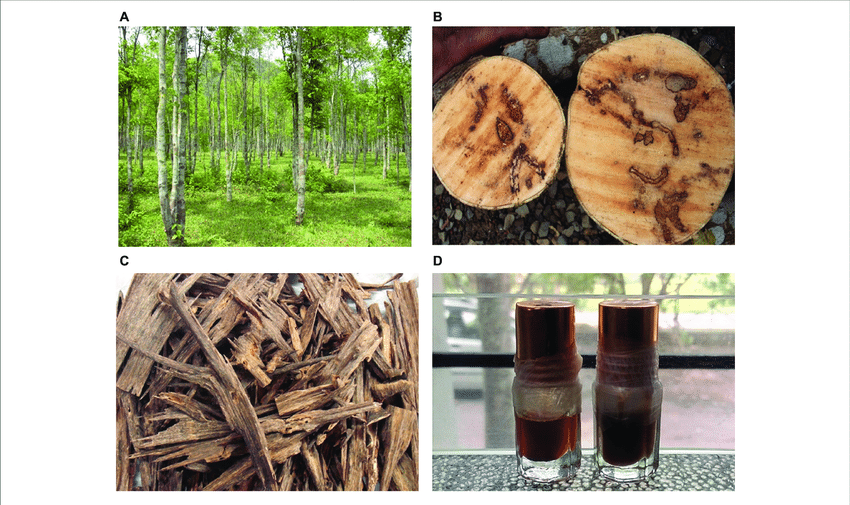
Perfumer Geza Schoen offered this explanation to Allure magazine in its excellent article:
Natural oud, the scent (the essential oil) arises when a particular fungus places itself on an Aquilaria tree. A reaction creates a resin that slowly embeds into the wood creating agarwood, known as oud, which is then soaked, and using a distillation and evaporation method is developed into an oil.
That is how perfumers in the Middle East, India, and the Far East have traditionally made a essential oil that can be very costly. As many perfume-lovers know, oud has been a trend in Western perfumery for several years (6 Western commercial fragrances based on oud were launched in 2007, over 200 by 2019), but what we mostly encounter is a synthetic re-creation of that oil, which puts oud-based fragrances within reach of many more fragrance lovers. The qualities of oud that don’t attract me are when it is used heavily to evoke smoke or leather. A great reference for some fragrance-lovers, but not really me. However, I’ve read that there are many different facets to oud, in nature depending on the specific variety of Aquilaria tree and the environment where it was grown, so I’m sure the synthetic creations also vary widely.
I’ll be honest – I can’t think of many oud-focused fragrances that I like a LOT, though I don’t object to it as a supporting player. It may be that my nose is acting sensitive toward a synthetic, but that’s not usually an issue for me. And I’ve gotten weary of every other new fragrance seeming to have “oud” in its name! There is one oud-centric fragrance that I really do enjoy a lot, and it grows on me every time I wear it: David Yurman Limited Edition. It is a classic combination of rose with oud, and both are used with a deft touch. The bottle, by the way, is gorgeous, a heavy, faceted, dark red crystal flacon.
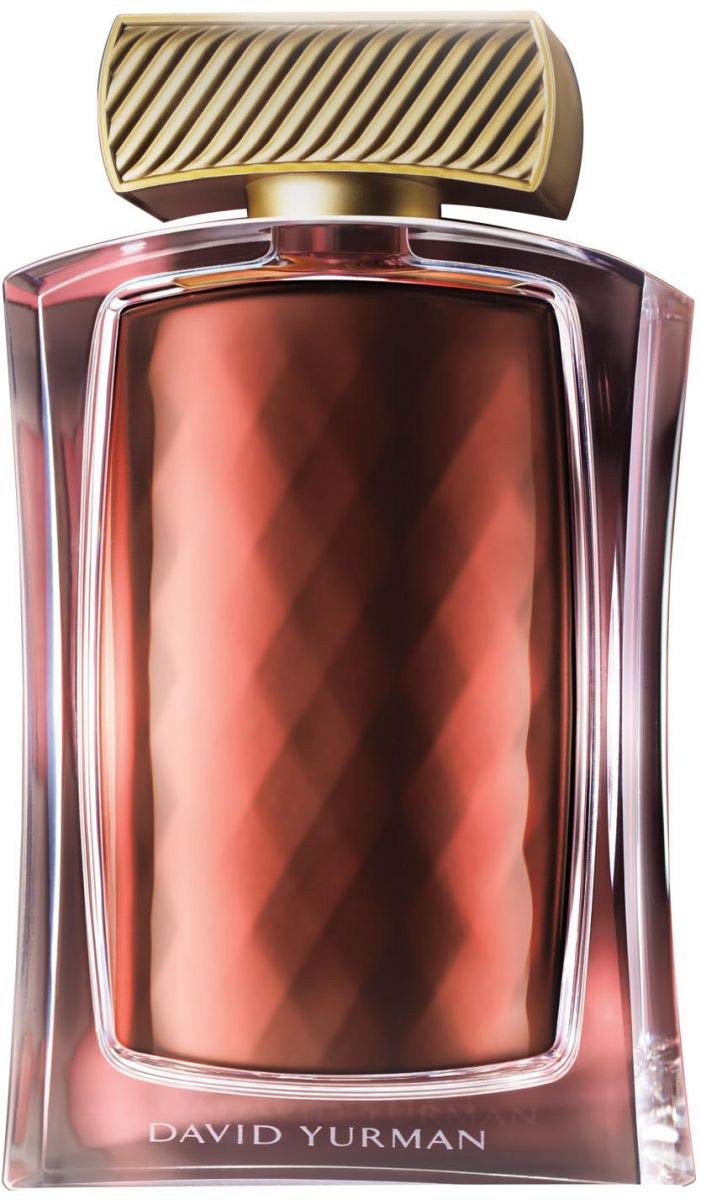
Launched in 2011, it is an extrait de parfum with central notes of oud and Taif rose. Top notes also include coriander, geranium, saffron, and raspberry, but the rose and oud notes appear immediately and carry through the parfum’s development, so the typical pyramid structre may not accurately describe it. Heart notes include violet and jasmine, though at this stage my nose is so distracted by the Taif rose and oud that I hardly detect them. Base notes add suede, musk, vanilla, and sandalwood. Interestingly, the notes list makes a point of saying “natural agarwood”, though that is no guarantee that the ingredient used isn’t synthetic.
I think this is a very skillful fragrance. The rose and oud could have been overwhelming, and they’re not, at least not with a controlled application, lol. This fragrance is all about gentle, rosy warmth with a bit of spice. The notes are well-blended, with saffron and fruity raspberry peeking through. The rose fades away sooner than the oud but it still hums softly in the background. DY Limited Edition reminds me a bit of Aramis’ Calligraphy Rose, and I wonder how it would compare to Calligraphy Saffron, which I haven’t tried. It’s not clear who was the perfumer behind DY Limited Edition, but I think it has to have been Harry Frémont of Firmenich, who created all the other David Yurman fragrances (the link will take you to a long interview of him by Richard Goller of the Fragroom blog).. He certainly knows his way around a rose, too, as a creator of Estée Lauder’s marvelous Knowing, as well as dozens of other scents.
Have you tried DY Limited Edition? Or can you suggest other oud fragrances that would appeal to a floral lover like me? Drop by Australian Perfume Junkies to see what Portia has to say about oud!
 Serenity Now Scents and Sensibilities