

Happy September! Anise the subject of our Notes on Notes this month, and it is a note not commonly found in perfume. The fragrance company Bon Parfumeur has a thorough explanation of anise in perfumery on its website. When one finds anise in a fragrance, it is usually anise or star anise, which come from the seeds and oil of two different plants. Anise comes from Pimpinella anisum, native to and grown throughout the Mediterranean area, while star anise comes from Illicium verum, native to southeastern China and Vietnam. Although the seeds’ fragrance and flavor resemble each other, the plants are not related; I was interested to learn that Pimpinella anisum is a member of the same plant family as parsley. Licorice, whose scent and flavor also resemble those of anise, is yet another different plant altogether, and it comes from the roots, not seeds.
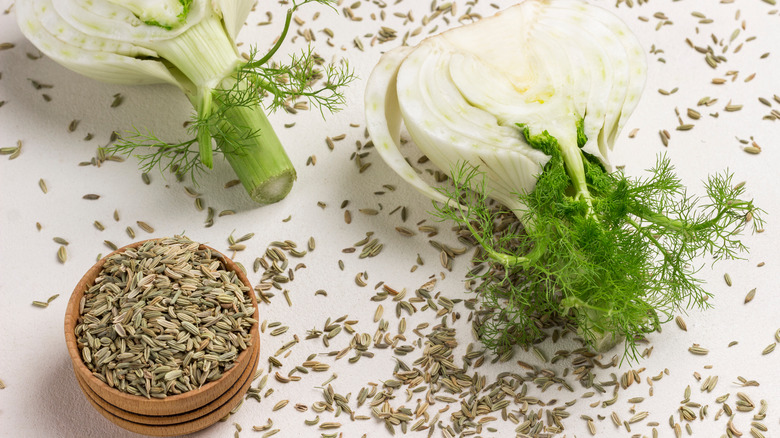
All three are used to create an aromatic, spicy accord in a fragrance. Fragrantica had a great “round-up” of best anise fragrances in 2022, noting that fennel is another variation on the same theme (and the plant is related to anise). The substance they have in common is anethole, and I must have an innate affinity for that, because I love strong black licorice, and fennel, and anise-flavored baked goods. My love for black licorice is so familiar to my family that on the rare occasion when jelly beans appear in our house (usually Easter), they all pick out the black ones to give to me! Bon Parfumeur describes its uses in perfumery:
It is used as a top note in perfumes, providing an initial burst of fragrance. It is also used to add a touch of sweetness and richness to gourmand fragrances. In addition, anise complements the warm, exotic compositions of oriental fragrances and contributes to the creation of spicy accords, blending harmoniously with other spices. In addition, anise adds a bold, assertive facet to men’s fragrances. It can also be used to create contrast and complexity when layered with other notes. This is why anise is favored by niche and artisan perfumers for its unique, individual character.
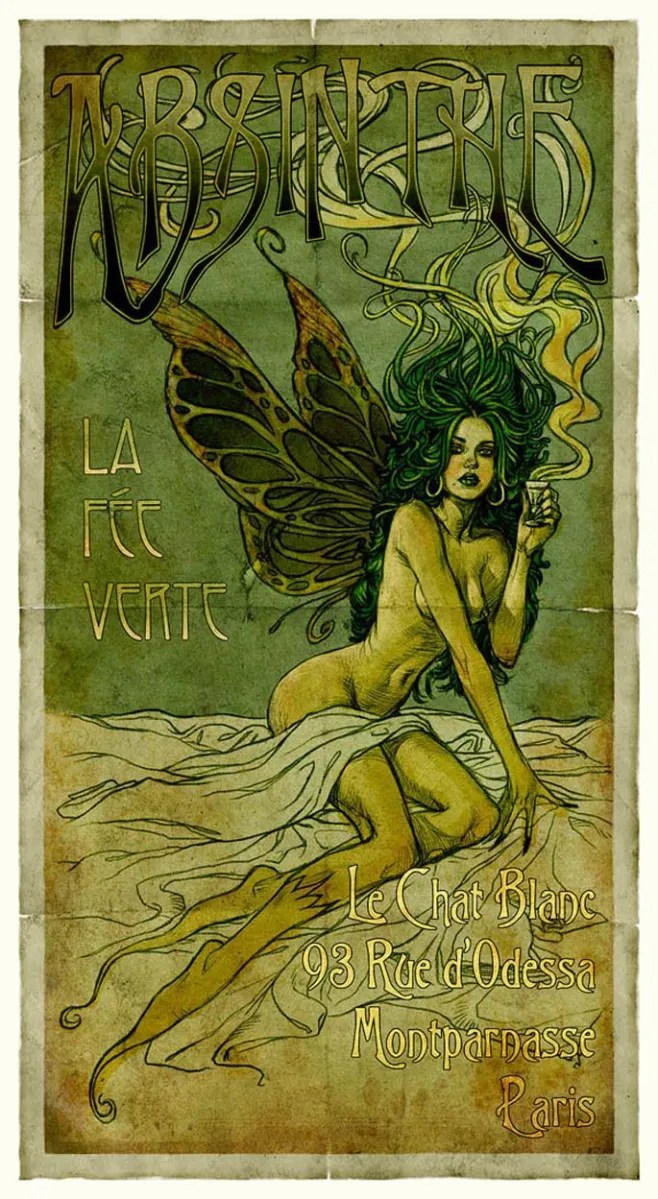
Anise is more often used to flavor liquor and liqueurs, most famously absinthe (said to drive men mad, thus inspiring the name of L’Artisan Parfumeur’s Fou d’Absinthe), but also pastis, ouzo, anisette, sambuca, raki, and others that were created in Mediterranean countries.
That being the case, it seems fitting that the most obviously anise-forward fragrance I own comes from a Spanish perfumer: Ramon Monegal’s Lovely Day. I think I also have a decant of Réglisse Noire, from 1000 Flowers, which is focused on licorice, as befits its name. However, Elena Vosnaki of Fragrantica, names one fragrance as the “archetypal anisic floral”: Guerlain’s L’Heure Bleue, whose origins go back to 1912 (do read her review, it’s a gorgeous piece of writing). I’ve always loved its name, meant to evoke the twilight hour when the sky briefly turns all shades of darkening blue, purple, and even green.

I happen to have a new bottle of the reissued eau de toilette of L’Heure Bleue, bought in January during a visit to the Guerlain boutique in The Breakers hotel in Palm Beach (highly recommended, if you’re in the area!). Like others in Guerlain’s 2021 collection of Les Légendaires, it does not disappoint. If you don’t love anise, fear not – it has been toned down in this reissue, although I can still pick it up among the top notes (it is listed as “aromatic spices”). It is definitely there, lending a tinge of spice and, dare I say, a tinge of green; more reminiscent of fennel than of licorice. It gives way seamlessly to the heart notes of violet and carnation, which segue into iris, but enough of it lingers to help the florals bridge from the top notes through the heart to the base notes of benzoin, vanilla, and tonka. This edition of L’Heure Bleue is eminently wearable, a true classic that suits modernity well while staying true to its roots.
I know some readers are devoted to Réglisse Noire; do any of you have any other favorite anise or licorice fragrances? Please share in the comments! And check out what Portia has to say about anise at Australian Perfume Junkies.

 Serenity Now Scents and Sensibilities