
Notes on Notes: Oud

Notes on Notes: Oud

November’s “Notes on Notes” is about oud, or agarwood. I don’t think I can provide a better or clearer explanation than this, from Sarah McCartney in her book “The Perfume Companion: The Definitive Guide to Choosing Your Next Scent”:

Oud is Arabic for wood, and you’ll also see it spelled oudh, aoud, and aoudh. An oudh is also a musical instrument which looks a lot like a lute. In perfumery, though, it’s a specific kind of wood from the agarwood tree, also called aloewood. Even more specifically, this tree must be infected by a species of mould, Phialophora parasitica, which makes it strongly whiffy.
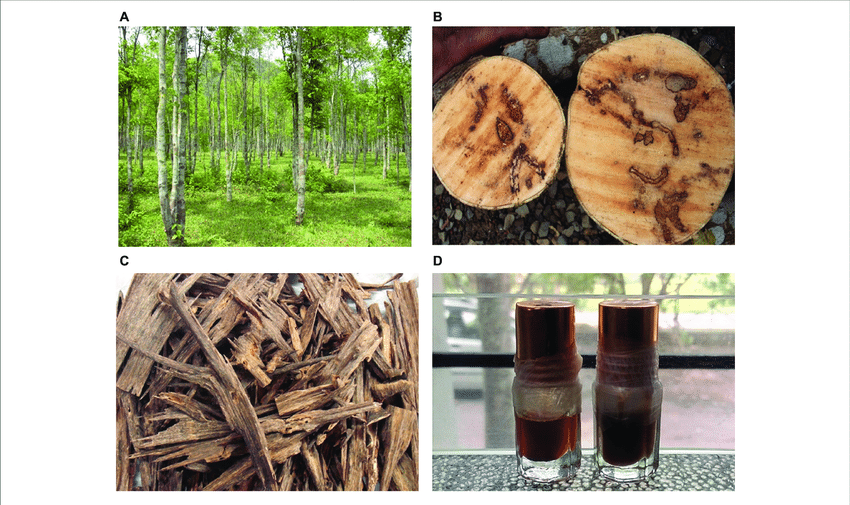
Montage of the development of agarwood and oud essence from aqualiaria trees
Agarwood and its products; image from Researchgate.net.

Perfumer Geza Schoen offered this explanation to Allure magazine in its excellent article:

Natural oud, the scent (the essential oil) arises when a particular fungus places itself on an Aquilaria tree. A reaction creates a resin that slowly embeds into the wood creating agarwood, known as oud, which is then soaked, and using a distillation and evaporation method is developed into an oil.

That is how perfumers in the Middle East, India, and the Far East have traditionally made a essential oil that can be very costly. As many perfume-lovers know, oud has been a trend in Western perfumery for several years (6  Western commercial fragrances based on oud were launched in 2007, over 200 by 2019), but what we mostly encounter is a synthetic re-creation of that oil, which puts oud-based fragrances within reach of many more fragrance lovers. The qualities of oud that don’t attract me are when it is used heavily to evoke smoke or leather. A great reference for some fragrance-lovers, but not really me. However, I’ve read that there are many different facets to oud,  in nature depending on the specific variety of Aquilaria tree and the environment where it was grown, so I’m sure the synthetic creations also vary widely.

I’ll be honest – I can’t think of many oud-focused fragrances that I like a LOT, though I don’t object to it as a supporting player. It may be that my nose is acting sensitive toward a synthetic, but that’s not usually an issue for me. And I’ve gotten weary of every other new fragrance seeming to have “oud” in its name! There is one oud-centric fragrance that I really do enjoy a lot, and it grows on me every time I wear it: David Yurman Limited Edition. It is a classic combination of rose with oud, and both are used with a deft touch. The bottle, by the way, is gorgeous, a heavy, faceted, dark red crystal flacon.
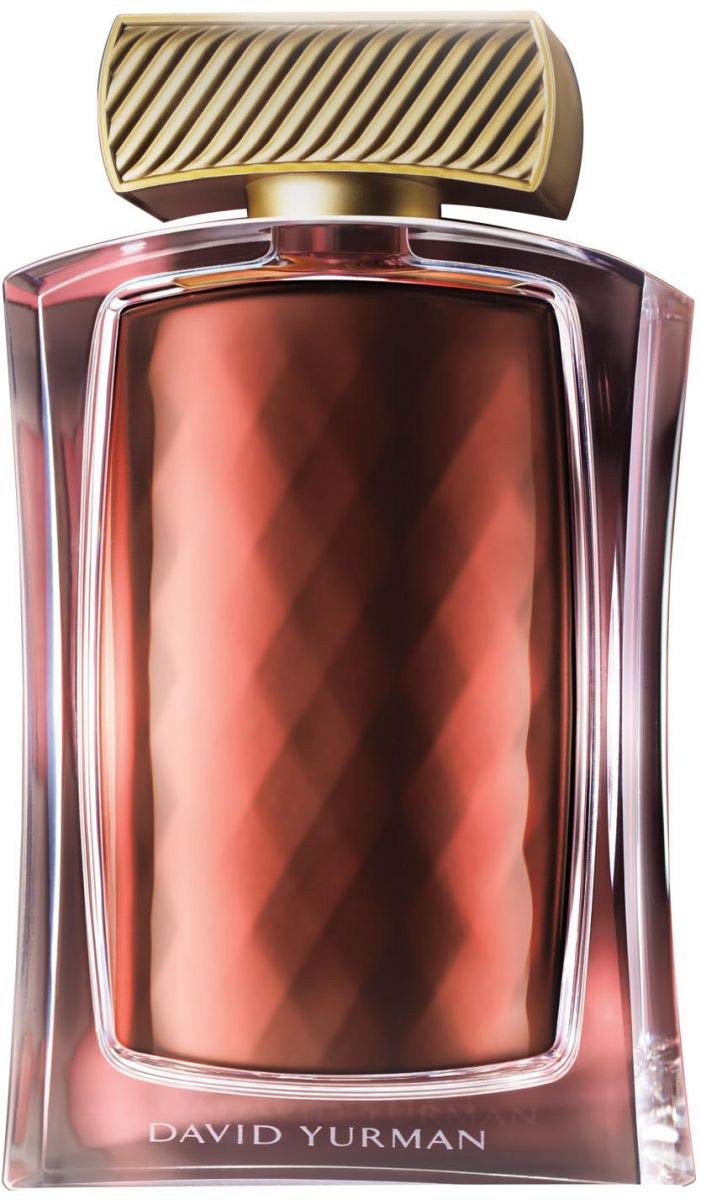
Red bottle of David Yurman Limited Edition fragrance
David Yurman Limited Edition extrait de parfum; image from Amazon.com

Launched in 2011, it is an extrait de parfum with central notes of oud and Taif rose. Top notes also include coriander, geranium, saffron, and raspberry, but the rose and oud notes appear immediately and carry through the parfum’s development, so the typical pyramid structre may not accurately describe it. Heart notes include violet and jasmine, though at this stage my nose is so distracted by the Taif rose and oud that I hardly detect them. Base notes add suede, musk, vanilla, and sandalwood. Interestingly, the notes list makes a point of saying “natural agarwood”, though that is no guarantee that the ingredient used isn’t synthetic.

I think this is a very skillful fragrance. The rose and oud could have been overwhelming, and they’re not, at least not with a controlled application, lol. This fragrance is all about gentle, rosy warmth with a bit of spice. The notes are well-blended, with saffron and fruity raspberry peeking through. The rose fades away sooner than the oud but it still hums softly in the background. DY Limited Edition reminds me a bit of Aramis’ Calligraphy Rose, and I wonder how it would compare to Calligraphy Saffron, which I haven’t tried. It’s not clear who was the perfumer behind DY Limited Edition, but I think it has to have been Harry Frémont of Firmenich, who created all the other David Yurman fragrances (the link will take you to a long interview of him by Richard Goller of the Fragroom blog).. He certainly knows his way around a rose, too, as a creator of Estée Lauder’s marvelous Knowing, as well as dozens of other scents.

Have you tried DY Limited Edition? Or can you suggest other oud fragrances that would appeal to a floral lover like me? Drop by Australian Perfume Junkies to see what Portia has to say about oud!

Scented Advent, December 8

Scented Advent, December 8

Today’s post about the SOTD from my Advent calendar will be brief, because it’s a scent I don’t like very much, and I don’t like to write a lot about scents I don’t like. It is Amber Aoud, from Roja Dove. First, I don’t much care for oud except in very small doses, and I’m tired of how omnipresent it seems to be, both as an ingredient and in the names of fragrances. Sadly, I suspect that the reason it is omnipresent and the reason I don’t like most of what I’ve encountered are the same: chemists have come up with some cheap synthetic molecules meant to imitate the real, expensive substance, which probably smells much better and more interesting.

Second, I react to Roja Dove’s fragrances much as I do to Tom Ford‘s: there are some very nice scents among them, but the hype and the prices are too much. I’ve enjoyed visiting a Roja Dove boutique in London, in the Burlington Arcade, and I’ve occasionally stopped by the counter in Neiman Marcus to test, but I’ve never been tempted to buy one of his fragrances. There are just so many other, equally (if not more) appealing, less expensive options.

But, to briefly address Amber Aoud, the first note that hits my nose is in fact “oud” that smells very chemical and synthetic to me. It smells smoky but not in a way that I enjoy; I’m sure that more sensitive noses would experience it as “burning.” It does turn into something sweeter and more pleasant, but for the life of me I can’t detect the rose it is supposed to contain as a major note, or any fig. It doesn’t smell particularly like “amber” either, or at least any of the accords I’ve learned to identify with “amber.” The full list of notes on Fragrantica is: Top notes of Bergamot, Lime and Lemon; middle notes of Rose, Fig, Ylang-Ylang and Jasmine; base notes of Agarwood (Oud), Ambergris, Saffron, Cinnamon, Birch, Civet, Orris Root, Musk, Oakmoss, Sandalwood and Patchouli. I don’t smell any of the citrus top notes at all (but this may be an older sample where they’ve evaporated). The sweetness I sense after the initial smoke may be coming from ylang-ylang, but it’s very hard to tell. As to the base notes, I smell “oud” and birch tar, and maybe a hint of the orris root.

So that’s me and Amber Aoud. Sorry to disappoint any fans — your mileage may vary! If you know and like this one, please share your thoughts in the comments. I’m looking forward to something different in tomorrow’s Advent calendar surprise! Which is one of the fun aspects of Advent calendars — a little surprise every day.

Refillable wooden Advent calendar
My fragrance Advent calendar
May Melange Marathon: Fragrances That Changed the Field

May Melange Marathon: Fragrances That Changed the Field

We interrupt our regularly scheduled programming, because the following New York Times Style Magazine article popped up in my news feed, and I got totally distracted by it! It is called The Fragrances That Changed the Field, by Aatish Taseer. It starts with a childhood memory, from India, of a first encounter with oudh, and travels a winding path from there through the “Orientalism” of fragrances in the 1970s, to the power statement fragrances of the 1980s, circling back to previous centuries and the use of florals and musks in fragrances. It includes insight from several modern perfumers.

I highly recommend this article! You’ll want to set aside a good block of time to read it. The opening paragraph:

I REMEMBER AS IF it were yesterday that distant afternoon on which I first smelled oudh. I was in my grandmother’s house in Delhi. I was 13, maybe 14. We had a family perfumer, or attarwallah, a man of some refinement, who came to us from Lucknow — a city that is a metonym for high Indo-Islamic culture. We didn’t know the attarwallah’s name, or how he knew to follow us from address to change of address. But he came without fail two or three times a year. A slim, gliding figure, with a mouth reddened from paan, or betel leaf and areca nut, the attarwallah produced his wares from carved bottles of colored glass that he carried in a black leather doctor’s bag. He showed us scents according to which season we were in. So in winter, musk and patchouli; in summer, white-flowered varieties of jasmine — of which there are some 40 odd in India — as well as rose and vetiver. In the monsoon, he brought us mitti attar, which imitates the smell of parched earth exhaling after the first rain (“mitti” means “mud” in Hindi). The perfumes came from the medieval Indian town of Kannauj, which is a 75-mile drive west of Lucknow and which, like its French counterpart, Grasse, has a tradition of perfume manufacturing several centuries old. Once he had drawn his perfume out on white cotton buds at the tips of long, thin sticks, the attarwallah lingered over his customers, telling stories of the various scents and reciting the odd romantic couplet of Urdu poetry.

If that doesn’t intrigue you, as a person interested in fragrance, I don’t know what will! Enjoy. BTW, my scent of the day today was Cristalle, and I’ll write about it tomorrow instead.

Featured image from baystreetex.com.