Welcome to the weekly Perfume Chat Room, perfumistas! I envision this chat room as a weekly drop-in spot online, where readers may ask questions, suggest fragrances, tell others their SOTD, comment on new releases or old favorites, and respond to each other. The perennial theme is fragrance, but we can interpret that broadly. This is meant to be a kind space, so please try not to give or take offense, and let’s all agree to disagree when opinions differ. In fragrance as in life, your mileage may vary! YMMV.
Today is Friday, February 9, and Valentine’s Day is next week! Happy Valentine’s Day in advance! Do you have any fragrant gifts in mind, for yourself or anyone else? I am saving up all my fragrance wishes for an upcoming trip to Paris — all suggestions of perfume sites to visit are welcome, especially places that don’t have branches in the US. Palais Royal is on the list for sure, for Lutens and Rosine; probably also Jovoy Paris, since I’ve loved their store in London.
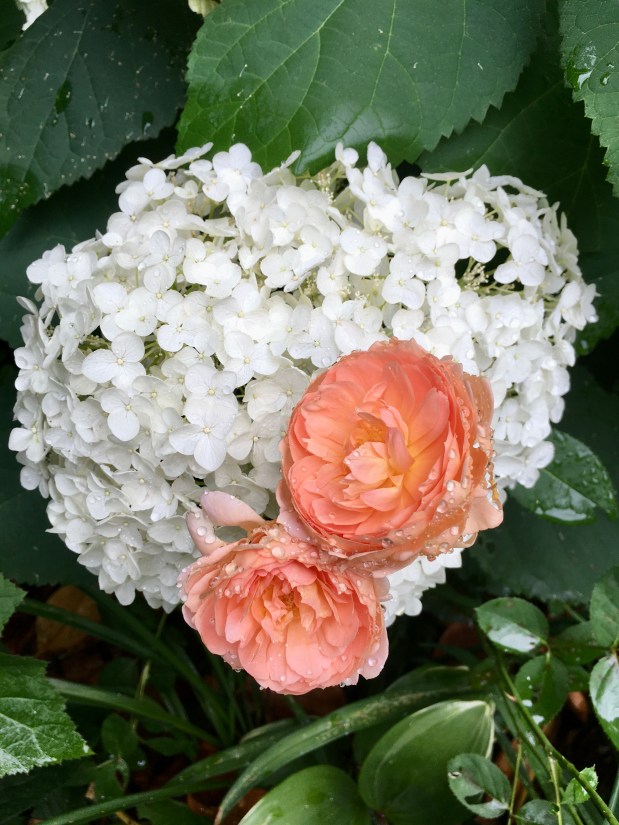
Most of my fragrance interest right now is in roses — real rose bushes, that is. I have some on order that should come in March; and I’ve bought some bare root roses of varieties that are highly fragrant and have the old-fashioned blooms I love, when I found them at a ridiculously low price at a big-box store. So those have kept me busy. My spring bulbs are starting to come up now, and most of those are very fragrant also — narcissus, hyacinths, starflowers. I’m delighted to see that my lavender plants seem to have survived the temperatures in the teens we had a few weeks ago.
Please share any fragrant plans you have for Valentine’s Day, and do suggest any favorite spots in Paris, perfume-related or otherwise! We’ll be there for a week, which offers plenty of time for tourism.
Welcome to the weekly Perfume Chat Room, perfumistas! I envision this chat room as a weekly drop-in spot online, where readers may ask questions, suggest fragrances, tell others their SOTD, comment on new releases or old favorites, and respond to each other. The perennial theme is fragrance, but we can interpret that broadly. This is meant to be a kind space, so please try not to give or take offense, and let’s all agree to disagree when opinions differ. In fragrance as in life, your mileage may vary! YMMV.
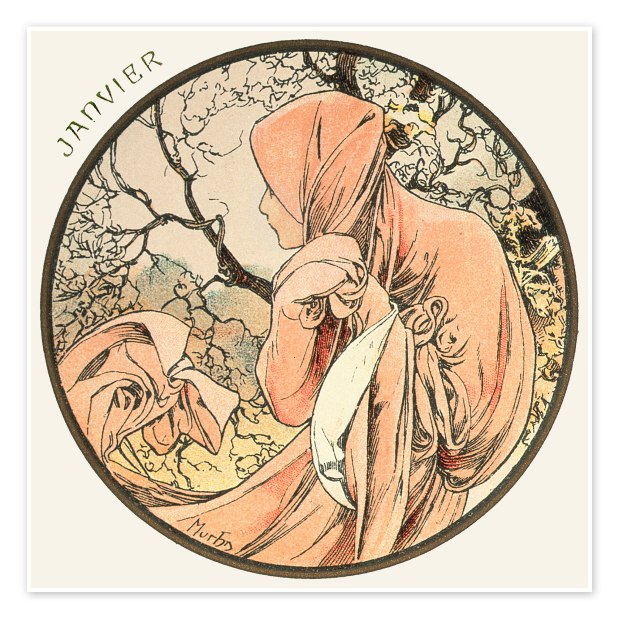
Today is Friday, January 12, and baby, it’s cold outside! Update: it is now Saturday, January 13 — my posting got delayed! I’ve been running around my garden adding mulch like mad and planning which potted plants we can move into our screened porch before temperatures dip below 20 degrees Fahrenheit. Last Christmas, we had a similar hard freeze, and I lost a number of plants. So I’m determined to do better protecting them this year!
I feel as if I’m betwixt and between, scentwise. Christmas is definitely over, so the warm, spicy scents that I enjoy during the holiday don’t really fit right now; and we are still quite far from spring, so I haven’t brought out greens and florals yet. I know it’s not mandatory to match one’s fragrance to the season, but the seasons do affect what appeals to me. And right now, I’m having trouble deciding! What are your fragrance choices for a chilly January?
Welcome to the weekly Perfume Chat Room, perfumistas! I envision this chat room as a weekly drop-in spot online, where readers may ask questions, suggest fragrances, tell others their SOTD, comment on new releases or old favorites, and respond to each other. The perennial theme is fragrance, but we can interpret that broadly. This is meant to be a kind space, so please try not to give or take offense, and let’s all agree to disagree when opinions differ. In fragrance as in life, your mileage may vary! YMMV.
Today is Friday, December 22, and the winter solstice has arrived! In this hemisphere, the days will slowly get longer and the light will get stronger. To be honest, I don’t feel the dark days of winter as I used to when I lived in New England, when it would be truly dark by 4 pm in December. Since we’re at the western edge of the Eastern Time Zone in the US, and also in the South, it still doesn’t get dark until after 5 pm here. The real cause for celebration in our house is that our new refrigerator is now in place — hurray! A lovely countertop “fabricator” was able to come and cut just enough from the countertop to squeeze it in between the cabinets. It’s a great improvement and a much better fit than the old one.
As Christmas is only a few days away, are you planning to give any fragrance gifts this year? I have the back-up bottle of Ginger Biscuit for our older daughter, and I finally thought of something for our second daughter. She loves Miss Dior Blooming Bouquet and isn’t looking to branch out, but she has a tendency to “save” Blooming Bouquet for dressier occasions. So I’ll give her a gift set of Philosophy’s Amazing Grace Ballet Rose, which share some of Blooming Bouquet’s notes and smells similar but isn’t as expensive, so she can feel free to wear it often. I hope she likes it! Our son is well-supplied with the Chanel Eau Paris-Edimbourg, since he got some for his birthday, so I won’t seek out another fragrance for him.
I’m late posting my contribution to December’s “Notes on Notes”, but do read what Portia has written about frankincense, traditionally said to have been one of the gifts the Three Kings brought to the newborn Jesus, and I’ll add my Note after Christmas. Right now, in the Christmas story, the Magi are still en route, following the Star, not knowing exactly where it will lead them or what they will find. To all who celebrate Christmas, I wish you a very happy one.
Welcome to the weekly Perfume Chat Room, perfumistas! I envision this chat room as a weekly drop-in spot online, where readers may ask questions, suggest fragrances, tell others their SOTD, comment on new releases or old favorites, and respond to each other. The perennial theme is fragrance, but we can interpret that broadly. This is meant to be a kind space, so please try not to give or take offense, and let’s all agree to disagree when opinions differ. In fragrance as in life, your mileage may vary! YMMV.
Today is Friday, December 15, and yes — I forgot to post last Friday. So sorry! Well, the refrigerator saga continues — the new one got delivered this morning, and it turns out it is 1/2 inch too wide for the space where the old one was, despite my multiple attempts at measuring. However, we think we can deal with it by hiring someone to adjust the kitchen counter on one side, so we’re keeping the new fridge. Right now, it’s sitting in the middle of our kitchen floor, plugged in and running, but empty until we can move it into place. Luckily, our plan was to keep the old one anyway and move it downstairs, so we still have a full-sized, functioning refrigerator. Never a dull moment around here!
We’re very happy that our son is home for his university holiday break, and he has a job lined up for post-graduation! We’re all happy to see the end of this difficult semester for him, and end on such a positive note. Christmas preparations are in full swing, and the tree is up and decorated. If you celebrate Christmas, how are your preparations going? If you celebrate Hanukkah, which ends tonight, I hope you had a blessed and peaceful holiday.
What smells do you most associate with the winter holidays? For me, it has to be the scent of evergreens. Pine, cedar, balsam — I love them all.
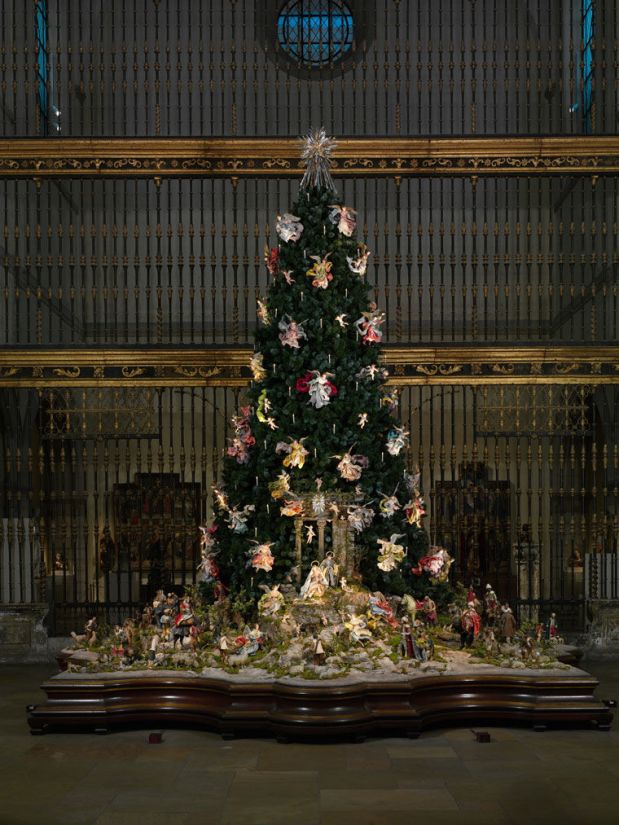
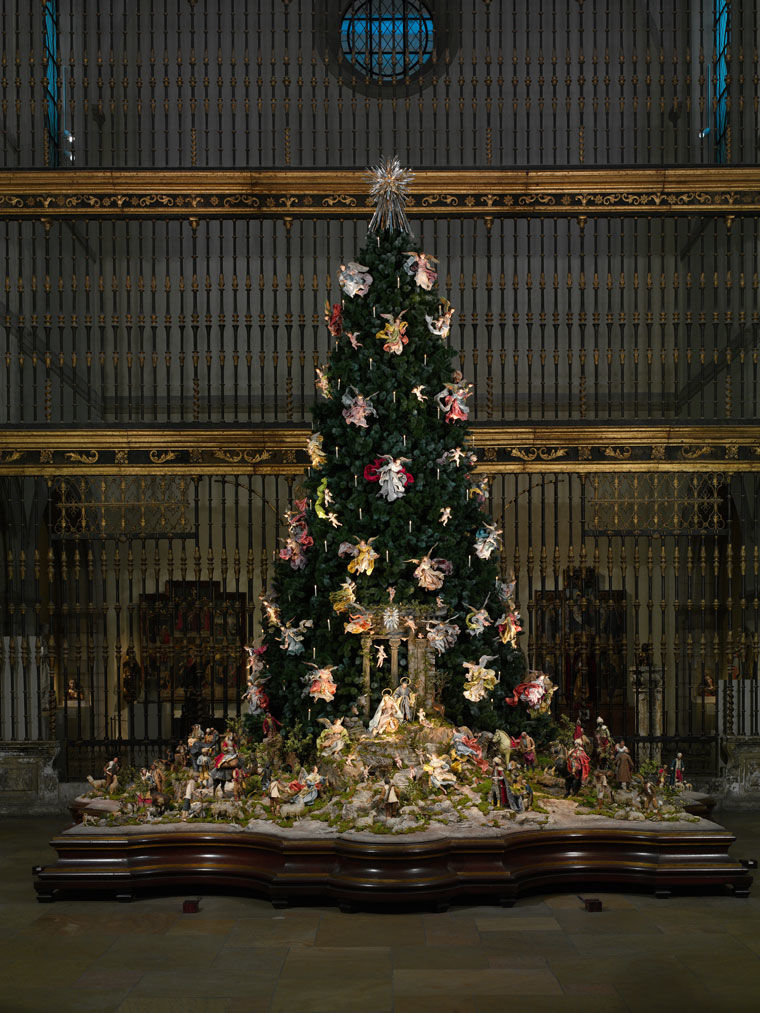
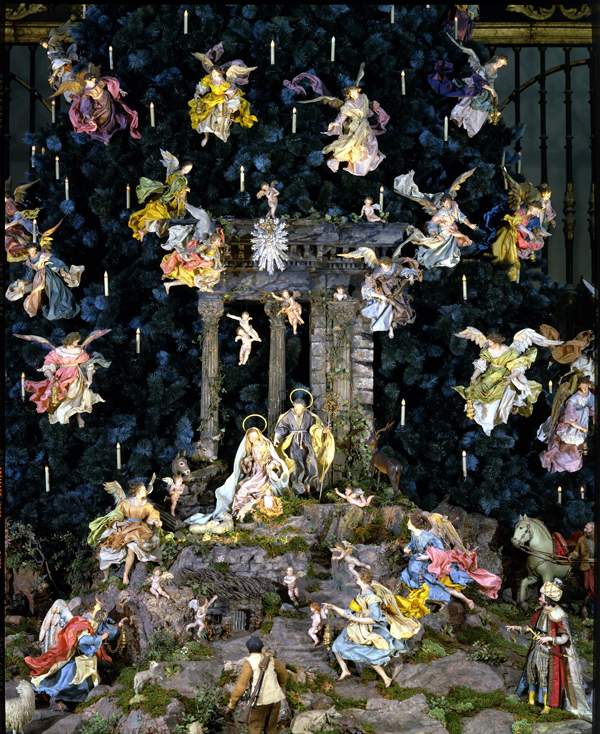
Metropolitan Museum of Art Christmas Tree and Creche
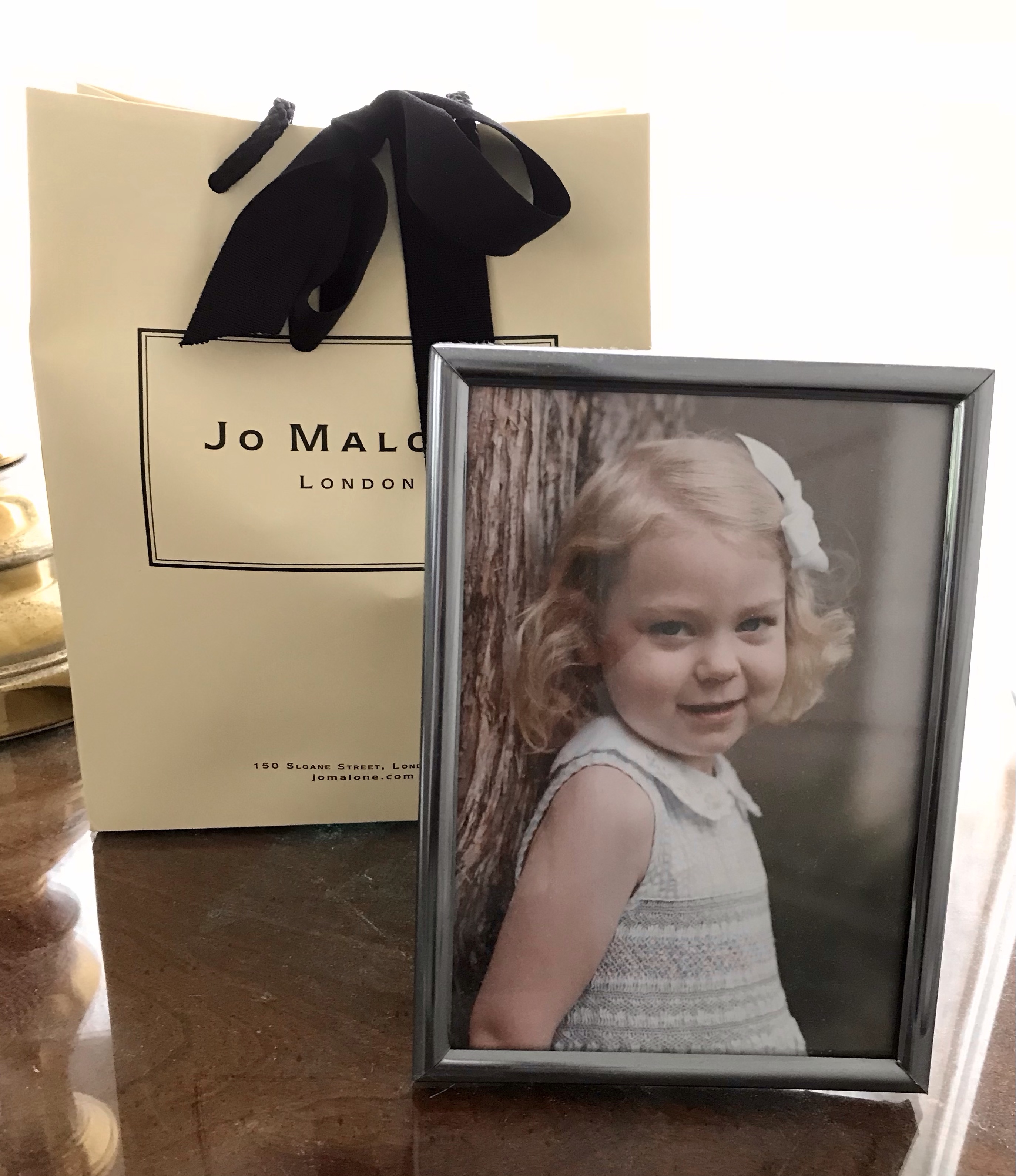
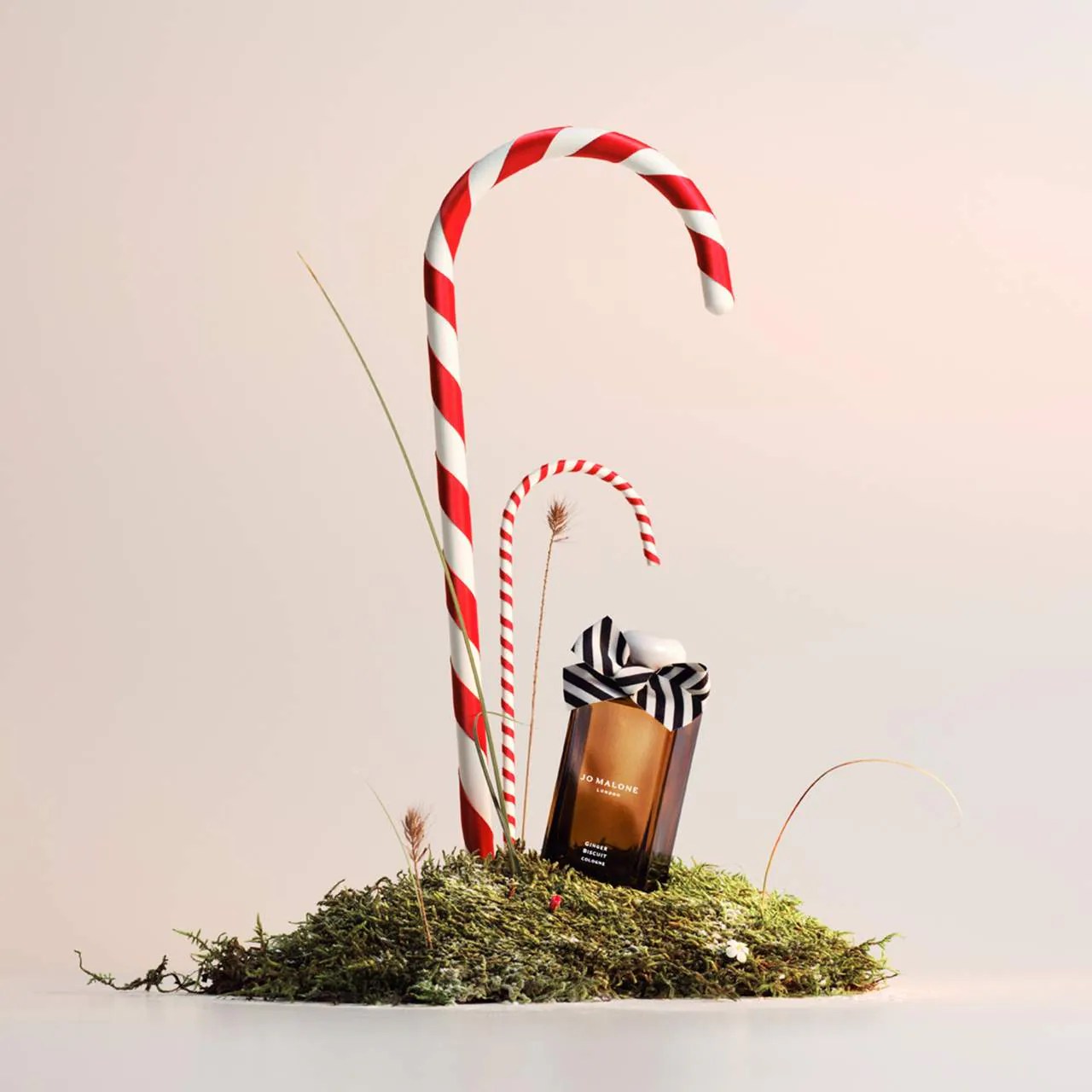
This is the last month of Portia’s and my collaboration, so the last “Counterpoint” unless I decide to resume in January. For December, we agreed to write about Jo Malone’s Ginger Biscuit, first launched in 2013 as part of a limited edition collection called “Sugar and Spice.” The perfumer who created it was Christine Nagel. It was released again this year as a holiday special release, just in time for me to grab some for my daughter’s birthday. Jo Malone’s Global Head of Fragrance, Céline Roux, describes its creation:
“Ginger Biscuit is not sugary sweet at all. If it was, it just wouldn’t be wearable. We have a lot of creamy wood notes in the formulation; you need the elegance of the wood to make it wearable. There’s also some natural ginger, which brings a zingy freshness and balances out the sweetness, and vanilla absolute. When you create scents like this, you need the best quality vanilla so that it is not candy sweet. So, what you get instead is a mouth-watering gourmand.”
1. How did you first encounter Jo Malone Ginger Biscuit, and what was your first impression?
Old Herbaceous: Ginger Biscuit was one of the small 9 ml bottles that came in a holiday fragrance sampler set from Jo Malone several years ago (basically the same set is now available again as a holiday coffret, with some really nice scents). I tried it and liked it, but I liked all the fragrances in the collection! Then my daughters asked to do a fragrance-sniffing session over Christmas a couple of years ago, and my oldest absolutely fell in love with Ginger Biscuit. Of course it had been a limited edition and was discontinued for the time being, available online only for exorbitant prices. I didn’t realize just how much she loved it until she told me of her many searches for a dupe or something that might come close. She rarely falls for a fragrance so hard, so I kept looking myself and hoping to find a stray bottle for her.
Well, lo and behold, someone commented on a Facebook group for fragrance fans, back in October, that they had seen Ginger Biscuit briefly listed on the Saks Fifth Avenue website, though it had quickly vanished. This raised the hope among many perfumistas that it was due to be re-released for the holidays. My city has a Saks Fifth Avenue store and it’s not far from where we live, so I made a rare trip to the mall to ask a sales associate for any information. The lovely woman who helped me confirmed that it would be a holiday release, and said she thought it would arrive at the start of November. I also stopped by Nordstrom, and another lovely sales associate told me the same thing. Both of them took my name and phone number. Just a few days later, the SA from Saks called me and said she had just gotten in a few bottles and would hold one for me. Shortly after that, the SA from Nordstrom made the same call. And so, dear readers, that is how I ended up with not one but two bottles of Ginger Biscuit. We gave one to our daughter in November for her birthday, and she was thrilled. Imagine her surprise when the second bottle appears under the Christmas tree! She’ll be set for life, or at least for several years.
Portia: I’d never heard of Jo Malone Ginger Biscuit before Old Herbaceous told me about it and how excited she and other perfumistas have been about its re-release for Christmas 2023. TBH Jo Malone perfumes just aren’t on my radar. Jin wears the woody number one and I had a couple of bath oils, Red Roses and Blue Agave. They were nice but the perfumes I’ve tried have all been totally underwhelming.
So it was with mild trepidation that I ventured into town and grabbed a small decant from the tester bottle (all samples had gone in the first few days of arrival, the SA was really lovely and even did the sample into my own little decant).
My first impression was. OH! it really is what is says on the bottle. A delightful waft of freshly opened iced gingerbread man wafted out as the SA was decanting. I was very taken but off to another perfume event so couldn’t douse myself.
2. How would you describe the development of Jo Malone Ginger Biscuit?
Portia: HA! I can’t help but smile like a fool when I spritz Ginger Biscuit. It’s just so freaking lifelike. Photo realism in fragrance. Ginger Biscuit smells like a ginger biscuit, or what is much closer to my heart an iced gingerbread man from Pizza Hut. I smell my wafting gorgeousness and am transported back 45 years and more to family events. We had a really lovely one in the next suburb and went for every occasion. The staff knew us, it was wheelchair accessible for Dad, there were banquettes that Mum and I loved to sit in with a chair for Jodie (my sister) and space for Dad. They had all you can eat salad and soda. At the end of every meal as we left the staff would give us kids an iced gingerbread man. THIS IS THE SMELL.
As we move from the top into the heart the ginger remains but less intense. Here the whole fragrance becomes a soft, chewy caramel that’s heavy on the vanilla.
It gets more and more vanilla essence as it dries down and is the softest, merest wash of gorgeous gourmand for hours and hours and hours.
Old Herbaceous: Right out of the bottle, Ginger Biscuit smells to me like a true gingersnap, spicy, sweet, and warm. It smells like a cookie or gingerbread that was made with real ginger and spices instead of artificial flavoring. I don’t usually gravitate to gourmand fragrances, as I find many to be too sweet and heavy for my taste, but Ginger Biscuit stays light and spicy. It is sweet, and there is a lovely vanilla that pervades the whole development from start to finish. A dominant note is said to be caramel, but I smell brown sugar more than caramel. The cinnamon and nutmeg bring depth to the sweetness of the vanilla and brown sugar, just as they do in real baking.
The vanilla persists even after the spiciness fades into the background. I do like a good vanilla, and that is how Ginger Biscuit ends up on my skin. It smells wonderful on my daughter; I enjoy it more on her than on myself, just because of her obvious delight in it. Smelling this light, sweet vanilla fragrance on her skin reminds me of how sweet she and her siblings smelled as babies, a very happy memory.
3. Do you or will you wear Jo Malone Ginger Biscuit regularly? For what occasions or seasons?
Old Herbaceous: Ginger Biscuit is absolutely perfect for the winter holiday season and beyond. Given the associations with gingerbread, I would wear it most in autumn and winter. It would be lovely to wear to a workplace during the holidays, as it isn’t overpowering. If you do wear it to work, you should be prepared to have people follow you trying to figure out what smells so nice!
That said, I don’t see myself wearing it very often, and now it will be a signature scent of my daughter’s, so that makes it even less likely that I would wear it often myself. But I might get in the habit of pulling out my small bottle at Christmas every year! It would be the perfect fragrance for Christmas morning breakfast, when our family tradition is to make cinnamon rolls.
Portia: Honestly? Though Jo Malone Ginger Biscuit is very nice, has excellent memories and smells good I just can’t imagine myself wanting to smell like this. I’ll definitely use up this decant over the silly season but am much more comfortable in Nuit Noel and Exultat for my hit of Holy. Maybe also because in Australia we are usually at around 35C/95f by 10am and thinking more about swimming pools and beaches than roaring fires.
4. Who should/could wear Jo Malone Ginger Biscuit?
Portia: Anyone who wants to smell like they’ve just been baking gingerbread or who loves the idea of smelling utterly edible. Even though I’m not putting my hand up for a bottle I really can imagine Jo Malone Ginger Biscuit smelling wonderful on both the major sexes and anything in between. It would be so nice to hug people over the holiday season who smell of it and I can imagine in the cold northern hemisphere that many compliments and questions about this beautiful scent would come your way.
Imagine on Christmas morning while hugging in thanks for gifts, smelling so divine! It would be the cherry on top of the magic.
Old Herbaceous: This could be happily worn by anyone, of any persuasion. It is as non-gender-specific as baking is. It’s a cozy scent, so anyone who wants to smell warm and cuddly should give it a try. It might attract some cuddles! I know many perfumistas were ecstatic that it has been re-released this year, and I can see why. Wouldn’t it be nice if Jo Malone would release it for every holiday season, as Clinique used to do with Wrappings?
Have you fallen for this or any other limited holiday release fragrance?
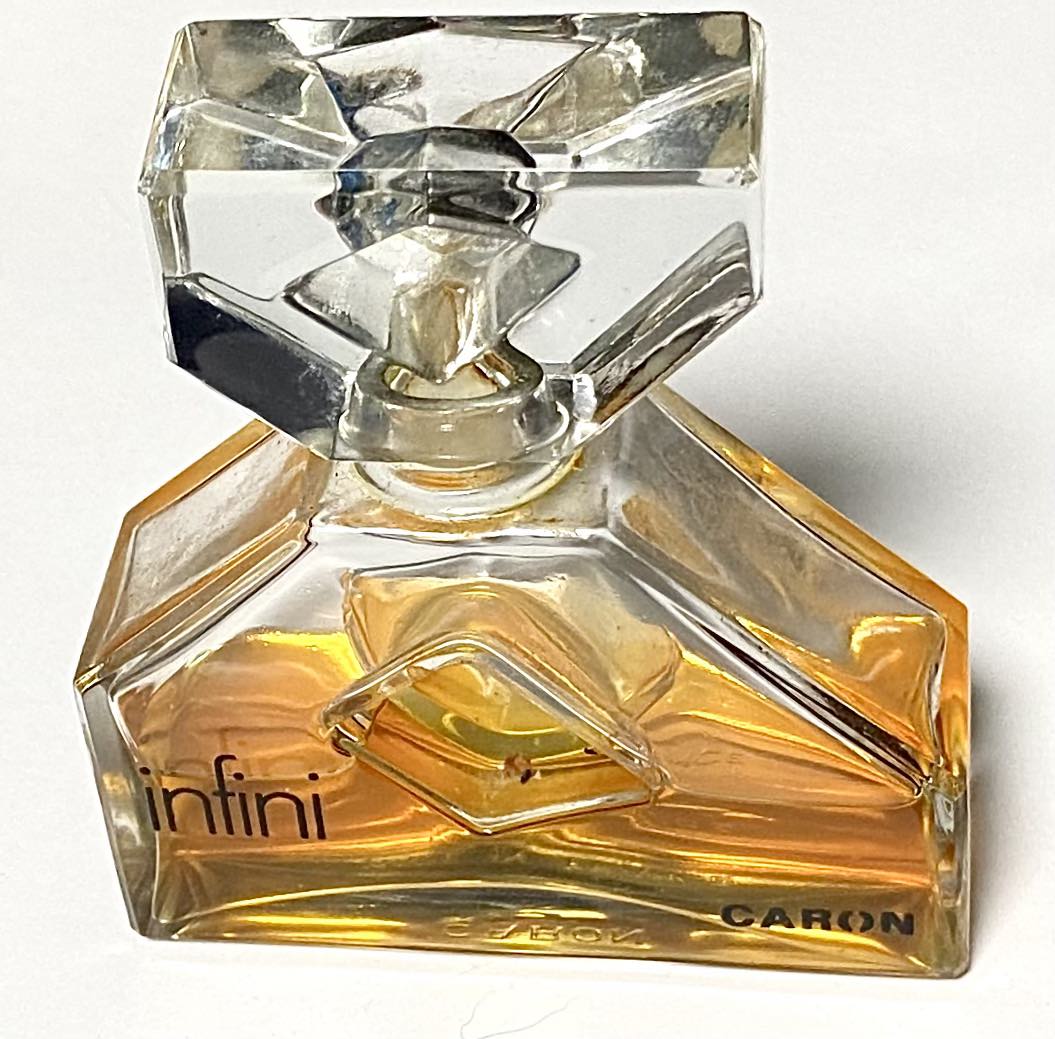
Happy Monday! Today, in our monthly “CounterPoint” collaboration, Portia of Australian Perfume Junkies and I consider Caron’s classic Infini.
The Infini many of us know is the 1970 formulation, which reused the name of an earlier Caron (Ernest Daltroff) fragrance from 1912. It was conceived of at the height of the race between the US and the Soviet Union to explore space and land a man on the moon. The goal was for Caron’s new fragrance to encapsulate a new modern era and an “infinite” future. The bottles for both the perfume and the parfum de toilette embody that sense of sleek, technical modernity, with the mathematical, angular perfume bottle and the smooth, silver-topped spray bottle of parfum de toilette.
“Caron’s futuristic project was apparently fifteen years in the making, as the perfumers searched for the most indefectible equilibrium of sharp green florals, woods, aldehydes, and musky animalics. The result – unseamed, flawless – is in my view one of the finest scents ever made.”
Notes are listed as: top notes – aldehydes, narcissus, muguet, jasmine; heart notes – iris, rose, tuberose, lilac; base notes – vetiver, sandalwood, musk, tonka bean, amber.
1. How did you first encounter Caron Infini, and what was your first impression?
Old Herbaceous: I first encountered Infini in the last few years, when I was already deep into my perfume rabbit-hole. I had been looking up fragrances with notes of narcissus, one of my favorite flowers and fragrance notes, and Infini kept appearing in various posts and lists as a classic to try if you like narcissus. So eventually, I found a vintage bottle of parfum de toilette (the version launched in 1970) for a reasonable price, and it was mine! It did not disappoint. I love the strong green aura that is present from the very start, with a noticeable narcissus accord lifted airborne by a hefty dose of aldehydes and enhanced by notes of jasmine and lily-of-the-valley. The last two floral notes are truly supporting players; they bring more green freshness and add to the slightly narcotic effect of the narcissus, but that’s the extent of their contribution (given that vintage fragrances do tend to lose some of their top notes, my impression may be affected by the age of my bottle).
To my nose, Infini definitely smells like a scent of the 1970s, when there were several successful strong green and herbal fragrances on the market, perhaps echoing the momentum of the environmental movement during that decade, which began with the first Earth Day. It fits right in with major loves of mine from that era, like Chanel’s Cristalle and No. 19, Aromatics Elixir, Silences, etc.
Portia: When I first got crazy about perfume Infini was not in demand and it seemed like there were gallons of it online for next to nothing. Out of interest I bought a small parfum in that outrageously brutalist bottle. It was love at first sniff. While smelling antique it also smells wholly new and modern. Perfumey but also like it’s trying to forge a new path from very well used ingredients. Coming from the same year as CHANEL No 19 it’s interesting to smell two so disparate sisters with quite a few parallels. No 19 being the more stoic and Infini feeling like a fun, flirty sibling.
2. How would you describe the development of Caron Infini?
Portia: Today I’m wearing vintage parfum and Parfum de Toilette. That aldehydic narcissus opening has always smelt more like fresh carnations to me. Not the perfumers trope of carnation but buying a bunch at the florist. Cool, green tinged, powdery and crisp. The heart is very sweet amber floral for me with reminders that narcissus is the major player here. My question is why aren’t oakmoss and some kinds of animalic noted? Or galbanum? The sweet, furry, resinous dry down lingers and i can smell faint traces of it next morning. A soft, powdery waft of gorgeousness long gone.
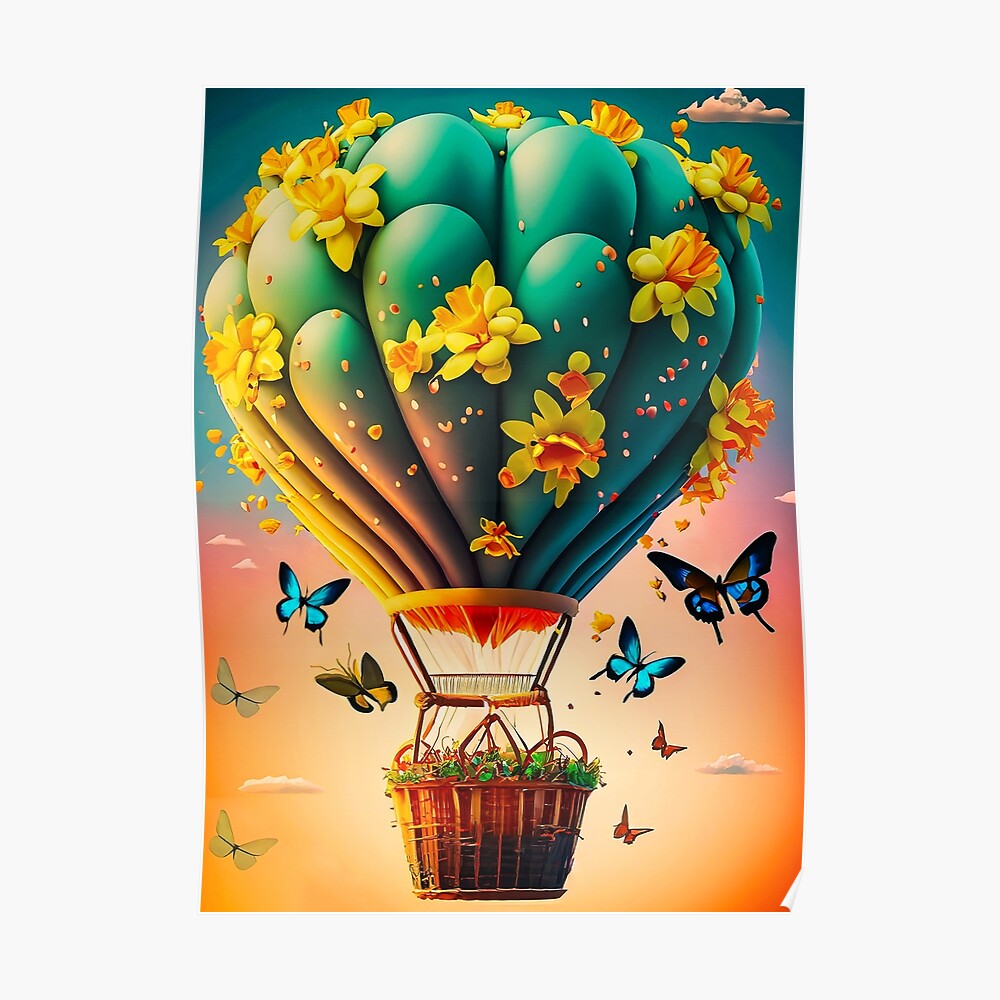
Old Herbaceous: Whenever I smell fragrance with a strongly aldehydic opening, what comes to mind is Luca Turin’s approving comment about my beloved Chanel No. 22, which has even more of a dose of aldehydes than its predecessor No. 5: “Stand back and watch the whole thing lumber off into the sky after a three-mile takeoff roll.” In the case of Infini, the aldehydes actually evoke the idea of an aerial vehicle taking off, as if it were a gleaming silver cartoon spaceship, a mid-century zeppelin, or a sparkling hot-air balloon. This balloon, though, carries a hefty load of daffodils and greenery. And while no one has listed galbanum as a passenger, my nose suspects it is along for the ride as a stowaway.
Hot air balloon; image by frigamribe88 at redbubble.com.
3. Do you or will you wear Caron Infini regularly? For what occasions or seasons?
Old Herbaceous: I haven’t been wearing it regularly, but now that I’ve dug it out of my collection for this post and our weather has cooled down, I’m going to include it in my fall rotation this year. The green fragrances I love so much are ideal not only for springtime, but also for this transitional season, when the oppressively humid heat gives way to cooler, drier air and the sky regains its vivid blue hue. September may be my favorite month although spring is my favorite season; having spent so many years in education, my own schooling and my later career, September always feels to me like a fresh start, like the hopeful beginning of a new school year. Besides, it is my birth month so for me personally, it is actually the start of a new year. Crisp green fragrance notes suit my mood in September.
As for occasions, I agree with Portia that Infini can dress up or dress down. To me, it has more warmth than No. 19 so it feels less standoffish, although it can still contribute a certain air to a soignée outfit.
Portia: Infini is a staple in my wearing rotations. Being such a pronounced beauty it’s perfect for nights working in drag. It slips seamlessly from summer to winter and always feels comfortable, elegant and just a little over the top. Infini fits afternoon BarBQs, lunch, fully dressed up or down. Though it’s not a shapeshifter itself it never feels out of place.
4. Who should/could wear Caron Infini?
Portia: Wearable by both sexes but I think you need to be a certain person to wear Caron Infini, especially the vintage formulas. While I think it could easily be a fragrance to confer extra confidence the wearer would have to be savvy enough about fragrance to understand that it can be used as such. Most general public in modern times could find it too far from what they know or smell in department stores. That’s my thought, happy to be proven wrong.
Old Herbaceous: Definitely a unisex option, excellent for both men and women. It reminds me a bit of Geoffrey Beene’s Grey Flannel, launched in 1975 as a traditionally masculine fragrance, though I wouldn’t say they smell alike. They do have a number of notes in common; but where Infini, targeted at women, has “perfumey” aldehydes among its top notes, Grey Flannel has citruses; while narcissus is dominant in Infini, it plays a supporting role to the violet accord in Grey Flannel. Just as women may smell wonderful in Grey Flannel, men may smell wonderful in Infini.
Miguel Matos at Fragrantica ha/s written about the latest version of Infini, launched by Caron in 2018, pointing out that it has nothing to do with the Infini of earlier decades. Indeed, it is a floral fruity gourmand. I wish Caron all possible success; but I also wish they wouldn’t reuse a name for a fragrance that differs so egregiously from the classic fragrance linked to that name. Have you tried any version of Infini? What do you think of it?
Welcome to the weekly Perfume Chat Room, perfumistas! I envision this chat room as a weekly drop-in spot online, where readers may ask questions, suggest fragrances, tell others their SOTD, comment on new releases or old favorites, and respond to each other. The perennial theme is fragrance, but we can interpret that broadly. This is meant to be a kind space, so please try not to give or take offense, and let’s all agree to disagree when opinions differ. In fragrance as in life, your mileage may vary! YMMV.
Today is Friday, September 15, and I’m so glad I stayed home and didn’t go with my husband to London as planned. Yes, I missed some anticipated treats like theater and museum shows, as well as some perfume sniffing, but I was here to help our son through some rough post-breakup moments this week, which is all that matters. He’s coping reasonably well, but he hasn’t been sleeping and he has been blindsided by some unexpected surges of grief. Thank goodness, he was already connected to an excellent therapist through university resources, and she has been extraordinarily helpful this week and last.
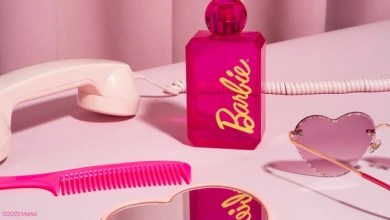
One of our daughters came over last night and we watched the Barbie movie! It was really fun, and I’ll happily watch it again next week with a close friend who hasn’t seen it yet. Margot Robbie and Ryan Gosling were both excellent. Apparently, Margot Robbie wears fragrances from Chanel and Calvin Klein, as well as some others; she is no longer a brand ambassador for Chanel, though, as her contract with the house expired last year. She does still wear vintage Chanel outfits, though — in Barbie pink! Perfume.com published an amusing list of Barbie-appropriate fragrances, most of which involved pink of some kind. There is, of course, an actual fragrance named Barbie, launched with the movie this summer. Have any of you tried it?
Have you seen “Barbie” yet, or any other recent movies? At home or at a movie theatre? Any recommendations? Have a great weekend!
Welcome to the weekly Perfume Chat Room, perfumistas! I envision this chat room as a weekly drop-in spot online, where readers may ask questions, suggest fragrances, tell others their SOTD, comment on new releases or old favorites, and respond to each other. The perennial theme is fragrance, but we can interpret that broadly. This is meant to be a kind space, so please try not to give or take offense, and let’s all agree to disagree when opinions differ. In fragrance as in life, your mileage may vary! YMMV.
Today is Friday, September 8, and I’m not going to London after all. Nothing major, but one of our kids has suffered a big blow (break-up) and is taking it very hard, so I decided not to tag along with my husband on his work trip and stay home this week, as said kid is at university a few miles away. Not a big deal to cancel, as I get to London most years, and it’s not going anywhere! I wouldn’t enjoy myself much anyway if I was worrying about our son the whole time. Silver lining: the friend who lives there and was going to go with me to a couple of things can use the theater tickets I had bought, which I’ve happily given to her and her husband, and one art exhibit I had planned to see is coming to the US after it closes at the Tate Britain. And there’s probably an October business trip to Barcelona on the agenda, which I’ve asked to extend to include — Paris! We got engaged in Paris, lo these many years ago, then spent part of our honeymoon there and haven’t been back since. It was supposed to be part of a big celebratory family trip in the summer of 2020, which went up in smoke like so many other COVID-era plans.
So now I need everyone’s suggestions on where to sniff perfume in Paris! Please share in the comments!
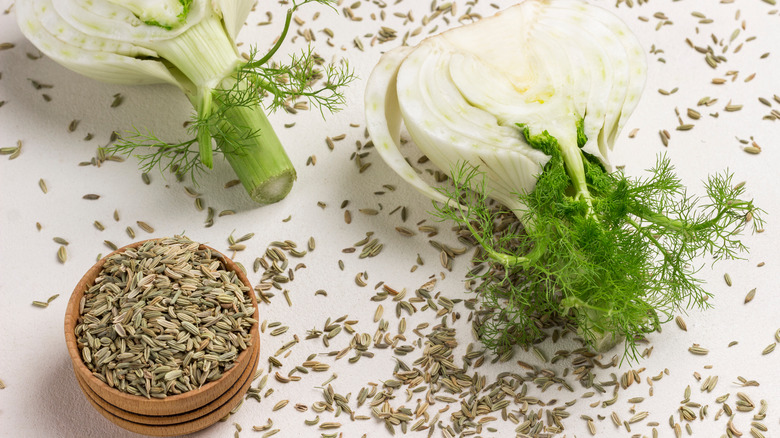
Happy September! Anise the subject of our Notes on Notes this month, and it is a note not commonly found in perfume. The fragrance company Bon Parfumeur has a thorough explanation of anise in perfumery on its website. When one finds anise in a fragrance, it is usually anise or star anise, which come from the seeds and oil of two different plants. Anise comes from Pimpinella anisum, native to and grown throughout the Mediterranean area, while star anise comes from Illicium verum, native to southeastern China and Vietnam. Although the seeds’ fragrance and flavor resemble each other, the plants are not related; I was interested to learn that Pimpinella anisum is a member of the same plant family as parsley. Licorice, whose scent and flavor also resemble those of anise, is yet another different plant altogether, and it comes from the roots, not seeds.
Fennel with anise seeds; image by Olena Ukhova/Shutterstock.
All three are used to create an aromatic, spicy accord in a fragrance. Fragrantica had a great “round-up” of best anise fragrances in 2022, noting that fennel is another variation on the same theme (and the plant is related to anise). The substance they have in common is anethole, and I must have an innate affinity for that, because I love strong black licorice, and fennel, and anise-flavored baked goods. My love for black licorice is so familiar to my family that on the rare occasion when jelly beans appear in our house (usually Easter), they all pick out the black ones to give to me! Bon Parfumeur describes its uses in perfumery:
It is used as a top note in perfumes, providing an initial burst of fragrance. It is also used to add a touch of sweetness and richness to gourmand fragrances. In addition, anise complements the warm, exotic compositions of oriental fragrances and contributes to the creation of spicy accords, blending harmoniously with other spices. In addition, anise adds a bold, assertive facet to men’s fragrances. It can also be used to create contrast and complexity when layered with other notes. This is why anise is favored by niche and artisan perfumers for its unique, individual character.
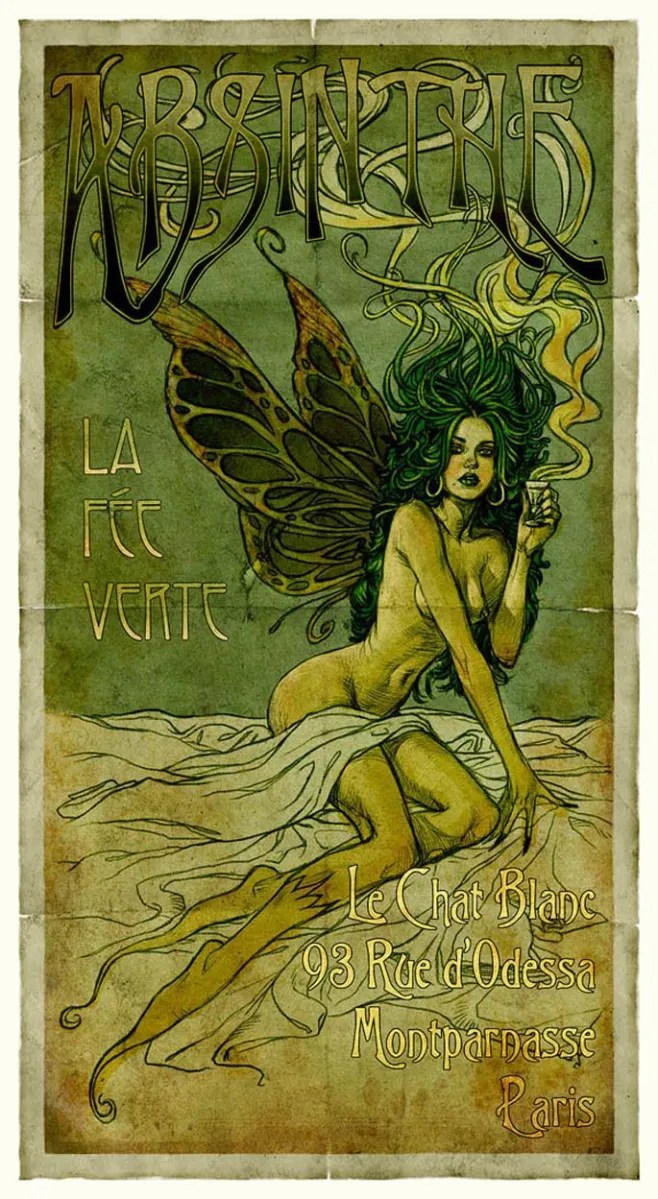
Anise is more often used to flavor liquor and liqueurs, most famously absinthe (said to drive men mad, thus inspiring the name of L’Artisan Parfumeur’s Fou d’Absinthe), but also pastis, ouzo, anisette, sambuca, raki, and others that were created in Mediterranean countries.
La Fée Verte, by Henri Toulouse-Lautrec.
That being the case, it seems fitting that the most obviously anise-forward fragrance I own comes from a Spanish perfumer: Ramon Monegal’s Lovely Day. I think I also have a decant of Réglisse Noire, from 1000 Flowers, which is focused on licorice, as befits its name. However, Elena Vosnaki of Fragrantica, names one fragrance as the “archetypal anisic floral”: Guerlain’s L’Heure Bleue, whose origins go back to 1912 (do read her review, it’s a gorgeous piece of writing). I’ve always loved its name, meant to evoke the twilight hour when the sky briefly turns all shades of darkening blue, purple, and even green.
Painting of twilight by Maxfield Parrish
I happen to have a new bottle of the reissued eau de toilette of L’Heure Bleue, bought in January during a visit to the Guerlain boutique in The Breakers hotel in Palm Beach (highly recommended, if you’re in the area!). Like others in Guerlain’s 2021 collection of Les Légendaires, it does not disappoint. If you don’t love anise, fear not – it has been toned down in this reissue, although I can still pick it up among the top notes (it is listed as “aromatic spices”). It is definitely there, lending a tinge of spice and, dare I say, a tinge of green; more reminiscent of fennel than of licorice. It gives way seamlessly to the heart notes of violet and carnation, which segue into iris, but enough of it lingers to help the florals bridge from the top notes through the heart to the base notes of benzoin, vanilla, and tonka. This edition of L’Heure Bleue is eminently wearable, a true classic that suits modernity well while staying true to its roots.
I know some readers are devoted to Réglisse Noire; do any of you have any other favorite anise or licorice fragrances? Please share in the comments! And check out what Portia has to say about anise at Australian Perfume Junkies.
Rabbit rabbit! Welcome to the weekly Perfume Chat Room, perfumistas! I envision this chat room as a weekly drop-in spot online, where readers may ask questions, suggest fragrances, tell others their SOTD, comment on new releases or old favorites, and respond to each other. The perennial theme is fragrance, but we can interpret that broadly. This is meant to be a kind space, so please try not to give or take offense, and let’s all agree to disagree when opinions differ. In fragrance as in life, your mileage may vary! YMMV.
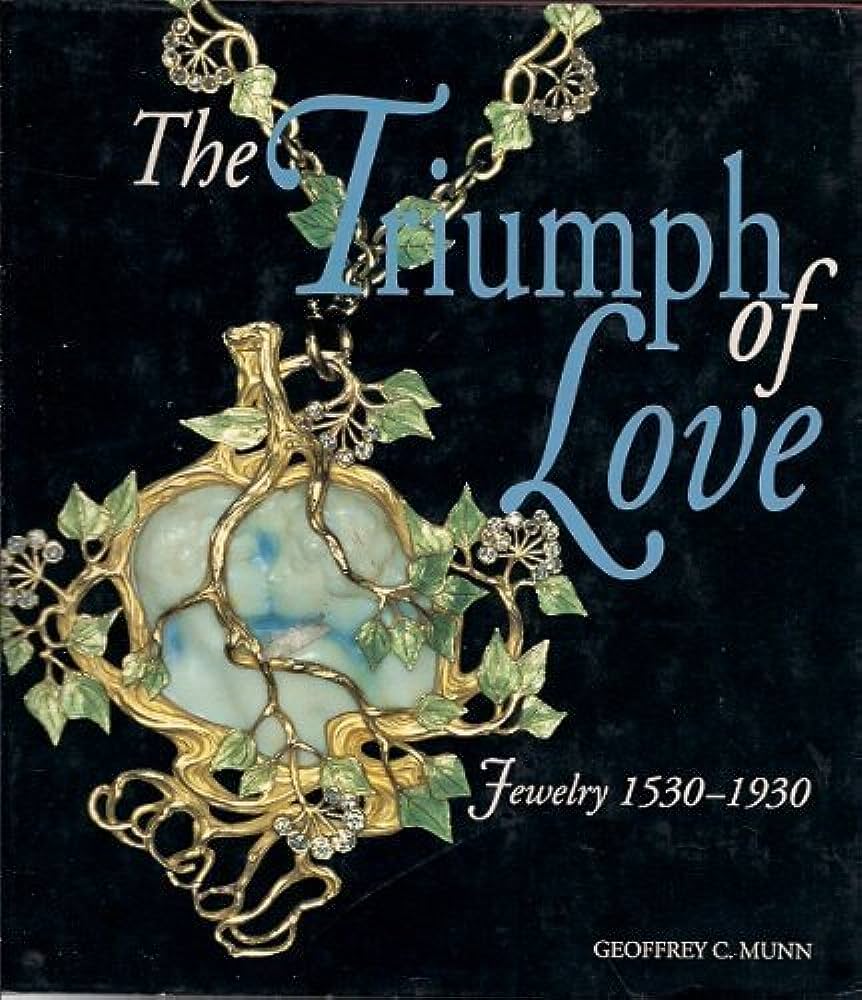
Today is Friday, September 1, and some people like to say “rabbit, rabbit” as their first utterance on the first day of the month, for good luck. Why not? Today is also the start of the Labor Day weekend, here in the US, and the official start day of my retirement. The party my kids planned for the occasion took place last Saturday, and it was so much fun! Many old friends came, including the only two people I knew in this whole state when we moved here from the Northeast, other than my husband, and two dear friends who flew in for the occasion. My lovely husband gave me a book about jewelry by Geoffrey Munn, one of our favorite experts on the UK “Antiques Road Show”, called “The Triumph of Love.” I’m truly blessed!
The Triumph of Love; Jewelry 1530-1930; by Geoffrey Munn.
The fragrance I chose to wear was new to my collection, which felt right for starting a new phase of life. It is Widian’s Rose Arabia Lily, launched in 2019. I got it this past February in Barcelona, on my visit to The Perfumery (a must if you are looking for niche fragrances in Barcelona, but you have to make an appointment). Notes listed by the brand are: Mandarin orange, bergamot, lemon, pink pepper; lily of the valley, ylang-ylang, carnation, tiare; ambergris, musk, vanilla, patchouli. It is beautiful and long-lasting.
The weather has improved here, after the super blue moon, but it’s still quite warm. The breeze helps, and it is much better than the temps of 98 degrees with 50+ percent humidity we had earlier in August. I think I’ll still be wearing my refreshing Hermès Jardin fragrances for a while. We don’t have any plans for Labor Day other than to relax, and maybe see the “Barbie” movie. Now I’m making a list of all the places I want to visit in London on our upcoming trip! I’m aiming for a mix of old favorites I haven’t seen in a while, and new experiences. All suggestions are welcome!
Please remember to come back on Monday, when Portia Turbo and I will be posting our “Notes on Notes” for the first Monday of the month. Have a great weekend!