Notes on Notes: Rose

Notes on Notes: Rose

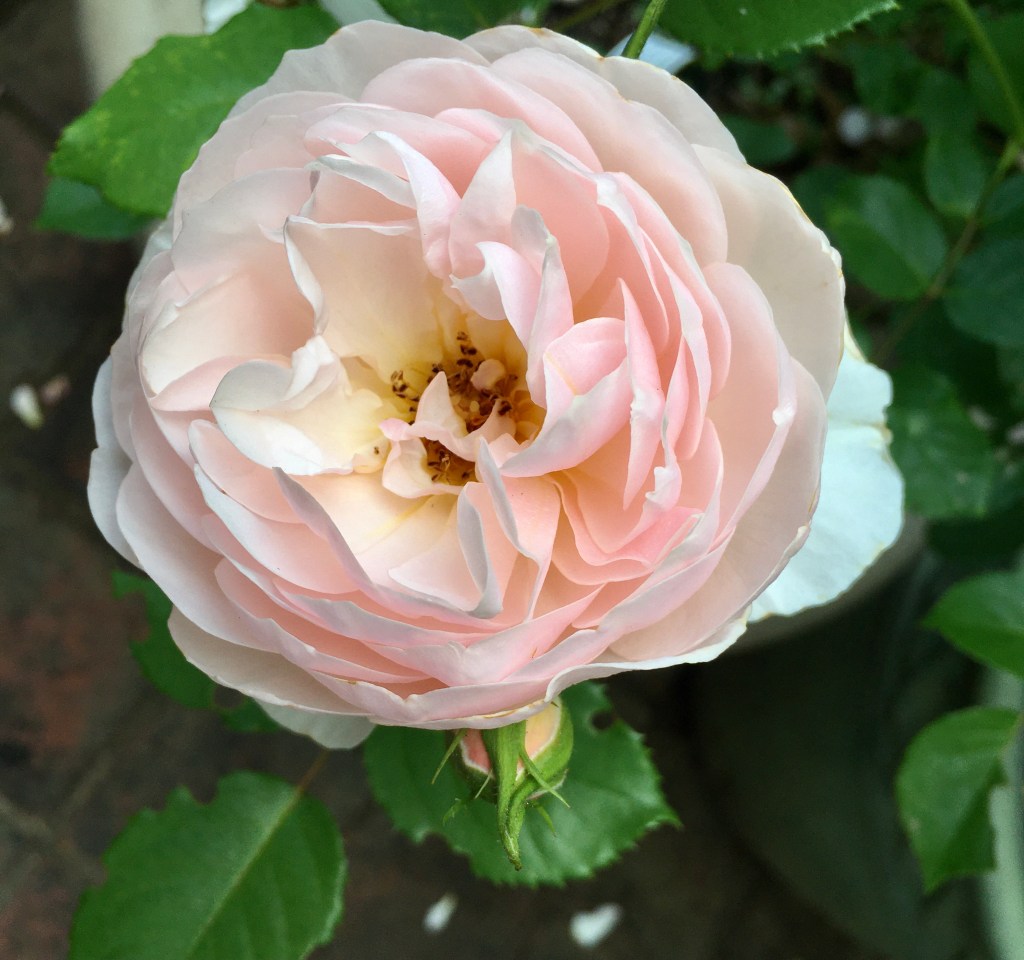
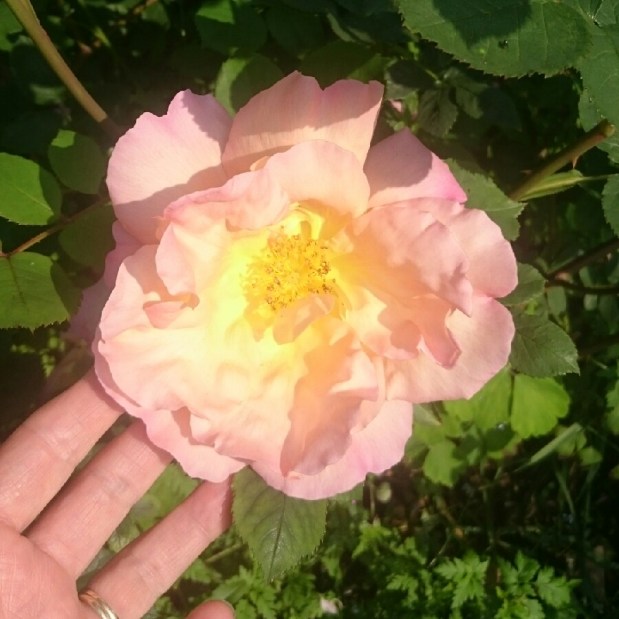
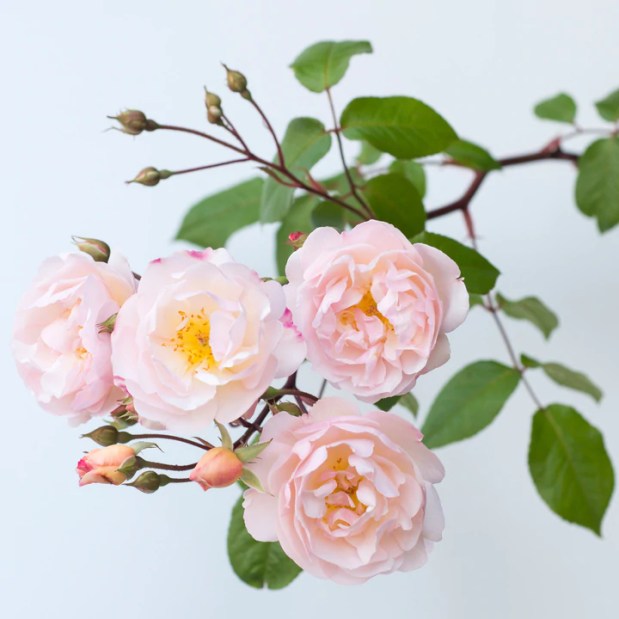
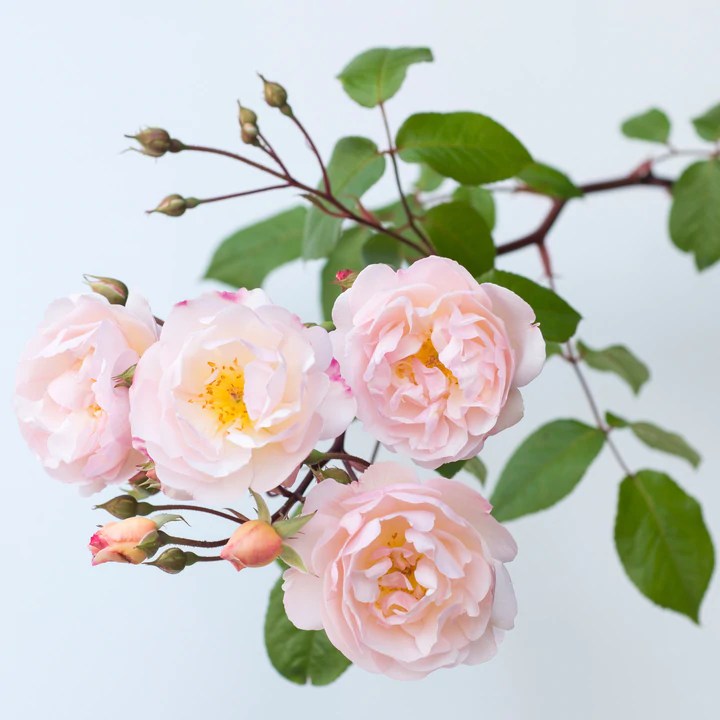
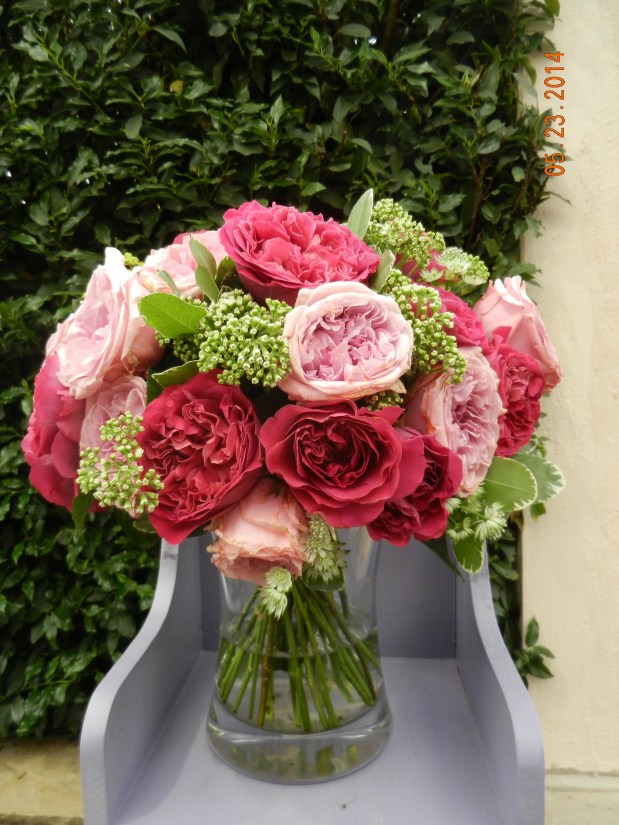
Ah, roses. As you may imagine (and regulars here know), with a pen name like Old Herbaceous, it is likely that I love roses. And I do – especially the highly fragrant English Roses hybridized by the late David Austin. As of last count, I am growing 14 of them, mostly in large pots. I’ve even visited the amazing display by David Austin Roses at the RHS Chelsea Flower Show! One rewarding aspect of seeing many varieties together in real life is that one can appreciate the different scents they emanate, as well as their different shapes and colors. Below are some photos from my terrace:
The fragrance of roses is actually a very complex ballet of many different molecules. As the American Rose Society notes, different varieties can smell quite different from each other, though recognizably and undeniably “rose”. According to ARS and the website Flower Power, “Rose scents fall into seven distinct categories. They are: rose (or damask), nasturtium, orris (which is similar to violets), violets, apple, clove and lemon (the fruit, not the blossoms). There are also twenty-six other less common aromas that can be discerned. Among them are: honeysuckle, moss, hyacinth, honey, wine, marigold, peppers, parsley, and even fruity raspberry.” These different nuances present an irresistible opportunity to perfumers: they can create endless variations by emphasizing one facet or another of a rose accord’s complicated structure. The Perfume Society says that rose is a note in at least 75% of traditionally feminine fragrances and at least 10% of traditionally masculine fragrances. While many perfumistas dislike rose notes in perfume, it may be that they haven’t found the right rose yet, since there are so many, varying widely from the classic rose-scented soap your older relatives may have used. In fact, one of my favorite perfume houses focuses almost entirely on rose-centered fragrances: Les Parfums de Rosine, founded by the late Marie-Helène Rogeon.
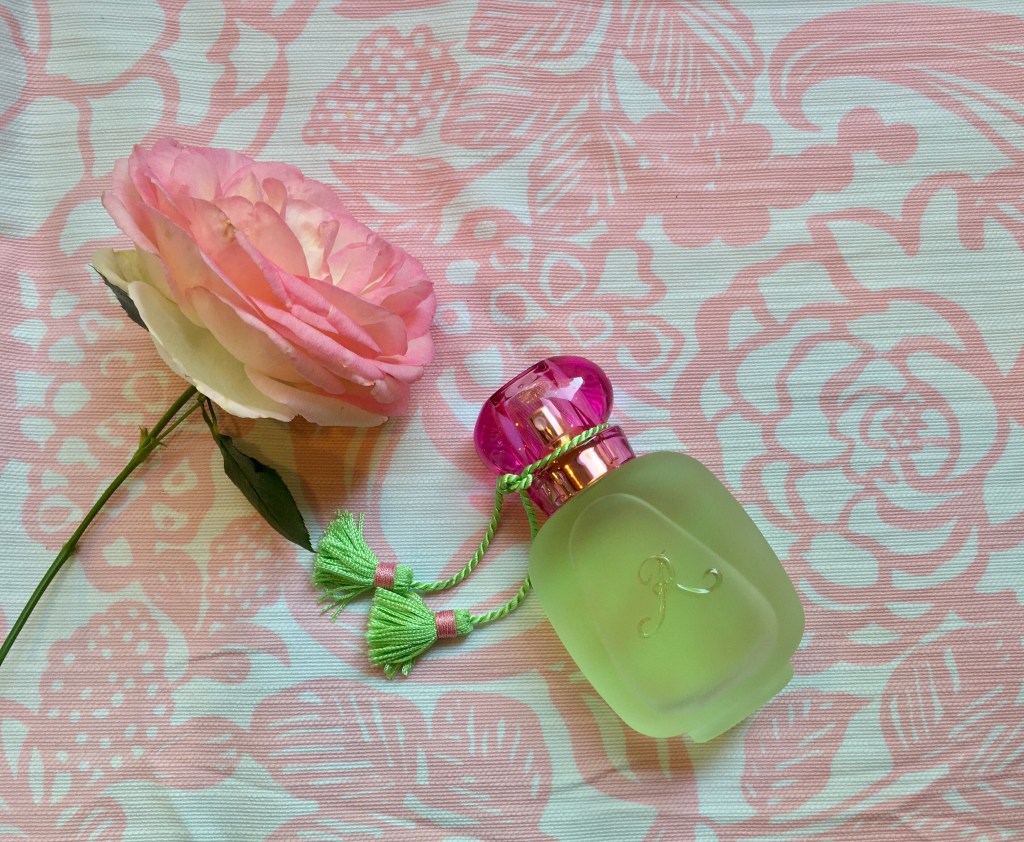
Clair Matin, Les Parfums de Rosine

I’ve written about many of the rose fragrances I own in past years’ “Roses de Mai Marathon”, but this month I have some new ones with which to illustrate “rose” as a note in fragrance. The newest in my collection is The Coveted Duchess Rose, from Penhaligon’s “Portraits” collection and created by perfumer Christophe Raynaud. It is an eau de parfum that Fragrantica classifies as an “amber floral”. I think that’s a misnomer; the “amber” quality is due to a vanilla accord which, oddly, isn’t listed as a note on Fragrantica but is listed on the brand’s website. Other notes are Rosa centifolia (one of the varieties most used in perfume), mandarin orange, musk, and “woody notes.” The mandarin orange note opens the fragrance, which quickly pivots to a beautiful, fresh, classic rose accord. As it dries down, Duchess Rose gets warmer and muskier in a soft progression toward its base notes. The rose accord is evident throughout, but the vanilla becomes an equal partner in its dance after a couple of hours. One of the things I like about this fragrance is that it starts out very dewy and fresh, because of the mandarin orange, then slowly warms up, with the floral aspect strongest in its heart phase. It reminds me of a sunny English summer day, dawning cool and fresh, the light becoming stronger as the sun rises, then warming into late afternoon.

Probably the most unusual new rose fragrance in my collection is Miguel Matos’ Miracle of Roses, which comes as an extrait. I was able to try it and buy it this spring in Barcelona, at The Perfumery (if you get a chance, do go visit this wonderful shop with its many niche and artisanal perfumes!). It is named for a legend about St. Elizabeth of Portugal, a medieval queen. M. Matos tells the story:

“Elizabeth was born in Zaragoza, Spain in 1271, she was the daughter of Peter III of Aragon and was married off to King Denis of Portugal in 1282. Throughout her life, Elizabeth demonstrated a great compassion to the poor and legend says she would leave the palace in disguise, in order to take food for the less fortunate.

The Miracle of Roses happens one day when the king discovered that Elizabeth was leaving the palace to take food to the poor. This is something that the queen had been forbidden to do. The king had threatened to lock her up and she was to never leave the palace again if the disobeyed. Despite this, the Queen never stopped feeding the poor and every day she would leave the palace and help her people.

One winter day, Elizabeth left the palace carrying pieces of bread hidden in her dress. As the King saw her going out, he asked, “What you are carrying?” She answered, “Roses, my lord.” As it was winter and roses were nowhere to be found at the time and in that cold weather, he demanded her to show him what she was carrying. When the queen unfolded her dress, roes fell on the floor.

The transformation of bread into roses is a miracle attributed to St Elizabeth of Portugal, a woman that set an example for devotion to God and kindness to her people. After the death of her husband in 1325, she entered the Santa Clara a Velha Monastery in Coimbra where she lived until 1336, when she passed. Pope Urban VIII canonized her in 1625.”

Miracle of Roses opens with a combination of cinnamon, bread, and milk. Yes, it really does smell of bread and milk, both of which are associated with kindness and charity. The next stage is where the rose makes its first appearance, accompanied by heliotrope, immortelle, and iris. The rose is not dominant, it is equaled here by the other flowers. The base notes are frequent “collaborators” with rose accords in fragrance: sandalwood, honey, incense, and woody notes. Miracle of Roses is a beautiful, slightly eccentric fragrance that is unlike any others I own. In fact, in future wearings I may add a drop on my wrist of the gorgeous attar of Taif roses that my husband bought for me in Dubai, to amp up the rose accord (don’t tell Miguel).
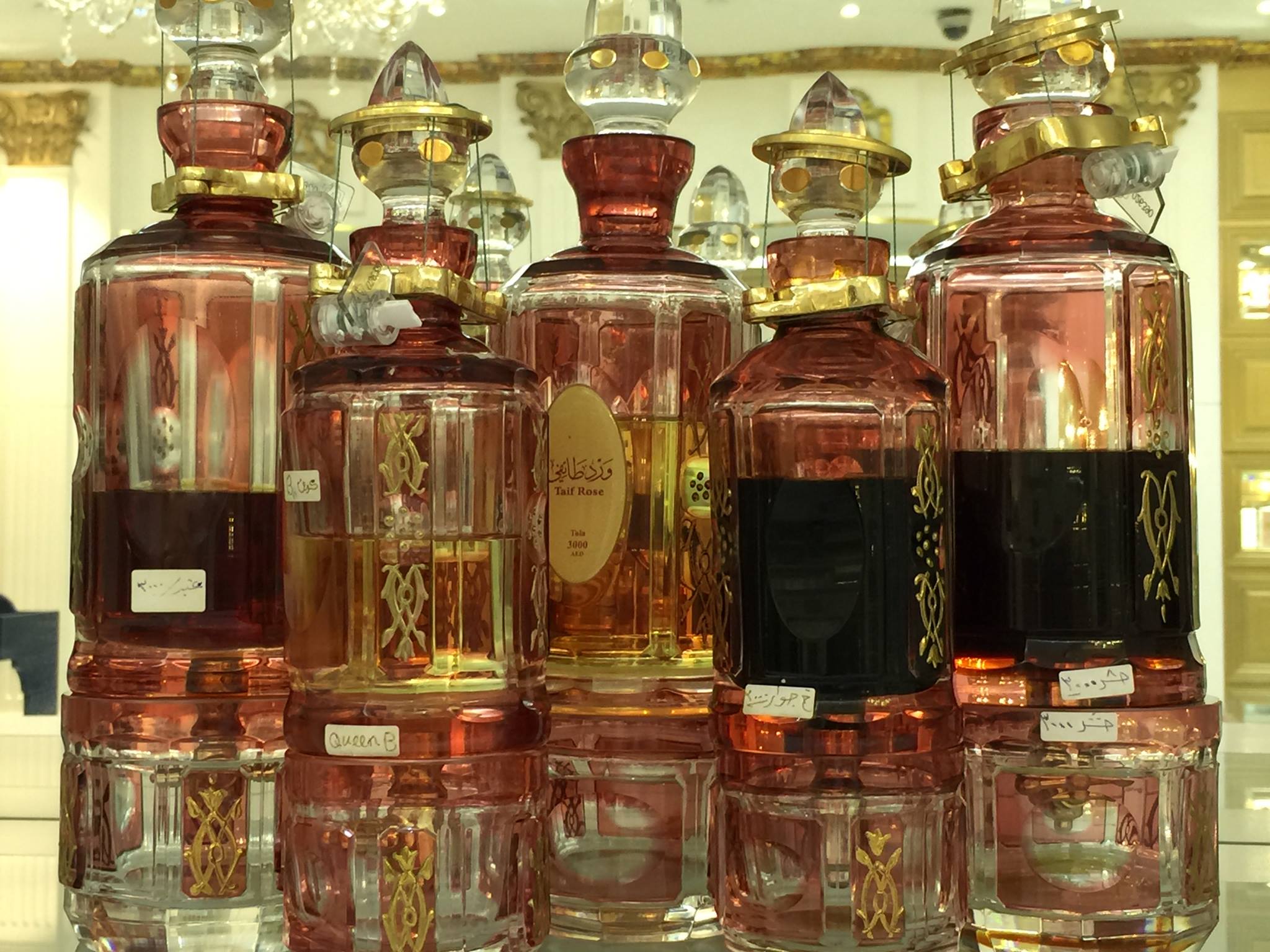
Speaking of Taif roses, the third rose fragrance I’ll use to discuss the note is Perris Monte Carlo’s Rose de Taif, an eau de parfum created by perfumer Luca Maffei; it is also available as an extrait. It is an aromatic, spicy rose, with herbal nuances. Fragrantica lists its notes as: geranium, lemon and nutmeg; middle note, Taif rose; base notes, damask rose and musk. Geranium and lemon are also common companions for roses in fragrance; they share some of the same molecules like geraniol. Not surprisingly, Rose de Taif smells a bit like a scented geranium, and less fruity than some rose-based fragrances. It is a far cry from the rose soaps that turned many people against rose in fragrance! It is clearly still a rose-centric fragrance, but it has a modern flair. As proof of that, my son’s very chic college girlfriend was at our house recently when I was wearing Rose de Taif for this blog post. She immediately sniffed the air and asked what smelled so great. I feel seen! Or smelled. The modern, spicy nuances of Rose de Taif also make it an ideal unisex fragrance, especially for men who may tend to avoid sweeter, more flowery rose scents. There are many great rose fragrances targeted to men these days, but I don’t see any reason why any man couldn’t wear whatever rose fragrance appeals to him, no matter who is the target customer.

Finally, Attar de Roses by Keiko Mecheri. My bottle has gone off a bit, so I get a sort of fermented rose smell when I first spray it, but that evaporates in seconds and becomes a lovely, warm, woody rose. It has been discontinued, so the brand’s website no longer lists it. According to Fragrantica, its notes include: Taif, Shiraz and Ancienne roses, jasmine, warm, woody notes, amber and leather. Jasmine is another classic rose companion in fragrance, famously paired with rose accords in perfumes like Chanel No. 5 and the late, great Joy by Jean Patou. Here, I barely detect it; the woody notes, which smell to me like sandalwood, are more evident to my nose. Although Attar de Roses is labeled as eau de parfum, I think it must have a high concentration of fragrance oil, because I can see it as a moist patch on the back of my hand where I sprayed it, long after that first spray. It stays rose-focused throughout its development in an almost linear fashion, which I appreciate when I’m in the mood.

Bringing us back to the garden aspects of rose fragrances, I actually found a scented geranium this year called – “Attar of Roses.” By golly, when you rub its leaves, it really does smell like a rose! Most scented geraniums smell like citronella or lemongrass to my nose. I like them, but I did a double-take when I smelled this one. So of course I bought it on the spot, and it is sitting in its own, smaller pot on the terrace where I grow my English Roses. I rarely bring tender plants inside to nurture over the winter and try to bring back in the spring, but I may have to make an exception for this one.

Rose fragrances tend to elicit strong feelings, as far as I can tell. Do you love or loathe rose fragrances, or do you have mixed reactions? Please add your thoughts in the comments – just remember that a fragrance you dislike may be another reader’s long-time favorite, so as always, please try not to give or take offense! Also, go see what Portia has to say, over at Australian Perfume Junkies. And Happy Fourth of July to my fellow Americans!

Notes on Notes logo
Notes on Notes; image by Portia Turbo.
Not my garden! Isola Bella, 2022
Perfume Chat Room, March 31

Perfume Chat Room, March 31

Welcome to the Friday Perfume Chat Room, perfumistas! I envision this chat room as a weekly drop-in spot online, where readers may ask questions, suggest fragrances, tell others their SOTD, comment on new releases or old favorites, and respond to each other. The perennial theme is fragrance, but we can interpret that broadly. This is meant to be a kind space, so please try not to give or take offense, and let’s all agree to disagree when opinions differ. In fragrance as in life, your mileage may vary! YMMV.

Today is Friday, March 31 — is your March “going out like a lion”? I think our weather lion has already left the building, though I risk jinxing us by saying so. We had low temps of 40 degrees F earlier this week, and tomorrow it’s supposed to approach 80 degrees. My plants are so confused. I still have daffodils coming up, but my lilies of the valley and roses are also now starting to bloom. One David Austin rose in particular is so fragrant as well as beautiful! It’s called “Fighting Temeraire”, after a famous painting, and it has a strong fruity rose fragrance that carries. This is one of the reasons I love David Austin’s English Rose hybrids — not only are they beautiful, in many colors, but they were bred and selected to be highly fragrant.

David Austin English Rose "Fighting Temeraire"; image from www.gardentags.com
David Austin English Rose “Fighting Temeraire”; image from http://www.gardentags.com

Yes, this rose’s blossoms really are that big! Speaking of fragrance and spring, Portia and I will resume our collaboration on Monday, now that we’ve both returned home from travels, with “Notes On Notes” (first Monday of each month) and “Counterpoint” (third Monday of each month). I’ll give you a hint: the note we’ve chosen for April appears in many green fragrances. Please join us!

I just got in the mail a sample of Parfums Dusita’s new fragrance; she’s running another contest to name it, on the Eau My Soul Facebook page. Are any of you taking part? I haven’t even sniffed it yet, but I’m looking forward to it.

Perfume Chat Room, September 9

Perfume Chat Room, September 9

Welcome to the weekly Perfume Chat Room, perfumistas! I envision this chat room as a weekly drop-in spot online, where readers may ask questions, suggest fragrances, tell others their SOTD, comment on new releases or old favorites, and respond to each other. The perennial theme is fragrance, but we can interpret that broadly. This is meant to be a kind space, so please try not to give or take offense, and let’s all agree to disagree when opinions differ. In fragrance as in life, your mileage may vary! YMMV.

Today is Friday, September 9, and the news is full of yesterday’s passing of Queen Elizabeth II, at the age of 96. There are many other places to debate the future of the monarchy, the British Empire’s impact, etc. This is not that place, as I know how widely opinions vary on those subjects. Today, I am focusing on Her late Majesty as a unique human being, who was born to privilege but also to lifelong service, including her unexpected ascension to the throne at the age of 25. At her birth, she was not expected to become the monarch but was thrust into the role of royal heir when her uncle abdicated, leaving her father to become King. He and her mother were models of duty and service — before, during and after World War II — and the young Elizabeth absorbed those lessons fully, performing official duties from her childhood until two days before her death, when she welcomed and appointed the UK’s new Prime Minister, Liz Truss. Extraordinary. (Ok, one political side note: I’m glad she lived long enough to see the changes in leadership in the USA and the UK, given the markedly poor manners of the two former leaders).

Full disclosure: I was raised by an English mother who, although she chose to leave England and its post-war constraints when she herself was in her early 20s, kept a high regard for Queen Elizabeth, her contemporary, and even identified with her as the older of two sisters, engrained with that sense of responsibility and duty. Her younger sister, my late aunt, had a personality more like Princess Margaret’s, but they were devoted to each other until my aunt’s early death from cancer in her 40s.

Bringing it back to fragrance, I’ve read that Queen Elizabeth’s favorite fragrances were Guerlain’s L’Heure Bleue and Floris’ White Rose. I haven’t tried the latter, but I have and love L’Heure Bleue. I also have a new fragrance that had already reminded me of Elizabeth, and will now be forever linked to her in my mind: Miller Harris’ Violet Ida. I received it earlier this month as a birthday gift, and it is lovely! As regular readers here know, Miller Harris is an English brand founded by London perfumer Lyn Harris. Violet Ida is actually based on iris and heliotrope, with top notes of bergamot and carrot seed, and base notes of vanilla and amber. It was inspired by the heroine of an English novel, whose name was Ida, whom the Miller Harris says “represents goodness, tenacity and morality.” That does seem appropriate for the late Queen as a person; and the pale violet color of Violet Ida‘s bottle evokes one of the pastel shades she favored in her public outfits.

Queen Elizabeth II in lavender
Her late Majesty Queen Elizabeth II

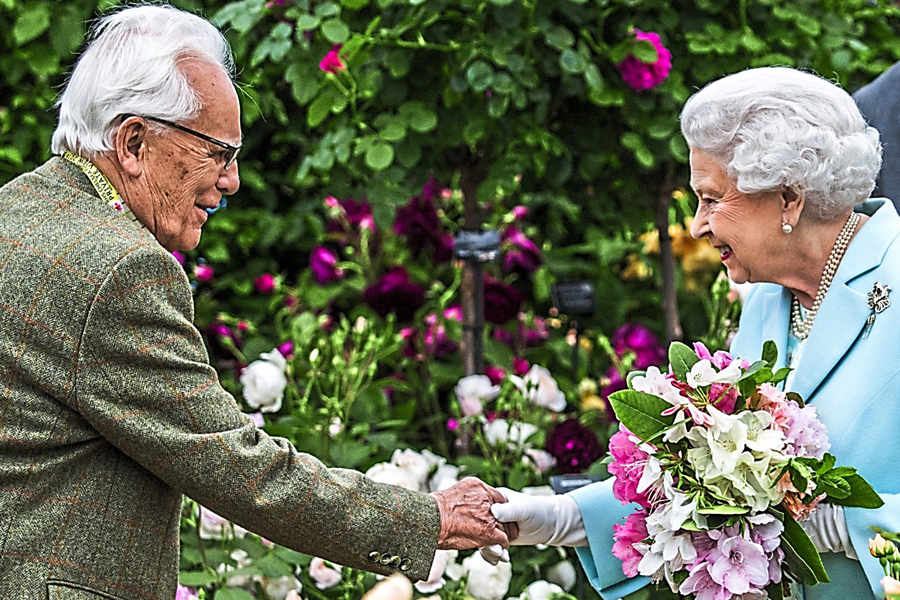
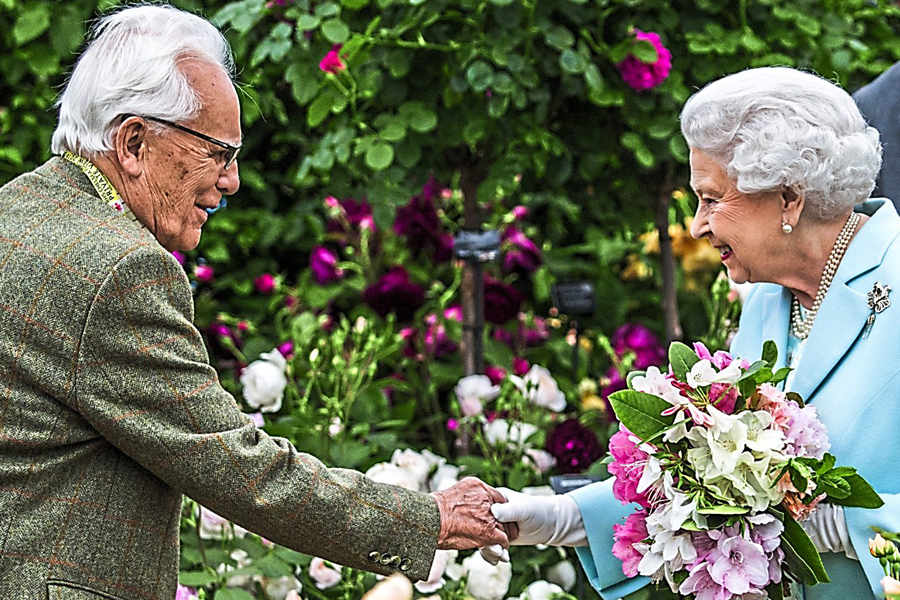
It always made me foolishly happy that the Queen had such a lovely meeting with the late rosarian David Austin, the year they both turned 90, at the Chelsea Flower Show and the display of his gorgeous English Roses, my favorites. I will think of this great lady when I wear Violet Ida. Rest in peace, Elizabeth, and may flights of angels sing thee to thy rest.

Queen Elizabeth II and David Austin at the Chelsea Flower Show

Perfume Chat Room, April 29

Welcome to the weekly Perfume Chat Room, perfumistas! I envision this chat room as a weekly drop-in spot online, where readers may ask questions, suggest fragrances, tell others their SOTD, comment on new releases or old favorites, and respond to each other. The perennial theme is fragrance, but we can interpret that broadly. This is meant to be a kind space, so please try not to give or take offense, and let’s all agree to disagree when opinions differ. In fragrance as in life, your mileage may vary! YMMV.

Today is Friday, April 29, and Monday is another “Scent Semantics” posting day! The word of the month, chosen by Portia, is a secret until then, so check back next week!

My roses are in full bloom this week and wow, do they smell gorgeous. I’ve posted some photos on my Instagram account.

Thanks to a timely post on Eau My Soul, I bought a very discounted bottle of Shalimar Philtre de Parfum from Costco, which sometimes has great deals on high-end fragrances. I’m very happy with my blind buy, which wasn’t completely blind because I had read that it was reminiscent of Shalimar Eau de Cologne, which I enjoy very much. Indeed it is, though not identical. For one thing, Philtre is an eau de parfum, and it definitely lasts longer. Below is the review of Shalimar Eau de Cologne I posted on Fragrantica some years ago, and I stand by it:

Happy happy happy! I have tried Shalimar EDP several times in department stores, and just didn’t like it. I recognized its quality and its legendary status but it was too heavy, too sweet, too strong, too old-fashioned. Every single time. Then I found Shalimar Eau de Cologne on sale for 24.99 at CVS, read the reviews here on my smartphone and thought, what the hell — let’s do this. So I did. I love it! This version is just yummy without being sweet. I get the vanilla, I get the smoke, I get the cedar, I get the leather. Shalimar EDC is luscious but light. Classic but not stuffy. I am just so pleased with this.

I would say that Philtre has more citrus, and less smoke and leather. It lasts all day (12+ hours) on my skin. I think the tolu balsam base note is a great touch; it adds depth and warmth.

At risk of setting off a torrent of verbiage, do you have a favorite version of Shalimar?

Perfume Chat Room, April 15

Perfume Chat Room, April 15

Welcome to the weekly Perfume Chat Room, perfumistas! I envision this chat room as a weekly drop-in spot online, where readers may ask questions, suggest fragrances, tell others their SOTD, comment on new releases or old favorites, and respond to each other. The perennial theme is fragrance, but we can interpret that broadly. This is meant to be a kind space, so please try not to give or take offense, and let’s all agree to disagree when opinions differ. In fragrance as in life, your mileage may vary! YMMV.

Today is Friday, April 15, and it is Good Friday in my own faith tradition, as well as the start of Passover in Judaism. April 15 is also usually the deadline for filing tax returns, but because it falls right before Saturday this year, the deadline is extended to Monday, April 18. I’m such a procrastinator that there was one year (many years ago) when I actually had to go to the main Post Office in Manhattan, which stayed open until midnight, to mail my return and have it postmarked by April 15. To be honest, it was kind of a festive atmosphere, like a convention of procrastinators, complete with news crews filming and broadcasting our disgrace. My wonderful husband has handled our taxes since we got married, with help from an accountant, which makes sense since he has an MBA. My eyes glaze over when I have to look at too many numbers, lol!

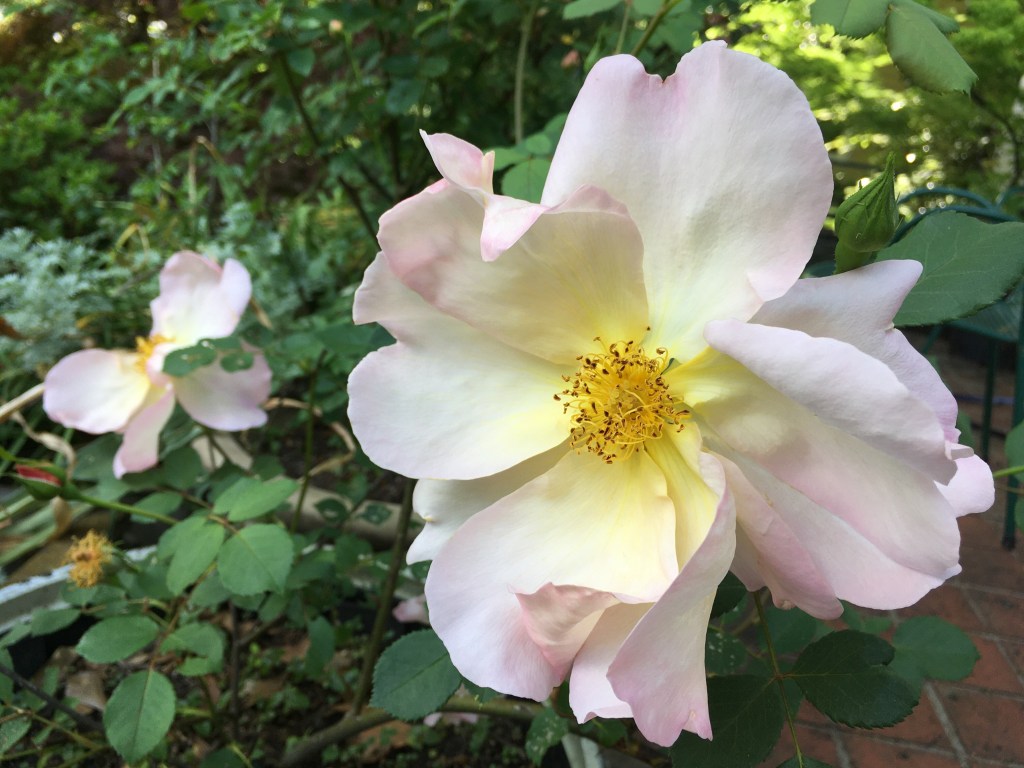
I have so many fragrant flowers in bloom right now! Dwarf lilacs, lilies of the valley, and the first rose blossoms are filling the air with perfume, and I am eagerly waiting for my Easter lilies to bloom (I love Easter). I have a new David Austin English Rose called “Lady of the Lake”; it is just lovely. Pale pink with a yellow eye, and very fragrant (as all his roses are). It’s making me want to break out my rose fragrances, of which I have many, but it’s too soon for another “Roses de Mai Marathon.” What fragrances are calling your name these days?

Pink rose Lady of the Lake, a David Austin English Rose
Lady of the Lake rose by David Austin; image from davidaustinroses.com
Perfume Chat Room, April 16

Perfume Chat Room, April 16

Welcome to the weekly Perfume Chat Room, perfumistas! I envision this chat room as a weekly drop-in spot online, where readers may ask questions, suggest fragrances, tell others their SOTD, comment on new releases or old favorites, and respond to each other. The perennial theme is fragrance, but we can interpret that broadly. This is meant to be a kind space, so please try not to give or take offense, and let’s all agree to disagree when opinions differ. In fragrance as in life, your mileage may vary! YMMV.

Today is Friday, April 16, and spring flowers are slowly giving way to summer blossoms in my garden. I have several roses that have started to bloom; they are almost all very fragrant, as most of the ones I grow are David Austin English Roses, which he hybridized over decades to regain the strong scent and old-fashioned form of the Old Roses. In the 20th century, many hybridizers bred for color and shape, which gave us so many beautiful, classic hybrid tea roses like Chrysler, John F. Kennedy, Peace, etc., but they weren’t as fragrant as their forebears. Other hybridizers bred roses for large-scale landscaping, like the Knockout Roses, but they are barely fragrant at all. So Mr. Austin’s goal was to take some of the best qualities of 20th century roses, like disease resistance, innovative colors, and repeat blooming periods, and marry them to the shapes and scents of old classics like the “Old Roses”.

This week, I was delighted to get in the mail my long-awaited sample of a new, soon-to-be-released perfume from Parfums Dusita, which is the subject currently of a naming contest! Perfumer and brand founder Pissara Umavijani invited members of the Eau My Soul group on Facebook to suggest perfume notes we’d like to see combined, then she chose from among those and created a fragrance. Now members who took part in suggesting the notes have been sent a generous sample of the unnamed fragrance and we get to submit up to three suggestions for names! The winner will get a large bottle of the fragrance.

I just love this project. Ms. Umavijani has done something like it before in 2019, when she launched what became Splendiris, a name I love and a very beautiful fragrance. I think that fragrance was the subject of a similar contest for readers of Fragrantica, if I recall correctly.

This new scent has notes of: petit grain, Rose Damascena, tuberose absolute, white freesia, Jasmine Grandiflora, oak wood, oakmoss absolute, sandalwood, vanilla absolute, and patchouli. I haven’t tried it yet as I wanted to wait until the weekend when I could focus more on it and less on work. Don’t those notes sound gorgeous, especially if (like me) you like florals?

P.S. WordPress has just informed me that this is my 500th post on Serenity Now: Scents & Sensibilities! Wow, that feels like a lot, but it has been so much fun and still is. Thanks for joining me on this blogging journey!

Fragrance Friday: RIP, David Austin

Fragrance Friday: RIP, David Austin

One of the giants of horticulture died this week: David Austin, OBE, creator of the “English Roses.” What does this have to do with fragrance, you ask? One of Mr. Austin’s major goals in hybridizing roses was to reinstate the powerful fragrances of “old roses” into modern roses with some of the best traits of newer rose hybrids: disease resistance, repeat bloom, a wider range of colors. And he succeeded, probably even beyond his own dreams, in creating “the perfect garden worthy rose that combines beauty, fragrance, repeat-flowering ability and good disease resistance with great charm – the quality his English Roses are most renowned for.” As he wrote in his book The English Roses, he had one preeminent objective, “… that we should strive to develop the rose’s beauty in flower, growth and leaf.” Of fragrance: “[It] may be said to be the other half of the beauty of a rose”.

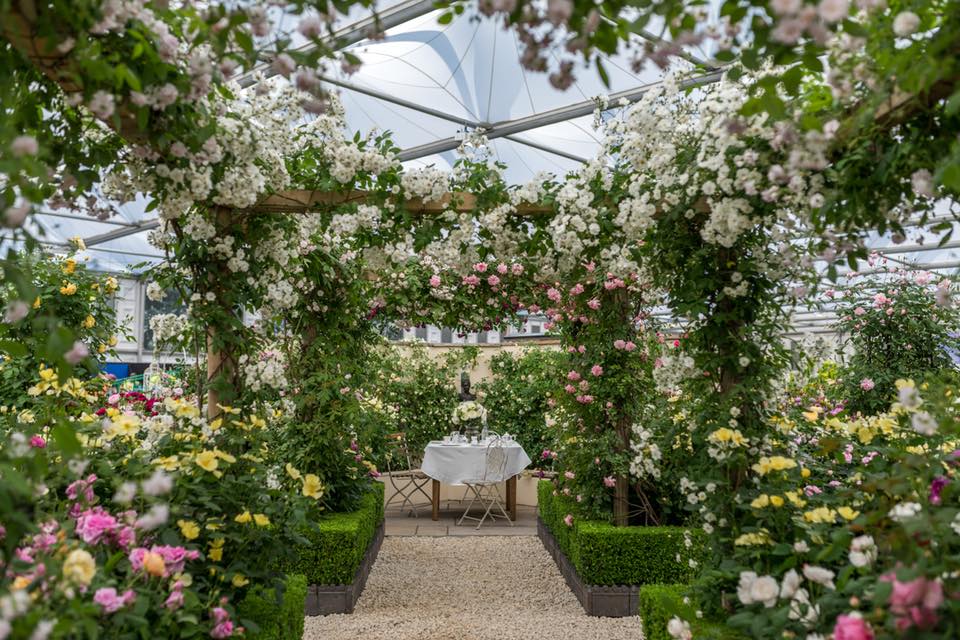
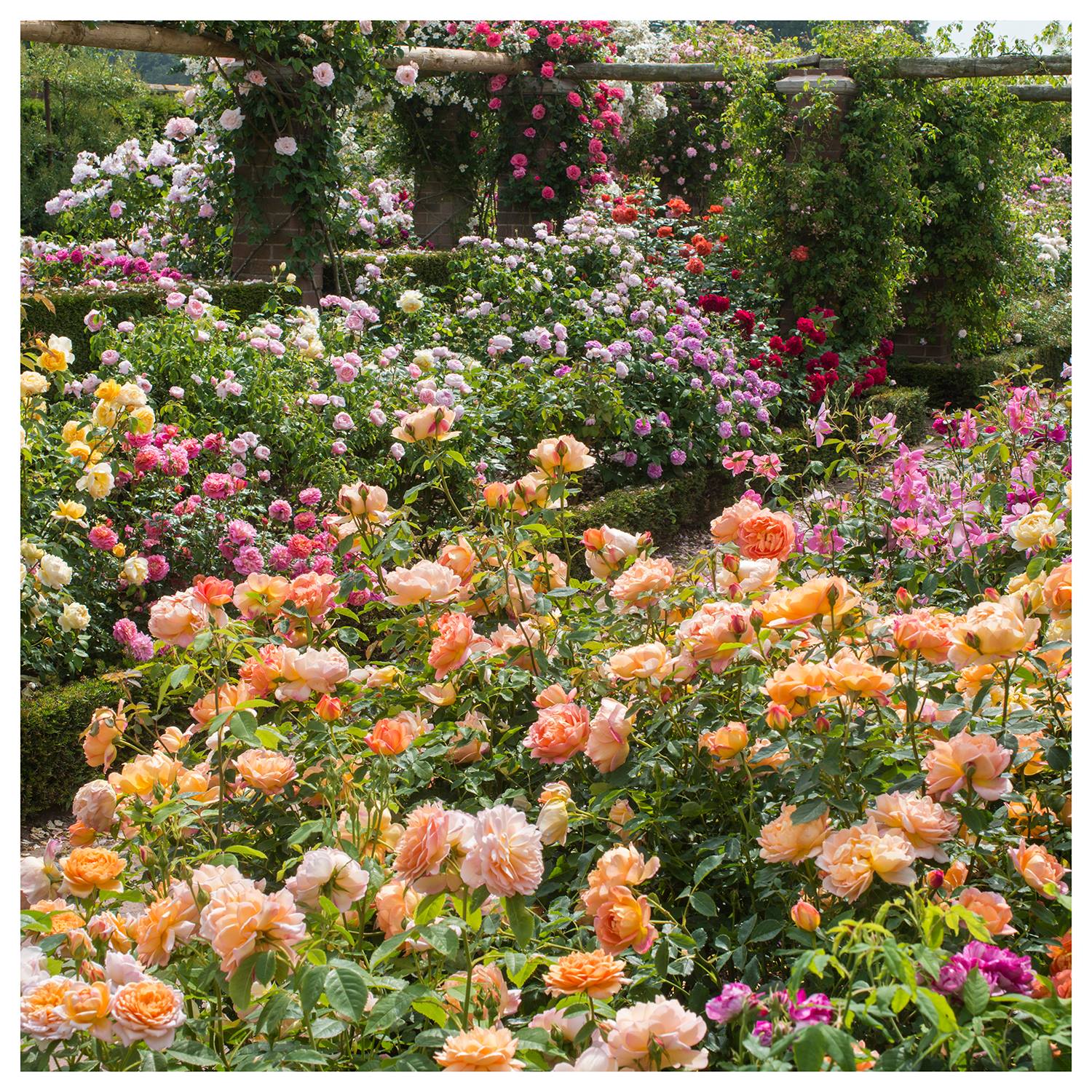
Mr. Austin’s English Roses won 24 gold medals at the RHS Chelsea Flower Show, the greatest flower show on earth. I’ve been privileged to visit that show twice, and the David Austin Roses display was always glorious!

David Austin Roses display at RHS Chelsea Flower Show, 2018

David Austin Roses display at RHS Chelsea Flower Show, 2018

When he was awarded the Order of the British Empire (OBE) in 2007 for his services to horticulture, he said “Every day, I marvel at my good fortune to have been able to make a life out of breeding roses. My greatest satisfaction is to see the pleasure my roses give to gardeners and rose lovers around the world”. What a legacy to leave! Legions of lovers of the English Roses included H.M. Queen Elizabeth II, who visited his displays at Chelsea:

David Austin and Queen Elizabeth II, display of English Roses at the RHS Chelsea Flower Show

David Austin showing Queen Elizabeth his English Roses at Chelsea; image http://www.davidaustinroses.com.

I grow some of his roses, although I have to choose carefully which ones, as my gardening climate is more hot and humid than they prefer. But I have had some gorgeous blossoms from them, and whenever I cut a few and bring them indoors, they scent an entire room with true, beautiful rose fragrance. The company’s website says:

The English Roses are famous for the diversity and strength of their fragrances, with many varieties having won awards, both nationally and internationally, for their delicious fragrances which can be Old Rose, Tea, fruity, myrrh, musky or almost any mixture of these elements.

The website and catalog describe each rose’s fragrance in specific detail: one has a scent that is a mix of “tea, myrrh, and fruit”; another has a “strong, delicious Old Rose fragrance, often with overtones of strawberry.” There is an entire chapter in his book devoted to fragrance.

Nearly all the basic scents of the rose are to be found somewhere among English Roses and, as a rose of one scent is hybridised with a rose of another, new scent combinations become evident. So it is that we find one scent merging into another, as we move through the varieties of English Roses. I regard this as one of the greatest pleasures they have to offer us. One problem arising out of this great diversity of fragrances is the difficulty in describing them. It is rather like writing about wines; in fact, taste is, as we all know, very close to the sense of smell. We can but do our best, by means of classification and reference to other scents that most of us know. As with wines, there is the danger of sounding pretentious.

Wonderful! Mr. Austin also wrote with gratitude of benefiting from the expertise of Robert Calkin as a fragrance consultant. Mr. Calkin is the author of a classic text on perfumery, Perfumery: Practice and Principles, and apparently “a great lover of roses.” With his guidance, the English Roses are loosely grouped into these categories of fragrance: Old Rose, Tea Rose, Myrrh, Musk, Fruit, and “Myriad.” The latter prompted the following description:

Sometimes it seems as though the fragrance of all the flowers are to be found somewhere in English Roses. The scent of lilac is found in ‘Heather Austin’ and ‘Barbara Austin’; that of lily of the valley in ‘Miss Alice.’ The scent of peach blossom is found in a number of roses. Sometimes, as we cast hither and thither for a name for our fragrances, we refer to them in terms of the bouquet of wine or the fragrance of honey. Clove scent occurs in certain varieties, as, for example, in ‘Heritage’. Seldom are these comparisons exact. Not always can any two people agree on the right term, but this only adds to the many charms of English Roses.

Mr. Austin was clearly a gifted writer, and some of the tributes to him have noted his deep love of books. I’ve always been charmed by the names of the English Roses, so many drawn from English literature (“William Shakespeare”), places (“Winchester Cathedral”), history (“Fighting Temeraire”), and even horticulture (“Gertrude Jekyll”).

Online tributes are flooding in; this obituary aptly describes his contributions. I will just say that although I never had the pleasure of meeting him or being in communication with him, Mr. David Austin brought much joy to me through the beauty AND fragrance of his lovely roses. I hope that heaven had bouquets of them awaiting his arrival. May “flights of angels sing thee to thy rest,” Mr. Austin.

Beds of English Roses at David Austin Roses display, RHS Chelsea Flower Show 2018.

David Austin English Roses at Chelsea, 2018.


Fragrance Friday: David Austin Roses

I am predictably obsessed with a few things (fragrance being the newest obsession). One of those is gardens. Another is roses. Put together fragrance, and roses, and gardens, and I am in heaven. It should come as no surprise, then, that I adore David Austin’s English Roses. He has been carefully breeding them for decades and I am able to grow a few in my garden with its limited sunny spots, including two that are mentioned in the article: Lady of Shalott and The Generous Gardener. One of the key attributes for which David Austin selects seedlings for his breeding program is fragrance.

In The Romantic Quest of David Austin RosesVictoria magazine shares some of the roses’ secrets with some lovely photographs. Michael Marriott, the “senior rosarian” at David Austin Roses, explained that “a rose’s fragrance may be the result of a mixture of up to three hundred various oils, but that two or three of these combine to create the dominant scent… ‘In David Austin’s English Roses,’ he explains, ‘the mix will include, variously, Old Rose, Tea, Musk, Myrrh or Fruit. Other oils add important subtle nuances that give different roses distinctive, evocative notes of cucumber, lemon, blackberry, honey, cedar wood, and more.’”

Three hundred different oils that go into creating a real rose’s natural fragrance! I swoon at the thought. No wonder my many rose-based fragrances all smell different. Mr. Marriott found it hard to pick a favorite among the real roses: “’A fresh memory of scent and off I’ll go in another direction.’ For fragrance, though, he favors the classic Old Rose scent of Gertrude Jekyll, and the Buttercup, he says, “for its elusive, truly delicious and rather exotic perfume.’”

Right now I am enjoying my sample spray of Jo Loves White Rose and Lemon Leaves, and it may be the finalist for the gift certificate I received at Christmas. It lasts longer than many other fragrances by Jo Malone (the company AND the perfumer) and it really does evoke a white rose as opposed to a red one (I also have Jo Malone Red Roses).

Which white rose? David Austin has a new one: Desdemona. If I could find another suitable spot in my small garden, I’d find one for her. As it is, I will have to make do with a much smaller bottle of perfume!

White English rose by David Austin, Desdemona

David Austin Rose Desdemona; photo http://www.davidaustinroses.com


Swoon.

Close your eyes and imagine… You walk inside a castle and are drawn to a doorway by a lovely scent that gets stronger with each step. You enter the room. Fragrance envelops you — a complex, rose scent with hints of citrus and spice, raspberry and vanilla. A field of David Austin Wedding Roses —…

via Experience David Austin Roses With All Your Senses, at Fleuramour — DAVID AUSTIN ROSES USA

Fragrance Friday: June and Roses

Fragrance Friday: June and Roses

June is National Rose Month and, just in time, the New York Times has published this: In Fragrance, Rose is the New Unisex. I love roses — flowers and fragrance — almost as much as I love lilies of the valley. More, in some ways, as the flowers of roses are so varied, much more than lilies of the valley.

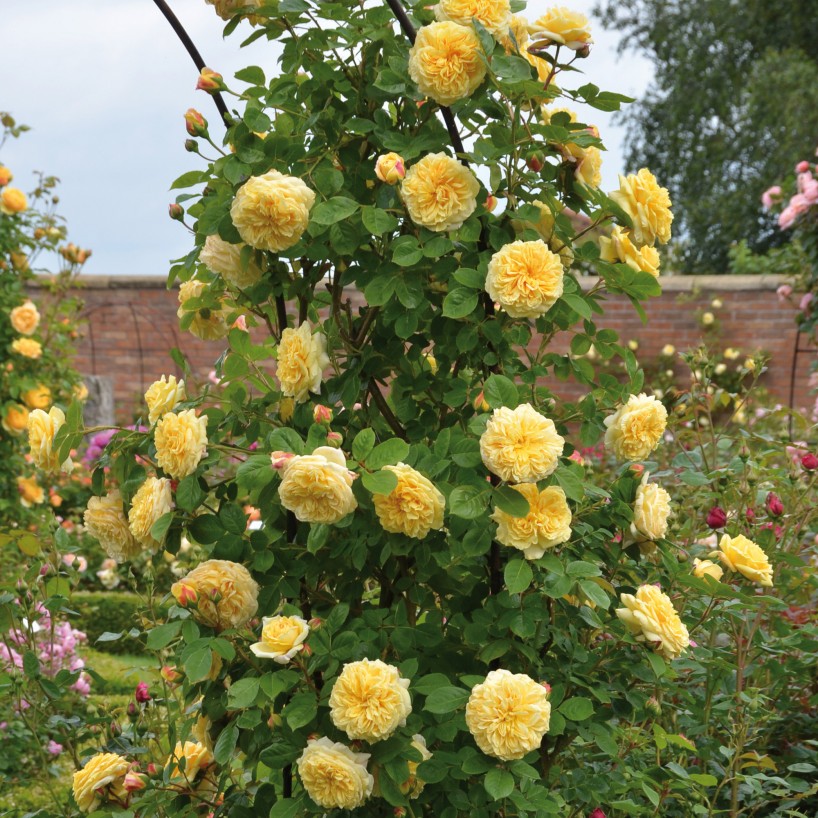
David Austin of England, pictured above meeting HRH Queen Elizabeth II at the Royal Chelsea flower show (where he won another gold medal at the age of 90), is a giant in the world of roses. He began his ambitious rose hybridization program decades ago, to bring back to modern roses the strong fragrances and softer shapes he knew from the roses of prior centuries. David Austin English Roses are the happy result — and they do make me happy! I can only grow a couple in my mostly shady, hot and humid Southern garden but they live up to their reputations as highly fragrant, beautiful roses. The one that does best for me is “Teasing Georgia”, a soft yellow rose I grow on a metal obelisk structure.

Yellow climbing English rose Teasing Georgia, by David Austin Roses, grown on a pillar.

“Teasing Georgia” rose; photo from David Austin Roses.

Mine isn’t quite as glamorous as this but it comes close! It has a strong tea rose fragrance.

There is one perfume house that specializes in rose-based perfumes: Les Parfums de Rosine. From the website: Continue reading