Welcome to the weekly Perfume Chat Room, perfumistas! I envision this chat room as a weekly drop-in spot online, where readers may ask questions, suggest fragrances, tell others their SOTD, comment on new releases or old favorites, and respond to each other. The perennial theme is fragrance, but we can interpret that broadly. This is meant to be a kind space, so please try not to give or take offense, and let’s all agree to disagree when opinions differ. In fragrance as in life, your mileage may vary! YMMV.
Today is Sunday, September 28, and we’re having a mix of weather this week before the possible arrival of tropical storms/hurricanes on the East Coast. I live far enough inland that hurricanes usually affect us only insofar as we can get heavy rains and wind from their edges, but as Hurricane Helene reminded us all a year ago, an inland location is no guarantee that one won’t be more seriously impacted. However, Helene was preceded by many days of heavy rains, so the ground was already soaked and couldn’t absorb more. Lately, it has been very dry here, so that’s less of an issue.
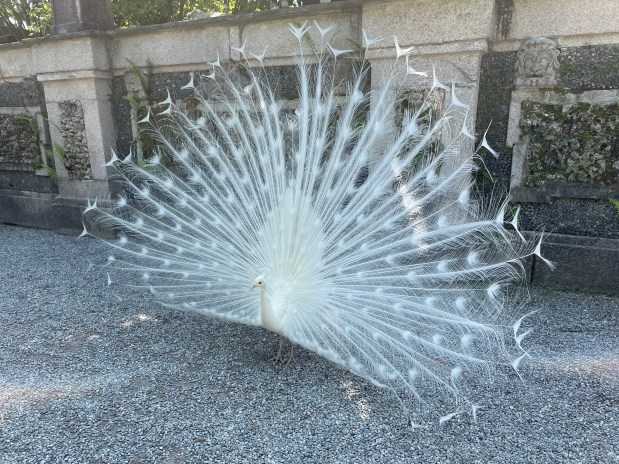
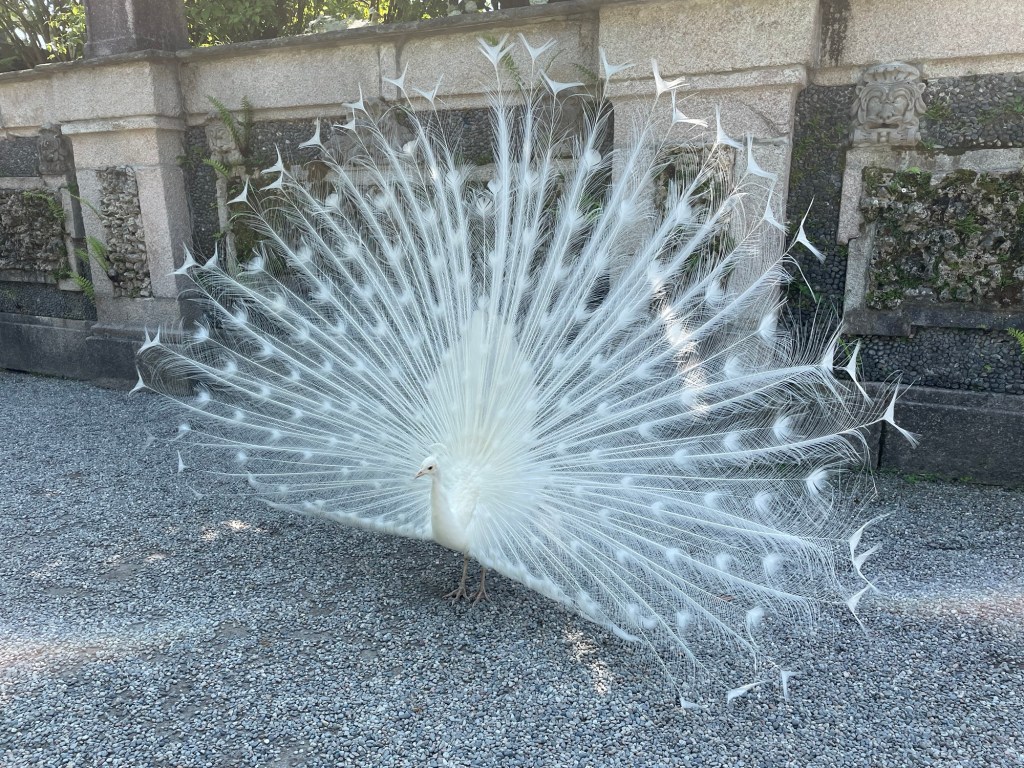
This weekend’s SOTD was D.S. & Durga’s White Peacock Lily, from a decant. It is a strong white flower fragrance with some aquatic notes. I’m not a big fan of strong white florals, but this has enough other notes that I’m not overwhelmed as long as I spray it with a light hand. It has a touch of grapefruit in the opening, which cuts through some of the sweetness, and another opening note, oleander, is the first white flower I smell. It moves quite quickly into the middle notes, which are dominated by white lily and jasmine. The jasmine is more green than indolic to my nose, which helps lighten the white lily.
Like many white florals, this one elicits strong reactions. Some people love it, others hate it and scrub it off. I fall in between. I don’t hate it, but I might if I applied it more lavishly. And it does last a long time, so if you don’t like it, you will have to scrub!
I haven’t tried many D.S. & Durga fragrances, have you? Any you particularly like?
November’s “Counterpoint” fragrance is Estée Lauder’s Beyond Paradise, in its original bottle and formulation. In many ways, it is a unique fragrance: almost a hologram of an imaginary tropical flower.
Beyond Paradise by Estée Lauder; image by Portia Turbo.
1. How did you first encounter Estee Lauder Beyond Paradise, and what was your first impression?
Old Herbaceous: Like a few other scents I’ve described, I first encountered Beyond Paradise because Luca Turin and Tania Sanchez rated it with five stars in their book “Perfumes: The A-Z Guide.” That book was a big part of my going down the rabbit-hole with fragrance, and I sought out several of the five-star fragrances as part of educating myself and my sense of smell. Although Beyond Paradise is still available (though apparently discontinued now), what one usually finds is a reformulation dating from 2015, in a standardized rectangular clear glass bottle. The original, in the ovoid rainbow-tinted bottle, was launched in 2003, created by Calice Becker. That’s the one I sought, with eventual success.
My first impression was “Wow – white floral alert!”, though I wouldn’t describe it as the proverbial “Big White Floral” that strikes terror into so many perfumistas’ hearts (or noses). I have mixed feelings about white florals. I love many white floral notes and accords, like jasmine and gardenia, and their corresponding flowers in real life, especially outside. Many white flower fragrances smell more like hothouse plants, grown in humid greenhouses and conservatories, warm and somewhat stifling. I wonder if this is because many perfumers encounter the blooms of plants like jasmine and gardenia in those settings?
Interestingly, Beyond Paradise is supposed to have been inspired by the largest conservatory in Europe and the UK, possibly in the world: the Eden Project in Cornwall, which I’ve actually visited with my family some years ago.
The Eden Project, Cornwall
This origin is reflected in the 2003 list of its notes:
Top Notes: Eden’s Mist, Blue Hyacinth, Orange Flower Templar, Jabuticaba Fruit Middle Notes: Laelia Orchid, Crepe Jasmin, Mahonia Japonica, Pink Honeysuckle Base Notes: Natal Plum Blossoms, Ambrette Seed, Zebrano Wood, Golden Melaleuca Bark
The accord “Eden’s Mist” is supposed to be based on the scent of the air inside one of the Eden Project’s domes. More prosaically, Fragrantica gives the following notes list: Top notes: Hyacinth, Orange Blossom, Grapefruit, Bergamot and Lemon; middle notes are Jasmine, Gardenia, Honeysuckle and Orchid; base notes are Hibiscus, Plum Wood, Ambrette (Musk Mallow) and Amber.
Portia: Many years ago on my first visit to India after Varun had moved back to help run the families’ hotels, I was shopping in the Sydney Airport Duty Free for gifts to give him and the family. Because I’d spent some serious money the SA was unbelievably generous with the samples. One of those was a spray mini of Beyond Paradise. When I first sprayed it on me I couldn’t believe anything could smell so good and fell madly in love on the spot. Nothing in my history of loving perfumes prepared me for what Beyond Paradise is.
Funnily, when I arrived in India Varun loathed it. He couldn’t understand why I would want to smell exactly like the jasmine, tuberose and marigold that Indian women wore woven into their hair and that Indians gave to their deities’ statues.
Obviously I ignored him and wore the whole mini over the next two weeks. I think I bought my first bottle on the way home.
2. How would you describe the development of Estee Lauder Beyond Paradise?
Portia: JASMINE! with some other florals and a citrus burst running underneath. It’s so over the top I can’t help but laugh and then once that dies down I continue to huff my wrist and smile the smile of a happy perfumista. There is even a squeal-y urinous hit from the grapefruit and a breathy poopiness. To me this is the most French of the Lauder summer oeuvre. Definitely not the super clean of many American perfumes. There is the dewy cool fresh water aspect though, like the cold rivulets on a bottle of white wine.
How are marigolds not a note, I can smell their sharp funkiness clear as day.
While Beyond Paradise does have a trajectory it’s not a large one and the noted amber in the base seems to pass me by completely. There are some green broken branches or twigs, white flowers and shitloads of vegetal musks with still pretty hints of pithy citrus right to the end.
Old Herbaceous: Given that my first impression is of exotic flowers growing in a conservatory, I think my nose is actually picking up on “Eden’s Mist”. I don’t smell any hyacinth, and I couldn’t tell you what jaboticaba fruit smells like. The closest I can describe to what I smell at first is a combination of jasmine and tropical orchids. Although Mahonia japonica is listed as a middle note, I don’t smell that. I grow mahonias in my garden, and to me they smell most like lily of the valley. That’s not what I smell in Beyond Paradise. In fact, the whole development of Beyond Paradise most resembles its origin story: a walk through a fantasy conservatory with abstract, imaginary flowers. I agree with Portia, though, that of all the floral components, the strongest is a jasmine accord.
Lauder initially described the fragrance and its flankers as “prismatic florals”. The word “prismatic” usually refers to the image created when a prism refracts a beam of light, separating into its color constituents. I experience Beyond Paradise as a sort of prism in reverse, with its many notes coalescing into a smoothly abstract whole. The image that comes to my mind is the modern sculpture “Cloud Gate”, by Anish Kapoor, in Chicago’s Millennium Park. It is made up of almost two hundred stainless steel plates, welded together so seamlessly that it appears as an unbroken polished surface (shaped like a giant bean, which is its nickname). To my nose, Beyond Paradise is almost linear, though it warms slightly after about an hour or two. That’s also when I smell some underlying fruitiness and green, and a bit of the funk that Portia describes.
Cloud Gate, by Anish Kapoor
3. Do you or will you wear Estee Lauder Beyond Paradise regularly? For what occasions or seasons?
Old Herbaceous: I don’t wear it often, but it’s a lovely fragrance for warm weather or a beach vacation. It also works well in an office, since it doesn’t shout BWF. I think it would be great for a romantic dinner outside on a terrace on a warm summer evening. It is quite elegant, in its streamlined abstraction.
Portia: The last couple of summer seasons Beyond Paradise did not come out of the Lauder box even once. I always think of Lauder as winter perfumes like Youth Dew, Azuree, and Cinnabar and forget this, Modern Muse and Beyond Paradise in the warmer months. This year as the weather heats up I’m leaving it in the grab tray so it does get a bunch of wears. It’s way too gorgeous and holds too many happy memories to leave it languishing, all forlorn in the cupboard.
Spring and summer seem like the perfect and obvious seasons to wear Beyond Paradise but I think it might be nice on any sunshiny day. It could also be a breath of nature and cool water in an office environment. So bright and refreshing without feeling like a regular freshie.
4. Who should/could wear Estee Lauder Beyond Paradise?
Portia: This is perhaps one of the girliest non-confectionary perfumes that’s available. I will say though that when I wear it the incongruity of a dude walking around smelling like this works in my favour. It’s one of the perfumes that people ask about. Mainly because it jumps out as not something you often smell on gents.
The change of bottle from gorgeous to boring AF will also mean that men will probably have less trouble having it on their dresser or in the collection.
Old Herbaceous: The opening of Beyond Paradise puts it squarely in the “feminine floral” camp, but as it dries down, it becomes more unisex to my nose and reminds me of some classic aquatic fragrances. I think it would especially suit anyone on a warm summer evening, when its fantasy florals would blend with the night air, especially in a humid climate. If you come across it at a reasonable price, sometimes still found online, it’s a nice addition to a fragrance collection unless you just loathe florals.
How do you respond to white florals, big or otherwise? Any favorites? Have you tried Beyond Paradise?
Welcome to a monthly collaboration new for 2023! Portia Turbo of Australian Perfume Junkies and I had so much fun doing “Scent Semantics” with some other fragrance bloggers in 2022 that we decided to launch TWO regular features as a new collaboration this year. The first, which we plan to post on the first Monday of each month, is “Notes on Notes“, in which we choose one note and write about it however the spirit moves us; last month’s Note was on galbanum. This second feature is “Counterpoint“, in which we ask ourselves the same handful of questions about a single fragrance and post our separate thoughts on it, on the third Monday of each month. We’re still experimenting with format, so comments on that are welcome too!
This month’s Counterpoint fragrance is Jean Patou’s Joy (we shall ignore the imposter Dior launched in 2018 after acquiring the name and the brand). Jean Patou was one of the great designers and couturiers of pre World War 2 Europe, with his own couture house. Joy was launched in 1930 at the outset of the Great Depression, apparently so that M. Patou’s haute couture clients could still enjoy something created by him even if they couldn’t buy his dresses any more. The true creator, of course, was the perfumer; in this case, Henri Alméras.
Joy was famously promoted as the “costliest perfume in the world”, which was probably a marketing ploy but also reflected the high quality and cost of its ingredients, including absolutes made from jasmine and roses from Grasse. It was also meant to compete with Chanel No.5 as a luxury perfume. They share some qualities and notes, but each is distinct from the other, and instantly recognizable to many.
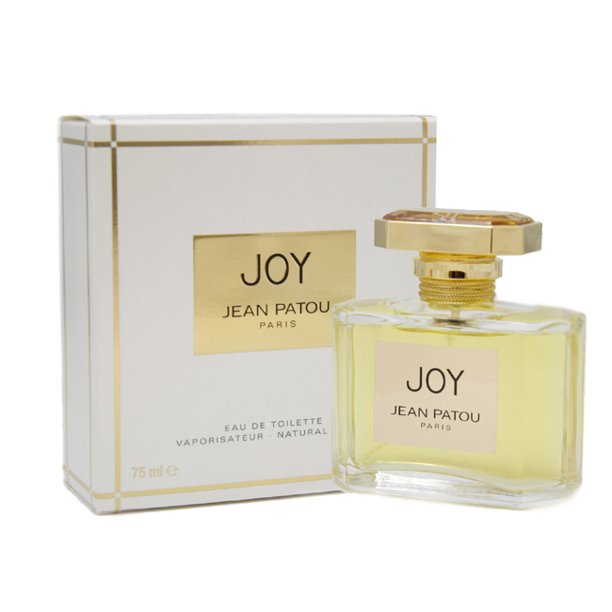
Jean Patou’s Joy; image from Portia at Australian Perfume Junkies
1. How did you first encounter Joy, and what was your first impression?
Old Herbaceous: I first tried Joy after I had gone down the rabbit-hole of this fragrance hobby. I knew it was one of the 20th century’s most legendary fragrances and that my perfume education would be incomplete if I didn’t try it. I found a tester of the eau de toilette at a very reasonable price, so I took the plunge and bought it blind.
My first impression was kind of “meh.” It was okay but I didn’t like it as much as the Chanels I already had, for example, or some of the more exciting new fragrances I was trying. It felt a bit old-fashioned, more than the Chanels did, and I couldn’t recognize its separate notes. As my nose became more educated, though, and I was trying more different kinds of fragrances, I came to like Joy better.
Portia: Honestly I have no memory of first smelling Joy by Patou. It seemed to be around in my childhood. It was definitely work by my Mum at some point and by various Aunts and friends Mums. There is no one specific image or memory I can conjure of my early encounters though.
When I started buying vintages I was so unaware of exactly how it should smell I sent a couple of samples around the world for confirmation and bought samples from Posh Peasant for comparison. So I’m taking my first vintage splash bottle as if it was the first time I smelled it. The only memory I have of that was being overwhelmed by this extraordinary scent. Eye-rollingly gorgeous stuff, I think I bought about a dozen bottles so I’d never be without it again, mainly vintage parfums and a couple of those 45ml EdT or EdP.
2. How would you describe the development of Joy?
Portia: Today I’m wearing both the vintage EdP and vintage parfum. I’m not sure exactly the years but the picture might give you an idea.
Opening is sharp white flowers, aldehydes and a swirl of ylang. It’s rich, plush and sumptuous. I know Joy is supposed to be rose and white floweer but the roses take a far back seat on the bus for ages before they start to become a serious contender. Even when they do make their play it’s only as a backup not the main event.
What I do smell as we hit the heart is fruit. Not that modern super sweet candy-ised fruit but that vintage tinned fruit salad. Yeah, it’s sweet but more robust, less headache inducing.
There is also a lovely, stemmy green note that could be hyacinth and it borders on torn twig. It’s verdant but also bitter and gives a lovely counterpoint to the bouquet and fruit.
Hiding deep below is also a little growly tiger and breathy, sweet jasmine.
As the fragrance heads towards dry down, the woods and animalics become more pronounced. Not dirty or ass-ish but smoothly skin-like, me but so much better.
Old Herbaceous: The notes listed for the original Joy are: tuberose, rose, ylang-ylang, aldehydes, pear, and green notes. The heart notes include jasmine and iris root. The base has notes of musk, sandalwood, and, in the vintage, civet. The version I have is the eau de toilette and it dates to 2016. Fragrantica lists this version’s notes as: Top notes — Bulgarian Rose, Ylang-Ylang and Tuberose; middle notes — Jasmine and May Rose; base notes — Musk and Sandalwood.
I think there are still some aldehydes in the opening, even if no longer listed, to give it some lift. There’s a pleasant soapiness to Joy that I associate with aldehydes; and I think they are the cause of so many people feeling that Joy is old-fashioned. I smell the ylang-ylang more than I do the other floral top notes, and then the jasmine arrives. It isn’t overpowering but it is very evident, much more so than the rose notes. I don’t smell any iris, root or bloom, at all, so that may not have become part of the modern EDT. It’s not quite as abstract a flower as Chanel No.5, but it is in that same vein. Even in EDT format, Joy has good longevity and sillage. A little goes a long way, given how dominant jasmine is. The final stage of this modern Joy on my skin is all soft sandalwood and white musk, like expensive soap.
Jean Patou’s Joy eau de toilette
3. Do you or will you wear Joy regularly? For what occasions or seasons?
Old Herbaceous: I don’t think I’ll wear Joy regularly, but that’s mostly because I now have such a large collection of fragrances that there are only a few I would say I “wear regularly.” Joy definitely gets more love from me than it used to, and it’s in a convenient location, so I do reach for it occasionally. It’s great for church or the office, because if you don’t overspray, it’s quite subtle and ladylike. It’s one of those fragrances that doesn’t jump out at anyone, it just smells very nice. By the same token, if you want your fragrance to make more of an impression, Joy may not be the one to choose that day (or night), unless the parfum has more impact (I haven’t tried that version).
Portia: Joy is so fabulous but rarely gets the spritz, splash ot swipe here. Every so often I get out the Patou box and grab Joy. I’ll wear it and put it back. Then I won’t think of it for months. That doesn’t lessen my love for it but it seems to fit only rarely.
I’m hoping that enjoying wearing it so much today and yesterday that it might inspire me to wear it more often.
4. Who should/could wear Joy?
Portia: Joy needs a certain amount of preparation if you’re not a regular wearer. It’s big, bold and makes a statement. It’s tenacity is also legendary, so you have to be ready to smell of this iconic beauty for at least half a day. Anyone who chooses Joy is choosing to smell of a fragrance that will not be easily available for us to buy when the bottle runs out. So they are wearing something precious and on it’s way to extinction. That alone tells you something of the wearer. Either they are so wealthy that they can stockpile or such a hedonist that wearing it to the dregs and enjoying every second is better than having it forever. No, I check myself. There are other reasons. Wearing it as a memory scent, to mark special occasions, as a lure or any number of wonderful reasons.
Really though, anyone who wants to smell spectacular and relive the joy of wearing Joy by Patou before it’s gone forever.
Old Herbaceous: As always, I say anyone who wants to can wear Joy or any other fragrance! Joy does give off a certain demure, ladylike air, at least in EDT form, but that could be deployed to great effect if the wearer isn’t, in fact, demure, ladylike, or even a lady. For myself, I prefer some of the reissued “Collection Heritage” fragrances created by Thomas Fontaine when he was Jean Patou’s head perfumer, especially Chaldée and L’Heure Attendue.
If you want to experience this legendary fragrance, I recommend getting some soon. Dior’s Joy is a pallid successor at best, but all the Jean Patou fragrances are now out of production, since LVMH bought the brand (to the howls of the faithful) and changed its name to just “Patou”. The fragrances are still widely available online and I’m told that Joy was so popular among ladies of my mother’s generation and even beyond that it is often found at estate sales. In fact, when a FiFi award was given in 2000 to the “perfume of the century”, it was given to Joy and NOT to its competitor No.5. So now really is the time to get yourself this small exemplar of 20th century fashion and creativity. I’ll be keeping my eye out for vintage parfum, since that’s the version that has gotten the most rave reviews (including from Luca Turin, who gave it his rare five-star rating) and that Portia finds so alluring.
Have you experienced Joy? What did you think? Has your opinion changed over time, as mine did?





 Serenity Now Scents and Sensibilities