Today’s Advent scent is Incense Flash, from Andy Tauer’s “Tauerville” line. The “Flash” series were meant to be less expensive than his main line of fragrances, but no less interesting (Rose Flash is a favorite of mine). Incense Flash has an abbreviated notes list: incense, woody notes, leather, musk. That’s a little deceiving, because incense itself can contain different notes, and who knows how many notes are included under the single term “woody notes”? Anyway, incense is what I smell, right away. It is smoky but not harsh.
Incense sticks; image from Epicurious.com
I used to associate incense with a sort of hippie mentality, but I find it so interesting in perfume. It seems to have gone more mainstream in recent years, with people buying sticks to burn at home. And of course, Advent is a great time to be wearing an incense-based scent, given various church traditions. I find myself really enjoying Incense Flash. I don’t really smell leather, but I think the musk accord is softening the whole impression.
I would say that the development of Incense Flash is somewhat linear. The lead actor is the incense, and everything else revolves around that, coming and going. I like it, as a straightforward incense fragrance.
Do you use incense in your home? Do you have any favorite Tauerville scents?
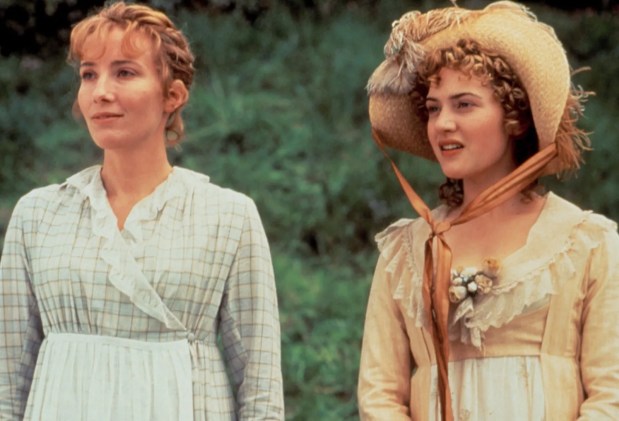
Today I cheated on the Advent calendar process. I needed a sample from an independent perfumer, to alternate with my Guerlain samples, but I also wanted to take part in Now Smell This’ Friday community project, which was to name your favorite work by, or inspired by, Jane Austen. So I grabbed the discovery set of Francesca Bianchi fragrances, which I hadn’t yet opened, and chose one that I thought might do. My favorite Jane Austen-inspired work is the movie “Sense and Sensibility”, which is why my blog is named, in part, Scents and Sensibilities (full name is Serenity Now: Scents and Sensibilities).
The heroines of “Sense and Sensibility”; image from Encyclopedia Brittanica.
The sample I chose was one I’ve never tried, called The Lover’s Tale. After all, Jane Austen’s books are all tales about lovers. But when I read more about it on Fragrantica — bingo! Here’s what Francesca Bianchi said about it herself:
This is a story of by-gone times about a secret encounter of lovers. It represents the contradictions between sense and sensibility, pruderie and passion. The lovers are full of desire but their education holds them back.
Francesca Bianchi
Launched in 2018, The Lover’s Tale has top notes of Honey, Mimosa, Aldehydes and Bergamot; middle notes of Orris, Peach, Heliotrope, Egyptian Jasmine and Bulgarian Rose; and base notes of Leather, Castoreum, Musk, Labdanum, Oakmoss, Vetiver and Sandalwood. It is considered a leather fragrance, as that note is a main player. Given its partnering with castoreum, musk, oakmoss, and vetiver, I venture to say that this is a more stereotypically masculine leather. However, the earlier notes are all very stereotypically feminine, with their profusion of florals. In a way, The Lover’s Tale is a combination of two characters from “Sense and Sensibility”: Colonel Brandon and Marianne Dashwood, who fall in love after various trials and tribulations.
I read somewhere that while it is understood that the title “Sense and Sensibility” refers to the two sisters, Elinor Dashwood who has common sense and intelligence, and the younger Marianne, who has a Romantic sensibility and passion, it can also be read as referring to Brandon and Marianne. He is the older, experienced man who commits himself to solving problems and addressing crises, including Marianne’s. He is practical — but he also has a wide streak of Romanticism himself, with his love of music and his infatuation with the emotional, musical Marianne.
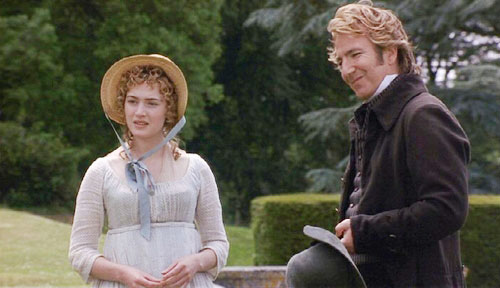
Colonel Brandon and Marianne Dashwood; image from Columbia Pictures.
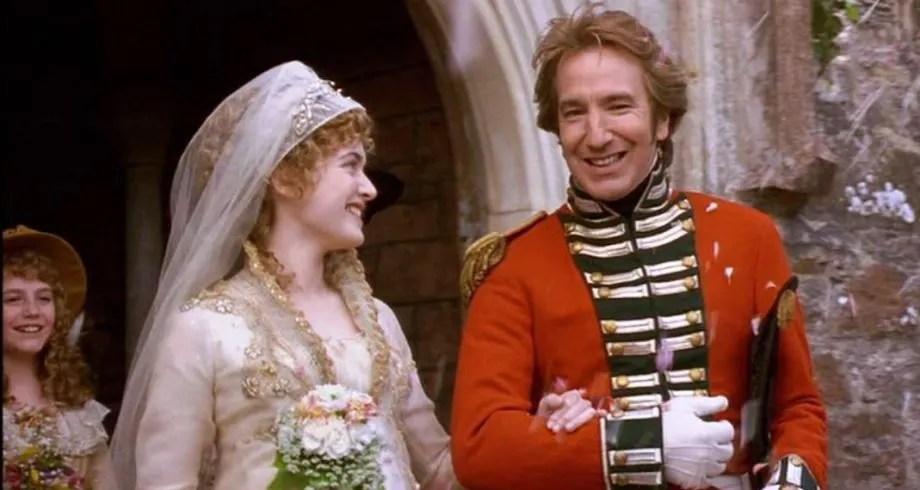
Colonel Brandon also spends much of the movie throwing himself into the saddle and riding off to save the day, so a leather fragrance is well suited to him. The honey in the opening notes can be a nice reference to what Emma Thompson, who wrote and starred in the movie, called the “extraordinary sweetness [of Brandon’s] nature.” The aldehydes and floral notes evoke Marianne’s love of beauty that can sometimes be a bit flighty; by the time The Lover’s Tale is in the final stage of drydown, the floral notes, the leather, and the warm animalic notes of the base have reconciled, and combine with labdanum and sandalwood in a beautiful marriage of scent.
Wedding of Colonel Brandon and Marianne Dashwood; image from Columbia Pictures
Do you have a favorite work by, or inspired by, Jane Austen? Any fragrance you might associate with it?
The Guerlain sample I pulled today was one that I tried and liked in the Las Vegas boutique, Frenchy Lavande. This version was launched under that name in 2021, but it is basically the same as Le Frenchy, which was launched in 2017. Like a few others, it was renamed and moved into the collection “L’Art et la Matière”. It is called an “aromatic fougère”, so classified largely because of the central role that lavender plays, but others have called it a citrusy aromatic. Fragrantica lists its notes as: Top notes, Lemon Verbena, Lemon and Bergamot; middle notes, Petitgrain, Lavender, Citron, Sage and Neroli; base notes, Ambergris, Vetiver and Tonka Bean. Eddie Bulliqi reviewed it and Herbes Troublantes recently for Fragrantica: “Herbs for Winter; Guerlain’s Frenchy Lavande and Herbes Troublantes.”
The opening is lovely, and even my nearby husband looked up and commented, “That’s really nice, what is it?”. While the opening notes are in fact very citrusy, I also smell lavender right away. The lemon and lemon verbena are more prominent than the bergamot, and the lemon verbena adds a distinctly herbal tint to the lemon and lavender. I can’t pinpoint the moment when lemon gives way to citron, but I can say that the partnership of citrus and lavender continues in the middle phase. I only get glimmers of sage, and the neroli is a latecomer to this stage, at least to my nose. It gradually replaces the lavender, as the fragrance moves toward its base notes. Vetiver continues the aromatic, herbal aspect of Frenchy Lavande. I can’t really distinguish the ambergris and tonka bean accords, just that the base slowly becomes warmer and less herbal.
Believe it or not, there is actually a blog called “The Traveling Frenchy” by a young woman named Alex, and in it she has posted a guide to visiting the lavender fields in Provence. I highly recommend it if you are thinking of seeking out French lavender fields; she gives very specific information on the locales she prefers, and even lists particular villages and roads.
The Traveling Frenchy blog’s Ultimate Guide to the Lavender Fields in Provence
Ultimately, though I like Frenchy Lavande very much, it is a bit like Herbes Troublantes in reminding one of a cologne, although it is in a eau de parfum format. I wouldn’t say that it is much nicer than my Jicky eau de toilette or even that it lasts longer; and it certainly costs a lot more. Bottom line: if you want a Guerlain lavender, I recommend Jicky. In fact, that may be my next Guerlain purchase, from its reissue of several Guerlain classics in the collection “Les Legendaires”.
Do you have a favorite lavender-centric fragrance?
The independent perfumer’s sample for today’s Advent scent is 1805, later renamed as 1805 Tonnerre, by Beaufort London. It is one of the first three fragrances released by this niche house upon its debut in 2015, as part of the “Come Hell Or High Water” collection. Fragrantica explains:
This collection brings together elements of Britain’s history, both imagined and real, to create collages of scent embodying themes of warfare, trade and exploration.
Crabtree’s lifelong love of fragrance and a preoccupation with the darker elements of British history served as the collection’s impetus.
Fragrantica
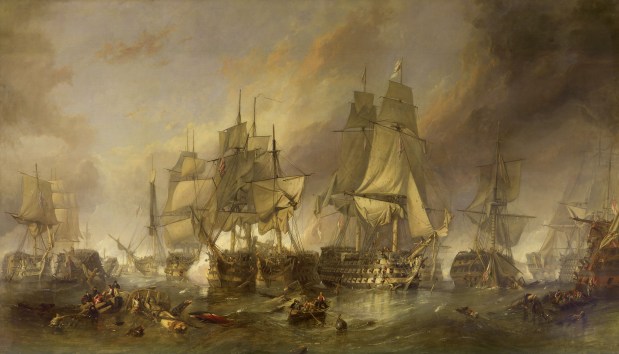
The brand’s packaging mentions the significance of the year 1805: the same year when Admiral Nelson won the Battle of Trafalgar but lost his life; and the year when the “wind force scale” was invented by Sir Francis Beaufort. The scent’s composition is described as follows:
The scent imagines moments within the battle itself. Powerful accords of smoke, gunpowder, blood and brandy combine with sea spray and a penetrating citrus note.
Beaufort London
More prosaically, Fragrantica lists its notes as: Top notes are lime, smoke and gunpowder; middle notes are blood, brandy and sea water; base notes are amber, balsam fir and cedar.
This is definitely a unique scent but it’s not unpleasant. Much more masculine than unisex to my nose, but is that mostly because we have learned to associate non-floral odors with men more than women? Be that as it may, I smell the top notes of smoke and gunpowder, and there is a sharp note right at the beginning that may be the “lime”. The sample I have is the actual 2015 launch 1805, not the renamed, later version, and I think that citrus top note may have gone off a bit. Blood? Brandy? There is a metallic tang in the middle phase that I think is meant to represent “blood”, but mostly what I smell is the continuing smoke, now merging with sea water. I don’t smell anything I could identify as brandy.
The opening and middle stages are challenging, but the final stage is calmer and warmer, perhaps in the way there is calm after a great naval battle or storm. The base notes are very woody; accords of fir and cedar dominate over amber. Unfortunately, this is also the stage where 1805 smells more generic, like a woody aftershave. Again, not unpleasant, but now not as interesting. Whenever the gunpowder accord wafts through, though, as it regularly does, it rekindles my nose’s interest.
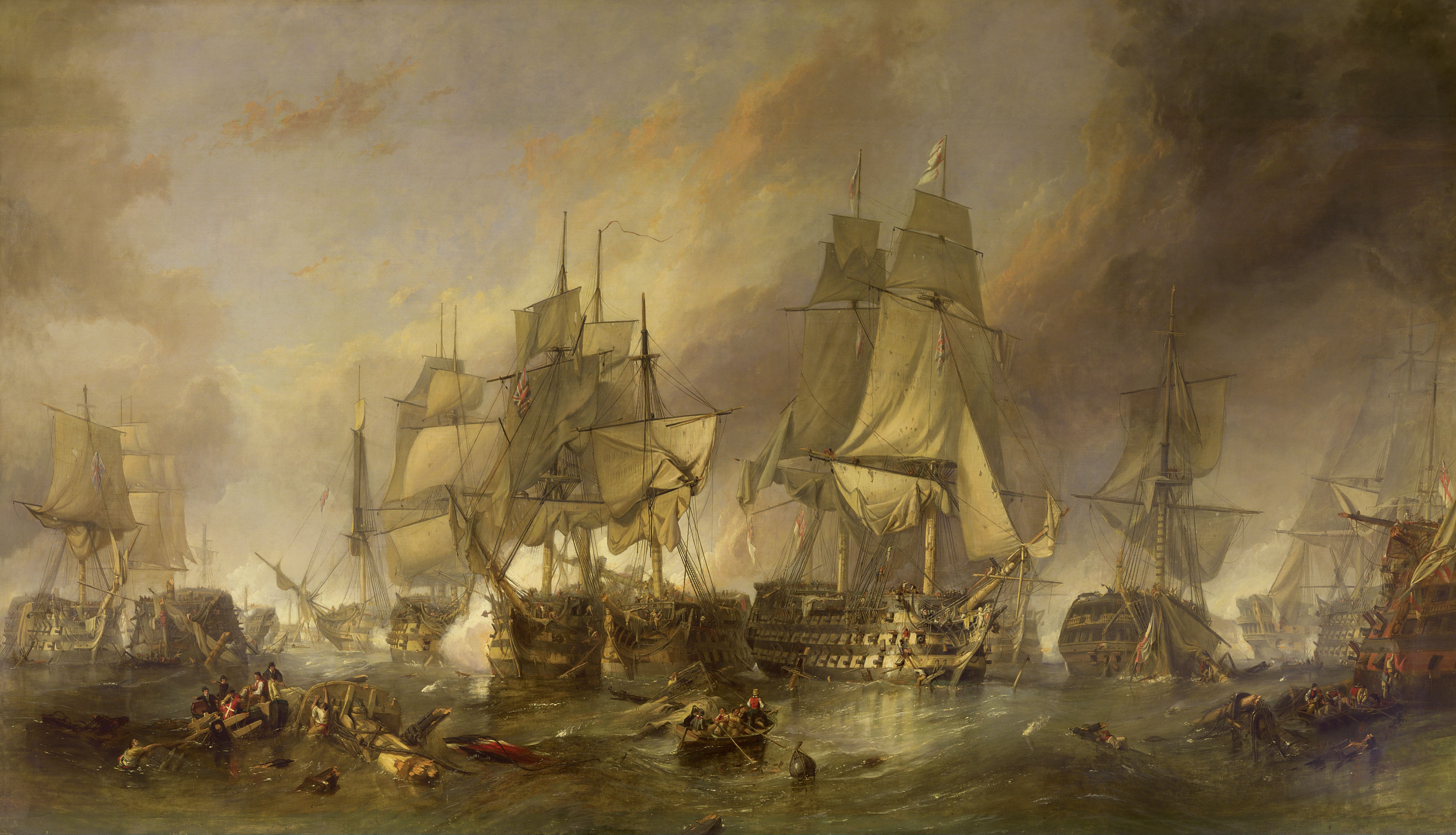
The Battle of Trafalgar, by William Clarkson Stanfield
I was introduced to Beaufort London at Bloom perfumery in London, several years ago, at which time they had released a couple more fragrances to join the original three. One of those, Fathom V, is actually a fragrance I like a lot, on its own merits. If you like smoky scents that are different, you may like 1805 and its other siblings, but this is definitely a fragrance where one must proceed with caution.
What scents do you find very intriguing and artistic, but you might not choose to wear them yourself or at least to wear them less often?
The independent perfumer Advent sample of the day is Hiram Green’s Arcadia. Wowza! It is classified as an “aromatic fougère”, and it has a great opening, top-heavy with lavender and bergamot. As they settle down, the bergamot recedes but the lavender stays strong, joined and made more floral by the arrival of jasmine and rose accords. The notes list from the brand’s website is: Bergamot, lavender, jasmine, rose, spices, resins, tonka bean, aged patchouli, New Caledonian sandalwood. Hiram Green, who is a natural perfumer, also lists the actual ingredients, which include evernia prunastri extract, which is oakmoss. Be still, my heart! I love oakmoss in fragrances. Mr. Green says this about the fragrance, which he launched this year (2022):
For this perfume I was inspired by the natural splendour of Arcadia. In this idyllic, unspoiled wilderness babbling brooks meander through mountains covered in dense forests and the air is filled with the sound of humming insects and twittering birds.
Imagine the lush undergrowth that covers the forest floor. In areas where the sun manages to break through the canopy, fragrant flowers bask in the sunlight and their sweet scent intertwines with the fresh green smell of the foliage.
The base notes blend beautifully together. The spices are pretty subtle — definitely noticeable, but they don’t hit you over the head (or nose). Resins, tonka bean, and sandalwood provide warmth, and patchouli and oakmoss hum underneath. The drydown stage is where I think Arcadia smells most like a traditionally masculine fragrance, with the lavender still evident over those warm base notes. There’s a light dustiness to this stage, possibly from the oakmoss, that makes me think of motes of sunlight floating through the sunbeams that shine through Mr. Green’s Arcadian forest.
In fact, the whole fragrance makes me think of a particular forest: Ashdown Forest in England, famous not only for its woodland beauty but also as the landscape of Christopher Robin’s childhood idyll, the Hundred Acre Wood he shared with Winnie-the-Pooh and friends. Arcadia, indeed!
Sunlight in Ashdown Forest, England; image from ashdownforest.com.
I’ve never been there, but I loved A.A. Milne’s books as a child; in fact, “Winnie-the-Pooh” was the first book I read by myself, shocking my parents at the age of four when I pointed to it and said, “I can wead that book.” And so I could, having taught myself to read, although I couldn’t pronounce Rs very well. One of my late mother’s cousins actually illustrated Christopher Milne’s memoir “The Path Through the Trees”.
I’m delighted with Mr. Green’s version of Arcadia and will put it on my “possible full bottle some day” list. Have you tried any of Hiram Green’s fragrances? Any favorites?
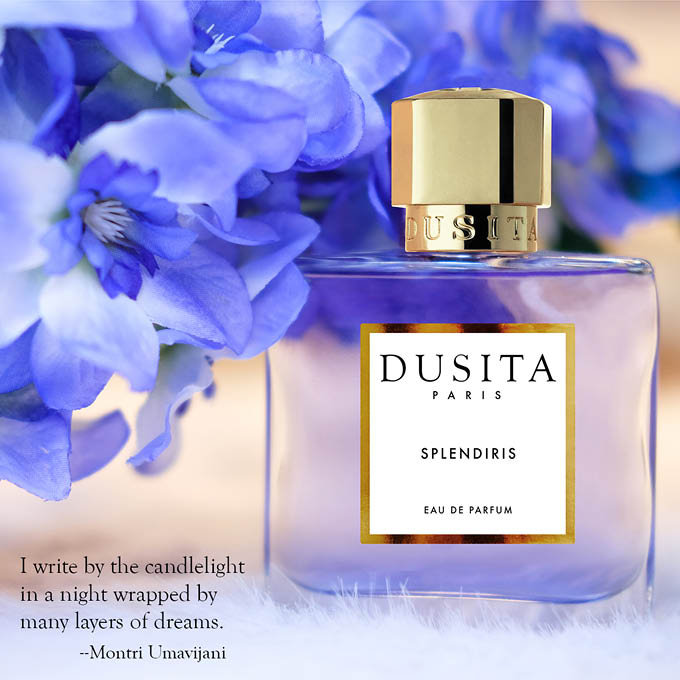
Today’s independent perfumer sample is Splendiris, by Parfums Dusita. What an intriguing scent! There was something in the opening that I didn’t like, though I did like the overall effect. I truly can’t figure out what it was that annoyed me — perhaps the carrot seeds listed as a note, as it was an almost woody note that bothered me. Luckily, the combination of violet and orris appears quite soon, and it’s a beautiful friendship. At this heart stage, those two accords dominate, but gently, like a cool breeze wafting over a flower bed.
The notes are listed by Fragrantica as follows: Top notes are Violet Leaves, Carrot Seeds, Fig Leaf, Green Mandarin, Italian Orange and Calabrian bergamot; middle notes are Violet, Orris, Grasse Rose and Jasmine Sambac; base notes are Vanilla, Ambergris, Haitian Vetiver and Cedar. The overall impression I get from Splendiris is “cool”, but it is the cool of a bright spring day, lightly warmed by sunshine. There is just enough rose and jasmine in this phase to make it more multi-layered and textured, especially the jasmine, but I don’t think anyone smelling it for the first time would think of it, even at this stage, as a rose or jasmine fragrance.
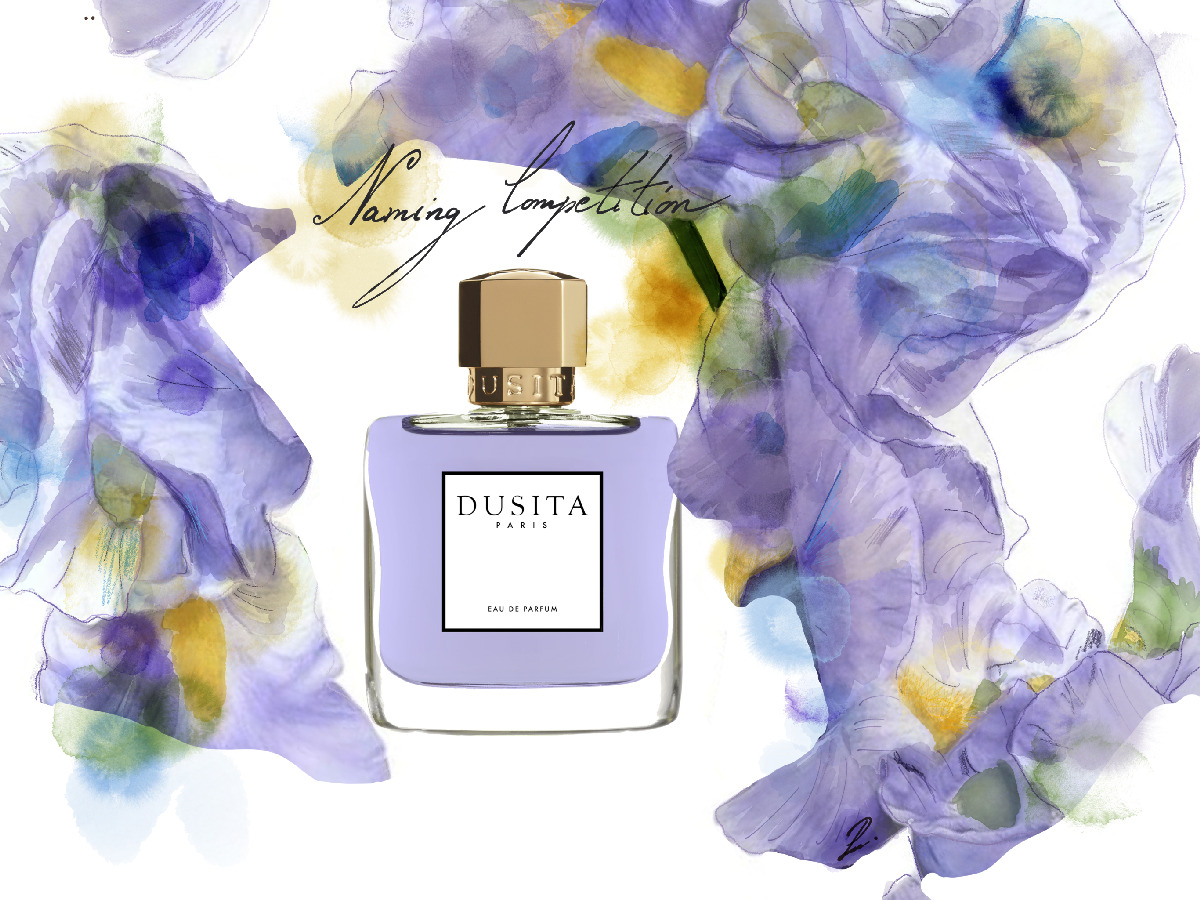
I’ve been trying more Dusita fragrances lately; I’ve been intrigued by the brand since it has a contest to name what became Splendiris.
Naming competition, Parfums Dusita
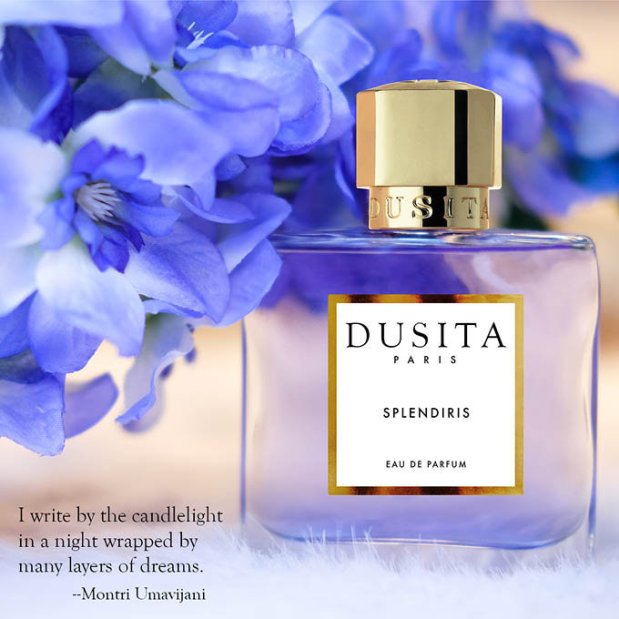
To my nose, Splendiris smells like the artwork above: shades of transparent purple and blue, illuminated by touches of gold, yellow and brown. The yellow, gold, and brown tints come from the base notes, such as vanilla, vetiver, and ambergris. There are some people who smell almost everything “in color”, in the phenomenon called synesthesia. I am not one of them, but Splendiris does lend painterly effects to the overall impressions, more than I usually perceive.
Have you had any experiences with synesthesia, or do you strongly associate any fragrances with a particular color?
Splendiris eau de parfum; image from Parfums Dusita
The Guerlain sample of the day is Iris Torréfié, which was created by Delphine Jelk and launched in 2020. I had to look up the word “torréfié”, as it was unfamiliar; it means roasted, often in reference to coffee beans. Sure enough, among the notes listed for the fragrance is coffee. The full notes list on Fragrantica is: Top notes, Cardamom, Coffee and Bergamot; middle notes, iris and Ambrette (Musk Mallow); base notes, Leather, Tea, Vanilla and Amber. I’ve never associated iris with coffee — or roasting, for that matter — but I do like the opening of Iris Torréfié very much.
Iris Espresso coffee beans
The very first thing I smell upon spraying my wrists is the iris, and it’s a beauty. Rich, a bit fruity, a bit carroty — it’s a gorgeous iris. And who knew? There is an actual iris called “Coffee Trader”. So maybe they are meant to be together after all!
Iris “Coffee Trader”; image from garden.org
I don’t smell cardamom at all in the opening, and I’m a little disappointed by that because I love the smell of cardamom. I do smell the bergamot; it makes a quick appearance to brighten the opening and then steps back. If I hadn’t been told there was a coffee note in Iris Torréfié, I would not have known. To my nose, the opening is all about iris with a light touch of bergamot.
In the middle phase, the iris is still dominant, still gorgeous. There is an underlying muskiness that emerges, which must be attributable to the ambrette. As Iris Torréfié dries down, the base reveals itself to be a warm combination of leather, vanilla, and amber; I don’t smell the listed note of tea. The iris continues to reign, warm but not “roasted.” All of these accords play very nicely with each other, while keeping the iris the star of the show. The leather is very subtle and segues smoothly from the ambrette.
Iris Torréfié is a lovely fragrance, and the first among my Guerlain samples that could tempt me to a full bottle, even though I have several iris-forward fragrance. It has just the right balance of floralcy and vaguely spicy, soft leather. Have you tried it? What did you think?
Another happy random pull from my samples! Today’s Advent SOTD is Spell 125, from Papillon Artisan Perfumes and perfumer Liz Moores. I really can’t improve on her own description and explanation:
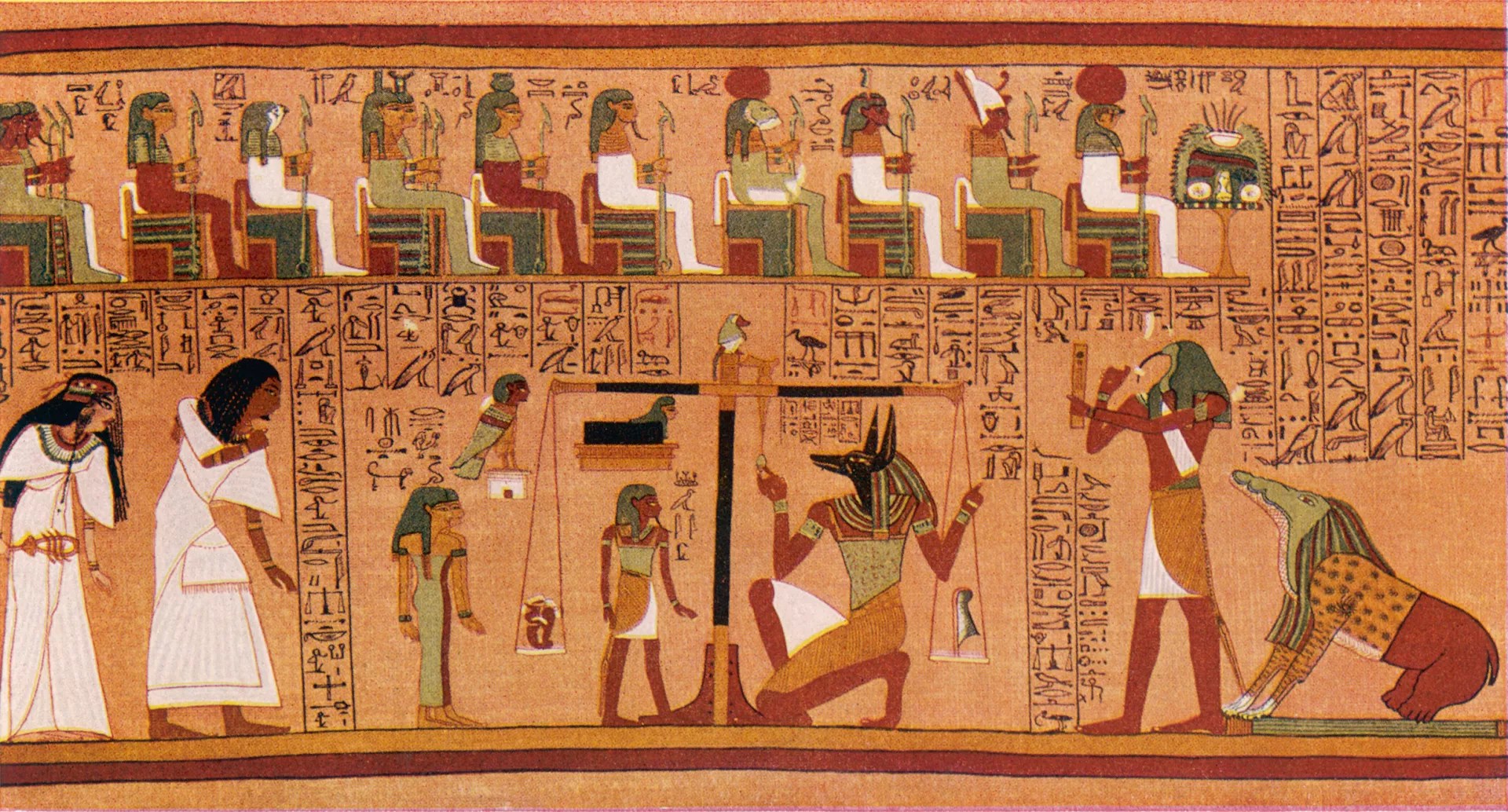
In the Book of the Dead, Spell 125 represents a balance of light and dark, life and death. The compelling ceremony of weighing the deceased’s heart against a feather animate a delicate olfactory rendering of the lightness of the soul, with just a sliver of the underworld shadows.
Part of the Egyptian Book of the Dead; image from DK Publishing.
Ms. Moores explains the context for this 2021 addition to her line of fragrances:
“The seventh fragrance released in Papillon’s seventh year, on the seventh day of the seventh month. In ancient Egypt, the number 7 was considered a number of the Gods, and it is these deep esoteric connections thread together the inspiration and composition for Spell 125. Everything about this perfume is entwined with magic, history and ancient mystery.
Notes are listed as: White Ambergris. Siberian Pine. Black Hemlock. Green Sacra Frankincense. Ylang. Indian Sandalwood. What I smell right away is a mix of frankincense and ylang, followed quickly by the pine and hemlock notes. Ambergris is something I have smelled as a raw ingredient, but I can’t readily identify it in a fragrance. What I notice in fragrances that list ambergris as a note or ingredient is that there is usually an underlying sensual warmth — not really spicy, but warm nevertheless. That’s what I perceive in Spell 125.
The frankincense smells spicy with a hint of smoke; the sensation of warmth it evokes is enhanced by the sandalwood accord. This warmth and spiciness lead me to think that Spell 125 will be most appealing in cooler weather, as is usual in fall and winter here. It reminds me a bit of St. Clair Scents’ Frost, though Frost is smokier. Spell 125 also has a sweetness to it that absolutely does not smell sugary; I think that is a contribution of the ambergris.
Like all Papillon perfumes, this one is lovely and beautifully constructed. It is fully unisex and would smell great on anyone. Definitely worth trying, if you haven’t done so yet. I happily own Papillon’s Dryad and Bengale Rouge. While I don’t know that I’ll ever add Spell 125 to my collection (I think I would go for Angelique and Tobacco Rose ahead of it), I’m very happy to have it as a sample.
Snce Spell 125 was launched in 2021, a year into the global pandemic, when it was hard to get out and try new fragrances, many people may not have had access to it yet. Have you had a chance to try it? What did you think?
Today’s Guerlain Advent sample is Rose Chérie, launched in 2021 and created by perfumer Delphine Jelk. The only notes listed for it are: Bulgarian rose, rose, violet, heliotrope, tonka, and musk. It is meant to evoke the chic of Paris and “la vie en rose.” The fragrance smells pink, too, like a fresh pink rose but with no greenery attached. The heliotrope accord is immediately evident to my nose; I really enjoy heliotrope in fragrances, I like the powdery aspect it lends. Here, it blends with the violet and rose accords to create a scent reminiscent of pink lipstick and face powder. The scent itself isn’t as retro as that sounds, though.
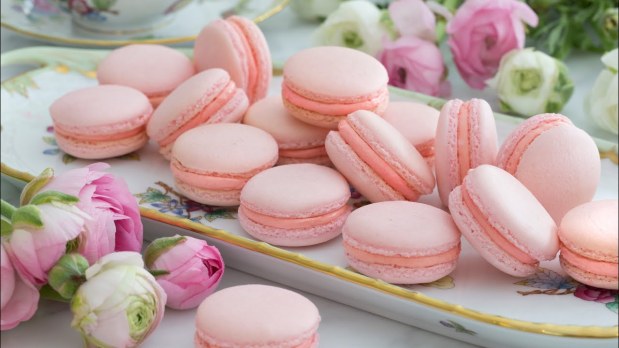
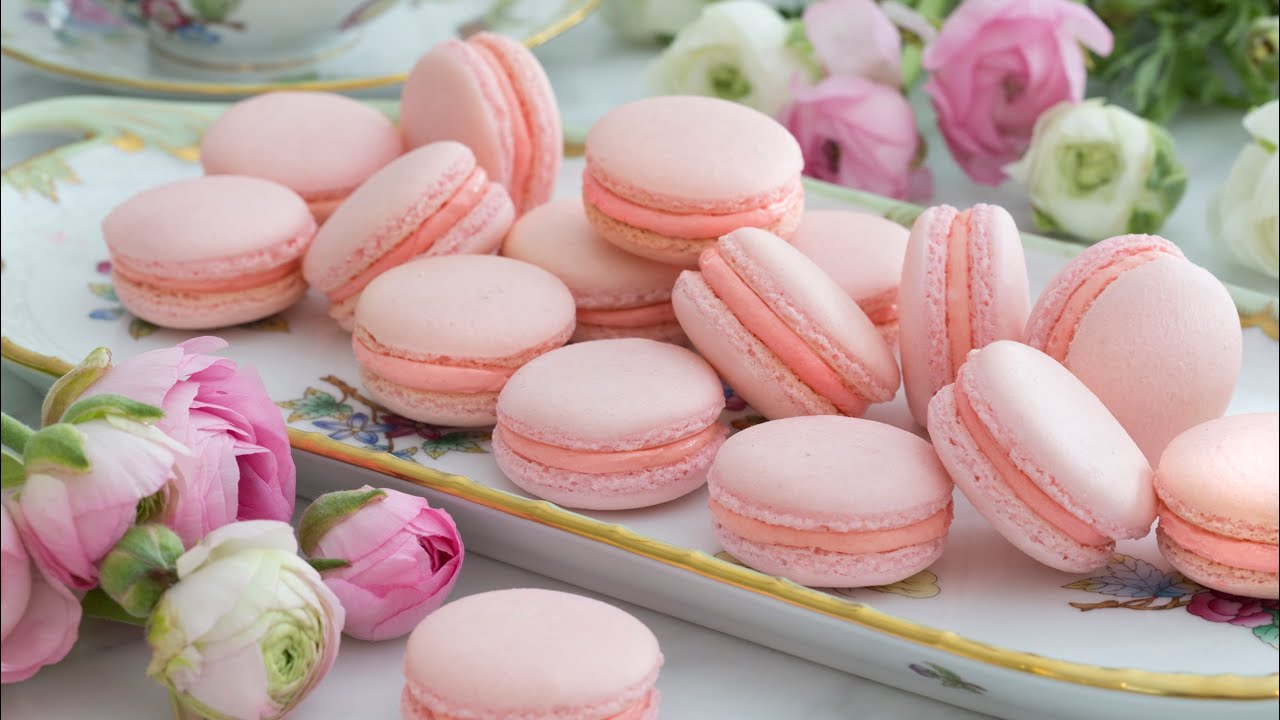
The heliotrope accord also smells like a mix of almond and vanilla, giving Rose Chérie a slight hint of gourmandise. It isn’t an actual gourmand fragrance though, which I appreciate because I have a limited tolerance for those. If there is any food it brings to my mind, that would be delicate pink macarons, lightly dusted with sugar. Now my mouth is watering, remembering the stacks of rainbow-hued macarons I saw in Nice a few years ago, in the patisseries of the old town and market.
Pink macarons; image from The Preppy Kitchen.
Rose Chérie definitely leans toward the feminine end of the spectrum, but it could smell wonderful on a man. It doesn’t last as well on my skin as, say, Épices Volées, but its longevity is fine. Its development is quite straightforward, almost linear to my nose. The tonka bean emerges after a while, once the floral notes have mostly faded. It gives a little oomph to the fragrance, like vanilla without any sugar.
This is a very pretty rose, and if you like semi-gourmand florals, you should probably try it if you get the chance. I own so many rose fragrances (hello, Roses de Mai Marathon!) that I wouldn’t feel the need to add this one; besides, I tend to favor richer or greener rose scents. But sometimes, one just wants a macaron! Do you have any favorite gourmand florals?
Today’s sample for Advent is Puredistance’s Warszawa No. 08, sent to me a while ago by a kind reader. The perfumer for this Puredistance fragrance is Antoine Lie. The website states that it was created for a store in Poland, and was inspired “by the class and elegance of Polish women and the rich history of the city of Warsaw”.
Street fashion show in Warsaw; image from the Associated Press
Puredistance is a brand I haven’t really explored before, so I appreciate having this opportunity. The house only creates its fragrances in parfum strength, with concentrations of perfume oils that range from 25-32%. The two other perfumers who have created for Puredistance are Annie Buzantian, and Roja Dove.
Warszawa No. 08 was launched in 2016, initially as a store exclusive and then worldwide in 2017. Top notes are listed as: galbanum, violet leaf, and grapefruit; middle note as: broom, jasmine, and iris; and base notes as: patchouli, styrax, and vetiver. It is a unisex fragrance, although the brand writes about it in terms of “classic feminine beauty”. The opening is very nice; I smell violet leaf more than galbanum. To the extent that any grapefruit accord is present, it is more like the rind than the fruit or juice, but that may be because it is made more bitter by the galbanum. To my nose, the opening is more green and herbal that citrusy.
As the middle notes develop, the broom is most dominant, but the jasmine is not far behind. Iris’ presence is detectable only in a certain softness that blurs the edges of the broom and jasmine. The broom is an interesting accord; it smells to me like a mix of green and yellow, with some woodiness mixed in. It’s a bit odd, but it works.
Broom plants in flower; image by Laura Christman / Record Searchlight.
The base notes work to evoke the earthiness of, for instance, broom plants growing in the wild. The vetiver especially recalls the kind of dry meadow in the image above, while the patchouli smells like earth. Throughout the development of Warszawa No. 08, the quality of the ingredients shows; there is a depth and texture to the fragrance that one doesn’t experience with even the most appealing “cheapies.” On balance, although I like this fragrance very much as a sample and I appreciate the artistry behind it, it’s not one that I would wear often just to please myself. What a relief — no need to yearn for a full bottle!
Have you had that experience with a fragrance — that you like and appreciate its quality, but you’re relieved to find that you don’t want anything more than a sample?