Notes on Notes: Galbanum

Notes on Notes: Galbanum

Happy Monday! As it’s the first Monday of the month, Portia Turbo of Australian Perfume Junkies and I are both posting about a fragrance note we’ve chosen; this month, it is galbanum.

I’ve realized over the years that galbanum may be my most favorite note in fragrances. It is the common thread among the many green fragrances I love, such as Chanel’s No. 19 and Cristalle, Balmain’s Vent Vert and Ivoire, Dior’s Miss Dior, Guerlain’s Vol de Nuit and Chamade, Jacomo’s Silences, and almost any fragrance with “vert” or “green” in its name. It doesn’t just appear in older classics, though — it is a key note in newer scents like Prada’s Infusion d’Iris, Frederic Malle’s Synthetic Jungle, and Papillon’s Dryad, among others. Not surprisingly, it is often found in chypre fragrances, usually with oakmoss.
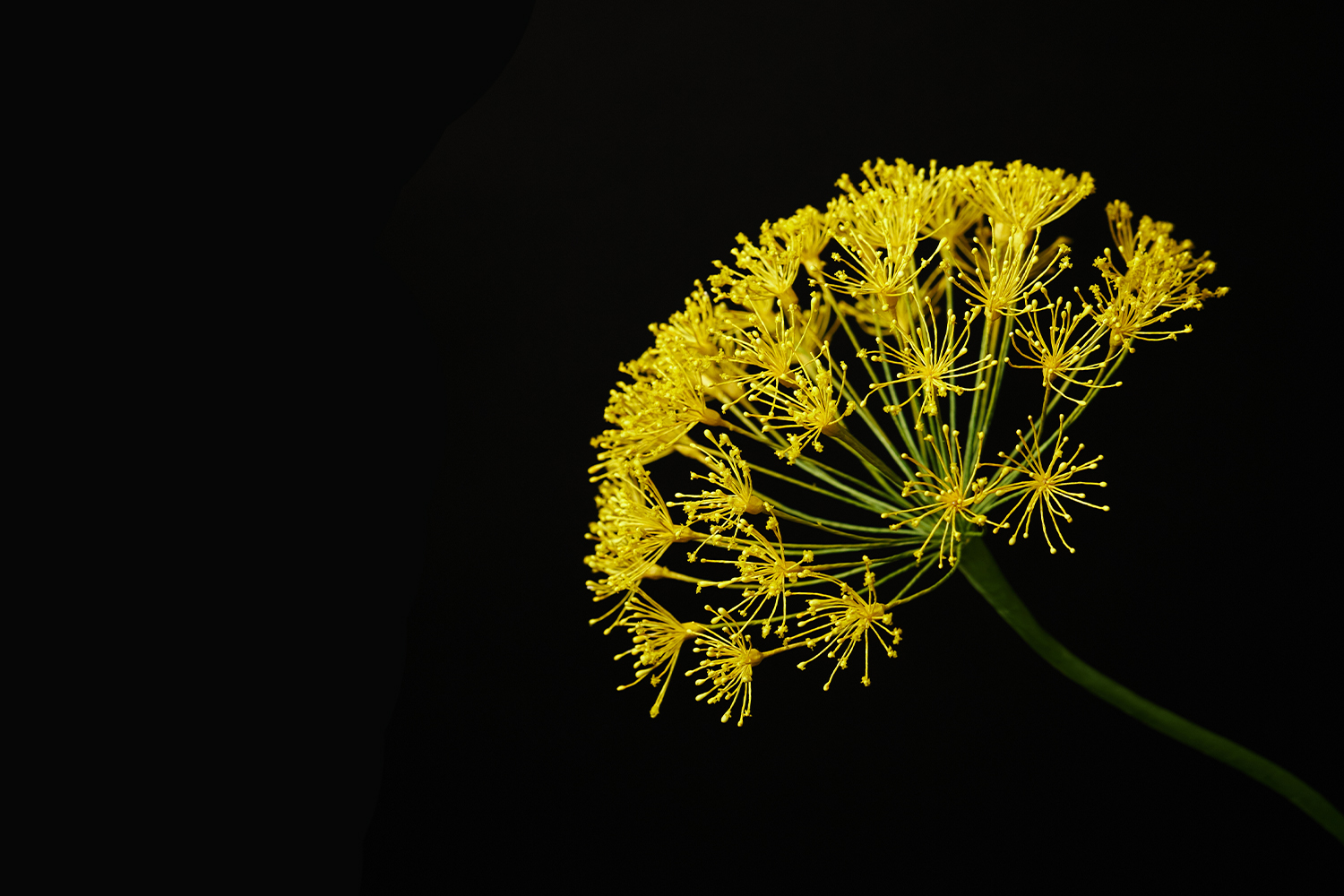
Yellow Galbanum blossom against black; image from thearomatica.com
Galbanum blossom; image from thearomatica.com.

One interesting thing I’ve learned about galbanum is that, as used in fragrance, it is actually an aromatic gum resin extracted from the plants Ferula gummosa and Ferula rubricaulis. So although we often see it listed as a top note, because it does tend to announce its presence immediately, it often persists through the heart stage and among the base notes. It has been valued by perfumers as a fixative, as are many resins. Nowadays, it often appears in fragrance in a synthetic form, as explained here on Fragrantica (the article is archived so you must register or be already registered to read it). The article’s author, Matvey Yudov, says that the original Vent Vert, created in 1945 by Germaine Cellier for Balmain, had 8% galbanum in its formula!

One of my favorite galbanum-rich fragrances is the afore-mentioned Silences, by Jacomo, in its original format. The 2012 reformulation, Silences Eau de Parfum Sublime, is lovely in its own right and still very green, but not as green as the 1978 original and 2004 reissue, which I think is the one I have. The first Silences has the following notes: top notes of Galbanum, Green Notes, Cassia, Bergamot, Orange Blossom, and Lemon; middle notes of Hyacinth, Lily-of-the-Valley, Iris, Narcissus, Rose, and Jasmine; base notes of Oakmoss, Vetiver, Cedar, Ambrette (Musk Mallow), Sandalwood, and Musk.

It just so happens that hyacinth, lily of the valley, iris, narcissus, and rose are some of my very favorite flowers in real life and accords in perfume. I was destined to love Silences! In it, the bitter, astringent green of the galbanum accord beautifully balances the sweetness of the floral notes, especially the orange blossom, rose and jasmine.

But since I’ve written before about Silences and some of the others mentioned above, this month I’ll turn to something different: Robert Piguet’s Bandit. The original, launched in 1944, was another creation of perfumer Germaine Cellier.
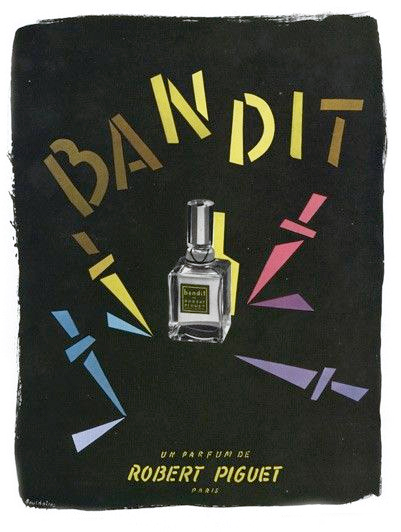
Vintage ad for Robert Piguet's Bandit perfume
Robert Piguet’s Bandit; vintage ad.

The version that was reissued in 1999 has these notes according to Fragrantica (though the notes list may belong more accurately to the 1944 original): “Top notes are Aldehydes, Galbanum, Artemisia, Bergamot, Neroli, Gardenia, Ylang-Ylang and Orange; middle notes are Carnation, Jasmine, Violet Root, Tuberose and Rose; base notes are Oakmoss, Leather, Civet, Vetiver, Patchouli, Myrrh, Musk, Amber and Coconut.” That version has now been replaced by Bandit Suprême, launched in 2020. It is still, as that article says, a perfume for “fearless women”!

Bandit makes a strong entrance right away, with the aldehydes lifting up galbanum and artemisia over the floral notes like a green hot-air balloon soaring over a garden or flowering fields. It reminds me of other strong aromatic perfumes that have undertones of leather, like Estée Lauder’s Azurée. Bergamot, which is both citrusy and green, makes a lively companion to the galbanum and artemisia, brightening whatever darkness they might otherwise shed. To my nose, the most prominent among the heart notes is the violet root, but that may be because the green top notes carry forward so powerfully. I can sense that the flower accords are there, especially the carnation, but if you asked me whether I smelled rose or jasmine after a blind sniff, I would say no.

The strongest base notes to my nose are oakmoss and leather with the galbanum still making its presence felt. If this 1999 version has any civet accord, it is of course synthetic, like the modern musk accord. But synthetic civet usually smells sort of urinous to my nose, and I don’t smell that here. Now that I know the galbanum used in fragrance is based on a resin, it makes sense to me that it carries all the way through until it meets up with myrrh in the base. The musk and amber accords create a warmth that was absent from the exhilarating opening — perhaps that’s the soft landing for the green hot-air balloon I imagined!

Green hot air balloon sailing over fields
Green hot air balloon; image from vistivictoria.com

Do you have any favorite fragrances with an obvious dose of galbanum? And remember to link over to Australian Perfume Junkies to get Portia’s Notes on that note!

Scent Sample Sunday: A Pop-Up, Anat Fritz Tzor’a, and Berdoues’ Trefle & Vetiver

Scent Sample Sunday: A Pop-Up, Anat Fritz Tzor’a, and Berdoues’ Trefle & Vetiver

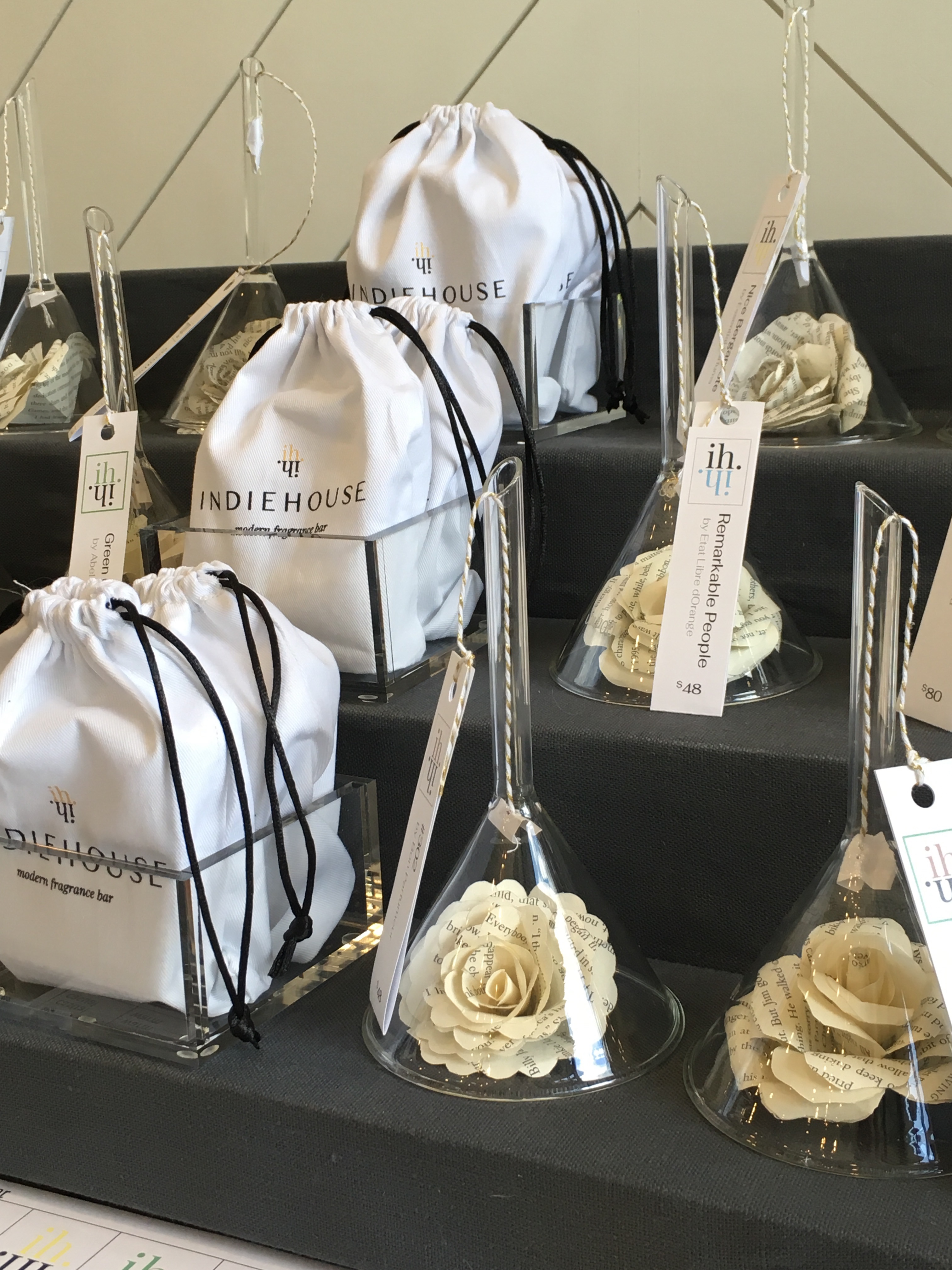
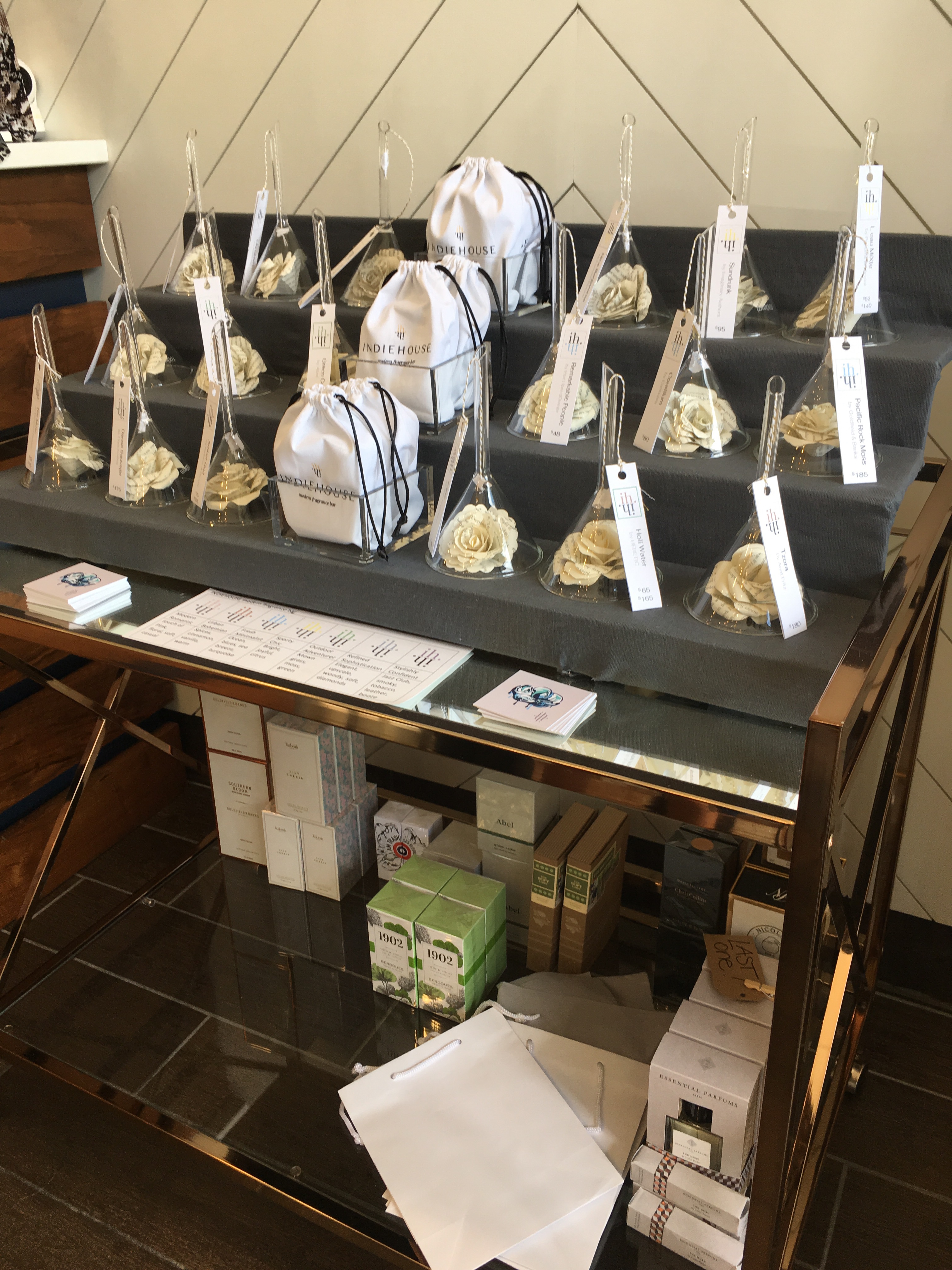
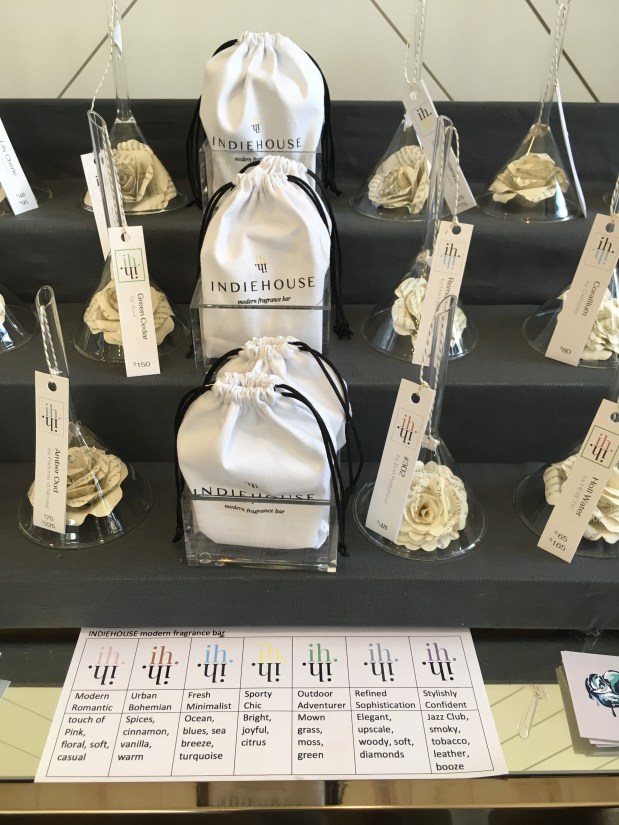
Last weekend, I visited a pop-up store presented by a new niche perfume retailer in my area: IndieHouse. I met its owner, Carrie Hadley, sniffed her small but thoughtfully chosen selection of fragrances for this event, and ended up buying an eau de toilette, Berdoues’ Trefle & Vetiver, from their 1902 line. With my purchase, I received a sample of Anat Fritz’ Tzor’a, another green scent, in eau de parfum.

Anat Fritz is a clothing and accessories designer who started in Berlin and is now based in New York. She has two fragrances, the second of which, Tzor’a, was created by perfumer Geza Schoen, who may be best known for his creations for Escentric Molecules and Ormonde Jayne. The website describes Tzor’a as “a bright, peppery unisex fragrance, featuring a zingy mix of warm citrus, pepper, earth, moss, and woods.” The composition is a pyramid structure: top notes of black currant, clary sage, bergamot, pepper; heart notes of magnolia, osmanthus, jasmine; base notes of cedarwood, vetiver, patchouli, musk, moss. If you are thinking this all sounds quite green, you are right! I love green fragrances, which is what attracted me to Tzor’a after sniffing the clever samples of fragrances that Carrie had created out of paper flowers sprayed with each fragrance and placed under glass funnels.

img_0027


The opening of Tzor’a is the “zingy” part. It is in fact very bright and peppery, thanks to the black current, sage, bergamot, and pepper. Users beware: a little of Tzor’a goes a long way! One spritz on the inside of my elbow lasted for hours and had great sillage — not so strong that it would repel anyone, but definitely radiating for a few feet. As it dries down, I must say that I don’t smell any of the flowers listed as heart notes; on my skin, Tzor’a goes straight into the woody base notes after the bright opening. The Non-Blonde blog’s review made a similar comment about the floral notes. Most prominent is the cedarwood, followed by vetiver. Some Fragrantica commenters have compared it to Terre d’Hermes.  Although it is unisex, it probably inclines more toward the masculine than the traditionally feminine. It is a very dry scent, which makes sense based on the brand’s description of what inspired it:

An ancient piece of land near Jerusalem, where the biblical story of Samson and Delilah begins. On a hill – with a breathtaking view over the whole landscape – lies Kibbutz TZOR Á between pomegranate, olive- and citrus trees. Luscious fruit trees wherever you look. A paradise place.

My imaginary home. The place I refer to when asked for the most beautiful place in the world. TZOR Á is an ode to this piece of nature, which emanates freedom, authenticity and self-confidence. Fresh and clear.

The place Tzor’a is home to a noted winery and series of vineyards in the Judean Hills. Interesting historical note: excavations near this kibbutz in 2011 uncovered a Jewish ritual bath structure dating back to the “Second Temple Period” (first century BC through first century CE). It was the first archaeological site to confirm that the area had Jewish inhabitants as long as 2000 years ago, likely until about the year 70 CE, when the Temple  (and most of ancient Jerusalem) was destroyed by the Romans to put down a rebellion, in one of the more brutal episodes of the Roman Empire.

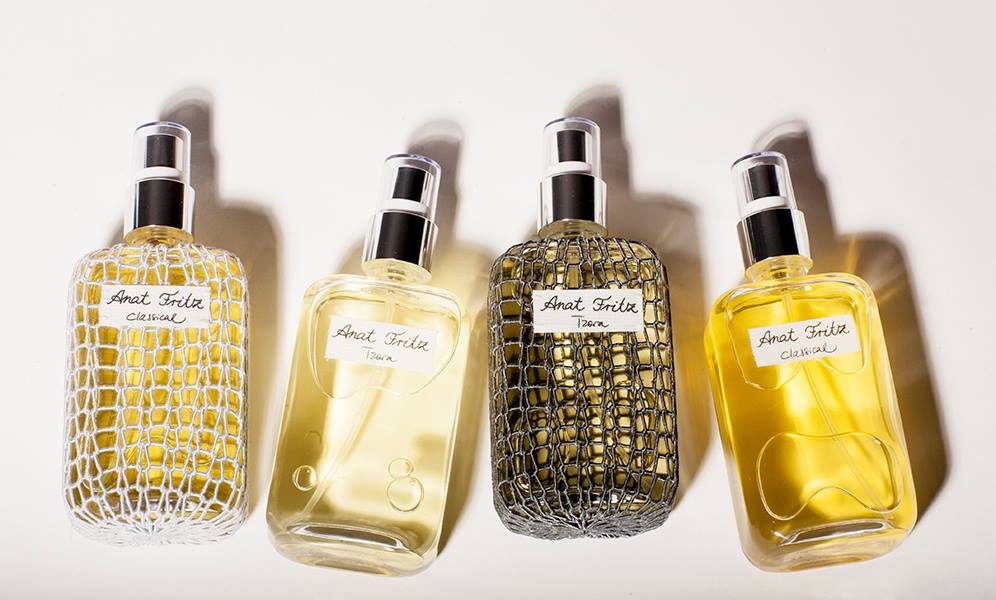
Tzor’a comes in a unique bottle: the bottle itself is a simple shape, a rounded rectangle of glass, but it is encased in a handknit net of sage green yarn, invoking Anat Fritz’ interest in textiles and knits. It is a very appealing presentation.

Anat Fritz perfumes

Anat Fritz fragrances; Tzor’a and Classical; image from http://www.anatfritz.com

All in all, I like Tzor’a a lot, but I think I would prefer it on my husband to wearing it myself. Given how much I love floral notes as well as green notes, and since I don’t seem to be able to smell the few floral notes in this composition, I think it will suit me better on him! It is an expensive fragrance, but the quality and strength are so high, it may be more affordable than it seems from the retail price ($180 for 80 ml), since it lasts so long with 1-2 sprays. Cafleurebon editor Gail Gross is a fan; her review is here.

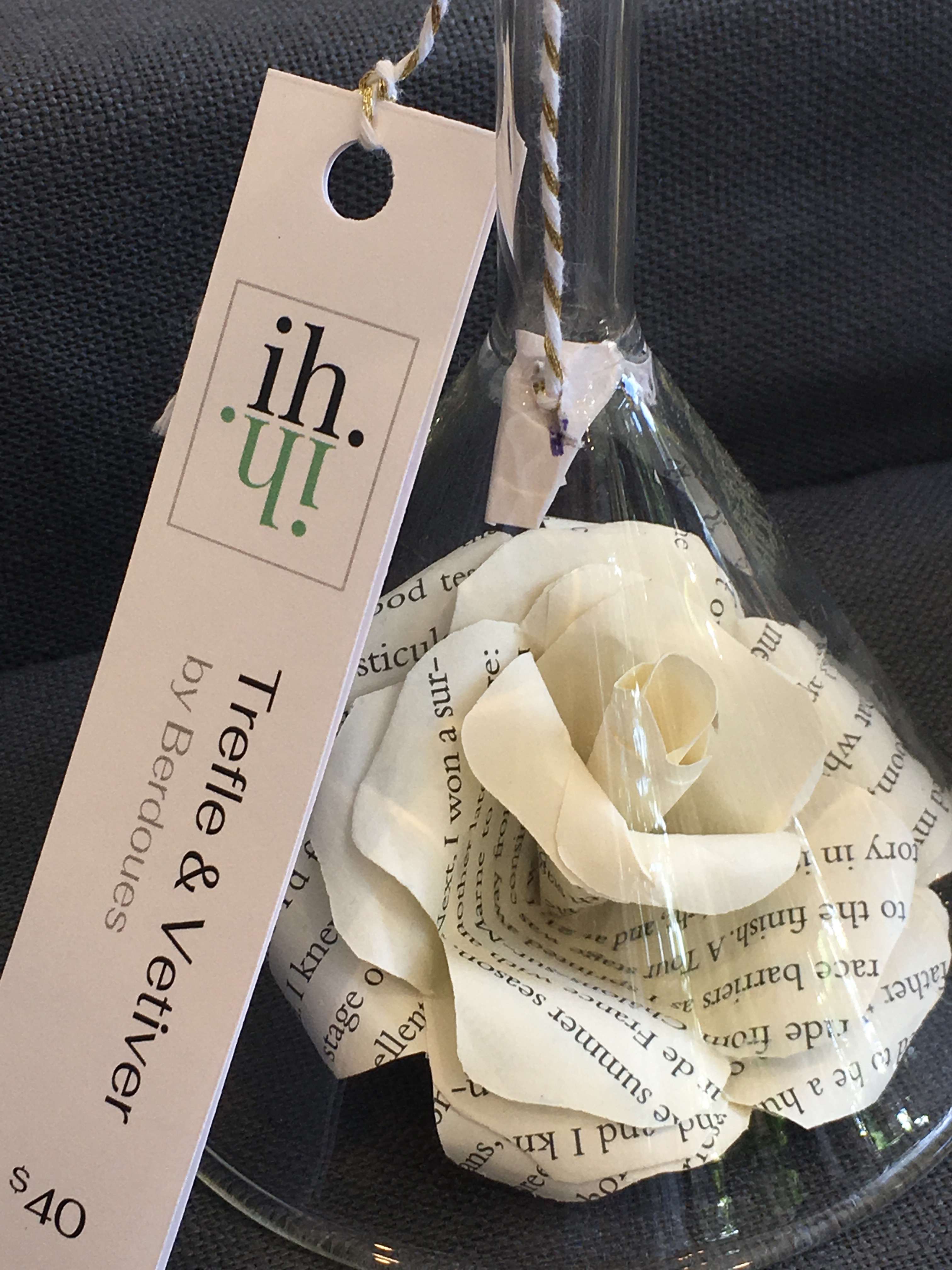
The other green fragrance I tried (and bought) was Berdoues’ Trefle & Vetiver.

img_0033

“Trefle” is French for clover, and the scent does indeed smell like summery clover blossoms. The top notes are apple and jasmine, the heart is clover, and the base note is vetiver. I find this to be more unisex than Tzor’a, because the fruity and floral notes are more apparent to me. It doesn’t last nearly as long as Tzor’a, not surprising since it is an eau de toilette, not eau de parfum. It is also more affordable, coming in at $40 for 100 ml. I was impressed by the wide range of prices that Indiehouse displayed, from the affordable to the luxe. Such a great way to introduce more people to niche fragrances! I look forward to writing more about Indiehouse when the brick-and-mortar store opens this fall.

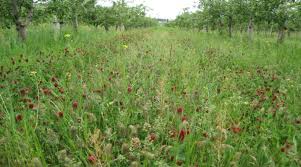
Trefle & Vetiver feels right for the weather and time of year in my part of the US. It is almost October and the days are getting noticeably shorter, yet the weather is still very hot and dry. The combination of bright apple with summery jasmine, tempered by clover and grounded by vetiver, suits that. It still feels like summer around here, but it’s time to harvest apples! Various clovers appear in apple orchards as non-invasive cover crops that help fix nitrogen in the soil, don’t compete with the trees for water, and attract the honey bees and other pollinators that are essential to fruit production. My own garden is too small and shaded to envision growing fruit trees for fruit, but I love the image of apple orchards underplanted with blossoming clover!

Blossoming red clover underplanting apple trees

Red clover in apple orchard; image from http://www.nrcs.usda.gov.

Although Trefle & Vetiver doesn’t radiate as strongly or as long as Tzor’a, it continues to make itself known as a pleasant skin scent for several hours after application. This would be a very nice scent to wear to work; it is subtle and soft as it dries down, but it is a pleasant reminder of the great outdoors when one has to be inside.

Have you visited any pop-up stores lately? Tried either of Anat Fritz’ fragrances? Have any other suggestions for fragrances during a hot, dry fall?