Welcome to the weekly Perfume Chat Room, perfumistas! I envision this chat room as a weekly drop-in spot online, where readers may ask questions, suggest fragrances, tell others their SOTD, comment on new releases or old favorites, and respond to each other. The perennial theme is fragrance, but we can interpret that broadly. This is meant to be a kind space, so please try not to give or take offense, and let’s all agree to disagree when opinions differ. In fragrance as in life, your mileage may vary! YMMV.
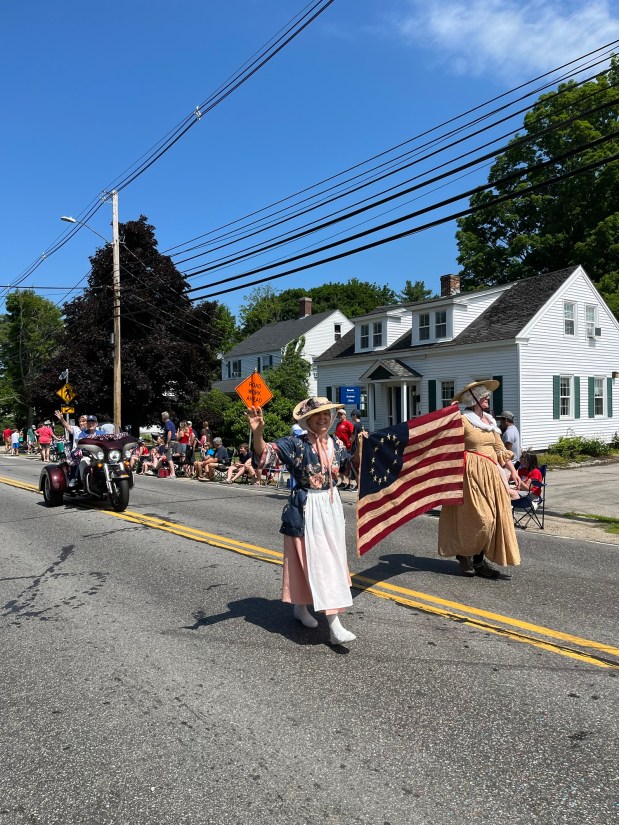
Today is Friday, July 4, and it has been a week. Suffice it to say, I’m not feeling particularly celebratory — but by God, my family has served the United States since before there even was a United States, so I’m trying to keep things in perspective and not let the Fourth of July and its meaning get taken from me. Independence and freedom cost too many too much to let them go without a fight, as we were reminded last summer on our trip to Normandy and the D-Day beaches.
On a lighter note, one of my multi-great grandfathers, after whom my father was named, like his father and grandfather and a few more ancestors before that, is mentioned in the Papers of George Washington for having complained to the General that he had been beaten by an officer in the Continental Army. My ancestor was in the state militia and viewed himself as independent of the regular army officers. Apparently he had sassed the officer, who took it upon himself to inflict corporal punishment. General Washington, bless him, took the complaint seriously and ordered an investigation. As if he had nothing else on his mind!
So for the Fourth, I thought I’d write about an all-American fragrance: Tommy Hilfiger’s Tommy Girl. Created by Calice Becker and launched in 1996, it is sold in a red, white, and blue striped bottle, presented as just the kind of youthful, fresh fragrance a true American Girl would wear.
But, of course, there’s much more to it than that, and Luca Turin gave it five stars in the first edition of his book “Perfumes: The Guide.”
Fragrantica lists its notes as follows: “Top notes are Apple Tree Blossom, Mandarin Orange, Camelia and Black Currant; middle notes are Lemon, Honeysuckle, Grapefruit, Rose, Lily, Mint and Violet; base notes are Magnolia, Jasmine, Cedar, Sandalwood and Leather.”
M. Turin describes Tommy Girl as a tea base “clothed … in a fresh floral accord so exhilaratingly bright that it could be used to set the white point for all future fragrances.” I assume that in this case, “camellia” refers to camellia sinensis, the plant from which tea leaves are derived. Apparently, the base tea accord was inspired by the complex scents in the famous Paris tea store, Mariage Frères. Some of the notes listed absolutely appear in various tea blends, such as lemon, jasmine, rose, mint.
Not surprisingly, since I love tea, I find Tommy Girl very pleasant to wear, especially in the heat and humidity we’re having here now. It goes on fresh and it stays fresh, just with different citrus and floral notes emerging as it evolves. My nose doesn’t pick up any leather accord, though.
Have you tried Tommy Girl lately? Are there any other fragrances you consider “All-American”?
The flag at half mast for Memorial Day, the American Cemetery, Normandy
November’s “Counterpoint” fragrance is Estée Lauder’s Beyond Paradise, in its original bottle and formulation. In many ways, it is a unique fragrance: almost a hologram of an imaginary tropical flower.
Beyond Paradise by Estée Lauder; image by Portia Turbo.
1. How did you first encounter Estee Lauder Beyond Paradise, and what was your first impression?
Old Herbaceous: Like a few other scents I’ve described, I first encountered Beyond Paradise because Luca Turin and Tania Sanchez rated it with five stars in their book “Perfumes: The A-Z Guide.” That book was a big part of my going down the rabbit-hole with fragrance, and I sought out several of the five-star fragrances as part of educating myself and my sense of smell. Although Beyond Paradise is still available (though apparently discontinued now), what one usually finds is a reformulation dating from 2015, in a standardized rectangular clear glass bottle. The original, in the ovoid rainbow-tinted bottle, was launched in 2003, created by Calice Becker. That’s the one I sought, with eventual success.
My first impression was “Wow – white floral alert!”, though I wouldn’t describe it as the proverbial “Big White Floral” that strikes terror into so many perfumistas’ hearts (or noses). I have mixed feelings about white florals. I love many white floral notes and accords, like jasmine and gardenia, and their corresponding flowers in real life, especially outside. Many white flower fragrances smell more like hothouse plants, grown in humid greenhouses and conservatories, warm and somewhat stifling. I wonder if this is because many perfumers encounter the blooms of plants like jasmine and gardenia in those settings?
Interestingly, Beyond Paradise is supposed to have been inspired by the largest conservatory in Europe and the UK, possibly in the world: the Eden Project in Cornwall, which I’ve actually visited with my family some years ago.
The Eden Project, Cornwall
This origin is reflected in the 2003 list of its notes:
Top Notes: Eden’s Mist, Blue Hyacinth, Orange Flower Templar, Jabuticaba Fruit Middle Notes: Laelia Orchid, Crepe Jasmin, Mahonia Japonica, Pink Honeysuckle Base Notes: Natal Plum Blossoms, Ambrette Seed, Zebrano Wood, Golden Melaleuca Bark
The accord “Eden’s Mist” is supposed to be based on the scent of the air inside one of the Eden Project’s domes. More prosaically, Fragrantica gives the following notes list: Top notes: Hyacinth, Orange Blossom, Grapefruit, Bergamot and Lemon; middle notes are Jasmine, Gardenia, Honeysuckle and Orchid; base notes are Hibiscus, Plum Wood, Ambrette (Musk Mallow) and Amber.
Portia: Many years ago on my first visit to India after Varun had moved back to help run the families’ hotels, I was shopping in the Sydney Airport Duty Free for gifts to give him and the family. Because I’d spent some serious money the SA was unbelievably generous with the samples. One of those was a spray mini of Beyond Paradise. When I first sprayed it on me I couldn’t believe anything could smell so good and fell madly in love on the spot. Nothing in my history of loving perfumes prepared me for what Beyond Paradise is.
Funnily, when I arrived in India Varun loathed it. He couldn’t understand why I would want to smell exactly like the jasmine, tuberose and marigold that Indian women wore woven into their hair and that Indians gave to their deities’ statues.
Obviously I ignored him and wore the whole mini over the next two weeks. I think I bought my first bottle on the way home.
2. How would you describe the development of Estee Lauder Beyond Paradise?
Portia: JASMINE! with some other florals and a citrus burst running underneath. It’s so over the top I can’t help but laugh and then once that dies down I continue to huff my wrist and smile the smile of a happy perfumista. There is even a squeal-y urinous hit from the grapefruit and a breathy poopiness. To me this is the most French of the Lauder summer oeuvre. Definitely not the super clean of many American perfumes. There is the dewy cool fresh water aspect though, like the cold rivulets on a bottle of white wine.
How are marigolds not a note, I can smell their sharp funkiness clear as day.
While Beyond Paradise does have a trajectory it’s not a large one and the noted amber in the base seems to pass me by completely. There are some green broken branches or twigs, white flowers and shitloads of vegetal musks with still pretty hints of pithy citrus right to the end.
Old Herbaceous: Given that my first impression is of exotic flowers growing in a conservatory, I think my nose is actually picking up on “Eden’s Mist”. I don’t smell any hyacinth, and I couldn’t tell you what jaboticaba fruit smells like. The closest I can describe to what I smell at first is a combination of jasmine and tropical orchids. Although Mahonia japonica is listed as a middle note, I don’t smell that. I grow mahonias in my garden, and to me they smell most like lily of the valley. That’s not what I smell in Beyond Paradise. In fact, the whole development of Beyond Paradise most resembles its origin story: a walk through a fantasy conservatory with abstract, imaginary flowers. I agree with Portia, though, that of all the floral components, the strongest is a jasmine accord.
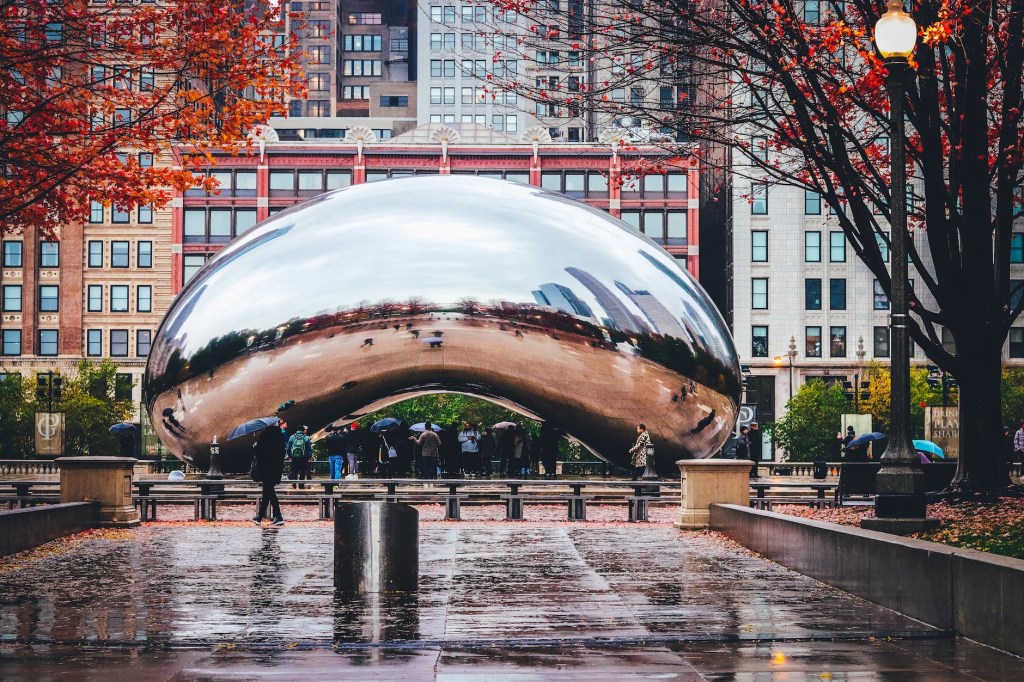
Lauder initially described the fragrance and its flankers as “prismatic florals”. The word “prismatic” usually refers to the image created when a prism refracts a beam of light, separating into its color constituents. I experience Beyond Paradise as a sort of prism in reverse, with its many notes coalescing into a smoothly abstract whole. The image that comes to my mind is the modern sculpture “Cloud Gate”, by Anish Kapoor, in Chicago’s Millennium Park. It is made up of almost two hundred stainless steel plates, welded together so seamlessly that it appears as an unbroken polished surface (shaped like a giant bean, which is its nickname). To my nose, Beyond Paradise is almost linear, though it warms slightly after about an hour or two. That’s also when I smell some underlying fruitiness and green, and a bit of the funk that Portia describes.
Cloud Gate, by Anish Kapoor
3. Do you or will you wear Estee Lauder Beyond Paradise regularly? For what occasions or seasons?
Old Herbaceous: I don’t wear it often, but it’s a lovely fragrance for warm weather or a beach vacation. It also works well in an office, since it doesn’t shout BWF. I think it would be great for a romantic dinner outside on a terrace on a warm summer evening. It is quite elegant, in its streamlined abstraction.
Portia: The last couple of summer seasons Beyond Paradise did not come out of the Lauder box even once. I always think of Lauder as winter perfumes like Youth Dew, Azuree, and Cinnabar and forget this, Modern Muse and Beyond Paradise in the warmer months. This year as the weather heats up I’m leaving it in the grab tray so it does get a bunch of wears. It’s way too gorgeous and holds too many happy memories to leave it languishing, all forlorn in the cupboard.
Spring and summer seem like the perfect and obvious seasons to wear Beyond Paradise but I think it might be nice on any sunshiny day. It could also be a breath of nature and cool water in an office environment. So bright and refreshing without feeling like a regular freshie.
4. Who should/could wear Estee Lauder Beyond Paradise?
Portia: This is perhaps one of the girliest non-confectionary perfumes that’s available. I will say though that when I wear it the incongruity of a dude walking around smelling like this works in my favour. It’s one of the perfumes that people ask about. Mainly because it jumps out as not something you often smell on gents.
The change of bottle from gorgeous to boring AF will also mean that men will probably have less trouble having it on their dresser or in the collection.
Old Herbaceous: The opening of Beyond Paradise puts it squarely in the “feminine floral” camp, but as it dries down, it becomes more unisex to my nose and reminds me of some classic aquatic fragrances. I think it would especially suit anyone on a warm summer evening, when its fantasy florals would blend with the night air, especially in a humid climate. If you come across it at a reasonable price, sometimes still found online, it’s a nice addition to a fragrance collection unless you just loathe florals.
How do you respond to white florals, big or otherwise? Any favorites? Have you tried Beyond Paradise?
Only a few more days of Advent to go! Today’s Advent surprise scent is By Kilian’s Liaisons Dangereuses, named for the decidedly unholy, notorious 18th century novel that has inspired award-winning stage plays and films.
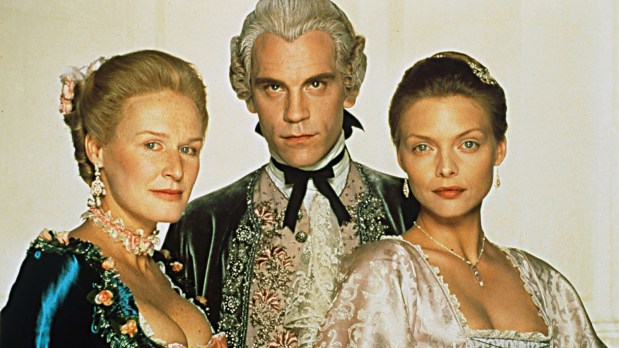
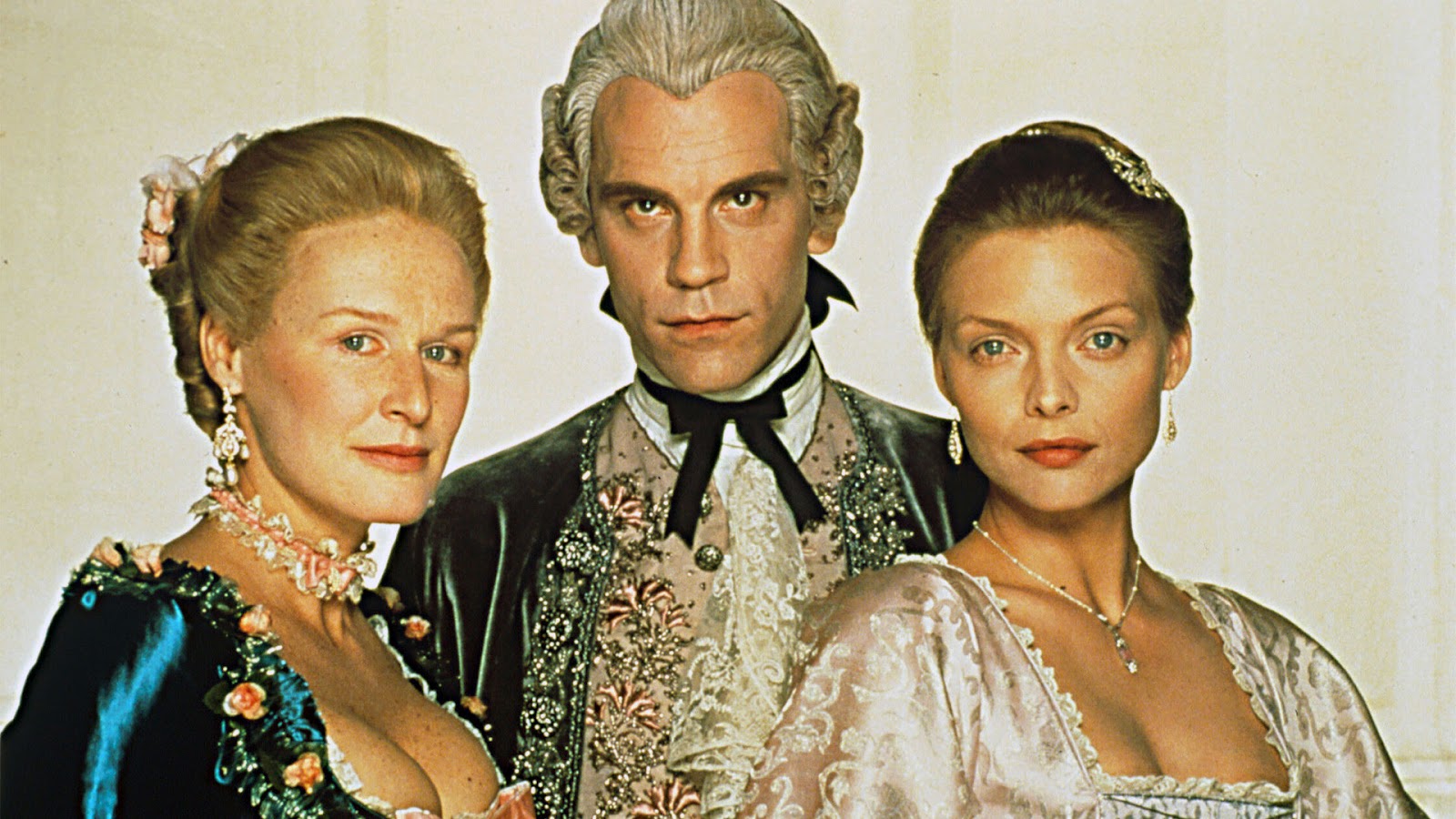
Dangerous Liaisons; image from Orion Pictures
Perfumer Calice Becker is the nose behind its creation, and it was launched in 2007. Fragrantica classifies it as a fruity chypre, with top notes of Peach, Plum, Black Currant and Coconut; middle notes of Rose, Geranium, Ambrette (Musk Mallow) and Cinnamon; and base notes of Musk, Sandalwood, Oakmoss, Woodsy Notes, Vetiver and Vanilla.
As one expects from Ms. Becker, this fragrance exhibits intelligence and elegance. To my nose, it is clearly unisex, reflecting the central roles of both Merteuil and Valmont, and their wicked collaborations. It opens with a sharp bite of blackcurrant, reminiscent of their malice. And that peach note! Dangerous, indeed. As that writer notes, “The peach is both seductive and deceitful.” The blackcurrant and peach dominate the opening, not unpleasantly; there is a languorous undercurrent that I will attribute to the coconut accord. Next up are the rose, geranium, and musk mallow, which convey seduction. I don’t smell cinnamon at this stage. The warm base notes are all about sex, with an undertone of bitterness from the oakmoss. Brilliant! The structure and development of Liaisons Dangereuses align closely with the actual plot of the story, without straying into explicitness. This is a scent many of us would be happy to wear, as opposed to the infamous ELdO creation, Secretions Magnifiques.
And yet, when you get right down to it, the latter might be a more accurate portrayal of the story, which involves illicit sex, seduction, betrayal, rape, miscarriage. The genius of the novel and its later iterations lies in part in how it shows the ugliness of the aristocratic characters’ actual behavior and how it is camouflaged and masked by their extravagantly ornate clothing, their elegant interiors, their wealth and breeding. Secretions Magnifiques could be a signature scent for the Vicomte de Valmont as played by John Malkovich.
Liaisons Dangereuses is more polite. The rose does not dominate the heart phase; I would say that rose, geranium, and musk mallow play equal roles here. In fact, one could analogize them to the three main characters of the movie “Dangerous Liaisons”, the rose standing in for Michelle Pfeiffer’s lovely and virtuous Mme. de Tourvel, the rose-resembling but astringent geranium for Glenn Close as the Marquise de Merteuil, and the musk mallow for John Malkovich’s Valmont.
I find this to be a very wearable fragrance, appropriate even for the workplace if applied lightly. The opening is actually wonderful, and different from more mainstream fragrances, and it segues beautifully into the heart notes. I found the base to be appealing and well-done, but less distinctive.
Confession: I’ve never actually watched the whole movie “Dangerous Liaisons”, because it gives me the creeps. That’s probably partly because of the outstanding acting by Close and Malkovich, who both have an uncanny ability to play attractive villains. Also, I find the whole storyline about Cécile, the 15 year-old virgin whom Valmont assaults for revenge (his own and Merteuil’s, for different reasons) very disturbing, especially in the aftermath of revelations about Jeffrey Epstein and Ghislaine Maxwell. Though I will continue to avoid the movie, I like the fragrance, and it is a brilliant creation. I’m not surprised that Luca Turin gave it four stars, and I’m glad to have had the chance to sample it.
I haven’t tried many of By Kilian’s fragrances, though I’ve liked the few I have tried, and one of my daughters really liked Water Calligraphy when she accompanied me on a perfume-sniffing excursion. Do you have any favorites? Or particular dislikes?
“Melange” is an apt word to use for Estee Lauder’s Beyond Paradise, as it is truly a melange of different florals. In their book “Perfumes: The Guide A-Z”, Luca Turin and Tania Sanchez not only gave it five stars, but also close to three full pages of discussion (most perfumes got a paragraph). He calls it a “symphonic floral.” Calice Becker was the perfumer who created it; Beyond Paradise was launched in 2003. The bottle I have is the teardrop-shaped, rainbow-tinted original. The batch number on the bottom suggests it dates to 2013. Fragrantica lists that version’s notes as: Top notes of Hyacinth, Orange Blossom, Grapefruit, Bergamot and Lemon; middle notes of Jasmine, Gardenia, Honeysuckle and Orchid; base notes of Hibiscus, Plum Wood, Ambrette (Musk Mallow) and Amber. The 2015 version in the rectangular bottle is described as having top notes of Blue Hyacinth, Orange Blossom and Jabuticaba; middle notes of Honeysuckle, Jasmine, Orchid and Mahonia; and base notes of Ambrette (Musk Mallow), Plum Blossom, Paperbark, and Woody Notes.
Both versions of Beyond Paradise are meant to be “fantasy florals” with a tropical theme; part of the length of Turin’s review is a long digression into the nature of abstract floral fragrances and how challenging they are to create, with a tip of the hat to perfumer Calice Becker, an acknowledged master of the art. According to contemporaneous press and PR coverage when it was launched, it included “proprietary notes” gleaned from a collaboration with The Eden Project, a fascinating conservation site in Cornwall, which involves massive biospheres located in and above an abandoned quarry and which I’ve had the privilege to visit. It does in fact house many rare and tropical plants, so it must be a great resource for unusual smells.
The garden centers and grocery stores (the only places I go these days) are full of potted hyacinths, one of my favorite flowers and favorite scents. Yesterday, in anticipation of Easter next weekend, I bought two pots of forced hyacinth bulbs: one has flowers of a delicate, creamy pale yellow; the other’s flowers are a cheerful, slightly tacky, bright pink. So the scent of real hyacinths is wafting through my house — what better time to review a recently acquired decant of Tom Ford’s Ombre de Hyacinth?
I had wanted to try it for a while, but it is discontinued and not easy to find. Imagine my delight when I saw it listed on the website of a decant subscription service I was considering! Sign me up! And I did.






 Serenity Now Scents and Sensibilities