Welcome to the weekly Perfume Chat Room, perfumistas! I envision this chat room as a weekly drop-in spot online, where readers may ask questions, suggest fragrances, tell others their SOTD, comment on new releases or old favorites, and respond to each other. The perennial theme is fragrance, but we can interpret that broadly. This is meant to be a kind space, so please try not to give or take offense, and let’s all agree to disagree when opinions differ. In fragrance as in life, your mileage may vary! YMMV.
Today is Friday, May 2, and yesterday was May Day in many countries. In France, a May Day tradition is to give bouquets of maguey, or lily of the valley, to loved ones and friends. Apparently this was a tradition faithfully honored by M. Christian Dior, whose favorite flower was the muguet. This inspired, in turn, his work with Edmond Roudnitska to create the legendary Dior fragrance Diorissimo. As regular readers here know, muguet is one of my favorite scents and the flowers are one of my favorite flowers. In past years, I’ve done daily posts in May for a blogging “May Muguet Marathon”, which has been great fun!
Today I’m wearing my newest muguet fragrance, Cavatina by Parfums Dusita. I really love it, especially at this time of year when the weather shifts between late spring and early summer.
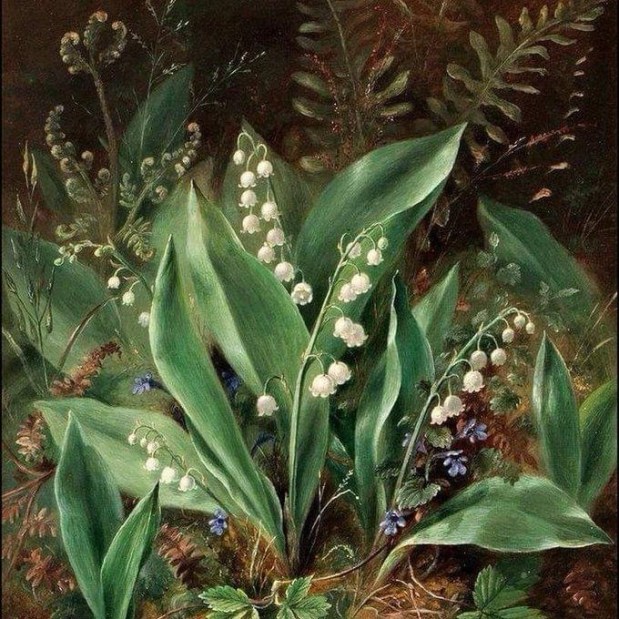
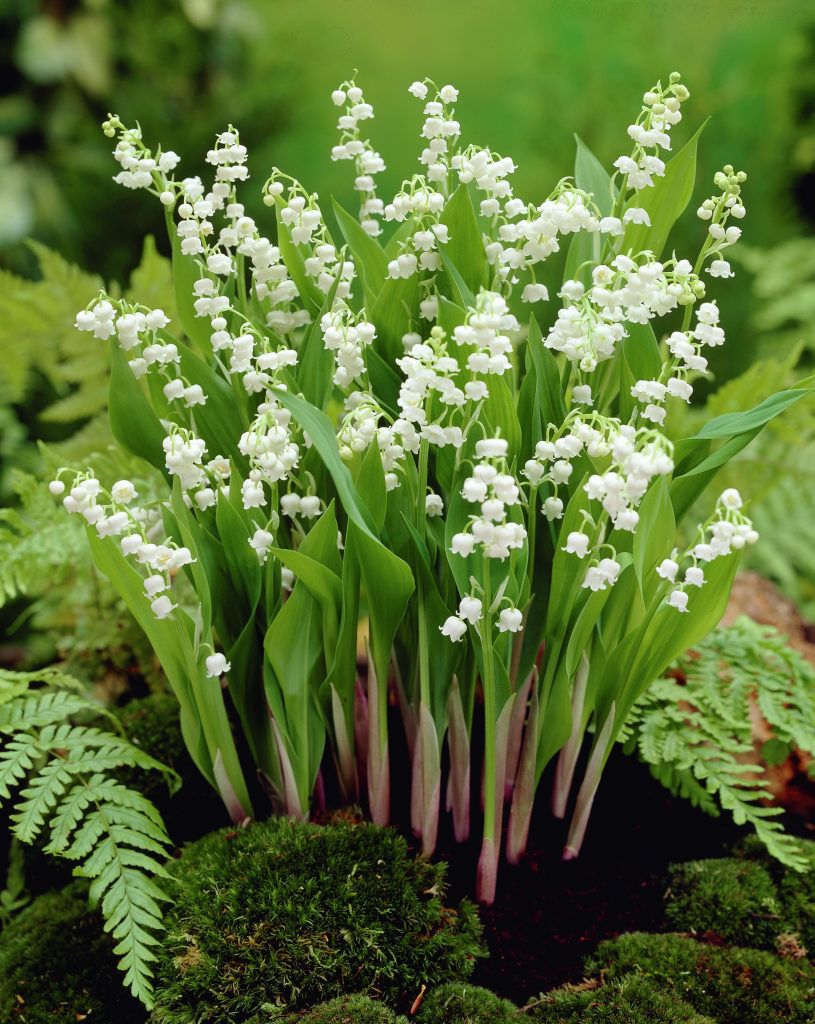
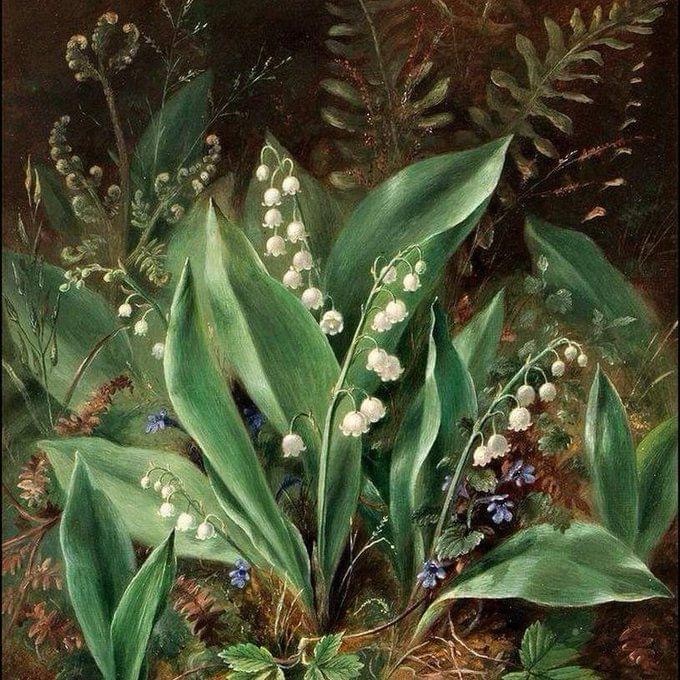
Lilies of the valley in woodland garden; image from Pinterest
Did you do anything special to celebrate May Day? Do you have any new-to-you favorite muguet or other spring fragrances?
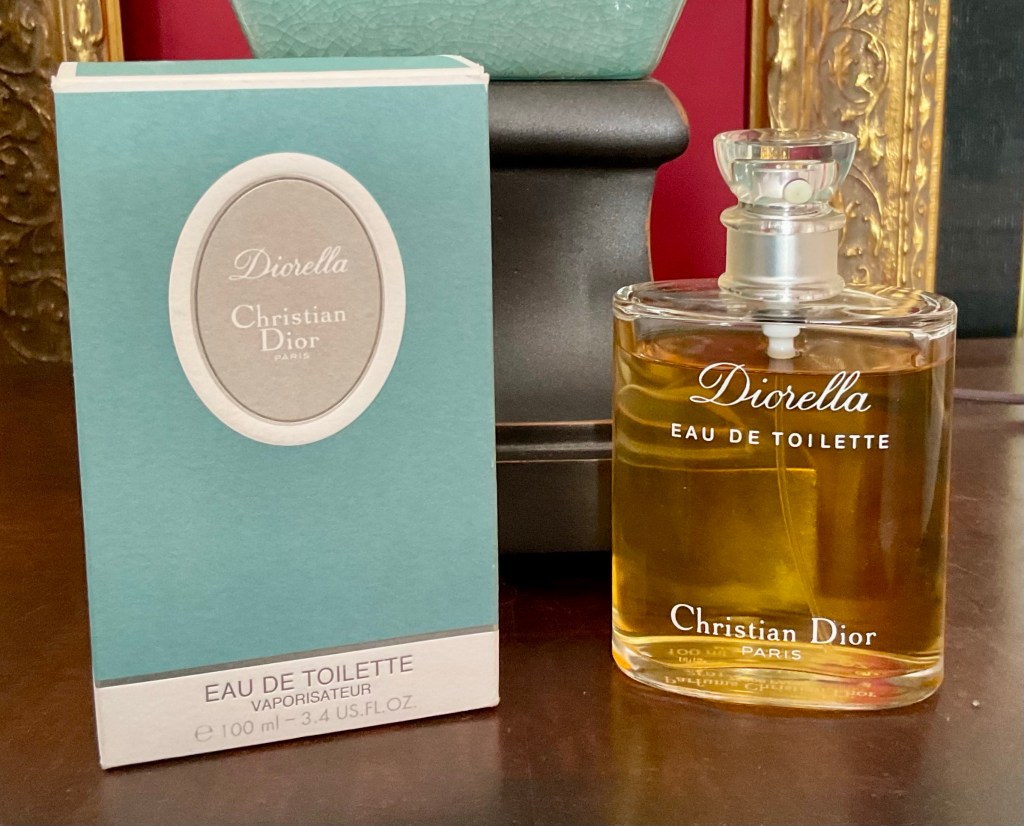
Welcome to the (late!) October installment of “CounterPoint”! I was thrown off by how early the first Monday of the month was, and various other distractions, but here we are, to discuss Christian Dior’s Diorella. Thank you, Portia, for being so patient!
Launched in 1972, Diorella is a “lemon chypre”, a narrow and specialized category of fragrance, given that chypres generally are a specific category. Perfumer Edmond Roudnitska created Diorella in 1972 at the peak of his powers, having already created for Dior the legendary fragrances Diorama, Diorissimo, and Eau Sauvage.
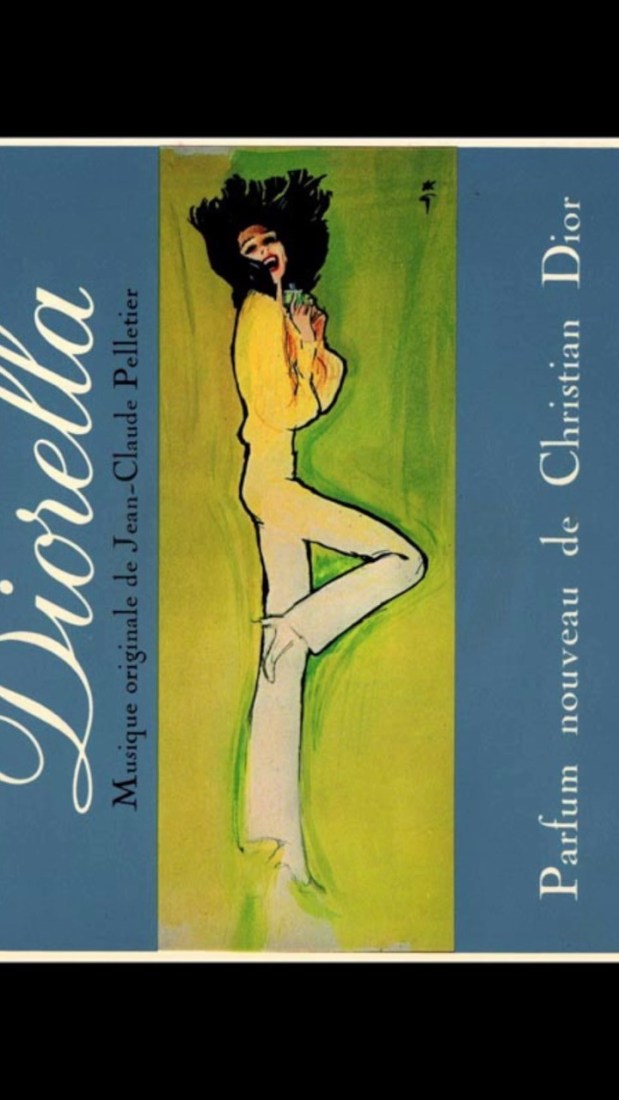
Diorella; image by Christian Dior.
Interestingly, Diorella was the inspiration for Meet Me On The Corner, a crowd-funded fragrance by Sarah McCartney of 4160 Tuesdays that she created to capture the vibe of 1970s chypres and named after a 1972 pop song.
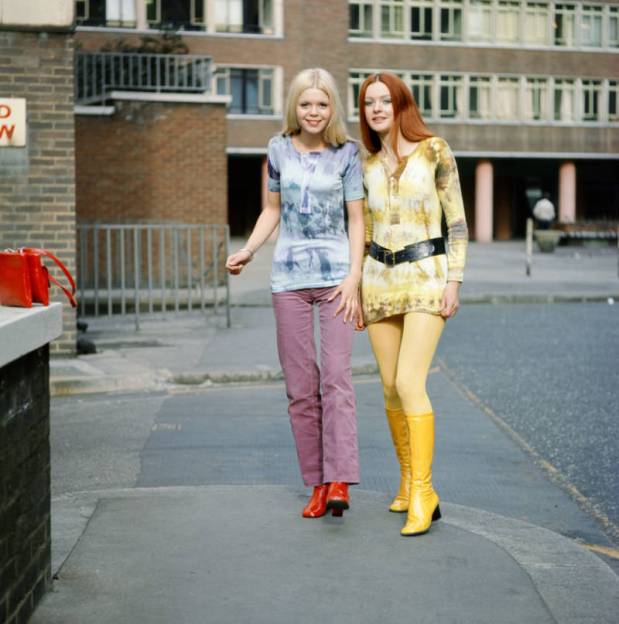
Tye-dye girls, Doreen Spooner/Getty Images
How did you first encounter Diorella and what was your first impression?
Portia: When Old Herbaceous asked if we could do Diorella my first internal response was “Diorella? Sure I’ve heard of it but have no memory of ever seeing it or smelling it.” Dutifully I went to the DIOR box and rummaged around just to be sure. Lo and behold, there is a 100ml, extremely vintage looking beat up houndstooth box of Diorella EdT. There’s clearly been some leakage, the sprayer and surrounds have residue and some eating away of the silver. The moment I touched the very bleached out label it just fell off. This bottle is O L D. Even on spritzing I have no memory of smelling this beauty. So while I may have smelled Diorella in the past I’m coming at it as a newbie. First impression is that I’m really surprised that the top seems to be intact.
Old Herbaceous: My perfumista journey began when I read “The Perfect Scent” by Chandler Burr, then moved on to “Perfumes: The A-Z Guide” by Luca Turin and Tania Sanchez. I was fascinated by their witty insights and their rating system of stars, so I started to seek out the fragrances they had awarded five stars, their top rating. One of those was Diorella, in its pre-2009 formulation. As I learned more about fragrances, I started to figure out how to find vintage fragrances (sadly, without access to the amazing Japanese flea markets that Neil Chapman describes in his blog The Black Narcissus!). I found an intact bottle of Diorella eau de toilette that dates from 2002, as best I can tell, based on its box, bottle, and batch number. It was a reasonable price, so I snapped it up.
My Diorella
My first impression was “Yes, this is a true chypre!” I happen to love most chypres (I can’t think of one I have disliked yet), with their classic structure of citrus top notes, floral heart notes, and base notes that include oakmoss. Per Fragrantica, the structure of the original Diorella is: top notes of green notes, Sicilian lemon, bergamot, melon, and basil; middle notes of honeysuckle, Moroccan jasmine, peach, carnation, cyclamen, and rose; and base notes of oakmoss, vetiver, patchouli, and musk. While the top notes of my bottle have faded somewhat with age, the combination of citrus and green notes is still evident and lively.
2. How would you describe the development of Diorella?
Old Herbaceous: The top notes aren’t as vivid in my bottle as I’m sure they were when it was new, but they are vivid enough to indicate the lemony/green opening accord intended by M. Roudnitska. The melon and green notes have taken precedence in my bottle, including a lovely basil accord. I think the basil is what may have prompted Turin and Sanchez to declare that if Guerlain’s fragrances are desserts, Diorella is a Vietnamese beef salad. Fear not! It smells nothing like rare meat. I think I can smell a couple of the base notes right from the start, specifically the vetiver and oakmoss, humming in the background.
In the heart phase, I smell honeysuckle and jasmine. The jasmine isn’t heavy or narcotic, it stays light. The hum of vetiver and oakmoss becomes more noticeable, and soon they take over from the floral notes entirely. In the drydown and base stage, Diorella moves from fresh toward warm without becoming spicy, supported by patchouli and musk. It also lasts a good long time, surprising in a fragrance that also smells very fresh.
Portia: Fizzy opening with bright green citruses and aldehydes, leaning slightly waxy like putting your fingernail into the peel and getting that luscious burst of fresh and sunshiny goodness. The greenery is both camellia leafy and tulip stemmy, crushed to let their greenness explode.
As the initial heady notes calm, I have a very modern masculine waft of cucumber/melon intertwined with the bouquet. It’s a surprise to have something so stuck in my mind as a 1980/90s gym men’s changeroom smell be lurking so significantly in this epitome of female beauty. It does not detract from the femininity at all and makes me think of how many of the men would also swoon for Diorella.
I will say that Diorella is very cologne-ish. This is not a complaint, merely an observation. For some reason I was expecting a very fruity/mossy chypre in the style of Mitsouko. This is as far from that as you can imagine while still bearing many of the same notes.
The heart and base take a long time merging and there’s plenty of crossover during this time, plus the citruses are subtly tenacious.
The crisp, green, oily grassiness of vetiver is tempered by the earthy patchouli and moss but there is much more going on here. I’m getting wafts of quite astringent eucalyptus, the fresh green of shady creeks as you trudge through the greenery. There’s a cooling, slightly salted seaside breeze hiding below.
The last gasps are a very vegetal musk and sweet greenery.
Diorella is so tapestried and I think it will take a dozen more wears to even get a hold of what’s happening here.
3. Do you or will you wear Diorella regularly? For what occasions or seasons?
Portia: Honestly, now that I’ve found this gorgeous unicorn it might be too special to wear willy nilly. Though it feels like an excellent sunny day spritz and could give me blue sky reminiscences in winter, I think just holding the bottle and sniffing the cap will be all I’m capable of doing.
Old Herbaceous: I haven’t been wearing Diorella regularly, but it has been such a good fit for the beautiful October weather we’re having that I plan to keep it out and within reach for at least a while (keeping it in its box, of course, to protect it from light!). It partners beautifully with these crisp, sunny, dry autumn days, although I often think of it more as an early summer scent. Diorella works well for a whole range of occasions, from casual to elegant, from daytime to evening. It’s like a Diane von Furstenburg wrap dress, the kind that were so fashionable in the 1970s (my mother wore them) and that you could dress up or dress down, endlessly versatile but with a distinct, chic personality.
4. Who should/could wear Diorella?
Old Herbaceous: Well, here’s what Luca Turin wrote on that topic: “Diorella was intended as a feminine and was the very essence of Bohemian chic, with an odd, overripe melon effect that still feels both elegant and decadent. The modern version, no doubt fully compliant with all relevant health-and-safety edicts since the fall of the Roman Empire, is drier and more masculine than of old, no bad thing since I have always seen it as a perfected Eau Sauvage and one of the best masculines money can buy.”
So there you have it! Diorella will work well for many perfume-lovers and can be spritzed for just about any occasion.
Portia: A truly unisex beauty that is cologne related but so much more. I need to go sniff a modern bottle to see if it still smells as good. Then if it does I might buy a bottle and wear it regularly through the warmer months. I’ll be most interested to read OH’s description of how it has survived.
Old Herbaceous: Borrowing again from Luca Turin with regard to the 2009 reformulation: “Great perfumery accords share with holograms the strange property of being damage resistant; the picture remains legible even though noise increases and fine detail is swept away. Diorella is one of those accords, and while the latest version is less caressingly decadent and lush than of old, it still conveys much of what made the original great.” Note that his comment is about the 2009 version; I think this is still the current edition, as I haven’t been able to find anything about a later formulation despite new IFRA restrictions on oakmoss. I wonder whether the oakmoss was already greatly reduced in 2009, with vetiver taking a more prominent role in the base, so more changes weren’t necessary.
Christian Dior’s Diorella was created in 1972 by the legendary perfumer Edmond Roudnitska, a sibling of his masterpiece Diorissimo. It is one of the fragrances awarded five stars by Turin and Sanchez in their book “Perfumes: The A-Z Guide.” Although they docked one star from it in their 2009 update, they still found it excellent. I have a bottle of Diorella that I think dates to 2002, according to the guidelines described in the “Raiders of the Lost Scent” blog (a great resource).
There are times when I am reminded that there is SO MUCH about English experience that is completely unfamiliar to me, in spite of having had an English mother. Of course, she came to America in the early 1950s, married my father and stayed, so much of her actual English experience predates 1960, and after that it was secondhand, mostly via her younger sister who was a model and actress during the era of “London Swings” (in fact, the second wife of Bernard Lewis, of “Chelsea Girl” fame). I bring this up because I am a devotee of the fragrances created by Sarah McCartney under her brand “4160 Tuesdays“, and was recently intrigued by her latest crowdfunding project, Meet Me On The Corner.
According to Sarah, this fragrance was inspired by a song of the same name that reached number 1 in the UK pop charts in 1972, by a folk rock group named Lindisfarne. I had never heard of the group, or the song, but Sarah’s story of how they reunited annually for many years for a Christmas concert in Newcastle, starting in 1976, and the inspiration she drew from their best-known song, were so charming that I took part in this year’s crowdfunding of the scent. Sarah has been thinking about this fragrance for a long time, as noted in this 2014 interview with CaFleureBon. Her latest commentary about it is here:
And now I have my very own bottle of Meet Me On The Corner, and I love it! (I also got the seasonal scent she mentions in the video, Christmas Concert, and will review that later this week after I attend an actual Christmas concert).
Meet Me On The Corner is a citrus chypre meant to evoke the fragrances that were popular in the 1970s like Sarah’s favorite Diorella, before the Blitzkrieg of 1980s powerhouses like Giorgio Beverly Hills — comparable to folk rock giving way to glam rock and its 1980s offspring. The 1971 song itself, which I hadn’t heard before, is a sweet, self-consciously folksy derivative of Bob Dylan’s 1965 Mr. Tambourine Man; of the versions on YouTube, I prefer the 2003 edition:
This is the refrain that inspired Sarah:
Meet me on the corner,
When the lights are coming on,
And I’ll be there.
I promise I’ll be there.
Down the empty streets,
We’ll disappear into the dawn,
If you have dreams enough to share.
So what is the fragrance like? It opens with a really pretty citrus, very lemony but not only lemon. There is another, less sweet citrus note which seems to be bergamot, but I clearly smell lemon too — not so much the fruit, but more like lemon zest and lemon tree. Maybe citron or petitgrain? Sarah says that the fragrance includes a peach lactone (a key ingredient of Edmond Roudnitska’s 1972 Diorella as well as Guerlain’s legendary ur-chypre, Mitsouko), flowery hedione (central to another Roudnitska masterpiece, the 1966 Eau Sauvage), and magnolia leaf. Here is what one producer says about the latter: it “exudes an aroma that is greener, more crisp and woody than the sweet scent of Magnolia Flower. The aroma of this rare Magnolia grandiflora leaf essential oil is clean and refined. Magnolia leaf is quite intriguing with hints of fig, bergamot and myrtle.”
As an official “notes list” isn’t yet available, I will offer a layperson’s guess and say that top notes include bergamot, citron, petitgrain; heart notes include peach, jasmine, fig, magnolia leaf, green notes (myrtle?); base notes include musk, woody and resinous notes (labdanum?), vetiver or oakmoss. I hope someone will issue a correct list! Meet Me At The Corner is a unisex fragrance, as befits the sometimes androgynous 1970s. It neatly combines aspects of Diorella and Eau Sauvage; this might be their love-child. It is bright and sunny, youthful without being sweet. It is, as Sarah has written, a fragrance to be “worn by women in jeans and men with long hair who scandalised our Edwardian grandparents.”
As I learned more about the song, the era, and Lindisfarne’s Christmas concerts, begun to raise funds for Newcastle City Hall, a concert venue, I also learned about the deep poverty that still afflicted Newcastle upon Tyne and its Dickensian slums in the 1970s, so well documented by photographer Nick Hedges for the UK charity Shelter. I also found this marvelous photo of the Pilgrim Street fire station in Newcastle in 1972, and I am guessing this may be the one that Sarah describes frequenting with her friends as teenagers:
Newcastle Fire Station 1972; image from Newcastle Chronicle.
Sarah has said on the 4160 Tuesdays website that Meet Me On The Corner will likely return as a regular offering in 2020, so keep an eye out for it; you can keep up with news on the 4160 Tuesdays Facebook page. It will be worth the wait!
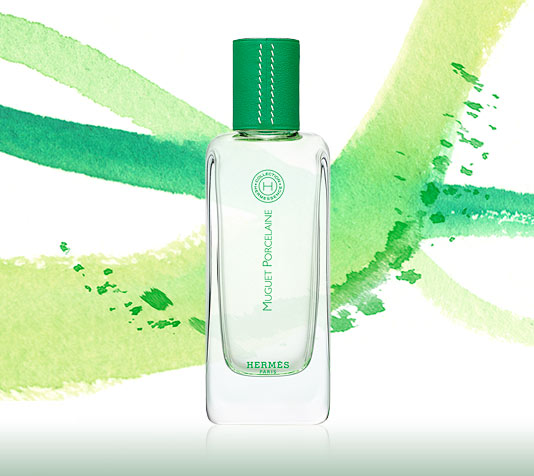
Thank goodness. I have been eagerly anticipating the release of the new (and last) Hermessence by Jean-Claude Ellena, Muguet Porcelaine. I love his Jardin series very much; the transparency of his fragrances appeals to me although some other perfume lovers do not like it. And I truly love lily of the valley scents, so I was keeping my fingers crossed that Muguet Porcelaine would not disappoint. And it doesn’t.
Before I got my own sample, I read some comments that used words like “cucumber”, “melon”, “watermelon” and even “bubble gum”! No, no, no, I thought, surely Ellena would not play such a cruel joke on perfume lovers who look forward to his new works, or on the lovely lily of the valley flower that has so inspired great perfumers like Edmond Roudnitska, whom Ellena holds in high regard.




 Serenity Now Scents and Sensibilities