Fragrance Friday: Crisp Fall Air

Fragrance Friday: Crisp Fall Air

Today was one of the nicest days we’ve had in October. It was in the 40s when we got up this morning. By afternoon, it was sunny and 65 degrees, with that wonderful crispness in the air that I associate with autumn. The smell of leaves, not fresh and green but not yet faded; the scent of rich, damp earth; the low humidity; they all combine to form the essence of fall. Then there is the smell of the light sweaters I am starting to wear: not the heavy woolen ones, not yet; the pale blue cashmere, the aqua blue cotton, the navy linen, the light mohair reminiscent of autumn leaves. They smell faintly of cedar, thanks to the wooden balls I put in their drawers; and the cedar fragrance combines with the other scents of fall to form a lovely, autumnal blend. Soon, the leaves will turn color dramatically and drop, and it will be time for the heavier sweaters and maybe some heavier scents. Not yet. Soon, but not yet.

Fragrance Friday: Aveda Composition Oil and Aromatherapy

Fragrance Friday: Aveda Composition Oil and Aromatherapy

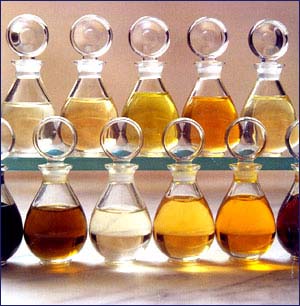
For my birthday, the Aveda rewards program sent me a gift certificate for a free 30 ml bottle of any one of their “composition oils.” I chose Shampure, which the Aveda website describes as a “nourishing blend of certified organic sunflower and meadowfoam oils for body, bath and scalp.” All the composition oils are meant to be used for several purposes, including as a massage oil, bath oil, cuticle oil, oil to rub into one’ scalp or brush into one’s hair, additive to lotions, personal aromatherapy fragrance. My personal fragrance journey hasn’t (yet) included aromatherapy, as I’m still educating myself about perfumes, but never say never!

Shampure is the classic Aveda fragrance you smell when you walk into an Aveda salon. It is very soft and soothing, and is said to contain 25 different plant essences or oils. Some of the essential oils are: Rose, Lavender, Aloe, Rosemary, Orange, Eucalyptus, Patchouli, Ylang Ylang, Anise, Fennel, Licorice, Bergamot, Coriander, Peppermint, Petitgrain, Sandalwood, Vanilla. Other ingredients are: Farnesol (floral), Eugenol (derived from clove oil and other spices and herbs), Linalool (floral/herbal notes), Citronellol (rose and geranium notes), Citral (found in lemon myrtle and lemongrass), Limonene (from citrus oil), Geraniol (a main ingredient in rose, palmarosa and citronella oil), and Cinnamyl (storax, balsam). Most of those are actually organic compounds. Just a couple of drops inside my elbow are plenty to waft up to my nose in a very pleasant manner.

I’m not much of a salon or spa-goer, but I do like some Aveda products very much. I’ve always loved their special tea blend, with its licorice, peppermint, fennel and basil flavors. I don’t know that I would have gone out to buy this Shampure oil without the gift certificate but I’m enjoying trying it. Do any of you use essential oils for aromatherapy?

Photo from http://www.raynauds.org.

Fragrance Friday Special Edition: Taif Rose

Fragrance Friday Special Edition: Taif Rose

Wow. I delayed posting because I had asked my globe-trotting husband to bring me a small bottle of real Arabian perfume from his business trip to Dubai. And he did: Taif Roses by the fragrance house Abdul Samad Al Qurash. This is the real deal, friends. It is a traditional Middle Eastern perfume oil that comes in a small, one-ounce bottle which will probably last me the rest of my life as it is so concentrated. I have it on my wrists right now but I just opened the bottle, so I can’t yet describe its progression. Here is the only longish review from Fragrantica.com:

This is a very potent oil to dab on your wrist, inner elbow, behind the ears, at your neck or at your temples. I am not a floral person, generally appreciating orientals and sweeter perfumes or those that are unique in some way. That’s where this one steps up to the bat.
Obviously, you must appreciate the taif rose. It is said that this particular fragrance contains the extract of 12,000 taif roses. In other words, you Must Love Taif Roses.
The first aroma is of course pure rose, a delicious, pure, rose bush. You are nestled amongst a bed of roses, surrounded by the ethereal, heady bouquet. It’s creamy, smooth, perhaps you can even imagine the morning dew in the essences of Taif rose. And then it sweetens slightly, just ever so. The oil stays this way for about an hour. Then the magic begins.
Suddenly, I felt as if I could smell the wet earth the roses were planted in, the leaves that had dropped and mixed in with the rich soil, pieces of branches that had fallen to the ground and begun to decompose. This was such a rich, decadent odor yet very real. Nothing seemed synthetic. As I felt I had my hands in this rich soil and was inhaling the richness of it, suddenly, the Taif rose came back to wrap itself around the entire perfume. And that’s how it continued to stay for hours. A mixture of reality. This is purity, not to be taken lightly.

The writer is exactly right about the first flush of roses. Nothing about this smells artificial or synthetic, it smells as if you are in the world’s largest, most fragrant rose garden with your nose buried in blossoms. The fragrance is very smooth and warm without being spicy. I look forward to smelling it as it develops today! I’m sure that’s how long the two little dabs will last.

Fragrance Friday: Rosemary

Fragrance Friday: Rosemary

I grow rosemary. I love the small blue flowers, the grey-green evergreen foliage that resembles needles. But most of all, I love the scent of rosemary. Freshly picked and minced, rosemary adds fragrance and complexity to so many dishes. In ancient Greece, rosemary was thought to improve the mind and memory, a belief later supported by some modern studies of aromatherapy. It later came to signify remembrance: “There’s rosemary, that’s for remembrance. Pray you, love, remember.” Ophelia, in Hamlet, Act IV, Scene 5. Rosemary was also carried in a bride’s bouquet or worn in a bridal wreath as a sign of fidelity. All in all, an herb and fragrance with many meanings and nuances. Some lovely quotes about rosemary, and its uses, can be found at the blog The Herb Gardener. Even more detailed information about its varieties and culture is at Auntie Dogma’s Garden Spot.

Coincidentally, a fragrance that currently fascinates me also has rosemary among its notes: Diorissimo. I used to wear it many years ago, in the 1980s. Diorissimo is another scent that seems to send the perfume blogosphere into orbit — not because people hate it but because they mourn its reformulation. I loved it because of its strong lily-of-the-valley fragrance, another favorite scent and plant of mine. (I grew my own to carry in my bridal bouquet and for my husband’s boutonniere). I hadn’t realized Diorissimo also has notes of rosemary until I did a search for rosemary-inflected perfumes on Fragrantica.com. Another surprise? It appears in Hermes’ Un Jardin Sur le Toit, which I am lucky enough to have received as a gift but haven’t tried yet! Can’t wait, as I have loved the other Jardin perfumes. Tomorrow, perhaps?

Rosemary may be having a cultural “moment.” The most recent catalogue from the Metropolitan Museum of Art has a gorgeous rosemary necklace with patinated metal “leaves” dangling from freshwater pearls. The jewelry maker is Michael Michaud, and his company makes a whole line of rosemary jewelry. I plan to enjoy this moment while it lasts! And maybe I’ll even try today’s Diorissimo.

Photo: Auntie Dogma’s Garden Spot.

Fragrance Friday: Moss

Fragrance Friday: Moss

Moss is a fragrance by a new(ish) company called Commodity Goods, which got started with a Kickstarter campaign and has an active social media presence: Commodity Goods on Facebook. The Moss I’ve tried, thanks to a sample, is listed as a men’s fragrance but there is also a women’s Moss with the identical notes, so I think they are the same fragrance packaged differently for men and women. According to Fragrantica.com, Moss was launched in 2013. Top notes are petitgrain, bergamot and elemi; middle notes are eucalyptus, orange blossom and oakmoss; base notes are cashmere wood, amber, cedar and white musk.

Petitgrain is a note based on the leaves of orange trees. The orange theme continues in the heart notes, with orange blossom. This is a green, fresh fragrance with just a touch of floral sweetness; it is mostly green and herbal, but very light and warmed by the base notes. I’m really loving it a lot. As you know if you’ve read my blog about gardening, Old Herbaceous, I like moss. I like moss in gardens. I like moss gardening. Moss is quiet. Moss is peaceful. Moss is persistent. Moss is resilient. Moss is green and fresh. Moss is.

I’ve been thinking a lot lately about persistence and resilience. I am by nature quiet and peaceful. I need to cultivate my own persistence and resilience. I need to regenerate after a drought the way moss does. A very interesting blogger named Laura Bancroft had some interesting comments on Commodity Goods: Piper Winston. It sounds to me as if the company is as interesting as its fragrances.

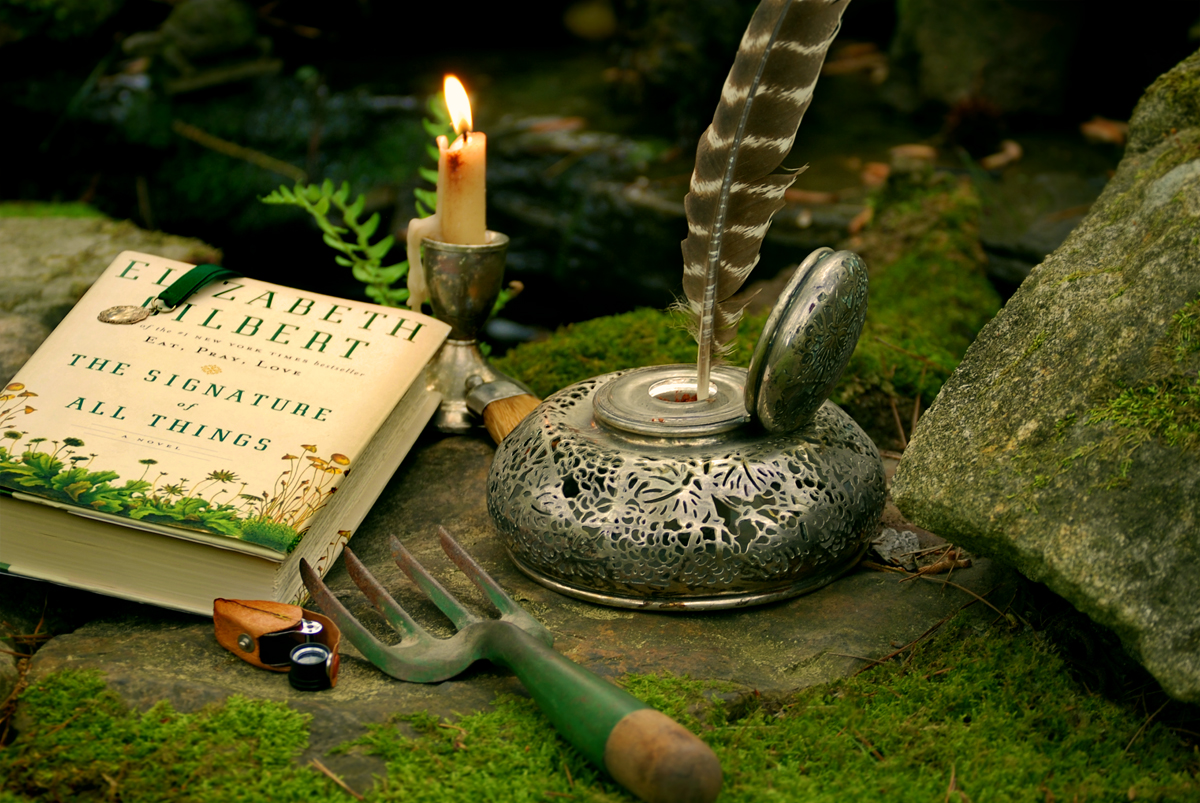
Even more interesting is that Elizabeth Gilbert, author of Eat Pray Love has written another book that came out last year, The Signature of All Things. Set in the nineteenth century, its heroine is a self-taught botanist with a passion for moss. In fact, she devotes herself to the study of moss for a few decades. Now that is persistence. I learned about this book from a lovely moss gardening website, MossAndStoneGardens.com. I may have to get a copy, spray myself with Moss, and lose myself.

The Signature of All Things

Fragrance Friday: Custo Barcelona L’Eau

Fragrance Friday: Custo Barcelona L’Eau

It was a long week. My husband had to be out of the country all week on business and I had to resolve a very challenging situation at work with lots of ramifications. But now it’s Friday! My work challenge appears to be successfully resolved; and my nice husband is home, bearing gifts from Barcelona. For me: a large bottle of Custo Barcelona L’Eau. Lovely!

Custo Barcelona is a fashion firm that was born in Barcelona. Its style is young, funky, colorful and cheerful. So is its fragrance. According to various websites, CB L’Eau is supposed to be a lighter version of the original Custo Barcelona fragrance that came out in 2008. The same “nose”, Alberto Morillas, developed both. For L’Eau, the top notes are bergamot, grapefruit and galbanum. Heart notes are peony, jasmine and “exotic fruits.” Base notes are musk, tonka bean, woody notes. It smells very European to me but not French.   Catalan, perhaps! Definitely a citrusy floral with woody undertones: bright, cheerful, feminine, warm.

Custo Barcelona fashions, from Photoquivir 2015.

Custo Barcelona fashions, from Photoquivir 2015.

I love Barcelona, especially the Barri Gotic and the Eixample neighborhood. I love the food, especially the fresh seafood, the tapas and the different kinds of sangria.I love Antonio Gaudi’s architecture there, including the stunning Sagrada Familia cathedral, still unfinished; his signature curves, bright colors and fanciful patterns have clearly influenced later Barcelona designers like Custo Barcelona and Desigual. And Custo Barcelona L’Eau definitely evokes the city, with its playful vibe layered over complexities. It reminds me of the Parc Guell, a Gaudi masterpiece and fantastical park with gardens, mosaics and fanciful structures. The gardens contain fragrant herbs, trees, and flowers. Some of its trees are tropical; some bear fruit. The blog In Search of a Thousand Cafes describes it well, with many lovely photos, including the one above.

CB L’Eau starts off bright and juicy, but the galbanum top note gives it a green, herbal astringency that cuts the sweetness of the citrus notes. It slowly blossoms into a light, fruity floral — more flowers than fruits, which I like. This part of its progression matches the bright pink of the peony notes and the pretty bottle.
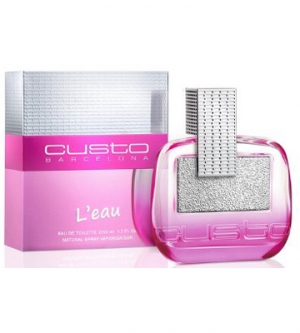
Custo Barcelona L'Eau

I love how the shape of the bottle matches the typography of the design house’s logo. The bottle is really unique, with its textured metallic inset of silver, asymmetrical cap and ombre tinted pink glass. The last phase of CB L’Eau is lightly musky, with sweetness from the tonka bean and dryness from the woody notes. I can still smell the base notes on my wrist ten hours after first spraying myself. All in all, a delightful gift from a delightful man! I’m grateful to have both.

Parc Guell benches: photo by TileMosaicGirl.com

Parc Guell benches: photo by TileMosaicGirl.com
Fragrance Friday: Cabaret, Cirque du Soleil

Fragrance Friday: Cabaret, Cirque du Soleil

I love reading other people’s comments on perfumes. Some are full-length reviews by known “perfumistas”, others are anonymous comments on sites like Fragrantica.com.  Many are very clever and evocative. For instance, this comment about the eau de parfum Cabaret, by Gres:

It is a rose chypre, somewhat melancholy in feeling but still alive. Like a ghost…. Cabaret is a great name…it also reminds me of my theatre background. Fresh soft florals, mostly rose at the top, and the base is a very dry clay smell. It is cool and elegant with a transparent, almost dusty smell. I think of the atmosphere backstage at every show I have been involved in. Antique wood counters in the dressing room, waxy makeup and powder strewn across them. Vases and vases of roses and lilies. That musky smell of fresh sweat from dancers just coming off stage.

The image that immediately came to my mind was a Cirque du Soleil show I saw this year, called “Zarkana.” It is described as being set in an abandoned theatre that mysteriously comes back to life for an evening, starting with the appearance of ghostly white figures of performers like ballerinas and acrobats with white-powdered hair and stage make up. At the start, the huge stage is lusciously draped with great swags of crimson velvet. The pale figures emerge from the darkness after the curtain swirls upward. And at the very end of the show, the cinematic backdrop turns into a rippling cascade of deep red roses, while the same ghostly performers and other more colorful characters come out to take their final bows.  Maybe this perfume should be renamed Zarkana. Or at least Cirque.

Finale, Zarkana, Cirque du Soleil.

Photo: Cirque du Soleil.

Fragrance Friday: Mink

Fragrance Friday: Mink

Recently, I sampled Boucheron eau de toilette. And I did NOT care for it. Too strong for me, too heavy. But I had some on a test strip, which I took home to share with my daughter. I left it on a table in my bedroom. Over the next night and day, it dried down into a more pleasing scent — still not right for me, but strangely familiar. I just could not put my finger on what it evoked.

A day later, I had it! Although Boucheron was launched years after my parents’ social prime, it reminded me of their cocktail parties, when one of my jobs was to greet guests, take their coats and lay them neatly on the big bed in a guest room. Many of the women wore minks. And that is what Boucheron called to mind. Unapologetic wealth. Old school elegance. A statement perfume for women who wear statement jewelry. Not my style, but impeccably designed to a high, specific standard. Just like Boucheron jewels. I’ll pass, but thanks for the memories.

Photo: Philippe Pottier, 1957, from highlowvintage.com

Fragrance Friday: Ginger Lilies

Fragrance Friday: Ginger Lilies

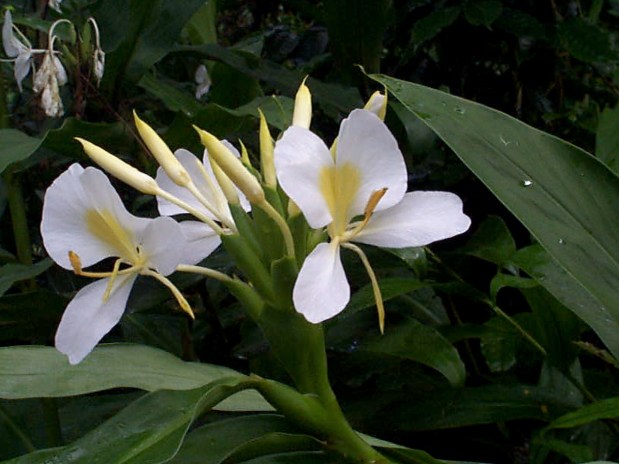
Late summer and early fall are the season in the South for white ginger lilies, hedychium coronarium. They are tall, tender perennials with long, sword-like green leaves topped by fluttering white flowers whose large petals inspire the plant’s other common name: white butterfly lily. Our next-door neighbor has a magnificent clump, which sends its perfume floating over both of our gardens. I have tried to grow it myself, mere yards from his thriving specimen, without success. The white ginger lily is fickle by nature. But oh, that perfume! Many scents have been called intoxicating; the ginger lily’s fragrance truly is. Designed to lure pollinating insects at night, the white flowers’ scent intensifies in the dark humidity of Southern summer nights.

Imagine my anticipation, then, when I learned that Jo Malone has a cologne named Dark Amber and Ginger Lily. I looked it up on Fragrantica.com and realized that it has notes of ginger, and water lily, but it has nothing to do with ginger lilies. It sounded lovely, though, and I had a sample from a purchase of Tudor Rose, so on my wrists it went. Mmmm. I don’t often like Oriental spicy perfumes, but when I do, I really do. And I really like this one. Warm, soft, a whisper of cardamom with the ginger top note, a floral bouquet for a heart, a touch of glove leather in the base notes. Definitely on my wish list. But nothing to do with actual ginger lilies.

My curiosity piqued, I decided to explore further. And voila! Continue reading

Fragrance Friday: The Scent of Water

Fragrance Friday: The Scent of Water

One of my favorite books is “The Scent of Water”, by Elizabeth Goudge. Sometimes I re-read it when I need respite from the tug and pull of my modern American life and job. It is the story of Mary Lindsay, a single, childless woman who leaves her successful career in London to move into a house in an English country village which she has inherited from a distant elderly cousin. She is on something of a spiritual quest, to rediscover her true self, her beliefs and her memories of the man who loved her more than she loved him, who had died in war before they were married.

Elizabeth Goudge had a rare gift of description: her words beautifully evoke the people and settings of her novels so that one can truly see them in the mind’s eye. Her early training was in art, and it shows in her ability to paint pictures with words. The house Mary Lindsay inherited is very old, and its rooms are bathed in rippling greenish light, as if they were underwater, because of the ivy and wisteria vines that grow near the old windows: it has a “dark stone-flagged hall where a silver tankard of lilies of the valley stood on an oak chest. The flowers and the polished silver gathered all light to themselves …”  Goudge uses the metaphor and imagery of water throughout the book, including an ancient well of springwater, hung with ivy and moss, that figures in several characters’ stories in the novel. She is also well aware of the symbolism in Christianity of flowers like the lily of the valley, which stands for purity and humility and is sometimes called Mary’s Tears, referring to the Virgin Mary and the tears she shed at the Crucifixion.

What is the scent of water? One of the other characters is another older woman, also single and childless, Jean. She is a kind but timid and fearful woman, often depressed and overwhelmed by life but struggling bravely to meet its challenges.

“Jean was visited by one of her rare moments of happiness, one of those moments when the goodness of God was so real to her that it was like taste and scent; the rough strong taste of honey in the comb and the scent of water.”
Elizabeth Goudge, The Scent of Water

But if one were to seek an actual scent that captured the spirit and atmosphere of this beloved book, what would it be? I nominate Jo Malone’s Lily of the Valley & Ivy, which  wafts from my wrists as I write this. With its notes of ivy (top), lily of the valley and narcissus (heart) and amber and beeswax (base), it is a lovely green floral with a hint of white musk. It is an elegant, quicksilver scent with earthly roots. It reminds me of a small, green and white English garden after a gentle rain. The scent of water.

Photo: http://www.basenotes.net