Scent Sample Sunday: Profumo di Pioggia

Scent Sample Sunday: Profumo di Pioggia

Our recent trip to Italy included a few days in Florence, our first visit ever to that beautiful city filled with art. In addition to its essential role in all facets of the Renaissance, Florence also became a center for perfume-making, together with Venice — a craft that notably was imported to France by the Florentine princess who became Queen of France, Catherine de Medici. The world-renowned perfumeries of Grasse, France, have their origin in the fashion she inspired for leather gloves scented with perfumes to mask the odor of the animalic substances used to tan the leather. She brought that fashion with her from Florence.

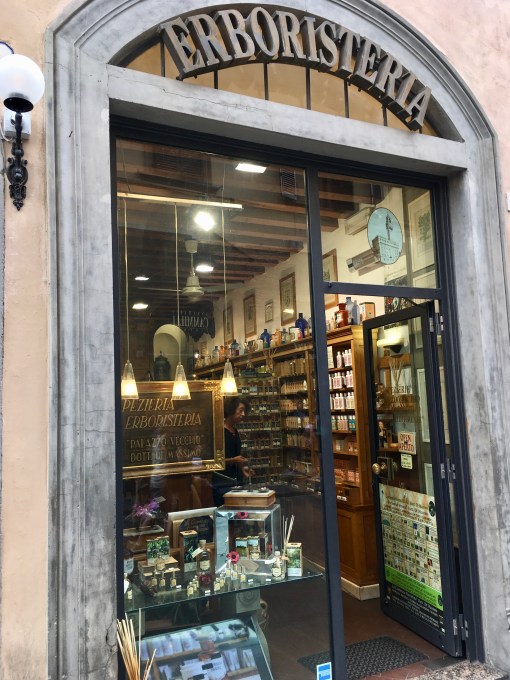
A small perfumery in Florence, Spezierie Palazzo Vecchio, continues the tradition with what it describes as original formulas from the perfumers who served Catherine de Medici, rediscovered after the catastrophic 1966 flood of the River Arno that wreaked havoc in Florence, in a line called “I Profumi di Firenze.” I can’t speak to the foundations of that claim, but some of the magnificent places we visited, like the church of Santa Maria Novella, suffered extensive damage to the priceless works of art they housed as well as their structures, and their restorations include markers showing how destructively high the floodwaters rose. (A famous series of photographs of the flood can be viewed here).

Although the store in Piazza Signoria (location of the famous scene in the film “A Room With A View” where Lucy Honeychurch faints into the arms of George Emerson, setting in motion the rest of the film’s events) was closed when we first stopped by, I was lucky enough to find it open on our last afternoon in Florence.
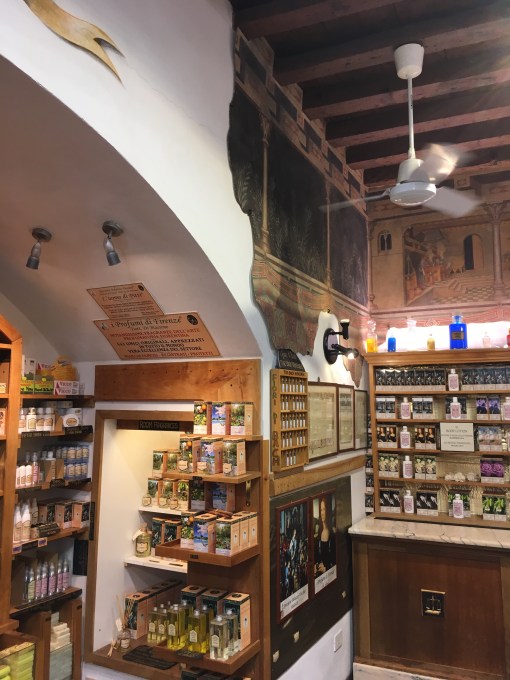
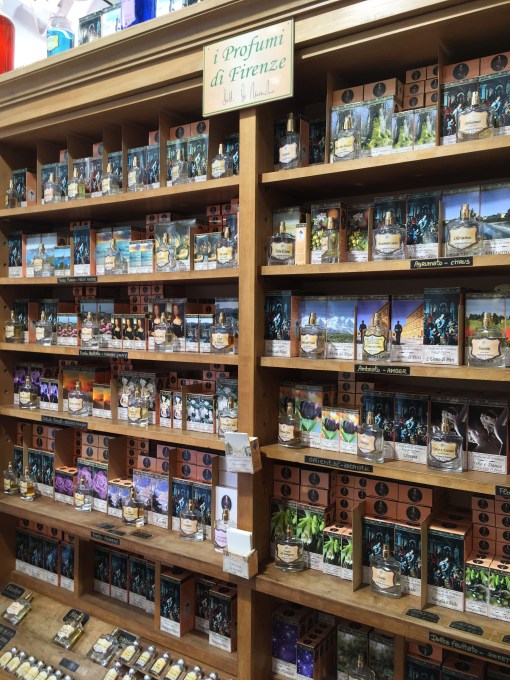
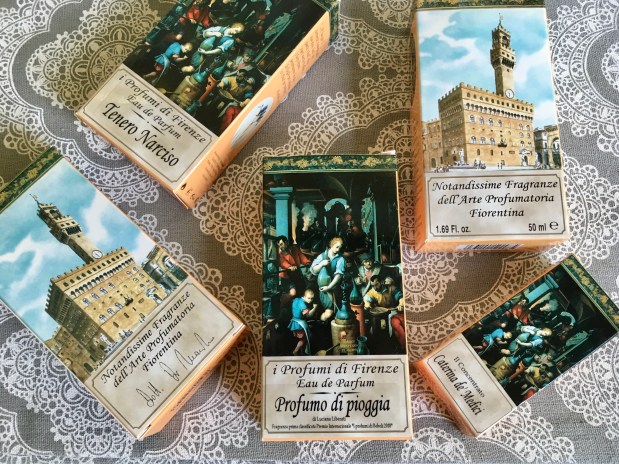
Even better — they were having a sale! So of course I came home with several bottles; one scent in particular is quite special, as it won first place in a fragrance competition called “I Profumi di Boboli.” The fragrance is called Profumo di Pioggia, created by Luciana Liberati. The assigned theme for the 2018 contest was “the scent of rain”; the winning fragrance was produced in a limited edition of only 60 bottles, one of which, happily, now belongs to me.

Before anyone gasps at any assumed extravagance, however, I note that the prices of I Profumi di Firenze are much more reasonable in their home boutique than they are in the US, especially during their sale. The most I spent for any single bottle, including a 50 ml bottle of eau de parfum and a 12 ml bottle of extrait, was 25 euros. The others were 20 euros or less. On the other hand, you have to get yourself to Florence to take advantage of that — not exactly the worst option, but not inexpensive either!

Profumo di Pioggia is meant to evoke the smell of a gentle summer rain in the wooded hills above Florence. It includes notes of fig leaf, pomegranate, dew, jasmine, lavender, oud, violet leaf, cedar, and white musk. The perfumer describes it (English translation): “A delicate summer rain enlivens pomegranate flowers. I take refuge under the branches of a fig tree to smell the arrival of summer. The scent of violets and woods from the undergrowth returns to my mind.”

It opens with a gentle green note, which I think is a combination of the fig leaf and violet leaf. Given how much I love green fragrances, this immediately won me over! The floral notes emerge; I definitely smell the jasmine and lavender; I don’t know that I would recognize the smell of pomegranate flowers, so I can’t identify that. The dominant note in the heart phase, though, is rain, or “petrichor.” I love it! So what is petrichor?

The word petrichor was invented by two Australian scientists who introduced it in a 1964 paper on the Nature of Argillaceous Odor (pdf), an investigation into the scent of moistened clay, rock, and sediment. They combined the Greek word for stone, “petra,” and “ichor,” which means “the blood of gods”, to coin a name for the scent of rain.

The mineralogists posited that the scent released by rain isn’t that of water, which itself has no odor, but is actually the aroma of organic compounds accumulated in the atmosphere and on surfaces; these are released when rain falls. The compounds include bacteria called geosmin. These bacteria gives beets their earthy flavor and help make digging up soil in a garden so satisfying and soothing.

Rain also releases aromatic terpenes secreted by plants. Terpenes are hydrocarbons found in the essential oils of plants. They’re what makes a walk in greenery both fragrant and healing.

And when rain falls, geosmin and terpenes fly—or more precisely, they fizz.

One village in India famously has a long tradition of capturing the fragrance of monsoon rains in “mitti attar”, or “the perfume of the earth.” As noted by the author of the New York Times article about it, the scent of rain differs widely from place to place and from climate to climate; the remembered smell of rainfall in the woods of Maine will be very different from that of the rain in India, or the American South, or the hills of Tuscany, but they are equally pleasing. Profumo di Pioggia is a gentle green cross between an aromatic and a floral fragrance, with a softly woody drydown. The wood notes in the base are very subtle; I probably wouldn’t be able to detect oud if it hadn’t been listed among the notes. The cedar and white musk notes are very well blended, so that neither one dominates or “hits” my nose. I do smell something reminiscent of beets, which are rich in the geosmin that is known to be a major component of petrichor scents — a delicate, sweetly earthy smell that fits well with the fig leaf.

I feel very lucky to have visited Spezierie Palazzo Vecchio, where the staff were also delightful, helpful, knowledgeable, and kind. If you get a chance to go to Florence, I recommend a visit! The perfumery is on a side street right off the Piazza Signoria, facing the Palazzo Vecchio, and you won’t want to miss those landmarks or the nearby Uffizi Gallery and its priceless masterpieces.
The non-profit organization that sponsors the contest “I Profumi di Boboli” also offers a multi-month perfume-making course that sounds fascinating if you can return to Florence seven times for its regularly scheduled classes. What a great reason to do that!

Have you tried any Florentine perfumes? Many enthusiasts know and love the fragrances of Santa Maria Novella, which I also visited — to be shared in a future blog post! If you know them, which are your favorites?

Scent Sample Sunday: The Merchant of Venice

Scent Sample Sunday: The Merchant of Venice

I’m ba-a-a-a-ck! I’ve been in and out a lot this summer so haven’t posted as regularly here as I normally do, but summer is officially over in this part of the world. Just the leisure, not the weather! It still hits 90 degrees F daily; the humidity is, if not oppressive, onerous; and the sun is still so strong that lavish applications of sunscreen are still required for palefaces like me. But yes, summer is over. My oldest child has finished her theater apprenticeship and will move into her first independent apartment by the end of this week. My second child moves back into her campus apartment to start her senior year of college. And my “baby”, the young man who is taller than any of us, starts his senior year of high school this week. Orientation for new students at the university where I work begins tomorrow, and we have a new Dean I’ve only met in passing. So it’s the start of a big year for us, and yes — summer is over.

My university job is in administration, so I do work in my office all summer, unlike my faculty colleagues, but I’ve been able to go with my husband on two lovely trips he took for work, one to London in May, and the other, more recently, to Italy. After his work there, we took an extra week of actual holiday for him and visited Florence and Venice, neither of which we had seen before. It will take several posts to describe all the perfume-related activities I did in Florence, so I’ll start off with Venice, where I was a bit more restrained! Venice, however, was also where I was able to visit the perfume exhibit at the Palazzo Mocenigo.

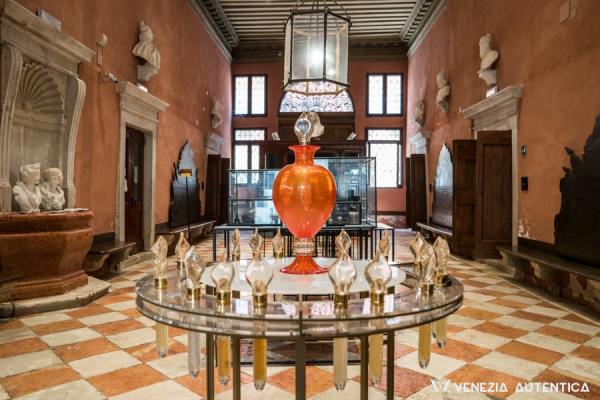
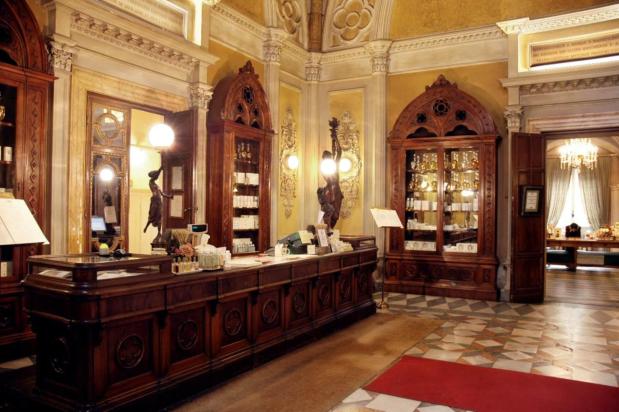
Entrance hall of Palazzo Mocenigo, perfume museum in Venice, Italy

Palazzo Mocenigo entrance hall; image from http://www.veneziaautentica.com


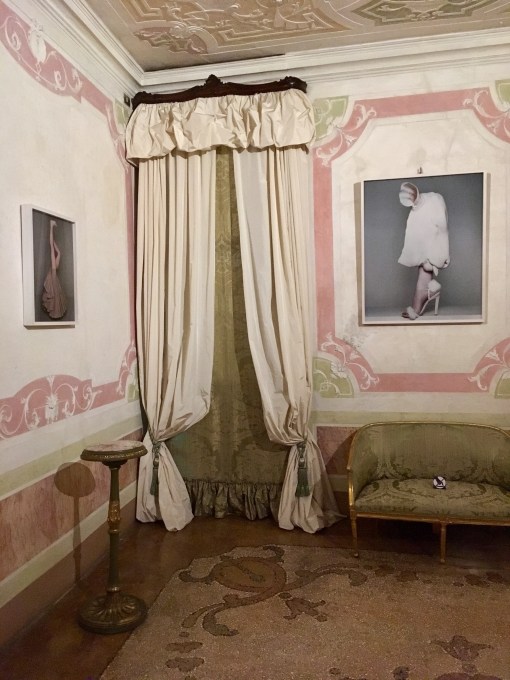
This is a relatively new “itinerary” at the museum, and it is well worth visiting. The Palazzo Mocenigo itself is very interesting as an example of a Venice palazzo (short video tour here), and right now it also contains three temporary exhibits, one of which is part of the Venice Biennale: “Brigitte Niedermair: Me and Fashion.”  (For more information about Ms. Niedermair, there is a great article in Wallpaper).

The other two, smaller exhibits are related to perfume: one, “Leonardo: Genius and Beauty,” is described thus:

A little-known aspect of Leonardo da Vinci will come to light in this exhibition organised to mark the fifth centenary of his death: his work as a cosmetologist and perfumer, dedicated to the creation of fragrances and cosmetics. A reconstruction of the lively network of exchanges between the major Renaissance courts enables us to learn of the experiments and recipes for cosmetics that Leonardo shared with the most important female figures of the day. Also on show will be pioneering recipes for depilatory ointments, creams made from snail slime and hair dyes. Leonardo even influenced hairstyles: “Da Vinci knots” are found in many paintings in which hairstyles are embellished with jewels, nets and perfumed fabrics. At the court of Ludovico il Moro in Milan, Leonardo organised parties, designed clothes and costumes, as well as inventing fabrics, jewels and perfumes. The exhibition will highlight the link between Milan and Venice: two cities where the use of perfume was widespread and hairdressers commonly sold cosmetics and perfumes. A specific role in the service of the court was dedicated to a “magister of perfumes”, who procured for the ladies little phials of mixtures for bleaching the hair, a very popular fashion in Venice.

Leonardo: Genius and Beauty.

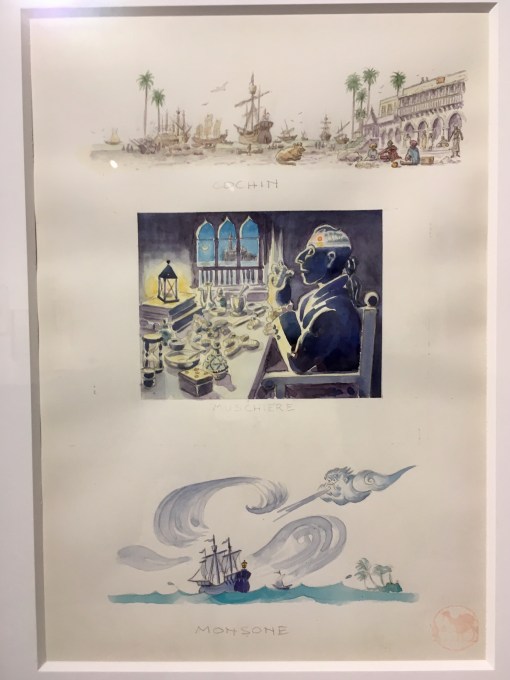
The other temporary exhibit related to perfume is “Carnet de Voyage: Illustrated Perfume.” It is sponsored by the fragrance line “The Merchant of Venice”, and it is a series of illustrated poems relating back to several of the line’s perfumes, imagining the voyages of an actual Venetian merchant seeking out rare substances to bring back to Venice for the creation of perfumes. Yes, it’s a bit of an infomercial, but a charming one, and I appreciate the support the company is giving to this small museum.

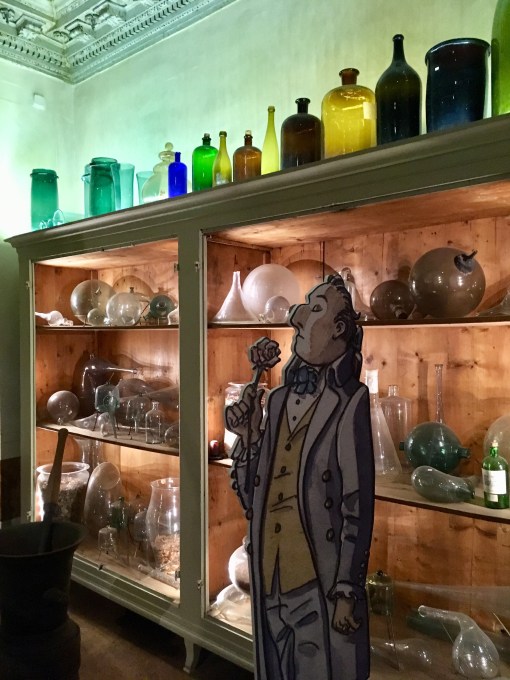
The main, and permanent, perfume exhibition at the palazzo is contained in several rooms upstairs. There is also a perfume laboratory on the ground floor, where one can take a perfume workshop.  The museum’s website includes a detailed description of the perfume exhibit.

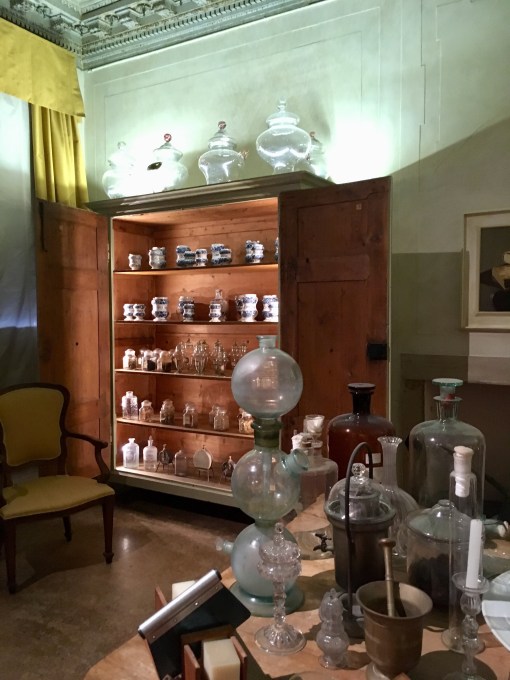
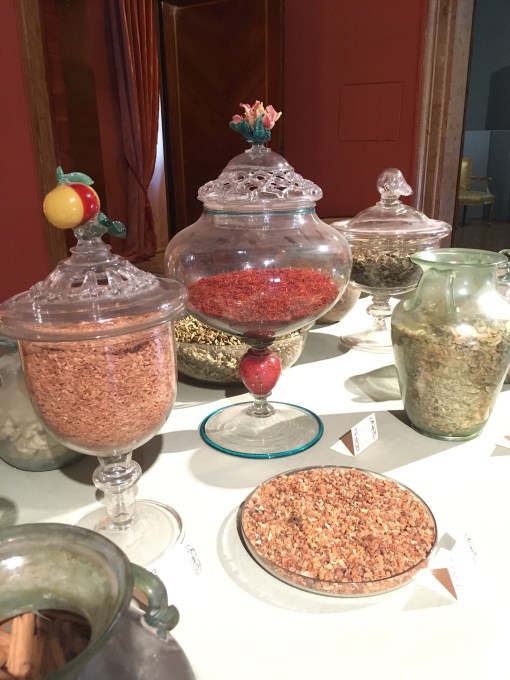
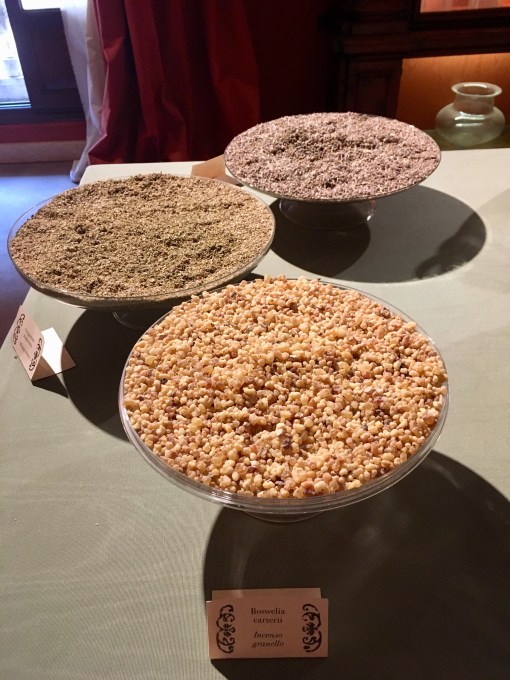
I enjoyed all of it, but especially the room devoted to raw ingredients, many of which were beautifully displayed in glass containers on a huge table where one could actually smell them.

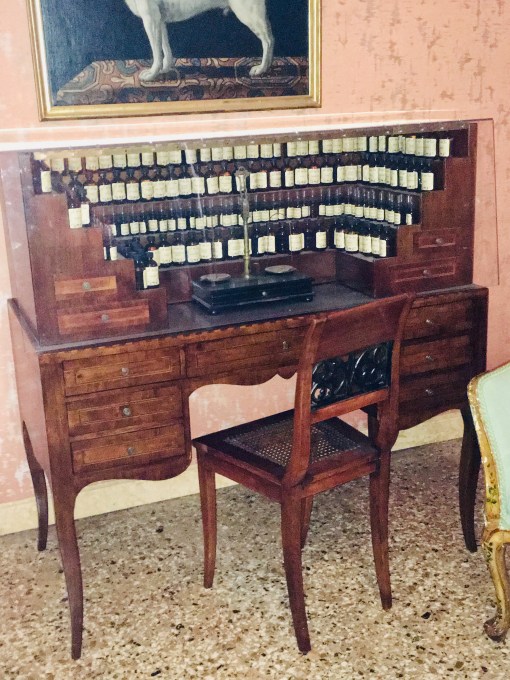
Another highlight was a 19th century Venetian perfumer’s organ, a beautiful piece of antique furniture in its own right, apart from its functional interest.

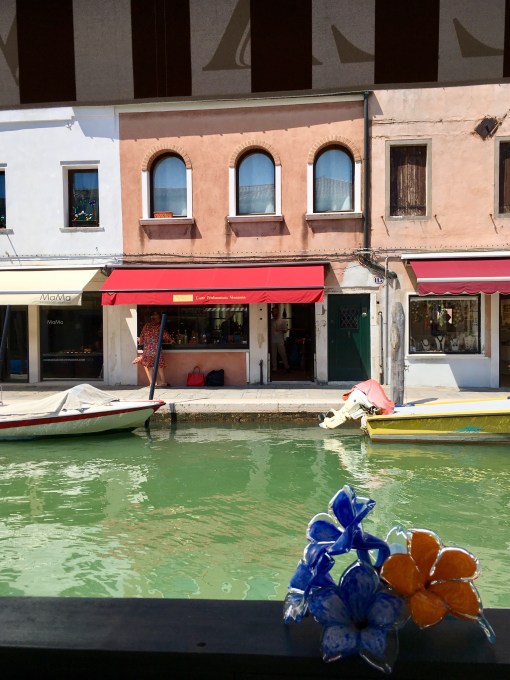
So of course — what does one need as a souvenir of this visit? Why, a fragrance from The Merchant of Venice, of course! On our day trip to the island of Murano, home of the famous glassblowers, we had lunch on a canal directly opposite The Merchant of Venice store. Sadly, it was closed and not due to open until after we planned to return to the city, but it’s a beautiful store with many of its striking Murano glass bottles displayed in its window.

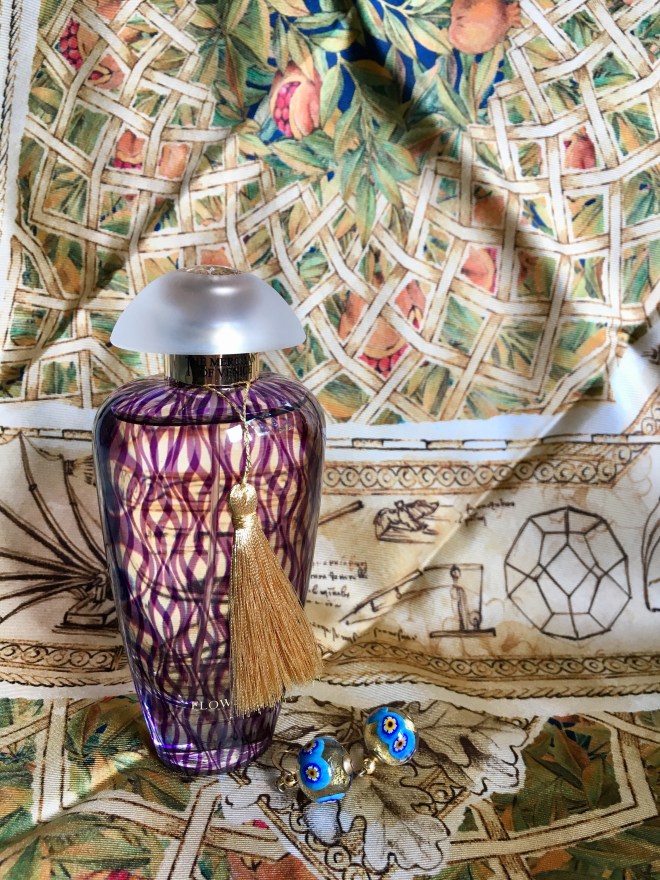
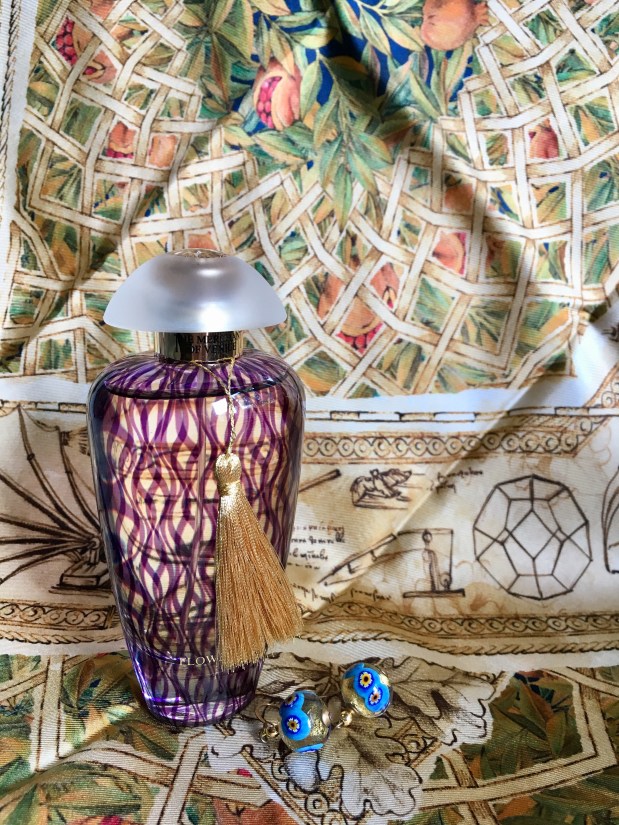
Luckily for me, one of my favorite online fragrance discounters just happened to have some of the same bottles, in tester format, on sale, so when we returned home, I ordered Flower Fusion. It is part of the “Murano Collection” and comes in a really pretty glass bottle swirled with streamers of blue within the clear glass. Top notes are listed on the brand’s website as jasmine, freesia, and ylang-ylang; heart notes are vanilla, patchouli, and labdanum; base notes are damask rose, violet petals, and ginger. Fragrantica lists most of the same notes, but in a different order: top notes are said to be lemon, violet, and ginger; middle notes rose, jasmine, ylang-ylang, freesia; base notes labdanum, patchouli, vanilla.

I definitely smell freesia as a strong top note, and since that is a lemony floral smell, I think that’s the source of the lemon note listed on Fragrantica. I do perceive that the jasmine and ylang-ylang follow close on its heels, and then the vanilla makes itself known in the middle stage. I would say that the rose and ginger are part of the middle stage, to my nose, with a hint of violet. The labdanum is also perceptible during the middle stage. This middle phase is very appealing if you like floral scents but don’t want something heavy. I can’t say that it smells quite like anything else I’ve tried recently. As it continues to dry down, the rose, vanilla, labdanum and ginger notes persist, and they combine beautifully. The patchouli emerges, but it does not dominate; it adds a green herbal note to the composition.

I like Flower Fusion very much, and it is perfect to wear on a balmy summer evening. The warmth and humidity suit it, although it might be a bit much at the height of the day, when something like Un Jardin Sur le Nil would probably be my preferred choice. The vanilla lends it a pleasant sweetness without turning it into a gourmand. It lasts well on my skin, perceptible even after several hours, and it would probably last longer if I sprayed more (I tend to spray pretty lightly).

Bottle of Merchant of Venice fragrance Flower Fusion with Murano glass earrings and Massimo Ravinale scarf based on Leonardo da Vinci

Flower Fusion with Murano glass earrings and “Leonardo” scarf by Massimo Ravinale.

Have you visited Venice? The Palazzo Mocenigo? Have you tried any of The Merchant of Venice fragrances? If so, what did you think? Or, have you been able to do any “perfume tourism” of your own this summer?

Scent Sample Sunday: Florence!

Scent Sample Sunday: Florence!

Hello, friends, I’m sorry for having been slightly AWOL recently. I’ve been in Florence, Italy, for my first visit ever, and I am in heaven. I think Tuscany is where good Americans go after they die, which was once said about Paris.

I’ve been able to visit the mothership of Santa Maria Novella fragrances, in its original location next to the cloister of Santa Maria Novella church. I’ve been to AquaFlor. I’ve been to Farmacia SS. Annunziata dal 1561. I have smelled many wonderful smells and I have eaten many wonderful meals! I’ll be writing about some of these once my life returns to a normal schedule!

Have you been to Florence? What was your favorite thing you did or smelled or ate?

Meeting a Unicorn: L’Iris de Fath

Meeting a Unicorn: L’Iris de Fath

I had a few fragrance adventures in London last month, but one of the best was a surprise encounter with 2018’s launch, L’Iris de Fath. Yes, THAT one — the award-winning reconstruction of the legendary Iris Gris fragrance from the house of Fath.

Other bloggers and authors have written at length about this project, including Luca Turin and Tania Sanchez, who were involved with it. The Fath website offers this:

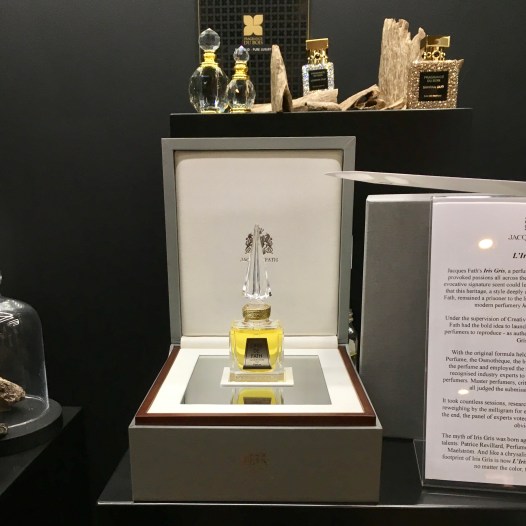
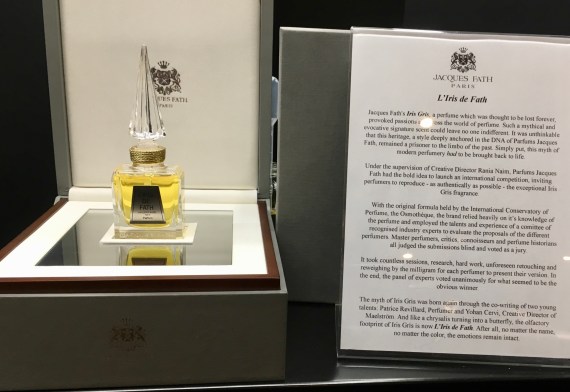
Jacques Fath’s Iris Gris is known as one of the greatest perfumes if not the greatest, unequalled since its creation. The balanced duo of Iris and Peach reflects perfumer Vincent Roubert’s exceptional know-how. The concentration of Iris of an unreached level made of Jacques Fath’s Iris Gris the most expensive perfume in the world. Launched in 1947, it disappeared the same year as Fath in 1954.  Often copied and certainly never equaled, it remains unique and timeless.

It was unthinkable that this heritage remained prisoner of the limbo of the past. Under the supervision of Creative Director Rania Naim, Parfums Jacques Fath launched an international competition of perfumers, in order to reproduce as faithfully as possible this exceptional fragrance. The myth is reborn, thanks to two young talents unanimously chosen by a committee of experts:  Patrice Revillard, Perfumer and Yohan Cervi, Creative Director of Maelström.

Like a chrysalis turning into a butterfly, it is now known as :L’ IRIS de FATH

After all, no matter the name, no matter the color, as long as emotions remain intact.

So how did I manage to meet this mythical creature? I went to Jovoy Paris’ Mayfair store in London and met a young sorcerer’s apprentice (SA) named Khalid. Khalid is a very nice, knowledgeable sales assistant at Jovoy Mayfair, where I have had nothing but lovely experiences. The first time I ever visited, the owner, Francois, happened to be there. He gave me a personal tour of the store, pulled out many fragrances for me to try, and even showed me (and let me smell!) the precious chunks of ambergris they keep in a vault downstairs.

On this latest visit, I happened to be nearby at my favorite overall store in London, Liberty. I was planning to meet a friend for a late lunch, and had some time to spare, so I stopped in at Jovoy. It was a quiet time in the store, and I was warmly greeted by Khalid. Here’s what I love about Jovoy. I told him that I was really just browsing, that I write about fragrance as a hobby, and that I had visited the store before and really enjoyed its wide range of stock, but wasn’t there to buy anything in particular. He asked me nevertheless what I like in fragrance, I said florals, and he asked if he could show me some of their newer floral scents. Of course, I said, and out came the testers and the paper strips, so I could sniff some truly beautiful florals. After I oohed and aahed over one with a dominant iris note, he asked me, “Do you like iris?” and I assured him that yes, I love iris, and in fact it was becoming one of my favorite notes, close on the heels of the muguet I love so much.

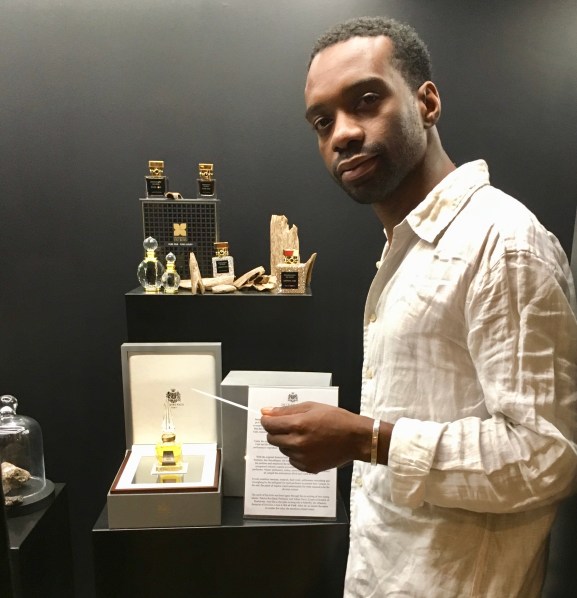
Well, Khalid got a gleam in his eye and invited me to follow him downstairs to see the store’s most special iris fragrance. We approached the same vault where the ambergris is kept, and there it was — The Unicorn. L’Iris de Fath. Reader, I gasped.


Khalid opened the vault and carefully dripped one drop of the precious fluid on a paper test strip, which he then handed to me. One drop, and a cloud of iris richness filled my nose. I tell you, if I ever win Powerball millions, I will fly back to London, head straight to Jovoy Mayfair, and buy their entire stock of L’Iris de Fath from Khalid. And I hope he gets a whopping commission.

I don’t have enough of a trained nose to be able to describe L’Iris as well as others have done, so I’ll just record my own impressions in my own words. This is a remarkably elegant, lasting, classic iris perfume. It has the rootiness of traditional orris, which I love and which takes center stage right from the start, but the opening is brightened by neroli and petitgrain, and it smells of iris flowers as well as their roots. The iris has a warmth that one doesn’t often associate with that note, and it comes from a subtle peach that lends it a velvety, soft, suede-like texture. I live in a part of the USA where peaches are a major crop; even the street where I live is named for the peach orchards that used to grow where a turn-of-the-century city neighborhood now unfolds its charms. Summer peaches that have been allowed to grow to ripeness on the heavy branches of fruit trees, in the hot Southern sun, have a scent to their skins that is not fruity, yet speaks to us of fruit. Just as I found that the famous melon note in Un Jardin Apres La Mousson is really the scent of the rind of an intact, ripe fruit, not the inner flesh, the peach of L’Iris de Fath is to my nose the scent of ripe, sun-kissed peach skin, with a hint of fuzz, soft and warm. Brilliant work by perfumer Patrice Revillard.

The heart stage is thoroughly immersed in iris and orris notes, but you can tell that other flowers are there too, because the fragrance is multi-layered and far from simple. I can pick up some violet, rose, jasmine, and carnation; none of them compete with the iris, although I think the violet adds a soft sheen of mauve powder at this stage. The base is warm and sensual, but reserved. The oakmoss, sandalwood, vetiver, and musk are apparent but they are so well-blended that one doesn’t smell them as separate notes. Sillage is elusive; one minute you think the scent isn’t carrying much further than one’s immediate vicinity, the next minute someone comes into the room and exclaims, “What is that wonderful smell?”

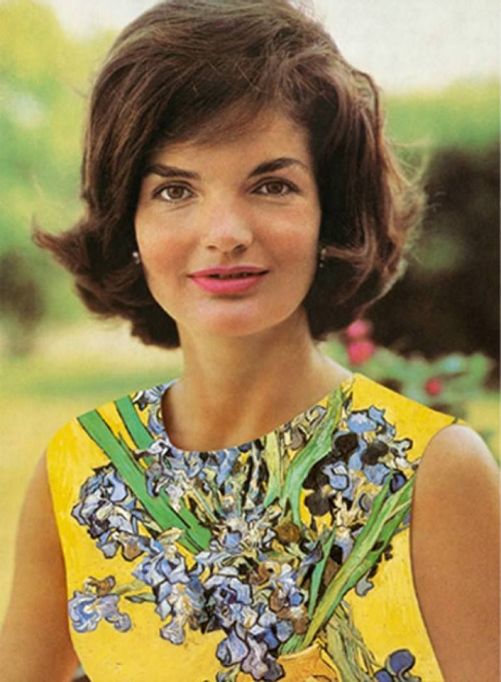
I found myself trying to imagine what famous beauty best embodies L’Iris de Fath and I think that must be Jacqueline Kennedy Onassis. This perfume is warm, yet reserved. It beckons you in the way she is famously said to have used her soft, breathy voice to speak so quietly and intimately to a companion that her interlocutor would be forced to lean in closer, closer, to hear her; and thus she conveyed the sense that she and her listener were alone in a private conversation, a little world of their own, even in the midst of a crowded party. She bewitched people, yet she was also reserved, dignified, impeccable, even with wind-tousled hair.

Jackie Kennedy in yellow iris sheath dress

Jacqueline Kennedy in iris sheath

L’Iris de Fath does not speak loudly, but it is very clearly itself: a warm iris-peach, elegant and classic. Its progression is fairly linear, and I mean that as a compliment. The orris especially wafts up for several hours and is present from start to finish. It is brighter at the start, warmer and less distinct at the end, but nevertheless fully present. It is one of those perfumes that would make one’s skin smell like the perfect, fragrant, warm, skin we’d all like to inhabit. Like our own skin, but so very much better.

Thank you for this lovely experience, Jovoy and Khalid!

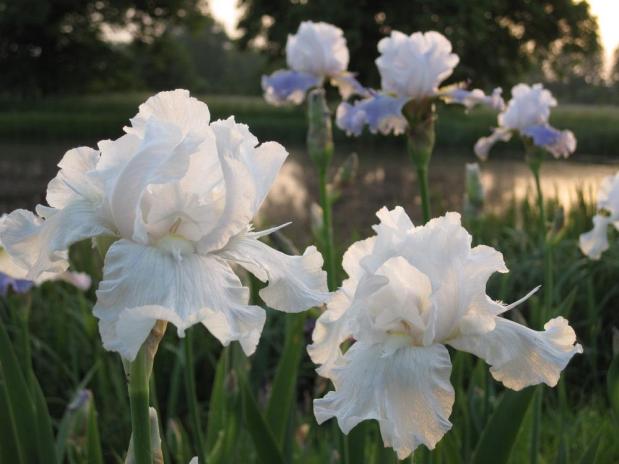
Featured image: Iris “Alabaster Unicorn”.

May Muguet Marathon: Chanel Paris-Biarritz

May Muguet Marathon: Chanel Paris-Biarritz

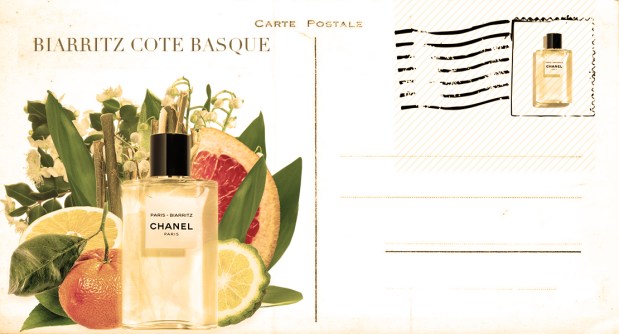
Last summer (2018), Chanel launched “Les Eaux de Chanel”, three eaux de toilette named after three destinations to which Chanel herself traveled from Paris. The destinations are Biarritz, Venise, and Deauville. Created by Olivier Polge, Chanel’s in-house perfumer, each of these fragrances opens with a strong medley of citrus notes. They are intended to be very fresh and lively, and so they are.

Paris-Biarritz is a tribute to the seaside resort in the southwest Basque region of France, which became fashionable during the time of Empress Eugenie and Napoleon III, who built a grand summer home there. Chanel opened her first true “salon de couture” here, in 1915, during World War I when many wealthy people sought refuge and distance from the war. The international clientele of Biarritz allowed her to earn enough that she became financially independent, and the town is thus integral to the history of her fashion house. Perfumer Olivier Polge describes the intent behind Les Eaux:

“This is a new sort of collection of perfumes, we call them Les Eaux because they’re fresh, fluid, sparkling. My source of inspiration came from Eau de cologne, those combinations of fresh citrus oils,” says Polge. Each scent was inspired and named after a destination vitally important to Coco Chanel’s life: Venice, Biarritz, and the beach town Deauville where she opened her very first boutique in 1913. “The three cities are really important in the history of Chanel. They became a part of our identity and source of inspiration,” he says.

The story of Coco Chanel in Biarritz is best told by Chanel itself, in this short film:

Like its siblings, Paris-Biarritz opens with a burst of citruses, in this case orange, lemon, bergamot, grapefruit, and tangerine. The combination is very appealing; there is sweetness from the orange and tangerine, tartness from the lemon and grapefruit, and some greenness from the bergamot. It takes a while for any heart notes to show up, and the first one I perceive is the neroli, which seems fitting since it is the source of orange blossom absolute. The bergamot lingers the longest of all those citrus top notes, which leads nicely into the greener heart of the fragrance. The words used by Chanel to describe this fragrance include “exceptionally fresh”, “dynamic”, “vivacious”, and I would agree.

As the citruses settle down, the neroli shows up, then lily of the valley and unspecified green notes. This heart phase is floral, but lightly so. Given that both lily of the valley and neroli give off citrusy and green aromas, and bergamot is a very “green” citrus to my nose, the greenness of the middle stage works well and quite smoothly. I think the neroli takes precedence over the lily of the valley, however. The citrus notes last longer than I might have expected, which I appreciate. This is a truly unisex fragrance, very reminiscent of summer colognes but longer lasting.

That doesn’t mean it has great longevity, though, because it doesn’t. Not bad for a citrus-focused fragrance, but after just a few hours, it is gone. The base notes are, to my nose, skin scents, and I can’t even say that I smell any patchouli, just a lingering light note of white musk. Some will enjoy reapplying it often to enjoy the beautiful citrus top notes. If you are seeking a a true lily of the valley fragrance, this isn’t it, but it is very appealing.

Have you tried any of “Les Eaux de Chanel”? Did you like any?

May Muguet Marathon: Happy Mother’s Day!

May Muguet Marathon: Happy Mother’s Day!

I am slacking off a bit this weekend, as it is Mother’s Day and I’m allowed to do that! So no muguet post yesterday, and today I’ll just wish a happy Mother’s Day to all who are, have, or had, mothers.

I was given a surprise gift: the Le Labo discovery set, with 17 of their fragrances to try — oh happy day! And I ordered something very special with the go-ahead from my lovely spouse: Scenthusiasm from 4160 Tuesdays. Can’t wait for that one! We will pick it up at his company’s office when we go to London later this month, and I’m hoping to visit the 4160 Tuesdays studio too. Have you given or received any fragrant gifts for Mother’s Day this year?

Enjoy the weekend!

May Muguet Marathon: No. 42 The Flower Shop

May Muguet Marathon: No. 42 The Flower Shop

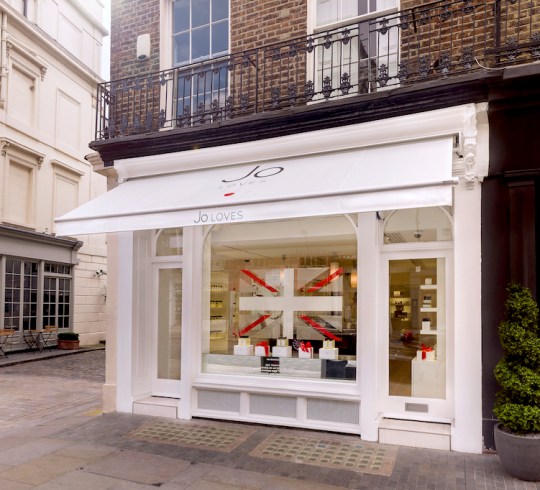
Those of you who read fragrance blogs and articles know that the brand Jo Loves was started by Jo Malone, who sold her first, eponymous brand to Estee Lauder, worked for them for some time, then launched a new brand of her own, Jo Loves, several years later. She also has a store at 42 Elizabeth Street in London. No. 42 The Flower Shop is named after the coincidence that when she was a teenager, Jo worked as a florist on the same street where her store now stands. I’ve had the pleasure of visiting it, and I highly recommend that if you are in London! It’s a lovely store, and it is close to Les Senteurs, a long-established niche perfumery with a wide selection of fragrances by independent brands.

Jo Loves fragrance boutique at 42 Elizabeth Street, London.

Jo Loves boutique

No. 42 The Flower Shop smells exactly like its name. It is the smell that greets you when you walk into a florist’s shop, a mix of cut flower and leaf fragrances, very green and fresh. While the brand’s website describes it only as “fresh blooms and crushed green leaves”, Fragrantica describes it in more detail: “top notes are green leaves, mandarin orange and peony; middle notes are lily-of-the-valley, freesia, jasmine and narcissus; base notes are iris, white musk, moss and patchouli.” Lily of the valley is listed with green notes as one of the top two notes perceived by commenters.

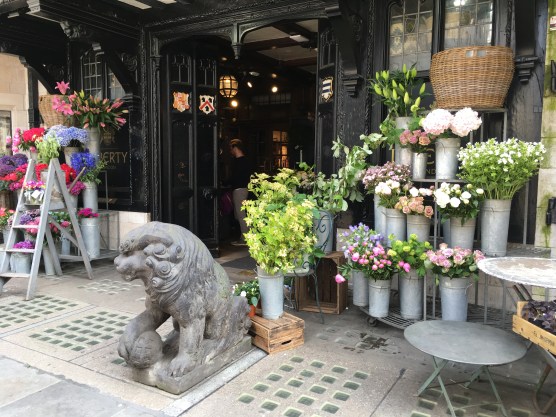
The opening is indeed very green, which I like very much. There is a slight sweetness and juiciness that reflects the mandarin orange note, but the citrus fades away quickly and what remains at first are green, green leaves. Then the floral notes enter, including the lily of the valley. I think that lily of the valley and freesia are evenly matched in No. 42 The Flower Shop. Both are evident, but they are blended together very nicely; at some moments in this middle stage, the freesia is more dominant to my nose, but at other times, the lily of the valley takes precedence. No. 42 The Flower Shop evokes a very specific memory for me: the florist buckets and potted plants outside my favorite store in the world: Liberty London.  I love everything about Liberty: first and foremost, its signature fabrics and fabric designs; but also its fabulous building in Great Marlborough Street, its tearoom, its amazing fragrance department — everything.

Flowers and buckets outside Liberty London florist store

Flower shop at Liberty London

The green notes persist during the middle stage of No. 42 The Flower Shop; that and the other floral notes make the fragrance a bouquet, and by no means a soliflore, as befits a florist shop. The narcissus note is evident, though not as strong as the lily of the valley and freesia, but it adds a nicely astringent tone to the sweeter flowers (it is not one of those heady, “narcotic” narcissus notes, it too is very green). The fragrance retains its greenness throughout, including in its base notes of moss and patchouli. The moss note is especially clever, as it is so common for lilies of the valley and spring bulbs like narcissus to be forced in pots and potted with green moss.

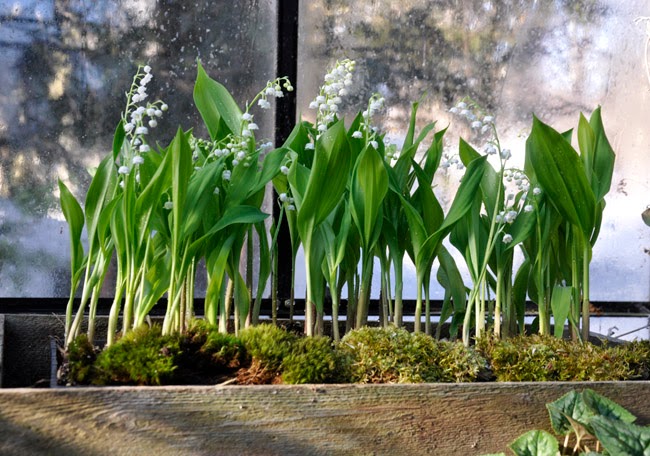
Forced lilies of the valley potted with green moss

Lilies of the valley planted with moss

Sadly, No. 42 The Flower Shop does show its kinship with some of the original Jo Malone fragrances in that it doesn’t last as long as I would like. It is so pretty, though, that I’m glad I own a bottle; and I’m looking forward to visiting Jo Loves’ boutique later this month to try her new fragrance, Rose Petal 25.

Have you tried any of the Jo Loves fragrances? I’m also very partial to White Rose and Lemon Leaves. If you’re interested and you haven’t tried any but you’re pretty sure you may want one, Jo Loves has a discovery “experience” where you pay the price of a full bottle (50 ml or 100 ml) and get a discovery set with a certificate for the full bottle of your size and choice; I believe that includes shipping.

Scent Sample Sunday: Nuda Veritas

Scent Sample Sunday: Nuda Veritas

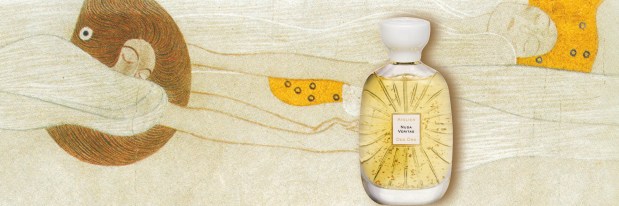
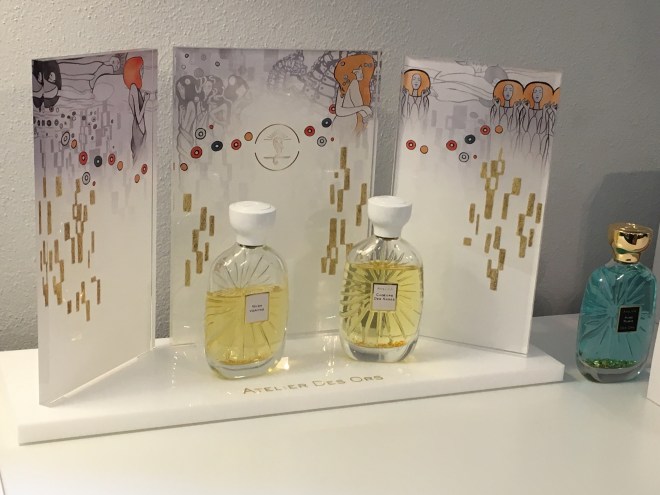
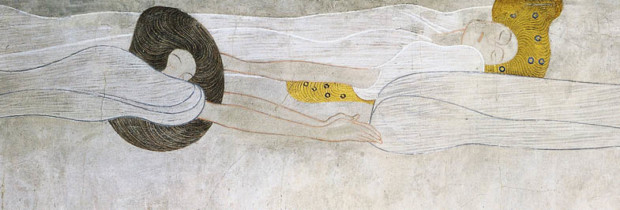
One year ago today, Cafleurebon published this announcement of Atelier des Ors’ new releases: the White Collection, and Bois Sikar, which I have previously reviewed. The White Collection consists of three linked fragrances based on Gustav Klimt’s “Beethoven Frieze”, which itself was inspired by Beethoven’s Ninth Symphony. Like all the Atelier des Ors fragrances, the perfumer who created them is Marie Salamagne.

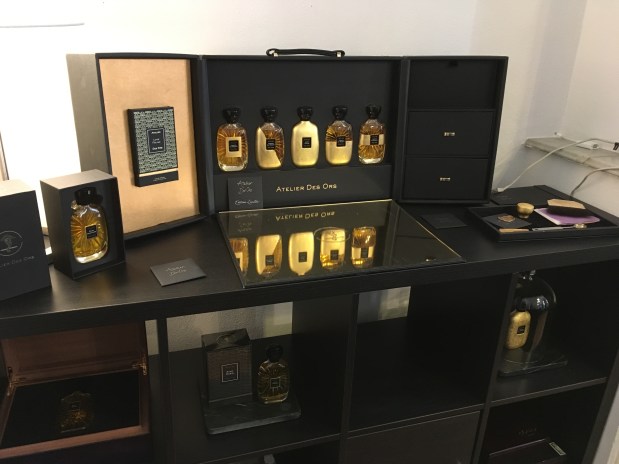
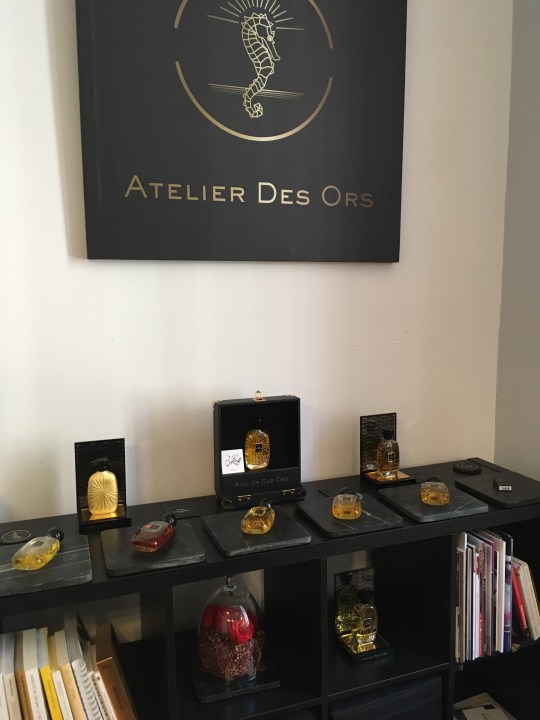
I was lucky enough to visit the office of Atelier des Ors in Cannes this past January, thanks to an invitation from Megan of the blog Megan in Sainte Maxime. I met her for the first time in person, and I also met Jean-Philippe Clermont, creative director and founder of the brand, and was introduced to some of Atelier des Ors’ beautiful scents.

M. Clermont has himself written about finding his inspiration for his White Collection in Klimt’s masterpiece. Like the frieze, the three scents are meant to evoke the human spiritual quest for joy and its stages, as Sergey Borisov described so well in the piece he wrote about the collection for Fragrantica. Miguel Matos also wrote an excellent review of the White Collection for Fragrantica, here.

Nuda Veritas represents the first stage of that journey. Its top notes are bergamot, an aquatic scent molecule called Transluzone, and neroli. Heart notes are osmanthus, Jasmine Sambac, Chinese jasmine, and tiare flower. Base notes are patchouli, marigold, the scent molecules Ambroxan and Helvetolide, and moss.

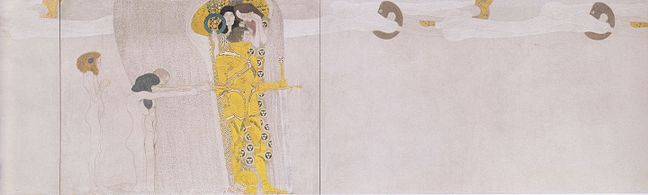
The impression Nuda Veritas gives is that of shimmering, early dawn light, at the break of day when the dew still refreshes the landscape. It evokes the hopes of humankind, as does the first panel of the Beethoven Frieze, whose figures symbolize humanity pleading for rescue by a knight who represents strength. Behind him are female figures symbolizing Compassion and Ambition, the two motives that might inspire such a knight to take up arms in defense of others. Above them all float female “Genii”, celestial spirits who are searching, seeking, as hope looks ahead, seeking for a happier destiny, portrayed in shades of white and gold.

Panel, Gustav Klimt's Vienna Secession Beethoven Frieze

First panel, Gustav Klimt’s “Beethoven Frieze”.

Detail of panel of Gustav Klimt's Beethoven frieze, female Genii

Detail of panel, Beethoven Frieze by Gustav Klimt

Of all the figures on this panel, Nuda Veritas most clearly evokes these female Genii, with its floating, shimmering, golden tones. It opens with a clear citrus note from bergamot, coupled with the aquatic notes and the brightness of neroli. The opening is very lovely, reminiscent of dawn light over a tranquil sea, horizon glimmering in the distance. It moves gently into the jasmine heart notes, partnered with osmanthus and tiare. Although these are all white flowers, they are used here with a subtle touch; there is no “BWF” explosion or dominance. Just as dawn’s golden light slowly shifts to a whiter daylight, so Nuda Veritas’ tone shifts from the clarity of its citrusy aquatic opening to a whiter, slightly creamier, more floral heart phase.

As it dries down, Nuda Veritas fades away, leaving earthy, herbal notes of patchouli, marigold, and moss, warmed by the smooth and slightly fruity musk of Helvetolide, and the depth of Ambroxan. I love the marigold, or tagetes, note in the base, as I enjoy both the flowers and their scent in real life; they smell like a mix of floral, aromatic, and slightly musky green, which works well in Nuda Veritas. I can’t describe the Ambroxan note any better than The Candy Perfume Boy, did here:

I perceive it as a very silky, silvery material. It’s immediately evocative of the ocean but in a purely mineral way – it doesn’t posses an aquatic character, but one does get the impression of salt and wet stones. There’s also a sweetness to Ambroxan – a transparent, glittering and crystalline feel, as well as a soft, skin-like woodiness. It’s a fascinating, multi-faceted material that can be pulled in many directions, but it’s also tremendously diffusive, adding an expanse to fragrances, creating space, in which beautiful nuances can dance.

One thing I find interesting about his description is how well it also describes part of the overall artistic purpose of the White Collection, which is to “pay homage to the white space; the page, canvas, or an idea before its conception, at the point of materialising.” The use of Ambroxan in Nuda Veritas does add “white space” to the fragrance, in which its many nuances dance. This also recalls a key aspect of Japanese aesthetics, in which the space between objects or lines, or “ma“, is as important as the lines or objects themselves. Klimt is known to have been much influenced by Japanese art and methods, so here again are a lovely connection and consistency between the art that inspired these scents and their composition. (In fact, one of Klimt’s most famous and controversial paintings is called “Nuda Veritas”, or “Naked Truth”, and its composition is also consistent with its namesake perfume).

The entire triptych of scents in the White Collection offers layer after layer of hidden meanings, using perfume as the evocative art to express them. Like Bois SikarNuda Veritas is a highly intelligent work of perfume art. Marie Salamagne’s brilliant creation evokes dawn, morning, and springtime, all symbolic of hope and new awakenings. For me, it is a scent that perfectly suits Palm Sunday, which Christians around the world celebrate today. Palm Sunday traditionally celebrates the triumphal entry of Jesus into Jerusalem and marks the start of Holy Week. As we know, the joy of that day will soon give way to Judas’ betrayal and the cross at Golgotha. But on that first Palm Sunday, the people who were present believed that their Savior had come, in response to the pleas of suffering humanity, and hope was in the air.

Sample kindly offered by Atelier des Ors, independent opinion my own.

Scent Sample Sunday: Brocard’s Mechta

Scent Sample Sunday: Brocard’s Mechta

When I last stayed in London, I was able to visit the wonderful Bloom perfumery, near Covent Garden. I highly recommend a visit! They carry an amazing range of niche perfumes and the staff is remarkably friendly, helpful, and knowledgeable. I spent a LOT of time there and emerged with a few discovery sets, including a set of three floral fragrances from Brocard, the revived Russian perfume house. It holds three of the series “Gardens of Temptation”, 15 ml each. This set includes: Mechta, Elegantnost, and Luybov.

Brocard Gardens of Temptation set 1 Inspiration

Brocard Gardens of Temptation set “Inspiration”

The set contains three small, simple flacons, not the funky bottles pictured above, which are the full-size bottles.

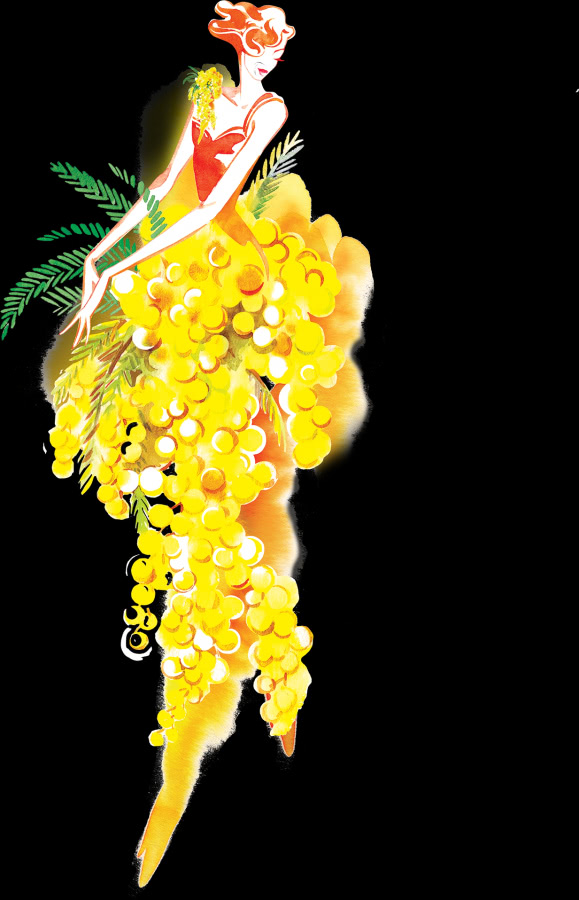
Mechta is described on Bloom’s website as a “spicy mimosa”. Its composition is described as: top notes are violet, hyacinth, and grass; middle notes are mimosa, linden blossom, magnolia, and clover; base notes are musk, honey, and cedar.

On my skin, Mechta opens as a bright, grassy violet; no hyacinth that I can detect. One thing I enjoy about this opening is the absence of citrus, which makes it a little different. I do love a good citrus opening, but I like this scent’s different top notes. As it dries down, the mimosa emerges, and it is a soft, pretty, yellow mimosa.  In the process of reading for this post, I discovered a wonderful Russian fragrance blog (thank you, Google Translate!) called Parfumistika, and its review of Brocard’s Gardens of Temptation, which includes the brand’s own description:

… drops of morning dew glistening on the grass and unusual green bitterness of hyacinth. The sun rises, coolness recedes, and the bright, joyful smells of linden-colored, mimosa, magnolia and acacia are revealed in all their glory. A firework of flowers gradually turns into a warm, honey-musky trail.

My experience of Mechta is more soft than bright, but very pleasant. If you don’t care for intensely green scents, fear not — the only green I detect is the grassy opening, which gives way to the mimosa pretty early. I would describe Mechta as a soft, warm, yellow, light floral. It’s very pretty, and very affordable if you can find it. I look forward to trying more of Brocard’s fragrances!

Fragrance Friday: Atelier des Ors and Bois Sikar

Fragrance Friday: Atelier des Ors and Bois Sikar

In late January, I had such a lovely blogger experience! I was in Nice for a week, taking a break from work to accompany my husband on his business trip, and free to do whatever I wished during the day. I reached out to a blogger whose fragrance blog I love, Megan in Sainte Maxime, and asked if she might like to get together for coffee or lunch. She said yes! She was working in Cannes, which is a short train ride from Nice, so I met her there. My very first blogger meet-up! And let me just tell you how much grief I got from my oldest daughter, who spent her teens being told “Don’t talk to strangers on the Internet! Never go meet someone you met online!” That child has been waiting for ten years to say that stuff back to me, even tongue in cheek.

Fragrance writer/blogger Megan in Sainte Maxime

Megan in Sainte Maxime; image from her Facebook page

Megan is as charming in person as she is in her blog. She graciously took me to a local coffee shop, then invited me to the offices of Atelier des Ors, where she has been doing some work for the line and its founder, Jean-Philippe Clermont. The two of them spent a generous amount of time showing me the house’s latest fragrances, also created by perfumer Marie Salamagne as are all the Atelier des Ors fragrances. Marie Salamagne is the perfumer behind Alaia and its flankers, Mugler’s Aura, Yves St. Laurent’s Black Opium and several flankers, and others you would recognize immediately, including several for Jo Malone. She is a great talent.

img_7969

Visit to Atelier des Ors, Cannes, France

The first five fragrances of Atelier des Ors were launched in 2015, joined by two more in 2017 and four new ones in 2018. Jean-Philippe wrote his own account of how he came to the creation of a perfume house for CaFleureBon, in 2016: CaFleureBon Creative Directors in Perfumery: Jean-Philippe Clermont. It seems he has been surrounded by interesting scents in exotic locations since his youth, including extensive travel in Asia and the Middle East. For some years, he ran a business dealing in fine cigars, and that experience sparked a passionate interest in fragrance and the materials that combine to create great fragrances, because of the variations among the cigars and the blends of tobacco that give rise to fragrant smoke.

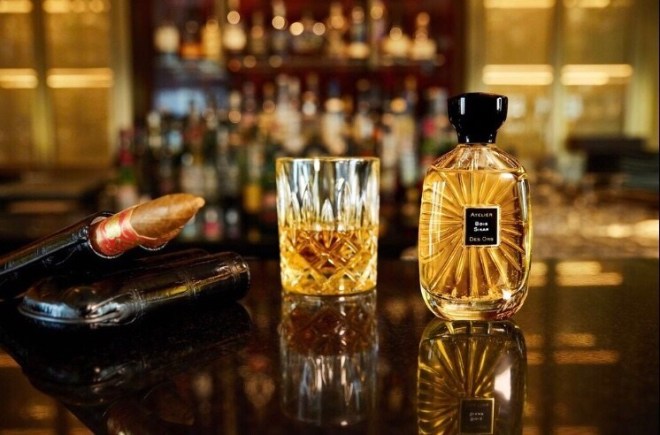
Three of the four 2018 fragrances are the “White Collection”, inspired by Gustav Klimt’s “Beethoven Frieze” in Vienna, Austria. Sergey Borisov wrote a lovely piece about the collection and its inspirations on Fragrantica. The fourth fragrance of 2018 is Bois Sikar, considered part of the “Black Collection.” It was inspired by Jean-Philippe’s cigar business, a very masculine scent, evocative of the scents one might find in a traditional London private gentlemen’s club:

A beguiling smoky tobacco scent with robust woody tonalities swirling against the heady vapours. The unique, smoky, peaty character of Islay’s single malt whisky is simultaneously conjured to create the essence of Bois Sikar. These addictive facets entwine with cedar leaf creating an intensely intoxicating fragrance.

Bois Sikar eau de parfum by Atelier des Ors, with whisky and cigar

Atelier des Ors’ Bois Sikar

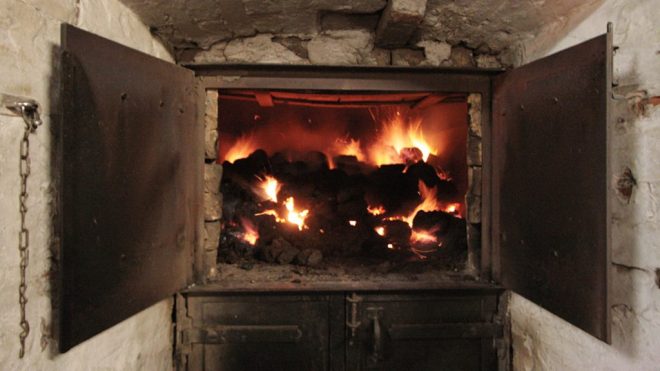
Bois Sikar is powerful stuff and not for the faint of heart, but it’s brilliant. A little goes a LONG way. The opening is woodsmoke and it is strong. It mellows slowly on the skin, as I imagine an Islay whisky mellows on the tongue after a rough start. Not that I’ve had any Islay whisky myself — I don’t care for Scotch, although it was my father’s drink. I have read that Islay whiskies are especially strong and have an intense flavor of peat smoke, which is used on that Scottish island — known as the “Queen of the Hebrides” and the “burning heart of smoky whiskies” — to smoke the malted barley that is used to make this distinctive local whisky. One writer describes this process: “The peat fuels the fires that roast the barley used in whisky-making, and it gives the finished product a robust flavor that recalls a campfire by the sea: smoky, earthy, a little salty, slightly medicinal.” Big, powerful, fierce, distinctive, super-smoky — these are the descriptors used for Islay whisky.

Peat kiln used in Scotch whisky distillery, Highland Park, Orkney

Peat kiln at Highland Park distillery, Orkney; image from www.whiskyadvocate.com

Commenters on Fragrantica are polarized about Bois Sikar, and their reactions are really all about the smoke. Either they love it, or they hate it. Several refer to it as smelling like a campfire; some who dislike it even use the word “barbecue.” It doesn’t smell to me at all like anything related to barbecue, as there are no food or meaty notes, but “campfire” is accurate. However, this campfire is stoked with fragrant wood, like the apple, mesquite, and cedar wood chips one can buy to add to regular logs in a firepit. This makes sense, given the deliberate evocation of peat fires; I suspect that some of the commenters have as little direct experience with Islay whiskies as I do!

Let us not forget the cigars. Here too, my firsthand knowledge is sadly lacking, although cigars were another pleasure my father enjoyed occasionally. It is interesting that, like whiskies, fragrances, wine, cigars are said to vary widely in their flavors or notes. Like fragrance writers, those who write about cigars review them and post “Best of” lists, such as Havana Insider’s Best Cuban Cigars of 2018.  After the initial blast of woodsmoke fades away, I do smell the tobacco in Bois Sikar. I’ve never smoked myself, but I do like the scent of good tobacco, and that is what I smell here.

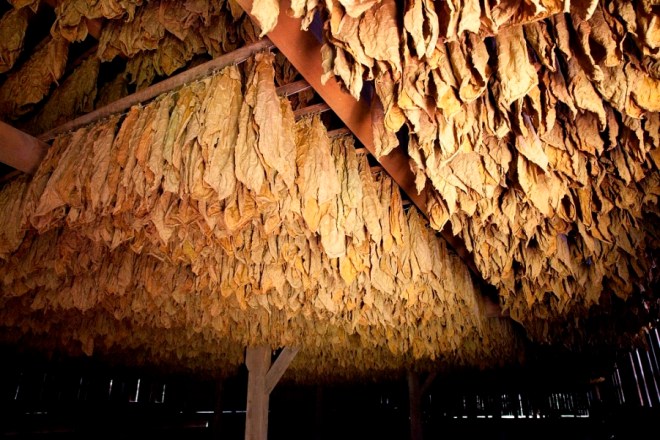
Tobacco barn Windsor CT

Tobacco drying in shed, Windsor, CT; image from http://www.connecticutbarns.org

As Bois Sikar dries down, the smoke slowly dissipates and one is left with a pleasantly woody, dry, tobacco scent, reminiscent of an old tobacco shed, or barn, in the middle of a dry field, after harvest. (I do have personal knowledge of those, as I grew up in Connecticut, where a tobacco industry was established in the early 1600s and continues to this day). The drydown and base note stages are  warm, woody, complex, and quite alluring. I applied two small sprays of Bois Sikar on my wrists last night, and this morning it was still fragrant on my skin when I woke up.

Old tobacco shed, barn, in Connecticut River Valley.

Connecticut tobacco shed; image from http://www.connecticutbarns.org.

I think the dryness of the base comes from the vetiver that is listed. I like Bois Sikar a lot, though it’s not my style of fragrance for myself and you have to be ready for that powerful opening. Although I believe that anyone who likes a fragrance can wear it, Bois Sikar is definitely a fragrance at the far end of the traditionally masculine spectrum. It lasts a long time, and the opening is intensely smoky. For those who want to wear it on social occasions, I recommend spraying it in small amounts a good hour before you leave home, as the powerhouse opening may overwhelm bystanders! If you want to wear it to work, proceed with caution and apply very lightly, allowing even more time for it to dry down before you go to your workplace.

I thoroughly enjoyed my visit to Cannes, my meet-up with Megan and Jean-Philippe, and my introduction to Atelier des Ors! The “White Collection” is much more my personal vibe, and will be the subject of a separate post, as its three scents warrant closer attention on their own.

What traditionally “masculine” fragrances do you enjoy, on yourself or on others? What do you think of strongly smoky fragrances? Any favorites?
Review based on a sample provided by Atelier des Ors, opinions my own.