This is a great post and interview with Diane St. Clair, a very gifted independent perfumer. Thank you, I Sniff Before I Sleep! I love her fragrances, starting with Gardener’s Glove and First Cut.
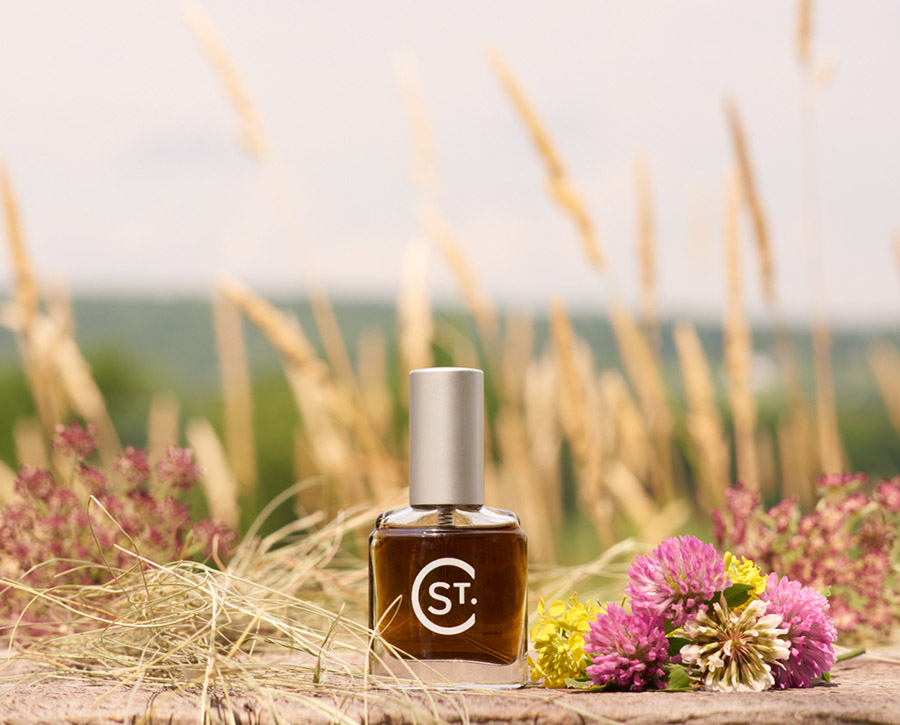

This is a great post and interview with Diane St. Clair, a very gifted independent perfumer. Thank you, I Sniff Before I Sleep! I love her fragrances, starting with Gardener’s Glove and First Cut.

Welcome to the weekly Perfume Chat Room, perfumistas! I envision this chat room as a weekly drop-in spot online, where readers may ask questions, suggest fragrances, tell others their SOTD, comment on new releases or old favorites, and respond to each other. The perennial theme is fragrance, but we can interpret that broadly. This is meant to be a kind space, so please try not to give or take offense, and let’s all agree to disagree when opinions differ. In fragrance as in life, your mileage may vary! YMMV.
Today is Friday, October 4, and it has been an eventful week! Not so much personally, but since last Friday, my part of the US has seen untold, unimaginable damage from flooding and winds arising from Hurricane Helene. Western North Carolina, a forested, mountainous region with many rivers and creeks, saw floods that were the worst on record, even including a massive, historic flood in 1916. My own region got the most rainfall in 48 hours that it has had since the 1880s. Rescues and repairs are ongoing; everyone from the federal government agencies to local volunteers, and every group you can imagine in between, has offered resources and support. My favorite volunteer group to date is the troupe of pack mules and their keepers, who were trucked to a staging location and are packing supplies up the mountain roads that vehicles still can’t travel.

On a lighter note, this week I’ve been trying out another of my bargain beauty purchases from London: Brocard’s Color Feeling Purple. Wow! This one’s a real keeper, and what a bargain at 15 pounds! It is a sweet violet fragrance with a blackberry accord that mingles beautifully with the powdery vibe of violet and iris. The perfumer is Dominique Moellhausen, whose family owns a Milan-based company that has been in the fragrance industry for over 50 years, both creating fragrances and selling raw materials and aromachemicals.
The notes listed on Fragrantica for Color Feeling Purple are: violet, blackberry, iris, heliotrope, oakmoss, cedar, amber, vetiver, orchid. It opens with a blast of violet and blackberry, and as it dries down it gets warmer and more powdery. I really like the blackberry note combined with violet. As the scent dries down, the violet remains dominant but the fruity blackberry note is slowly replaced by powdery iris and heliotrope. The drydown is warmed by the notes of amber, vetiver, and oakmoss; I don’t really smell cedar, and I never know what perfumers mean when they say there’s a note of “orchid”, since many orchids don’t have a distinctive scent and those that do, mostly smell to me like vanilla (vanilla comes from an orchid plant). Bloom Perfumery, where I bought this, describes the scent on its website as “holding sugared violets candy with leather gloves.” I’m not perceiving leather very much at all, but the longer it dries down on my skin, the more plausible that becomes. Color Feeling Purple has a more complex, interesting progression than one might expect from an inexpensive fragrance.
What a pleasant surprise! Have you tried any fragrances lately that surprised you?


Welcome to the weekly Perfume Chat Room, perfumistas! I envision this chat room as a weekly drop-in spot online, where readers may ask questions, suggest fragrances, tell others their SOTD, comment on new releases or old favorites, and respond to each other. The perennial theme is fragrance, but we can interpret that broadly. This is meant to be a kind space, so please try not to give or take offense, and let’s all agree to disagree when opinions differ. In fragrance as in life, your mileage may vary! YMMV.
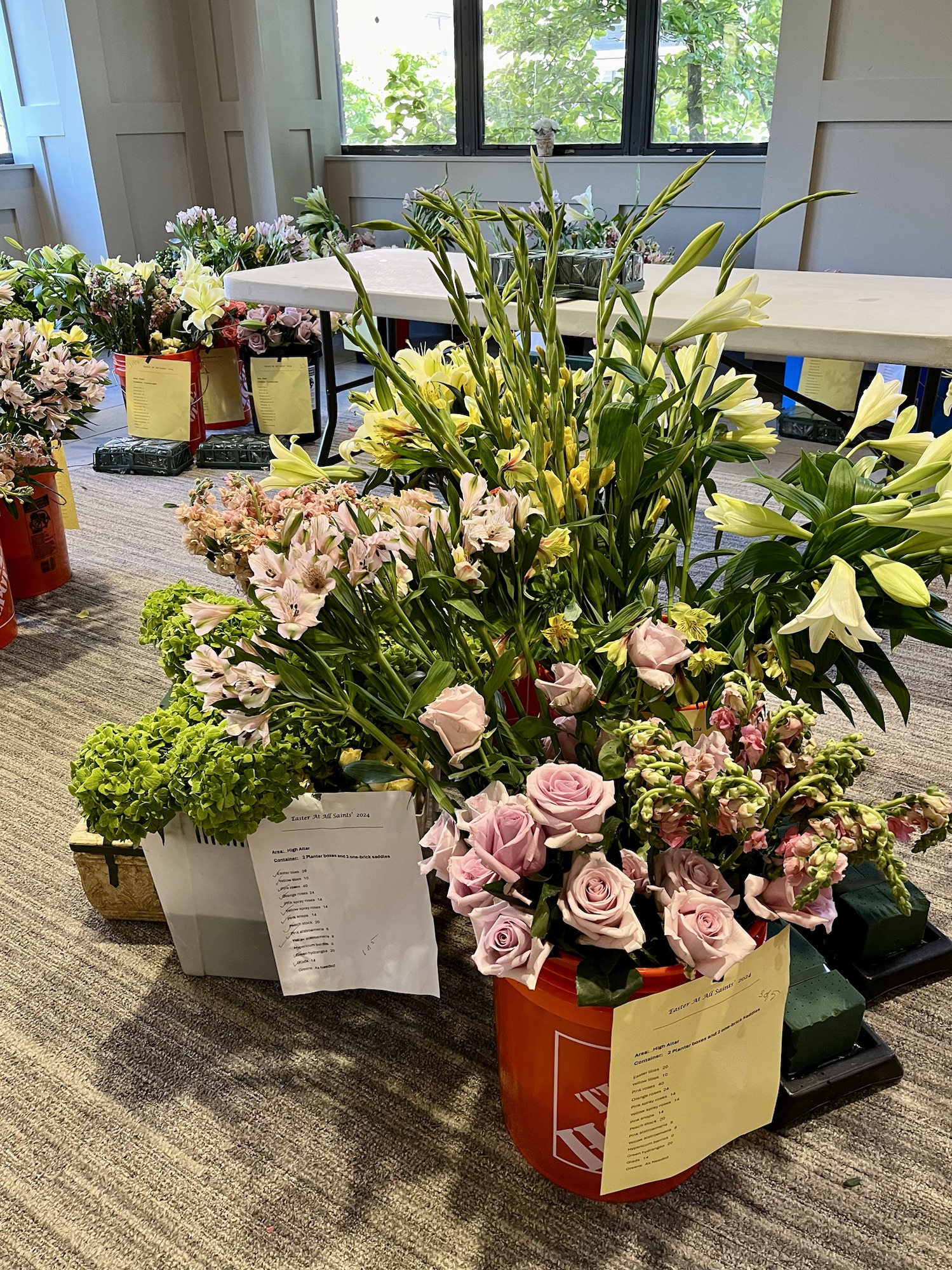
Today is Friday, March 29, and it is Good Friday in the Western Christian world (the dates when the Eastern Orthodox Church celebrates Good Friday and Easter are different). For the first time, I was able to go downtown to my church and help with all the labor that goes into the magnificent floral arrangements we enjoy at Easter. Even though Good Friday is a somber day, it was lovely to work with my hands with a very congenial group of fellow parishioners and handle the gorgeous flowers. The large room where we were working was filled with their fragrance, especially the lilies but also roses and stock.
There were many other flowers but those were the most fragrant. As I smelled it, I kept thinking it reminded me of an actual perfume, and then I realized what it was: Cartier’s Carat.
Created by Mathilde Laurent in 2018, I feel as if Carat has never gotten much vocal love among perfumistas. I like it very much, especially in the spring. It was meant to constitute a fragrant evocation of diamonds, with their prismatic reflection of the whole color spectrum, each component color represented by a different flower.
To accomplish this, the perfume maker decided to imitate an optical phoneme that is characteristic of diamonds: diffraction of color. So she chose seven different fresh flowers that, when combined, formed a new, abstract flower.
The composition represents the colors of rainbow in the form of flowers; violet, indigo, blue, green, yellow, orange and red are captured with the notes of violet, lily, hyacinth, ylang-ylang, narcissus, honeysuckle and tulips.
Per Fragrantica, top notes are Green Notes, Pear and Bergamot; middle notes are Hyacinth, Tulip, Narcissus, Lily, Honeysuckle, Violet and Ylang-Ylang; base notes are Mimosa and White Musk. I agree with one reviewer who also smelled lilac; I have a small lilac blooming on my patio right now, and it definitely makes an appearance in Carat. It reminds me of the lilac in Jean Patou’s Vacances, the Collection Heritage version created by Thomas Fontaine in 2014.
Now that my nose has associated Carat with arranging Easter flowers, I think I’ll have to wear it on Easter Sunday, together with a hat. If you celebrate Easter or another spring holiday, do you have any favorite fragrances you associate with the holiday? And do you have any special Easter or other spring holiday traditions?
Welcome to June’s installment of “Counterpoint”, a feature in which Portia of Australian Perfume Junkies and I exchange our thoughts on the same fragrance! This month’s featured fragrance is Le Jardin de Monsieur Li .

Le Jardin de Monsieur Li is part of the “Jardin” series by Hermes, created by Jean-Claude Ellena. It was launched in 2015, and it is meant to evoke a Chinese garden, with notes of kumquat, bergamot, jasmine, mint, and green sap.
I believe this was the last of the “Jardin” fragrances create by M. Ellena while he was Hermès’ in-house chief perfumer. I love gardens, and I love the “Jardin” fragrances, each one inspired by a different garden. In the case of Le Jardin de Monsieur Li, Hermès says it is a garden “poised between reality and imagination”, but it reminds me of a real garden I visited the one time I have ever been to China. I had gone with my husband to Shanghai, where he had work for a week, and I was on my own to explore the city. I don’t speak Mandarin, but I taught myself a few phrases (“Excuse me”, “Please”, and “Thank you”) and the Shanghai metro was very easy to navigate. High on my list of places to go was the Yuyuan Garden, built several hundred years ago during the Ming dynasty.

It is a remarkable place, five acres completely enclosed by ancient stone walls in the middle of a bustling part of Shanghai where the Old City has been engulfed by the modern metropolis. The garden is divided into six main areas with different themes and purposes; parts of the garden and its structures were used for performances, for example. It has water features and a large koi pond, and amazing stone work in addition to several rockeries. Some of the most striking elements are the “dragon walls” that divide the garden; the walls are built to look like the undulating back of a long dragon, and they end with a dragon’s head! The garden’s name means pleasing and satisfying, and it was created as a tranquil haven for an important Chinese official’s parents by their dutiful son.

Upon entering the garden after leaving the modern metro, one may experience a quick, delighted intake of breath, and I had the same reaction to Le Jardin de Monsieur Li. It is at once citrusy, aromatic, and floral – a perfect summer fragrance.
Portia: As soon as Monsieur Li came out I wanted to get some on my skin. The Jardin range is some of Jean Claude Ellena’s best work (in my opinion anyway) and I’m yet to find one that disappoints. Sydney gets things later than the world but luckily Jin and I were in Tokyo and we hunted it down at a department store Hermès counter. Mint is one of my favourite notes in fragrance and so I was immediately smitten. Jin bought me a set with shower gel and lotion in the most fabulous box. So not only is Monsieur Li lovely but it has an excellent scent memory to match.
Old Herbaceous: I first encountered it when I “met” the other Jardin fragrances. It launched at about the same time that I went completely down the perfume rabbithole, in 2015 (the same year I started this blog to record my impressions and experiences). My late mother had sent me a generous birthday check, and I discovered that a certain discounter website had all five of the original Jardin fragrances for very affordable prices, so I used her gift to buy myself the whole set (I have a thing for complete sets), having become intrigued by reading Chandler Burr’s book The Perfect Scent, which included his account of how M. Ellena created Un Jardin Sur le Nil.
I think my first impression of Monsieur Li was colored by how much I love Un Jardin Après la Mousson and Sur le Nil. I didn’t pay as much attention to it. Once I really tried it and focused on it, I found Monsieur Li to be just as rewarding as those favorites, though they still “outrank” it.
2. How would you describe the development of Le Jardin de Monsieur Li?
Old Herbaceous: The citrus notes in the opening are refreshing with that slight bitterness, like the grapefruit accord that M. Ellena uses so often. They are quickly joined by the jasmine, but this is a light, fresh jasmine, not the heavy narcotic white flower smell often associated with that accord. To me, it smells like jasmine polyanthum, a lovely pinkish white jasmine vine that is often grown indoors as a houseplant.
I smell a touch of mint, which adds to the freshness of the scent and lends it a tinge of green. As some of you know, I do love my strong green fragrances; this is not a strong green fragrance at all, but it has just enough greenness to appeal to me. As it dries down, the citrus notes slowly recede, as they usually do, but they linger enough to maintain the aromatic aura of this summer floral. The final stage is lightly musky, but I can still smell jasmine and mint, so it has a lovely, soft finish.
Portia: Before we get to spritzing I’d like to say how much I love the feel of these bottles. The glass is so smooth it’s like fabric. It’s hefty without being heavy and fits my hand like it was made just for me. Already I’m feeling good. I rather like the way JCE thinks:
“I remembered the smell of ponds, the smell of jasmine, the smell of wet stones, of plum trees, kumquats and giant bamboos. It was all there, and in the ponds, there were even carp steadily working towards their hundredth birthdays.” Jean-Claude Ellena
It’s like he has translated these memories perfectly into scent.
Hermès gives these featured accordsL Sambac Jasmine, Kumquat, Bergamot
Water, shade, greenery gowing in a glasshouse. A terrarium. Yes, I smell sparkling and pithy citrus, some vegetal musks, clear and clean white florals. It might have been suggestion but I also smell broken bamboo, that weird dry/torn/sappy/sweet/coldness that the smell evokes in my mind. I also smell bittersweet citrus juice. The heart moves on and gives me peony and waterfalls over the top and some non-citrus fruit but I can’t pinpoint it. Maybe even berries? Later the vegetal musks seem to mix with some resins, I want to say elemi but really it’s just a feeling more that a scent association.
That’s the fireworks of open and heart. As Monsieur Li heads towards dry down the vegetal musks and resins with an overlay of cut green oranges continues quietly but pervasively for hours. Towards the end I even smell something vanilla-ish. It melds with my skin but makes it smell 100x better than it ever has.
It’s not weird or big or crazy. It definitely has a softer amount of that JCE Jardin oily sweetness undercut by water and greenery. Monsieur Li is surprisingly long lasting on my skin too
3. Do you or will you wear Le Jardin de Monsieur Li regularly? For what occasions or seasons?
Portia: Yes, I wear Monsieur Li regularly. Though regularly means monthly rather than weekly. It works best for me when there is at least dappled sunshine. The temperature is not so important but I always feel really alive when wearing it in the sun.
Though it fits perfectly in most occasions I particularly love it when smelling good but not overwhelming is the job of the day. Perfect for food, movies, travel or anything up close. Also excellent as a bed time calming or early morning get me revved for the day spritz. So versatile.
Monsieur Li is surprisingly long lasting on my skin too
Old Herbaceous: I don’t wear it regularly, but I really should! It is especially appealing as a summer fragrance, though I would happily wear it during the spring and really any time I want a fresh cologne-type scent. I think it would partner beautifully with a guest’s summer wedding outfit, for any gender.
4. Who should/could wear Le Jardin de Monsieur Li ?
Old Herbaceous: This is a truly unisex scent, in my view. It has just the right combination of citrus, aromatic, and floral notes to balance between the traditionally feminine and masculine. When I was growing up, in a preppy part of New England, men often wore ties made of Liberty Tana Lawn floral fabric to summer parties and weddings, with lightweight suits; Le Jardin de Monsieur Li would go wonderfully with those.
Portia: Monsieur Li will probably be a bit low key for most hard core perfumistas. Their perfume wardrobes probably have enough cologne style fragrances.
Mint and aquatic are both also a no-go space for a lot of people. What I would say to anyone afraid of spritzing is that here the citrus and green notes are king. Though mint and water are present and noticeable the way that JCE has made this perfume could be a gateway for you.
Definitely unisex, its longevity means you can wear it to work and still have remnants left at the end of the day. It is also the sort of low key beauty that any non perfumista who wants to smell good as part of being dressed well could wear year round. I’ve not given it as a gift but thinking about that now it would be a perfect non confronting, wearable, elegant selection. That it has bath products that match make it even more alluring.
I’m also thinking that for someone who wants to define their leisure time with scent, Monsieur Li would be a beautiful, laid back, pared back signature. A gentle waft of freedom.

Have you tried Le Jardin de Monsieur Li? Thoughts? Also, I can’t omit mention of Sarah McCartney’s wonderful riff on it: 4160 Tuesdays’ Le Jardin de Monsieur McGregor, another garden scent I love very much! And its name makes me smile.
Do you have any requests for an upcoming Counterpoint fragrance? The only limitation is that it must be one Portia and I both possess or can sample. Suggestions are welcome!
Welcome to a new feature that I hope will appear monthly! Portia Turbo of Australian Perfume Junkies and I had so much fun doing “Scent Semantics” with some other fragrance bloggers in 2022 that we decided to launch TWO regular features as a new collaboration in 2023. The first, which we plan to post on the first Monday of each month, is “Notes on Notes“, in which we choose one note and write about it however the spirit moves us; our first Note was oakmoss. This second feature is “Counterpoint“, in which we ask ourselves the same handful of questions about a single fragrance and post our separate thoughts on it, on the third Monday of each month. We’re still experimenting with format, so comments on that are welcome too! This month’s Counterpoint fragrance is Chanel No. 5.
Continue reading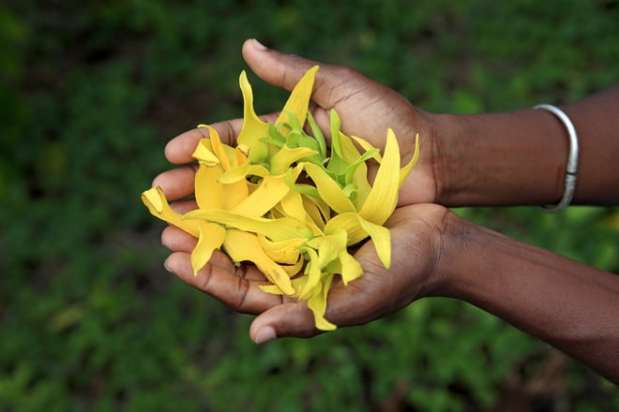
Happy Christmas Eve! I never got around to posting yesterday because I was so busy creating the first of several family feasts for last night and the next few days. I love to cook, and I love having our kids and their friends around, so this is a great time of year for me!
For December 23, my Advent SOTD was Guerlain’s Embruns d’Ylang, created by Thierry Wasser and launched in 2019. I like it much more than I expected to! Not that I dislike ylang-ylang, but it’s not high on my list of favorite floral notes. I like it a lot as a supporting character in many beautiful fragrances, but I wouldn’t normally seek out a fragrance where it has the starring role.
According to Fragrantica, the notes included are: top notes, Salt and Bergamot; middle notes, Ylang-Ylang, Cloves and Jasmine Sambac; base notes, Iris, Patchouli and Vanilla. I never know how to identify “salt” as a fragrance accord, except as a sort of mineral smell; and Embruns d’Ylang definitely has that in its opening, with a tangy bergamot. Believe it or not, the combination of salt and a bitter citrus has a long history, though mostly involving grapefruit: “Grapefruit and Salt: The Science Behind This Unlikely Power Couple.”
After the opening, ylang-ylang is the dominant accord, and it is very lovely. Interestingly, although I often think of ylang-ylang as falling on the sweeter end of the yellow flower spectrum, here it doesn’t come across as very sweet. It certainly isn’t cloying at all, and it is a ylang-ylang that would work well for all, truly unisex if that is a concern. I don’t smell cloves at all, though given the above article’s explanation of how our taste sensors can cancel each other out, I wonder if cloves are helping to reduce the sweetness of the ylang-ylang. I do pick up the jasmine sambac, but here it is a supporting player.
The ylang-ylang persists into the drydown and the base, which makes for a very interesting combination of yellow floral, powdery iris, soft warm vanilla, and earthy patchouli. I find it quite unique, and very pleasing. It also lasts on my skin for several hours, including overnight.
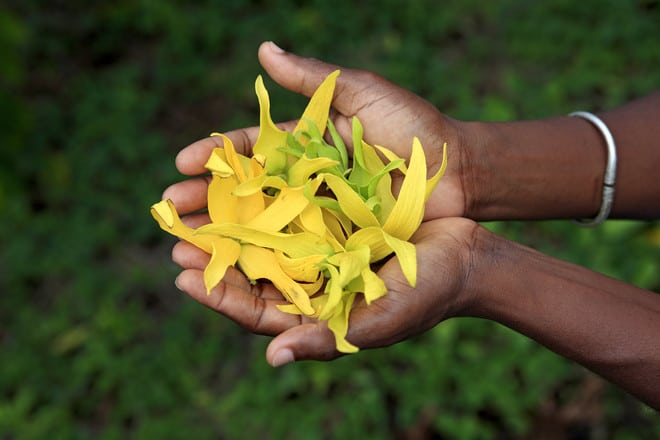
I find this to be a thoroughly unisex yellow floral fragrance with a unique combination of notes. Its name has a poetic meaning: seafoam of ylang, which takes into account the salt accord. This is different enough that I would suggest trying before you buy it, if you are so inclined, but it is well worth sampling.
Now I have to decide what to wear for Christmas Eve! Truthfully, I have many nice options, so I might have more than one SOTD. Happy Christmas Eve, everyone who celebrates it! Advent officially ends tonight, so I’ll wish you also a very happy Christmas; and to everyone everywhere, a happy, healthy holiday season. Thanks for joining me and other readers here on Serenity Now: Scents and Sensibilities; I look forward to hearing more from you all in 2023!

Even days of December are when I alternate my Guerlain samples with other samples, and I’m trying to make sure I reach into the box that has mostly independent perfumers’ fragrance. In this challenging economy, it continues to be important to support the independent and small businesses that already had a tough time during the pandemic. Besides, the independent perfumers often create the most interesting and innovative fragrances that we love to try.
Today’s sample is Andy Tauer‘s L’Air des Alpes Suisses, inspired by the Swiss Alps and launched in 2019, and I’m just delighted. First, it’s a beautiful fragrance. Second, I was able to visit Zurich and some of its perfumeries in the “before times” and one of them was Suskind, a small perfumery that only sells niche fragrances. Apparently its owner was an early supporter of Andy Tauer (who is based in Zurich), who is very well-liked in the perfume community for his approachability as well as his undoubted talents. When I visited Suskind and asked to sample some Tauer perfumes, the sales assistant confirmed that he stops by sometimes, and how nice he is.
So back to my sample: L’Air des Alpes Suisses is 100% unisex. It may lean a little masculine for some, because it is aromatic and woody, which many associate with masculine fragrances. Here is M. Tauer’s description on his website:
HEAD NOTES The HEAD notes are fresh like a breeze from treeless mountain summits: rough granite ground, the cool air from the glacier, and bitter alpine herbs. HEART NOTES The HEART notes are fresh, green with hints of spices. Floral delicacies such as the red Alpine lily bloom on lush meadows, powdery, spicy, green. BODY NOTES The BODY notes are inspired by alpine forests on cliffy slopes: the woody warmth of timber, larch and beech, with the sweet amber perfume of dry earth in the sun. notes are inspired by alpine forests on cliffy slopes: the woody warmth of timber, larch and beech, with the sweet amber perfume of dry earth in the sun. L’Air des Alpes Suisses notes list, from the Tauer Perfumes website
Fragrantica lists these specific notes, in no particular order: ambergris, lavender, fir, pine needles, tonka bean, lily, lemon balm, orchid, birch, palisander rosewood, basil, thyme, nutmeg. As others have noted since its launch, L’Air des Alpes Suisses is basically a fougère, a classic fragrance structure that uses citrus, lavender, coumarin (tonka), and a mossy or woody base, often oakmoss. An aromatic fougère, like this one, will also include notes of spices and herbs.
To my nose, the lemon balm accord is taking the place of a more traditional “citrus” opening, accompanied by lavender, green herbs like basil and thyme; personally, I would list chamomile instead of basil. So the opening is very green but not like galbanum, more herbal and less bitter. There is no sweetness at all, but it’s very pleasant and refreshing. The middle phase is very intriguing, with the herbal accords mingling with the floral notes of lily and orchid, and a hint of evergreen forests. M. Tauer’s handling of the accords that evoke fir and pine needles is masterful. Needless to say, there is nothing that smells at all like the ubiquitous pine-scented cleaning liquids. Nutmeg brings a woody spiciness to the party.
As L’Air dries down, it does get woodier, which adds warmth, but I think the star of the show is ambergris. There’s an earthy warmth that blends harmoniously with the warm woods but is distinct from them. Having had the privilege of smelling actual ambergris (kept in a vault!), I think that is what my nose detects. The tonka (or coumarin) evokes dry hay, as one would find in a summer meadow.
As you may know, the Swiss Alps are home to amazing alpine meadows, with unique, unusual plants and flowers. A beloved summer tradition of hiking and walking along trails to see the meadows in bloom has persisted in Switzerland, despite its sophisticated, urbane modernity. Andy Tauer has perfectly captured the atmosphere of an alpine ramble surrounded by meadows and flowers and fringed by evergreen forests, starting at the summit and slowly descending. I think I would love this on my husband, because I quite like it on myself!


Happy start of Advent, perfumistas! Even if you don’t celebrate Advent, you can still enjoy the festivities. Here at Serenity Now: Scents and Sensibilities, we love Advent, and we love a good Advent calendar, with all the little drawers or doors that hide surprises or treats. I continue to be astonished by the many high-end luxury Advent calendars now available in the beauty world, from brands like Chanel and Jo Malone London, as well as calendars with assorted teas, or jams, or other goodies. (Note: while some are now sold out, others are now on sale).
As I did last year, I am using fragrance samples I already have to do my own homemade Advent calendar, and I’ll try to post about them daily as a “Scented Advent” feature through December 24. This year, I am the happy recipient of a dozen samples of Guerlain fragrances from my autumn visit to the Guerlain boutique in Las Vegas, so I’ll alternate those with other samples. I’ll preserve some element of surprise by reaching into my Guerlain goodie bag every other day and pulling out whatever comes to hand.

My first Guerlain sample is Oeillet Pourpre, which means “purple carnation”. It is described as a new fragrance that was launched in 2021 as part of the collection “L’Art et la Matière”, created by Thierry Wasser and Delphine Jelk. However, several close observers of Guerlain, including Neil Chapman of The Black Narcissus blog, have noted that it is a slight reformulation of Guerlain’s 2017 Lui. (I”m actually glad to know this, because I had thought I’d like to try Lui, which has been discontinued, and now I won’t feel I should seek it out). Fragrantica lists these notes: Top: Clove and Pear; middle: Benzoin and Carnation; base: Smoke, Vanilla, Leather, Woody Notes and Musk.
One thing about Oeillet Pourpre that intrigues me is that it has smelled slightly different on me each time I’ve tried it. The first time, it reminded me a lot of two carnation-centric fragrances I have and like: L’Artisan’s Oeillet Sauvage, and Lutens’ Vitriol d’Oeillet. Today, it smells smokier than either of those, in a good way. I don’t usually gravitate to smoky fragrances, though there are some I like, so that’s a pleasant surprise. I do like carnation in fragrance, which I know some people dislike, and I like it here. Oeillet Sauvage is more floral, but it shares Oeillet Pourpre’s notes of resin (benzoin) and vanilla as well as carnation.
Much as I do like Oeillet Pourpre, and it lasts and develops well on my skin, its retail price means I won’t be buying a full bottle, especially as I already have full bottles of Oeillet Sauvage and Vitriol d’Oeillet. Fragrantica comments are full of frustration that the more reasonably priced Lui was renamed and moved into the L’Art et la Matière collection, where it is priced at $360 for 100 ml and smaller sizes are not available. I’m very happy to have received this sample, though, as it has allowed me to try it on different days and see how each wearing differs.
Do you have any thoughts to share about these fragrances, or L’Art et la Matière? Do you have an Advent calendar this year?

The word for this month’s Scent Semantics posts is “misanthrope.” If you haven’t read one of these posts before, “Scent Semantics” brings together a group of us fragrance bloggers in a collaborative project called “Scent Semantics“, the brainchild of Portia Turbo over at A Bottled Rose. On the first Monday of each month, we all take a word — the same word — as inspiration for a post that has some relationship to a fragrance, broadly interpreted. There are six participating blogs: Serenity Now Scents and Sensibilities (here), The Plum Girl, The Alembicated Genie, Eau La La, Undina’s Looking Glass, and A Bottled Rose. I hope you’ll all check out the Scent Semantics posts on each blog!
One definition of “misanthrope” is “someone who dislikes and avoids other people.” Now, I am not normally a misanthrope myself, although I am definitely an introvert (and if you’ve never seen author Susan Cain’s TED talk on the subject, click on that link — it’s a treat!). However, I think we’ve all become a bit misanthropic during the last two and a half years of a global pandemic — we were forced to avoid other people starting in March of 2020, then we disliked many people because of their varied responses to the pandemic. Layer on top of that the American elections of 2020 and their aftermath, so full of rage, and I think it’s safe to say that many of us, misanthropic by nature or not, have been slowly emerging from a phase of misanthropy.
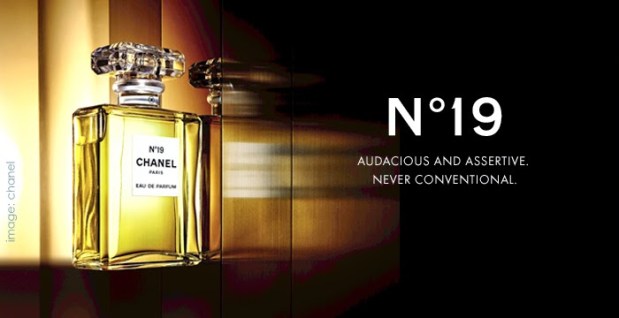
My semantically matched fragrance this month is vintage Chanel No. 19 eau de toilette. I’ve been wearing it almost daily for the past week as my green armor at work, due to the difficulties I’ve encountered leading up to a long overdue personal leave (which started this weekend, yay!). No. 19 always makes me feel that I can be tougher than I actually am; it stiffens my backbone. Some might say that it helps me set and keep healthy boundaries, lol!
Why? I think it’s because of the hefty dose of galbanum that heralds its arrival: a bitter, green opening chord that announces, as the Chanel website says, a “daring, distinctive, uncompromising composition.” Perfect for setting boundaries! The other top notes reinforce the lack of compromise: astringent bergamot, assertive hyacinth, aromatic neroli. All have a distinctive tinge of green supporting the star of the show, the galbanum, which Fragrantica sums up as an “intense and persistent bitter green .” Indeed. If galbanum were a person, it would be Bette Davis playing Margo Channing in “All About Eve”:
If you’re not familiar with the movie, it is about a star actress who is turning forty, fears for her career, and is manipulated and ultimately upstaged by a much younger woman. Fittingly, No. 19 was the last Chanel fragrance created while Coco Chanel herself was still alive, in her 80s, though I don’t know that anyone ever succeeded in either manipulating or upstaging her. Master perfumer Henri Robert put the finishing touches on the formula in 1970, Chanel died in early 1971, and No. 19 was released the same year.
The blog “Olfactoria’s Travels” has a wonderful review of No. 19, referring to it as a “magic cloak”. The reviewer takes a more benevolent view of No. 19 than Tania Sanchez did in the guide to perfumes she co-wrote with Luca Turin, where she compared it to the wire mother monkey in a famous experiment about nurturing or the lack thereof. Blogger and author Neil Chapman, of “The Black Narcissus”, is famously a devotee of No. 19, scarfing up vintage bottles of it in all formats from second-hand stores in Japan, where he lives. You can read all about it in his amazing book, “Perfume: In Search of Your Signature Scent”, available in the UK and the US, and elsewhere in other languages, which I highly recommend!
Luckily for me, since I adore green fragrances, on my skin the greenery lasts and lasts, joined in the heart phase by some of my favorite floral notes: iris, orris root, rose, lily-of-the-valley, narcissus, jasmine and ylang-ylang. The green astringency of the opening notes is carried forward by the lily-of-the-valley and narcissus, while orris root adds earthiness, iris adds powder, and jasmine and ylang-ylang add airiness, sexiness and warmth. My sense of No. 19 as “armor” is aided by my vintage spray, a refillable, silvery, aluminum canister that has protected its contents for many years.
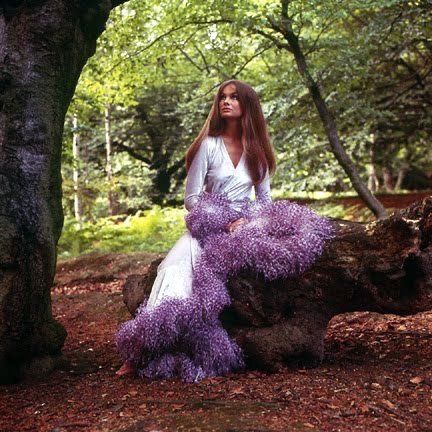
No. 19 has had many “faces”, my favorite being English model and iconoclast Jean Shrimpton. And guess what? Based on her own words, she may actually have been a misanthrope, having walked away from her superstar modeling career and life of celebrity in her 30s, becoming what she herself described as a recluse running a hotel in Cornwall. Although the photo of her below is not an ad for Chanel, to me it captures the spirit of No. 19‘s opening — inscrutable, distant, mingling shades of green, white, and earthy brown with the unexpected intrusion of purple:
As No. 19 dries down, to my nose the galbanum never leaves, though it recedes into the distance as the oakmoss enters the glade. Because I have the vintage EDT, the base includes oakmoss, leather, musk, sandalwood, and cedar. It is a true chypre, a genre I love. It reminds me of the Jackie Kennedy Onassis of the 1970s: elegant and even haughty upon first appearance, with a warmth that reveals itself over time to the patient; breaking free from the fashion conventions she mastered so skillfully and embodied in the 1950s and 1960s, and far from the cold “wire mother” of Tania Sanchez’ imagining while retaining an aura that commands respect.
I’m choosing to adopt Laura Bailey‘s interpretation of No. 19, which she described in Vogue at the height of pandemic lockdowns in 2020, as the scent of new beginnings and dreams of future adventure:
No 19, the ‘unexpected’ Chanel, the ‘outspoken’ Chanel, created at the height of the first wave of feminism in 1971, and named for Coco Chanel’s birthday – 19 August – is, for me, the fragrance of freedom, of optimism, of strength. (And of vintage campaign stars Ali MacGraw, Jean Shrimpton and Christie Brinkley.) The heady cocktail of rose-iris-vetiver-jasmine-lily-of-the-valley remains shockingly modern and original, bolder than any sweet fairy-tale fantasy.
If you had to relate a fragrance to the word “misanthrope”, which would you choose?


Today is the fourth Sunday in Advent, and my SOTD is Zoologist’s Bat, in eau de parfum format. So I think it is the original Bat, launched in 2015 as an eau de parfum and an Art & Olfaction Award winner in 2016, whose formula was changed in 2020 and now appears to be an extrait de parfum (the original formula, by Ellen Covey, is still available under the name Night Flyer, from her own brand Olympic Orchids, where you can currently get 20% off during December with the code 2021WINTER, including on her two discovery sets). I approached this scent with trepidation, as I don’t much care for bats, and so many comments over the years have mentioned rotting fruit. But when one is doing Advent calendar surprises, one must go with the scent Advent sent!
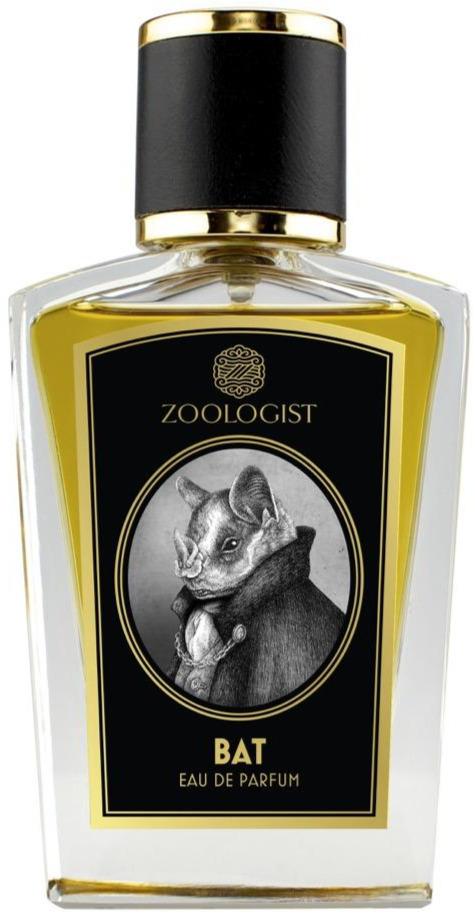
To my relief, my experience of Bat is neither animalic nor rotting. It smells to me, as it does to other commenters, like well-aerated compost. Compost is, of course, decomposed soil, made up of vegetation that has in fact “rotted” or decomposed, but it doesn’t smell rotten, if you get my drift. We gardeners use as much of it as we can as a supplement to our garden soil, because it is so good for our plants. Many gardeners who have the space will create their own compost from grass clippings, fallen leaves and fruit, even fruit and vegetable trimmings and other such bits from the kitchen. When compost is well made, it definitely smells like dirt, but it has a sweetness to it that is quite appealing. And that is what Bat smells like to my nose.
In fact, I’ll go an olfactory step further and say that I also smell a bit of truffle as the scent develops. Not the chocolate kind, but an actual truffle, which is a tuber that grows beneath ground. Bat in its original form was famous for a banana top note, but I never really smell banana. It’s possible there may be some banana skins in the compost pile, but that’s as close as my nose gets to it. As it develops, I do smell myrrh and fig, which are listed as heart notes. The full notes list is: Soil tincture, Banana and Fruity Notes (top); Tropical Fruits, Fig, resins, Green Notes and Myrrh (middle); Musk, Vetiver, Leather, Sandalwood and Tonka Bean (base). Fig is really the only identifiable fruit I smell, though. I have a feeling Bat is one of those fragrances that will smell different at different times of year in different weather, as things like temperature and humidity vary. Right now, in cool dry weather, I’m finding it very pleasant; I’ll be interested to try it again on one of our hot, humid, summer days, and see if I smell more fruit. Luca Turin has written that he believes Bat includes geosmin, the molecule responsible for the distinctive scent of petrichor, or the earth after rain, and I have no reason to doubt that.
The Plum Girl blog has a wonderful post about Zoologist Perfumes, with an interview of its founder Victor Wong. All in all, I’m quite pleased to have the chance to try the original Bat. I don’t dislike bats, after all, and I value their role in our ecosystem, but they have startled me on occasions when I have seen them flapping around trees at twilight, so this fragrance is as close as I care to get.

Have you tried either version of Bat, or compared them? Do you have any particular favorites from Zoologist? Given that I tend to favor florals and greens, are there any like those you would recommend from the brand?
 Serenity Now Scents and Sensibilities