Counterpoint: Cabochard

Counterpoint: Cabochard

Cabochard may be the best known fragrance issued by the house of Grès, at least to this generation of perfumistas. It is not the only one, but it was the first and it is one of only a few that came out while the real Madame Grès still owned the perfume line, which she sold in 1982. (Others I own are Cabaret and Cabotine). It was created in 1959 by legendary perfumer Bernard Chant, who also created strong fragrances like Aromatics Elixir, Azurée, Aramis, and the original Halston, now called Halston Classic. It is a classic leather chypre, originally with a full symphony of notes and accords, which Fragrantica lists as: aldehydes, sage, spices, tarragon, asafoetida, lemon and fruity notes; middle notes of geranium, orris root, rose, jasmine and ylang-ylang; base notes of leather, oakmoss, tobacco, vetiver, patchouli, sandalwood, musk, amber, and coconut.

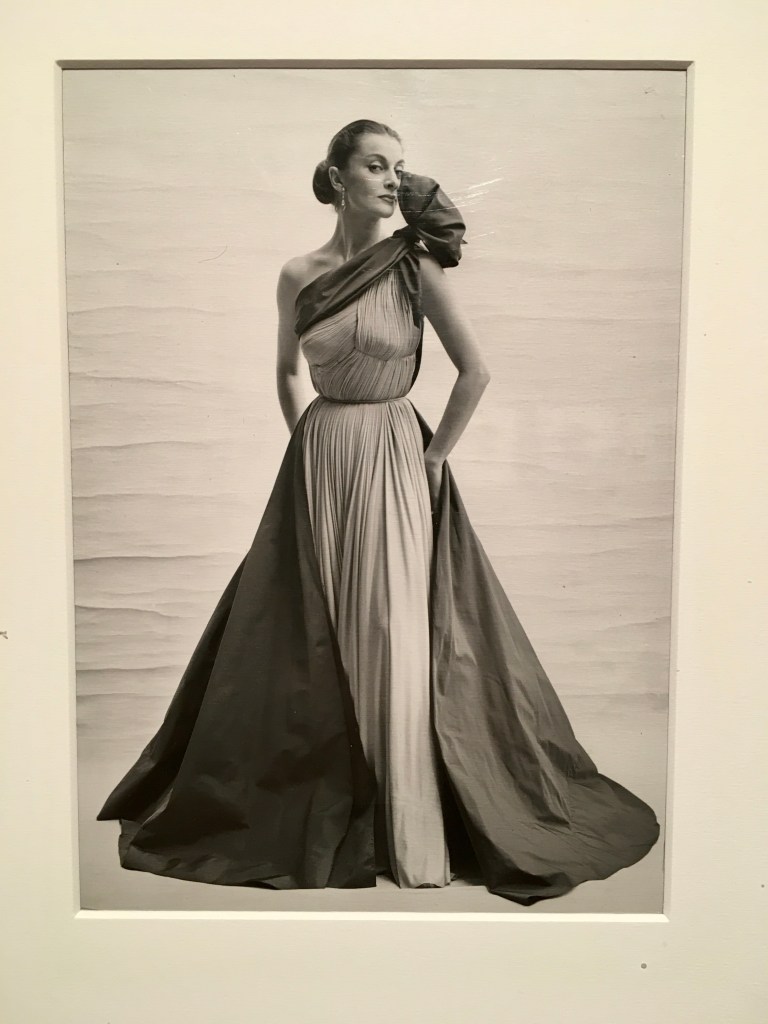
Madame Grès was a legendary designer of haute couture, based mostly in Paris and dressing its elite from the 1930s into the 1980s. Her creations are truly unique – you look at one of her garments and you know it’s by her. They are in many collections, including the Costume Institute of the Metropolitan Museum of Art, which describes her work thus:

“Madame Alix Grès’ career spanned five decades and throughout them all she excelled in her ability to manipulate fabric and use its innate characteristics to enhance her designs. She executed flowing body-skimming forms inspired by ancient Greek dress; minimalist, sculptural forms and voluminous, dramatic shapes.”

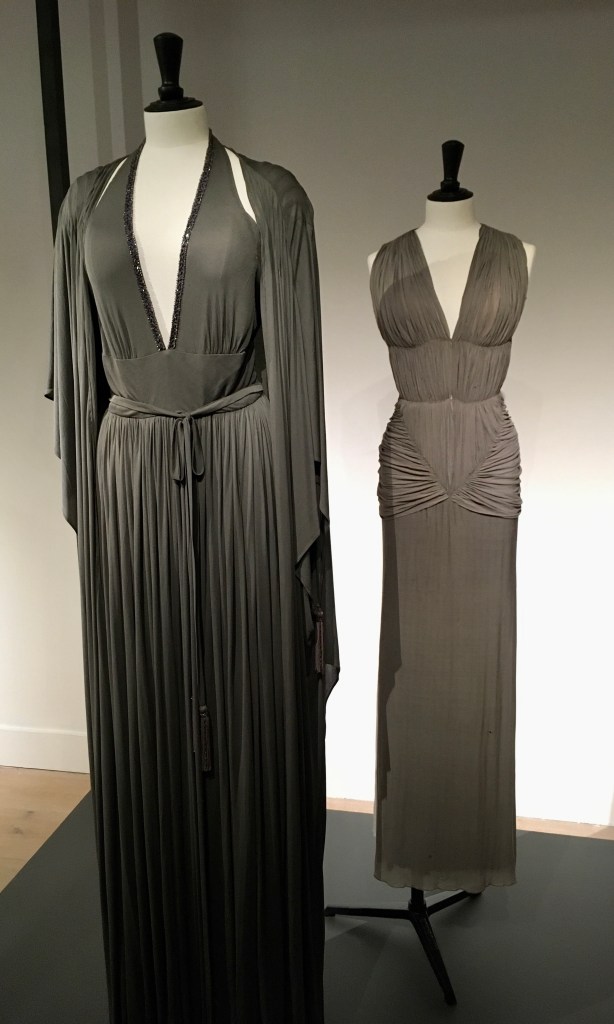
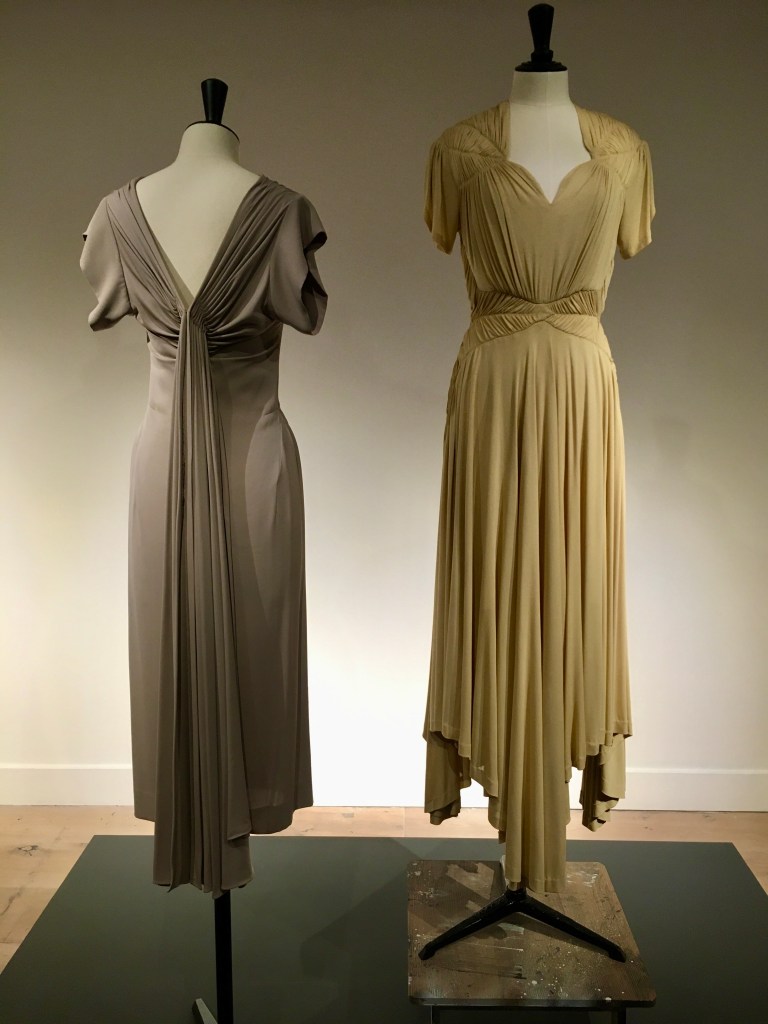
I chose Cabochard as this month’s “Counterpoint” fragrance to write about with Portia (of the blog Australian Perfume Junkies) because I saw a rare exhibit of Madame Grès dresses and other outfits a few weeks ago. Most of the items displayed were from the private collection of the late Azzedine Alaïa, another genius of garment construction who studied Madame Grès and her techniques. This post will be liberally sprinkled with photos I took! There were so many gorgeous dresses that it was hard to choose.
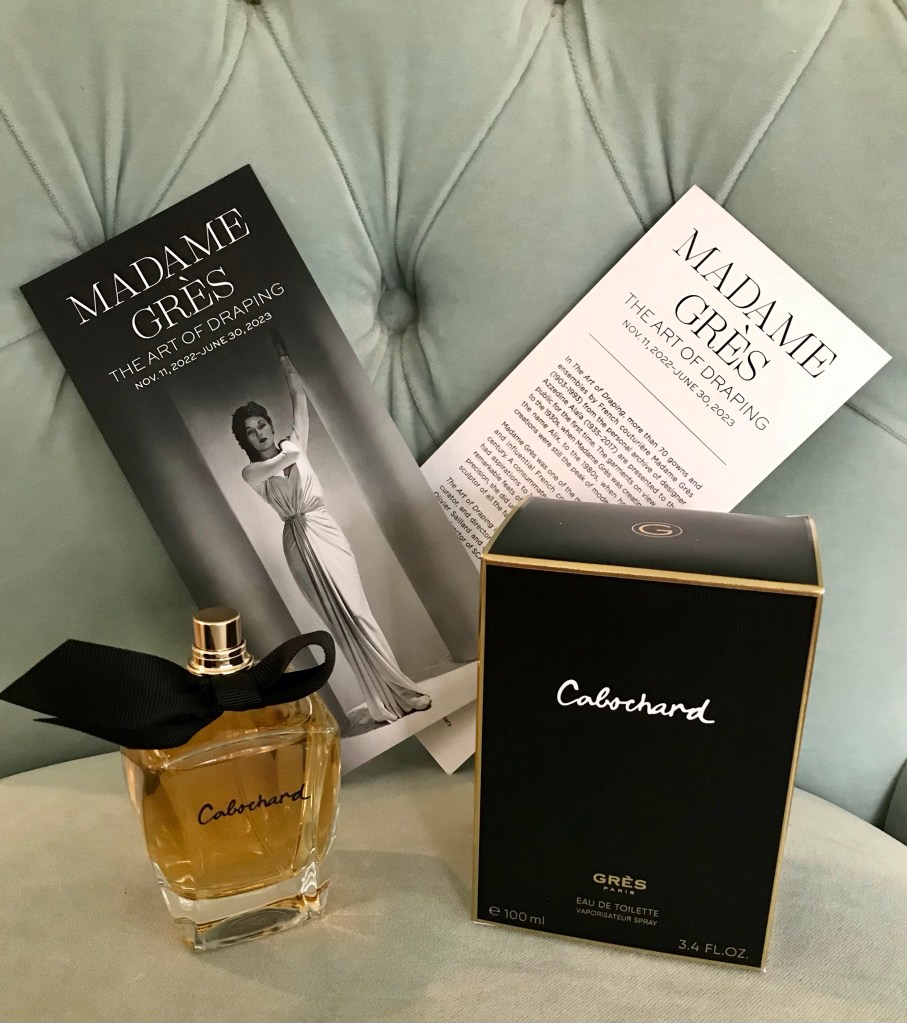
Cabochard and Madame Gres

Apparently the fragrance took inspiration from a trip to India that Madame Grès took in the late 1950s to look into the reorganization of traditional Indian textile manufacture, a project of the Ford Foundation and others. It was named Cabochard because of her well-known stubbornness and determination, on full display during the Nazi occupation of Paris in the 1940s, when she refused to serve German clients (who were mostly wives of Nazi officers). Another example is that when she was ordered to stop using so much fabric, at first she defied the order, and they shut down her atelier, then she complied but her next collection was all in the colors of the French flag: red, white, and blue.

  1. How did you first encounter Cabochard and what was your first impression?

Portia: I cannot remember the first time I smelled Cabochard. Maybe it was on an Aunt or one of Mum’s friends, or one of my friend’s Mums. It could have been a sniff session in a department store in the time that I loved perfume but wasn’t internet connected to you all or maybe I read about it in the initial stages of discovering the scent blogosphere. I do remember that I bought a tall slender bottle with a black lid, maybe even from overseas way back in the time of postal ability. That bottle was given to a friend when they fell madly in love. Then I scored an extrait that had my mind whirling (still does, though it’s a second bottle now) and lastly, when the bottle was redesigned and the fragrance given a spruce for modern day I grabbed a tester for next to nothing. Perfumer Bernard Chant created Cabochard in 1959, Aramis in 1966 and Aromatics Elixir in 1971. A trilogy or family of fragrance, all similar but riffing different elements.
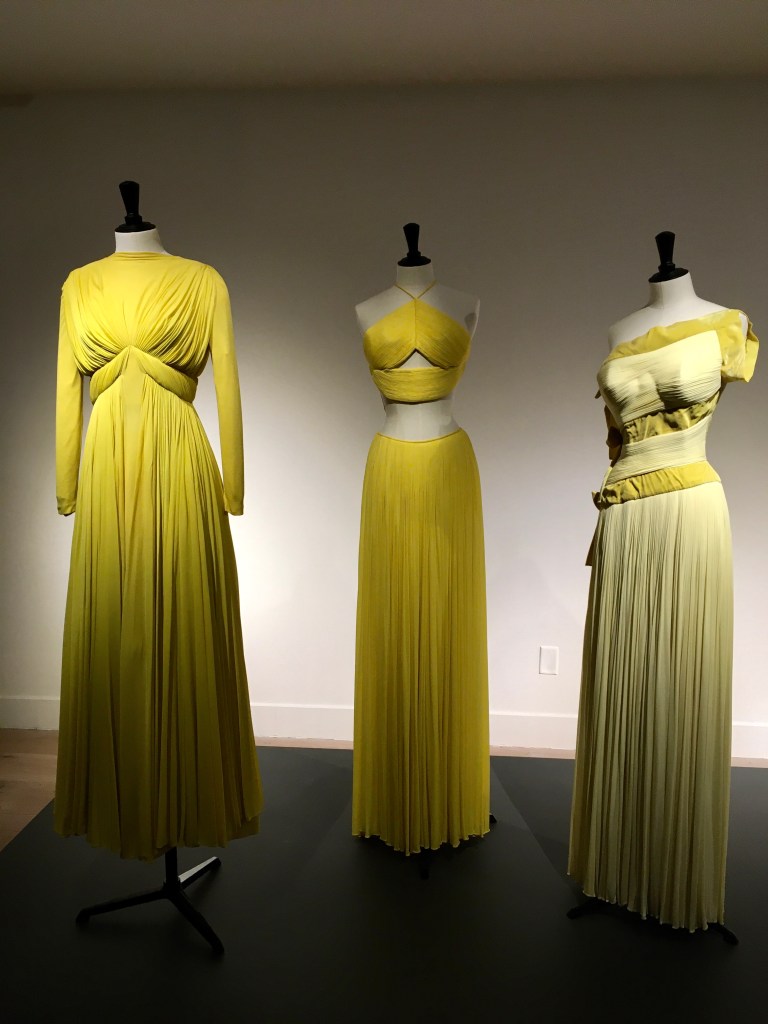
Dresses by Madame Gres

Old Herbaceous: I got a heavily discounted bottle of Cabochard eau de toilette after reading Luca Turin’s hilarious but scathing review in “Perfumes: The A-Z Guide”, in which he famously called this reformulation “Cabochard chewed down to a frazzle by accountant moths” and compared it to a time-ravaged Peter O’Toole whom no one recognized any more. I had previously bought another Grès fragrance, Cabaret (which came out long after she had died), and liked it very much, so I thought I would see what Cabochard was like and whether it deserved such criticism. Of course, I don’t have the original vintage for a comparison, but I was curious anyway. And I also found the name charming: stubborn, like a donkey, but also resolute and determined.

Cabochard has been reformulated (as have so many classics), and for a long time, what was available was the version I first bought, in a tall, slender bottle with a bas-relief bow on front. However, in 2019, the current owners of the brand reissued Cabochard in eau de toilette and eau de parfum, in shorter bottles with real black ribbons on the neck. These improve on their immediate predecessor and have been well-received, so I own both!

My initial impression was that Cabochard reminded me of Chanel No. 19, which startled me until I re-read the list of notes and saw that the 2019 eau de parfum has a strong dose of galbanum as one of its top notes. I like the opening very much, no surprise! When I asked my 21 year-old son to tell me what he thought, he sniffed my wrist and said “I can’t say I LIKE it, but I wouldn’t say I dislike it either. It’s really different!” How is that for a diplomatic answer?

  • How would you describe the development of Cabochard?

Old Herbaceous: I’m wearing the 2019 eau de parfum, which has a different list of notes from the original, according to Fragrantica: top notes of aldehydes, galbanum, and sage; heart notes of ylang-ylang, rose, and jasmine; base notes of oakmoss, leather, patchouli, and sandalwood. Right away, the aldehydes and galbanum hit the nose; the aldehydes drift away, but the galbanum remains a leading player. I barely smell any of the floral notes at all, then the base notes arrive — and wow, do they persist! Very true to the fragrance’s name, lol. Of those, the one I smell the least is sandalwood, which is a shame as that is clearly a reference to India. The oakmoss note is potent, and in 2019, it might still have had some real oakmoss atranol, though it was heavily restricted by then, and atranol was banned entirely in Europe in 2021. I’m guessing that by 2019, Parfums Grès was already using a modern substitute, both for cost reasons and because the ban was on the horizon.

The 2019 eau de toilette also has its own slightly different list of notes, which Fragrantica lists as: top notes of aldehydes, bergamot, and sage; heart notes of ylang-ylang, rose, and jasmine; base notes of oakmoss, leather, patchouli, and sandalwood. This is actually a more classic chypre structure, with bergamot among its top notes which the eau de parfum lacks.

Neil Chapman, author of The Black Narcissus blog, wrote about Cabochard in his marvelous book “Perfume: In Search of Your Signature Scent”, and described it as “a dark and brooding scent of greys, purples, and blacks that hovers, tantalizingly, above the skin” (I think he was describing the vintage extrait). To my nose, because of the galbanum and base notes, the eau de parfum is indeed “dark and brooding” but varying shades of dark green and brown.
Portia: Wearing vintage extrait and modern EdT. The opening fruity sparkle is herbaceous, aromatic and dense. Imagine being in the storeroom of an Indian bazaar, the spark and buzz of faulty electrics, fruit and veg in waxy cardboard boxes, sizzling spices, bitter herbs, and the scent of dozens of boxes of sandalwood soap. Cabochard is as full on as you can imagine. A heavy, hectic, psychedelic scent that manages to be all this and warmly classy too. That is quite a feat to keep something so big from flying out of control. It’s definitely a hark back to perfume of yesteryear but much of today’s product could learn a thing or ten from one sniff of Cabochard.

Fragrance bottles of Cabochard eau de toilette and parfum
Cabochard eau de toilette (2019) and parfum; image by Portia Turbo.

Through the heart flowers are a bouquet and I can’t pick any of them out, not really pick them out, though I get flashes of ideas of flowers. It doesn’t matter anyway because already the base notes are coming through: sandalwood, tobacco, patchouli, leather and oakmoss are the ones I can detect but what I really smell is Cabochard. It’s the base of Cabochard that IS Cabochard to me. That long trail of golden darkness that floats mysteriously around me for hours and hours.

  • Do you or will you wear Cabochard regularly? For what occasions or seasons?

Portia: It’s funny. I just put my Cabochard EdT in its box to give it a rest. I keep the extrait out for sneaky swipes. Cabochard is an excellent foil against the downward spiral of depression. Something so thick, rich, tapestried and enigmatic can derail the slide brilliantly if I catch it early enough. So yes, Cabochard gets wear.

It’s also a perfect glamour scent for nights working a drag. Cabochard’s fine line between masculine and feminine in scent is a perfect match.

Old Herbaceous: I don’t wear it often, and when I do, I realize that I really have to be in the mood for Cabochard. To me, it is a fragrance best suited to fall and winter, when it appeals to me most; to my nose, it’s a bit much in the hot, humid weather we get here in the summer.

  • Who should/could wear Cabochard?

Old Herbaceous: I find Cabochard totally unisex – wearable by men or women without startling anyone with traditional expectations. Not surprising, given that its original creator Bernard Chant also came up with Aramis, a legendary masculine fragrance that is still a top seller, and strong feminine fragrances like Aromatics Elixir and Azurée (also Beautiful, more floral than many of his other creations).

Portia: Cabochard is truly unisex. Anyone with the chutzpah to wear such an iconic fragrance should definitely get some on. It’s a big perfume but a single spritz could even be low key enough for the workplace. Should you need armour, to make an entrance, to become an object of power then a couple of sprays more. 10 sprays should gas those nearby, dry clean your curtains and make people give you a wide berth. I’m wearing 10 sprays right now, home alone and in my perfume room/office. Bloody heaven!

Did I mention that Cabochard can be had for very little money on the discount sites? So, affordable glamour. YAY!
Have you tried Cabochard, vintage or modern? Which version, and what do you think?
Scent Sample Sunday: Silences

Scent Sample Sunday: Silences

One of the regular readers here mentioned recently wearing Silences, and Portia from “Australian Perfume Junkies” and I immediately oohed and aahed over it. So today’s scent sample is Jacomo’s classic fragrance, the original Silences.

Magazine ad for fragrance Jacomo Silences

Jacomo Silences, original ad (1978).

Silences was launched in 1978, and it fits right in with the green, woody, chypre vibe of so many classic fragrances from that decade. I’ve realized that my scent tastes seem to have been formed mostly in the 1960s and 1970s, when I was a child; given how deeply scent is linked to our subconscious, it makes sense that the fragrances of one’s childhood have particular impact. (To be clear, I own and love MANY later fragrances, but I find that I am really drawn to chypres, for instance, and to retro florals).

Fragrantica lists its notes as follows: Top notes — orange blossom, galbanum, bergamot, lemon, green notes and cassia; middle notes — iris, jasmine, narcissus, hyacinth, rose and lily-of-the-valley; base notes — vetiver, musk, sandalwood, oakmoss, cedar and ambrette (musk mallow). This list refers to the original and classic Silences, which was reissued in 2004. There is a new version, called Silences Eau de Parfum Sublime, which was issued in 2012. I appreciate, by the way, that the brand didn’t just reformulate and pretend that the new version was the same Silences. It’s easy to tell them apart, both from the name and from the packaging; Silences Sublime comes in a similar iconic round black bottle, but the lettering on it is completely different. It has excellent reviews online, but it doesn’t seem to be widely available in the US, unlike classic Silences, which can be found online for bargain prices. One can order it directly for delivery to Europe and a few other countries from the Jacomo brand website.

And Silences is a true bargain beauty! You have to like dry green chypres to enjoy it, though. It opens with galbanum leading the charge, a soupcon of bergamot floating in its wake. I don’t smell orange blossom at all, and while I’m sure the other listed top notes are there, because the opening is multi-faceted and complex, most of what I clearly smell is the combination of galbanum and bergamot, with galbanum dominating. As it dries down, two of my favorite flowers emerge: narcissus and hyacinth. The dry greenness of the galbanum persists, though I also get a hint of lily of the valley (another favorite flower). There’s a soft green earthiness that I have come to associate with iris root. I don’t smell any jasmine or rose in this middle phase.

Silences has often been compared to Chanel No. 19 in its eau de toilette version and for good reason. Their notes are almost identical, though in slightly different order and emphasis. No. 19 was created by the master Henri Robert in 1970, who also created 1974’s Chanel Cristalle. The perfumer behind Silences was Gerard Goupy, working at Givaudan with Jean-Charles Niel. Interestingly, M. Goupy was also the nose behind Lancome’s Climat, created in 1967, which in its vintage form is another green floral, though its opening is strongly aldehydic, unlike these later chypres. He also created Lancome’s Magie Noire in 1978, which has many of the same notes, also in a different order, but adding notes like spices and incense, honey and civet; it too is considered a chypre but more floral than green or woody. Victoria at “Bois de Jasmin” points out that its particular genius lies in the tension of combining its oriental and chypre accords.

So although one might be tempted to pigeonhole Silences as a bargain shadow of No. 19, it is not. Look at the sequence above: 1967: Goupy’s Climat; 1970: Robert’s No. 19; 1974: Robert’s Cristalle; 1978: Goupy’s Silences. Add in Bernard Chant’s creations for Estee Lauder, 1969’s Azuree and 1971’s Clinique Aromatics Elixir, and you see the fragrance zeitgeist of the time, with several gifted French perfumers exploring facets of dry, woody, green, bitter, mossy, dark, earthy scents — very fitting, for an era that also brought the environmental movement, the first “Earth Day” in 1970, and many landmark environmental protection laws.

Where does Silences fit on the scent spectrum? To my nose, it is more of a bitter green than the others, because of the strong galbanum opening. I love galbanum, so this delights me. It doesn’t have the leather notes that some of the others listed above have, or some of the animalic notes (it does list musk, but that may be based more on the base note of ambrette, or musk mallow plant).  Bitter, yes, but I don’t find Silences aggressive overall, as some commenters do. The opening is sharply green, but its final drydown phase becomes quite gentle and earthy while staying green, probably due to the combination of oakmoss, vetiver and sandalwood, softened by the ambrette. The complexity of its base accord is revealed in that today, I sprayed both my wrists at the same time. One wrist smells more strongly green and mossy, and the other more like a sweetish sandalwood with some lingering hyacinth.

The floral notes in Silences are quite reticent. The only ones I really smell are the narcissus and hyacinth, with a hint of muguet, all of which are quite green in their own right. So if it’s a more floral green you seek, I suggest you try No. 19 or Cristalle. Fruit? Aside from the bergamot opening note, which is subtle, there is no fruit here AT ALL. Sweet? Nope. Look elsewhere for fruity florals, or gourmands.

Have you tried Silences? Do you like green fragrances?

Scent Sample Sunday: Mitsouko and Halston

Scent Sample Sunday: Mitsouko and Halston

What more can be said about Guerlain’s Mitsouko in this, its centennial year? Since its creation in 1919, it has attracted, confused, frustrated and even repelled those who smell it. Many great writers and blogs about fragrances have extolled its excellence and legendary status, as well as the challenge it poses to modern noses: Chandler Burr, Luca Turin, The Black Narcissus, Kafkaesque, Cafleurebon, Bois de Jasmin, Perfume Shrine, etc.

As part of my own process for trying to understand it, I began to educate myself about chypres, the fragrance family to which Mitsouko belongs. Along the way, I learned that several of my favorite fragrances fall in that group. One of them is Halston, now titled Halston Classic. I have a small bottle, with Halston’s signature on the bottle. As I read about them both on Fragrantica, I noticed that Mitsouko and Halston share many of the same notes. Halston: mint, melon, green leaves, peach, bergamot; carnation, orris root, jasmine, marigold, ylang-ylang, cedar, rose; sandalwood, amber, patchouli, musk, oak moss, vetiver, incense. Mitsouko: bergamot, lemon, mandarin, neroli; peach, ylang-ylang, rose, clove, cinnamon; labdanum, benzoin, patchouli, vetiver, oak moss.

How do they compare? The Mitsouko eau de parfum I have (first created in 2007 but listing the same notes as the original, reformulated in 2013 and supposedly quite close to the original) lasts much longer than my Halston, which I think is a cologne concentration (hard to read the tiny lettering on the bottom). The famous dry cinnamon note is strong, while none of Halston‘s notes come across as powerfully. In Halston, I think the carnation note adds the spice notes one finds in Mitsouko, while its sandalwood may provide some of the dry woodiness that Mitsouko gets from the cinnamon. On my skin, Mitsouko smells smokier than the Halston. Wearing one each on my hands, I can smell their kinship, and it seems entirely possible to me that perfumer Bernard Chant, who created Halston, may have had in mind the creation of a modern tribute to the legendary Mitsouko, especially with that peach opening. I doubt M. Chant would have missed the obvious reference to Mitsouko, famously the first fragrance to add a note of peach, by using a synthetic ingredient.

Halston is definitely easier to wear and easier on the modern nose, though still miles away from the fruity florals currently in favor. I especially love its marigold note. When I was trying out Mitsouko, however, my young adult daughter came to sit by me and declared “Never wear that perfume again, Mom!”. There is a dark side to Mitsouko, as many commenters have noted.

What do you think of Mitsouko or Halston Classic?

Fragrance Friday: Daily Post -“Aromatic”

Fragrance Friday: Daily Post -“Aromatic”

I don’t normally do the WordPress “Daily Post”, but one of this week’s word prompts caught my eye: “aromatic.” Well, I certainly have a response to that, as some of my favorite fragrances have aromatic qualities, even if they aren’t primarily classified as “aromatics”. But let’s start with a classic: the aptly named “Aromatics Elixir” by Clinique.

In many ways, Aromatics Elixir is a quintessential 1970s fragrance. It was launched at the start of that decade, created by the great perfumer Bernard Chant, for a new brand (Clinique) of the Estee Lauder company. It is green, dry, herbal and strong. Its creators positioned it as a “non-conformist chypre”, a perfume ahead of its time, that went “beyond perfume.” To me, it is in many ways the scent of 1970s feminism: independent, strong, challenging traditional strictures without becoming androgynous. Very in-your-face and unapologetic, but with its own beauty. If I were to assign a face to it, I would choose 1970s supermodel Lauren Hutton, a non-conformist beauty with her gap teeth and American style. Hutton had a chameleon-like quality, able to pull off effortless elegance in couture evening wear but showing off that same great bone structure in a plain white shirt, outdoors in the fresh air. Whenever I picture her in my mind, she is outside.

Supermodel Lauren Hutton in 1975

Lauren Hutton, 1975

Luca Turin describes the impact of Aromatics Elixir thus: “Smelling Aromatics Elixir on a strip and especially in the air following a string of ‘modern’ fragrances is like watching Lauren Bacall in The Big Sleep after twelve episodes of Cheers.” That pretty much sums it up; as he notes, Aromatics Elixir “achieves at once salubrious radiance and luxurious dusk.”

But Bernard Chant created another great aromatic fragrance for Estee Lauder, shortly before Aromatics Elixir: 1969’s Azuree. I was lucky enough to find an affordable, unopened tester of Azuree parfum online – wow. This is a really complex fragrance with a lot of different notes balanced against each other. Luca Turin calls it a “citrus leather” with a leather-chypre heart and gives it five stars, contrasting its ongoing fidelity to the original vision of its creator with the sad dismantling of his other leathery masterpiece, Cabochard. Fragrantica lists its notes as follows: top notes – aldehydes, artemisia, gardenia, basil, sage, bergamot; middle notes – cyclamen, orris root, jasmine, ylang-ylang, geranium, vetiver, rose; base notes – leather, amber, patchouli, musk and oakmoss. My bottle is labeled as “parfum”, not “eau de parfum”, and both its strength and longevity bear that out, as does the slightly oily slick on my skin when I first spray it on. Other commenters have noted the excellent spray nozzle on this bottle, which allows you to spray a small amount in fine droplets. That is all you need! Azuree is strong stuff!

On my skin, Azuree opens with a jolt of aldehydes, bergamot and artemisia, with herbal tones from the basil and sage top notes, although I can’t distinguish those separately.  In the middle stage, I mostly smell orris root (really delightful and earthy, with an underlying carroty sweetness), vetiver and a hint of ylang-ylang. The story behind Azuree is that Estee Lauder, founder of the cosmetics empire, wanted to capture the outdoor scents of Cap d’Antibes on the azure sea of the French Riviera, where she had a villa in the years when Cap d’Antibes still looked more like the landscapes painted by Claude Monet and other Impressionists than the overbuilt hodge-podge it has become. Azuree does have a Mediterranean aura of dryness, citrus, herbs, and pine resin, as if one were looking down a dry Riviera coastline toward the stone pines of Juan-les-Pins from a sunlit Mediterranean garden. While roses, cyclamens and geraniums are listed among the heart notes, and they are all Mediterranean flowers that might grow in such a garden, along with the green herbs listed among the top notes, I really can’t pick them out.

View of the cliff garden, sea and boats, from garden of villa in French Riviera

View from villa in the French Riviera

As it dries down, Azuree becomes more leathery, dry and oak-mossy. At this stage, it LASTS.  If I put it on my wrists at night, I can still clearly smell its final drydown stage the next morning. Like Aromatics Elixir, this fragrance is so very different from the current trends of sweet, fruity or gourmand scents! It doesn’t smell old-fashioned at all, it smells almost radical. Yet at the same time, if one were to characterize it as a person, one might describe a free-spirited young woman, wearing no make up but with an “old soul” gazing from her eyes. Definitely one of the great beauties of the 1970s. If Aromatics Elixir is Lauren Hutton, Azuree is Margaux Hemingway, whose grandfather famously spent so much time on the unspoilt Riviera with the most glamorous, unconventional creatives of the day.

Supermodel Margaux Hemingway

Margaux Hemingway

Have you worn Aromatics Elixir or Azuree? Or perhaps another Clinique classic, Wrappings?