Fragrance Friday: Charleston Girl

Fragrance Friday: Charleston Girl

We have been visiting Charleston and the Isle of Palms recently, soaking up some sea and sunshine before the final stretch of the school year. Part of our mission was to share this beautiful part of the world with old friends of ours who have recently moved back to the United States after almost three decades of living in Paris. I have long regarded Charleston as the most beautiful, most European city in America, which, combined with its uniquely American history, makes it a favorite destination.

One aspect of introducing our friends to Charleston’s charms was taking them to visit Middleton Place, a former rice plantation on the banks of the Ashley River that dates back to the 17th century. Only one wing of the former mansion remains, but the outbuildings, gardens and rivermarsh views are still fascinating. We walked through hundreds of camellias in bloom, watched birds, admired centuries-old live oaks draped in Spanish moss. AND I found a locally made perfume in the gift shop whose proceeds support Middleton Place: Charleston Girl. Continue reading

Fragrance Friday: A Life in Scent

Fragrance Friday: A Life in Scent

Fashion news outlets have been trumpeting the foray of a longtime fashionista and industry insider, former Vogue Creative Director Grace Coddington, into the world of self-named perfumes. Comme des Garcons will launch Grace by Grace Coddington this April. Okay, so far, so good, ho hum. Here’s what I found more interesting: this article by Vogue, in which Ms. Coddington traces her favorite scents throughout her long career in fashion, starting in the late 1950s when she was a young model in London.

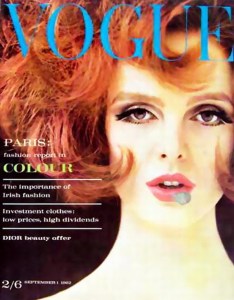
Grace Coddington Vogue 1962

Grace Coddington. Vogue UK, September 1962

Ms. Coddington has always had a striking, different look: more Pre-Raphaelite Sisterhood than Twiggy in my view.

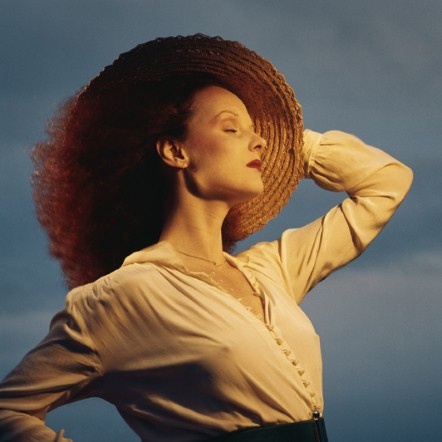
Grace Coddington telegraph

Grace Coddington; photo from fashion.telegraph.co.uk

Her new perfume sounds lovely but pretty conventional: “peach blossom, white musk, and amber crystal–spiked Moroccan rose absolute”, according to Vogue. It will be interesting to see if the actual fragrance is more individual and quirky than that description, as Grace Coddington’s own style, personal and editorial, has long been both of those.

Featured photo: Steven Klein, for Vogue January 2013; editor Grace Coddington.

Fragrance Friday: A Perfume Mystery

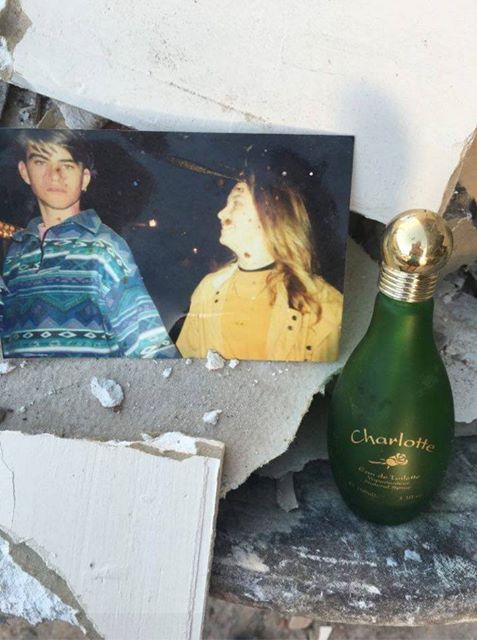
An intriguing news item from Australia: Photo and perfume found hidden in doomed Gold Coast house.  It seems that a bottle of eau de toilette, titled “Charlotte”, was found with a photograph of a young couple in a wall cavity, in a house slated for demolition.

perfume mystery

The owner of the house posted the above picture on Facebook, looking for information on who the young people might be, and what is the story behind this discovery.

Another mystery: what is this perfume? I haven’t been able to find it in a cursory search on Fragrantica or Google — any ideas? I love the idea of someone doing this.  If you were to hide a photo with a perfume, what would the photo show and what would the perfume be?

Fragrance Friday: Ostara

Fragrance Friday: Ostara

It may be a bit early in the season to review Penhaligon’s Ostara, given that it is named after a goddess of spring and the vernal equinox festival celebrated by pagans. The vernal equinox, after all, happens in March, not February. But temperatures here today reached the 60s, and it was a beautiful sunny day, so Ostara feels right for the day.

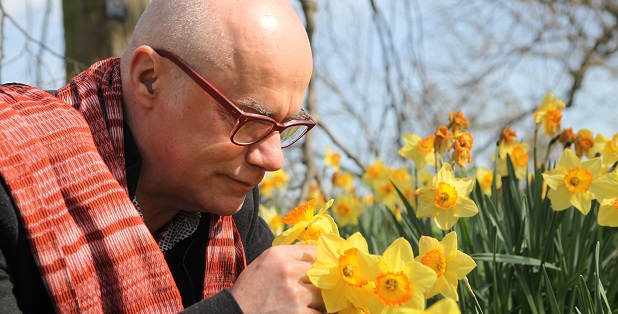
Penhaligon’s is a venerable British perfume house that dates back to the mid-late 19th century; its founder was perfumer to Queen Victoria. It was acquired last year by Puig, a Spanish company based in Barcelona, one of my favorite cities. They are expanding the reach of Penhaligon’s and have even opened a store in the United States, in New York: At Penhaligon’s, Old World Meets Modernism. Ostara is a new fragrance, launched in 2015. The perfumer behind it is Bertrand Duchaufour, who was inspired by England’s wild daffodils to create a sunny fragrance bouquet of yellow flowers, green leaves, dew and scented flowers.

Bertrand Duchaufour daffodils

Bertrand Duchaufour at Kew Gardens; http://www.penhaligons.com.

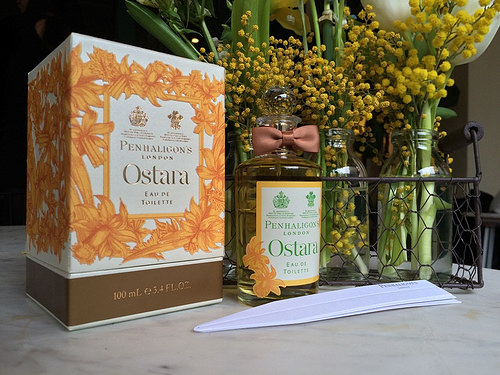
The packaging is beautiful, with yellow cut-paper daffodils applied to the outer box. On the back is an excerpt from Wordsworth’s  famous poem “I Wandered Lonely As A Cloud:

Beside the lake, beneath the trees,
Fluttering and dancing in the breeze….
And then my heart with pleasure fills,
And dances with the daffodils.
Ostara Box

Photo: www.blogs.elle.com.hk

Ostara opens with bergamot, clementine, juniper, red berries CO2, mint, currant buds CO2, violet leaf absolute, green leaves and aldehydes. The mostly floral heart adds notes of daffodil, hyacinth, cyclamen, ylang-ylang, hawthorn and wisteria along with beeswax. Base notes include styrax resin, vanilla, benzoin, musk, amber and blond wood.

To me, the opening is bright but not fruity. There is more than a hint of greenness from the juniper, mint, violet leaf and green leaves, but also a creamy undertone that is really winning, maybe from the beeswax accord. I smell the daffodil note quickly, and an astringent note that I think must be the hawthorn. There is nothing dark about Ostara. However, it’s not sweet — just sunny. I don’t pick up the hyacinth note very strongly, nor is the daffodil accord as sweet as, say, paperwhite narcissus. The drydown is warm, creamy and light. Victoria at Bois de Jasmin describes it so well: “From the first minute on skin Ostara glows, rich in green, citrusy and leafy nuances but without suggesting the component parts. In other words, don’t expect to smell along the marketing pyramid and find bergamot and then juniper, mint, violet, etc. Like a flower from a magician’s wand, it unfolds as a big, dewy blossom.”

Why the name Ostara?  According to some, Ostara is a pagan festival marking the time when the sun passes over the celestial equator and the season’s change from winter to spring. It is named for a pagan goddess of spring or the dawn, Eostre, whose name appears in the Anglo-Saxon writings of the Venerable Bede — but only once. Some say that her name is the root of the word “Easter”, the Christian holy day of renewal, resurrection and rebirth.
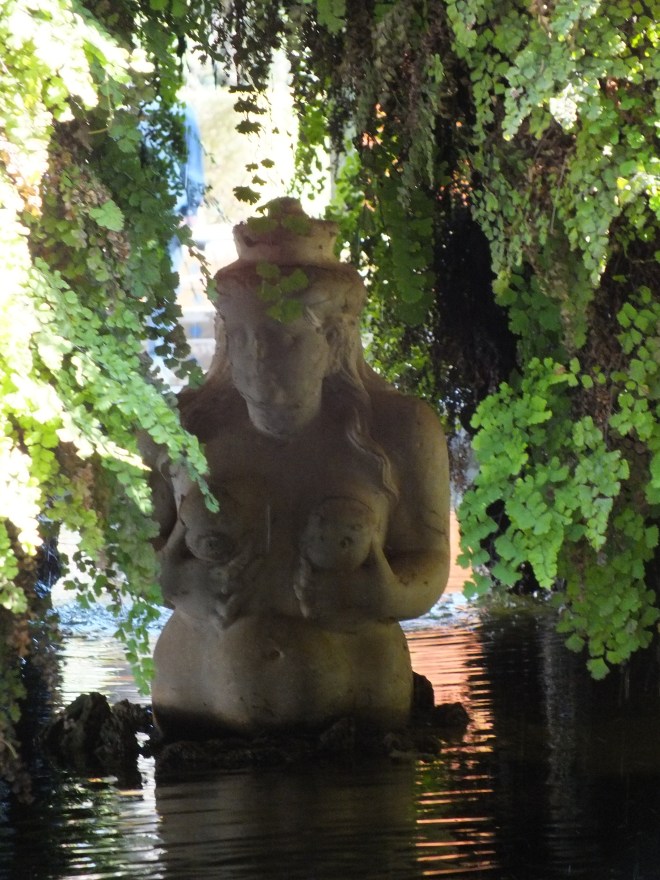
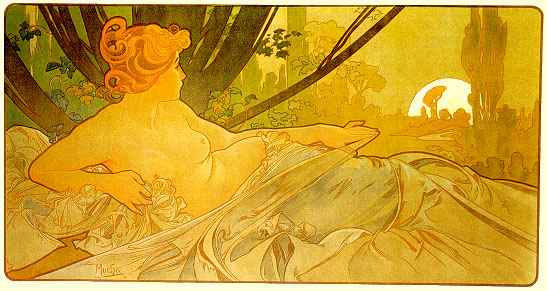
Goddess in Grotto Real Alcazar Garden

Daffodils are my favorite flowers, followed closely by lilies-of-the-valley and roses. I’m so happy that a great perfumer and renowned perfume house teamed up to create a daffodil fragrance, especially one so pleasing.
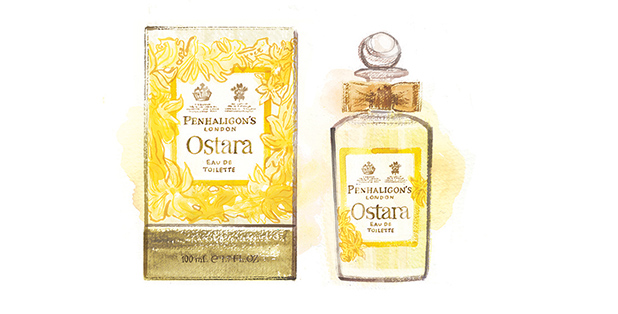
Ostara

Illustration: Melissa Bailey for Penhaligon’s.


Fragrance Friday: Roses for Valentine’s Day

Fragrance Friday: Roses for Valentine’s Day

Happy Valentine’s Day this weekend! This seems like a good opportunity to write about one of the rose-y fragrances I have discovered recently, given the association of red roses with Valentines (and the bouquet of them I was given yesterday! yes, that was early, because my husband is one of those delightful men who can’t wait to present a gift once it is in his hands).

Where to start? I think with Rose d’Amour, by Les Parfums de Rosine. Continue reading

LVMH Silences Monsieur Guerlain

Instead of my usual “Fragrance Friday” post, I am sharing this, from Kafkaesque. Sadly, the title of that blog is eerily appropriate for this news:

I was stunned to wake up this morning to news that LVMH, the parent company of Guerlain, has shut down the Monsieur Guerlain website,

Source: LVMH Silences Monsieur Guerlain

Fragrance Friday: Amouage’s Memoir Woman

Fragrance Friday: Amouage’s Memoir Woman

Wow!! This is not my usual type of fragrance, as I normally gravitate toward green florals, but I was excited to try it from a lovely gift coffret of six mini Amouage perfumes. Memoir is amazing. Many reviewers have said it reminds them of the original Poison. I used to wear Poison in the 1980s and this is much, much better. I do understand that impression, though, but to me Poison was very plummy and I smell no fruit in Memoir other than the spicy orange in the opening.

As soon as I dabbed Memoir on my wrist, Continue reading

Fragrance Friday: Carner Barcelona

Fragrance Friday: Carner Barcelona

My lovely husband has returned from another business trip to Barcelona; and I am now the happy recipient of several samples of fragrance from the niche perfumery Carner Barcelona, as well as the “travel set” of its fragrances Tardes and Rima XI. I haven’t had a chance to try them yet, so this week’s “Fragrance Friday” will be about the perfume house instead.

Carner Barcelona was founded by Sara Carner in 2009. According to the company website, Continue reading

Fragrance Friday: Monsoons

Fragrance Friday: Monsoons

I just read the most interesting article about a village in India that creates an attar to capture the scent of rain and the seasonal monsoons: Making Perfume From the Rain.

Every storm blows in on a scent, or leaves one behind. The metallic zing that can fill the air before a summer thunderstorm is from ozone, a molecule formed from the interaction of electrical discharges—in this case from lightning—with oxygen molecules. Likewise, the familiar, musty odor that rises from streets and storm ponds during a deluge comes from a compound called geosmin. A byproduct of bacteria, geosmin is what gives beets their earthy flavor. Rain also picks up odors from the molecules it meets. So its essence can come off as differently as all the flowers on all the continents—rose-obvious, barely there like a carnation, fleeting as a whiff of orange blossom as your car speeds past the grove. It depends on the type of storm, the part of the world where it falls, and the subjective memory of the nose behind the sniff.

Fascinating! The author, Cynthia Barnett, goes on to describe how she flew to India on the eve of monsoon season for the express purpose of visiting the village in Uttar Pradesh where, for centuries, villagers have captured the scent of the rain in their part of the world. They call it mitti attar. She describes in great detail what materials they gather and how they process them according to traditional routines. And then, she samples the end product, “Earth’s perfume”: Continue reading

“The Smell of Loss”

“The Smell of Loss”

Normally I post about fragrance on or around Fridays, in my weekly “Fragrance Friday” blog post. But this weekend’s New York Times had such a stunning, beautiful op-ed piece, The Smell of Loss, that I just had to share it.

The first time it happens is a dark winter’s afternoon, not quite a year after her death. I’m at my desk working, and there it suddenly is: sharp, glassy-green, with that faint, musky undertone that catches at the back of your throat.

I recognize it instantly: the scent that hung in our hall every time she came to supper. The perfume that clung to her coat, her scarves, detectable sometimes for hours on my babies’ hair after she’d been carrying and kissing them.

That first time, it’s a shock. Her perfume is something I’ve long forgotten (in her final months, mostly bedridden, she was beyond all that). But here it is — absolute and definite and quite overpowering.

The author, Julie Myerson, is describing the signature fragrance of her beloved, deceased mother-in-law, which she starts smelling at unexpected moments, for minutes at a time, with no apparent source such as clothing. She consults experts:

I email Jay A. Gottfried, a neuroscientist who runs the Gottfried Laboratory at Northwestern University, which investigates the links between brain activity and sensory perception.

Professor Gottfried tells me that what I describe is known in his business as “phantosmia” or “phantom smells.” The sense of smell, he says, is our most ancient, primal sense and has “intimate and direct control over emotional and behavioral states.”

You really have to read the rest of this article, it is wonderful. Enjoy! Have you ever experienced this phenomenon?

Illustration: Aidan Koch, for The New York Times