Notes on Notes: Citrus

Notes on Notes: Citrus

Welcome to the June installment of Notes on Notes, a collaboration with Portia of Australian Perfume Junkies! Each month, we choose a fragrance note and each of us writes a blog post about it based on our personal experiences. This month, the note is citrus (encompassing any and all citrus notes), since it suits the summer months so well.

Most of the familiar citruses are “hesperidic” fruits. According to Wikipedia, “Carl Linnaeus gave the name Hesperideæ to an order containing the genus Citrus, in allusion to the golden apples of the Hesperides.” These include oranges, lemons, grapefruit, limes, and (importantly for fragrance) bergamots. All offer essential oils from their bitter rinds which have been used often in the creation of fragrances, with synthetic versions available as substitutes.

In fragrance, the perfumer I most associate with brilliant use of citrus notes is Jean-Claude Ellena. He likes their bitterness; and a citrus has often been the featured opener for many of his fragrances, including the Jardin series he launched at Hermès. I’ve written before about my love for Un Jardin Sur Le Nil, which opens with a marvelous grapefruit accord. Miller Harris’ discontinued Tangerine Vert is another terrific citrus scent; in that post, I also covered another sadly discontinued fragrance, from Maison Martin Margiela, Replica Filter Glow. It was a dry oil fragrance meant to be directly layered with a complementary scent and said to prolong it. You could also wear it on its own, with its notes of neroli, grapefruit blossom, bergamot, and rose absolute. I think it would enhance any citrus-forward fragrance.
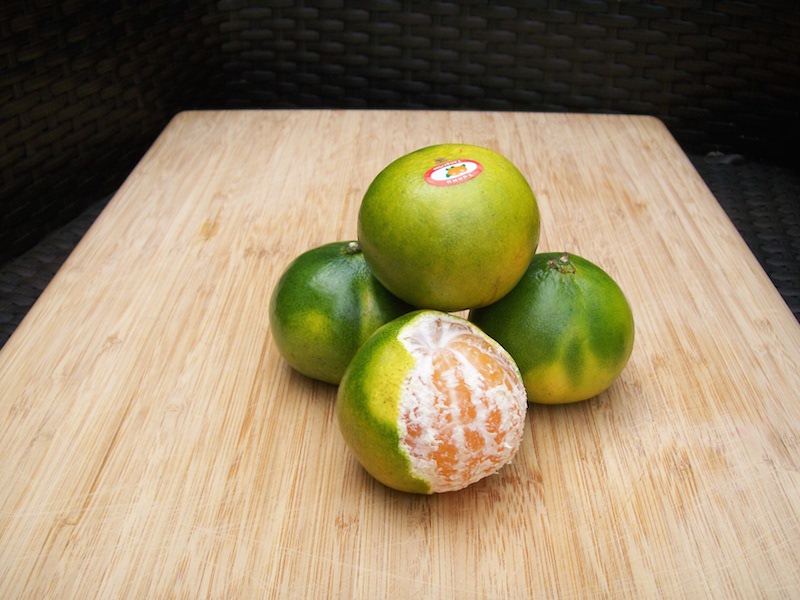
Green tangerine fruits on wood
Green tangerines; image from http://www.eatwellshanghai.com

Much as I love the other citrus notes, in perfume my favorite may be bergamot. I was raised on Earl Grey tea, whose distinctive aroma and flavor come from the infusion of bergamot essential oil into the tea, so I associate happy memories of teatime with that scent. (Earl Grey tea brings back childhood memories so strongly that I always drink it with milk and sugar, unlike most of the other teas and coffees I enjoy). I love the fresh zing it brings to a fragrance’s opening, and its green astringency, which partners so well with the green scents I love, like Chanel’s Cristalle and No. 19. Bergamot seems to enhance galbanum, and vice versa.

My two newest citrus-based fragrances were both bought on recent vacation trips (perfume tourism strikes again!): Carthusia’s A’mmare, which I bought in Milan last summer, and Lili Bermuda’s Bermudiana, purchased just last month in Bermuda. Both open with a detectable burst of bergamot, combined with aromatic herbs. A’mmare pairs it with rosemary (and salt); Bermudiana with basil and aldehydes. The fragrances are separated by six decades — Bermudiana was launched in 1962, and A’mmare in 2021.

A’mmare

Bermudiana has a strong heart note of galbanum, one of my favorites. A’mmare‘s heart notes are an aquatic accord and mint. Both fragrances pair so well with bergamot; both are very summery without being too beachy (i.e., they don’t smell to me like sunscreen). I love their combination of bergamot with different green herbs. They feel like summer colognes but last much longer.

Do you have any favorite citrus notes? Are there any you really dislike? I actually can’t think of any I dislike …

Check out Portia’s Notes on Notes on Australian Perfume Junkies!
Notes on Notes logo
Notes on Notes; image by Portia Turbo.
Notes on Notes: Galbanum

Notes on Notes: Galbanum

Happy Monday! As it’s the first Monday of the month, Portia Turbo of Australian Perfume Junkies and I are both posting about a fragrance note we’ve chosen; this month, it is galbanum.

I’ve realized over the years that galbanum may be my most favorite note in fragrances. It is the common thread among the many green fragrances I love, such as Chanel’s No. 19 and Cristalle, Balmain’s Vent Vert and Ivoire, Dior’s Miss Dior, Guerlain’s Vol de Nuit and Chamade, Jacomo’s Silences, and almost any fragrance with “vert” or “green” in its name. It doesn’t just appear in older classics, though — it is a key note in newer scents like Prada’s Infusion d’Iris, Frederic Malle’s Synthetic Jungle, and Papillon’s Dryad, among others. Not surprisingly, it is often found in chypre fragrances, usually with oakmoss.

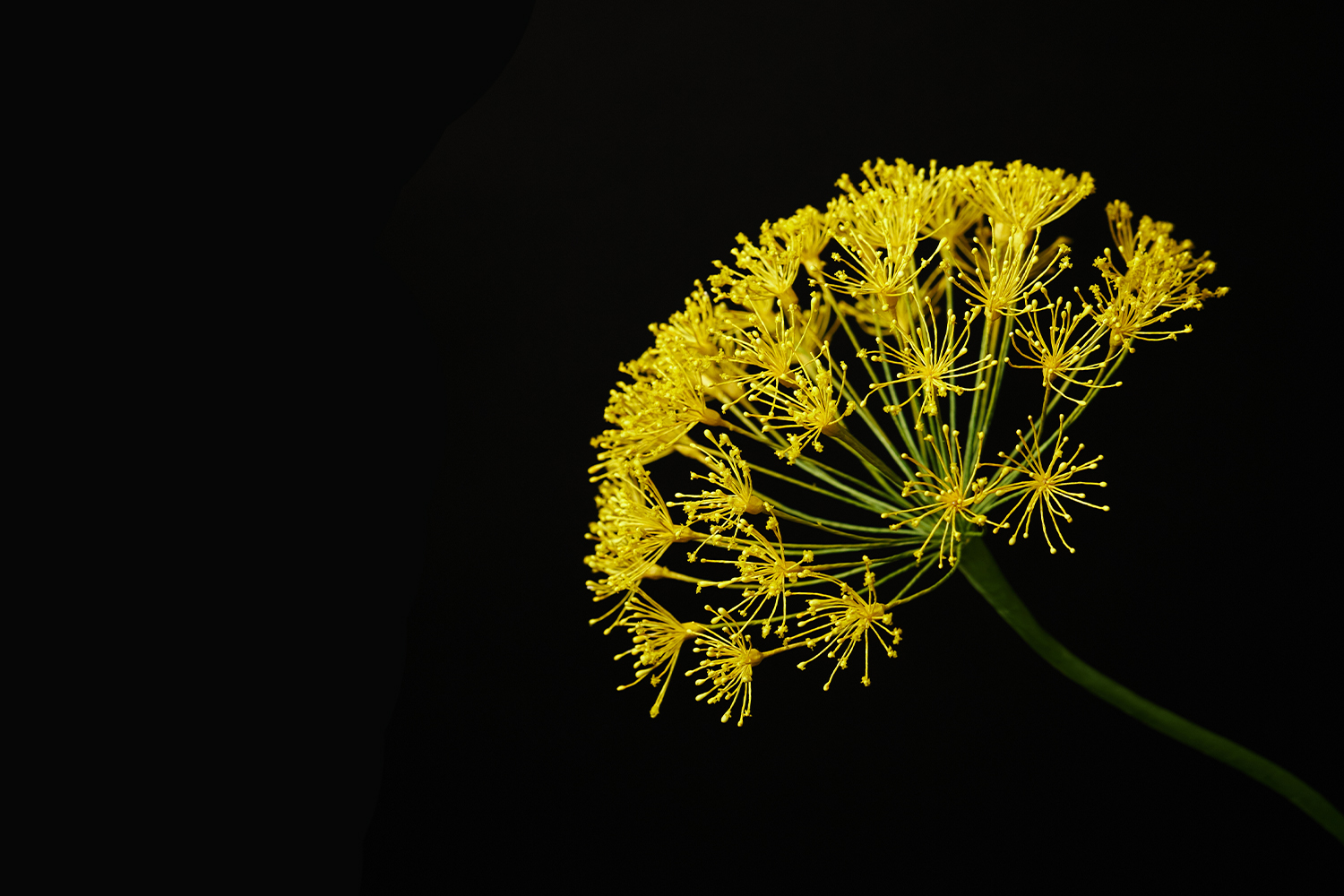
Yellow Galbanum blossom against black; image from thearomatica.com
Galbanum blossom; image from thearomatica.com.

One interesting thing I’ve learned about galbanum is that, as used in fragrance, it is actually an aromatic gum resin extracted from the plants Ferula gummosa and Ferula rubricaulis. So although we often see it listed as a top note, because it does tend to announce its presence immediately, it often persists through the heart stage and among the base notes. It has been valued by perfumers as a fixative, as are many resins. Nowadays, it often appears in fragrance in a synthetic form, as explained here on Fragrantica (the article is archived so you must register or be already registered to read it). The article’s author, Matvey Yudov, says that the original Vent Vert, created in 1945 by Germaine Cellier for Balmain, had 8% galbanum in its formula!

One of my favorite galbanum-rich fragrances is the afore-mentioned Silences, by Jacomo, in its original format. The 2012 reformulation, Silences Eau de Parfum Sublime, is lovely in its own right and still very green, but not as green as the 1978 original and 2004 reissue, which I think is the one I have. The first Silences has the following notes: top notes of Galbanum, Green Notes, Cassia, Bergamot, Orange Blossom, and Lemon; middle notes of Hyacinth, Lily-of-the-Valley, Iris, Narcissus, Rose, and Jasmine; base notes of Oakmoss, Vetiver, Cedar, Ambrette (Musk Mallow), Sandalwood, and Musk.

It just so happens that hyacinth, lily of the valley, iris, narcissus, and rose are some of my very favorite flowers in real life and accords in perfume. I was destined to love Silences! In it, the bitter, astringent green of the galbanum accord beautifully balances the sweetness of the floral notes, especially the orange blossom, rose and jasmine.

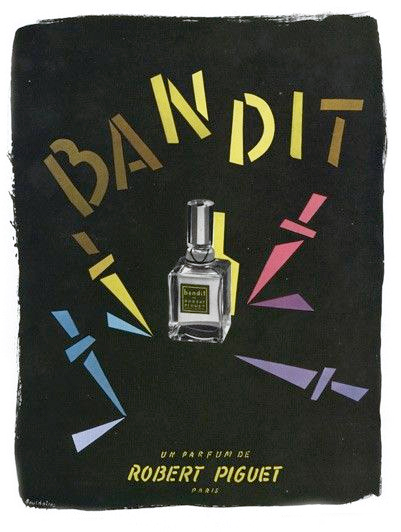
But since I’ve written before about Silences and some of the others mentioned above, this month I’ll turn to something different: Robert Piguet’s Bandit. The original, launched in 1944, was another creation of perfumer Germaine Cellier.

Vintage ad for Robert Piguet's Bandit perfume
Robert Piguet’s Bandit; vintage ad.

The version that was reissued in 1999 has these notes according to Fragrantica (though the notes list may belong more accurately to the 1944 original): “Top notes are Aldehydes, Galbanum, Artemisia, Bergamot, Neroli, Gardenia, Ylang-Ylang and Orange; middle notes are Carnation, Jasmine, Violet Root, Tuberose and Rose; base notes are Oakmoss, Leather, Civet, Vetiver, Patchouli, Myrrh, Musk, Amber and Coconut.” That version has now been replaced by Bandit Suprême, launched in 2020. It is still, as that article says, a perfume for “fearless women”!

Bandit makes a strong entrance right away, with the aldehydes lifting up galbanum and artemisia over the floral notes like a green hot-air balloon soaring over a garden or flowering fields. It reminds me of other strong aromatic perfumes that have undertones of leather, like Estée Lauder’s Azurée. Bergamot, which is both citrusy and green, makes a lively companion to the galbanum and artemisia, brightening whatever darkness they might otherwise shed. To my nose, the most prominent among the heart notes is the violet root, but that may be because the green top notes carry forward so powerfully. I can sense that the flower accords are there, especially the carnation, but if you asked me whether I smelled rose or jasmine after a blind sniff, I would say no.

The strongest base notes to my nose are oakmoss and leather with the galbanum still making its presence felt. If this 1999 version has any civet accord, it is of course synthetic, like the modern musk accord. But synthetic civet usually smells sort of urinous to my nose, and I don’t smell that here. Now that I know the galbanum used in fragrance is based on a resin, it makes sense to me that it carries all the way through until it meets up with myrrh in the base. The musk and amber accords create a warmth that was absent from the exhilarating opening — perhaps that’s the soft landing for the green hot-air balloon I imagined!

Green hot air balloon sailing over fields
Green hot air balloon; image from vistivictoria.com

Do you have any favorite fragrances with an obvious dose of galbanum? And remember to link over to Australian Perfume Junkies to get Portia’s Notes on that note!

Scent Semantics, September 5

Scent Semantics, September 5

The word for this month’s Scent Semantics posts is “misanthrope.” If you haven’t read one of these posts before, “Scent Semantics” brings together a group of us fragrance bloggers in a collaborative project called “Scent Semantics“, the brainchild of Portia Turbo over at A Bottled Rose. On the first Monday of each month, we all take a word — the same word — as inspiration for a post that has some relationship to a fragrance, broadly interpreted. There are six participating blogs: Serenity Now Scents and Sensibilities (here), The Plum GirlThe Alembicated GenieEau La LaUndina’s Looking Glass, and A Bottled Rose. I hope you’ll all check out the Scent Semantics posts on each blog!

One definition of “misanthrope” is “someone who dislikes and avoids other people.” Now, I am not normally a misanthrope myself, although I am definitely an introvert (and if you’ve never seen author Susan Cain’s TED talk on the subject, click on that link — it’s a treat!). However, I think we’ve all become a bit misanthropic during the last two and a half years of a global pandemic — we were forced to avoid other people starting in March of 2020, then we disliked many people because of their varied responses to the pandemic. Layer on top of that the American elections of 2020 and their aftermath, so full of rage, and I think it’s safe to say that many of us, misanthropic by nature or not, have been slowly emerging from a phase of misanthropy.

My semantically matched fragrance this month is vintage Chanel No. 19 eau de toilette. I’ve been wearing it almost daily for the past week as my green armor at work, due to the difficulties I’ve encountered leading up to a long overdue personal leave (which started this weekend, yay!). No. 19 always makes me feel that I can be tougher than I actually am; it stiffens my backbone. Some might say that it helps me set and keep healthy boundaries, lol!

Why? I think it’s because of the hefty dose of galbanum that heralds its arrival: a bitter, green opening chord that announces, as the Chanel website says, a “daring, distinctive, uncompromising composition.” Perfect for setting boundaries! The other top notes reinforce the lack of compromise: astringent bergamot, assertive hyacinth, aromatic neroli. All have a distinctive tinge of green supporting the star of the show, the galbanum, which Fragrantica sums up as an “intense and persistent bitter green .” Indeed. If galbanum were a person, it would be Bette Davis playing Margo Channing in “All About Eve”:

“All About Eve”, 20th Century Fox.

If you’re not familiar with the movie, it is about a star actress who is turning forty, fears for her career, and is manipulated and ultimately upstaged by a much younger woman. Fittingly, No. 19 was the last Chanel fragrance created while Coco Chanel herself was still alive, in her 80s, though I don’t know that anyone ever succeeded in either manipulating or upstaging her. Master perfumer Henri Robert put the finishing touches on the formula in 1970, Chanel died in early 1971, and No. 19 was released the same year.

The blog “Olfactoria’s Travels” has a wonderful review of No. 19, referring to it as a “magic cloak”. The reviewer takes a more benevolent view of No. 19 than Tania Sanchez did in the guide to perfumes she co-wrote with Luca Turin, where she compared it to the wire mother monkey in a famous experiment about nurturing or the lack thereof. Blogger and author Neil Chapman, of “The Black Narcissus”, is famously a devotee of No. 19, scarfing up vintage bottles of it in all formats from second-hand stores in Japan, where he lives. You can read all about it in his amazing book, “Perfume: In Search of Your Signature Scent”, available in the UK and the US, and elsewhere in other languages, which I highly recommend!

Luckily for me, since I adore green fragrances, on my skin the greenery lasts and lasts, joined in the heart phase by some of my favorite floral notes: iris, orris root, rose, lily-of-the-valley, narcissus, jasmine and ylang-ylang. The green astringency of the opening notes is carried forward by the lily-of-the-valley and narcissus, while orris root adds earthiness, iris adds powder, and jasmine and ylang-ylang add airiness, sexiness and warmth. My sense of No. 19 as “armor” is aided by my vintage spray, a refillable, silvery, aluminum canister that has protected its contents for many years.

No. 19 has had many “faces”, my favorite being English model and iconoclast Jean Shrimpton. And guess what? Based on her own words, she may actually have been a misanthrope, having walked away from her superstar modeling career and life of celebrity in her 30s, becoming what she herself described as a recluse running a hotel in Cornwall. Although the photo of her below is not an ad for Chanel, to me it captures the spirit of No. 19‘s opening — inscrutable, distant, mingling shades of green, white, and earthy brown with the unexpected intrusion of purple:

Model Jean Shrimpton sitting on an ancient tree root.
Jean Shrimpton; image by Patrick Lichfield for Vogue, 1970.

As No. 19 dries down, to my nose the galbanum never leaves, though it recedes into the distance as the oakmoss enters the glade. Because I have the vintage EDT, the base includes oakmoss, leather, musk, sandalwood, and cedar. It is a true chypre, a genre I love. It reminds me of the Jackie Kennedy Onassis of the 1970s: elegant and even haughty upon first appearance, with a warmth that reveals itself over time to the patient; breaking free from the fashion conventions she mastered so skillfully and embodied in the 1950s and 1960s, and far from the cold “wire mother” of Tania Sanchez’ imagining while retaining an aura that commands respect.

I’m choosing to adopt Laura Bailey‘s interpretation of No. 19, which she described in Vogue at the height of pandemic lockdowns in 2020, as the scent of new beginnings and dreams of future adventure:

No 19, the ‘unexpected’ Chanel, the ‘outspoken’ Chanel, created at the height of the first wave of feminism in 1971, and named for Coco Chanel’s birthday – 19 August – is, for me, the fragrance of freedom, of optimism, of strength. (And of vintage campaign stars Ali MacGraw, Jean Shrimpton and Christie Brinkley.) The heady cocktail of rose-iris-vetiver-jasmine-lily-of-the-valley remains shockingly modern and original, bolder than any sweet fairy-tale fantasy.

If you had to relate a fragrance to the word “misanthrope”, which would you choose?

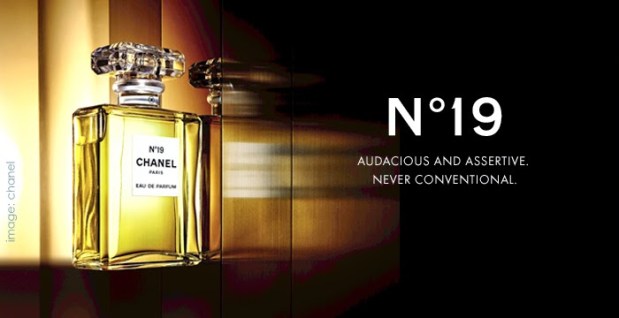
Ad with perfume bottle of Chanel No. 19
Chanel No. 19 ad; image from chanel.com.
Perfume Chat Room, April 1

Perfume Chat Room, April 1

Welcome to the weekly Perfume Chat Room, perfumistas! I envision this chat room as a weekly drop-in spot online, where readers may ask questions, suggest fragrances, tell others their SOTD, comment on new releases or old favorites, and respond to each other. The perennial theme is fragrance, but we can interpret that broadly. This is meant to be a kind space, so please try not to give or take offense, and let’s all agree to disagree when opinions differ. In fragrance as in life, your mileage may vary! YMMV.

Today is Friday, April 1 — Happy April Fools’ Day! I couldn’t think of an appropriate April Fools post for a fragrance blog, though my personal Facebook feed is blowing up with silly posts from friends. Also, “rabbit rabbit” for good luck this month, and don’t miss the April Scent Semantics posts from six bloggers next Monday! I got to choose the word for April, which is fun for me. But it’s a secret until Monday, so please check back!

This week, I had to attend a neighborhood meeting to discuss a proposal for designating our neighborhood as an official historic district, which would protect us from encroaching development, roadways, and demolitions of old houses. It has become a flashpoint of controversy, and a number of homeowners who don’t want additional restrictions on what they can do to their houses — if the houses were built before the 1960s — have become very angry, threatening to sue the neighborhood volunteers who lead our civic association. I didn’t want to go to the meeting, but went to support the beleaguered volunteers and to voice support for the historic designation. Whew! Glad the meeting is over, though the controversy continues! And yes, I wore Chanel No. 19 which is my fragrance armor.

Liv Tyler as Arwen, in The Fellowship of the Ring movie; New Line Cinema.

Victoria at “Bois de Jasmin” has written very knowledgeably (as always) about Chanel No. 19. She discussed its reformulations, adding this historical insight:

A side note on galbanum, fragrance and politics. When Chanel No 19 was created in 1971, it was formulated with a superb grade of Iranian galbanum oil, which was sourced especially for it. However, when the Iranian Revolution broke out in 1979, the oil became unavailable. No 19 had to be reformulated, which was accomplished with much difficulty, because the original galbanum oil was of a particularly fine, rare caliber.

History. Always fascinating, sometimes enraging.

Do you have any thoughts on what fragrance to wear for April Fools’ Day? Or for “rabbit rabbit”? Or any fragrance-related history? Do share!