Perfume Chat Room, August 23

Perfume Chat Room, August 23

Welcome to the weekly Perfume Chat Room, perfumistas! I envision this chat room as a weekly drop-in spot online, where readers may ask questions, suggest fragrances, tell others their SOTD, comment on new releases or old favorites, and respond to each other. The perennial theme is fragrance, but we can interpret that broadly. This is meant to be a kind space, so please try not to give or take offense, and let’s all agree to disagree when opinions differ. In fragrance as in life, your mileage may vary! YMMV.

Today is Friday, August 23, and the weather is finally cooling off a bit. My poor roses, which have been gasping for breath and water for weeks now, seem to be sighing in relief and gearing up for a fall flush of blossoms. I planted several new-to-me varieties in large pots this spring, and it has been interesting to learn their growth habits and needs. The one characteristic all my roses have in common is that they must be fragrant. I just don’t see the point in growing roses that aren’t fragrant; I know many people do, because they are more focused on color and shape, but I’ve found I can have all three: lovely color, shape, AND fragrance.

I’m still wearing light, summery fragrances, as it still gets pretty hot during the day though we get some relief overnight. A recent favorite has been Patricia de Nicloai’s Rose Pivoine, which one of my lovely regular readers here sent me. You know who you are — thank you so much! I’ve been loving it! Top notes are ambrette, raspberry, red currant, and bergamot. The heart is rose oil and absolute, mixed with violet, iris, peony, and pepper; the base is sandalwood and musk. It is meant to evoke a bouquet of fresh roses and peonies, with green leaves as companions. It is lovely. I think I still prefer Nicolai’s Rose Royale, but Rose Pivoine is excellent, especially in hot, humid weather.

Parfums de Nicolai is launching a new set of gourmand fragrances next month, “Les Gourmandises.” I don’t often gravitate to courmand fragrances, but these do sound intriguing. I’ll be in London after their launch date, so maybe I’ll see if I can sample them at one of my favorite London fragrance boutiques.

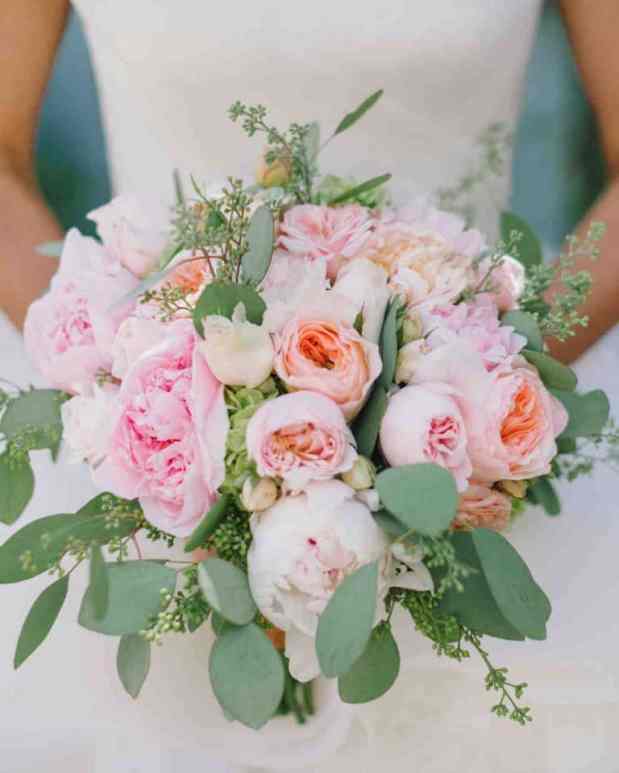
Bouquet by Bloom in the Box

Have you started switching over to autumn fragrances, or spring fragrances if you’re in the Southern Hemisphere (looking at you, Portia!)?

Perfume Chat Room, May 3

Perfume Chat Room, May 3

Welcome to the weekly Perfume Chat Room, perfumistas! I envision this chat room as a weekly drop-in spot online, where readers may ask questions, suggest fragrances, tell others their SOTD, comment on new releases or old favorites, and respond to each other. The perennial theme is fragrance, but we can interpret that broadly. This is meant to be a kind space, so please try not to give or take offense, and let’s all agree to disagree when opinions differ. In fragrance as in life, your mileage may vary! YMMV.

Today is Friday, May 3, and I am still obsessing over roses. Real-life roses, in my garden and online, and also in perfume (though I don’t wear much perfume on days when I’m spending a lot of time working in the garden).

But in fragrance, I have taken my usual May detour into the realm of muguet, or lily-of-the-valley, honoring May Day and the yearly appearance of these fragile, fleeting blooms. Unlike roses, lilies of the valley don’t rebloom during their flowering season. One and done! They’re also challenging to grow en masse here in the hot, humid Southeast, though my sister-in-law has succeeded in growing the kind of large patch of LOTV here that she and I both knew from our childhoods in Connecticut, where they grow and spread like weeds.

Nurturing hopes of perhaps getting my hands and nose on a tester of Patricia de Nicolai’s new — and already sold out — muguet perfume, Une Fleur en Mai, I recently tried her 2009 creation Un Coeur en Mai for MDCI. It’s not a muguet perfume but it is a floral green fragrance and very lovely. Dominant floral notes are rose and mimosa, with a hefty dose of green galbanum. I really like several of her fragrances for her own line, like Odalisque, Rose Royale, Odalisque, New York, Musc Intense. I think I need to add to my reviews of her fragrances!

Do you have any of Patricia de Nicolai’s fragrances, either under her own line or created for others? What do you think? Any favorites?

Bottle of Patricia Nicolai's Musc Intense eau de parfum
Musc Intense, by Parfums de Nicolai; image from http://www.pncicolai.com.
Perfume Chat Room, July 14

Perfume Chat Room, July 14

Welcome to the weekly Perfume Chat Room, perfumistas! I envision this chat room as a weekly drop-in spot online, where readers may ask questions, suggest fragrances, tell others their SOTD, comment on new releases or old favorites, and respond to each other. The perennial theme is fragrance, but we can interpret that broadly. This is meant to be a kind space, so please try not to give or take offense, and let’s all agree to disagree when opinions differ. In fragrance as in life, your mileage may vary! YMMV.

Today is Friday, July 14, and it is Bastille Day! Vive la France!

Eiffel Tower in Paris with Bastille Day fireworks
Bastille Day fireworks; image from http://www.eurotunnel.com.

Do you plan to wear a French fragrance today? I’ve already announced, on Now Smell This, my goal of wearing a succession of French SOTDs from the houses of Caron, Chanel, Guerlain, and Jean Patou, with possible detours toward Parfums de Nicolai and Atelier des Ors. Candidates include: Infini, No. 22 or 19, Parure, and L’Heure Attendue. Wish me luck!

Please drop by on Monday for the monthly “Counterpoint” blog post that Portia Turbo and I have been doing. We’ve got a great one for you, and it’s French! Full disclosure: it may go up in the afternoon, since I’ll be at my office on campus most of the day.

My countdown toward retirement at the end of July continues — it is both exhilarating and a bit weird. My kids are planning a retirement party for me with family and friends at the end of August, and it’s such fun to find out weekly who will attend, including some dear friends from far away. My workplace will have a retirement reception for me on July 31, my last day on campus. I’m glad to get that chance to say goodbye in person to many colleagues, both at my school and from other campus offices. Since I’m not moving anywhere, I will still be able to have occasional lunch or coffee with some who are particularly close work friends. What a novelty — in almost 19 years in this job, I have rarely even left my desk for lunch (I know, bad habit).

Do you have any special favorites among French fragrances or fragrance houses? Do tell!

Perfume Chat Room, January 28

Perfume Chat Room, January 28

Welcome back to the weekly Perfume Chat Room, perfumistas! I envision this chat room as a weekly drop-in spot online, where readers may ask questions, suggest fragrances, tell others their SOTD, comment on new releases or old favorites, and respond to each other. The perennial theme is fragrance, but we can interpret that broadly. This is meant to be a kind space, so please try not to give or take offense, and let’s all agree to disagree when opinions differ. In fragrance as in life, your mileage may vary! YMMV.

Today is Friday, January 28, and I have surprised myself by how much I’m enjoying a fragrance whose name initially deterred me: Parfums de Nicolai’s Musc Intense. I don’t usually think of musky fragrances as something I’ll like, and “intense” in a fragrance name often indicates it is a flanker of something else, amped up to a degree I may not appreciate (much as I do love Tiffany & Co. Intense). But when I read the notes listed on Fragrantica, they sounded very appealing, so I took a chance (yes, it was a blind buy, naughty me; but I have loved every Nicolai fragrance I’ve tried to date, so it wasn’t completely reckless). Top notes — Turkish Rose, Pear and Galbanum; middle notes — Rose, Violet, Carnation and Jasmine; base notes — Musk, Civet, Amber and Sandalwood.

Wow! Musc Intense is just lovely. Soft, warm, but persistent — I can still smell it on my wrists after a light application 24 hours ago. It clings to clothing, too, in a very agreeable way. This is now a contender with Jicky eau de toilette for favorite bedtime scent. It smells cuddly and also floral, with a bit of fruit; the pear note in the opening is just right, a light touch of fruitiness that is also a bit green. Don’t laugh, but the drydown of Musc Intense evokes clean baby animals, like a freshly washed puppy.

Have you ever been put off by the name of a fragrance only to find, to your surprise, that you like it very much?

Photo by Pixabay on Pexels.com
May Muguet Marathon: Odalisque

May Muguet Marathon: Odalisque

Odalisque by Parfums de Nicolai is an eau de parfum with a strong floral heart of lily of the valley, jasmine, and iris, heralded by top notes of bergamot and mandarin, and resting on a base of oakmoss and musk. The brand calls it “a unique fragrance for strong personalities”, and on the website, its listing highlights, through graphics, the notes of mandarin, muguet, and oakmoss.

“Odalisque” is a word whose meaning has evolved over time. One author explains:

The English and French term odalisque (rarely odalique) derives from the Turkish ‘oda’, meaning “chamber”; thus an odalisque originally meant a chamber girl or attendant. In western usage, the term has come to refer specifically to the harem concubine. By the eighteenth century the term odalisque referred to the eroticized artistic genre in which a nominally eastern woman lies on her side on display for the spectator. (Joan DelPlato)

Patricia de Nicolai created the fragrance Odalisque in 1989. It is a very French perfume, as befits its creation by a member of the Guerlain family (her uncle is Jean-Paul Guerlain). It is not an Oriental fragrance by any means, or even a French version of an Oriental, as one might expect from a perfume that refers to a harem.  No, this Odalisque is a woody green chypre with a classic chypre structure, but using muguet as the featured floral note instead of the more commonly used rose and jasmine (Odalisque’s heart notes include jasmine blended with iris, together with the lily of the valley). So why the name?

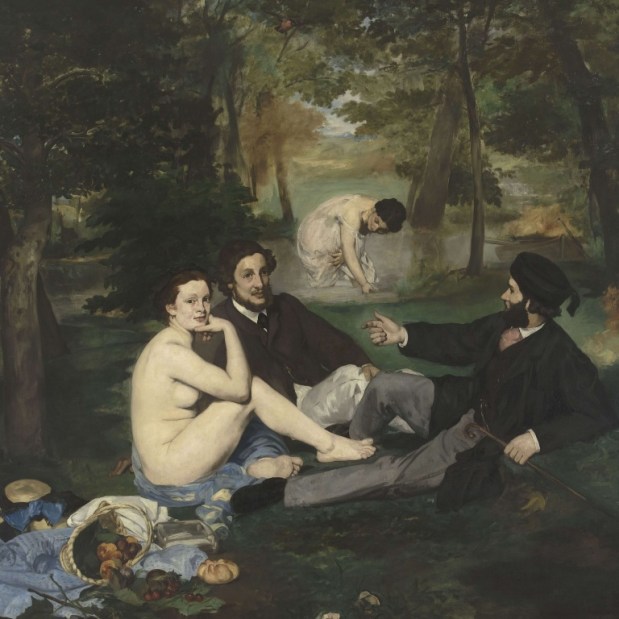
Some of the most famous paintings of “odalisques” were by French painters, from Boucher to Matisse. In fact, right now the Norton Simon museum in Pasadena, California has an exhibit of paintings called “Matisse/Odalique”. Matisse himself candidly admitted that he used the theme of the “odalisque” as a reason to paint female nudes, and it is clear that many Western painters adopted the subject because it allowed them to paint titillating scenes of naked women, offering themselves to the male gaze (and, one is meant to assume, sexual availability), while also allowing the artists to distance themselves and deflect criticism by making the women and the scenes “exotic.”
Oil painting of odalisques playing checkers, by Henri Matisse

Odalisques Jouant Aux Dames; Henri Matisse

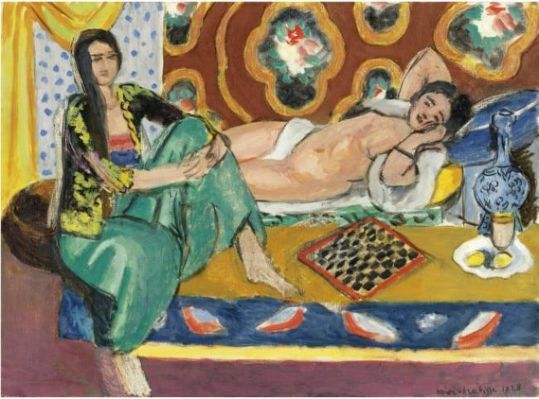
The heady flowers of rose and jasmine suit our traditional vision of the Ottoman Empire, but lily of the valley is quintessentially a Northern European flower, native to the cooler, temperate zones of the Northern Hemisphere, its preferred habitat being in shaded woodlands. Its prominence in Odalisque means that the fragrance is not exotic at all, although it is mysterious and beguiling. To my nose, the citrus opening leaves the stage very quickly, while I smell the oakmoss “base” right from the start. As the citrus notes fade, the greenness of the muguet takes over, the pure white lily of the valley flanked by rose and iris, as the odalisques in the paintings, frequently portrayed as white European women, are often shown attended by exotic Middle Eastern servants.
Painting of an odalisque in a harem with slave and eunuch, by Jean August Dominique Ingres; Fogg Art Museum.

Odalisque a l’Esclave; Jean Auguste Dominique Ingres; Fogg Art Museum.

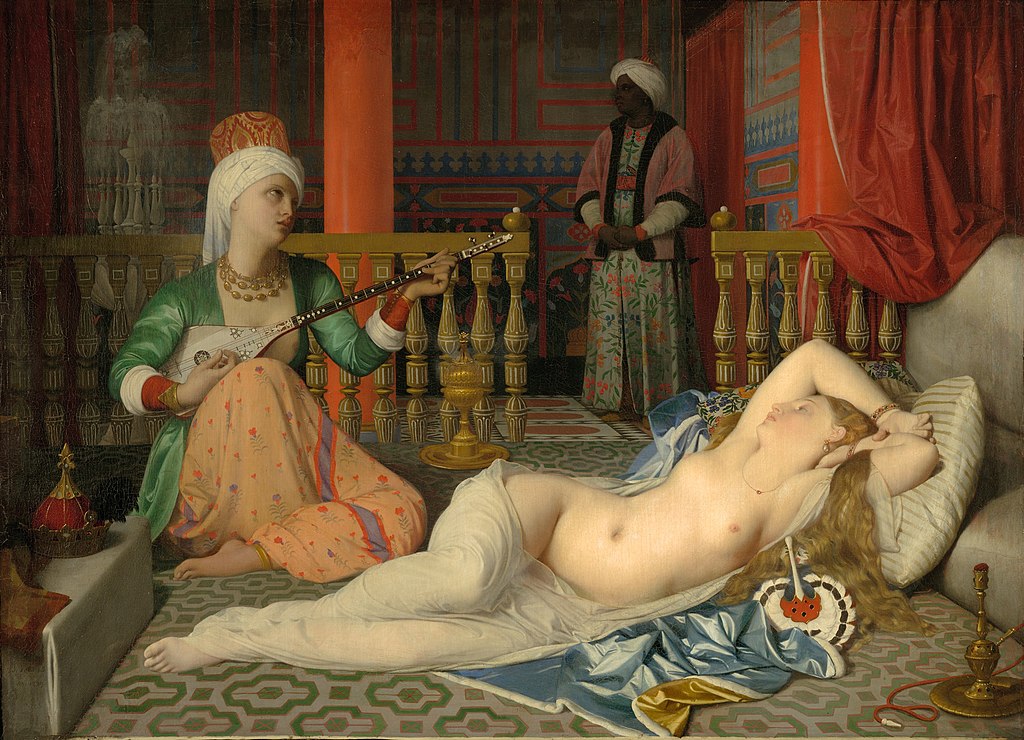
As it happens, one of the most famous French paintings using the trope of the “odalisque” also portrays a quintessentially European setting, green and woody like the chypre structure of Odalisque: Edouard Manet’s “Le Dejeuner sur l’Herbe.” That it refers to the figure of an “odalisque” is indisputable: the female model’s nudity, her pose with her body turned partly away from the viewer but displaying most of her naked body, her direct gaze, and the figure of another woman bathing at a distance, all evoke more traditional images of a concubine in a “Turkish bath” setting. One of the male figures wears an Ottoman-style flat cap with a tassel, reminiscent of a traditional Turkish fez.
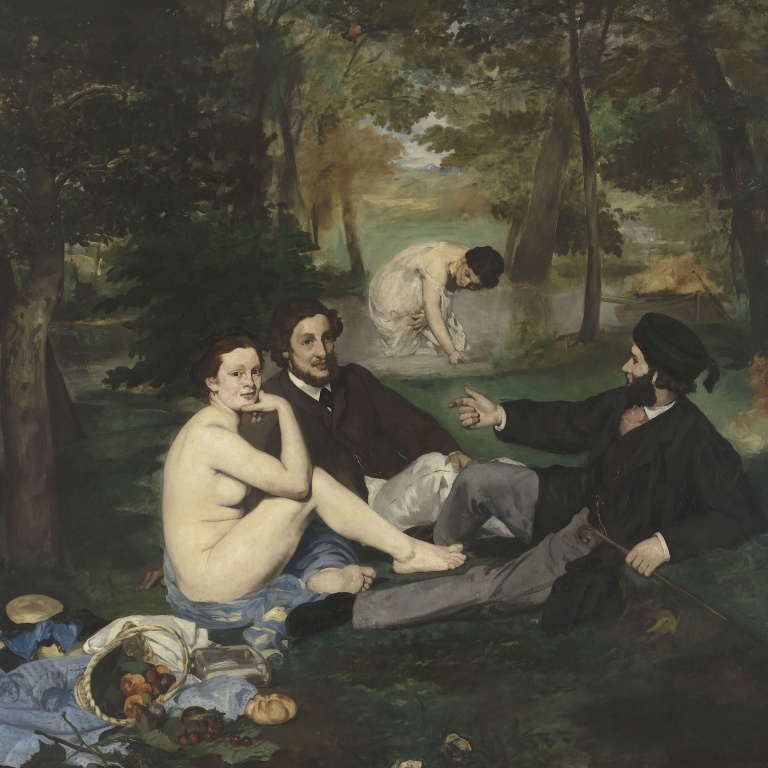
Le Dejeuner sur l'Herbe, painting by Edouard Manet, from Musee de l

Le Dejeuner sur l’Herbe, by Edouard Manet; Musee d’Orsay.

I don’t think it is a coincidence that a perfumer as intelligent as Patricia de Nicolai created a fragrance like Odalisque that so readily lends itself to an evocation of one of France’s most famous, treasured masterpieces.

Luca Turin regarded the original Odalisque itself as something of a masterwork. He commented thus about its original formulation:

Odalisque’s superbly judged floral accord of jasmine and iris, both abstract and very stable, allied to a saline note of oakmoss, initially feels delicate, but in use is both sturdy and radiant. It is as if the perfumer had skillfully shaved off material from a classic chypre accord until a marmoreal light shone through it.

What, exactly, is a “marmoreal light”? According to Merriam-Webster, “marmoreal” means “suggestive of marble or a marble statue, especially in coldness or aloofness.” There you have it. I defy anyone to look at Manet’s painting and not see a marmoreal light on the key figure of the naked woman.

By making the muguet the most prominent floral note in Odalisque, Mme. de Nicolai has emphasized the cool, white, marmoreal aspect of the fragrance, but she sets it against a powerful base of oakmoss and musk, just as Manet’s odalisque is highlighted against the dark green, woody background of the setting he chose so deliberately (and radically). Odalisque was reformulated after IFRA imposed new restrictions on the use of oakmoss in fragrance, but I can attest to the continuing power of its oakmoss base.  As much as I love the muguet heart note of Odalisque, ultimately the story it tells is one of oakmoss. I can smell it from the very opening of Odalisque, and it persists for hours, taking its place on the olfactory center stage after about an hour of the fragrance’s progression. On my skin, the oakmoss and musk last for at least 10-12 hours; I’ve applied Odalisque at night and I can still clearly smell those base notes the next morning.

The combination of oakmoss and musk is very sensual without being “sexy”, as Caitlin points out in her blog “This Side of Perfume.” The accord is too classic and elegant to warrant such a trite phrase. Like Manet’s model, this sensual accord is direct without titillating. It simply presents itself, unconcerned. It also lends a retro, vintage feel to Odalisque without making it dowdy. In sum, if you are looking for a classic, French, high-quality perfume that features muguet, this one should be on your list. It differs significantly from the ultimate French muguet fragrance, Diorissimo, and others like Guerlain’s Muguet; it is darker, mossier, woodier. It is also glorious. Have you tried it?
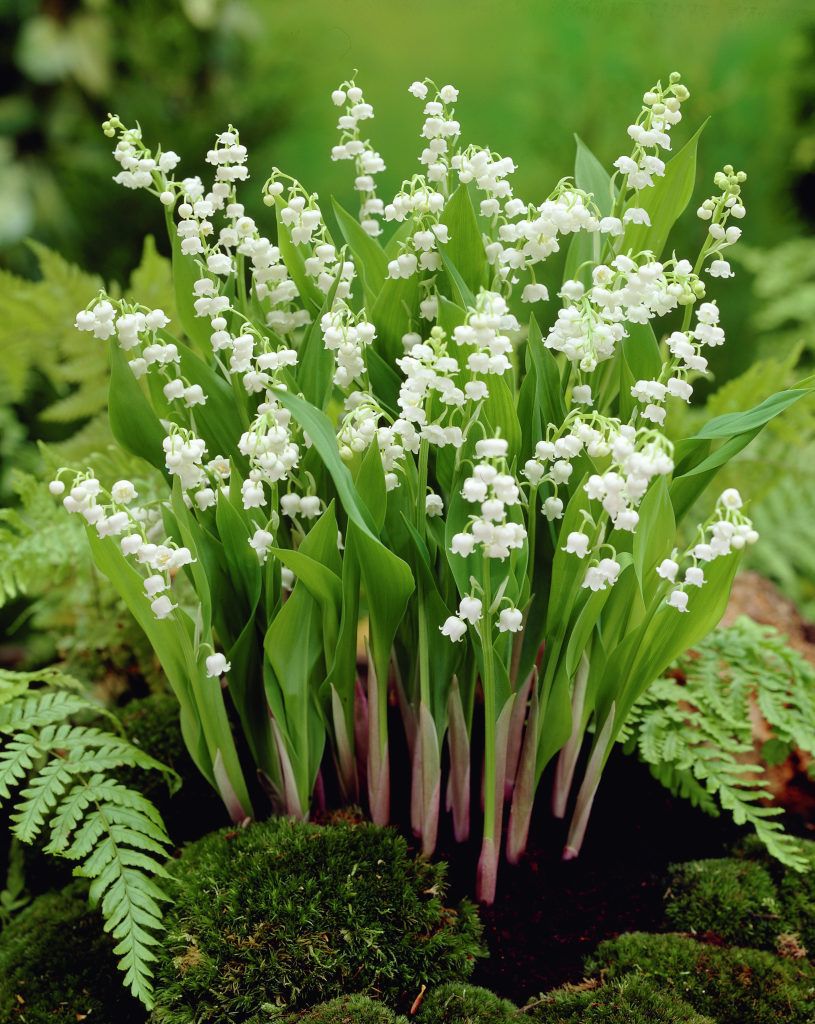
Lilies of the valley, green moss, and ferns in woodland garden

Lilies of the valley in woodland garden; image from Pinterest