Counterpoint: Ginger Biscuit

Counterpoint: Ginger Biscuit

This is the last month of Portia’s and my collaboration, so the last “Counterpoint” unless I decide to resume in January. For December, we agreed to write about Jo Malone’s Ginger Biscuit, first launched in 2013 as part of a limited edition collection called “Sugar and Spice.” The perfumer who created it was Christine Nagel. It was released again this year as a holiday special release, just in time for me to grab some for my daughter’s birthday. Jo Malone’s Global Head of Fragrance, Céline Roux, describes its creation:

“Ginger Biscuit is not sugary sweet at all. If it was, it just wouldn’t be wearable. We have a lot of creamy wood notes in the formulation; you need the elegance of the wood to make it wearable. There’s also some natural ginger, which brings a zingy freshness and balances out the sweetness, and vanilla absolute. When you create scents like this, you need the best quality vanilla so that it is not candy sweet. So, what you get instead is a mouth-watering gourmand.” 

1. How did you first encounter Jo Malone Ginger Biscuit, and what was your first impression?

Old Herbaceous: Ginger Biscuit was one of the small 9 ml bottles that came in a holiday fragrance sampler set from Jo Malone several years ago (basically the same set is now available again as a holiday coffret, with some really nice scents). I tried it and liked it, but I liked all the fragrances in the collection! Then my daughters asked to do a fragrance-sniffing session over Christmas a couple of years ago, and my oldest absolutely fell in love with Ginger Biscuit. Of course it had been a limited edition and was discontinued for the time being, available online only for exorbitant prices. I didn’t realize just how much she loved it until she told me of her many searches for a dupe or something that might come close. She rarely falls for a fragrance so hard, so I kept looking myself and hoping to find a stray bottle for her.

Well, lo and behold, someone commented on a Facebook group for fragrance fans, back in October, that they had seen Ginger Biscuit briefly listed on the Saks Fifth Avenue website, though it had quickly vanished. This raised the hope among many perfumistas that it was due to be re-released for the holidays. My city has a Saks Fifth Avenue store and it’s not far from where we live, so I made a rare trip to the mall to ask a sales associate for any information. The lovely woman who helped me confirmed that it would be a holiday release, and said she thought it would arrive at the start of November. I also stopped by Nordstrom, and another lovely sales associate told me the same thing. Both of them took my name and phone number. Just a few days later, the SA from Saks called me and said she had just gotten in a few bottles and would hold one for me. Shortly after that, the SA from Nordstrom made the same call. And so, dear readers, that is how I ended up with not one but two bottles of Ginger Biscuit. We gave one to our daughter in November for her birthday, and she was thrilled. Imagine her surprise when the second bottle appears under the Christmas tree! She’ll be set for life, or at least for several years.
Portia: I’d never heard of Jo Malone Ginger Biscuit before Old Herbaceous told me about it and how excited she and other perfumistas have been about its re-release for Christmas 2023. TBH Jo Malone perfumes just aren’t on my radar. Jin wears the woody number one and I had a couple of bath oils, Red Roses and Blue Agave. They were nice but the perfumes I’ve tried have all been totally underwhelming. 

So it was with mild trepidation that I ventured into town and grabbed a small decant from the tester bottle (all samples had gone in the first few days of arrival, the SA was really lovely and even did the sample into my own little decant).

My first impression was. OH! it really is what is says on the bottle. A delightful waft of freshly opened iced gingerbread man wafted out as the SA was decanting. I was very taken but off to another perfume event so couldn’t douse myself.

2. How would you describe the development of Jo Malone Ginger Biscuit?

Portia: HA! I can’t help but smile like a fool when I spritz Ginger Biscuit. It’s just so freaking lifelike. Photo realism in fragrance. Ginger Biscuit smells like a ginger biscuit, or what is much closer to my heart an iced gingerbread man from Pizza Hut. I smell my wafting gorgeousness and am transported back 45 years and more to family events. We had a really lovely one in the next suburb and went for every occasion. The staff knew us, it was wheelchair accessible for Dad, there were banquettes that Mum and I loved to sit in with a chair for Jodie (my sister) and space for Dad. They had all you can eat salad and soda. At the end of every meal as we left the staff would give us kids an iced gingerbread man. THIS IS THE SMELL.

As we move from the top into the heart the ginger remains but less intense. Here the whole fragrance becomes a soft, chewy caramel that’s heavy on the vanilla.  

It gets more and more vanilla essence as it dries down and is the softest, merest wash of gorgeous gourmand for hours and hours and hours.

Old Herbaceous: Right out of the bottle, Ginger Biscuit smells to me like a true gingersnap, spicy, sweet, and warm. It smells like a cookie or gingerbread that was made with real ginger and spices instead of artificial flavoring. I don’t usually gravitate to gourmand fragrances, as I find many to be too sweet and heavy for my taste, but Ginger Biscuit stays light and spicy. It is sweet, and there is a lovely vanilla that pervades the whole development from start to finish. A dominant note is said to be caramel, but I smell brown sugar more than caramel. The cinnamon and nutmeg bring depth to the sweetness of the vanilla and brown sugar, just as they do in real baking.

The vanilla persists even after the spiciness fades into the background. I do like a good vanilla, and that is how Ginger Biscuit ends up on my skin. It smells wonderful on my daughter; I enjoy it more on her than on myself, just because of her obvious delight in it. Smelling this light, sweet vanilla fragrance on her skin reminds me of how sweet she and her siblings smelled as babies, a very happy memory.

3. Do you or will you wear Jo Malone Ginger Biscuit regularly? For what occasions or seasons?

Old Herbaceous: Ginger Biscuit is absolutely perfect for the winter holiday season and beyond. Given the associations with gingerbread, I would wear it most in autumn and winter. It would be lovely to wear to a workplace during the holidays, as it isn’t overpowering. If you do wear it to work, you should be prepared to have people follow you trying to figure out what smells so nice!

That said, I don’t see myself wearing it very often, and now it will be a signature scent of my daughter’s, so that makes it even less likely that I would wear it often myself. But I might get in the habit of pulling out my small bottle at Christmas every year! It would be the perfect fragrance for Christmas morning breakfast, when our family tradition is to make cinnamon rolls.

Portia: Honestly? Though Jo Malone Ginger Biscuit is very nice, has excellent memories and smells good I just can’t imagine myself wanting to smell like this. I’ll definitely use up this decant over the silly season but am much more comfortable in Nuit Noel and Exultat for my hit of Holy. Maybe also because in Australia we are usually at around 35C/95f by 10am and thinking more about swimming pools and beaches than roaring fires.

4. Who should/could wear Jo Malone Ginger Biscuit?

Portia: Anyone who wants to smell like they’ve just been baking gingerbread or who loves the idea of smelling utterly edible. Even though I’m not putting my hand up for a bottle I really can imagine Jo Malone Ginger Biscuit smelling wonderful on both the major sexes and anything in between. It would be so nice to hug people over the holiday season who smell of it and I can imagine in the cold northern hemisphere that many compliments and questions about this beautiful scent would come your way.

Imagine on Christmas morning while hugging in thanks for gifts, smelling so divine! It would be the cherry on top of the magic.

Old Herbaceous: This could be happily worn by anyone, of any persuasion. It is as non-gender-specific as baking is. It’s a cozy scent, so anyone who wants to smell warm and cuddly should give it a try. It might attract some cuddles! I know many perfumistas were ecstatic that it has been re-released this year, and I can see why. Wouldn’t it be nice if Jo Malone would release it for every holiday season, as Clinique used to do with Wrappings?

Have you fallen for this or any other limited holiday release fragrance?
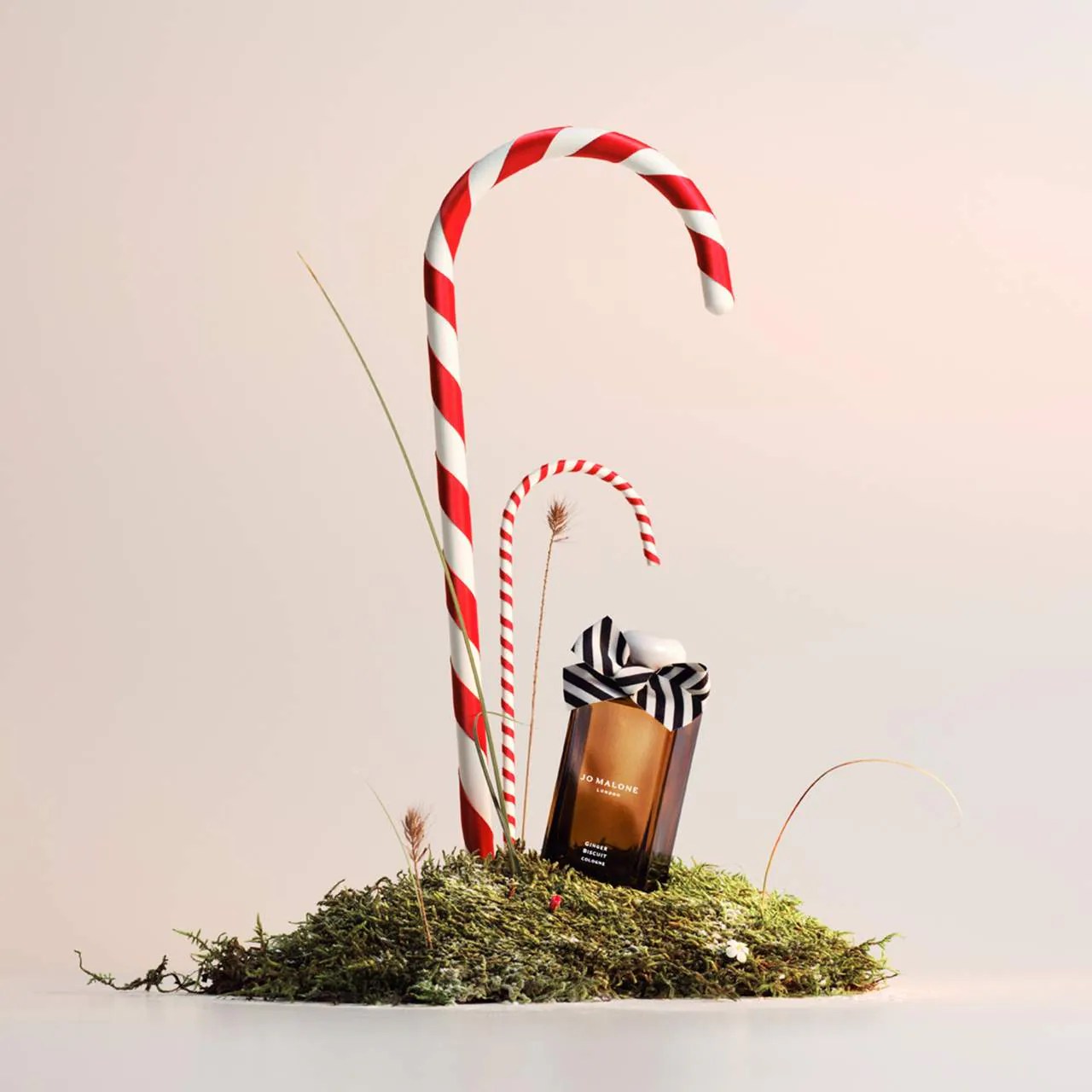
Bottle of Ginger Biscuit fragrance by Jo Malone
Jo Malone holiday release Ginger Biscuit
Counterpoint: Beyond Paradise

Counterpoint: Beyond Paradise

November’s “Counterpoint” fragrance is Estée Lauder’s Beyond Paradise, in its original bottle and formulation. In many ways, it is a unique fragrance: almost a hologram of an imaginary tropical flower.

Rainbow bottle of Beyond Paradise eau de parfum
Beyond Paradise by Estée Lauder; image by Portia Turbo.

1. How did you first encounter Estee Lauder Beyond Paradise, and what was your first impression? 

Old Herbaceous: Like a few other scents I’ve described, I first encountered Beyond Paradise because Luca Turin and Tania Sanchez rated it with five stars in their book “Perfumes: The A-Z Guide.” That book was a big part of my going down the rabbit-hole with fragrance, and I sought out several of the five-star fragrances as part of educating myself and my sense of smell. Although Beyond Paradise is still available (though apparently discontinued now), what one usually finds is a reformulation dating from 2015, in a standardized rectangular clear glass bottle. The original, in the ovoid rainbow-tinted bottle, was launched in 2003, created by Calice Becker. That’s the one I sought, with eventual success.

My first impression was “Wow – white floral alert!”, though I wouldn’t describe it as the proverbial “Big White Floral” that strikes terror into so many perfumistas’ hearts (or noses). I have mixed feelings about white florals. I love many white floral notes and accords, like jasmine and gardenia, and their corresponding flowers in real life, especially outside. Many white flower fragrances smell more like hothouse plants, grown in humid greenhouses and conservatories, warm and somewhat stifling. I wonder if this is because many perfumers encounter the blooms of plants like jasmine and gardenia in those settings?

Interestingly, Beyond Paradise is supposed to have been inspired by the largest conservatory in Europe and the UK, possibly in the world: the Eden Project in Cornwall, which I’ve actually visited with my family some years ago.

The Eden Project, Cornwall

This origin is reflected in the 2003 list of its notes:

Top Notes: Eden’s Mist, Blue Hyacinth, Orange Flower Templar, Jabuticaba Fruit
Middle Notes: Laelia Orchid, Crepe Jasmin, Mahonia Japonica, Pink Honeysuckle
Base Notes: Natal Plum Blossoms, Ambrette Seed, Zebrano Wood, Golden Melaleuca Bark

The accord “Eden’s Mist” is supposed to be based on the scent of the air inside one of the Eden Project’s domes. More prosaically, Fragrantica gives the following notes list: Top notes: Hyacinth, Orange Blossom, Grapefruit, Bergamot and Lemon; middle notes are Jasmine, Gardenia, Honeysuckle and Orchid; base notes are Hibiscus, Plum Wood, Ambrette (Musk Mallow) and Amber.

Portia: Many years ago on my first visit to India after Varun had moved back to help run the families’ hotels, I was shopping in the Sydney Airport Duty Free for gifts to give him and the family. Because I’d spent some serious money the SA was unbelievably generous with the samples. One of those was a spray mini of Beyond Paradise. When I first sprayed it on me I couldn’t believe anything could smell so good and fell madly in love on the spot. Nothing in my history of loving perfumes prepared me for what Beyond Paradise is.

Funnily, when I arrived in India Varun loathed it. He couldn’t understand why I would want to smell exactly like the jasmine, tuberose and marigold that Indian women wore woven into their hair and that Indians gave to their deities’ statues. 

Obviously I ignored him and wore the whole mini over the next two weeks. I think I bought my first bottle on the way home.

2. How would you describe the development of Estee Lauder Beyond Paradise?

Portia: JASMINE! with some other florals and a citrus burst running underneath. It’s so over the top I can’t help but laugh and then once that dies down I continue to huff my wrist and smile the smile of a happy perfumista. There is even a squeal-y urinous hit from the grapefruit and a breathy poopiness. To me this is the most French of the Lauder summer oeuvre. Definitely not the super clean of many American perfumes. There is the dewy cool fresh water aspect though, like the cold rivulets on a bottle of white wine.

How are marigolds not a note, I can smell their sharp funkiness clear as day.

While Beyond Paradise does have a trajectory it’s not a large one and the noted amber in the base seems to pass me by completely. There are some green broken branches or twigs, white flowers and shitloads of vegetal musks with still pretty hints of pithy citrus right to the end.

Old Herbaceous: Given that my first impression is of exotic flowers growing in a conservatory, I think my nose is actually picking up on “Eden’s Mist”. I don’t smell any hyacinth, and I couldn’t tell you what jaboticaba fruit smells like. The closest I can describe to what I smell at first is a combination of jasmine and tropical orchids. Although Mahonia japonica is listed as a middle note, I don’t smell that. I grow mahonias in my garden, and to me they smell most like lily of the valley. That’s not what I smell in Beyond Paradise. In fact, the whole development of Beyond Paradise most resembles its origin story: a walk through a fantasy conservatory with abstract, imaginary flowers. I agree with Portia, though, that of all the floral components, the strongest is a jasmine accord.

Lauder initially described the fragrance and its flankers as “prismatic florals”. The word “prismatic” usually refers to the image created when a prism refracts a beam of light, separating into its color constituents. I experience Beyond Paradise as a sort of prism in reverse, with its many notes coalescing into a smoothly abstract whole. The image that comes to my mind is the modern sculpture “Cloud Gate”, by Anish Kapoor, in Chicago’s Millennium Park. It is made up of almost two hundred stainless steel plates, welded together so seamlessly that it appears as an unbroken polished surface (shaped like a giant bean, which is its nickname). To my nose, Beyond Paradise is almost linear, though it warms slightly after about an hour or two. That’s also when I smell some underlying fruitiness and green, and a bit of the funk that Portia describes.

Cloud Gate, by Anish Kapoor

3. Do you or will you wear Estee Lauder Beyond Paradise regularly? For what occasions or seasons?

Old Herbaceous: I don’t wear it often, but it’s a lovely fragrance for warm weather or a beach vacation. It also works well in an office, since it doesn’t shout BWF. I think it would be great for a romantic dinner outside on a terrace on a warm summer evening. It is quite elegant, in its streamlined abstraction.

Portia: The last couple of summer seasons Beyond Paradise did not come out of the Lauder box even once. I always think of Lauder as winter perfumes like Youth Dew, Azuree, and Cinnabar and forget this, Modern Muse and Beyond Paradise in the warmer months. This year as the weather heats up I’m leaving it in the grab tray so it does get a bunch of wears. It’s way too gorgeous and holds too many happy memories to leave it languishing, all forlorn in the cupboard.

Spring and summer seem like the perfect and obvious seasons to wear Beyond Paradise but I think it might be nice on any sunshiny day. It could also be a breath of nature and cool water in an office environment. So bright and refreshing without feeling like a regular freshie.

4. Who should/could wear Estee Lauder Beyond Paradise?

Portia: This is perhaps one of the girliest non-confectionary perfumes that’s available. I will say though that when I wear it the incongruity of a dude walking around smelling like this works in my favour. It’s one of the perfumes that people ask about. Mainly because it jumps out as not something you often smell on gents. 

The change of bottle from gorgeous to boring AF will also mean that men will probably have less trouble having it on their dresser or in the collection.

Old Herbaceous: The opening of Beyond Paradise puts it squarely in the “feminine floral” camp, but as it dries down, it becomes more unisex to my nose and reminds me of some classic aquatic fragrances. I think it would especially suit anyone on a warm summer evening, when its fantasy florals would blend with the night air, especially in a humid climate. If you come across it at a reasonable price, sometimes still found online, it’s a nice addition to a fragrance collection unless you just loathe florals.

How do you respond to white florals, big or otherwise? Any favorites? Have you tried Beyond Paradise?

Counter/Point, a monthly blog collaboration
Counterpoint: Diorella

Counterpoint: Diorella

Welcome to the (late!) October installment of “CounterPoint”! I was thrown off by how early the first Monday of the month was, and various other distractions, but here we are, to discuss Christian Dior’s Diorella. Thank you, Portia, for being so patient!

Launched in 1972, Diorella is a “lemon chypre”, a narrow and specialized category of fragrance, given that chypres generally are a specific category. Perfumer Edmond Roudnitska created Diorella in 1972 at the peak of his powers, having already created for Dior the legendary fragrances Diorama, Diorissimo, and Eau Sauvage.

Ad for 1972's Diorella eau de toilette
Diorella; image by Christian Dior.

Interestingly, Diorella was the inspiration for Meet Me On The Corner, a crowd-funded fragrance by Sarah McCartney of 4160 Tuesdays that she created to capture the vibe of 1970s chypres and named after a 1972 pop song.

Teenaged girls wearing tie-dyed clothing, 1970s, Doreen Spooner
Tye-dye girls, Doreen Spooner/Getty Images
  1. How did you first encounter Diorella and what was your first impression?

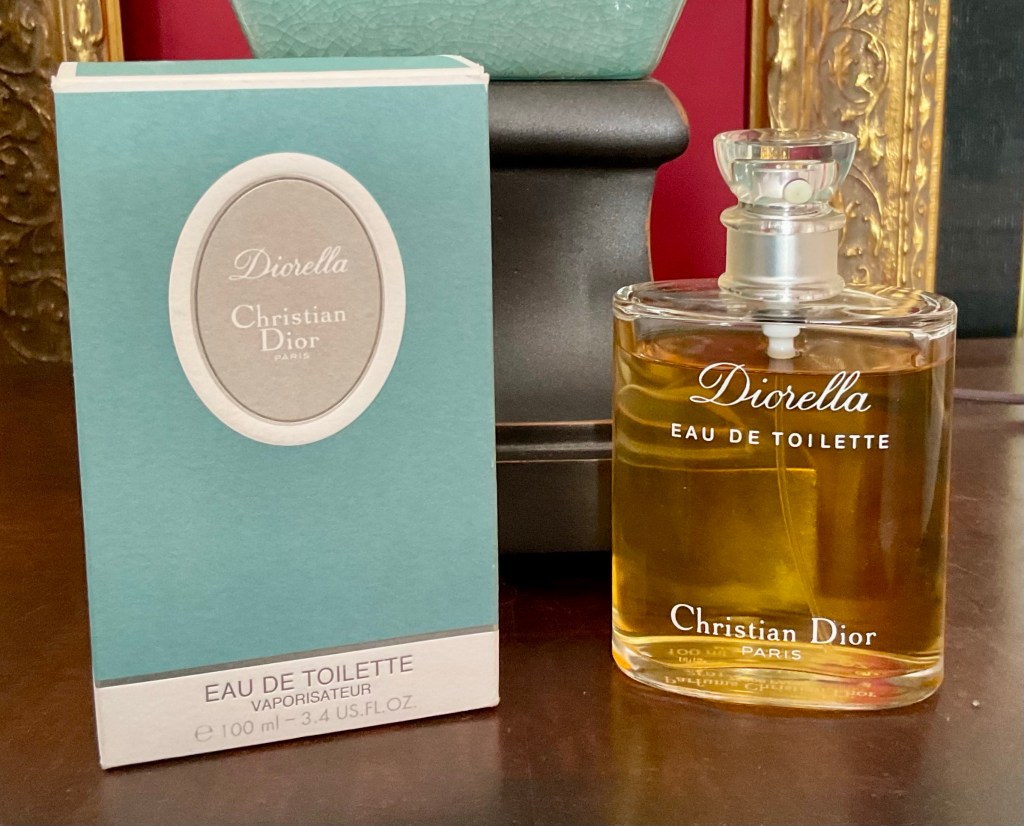
Portia: When Old Herbaceous asked if we could do Diorella my first internal response was “Diorella? Sure I’ve heard of it but have no memory of ever seeing it or smelling it.” Dutifully I went to the DIOR box and rummaged around just to be sure. Lo and behold, there is a 100ml, extremely vintage looking beat up houndstooth box of Diorella EdT. There’s clearly been some leakage, the sprayer and surrounds have residue and some eating away of the silver. The moment I touched the very bleached out label it just fell off. This bottle is O L D. Even on spritzing I have no memory of smelling this beauty. So while I may have smelled Diorella in the past I’m coming at it as a newbie. First impression is that I’m really surprised that the top seems to be intact. 

Old Herbaceous: My perfumista journey began when I read “The Perfect Scent” by Chandler Burr, then moved on to “Perfumes: The A-Z Guide” by Luca Turin and Tania Sanchez. I was fascinated by their witty insights and their rating system of stars, so I started to seek out the fragrances they had awarded five stars, their top rating. One of those was Diorella, in its pre-2009 formulation. As I learned more about fragrances, I started to figure out how to find vintage fragrances (sadly, without access to the amazing Japanese flea markets that Neil Chapman describes in his blog The Black Narcissus!). I found an intact bottle of Diorella eau de toilette that dates from 2002, as best I can tell, based on its box, bottle, and batch number. It was a reasonable price, so I snapped it up.

My Diorella

My first impression was “Yes, this is a true chypre!” I happen to love most chypres (I can’t think of one I have disliked yet), with their classic structure of citrus top notes, floral heart notes, and base notes that include oakmoss. Per Fragrantica, the structure of the original Diorella is: top notes of green notes, Sicilian lemon, bergamot, melon, and basil; middle notes of honeysuckle, Moroccan jasmine, peach, carnation, cyclamen, and rose; and base notes of oakmoss, vetiver, patchouli, and musk. While the top notes of my bottle have faded somewhat with age, the combination of citrus and green notes is still evident and lively.

2. How would you describe the development of Diorella?

Old Herbaceous: The top notes aren’t as vivid in my bottle as I’m sure they were when it was new, but they are vivid enough to indicate the lemony/green opening accord intended by M. Roudnitska. The melon and green notes have taken precedence in my bottle, including a lovely basil accord. I think the basil is what may have prompted Turin and Sanchez to declare that if Guerlain’s fragrances are desserts, Diorella is a Vietnamese beef salad. Fear not! It smells nothing like rare meat. I think I can smell a couple of the base notes right from the start, specifically the vetiver and oakmoss, humming in the background.

In the heart phase, I smell honeysuckle and jasmine. The jasmine isn’t heavy or narcotic, it stays light. The hum of vetiver and oakmoss becomes more noticeable, and soon they take over from the floral notes entirely. In the drydown and base stage, Diorella moves from fresh toward warm without becoming spicy, supported by patchouli and musk. It also lasts a good long time, surprising in a fragrance that also smells very fresh.

Portia: Fizzy opening with bright green citruses and aldehydes, leaning slightly waxy like putting your fingernail into the peel and getting that luscious burst of fresh and sunshiny goodness. The greenery is both camellia leafy and tulip stemmy, crushed to let their greenness explode.

As the initial heady notes calm, I have a very modern masculine waft of cucumber/melon intertwined with the bouquet. It’s a surprise to have something so stuck in my mind as a 1980/90s gym men’s changeroom smell be lurking so significantly in this epitome of female beauty. It does not detract from the femininity at all and makes me think of how many of the men would also swoon for Diorella.

I will say that Diorella is very cologne-ish. This is not a complaint, merely an observation. For some reason I was expecting a very fruity/mossy chypre in the style of Mitsouko. This is as far from that as you can imagine while still bearing many of the same notes.

The heart and base take a long time merging and there’s plenty of crossover during this time, plus the citruses are subtly tenacious.

The crisp, green, oily grassiness of vetiver is tempered by the earthy patchouli and moss but there is much more going on here. I’m getting wafts of quite astringent eucalyptus, the fresh green of shady creeks as you trudge through the greenery. There’s a cooling, slightly salted seaside breeze hiding below.

The last gasps are a very vegetal musk and sweet greenery.

Diorella is so tapestried and I think it will take a dozen more wears to even get a hold of what’s happening here.

3. Do you or will you wear Diorella regularly? For what occasions or seasons?

Portia: Honestly, now that I’ve found this gorgeous unicorn it might be too special to wear willy nilly. Though it feels like an excellent sunny day spritz and could give me blue sky reminiscences in winter, I think just holding the bottle and sniffing the cap will be all I’m capable of doing.

Old Herbaceous: I haven’t been wearing Diorella regularly, but it has been such a good fit for the beautiful October weather we’re having that I plan to keep it out and within reach for at least a while (keeping it in its box, of course, to protect it from light!). It partners beautifully with these crisp, sunny, dry autumn days, although I often think of it more as an early summer scent. Diorella works well for a whole range of occasions, from casual to elegant, from daytime to evening. It’s like a Diane von Furstenburg wrap dress, the kind that were so fashionable in the 1970s (my mother wore them) and that you could dress up or dress down, endlessly versatile but with a distinct, chic personality.

4. Who should/could wear Diorella?

Old Herbaceous: Well, here’s what Luca Turin wrote on that topic: “Diorella was intended as a feminine and was the very essence of Bohemian chic, with an odd, overripe melon effect that still feels both elegant and decadent. The modern version, no doubt fully compliant with all relevant health-and-safety edicts since the fall of the Roman Empire, is drier and more masculine than of old, no bad thing since I have always seen it as a perfected Eau Sauvage and one of the best masculines money can buy.”

So there you have it! Diorella will work well for many perfume-lovers and can be spritzed for just about any occasion.

Portia: A truly unisex beauty that is cologne related but so much more. I need to go sniff a modern bottle to see if it still smells as good. Then if it does I might buy a bottle and wear it regularly through the warmer months. I’ll be most interested to read OH’s description of how it has survived.

Old Herbaceous: Borrowing again from Luca Turin with regard to the 2009 reformulation: “Great perfumery accords share with holograms the strange property of being damage resistant; the picture remains legible even though noise increases and fine detail is swept away. Diorella is one of those accords, and while the latest version is less caressingly decadent and lush than of old, it still conveys much of what made the original great.” Note that his comment is about the 2009 version; I think this is still the current edition, as I haven’t been able to find anything about a later formulation despite new IFRA restrictions on oakmoss. I wonder whether the oakmoss was already greatly reduced in 2009, with vetiver taking a more prominent role in the base, so more changes weren’t necessary.

Ad for 1972's Diorella eau de toilette
Diorella; image by Christian Dior.
Counterpoint: Infini

Counterpoint: Infini

Happy Monday! Today, in our monthly “CounterPoint” collaboration, Portia of Australian Perfume Junkies and I consider Caron’s classic Infini.

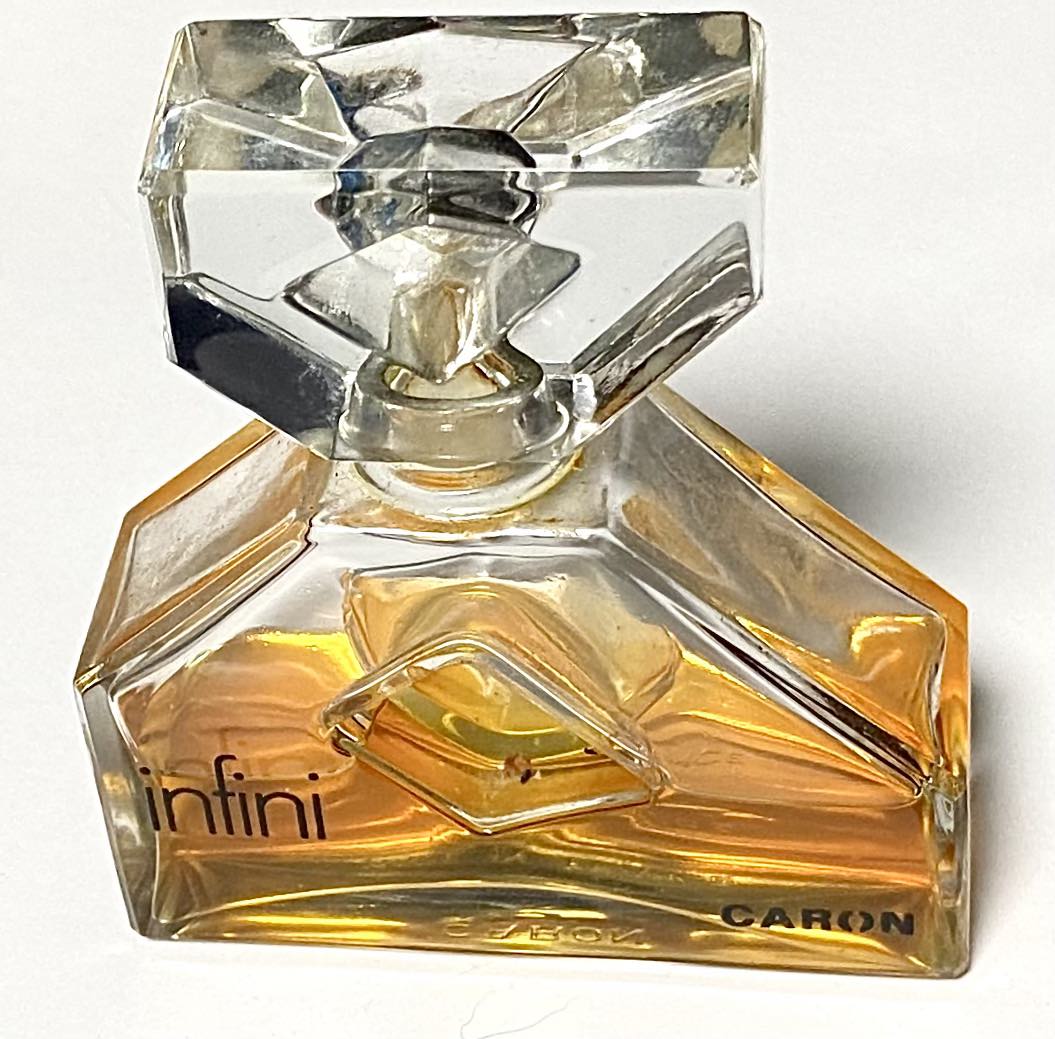
The Infini many of us know is the 1970 formulation, which reused the name of an earlier Caron (Ernest Daltroff) fragrance from 1912. It was conceived of at the height of the race between the US and the Soviet Union to explore space and land a man on the moon.  The goal was for Caron’s new fragrance to encapsulate a new modern era and an “infinite” future. The bottles for both the perfume and the parfum de toilette embody that sense of sleek, technical modernity, with the mathematical, angular perfume bottle and the smooth, silver-topped spray bottle of parfum de toilette.

Bottles of Infini parfum de toilette and parfum.
Caron’s Infini; image by Portia Turbo.

Neil Chapman, blogger at The Black Narcissus and author of “Perfume: In Search of Your Signature Scent”, is a fan of this fragrance that was meant to evoke the infinity of space exploration:

“Caron’s futuristic project was apparently fifteen years in the making, as the perfumers searched for the most indefectible equilibrium of sharp green florals, woods, aldehydes, and musky animalics. The result – unseamed, flawless – is in my view one of the finest scents ever made.”

Notes are listed as: top notes – aldehydes, narcissus, muguet, jasmine; heart notes – iris, rose, tuberose, lilac; base notes – vetiver, sandalwood, musk, tonka bean, amber.

1. How did you first encounter Caron Infini, and what was your first impression?

Old Herbaceous: I first encountered Infini in the last few years, when I was already deep into my perfume rabbit-hole. I had been looking up fragrances with notes of narcissus, one of my favorite flowers and fragrance notes, and Infini kept appearing in various posts and lists as a classic to try if you like narcissus. So eventually, I found a vintage bottle of parfum de toilette (the version launched in 1970) for a reasonable price, and it was mine! It did not disappoint. I love the strong green aura that is present from the very start, with a noticeable narcissus accord lifted airborne by a hefty dose of aldehydes and enhanced by notes of jasmine and lily-of-the-valley. The last two floral notes are truly supporting players; they bring more green freshness and add to the slightly narcotic effect of the narcissus, but that’s the extent of their contribution (given that vintage fragrances do tend to lose some of their top notes, my impression may be affected by the age of my bottle).

To my nose, Infini definitely smells like a scent of the 1970s, when there were several successful strong green and herbal fragrances on the market, perhaps echoing the momentum of the environmental movement during that decade, which began with the first Earth Day. It fits right in with major loves of mine from that era, like Chanel’s Cristalle and No. 19, Aromatics Elixir, Silences, etc.

Portia: When I first got crazy about perfume Infini was not in demand and it seemed like there were gallons of it online for next to nothing. Out of interest I bought a small parfum in that outrageously brutalist bottle. It was love at first sniff. While smelling antique it also smells wholly new and modern. Perfumey but also like it’s trying to forge a new path from very well used ingredients. Coming from the same year as CHANEL No 19 it’s interesting to smell two so disparate sisters with quite a few parallels. No 19 being the more stoic and Infini feeling like a fun, flirty sibling.

2. How would you describe the development of Caron Infini?

Portia: Today I’m wearing vintage parfum and Parfum de Toilette. That aldehydic narcissus opening has always smelt more like fresh carnations to me. Not the perfumers trope of carnation but buying a bunch at the florist. Cool, green tinged, powdery and crisp. The heart is very sweet amber floral for me with reminders that narcissus is the major player here. My question is why aren’t oakmoss and some kinds of animalic noted? Or galbanum? The sweet, furry, resinous dry down lingers and i can smell faint traces of it next morning. A soft, powdery waft of gorgeousness long gone.

Old Herbaceous: Whenever I smell fragrance with a strongly aldehydic opening, what comes to mind is Luca Turin’s approving comment about my beloved Chanel No. 22, which has even more of a dose of aldehydes than its predecessor No. 5: “Stand back and watch the whole thing lumber off into the sky after a three-mile takeoff roll.” In the case of Infini, the aldehydes actually evoke the idea of an aerial vehicle taking off, as if it were a gleaming silver cartoon spaceship, a mid-century zeppelin, or a sparkling hot-air balloon. This balloon, though, carries a hefty load of daffodils and greenery. And while no one has listed galbanum as a passenger, my nose suspects it is along for the ride as a stowaway.

Illustration of hot air balloon covered in giant daffodils; image from redbubble.com.
Hot air balloon; image by frigamribe88 at redbubble.com.

3. Do you or will you wear Caron Infini regularly? For what occasions or seasons?

Old Herbaceous: I haven’t been wearing it regularly, but now that I’ve dug it out of my collection for this post and our weather has cooled down, I’m going to include it in my fall rotation this year. The green fragrances I love so much are ideal not only for springtime, but also for this transitional season, when the oppressively humid heat gives way to cooler, drier air and the sky regains its vivid blue hue. September may be my favorite month although spring is my favorite season; having spent so many years in education, my own schooling and my later career, September always feels to me like a fresh start, like the hopeful beginning of a new school year. Besides, it is my birth month so for me personally, it is actually the start of a new year. Crisp green fragrance notes suit my mood in September.

As for occasions, I agree with Portia that Infini can dress up or dress down. To me, it has more warmth than No. 19 so it feels less standoffish, although it can still contribute a certain air to a soignée outfit.

Portia: Infini is a staple in my wearing rotations. Being such a pronounced beauty it’s perfect for nights working in drag. It slips seamlessly from summer to winter and always feels comfortable, elegant and just a little over the top. Infini fits afternoon BarBQs, lunch, fully dressed up or down. Though it’s not a shapeshifter itself it never feels out of place.

4. Who should/could wear Caron Infini?

Portia: Wearable by both sexes but I think you need to be a certain person to wear Caron Infini, especially the vintage formulas. While I think it could easily be a fragrance to confer extra confidence the wearer would have to be savvy enough about fragrance to understand that it can be used as such. Most general public in modern times could find it too far from what they know or smell in department stores. That’s my thought, happy to be proven wrong.

Old Herbaceous: Definitely a unisex option, excellent for both men and women. It reminds me a bit of Geoffrey Beene’s Grey Flannel, launched in 1975 as a traditionally masculine fragrance, though I wouldn’t say they smell alike. They do have a number of notes in common; but where Infini, targeted at women, has “perfumey” aldehydes among its top notes, Grey Flannel has citruses; while narcissus is dominant in Infini, it plays a supporting role to the violet accord in Grey Flannel. Just as women may smell wonderful in Grey Flannel, men may smell wonderful in Infini.

Miguel Matos at Fragrantica ha/s written about the latest version of Infini, launched by Caron in 2018, pointing out that it has nothing to do with the Infini of earlier decades. Indeed, it is a floral fruity gourmand. I wish Caron all possible success; but I also wish they wouldn’t reuse a name for a fragrance that differs so egregiously from the classic fragrance linked to that name. Have you tried any version of Infini? What do you think of it?

Bottle of Caron's Infini perfume; image by Portia Turbo.
Caron’s Infini; image by Portia Turbo.
Counterpoint: Paris-Édimbourg

Counterpoint: Paris-Édimbourg

Welcome to this month’s “CounterPoint” about a newer fragrance: Chanel’s Paris-Édimbourg, one of Les Eaux de Chanel”, which has been a very successful series of lighter, more casual Chanel fragrances focused on freshness and named for particular destinations to which Coco Chanel regularly traveled, such as Biarritz, Deauville, and Venice. Most of “Les Eaux” are truly unisex, but Édimbourg, the fifth in the series, launched in 2021, smells to me more traditionally masculine than its predecessors. And indeed, perfume Olivier Polge has said: “Both fresh and woody, PARIS-ÉDIMBOURG could be the fragrance of a tweed jacket borrowed from the men’s wardrobe that was such an inspiration to Gabrielle Chanel.”

Apparently, Coco Chanel spent a lot of time in Scotland in the 1920s during the years when she was having an affair with the Duke of Westminster, who owned vast estates in the Scottish Highlands — a wild, forested, mountainous area, where nevertheless the visiting landed gentry and their guests still dressed for dinner after a day of fishing, shooting, tramping, and other outdoor pursuits.

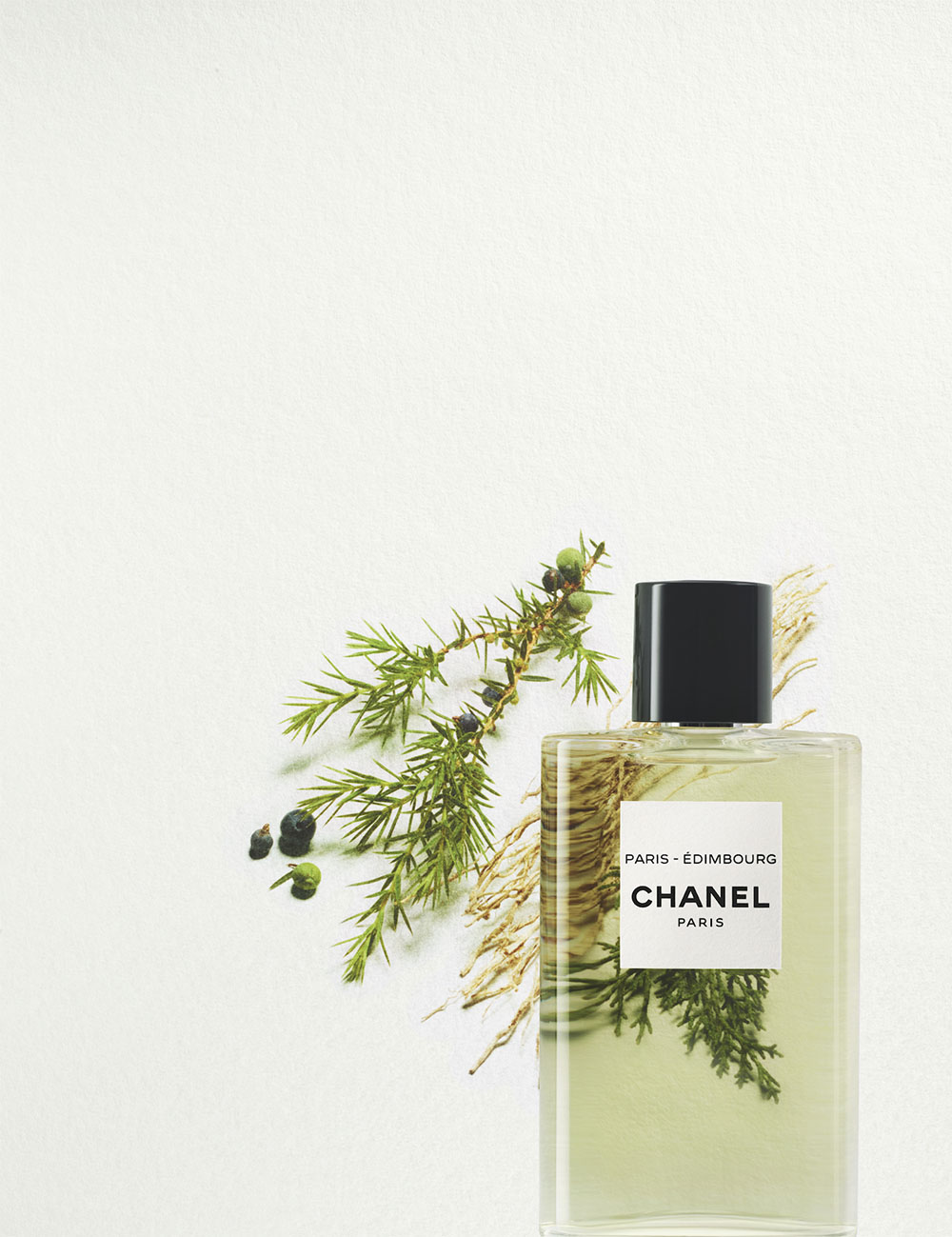
Bottle of Chanel's Paris-Édimbourg fragrance
Les Eaux de Chanel: Paris-Édimbourg; chanel.com
  1. How did you first encounter Paris-Édimbourg and what was your first impression?

Portia: Being an Aussie we tend to get everything a little behind the rest of the world but I always check in with my local CHANEL Beauty stand alone store in the Westfield just down the road. Everyone was raving about the newest from the Les Eaux range and that they’d picked such a strange place to be the destination. I’ve no memory in my readings of Coco hitting the Scottish Moors but that’s probably my memory. Anyway, I went into CHANEL Beauty on the off chance and lo and behold there was a Tester and stock. Did you know they also have body products? So cool. Tried it, walked around the mall doing my shopping and went back to buy it before leaving. Honestly, I would have bought it anyway because I’m a completionist and I already had the rest of the line. That it was so bloody gorgeous was just the cherry on top.

Old Herbaceous: I was able to get a travel spray decant of it from a monthly fragrance subscription, after I had done the same with the earlier “Eaux de Chanel.” With the first three, I had tried them as samples pre-pandemic at Nordstrom, and liked them very much. So when my subscription started offering decants of them, I quickly added them to my queue! Also, I have a thing for complete collections (Portia calls that being a “completionist”, lol), which I usually try to restrain, but chose to indulge with Les Eaux. After all, travel sprays don’t take up much space!

My first impression was that this is a traditionally masculine aromatic fragrance, and that is still my impression. I ended up giving my travel spray to my 22 year-old son, and he loves it so much that he requested a full bottle for his birthday this summer. His very chic girlfriend loves it on him, which I’m sure clinched the matter! It does smell very nice on him, and he likes the fact that it reminds him of Scotland, a country we have visited as a family and enjoyed very much.

Fragrantica classifies Paris-Édimbourg as woody, aromatic, and aquatic. Top notes are listed as cypress and juniper berries, middles not as cedar, lavender, and vetiver; base notes as musk and vanilla. I’m not sure why it includes “aquatic” in its description, because to me, it doesn’t particularly evoke water or watery notes. It does have the bracing, cool quality of aromatic evergreens.

2. How would you describe the development of Paris-Édimbourg?

Old Herbaceous: The opening is quite strong, and redolent of juniper even more than cypress. I like that a lot (the only hard spirit I drink, on the rare occasion when I have a cocktail instead of wine, is gin, which is flavored with juniper berries; perhaps that is the perfumer’s clever reference to the cocktails undoubtedly enjoyed by Chanel and her friends). The cypress and juniper notes combine to smell very herbal and green, to my nose — another plus for me. At this stage, Paris-Édimbourg has strong sillage, so one might want to apply it lightly. One light spritz on my wrist carries well beyond my arm’s reach, and I expect most wearers will want to apply scent to more than just one wrist.

As it moves into the heart phase, Paris-Édimbourg becomes less green and more herbal with the lavender accord becoming prominent. The cedar and vetiver accords lend warmth and woodiness to this stage, and contribute, with the lavender, to the impression of a more traditionally masculine fougere-style fragrance. The light application to start pays off in this stage, as it now feels “just right” to my nose, though still a fragrance I would prefer on my husband’s skin to my own. It just goes to show you how engrained these cultural impressions can be, aided by the fact that both my husband and my late father have leaned toward classic “barbershop” fougeres in their fragrances.

The dry-down stage is very pleasant, becoming the scent of warm “skin but better” with its base notes of musk and vanilla. The lingering traces of lavender lend it a soapiness that is very pleasing, evoking not just warm skin, but clean skin.

Portia: The opening woods are green and spicy. The tart citrus even veers towards grapefruit and I’m smelling something spicy like nutmeg, maybe cinnamon. Could it be the juniper berry? I’ve always smelt that as a cool spice, like capsicum as opposed to chilli.Ahhh, the heart resolves into juniper and pine. 

Paris-Edimbourg smells so fresh and clean, like a modern fine fragrance version of Norsca. Yeah! I remember thinking that on my first wear. Reminiscent, not same. Just a jump started memory. There is a warm sweetness as we head towards dry down. I’d have said a not very vanilla heavy amber, resinous sweetness. 

I’ve been and had Korean BarBQ, a few drinks and chatter, then watched some footy. There’s still an oily grass, pithy citrus and fluffy musks with some torn green twiggy branch. Now feeling done in a very Jean-Claude Ellena vein. A soft wash of it. That’s a long ride for what is basically a cologne style of fragrance.

3. Do you or will you wear Paris-Édimbourg regularly? For what occasions or seasons?

Portia: Amusingly, until today Paris-Edimbourg had sat unopened in my wardrobe. You can see the wrapping in the photo.

Bottle and box of Chanel's fragrance Paris-Édimbourg
Les Eaux de Chanel: Paris-Édimbourg; image by Portia Turbo.

We are heading into our warmer months in Oz. Already the days are 20C/70f and above. Paris-Edimbourg fit the day perfectly and has even been a good fit for this evening. Last summer I wore Paris-Venise and Paris-Riviera so much they secured places in the grab tray. I think Paris-Edimbourg will be taking Paris-Venise‘s spot.

Old Herbaceous: I doubt that I’ll wear it myself, but I’ll enjoy smelling it regularly on my son! I think it’s just right for an occasion when one wants to smell a bit more “dressy” but still at ease. Paris-Édimbourg strikes me as the scent equivalent of male or female “business casual” — a fragrance that goes with a crisp collared shirt and neatly pressed, tailored pants. Classic and well-mannered.

4. Who should/could wear Paris-Édimbourg?

Old Herbaceous: Aside from the standard reply, “anyone who wants to”, I do perceive this as a more masculine fragrance based on my own scent history, but it could be worn to great effect by a woman or really anyone of any gender! In that sense, like the other “Eaux de Chanel”, Paris-Édimbourg is absolutely unisex. Perfumer Olivier Polge and Chanel have called it “androgynous”, which I think fits.

Portia: The joy of the Les Eaux line is they are wearable by all.  Paris-Edimbourg is no exception and I think it might even be the most masculine leaning of the set. The bottles are a beautiful hark back to vintage CHANEL and I love that they’ve used the regular box lining-card for the outer presentation. The price point is affordable for a luxury brand and I’m thinking this could be a very good gift for someone special. Who doesn’t love a little bit of a CHANEL logo?

Most of us need another perfume like an extra hole in our heads but if your collection is missing a very wearable, spritz and go cologne style scent then you could do a lot worse than Paris-Edimbourg.

Have you tried this, or any of the other “Eaux de Chanel”? Any favorites? Do you have any on your wish list or “to-try” list?

Bottle of Chanel's fragrance Paris-Édimbourg
Les Eaux de Chanel: Paris-Édimbourg; image from chanel.com
Counterpoint: Cabochard

Counterpoint: Cabochard

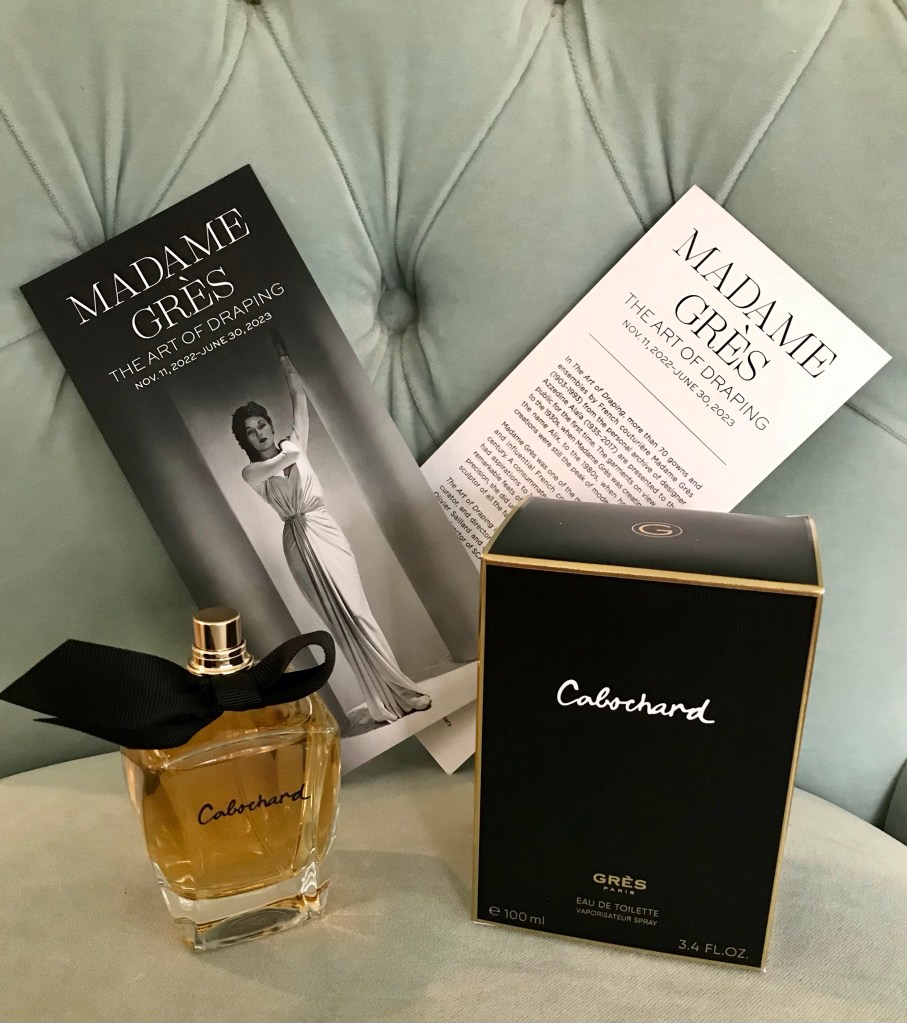
Cabochard may be the best known fragrance issued by the house of Grès, at least to this generation of perfumistas. It is not the only one, but it was the first and it is one of only a few that came out while the real Madame Grès still owned the perfume line, which she sold in 1982. (Others I own are Cabaret and Cabotine). It was created in 1959 by legendary perfumer Bernard Chant, who also created strong fragrances like Aromatics Elixir, Azurée, Aramis, and the original Halston, now called Halston Classic. It is a classic leather chypre, originally with a full symphony of notes and accords, which Fragrantica lists as: aldehydes, sage, spices, tarragon, asafoetida, lemon and fruity notes; middle notes of geranium, orris root, rose, jasmine and ylang-ylang; base notes of leather, oakmoss, tobacco, vetiver, patchouli, sandalwood, musk, amber, and coconut.

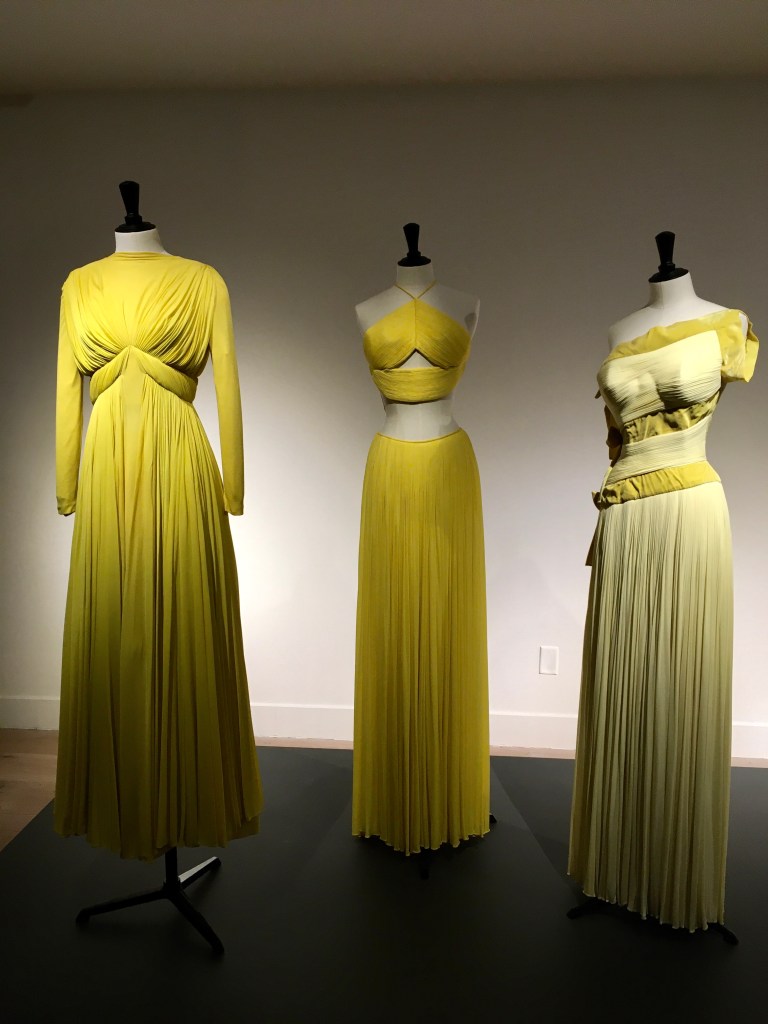
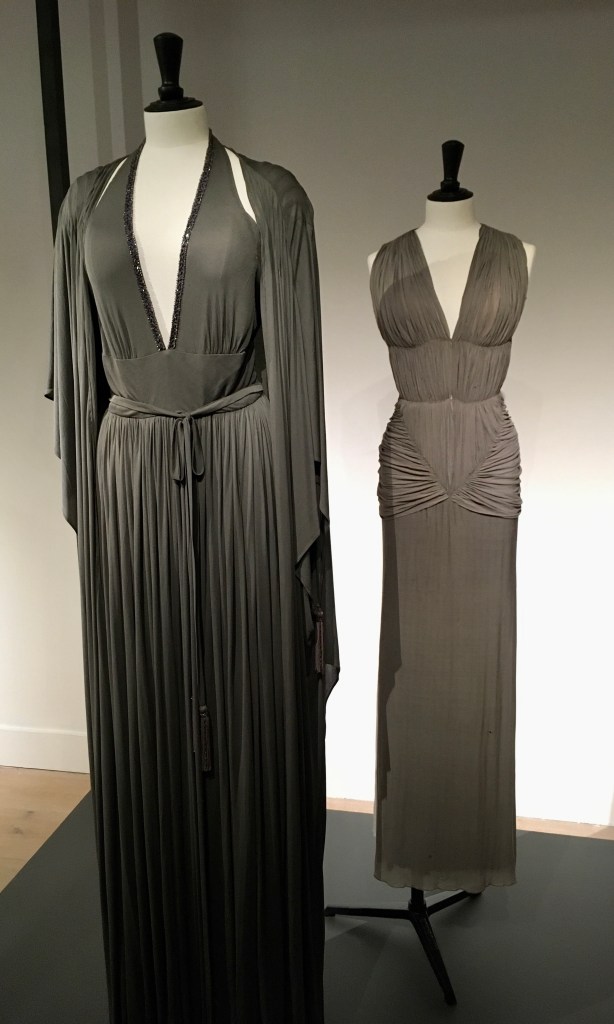
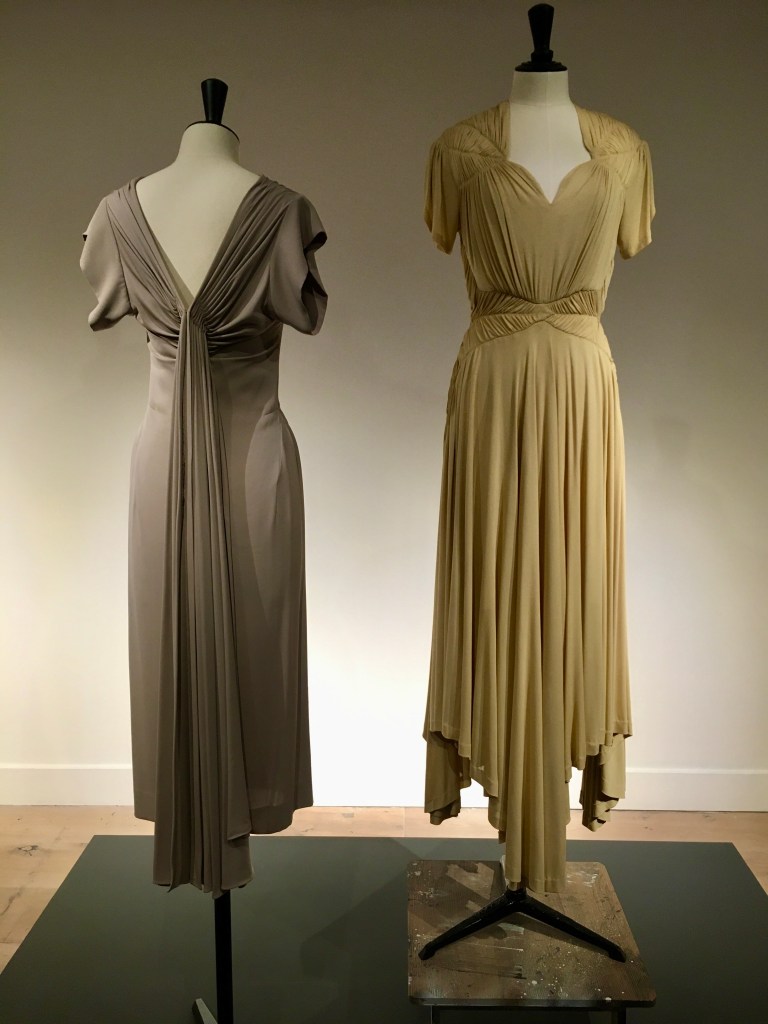
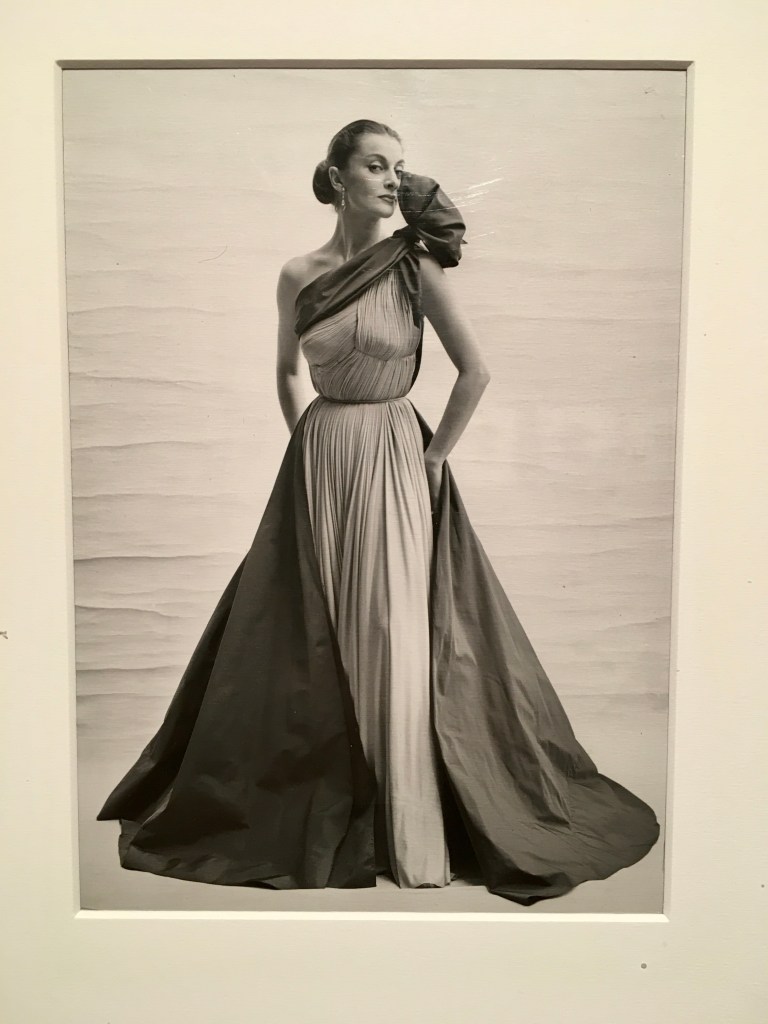
Madame Grès was a legendary designer of haute couture, based mostly in Paris and dressing its elite from the 1930s into the 1980s. Her creations are truly unique – you look at one of her garments and you know it’s by her. They are in many collections, including the Costume Institute of the Metropolitan Museum of Art, which describes her work thus:

“Madame Alix Grès’ career spanned five decades and throughout them all she excelled in her ability to manipulate fabric and use its innate characteristics to enhance her designs. She executed flowing body-skimming forms inspired by ancient Greek dress; minimalist, sculptural forms and voluminous, dramatic shapes.”

I chose Cabochard as this month’s “Counterpoint” fragrance to write about with Portia (of the blog Australian Perfume Junkies) because I saw a rare exhibit of Madame Grès dresses and other outfits a few weeks ago. Most of the items displayed were from the private collection of the late Azzedine Alaïa, another genius of garment construction who studied Madame Grès and her techniques. This post will be liberally sprinkled with photos I took! There were so many gorgeous dresses that it was hard to choose.

Cabochard and Madame Gres

Apparently the fragrance took inspiration from a trip to India that Madame Grès took in the late 1950s to look into the reorganization of traditional Indian textile manufacture, a project of the Ford Foundation and others. It was named Cabochard because of her well-known stubbornness and determination, on full display during the Nazi occupation of Paris in the 1940s, when she refused to serve German clients (who were mostly wives of Nazi officers). Another example is that when she was ordered to stop using so much fabric, at first she defied the order, and they shut down her atelier, then she complied but her next collection was all in the colors of the French flag: red, white, and blue.

  1. How did you first encounter Cabochard and what was your first impression?

Portia: I cannot remember the first time I smelled Cabochard. Maybe it was on an Aunt or one of Mum’s friends, or one of my friend’s Mums. It could have been a sniff session in a department store in the time that I loved perfume but wasn’t internet connected to you all or maybe I read about it in the initial stages of discovering the scent blogosphere. I do remember that I bought a tall slender bottle with a black lid, maybe even from overseas way back in the time of postal ability. That bottle was given to a friend when they fell madly in love. Then I scored an extrait that had my mind whirling (still does, though it’s a second bottle now) and lastly, when the bottle was redesigned and the fragrance given a spruce for modern day I grabbed a tester for next to nothing. Perfumer Bernard Chant created Cabochard in 1959, Aramis in 1966 and Aromatics Elixir in 1971. A trilogy or family of fragrance, all similar but riffing different elements.

Dresses by Madame Gres

Old Herbaceous: I got a heavily discounted bottle of Cabochard eau de toilette after reading Luca Turin’s hilarious but scathing review in “Perfumes: The A-Z Guide”, in which he famously called this reformulation “Cabochard chewed down to a frazzle by accountant moths” and compared it to a time-ravaged Peter O’Toole whom no one recognized any more. I had previously bought another Grès fragrance, Cabaret (which came out long after she had died), and liked it very much, so I thought I would see what Cabochard was like and whether it deserved such criticism. Of course, I don’t have the original vintage for a comparison, but I was curious anyway. And I also found the name charming: stubborn, like a donkey, but also resolute and determined.

Cabochard has been reformulated (as have so many classics), and for a long time, what was available was the version I first bought, in a tall, slender bottle with a bas-relief bow on front. However, in 2019, the current owners of the brand reissued Cabochard in eau de toilette and eau de parfum, in shorter bottles with real black ribbons on the neck. These improve on their immediate predecessor and have been well-received, so I own both!

My initial impression was that Cabochard reminded me of Chanel No. 19, which startled me until I re-read the list of notes and saw that the 2019 eau de parfum has a strong dose of galbanum as one of its top notes. I like the opening very much, no surprise! When I asked my 21 year-old son to tell me what he thought, he sniffed my wrist and said “I can’t say I LIKE it, but I wouldn’t say I dislike it either. It’s really different!” How is that for a diplomatic answer?

  • How would you describe the development of Cabochard?

Old Herbaceous: I’m wearing the 2019 eau de parfum, which has a different list of notes from the original, according to Fragrantica: top notes of aldehydes, galbanum, and sage; heart notes of ylang-ylang, rose, and jasmine; base notes of oakmoss, leather, patchouli, and sandalwood. Right away, the aldehydes and galbanum hit the nose; the aldehydes drift away, but the galbanum remains a leading player. I barely smell any of the floral notes at all, then the base notes arrive — and wow, do they persist! Very true to the fragrance’s name, lol. Of those, the one I smell the least is sandalwood, which is a shame as that is clearly a reference to India. The oakmoss note is potent, and in 2019, it might still have had some real oakmoss atranol, though it was heavily restricted by then, and atranol was banned entirely in Europe in 2021. I’m guessing that by 2019, Parfums Grès was already using a modern substitute, both for cost reasons and because the ban was on the horizon.

The 2019 eau de toilette also has its own slightly different list of notes, which Fragrantica lists as: top notes of aldehydes, bergamot, and sage; heart notes of ylang-ylang, rose, and jasmine; base notes of oakmoss, leather, patchouli, and sandalwood. This is actually a more classic chypre structure, with bergamot among its top notes which the eau de parfum lacks.

Neil Chapman, author of The Black Narcissus blog, wrote about Cabochard in his marvelous book “Perfume: In Search of Your Signature Scent”, and described it as “a dark and brooding scent of greys, purples, and blacks that hovers, tantalizingly, above the skin” (I think he was describing the vintage extrait). To my nose, because of the galbanum and base notes, the eau de parfum is indeed “dark and brooding” but varying shades of dark green and brown.

Portia: Wearing vintage extrait and modern EdT. The opening fruity sparkle is herbaceous, aromatic and dense. Imagine being in the storeroom of an Indian bazaar, the spark and buzz of faulty electrics, fruit and veg in waxy cardboard boxes, sizzling spices, bitter herbs, and the scent of dozens of boxes of sandalwood soap. Cabochard is as full on as you can imagine. A heavy, hectic, psychedelic scent that manages to be all this and warmly classy too. That is quite a feat to keep something so big from flying out of control. It’s definitely a hark back to perfume of yesteryear but much of today’s product could learn a thing or ten from one sniff of Cabochard.

Fragrance bottles of Cabochard eau de toilette and parfum
Cabochard eau de toilette (2019) and parfum; image by Portia Turbo.

Through the heart flowers are a bouquet and I can’t pick any of them out, not really pick them out, though I get flashes of ideas of flowers. It doesn’t matter anyway because already the base notes are coming through: sandalwood, tobacco, patchouli, leather and oakmoss are the ones I can detect but what I really smell is Cabochard. It’s the base of Cabochard that IS Cabochard to me. That long trail of golden darkness that floats mysteriously around me for hours and hours.

  • Do you or will you wear Cabochard regularly? For what occasions or seasons?

Portia: It’s funny. I just put my Cabochard EdT in its box to give it a rest. I keep the extrait out for sneaky swipes. Cabochard is an excellent foil against the downward spiral of depression. Something so thick, rich, tapestried and enigmatic can derail the slide brilliantly if I catch it early enough. So yes, Cabochard gets wear.

It’s also a perfect glamour scent for nights working a drag. Cabochard’s fine line between masculine and feminine in scent is a perfect match.

Old Herbaceous: I don’t wear it often, and when I do, I realize that I really have to be in the mood for Cabochard. To me, it is a fragrance best suited to fall and winter, when it appeals to me most; to my nose, it’s a bit much in the hot, humid weather we get here in the summer.

  • Who should/could wear Cabochard?

Old Herbaceous: I find Cabochard totally unisex – wearable by men or women without startling anyone with traditional expectations. Not surprising, given that its original creator Bernard Chant also came up with Aramis, a legendary masculine fragrance that is still a top seller, and strong feminine fragrances like Aromatics Elixir and Azurée (also Beautiful, more floral than many of his other creations).

Portia: Cabochard is truly unisex. Anyone with the chutzpah to wear such an iconic fragrance should definitely get some on. It’s a big perfume but a single spritz could even be low key enough for the workplace. Should you need armour, to make an entrance, to become an object of power then a couple of sprays more. 10 sprays should gas those nearby, dry clean your curtains and make people give you a wide berth. I’m wearing 10 sprays right now, home alone and in my perfume room/office. Bloody heaven!

Did I mention that Cabochard can be had for very little money on the discount sites? So, affordable glamour. YAY!

Have you tried Cabochard, vintage or modern? Which version, and what do you think?

Counterpoint: Le Jardin de Monsieur Li

Counterpoint: Le Jardin de Monsieur Li

Welcome to June’s installment of “Counterpoint”, a feature in which Portia of Australian Perfume Junkies and I exchange our thoughts on the same fragrance! This month’s featured fragrance is Le Jardin de Monsieur Li .

Bottle of Hermès fragrance Le Jardin de Monsieur Li
Le Jardin de Monsieur Li, by Hermès; image from Portia

Le Jardin de Monsieur Li is part of the “Jardin” series by Hermes, created by Jean-Claude Ellena. It was launched in 2015, and it is meant to evoke a Chinese garden, with notes of kumquat, bergamot, jasmine, mint, and green sap.

I believe this was the last of the “Jardin” fragrances create by M. Ellena while he was Hermès’ in-house chief perfumer. I love gardens, and I love the “Jardin” fragrances, each one inspired by a different garden. In the case of Le Jardin de Monsieur Li, Hermès says it is a garden “poised between reality and imagination”, but it reminds me of a real garden I visited the one time I have ever been to China. I had gone with my husband to Shanghai, where he had work for a week, and I was on my own to explore the city. I don’t speak Mandarin, but I taught myself a few phrases (“Excuse me”, “Please”, and “Thank you”) and the Shanghai metro was very easy to navigate. High on my list of places to go was the Yuyuan Garden, built several hundred years ago during the Ming dynasty.

Yuyuan Garden in Shanghai
Yuyuan Garden; image from ChinaXianTour.com.

It is a remarkable place, five acres completely enclosed by ancient stone walls in the middle of a bustling part of Shanghai where the Old City has been engulfed by the modern metropolis. The garden is divided into six main areas with different themes and purposes; parts of the garden and its structures were used for performances, for example. It has water features and a large koi pond, and amazing stone work in addition to several rockeries. Some of the most striking elements are the “dragon walls” that divide the garden; the walls are built to look like the undulating back of a long dragon, and they end with a dragon’s head! The garden’s name means pleasing and satisfying, and it was created as a tranquil haven for an important Chinese official’s parents by their dutiful son.

Dragon wall in China's Yuyuan Garden
Dragon wall in Yuyuan Garden; image from treetreats.wordpress.com

Upon entering the garden after leaving the modern metro, one may experience a quick, delighted intake of breath, and I had the same reaction to Le Jardin de Monsieur Li. It is at once citrusy, aromatic, and floral – a perfect summer fragrance.

  1. How did you first encounter Le Jardin de Monsieur Li, and what was your first impression?

Portia: As soon as Monsieur Li came out I wanted to get some on my skin. The Jardin range is some of Jean Claude Ellena’s best work (in my opinion anyway) and I’m yet to find one that disappoints. Sydney gets things later than the world but luckily Jin and I were in Tokyo and we hunted it down at a department store Hermès counter. Mint is one of my favourite notes in fragrance and so I was immediately smitten. Jin bought me a set with shower gel and lotion in the most fabulous box. So not only is Monsieur Li lovely but it has an excellent scent memory to match.

Old Herbaceous: I first encountered it when I “met” the other Jardin fragrances. It launched at about the same time that I went completely down the perfume rabbithole, in 2015 (the same year I started this blog to record my impressions and experiences). My late mother had sent me a generous birthday check, and I discovered that a certain discounter website had all five of the original Jardin fragrances for very affordable prices, so I used her gift to buy myself the whole set (I have a thing for complete sets), having become intrigued by reading Chandler Burr’s book The Perfect Scent, which included his account of how M. Ellena created Un Jardin Sur le Nil.

I think my first impression of Monsieur Li was colored by how much I love Un Jardin Après la Mousson and Sur le Nil. I didn’t pay as much attention to it. Once I really tried it and focused on it, I found Monsieur Li to be just as rewarding as those favorites, though they still “outrank” it.

2. How would you describe the development of Le Jardin de Monsieur Li?

Old Herbaceous: The citrus notes in the opening are refreshing with that slight bitterness, like the grapefruit accord that M. Ellena uses so often. They are quickly joined by the jasmine, but this is a light, fresh jasmine, not the heavy narcotic white flower smell often associated with that accord. To me, it smells like jasmine polyanthum, a lovely pinkish white jasmine vine that is often grown indoors as a houseplant.

I smell a touch of mint, which adds to the freshness of the scent and lends it a tinge of green. As some of you know, I do love my strong green fragrances; this is not a strong green fragrance at all, but it has just enough greenness to appeal to me. As it dries down, the citrus notes slowly recede, as they usually do, but they linger enough to maintain the aromatic aura of this summer floral. The final stage is lightly musky, but I can still smell jasmine and mint, so it has a lovely, soft finish.

Portia: Before we get to spritzing I’d like to say how much I love the feel of these bottles. The glass is so smooth it’s like fabric. It’s hefty without being heavy and fits my hand like it was made just for me. Already I’m feeling good. I rather like the way JCE thinks:

“I remembered the smell of ponds, the smell of jasmine, the smell of wet stones, of plum trees, kumquats and giant bamboos. It was all there, and in the ponds, there were even carp steadily working towards their hundredth birthdays.” Jean-Claude Ellena

It’s like he has translated these memories perfectly into scent.

Hermès gives these featured accordsL Sambac Jasmine, Kumquat, Bergamot

Water, shade, greenery gowing in a glasshouse. A terrarium. Yes, I smell sparkling and pithy citrus, some vegetal musks, clear and clean white florals. It might have been suggestion but I also smell broken bamboo, that weird dry/torn/sappy/sweet/coldness that the smell evokes in my mind. I also smell bittersweet citrus juice. The heart moves on and gives me peony and waterfalls over the top and some non-citrus fruit but I can’t pinpoint it. Maybe even berries? Later the vegetal musks seem to mix with some resins, I want to say elemi but really it’s just a feeling more that a scent association.

That’s the fireworks of open and heart. As Monsieur Li heads towards dry down the vegetal musks and resins with an overlay of cut green oranges continues quietly but pervasively for hours. Towards the end I even smell something vanilla-ish. It melds with my skin but makes it smell 100x better than it ever has.

It’s not weird or big or crazy. It definitely has a softer amount of that JCE Jardin oily sweetness undercut by water and greenery. Monsieur Li  is surprisingly long lasting on my skin too

3. Do you or will you wear Le Jardin de Monsieur Li regularly? For what occasions or seasons?

Portia: Yes, I wear Monsieur Li regularly. Though regularly means monthly rather than weekly. It works best for me when there is at least dappled sunshine. The temperature is not so important but I always feel really alive when wearing it in the sun. 

Though it fits perfectly in most occasions I particularly love it when smelling good but not overwhelming is the job of the day. Perfect for food, movies, travel or anything up close. Also excellent as a bed time calming or early morning get me revved for the day spritz. So versatile.

Monsieur Li is surprisingly long lasting on my skin too 

Old Herbaceous: I don’t wear it regularly, but I really should! It is especially appealing as a summer fragrance, though I would happily wear it during the spring and really any time I want a fresh cologne-type scent. I think it would partner beautifully with a guest’s summer wedding outfit, for any gender.

4. Who should/could wear Le Jardin de Monsieur Li ?

Old Herbaceous: This is a truly unisex scent, in my view. It has just the right combination of citrus, aromatic, and floral notes to balance between the traditionally feminine and masculine. When I was growing up, in a preppy part of New England, men often wore ties made of Liberty Tana Lawn floral fabric to summer parties and weddings, with lightweight suits; Le Jardin de Monsieur Li  would go wonderfully with those.

Portia: Monsieur Li  will probably be a bit low key for most hard core perfumistas. Their perfume wardrobes probably have enough cologne style fragrances.

Mint and aquatic are both also a no-go space for a lot of people. What I would say to anyone afraid of spritzing is that here the citrus and green notes are king. Though mint and water are present and noticeable the way that JCE has made this perfume could be a gateway for you. 

Definitely unisex, its longevity means you can wear it to work and still have remnants left at the end of the day. It is also the sort of low key beauty that any non perfumista who wants to smell good as part of being dressed well could wear year round. I’ve not given it as a gift but thinking about that now it would be a perfect non confronting, wearable, elegant selection. That it has bath products that match make it even more alluring.

I’m also thinking that for someone who wants to define their leisure time with scent, Monsieur Li would be a beautiful, laid back, pared back signature. A gentle waft of freedom.

Bottles of Hermès "Jaradin" fragrances
Hermès’ “Jardin” series of fragrances; image from hermes.com

Have you tried Le Jardin de Monsieur Li? Thoughts? Also, I can’t omit mention of Sarah McCartney’s wonderful riff on it: 4160 Tuesdays’ Le Jardin de Monsieur McGregor, another garden scent I love very much! And its name makes me smile.

Do you have any requests for an upcoming Counterpoint fragrance? The only limitation is that it must be one Portia and I both possess or can sample. Suggestions are welcome!
Counter/Point, a monthly blog collaboration
Counterpoint: Un Bois Vanille

Counterpoint: Un Bois Vanille

Happy Monday! Today is May 15, and this is another “Counterpoint” post from me and Portia of Australian Perfume Junkies.

This month’s Counterpoint fragrance is Un Bois Vanille, from Serge Lutens. Launched in 2003, the perfumer who created it is Christopher Sheldrake. It is one of several offspring of Feminité du Bois, created in 1992 for Shisheido by the team of Serge Lutens, Christopher Sheldrake, and Pierre Bourdon. It seems that after FdB, M. Sheldrake explored the innovative woody accords in different directions, including Un Bois Vanille, Bois de Violette, Bois et Musc, Bois et Fruits, Bois Oriental,  and Un Bois Sépia.

Bottle of Serge Lutens' Un Bois Vanille
Un Bois Vanille by Serge Lutens; image from Portia.

Un Bois Vanille is a complex scent that plays off the botanical origins of vanilla, most familiar to us as the sweet ingredient in so many baked goods. Vanilla extract comes from beans that grow in pods on vining orchids in tropical rain forests. The vines climb up trees in their natural habitats; in cultivation, they are often grown on wooden supports. Wood, then, is a suitable companion to vanilla, and they are well-partnered in Un Bois Vanille. The green aspect of vanilla vines is evoked by an anise accord; other notes include coconut milk, beeswax, sandalwood, tonka, almond, benzoin, guiac, and musk.

  1. How did you first encounter Un Bois Vanille, and what was your first impression?

Portia: I’m not sure exactly but it could have been while sniffing with friends in what was our most glamorous Sydney department store David Jones. It also might have been through an early Serge Lutens sampler from Posh Peasant. Maybe around 2010? Yeah, I came to you all quite late. It was a very solo perfume journey for me till finding the scent blogosphere. I liked it early on but it didn’t compete with some of the more outrageous scents in the line. At the time I was all about pushing boundaries, being daring, shocking and pushing every fragrant envelope to its farthest shore. Since those heady days I’ve come to love many of those outrageous perfumes but the ones i tend to wear are much more comfortable.

Old Herbaceous: I came into possession of Un Bois Vanille a couple of years ago, when I found a tester online at a very reasonable price. Since I was, and am still, in the process of educating my nose, I knew I wanted to try some of Serge Lutens’ fragrances, and I had read in many places that Un Bois Vanille was one of his most approachable fragrances, easier to appreciate and enjoy than some of his more innovative scents. So I bought the tester, and it was the start of a small Lutens cluster in my collection. My first impression was that it is a sophisticated vanilla while remaining sweet, but it is never sugary. The beeswax and coconut milk give it a smoothness that I find quite soothing, and I enjoy the anise accord.

2. How would you describe the development of Un Bois Vanille?

Old Herbaceous: To my nose, the vanilla is obvious right away, with a milky undertone. It remains dominant throughout, with anise emerging, followed by phases that smell woody (sandalwood, tonka, almond), then resinous and warm (guiac, benzoin, musk).

PortiaUn Bois Vanille doesn’t have an enormous range through its development when I wear it. It opens hot vanilla caramel bakery, fresh from the oven. As it moves through the heart the nuttiness dries it out but we don’t lose that warmth. Even in dry down when the woods have taken over vanilla heavy amber reigns supreme.

3. Do you or will you wear Un Bois Vanille regularly? For what occasions or seasons?

Portia: Honestly, I’m lucky if Un Bois Vanille gets a wear annually. Vanilla, woods and amber make up a large percentage of my perfume wardrobe. There are a few favourites that are in easy reach, on the grab tray or on my mind. Since my Serge Lutens bottles grab tray got repurposed in the revamp of the perfume/dressing/office room and they are all in a box their wear has reduced a lot. In the 10 years I’ve owned this bottle it has probably only had 10 wears. Hopefully us writing about Un Bois Vanille at the start of the cooler months here in Sydney will rejog my memory and I’ll give it a few more outings. Wearing it the last couple of days, once for bed and today for work, I’ve really enjoyed it. Though it’s not important a couple of people have asked what it is I’m wearing and if it’s still available. So that’s nice too.

Old Herbaceous: I don’t wear it regularly, though I like it whenever I do. Since I’m on the other side of the planet from Portia, we are entering our summer months, and the vanilla fragrance I like for summer is Vanira Moorea by Berdoues. I will try to remember to pull out Un Bois Vanille this fall, though, because I agree with Portia that it is very suitable for autumn and winter.

4. Who should/could wear Un Bois Vanille?

Old Herbaceous: Un Bois Vanille is definitely a unisex scent. Apparently, the genesis of its forebear Feminité du Bois was to show that a woody fragrance, traditionally associated with masculine fragrances, could be made more feminine. Almost every time I wear any vanilla-centric fragrance, I get more compliments than with almost any other scent, usually from men. So it clearly works well as a feminine scent! Conversely, I would find this very appealing on a man, and I need to find out what it smells like on my husband!

Portia: When I spritz Un Bois Vanille it always feels like a rich dessert or cocktail. A fountain of molten vanilla, caramel, coconut and nutty biscuit. Lavish, delicious and playful. It works from slouching in front of the TV to elegant awards nights. While cool weather is my preferred wear time, I can also imagine it working for spring weekends and sensual tropical evenings. Smelling good enough to eat, but in a sophisticated way, is always a winner. Unisex but leaning towards what society expects women to smell like. I say go for the subversive guys, wear against the grain. I can only imagine how amazing this would smell on some beefy hunk of a tradesman as he turns up to fix your power box.

If huge stories float your boat, then Un Bois Vanille might be a little boring for you. On the other hand, if you love to smell good. You like a hefty, rich, not too confectionary oriented gourmand that lasts all day and into the night then you might just have found a new grand love.

Please add your answers to one or more of the questions above, in the comments!

Perfume Chat Room, April 21

Perfume Chat Room, April 21

Welcome to the Friday Perfume Chat Room, perfumistas! I envision this chat room as a weekly drop-in spot online, where readers may ask questions, suggest fragrances, tell others their SOTD, comment on new releases or old favorites, and respond to each other. The perennial theme is fragrance, but we can interpret that broadly. This is meant to be a kind space, so please try not to give or take offense, and let’s all agree to disagree when opinions differ. In fragrance as in life, your mileage may vary! YMMV.

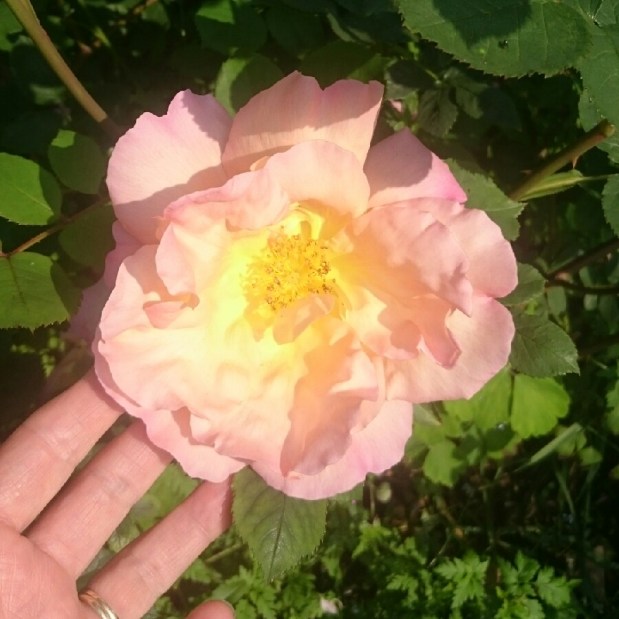
Today is Friday, April 21, and my roses continue to explode in bloom (’tis the season here in the Southeast, I know some of you haven’t even gotten all your spring blossoms yet). I’ve been enjoying sniffing each one and smelling the subtle differences in their scents. Some are more fruity, some are more musky, some are so strongly “rosy” that it’s all I smell.

David Austin English Rose "Fighting Temeraire"; image from www.gardentags.com
David Austin English Rose “Fighting Temeraire”; image from http://www.gardentags.com

This past Monday, I posted another “Counterpoint“, the collaboration between me and Portia of Australian Perfume Junkies. The mystery perfume we analyzed is Jean Patou’s Joy — the original, the one and only Joy. If you haven’t read it yet, please check it out! I really love these projects.

In other news, the community project at another favorite blog, “Now Smell This“, is to wear a spring floral fragrance or other fragrance that reminds you of spring. I’m ready, bring it! I have so many spring florals, it’s not even funny. Now I just have to decide which of many to wear today. I think I’ll go with a newer acquisition, 4160 Tuesdays’ Both Sides of Clouds in extrait strength, the one that earned me compliments from a checkout cashier last week!

What is your favorite spring floral fragrance if you have one?

Counterpoint: Jean Patou’s Joy

Counterpoint: Jean Patou’s Joy

Welcome to a monthly collaboration new for 2023! Portia Turbo of Australian Perfume Junkies and I had so much fun doing “Scent Semantics” with some other fragrance bloggers in 2022 that we decided to launch TWO regular features as a new collaboration this year. The first, which we plan to post on the first Monday of each month, is “Notes on Notes“, in which we choose one note and write about it however the spirit moves us; last month’s Note was on galbanum. This second feature is “Counterpoint“, in which we ask ourselves the same handful of questions about a single fragrance and post our separate thoughts on it, on the third Monday of each month. We’re still experimenting with format, so comments on that are welcome too!

This month’s Counterpoint fragrance is Jean Patou’s Joy (we shall ignore the imposter Dior launched in 2018 after acquiring the name and the brand). Jean Patou was one of the great designers and couturiers of pre World War 2 Europe, with his own couture house. Joy was launched in 1930 at the outset of the Great Depression, apparently so that M. Patou’s haute couture clients could still enjoy something created by him even if they couldn’t buy his dresses any more. The true creator, of course, was the perfumer; in this case, Henri Alméras.

Joy was famously promoted as the “costliest perfume in the world”, which was probably a marketing ploy but also reflected the high quality and cost of its ingredients, including absolutes made from jasmine and roses from Grasse. It was also meant to compete with Chanel No.5 as a luxury perfume. They share some qualities and notes, but each is distinct from the other, and instantly recognizable to many.

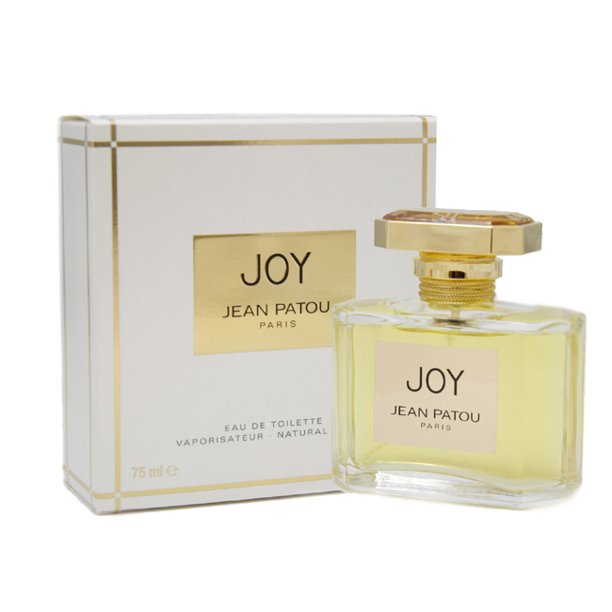
The fragrance "Joy" by Jean Patou
Jean Patou’s Joy; image from Portia at Australian Perfume Junkies

1. How did you first encounter Joy, and what was your first impression?

Old Herbaceous: I first tried Joy after I had gone down the rabbit-hole of this fragrance hobby. I knew it was one of the 20th century’s most legendary fragrances and that my perfume education would be incomplete if I didn’t try it. I found a tester of the eau de toilette at a very reasonable price, so I took the plunge and bought it blind.

My first impression was kind of “meh.” It was okay but I didn’t like it as much as the Chanels I already had, for example, or some of the more exciting new fragrances I was trying. It felt a bit old-fashioned, more than the Chanels did, and I couldn’t recognize its separate notes. As my nose became more educated, though, and I was trying more different kinds of fragrances, I came to like Joy better.

Portia: Honestly I have no memory of first smelling Joy by Patou. It seemed to be around in my childhood. It was definitely work by my Mum at some point and by various Aunts and friends Mums. There is no one specific image or memory I can conjure of my early encounters though. 

When I started buying vintages I was so unaware of exactly how it should smell I sent a couple of samples around the world for confirmation and bought samples from Posh Peasant for comparison. So I’m taking my first vintage splash bottle as if it was the first time I smelled it. The only memory I have of that was being overwhelmed by this extraordinary scent. Eye-rollingly gorgeous stuff, I think I bought about a dozen bottles so I’d never be without it again, mainly vintage parfums and a couple of those 45ml EdT or EdP.

2. How would you describe the development of Joy?

Portia: Today I’m wearing both the vintage EdP and vintage parfum. I’m not sure exactly the years but the picture might give you an idea.

Opening is sharp white flowers, aldehydes and a swirl of ylang. It’s rich, plush and sumptuous. I know Joy is supposed to be rose and white floweer but the roses take a far back seat on the bus for ages before they start to become a serious contender. Even when they do make their play it’s only as a backup not the main event.

What I do smell as we hit the heart is fruit. Not that modern super sweet candy-ised fruit but that vintage tinned fruit salad. Yeah, it’s sweet but more robust, less headache inducing.

There is also a lovely, stemmy green note that could be hyacinth and it borders on torn twig. It’s verdant but also bitter and gives a lovely counterpoint to the bouquet and fruit.

Hiding deep below is also a little growly tiger and breathy, sweet jasmine.

As the fragrance heads towards dry down, the woods and animalics become more pronounced. Not dirty or ass-ish but smoothly skin-like, me but so much better.

Old Herbaceous: The notes listed for the original Joy are: tuberose, rose, ylang-ylang, aldehydes, pear, and green notes. The heart notes include jasmine and iris root. The base has notes of musk, sandalwood, and, in the vintage, civet. The version I have is the eau de toilette and it dates to 2016. Fragrantica lists this version’s notes as: Top notes — Bulgarian Rose, Ylang-Ylang and Tuberose; middle notes — Jasmine and May Rose; base notes — Musk and Sandalwood.

I think there are still some aldehydes in the opening, even if no longer listed, to give it some lift. There’s a pleasant soapiness to Joy that I associate with aldehydes; and I think they are the cause of so many people feeling that Joy is old-fashioned. I smell the ylang-ylang more than I do the other floral top notes, and then the jasmine arrives. It isn’t overpowering but it is very evident, much more so than the rose notes. I don’t smell any iris, root or bloom, at all, so that may not have become part of the modern EDT. It’s not quite as abstract a flower as Chanel No.5, but it is in that same vein. Even in EDT format, Joy has good longevity and sillage. A little goes a long way, given how dominant jasmine is. The final stage of this modern Joy on my skin is all soft sandalwood and white musk, like expensive soap.

Jean Patou’s Joy eau de toilette

3. Do you or will you wear Joy regularly? For what occasions or seasons?

Old Herbaceous: I don’t think I’ll wear Joy regularly, but that’s mostly because I now have such a large collection of fragrances that there are only a few I would say I “wear regularly.” Joy definitely gets more love from me than it used to, and it’s in a convenient location, so I do reach for it occasionally. It’s great for church or the office, because if you don’t overspray, it’s quite subtle and ladylike. It’s one of those fragrances that doesn’t jump out at anyone, it just smells very nice. By the same token, if you want your fragrance to make more of an impression, Joy may not be the one to choose that day (or night), unless the parfum has more impact (I haven’t tried that version).

Portia: Joy is so fabulous but rarely gets the spritz, splash ot swipe here. Every so often I get out the Patou box and grab Joy. I’ll wear it and put it back. Then I won’t think of it for months. That doesn’t lessen my love for it but it seems to fit only rarely. 

I’m hoping that enjoying wearing it so much today and yesterday that it might inspire me to wear it more often.

4. Who should/could wear Joy?

Portia: Joy needs a certain amount of preparation if you’re not a regular wearer. It’s big, bold and makes a statement. It’s tenacity is also legendary, so you have to be ready to smell of this iconic beauty for at least half a day. Anyone who chooses Joy is choosing to smell of a fragrance that will not be easily available for us to buy when the bottle runs out. So they are wearing something precious and on it’s way to extinction. That alone tells you something of the wearer. Either they are so wealthy that they can stockpile or such a hedonist that wearing it to the dregs and enjoying every second is better than having it forever. No, I check myself. There are other reasons. Wearing it as a memory scent, to mark special occasions, as a lure or any number of wonderful reasons. 

Really though, anyone who wants to smell spectacular and relive the joy of wearing Joy by Patou before it’s gone forever.

Old Herbaceous: As always, I say anyone who wants to can wear Joy or any other fragrance! Joy does give off a certain demure, ladylike air, at least in EDT form, but that could be deployed to great effect if the wearer isn’t, in fact, demure, ladylike, or even a lady. For myself, I prefer some of the reissued “Collection Heritage” fragrances created by Thomas Fontaine when he was Jean Patou’s head perfumer, especially Chaldée and L’Heure Attendue.

If you want to experience this legendary fragrance, I recommend getting some soon. Dior’s Joy is a pallid successor at best, but all the Jean Patou fragrances are now out of production, since LVMH bought the brand (to the howls of the faithful) and changed its name to just “Patou”. The fragrances are still widely available online and I’m told that Joy was so popular among ladies of my mother’s generation and even beyond that it is often found at estate sales. In fact, when a FiFi award was given in 2000 to the “perfume of the century”, it was given to Joy and NOT to its competitor No.5. So now really is the time to get yourself this small exemplar of 20th century fashion and creativity. I’ll be keeping my eye out for vintage parfum, since that’s the version that has gotten the most rave reviews (including from Luca Turin, who gave it his rare five-star rating) and that Portia finds so alluring.

Have you experienced Joy? What did you think? Has your opinion changed over time, as mine did?

Counter/Point, a monthly blog collaboration