May Melange Marathon: Fragrances That Changed the Field

May Melange Marathon: Fragrances That Changed the Field

We interrupt our regularly scheduled programming, because the following New York Times Style Magazine article popped up in my news feed, and I got totally distracted by it! It is called The Fragrances That Changed the Field, by Aatish Taseer. It starts with a childhood memory, from India, of a first encounter with oudh, and travels a winding path from there through the “Orientalism” of fragrances in the 1970s, to the power statement fragrances of the 1980s, circling back to previous centuries and the use of florals and musks in fragrances. It includes insight from several modern perfumers.

I highly recommend this article! You’ll want to set aside a good block of time to read it. The opening paragraph:

I REMEMBER AS IF it were yesterday that distant afternoon on which I first smelled oudh. I was in my grandmother’s house in Delhi. I was 13, maybe 14. We had a family perfumer, or attarwallah, a man of some refinement, who came to us from Lucknow — a city that is a metonym for high Indo-Islamic culture. We didn’t know the attarwallah’s name, or how he knew to follow us from address to change of address. But he came without fail two or three times a year. A slim, gliding figure, with a mouth reddened from paan, or betel leaf and areca nut, the attarwallah produced his wares from carved bottles of colored glass that he carried in a black leather doctor’s bag. He showed us scents according to which season we were in. So in winter, musk and patchouli; in summer, white-flowered varieties of jasmine — of which there are some 40 odd in India — as well as rose and vetiver. In the monsoon, he brought us mitti attar, which imitates the smell of parched earth exhaling after the first rain (“mitti” means “mud” in Hindi). The perfumes came from the medieval Indian town of Kannauj, which is a 75-mile drive west of Lucknow and which, like its French counterpart, Grasse, has a tradition of perfume manufacturing several centuries old. Once he had drawn his perfume out on white cotton buds at the tips of long, thin sticks, the attarwallah lingered over his customers, telling stories of the various scents and reciting the odd romantic couplet of Urdu poetry.

If that doesn’t intrigue you, as a person interested in fragrance, I don’t know what will! Enjoy. BTW, my scent of the day today was Cristalle, and I’ll write about it tomorrow instead.

Featured image from baystreetex.com.

May Melange Marathon: White Peacock Lily

May Melange Marathon: White Peacock Lily

D.S. & Durga is a niche brand I haven’t experienced very much, partly because of their price point (high, even for samples). But when I had an opportunity to buy a reasonably priced decant of White Peacock Lily, I jumped at it, because it sounded so intriguing when it was launched in 2016. It is indeed a very lovely lily-focused fragrance. Its notes include: Top notes of Oleander, Cabreuva Rouge, and Grapefruit Pith; middle notes of White Lily, Egyptian Jasmine, Cream and “Alabaster Violet” (which I assume means white violet); base notes of Ambrette (Musk Mallow), Vanilla, and Fog. The perfumer, D.S. of D.S. & Durga, also mentions on the website that it has notes of bergamot, melon, and rose Otto.

One thing I like about the brand’s website is that each fragrance comes with detailed “liner notes”, describing the inspiration for it, with references to literature, music, etc. The liner notes for White Peacock Lily state:

The piece that inspired this perfume is called “The White Peacock” by Fiona Macleod — a Scottish woman famous throughout the highlands for her dreamy works—and set to music by Griffes. It is one of the few tone poems based on an actual poem. The music, scored for a small orchestra, takes direction from the words. Mercurial/magic harps, winding strings, quirky brass horns, and the comical buzz of clarinets describe the beautifully soft language: “cliffs of basalt, fronds of cactus, where the bulbul singeth, cream-white poppies.” In Griffes music, the listener can hear the cream white poppies, the sweeping seas of flowers, and most important the silent noble glide of the grand bird that floats above the fields of flowers.

The composer mentioned is unfamiliar to me: Charles Tomlinson Griffes. Sadly, he died of pneumonia at the age of 35, at the outset of a very promising career, in 1920 at the height of the last century’s global pandemic, influenza. Apparently one of a few of his works that are still performed is “The White Peacock”, inspiration for today’s “May Melange Marathon” fragrance.

Continue reading
May Melange Marathon: La Colle Noire

May Melange Marathon: La Colle Noire

Happy May Day, and welcome to the May Melange Marathon! In previous years, I have written blogging marathons in the month of May, celebrating the lovely lily of the valley in a “May Muguet Marathon“, and my beloved roses in a “Roses de Mai Marathon.” This year, I wanted to write about a number of the green fragrances I love, but I didn’t think I had enough to post about one daily for 31 days. Also, I have some new (to me) muguet and rose fragrances. So the solution is to go with the theme of “April showers bring May flowers” and write about a melange of scents that evoke different aspects of a garden, with a mix of florals and greens.

First up: Christian Dior’s La Colle Noire. Launched in 2016, it is named for the Provence estate of designer Christian Dior, outside the legendary perfume city of Grasse. One of the reasons that Grasse became so important in perfumery is the abundance and quality of the roses that are grown there for their essential oil, especially the “Rose de Mai”, or centifolia rose, also known as the Provence rose. Perfumer Francois Demachy wrote of La Colle Noire:

“In the springtime, the Centifolia Rose takes over the garden of La Colle Noire, Christian Dior’s beloved home in the Grasse region. It is an extraordinary time, when the flower’s plump, honeyed and fruity scent lingers in the air. This fragrance is an ode to that magical place and the unique rose that grows in the land of my childhood.”

Continue reading

Fragrance as a Source of Comfort in Trying Times

www.townandcountrymag.com/style/beauty-products/a36166476/mood-boosting-fragrance/

This just in, from Town and Country magazine.

Perfume Chat Room, April 23

Perfume Chat Room, April 23

Welcome to the weekly Perfume Chat Room, perfumistas! I envision this chat room as a weekly drop-in spot online, where readers may ask questions, suggest fragrances, tell others their SOTD, comment on new releases or old favorites, and respond to each other. The perennial theme is fragrance, but we can interpret that broadly. This is meant to be a kind space, so please try not to give or take offense, and let’s all agree to disagree when opinions differ. In fragrance as in life, your mileage may vary! YMMV.

Today is Friday, April 23, and I have a new, fragrant tree to plant! It is called a “buckwheat tree”, it is native to the Southeast, and this particular variety has pink flowers. They’re very fragrant, and I’m having fun deciding where to plant it so we can enjoy its fragrance. Luckily, it doesn’t get very large, so I have options.

I’ve been on a bit of a vintage kick lately; I just got a small bottle of Paco Rabanne’s Metal, which I quite like. It’s a green chypre floral that launched in 1979. Fragrantica lists its notes as follows: top notes are Hyacinth, Aldehydes, Green Notes, Basil and Lemon; middle notes are Lily-of-the-Valley, iris, Jasmine, Cyclamen, Rose, Ylang-Ylang and Tuberose; base notes are Oakmoss, Vetiver, Musk, Amber and Sandalwood.

I have some new green fragrances to review and also a couple of new LOTV/muguet fragrances, so my “May Marathon” will probably be a melange. Maybe that’s what I’ll call it: “May Melange Marathon”! What do you think?

Featured image: Paco Rabanne dress, 1967, collection of the Metropolitan Museum of Art.

Perfume Chat Room, April 16

Perfume Chat Room, April 16

Welcome to the weekly Perfume Chat Room, perfumistas! I envision this chat room as a weekly drop-in spot online, where readers may ask questions, suggest fragrances, tell others their SOTD, comment on new releases or old favorites, and respond to each other. The perennial theme is fragrance, but we can interpret that broadly. This is meant to be a kind space, so please try not to give or take offense, and let’s all agree to disagree when opinions differ. In fragrance as in life, your mileage may vary! YMMV.

Today is Friday, April 16, and spring flowers are slowly giving way to summer blossoms in my garden. I have several roses that have started to bloom; they are almost all very fragrant, as most of the ones I grow are David Austin English Roses, which he hybridized over decades to regain the strong scent and old-fashioned form of the Old Roses. In the 20th century, many hybridizers bred for color and shape, which gave us so many beautiful, classic hybrid tea roses like Chrysler, John F. Kennedy, Peace, etc., but they weren’t as fragrant as their forebears. Other hybridizers bred roses for large-scale landscaping, like the Knockout Roses, but they are barely fragrant at all. So Mr. Austin’s goal was to take some of the best qualities of 20th century roses, like disease resistance, innovative colors, and repeat blooming periods, and marry them to the shapes and scents of old classics like the “Old Roses”.

This week, I was delighted to get in the mail my long-awaited sample of a new, soon-to-be-released perfume from Parfums Dusita, which is the subject currently of a naming contest! Perfumer and brand founder Pissara Umavijani invited members of the Eau My Soul group on Facebook to suggest perfume notes we’d like to see combined, then she chose from among those and created a fragrance. Now members who took part in suggesting the notes have been sent a generous sample of the unnamed fragrance and we get to submit up to three suggestions for names! The winner will get a large bottle of the fragrance.

I just love this project. Ms. Umavijani has done something like it before in 2019, when she launched what became Splendiris, a name I love and a very beautiful fragrance. I think that fragrance was the subject of a similar contest for readers of Fragrantica, if I recall correctly.

This new scent has notes of: petit grain, Rose Damascena, tuberose absolute, white freesia, Jasmine Grandiflora, oak wood, oakmoss absolute, sandalwood, vanilla absolute, and patchouli. I haven’t tried it yet as I wanted to wait until the weekend when I could focus more on it and less on work. Don’t those notes sound gorgeous, especially if (like me) you like florals?

P.S. WordPress has just informed me that this is my 500th post on Serenity Now: Scents & Sensibilities! Wow, that feels like a lot, but it has been so much fun and still is. Thanks for joining me on this blogging journey!

Perfume Chat Room, April 2

Perfume Chat Room, April 2

Welcome to the weekly Perfume Chat Room, perfumistas! I envision this chat room as a weekly drop-in spot online, where readers may ask questions, suggest fragrances, tell others their SOTD, comment on new releases or old favorites, and respond to each other. The perennial theme is fragrance, but we can interpret that broadly. This is meant to be a kind space, so please try not to give or take offense, and let’s all agree to disagree when opinions differ. In fragrance as in life, your mileage may vary! YMMV.

Today is Friday, April 2, and it is Good Friday, for those who celebrate Easter. I love Easter! Today is a solemn day in the Christian church, but it is also the start of one of my favorite holiday weekends, during one of my favorite times of year. In my part of the US, we are enjoying a full outbreak of spring, with daffodils, tulips, and other bulbs blooming in profusion, flowering trees in full blossom, green leaves tipping the tree branches, and longer days of sunshine. The fact that this week has been unusually cool and wet is letting me make up for some lost time in planting seeds that prefer to germinate in colder temperatures. There’s always a silver lining! And today, while chillier than usual, is bright and sunny.

My lilies of the valley are getting ready to bloom outdoors, which is always an opportunity for me to compare muguet-centered fragrances with the real thing. I also have a potted Easter lily for indoors, and some forced hyacinths to bring inside, so my weekend will be filled with the scents of spring. Now I just have to decide which fragrances to wear myself! As many of you know, I lean strongly toward greens and florals, which work well for spring and Easter. I’m sure my perennial favorite, Ostara, will make an appearance this weekend.

I’m happy that all three of our kids will be home for the holiday; one has also invited a friend. Our church has set up for outdoor services, with groups of seats appropriately spaced, and other safety protocols. I’m looking forward to that; they did that last week for Palm Sunday, and it was very meaningful to be back onsite, even outside. I’ll cook the usual Easter Sunday feast, with roast lamb and spring asparagus plus other assorted side dishes. If you celebrate Easter, do you have any special plans?

Perfume Chat Room, February 12

Perfume Chat Room, February 12

Welcome to the weekly Perfume Chat Room, perfumistas! I envision this chat room as a weekly drop-in spot online, where readers may ask questions, suggest fragrances, tell others their SOTD, comment on new releases or old favorites, and respond to each other. The perennial theme is fragrance, but we can interpret that broadly. This is meant to be a kind space, so please try not to give or take offense, and let’s all agree to disagree when opinions differ. In fragrance as in life, your mileage may vary! YMMV.

Today is Friday, February 12, and here in the USA, Monday will be the Presidents’ Day holiday. Sunday brings us Valentine’s Day, and today is the official day of Lunar New Year. We are officially in the Year of the Ox! Now Smell This has a community project this week to wear a fragrance that evokes the traditional qualities of the Ox: dependable, diligent, reliable, etc. That had me stumped until my eye fell upon a Serge Lutens sample of La Religieuse, so that’s my SOTD. I know others have had less positive experiences with nuns, but I went to a Catholic school in Brussels for two years, run by nuns, and they were lovely, so I have positive associations with “les religieuses”.

I’ve just found out about a new documentary that follows perfumer Francois Demachy, called “Nose.” I look forward to seeing it! Do any of you have special celebrations ahead for any of these holidays or other festive occasions? Any special fragrances in mind for them?

How To Make Sense of Scents

How To Make Sense of Scents

The New Yorker magazine, renowned home of literary legends, has published a piece called “How To Make Sense of Scents”, by staff writer Rachel Syme. She reads Fragrantica! Like many fragheads, she traces her interest in perfume back to childhood and her mother’s favorite scents, which included Anais Anais and Poison. She became a hoarder of perfume samples from Surrender to Chance and The Perfumed Court, like many of us.

Ms. Syme’s piece discusses the way that most of us lack the vocabulary to describe scents accurately and consistently. She also highlights a recently published book (October 2020), Harold McGee’s “Nose Dive: A Field Guide to the World’s Smells” (Penguin Press). McGee is actually a food scientist, so his observations range from the molecular to deviled eggs, with many stops between.

Another 2020 book Ms. Syme discusses is “Smells: A Cultural History of Odours in Early Modern Times” (Polity), by French professor and historian Robert Muchembled. She sums up their different approaches:

Where McGee seeks a common vocabulary for exploring the osmocosm, Muchembled reminds us that the variables of time and place may defy a truly shared language. What we smell depends on what’s in vogue and what’s valued—on what cultural forces happen to be swirling in the air.

She ties Muchembled’s discussion of the impact of plague epidemics of the Middle Ages on the populaces’ relationship to the sense of smell, to the current pandemic in which we face a deadly virus that spreads largely through aerosolized forms and can also deprive sufferers of their sense of smell, temporarily or permanently.

I will have to seek out more of Ms. Syme’s writing! I’ve already bought the Kindle version of McGee’s book and will likely do the same with Muchembled’s tome (as an incorrigible book hoarder, I try to buy most books in digital form these days). After all, who doesn’t love a writer who voices these scentiments:

I also have a new appreciation for the elusive quest to track down smells: while there is an undeniable appeal to pursuing a “proper language” for discussing the osmocosm, there is also something to be gained by accepting that much of the pleasure of nasal perception is untranslatable. When we are at last able to swoon together again, unmasked and unmoored, over lilacs or hot brioche, what we will really be sharing is secret reverie.

Featured image: Photograph by Delaney Allen for The New Yorker.

Fleeting — Scents in Colour

Fleeting — Scents in Colour

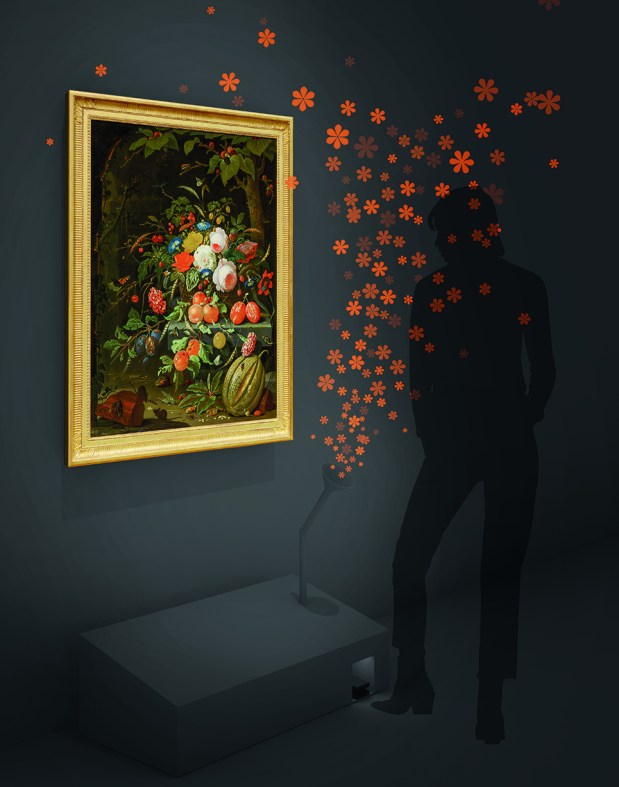
One of my favorite fragrance blogs, Now Smell This, posted a brief mention of an upcoming art exhibit at the Mauritshuis museum in Holland. It is called “Fleeting — Scents in Colour”, and it will pair artworks with the imagined scents of what is portrayed. Apparently, some of those scents will be pleasant, and others — not so much. But what a great idea!

I think fragrance is under-utilized as a partner to other arts, but I understand why — it is hard to use in live performance spaces, for example, unless one decided to have one dominant smell, because how do you clear one out of the air to make room for another? And some people could be allergic, even if it just makes them sneeze. Pairing more static artworks like paintings with fragrance one can smell in limited space seems more feasible, though I wonder how this will work in the ongoing pandemic of airborne COVID-19.

Kudos to the Mauritshuis for even trying! Here is their description:

Fleeting – Scents in Colour

11 February 2021 – 6 June 2021 – Scented flowers and perfumes, foul-smelling canals and unpleasant body odours, smell and well-being, new aromas from far-away lands (spices, tobacco, coffee and tea), the disappearing smells of the bleaching fields, old crafts and more. Can life in the seventeenth century be captured in smell? How are smell (and scent) portrayed? What significance did people attach to smell? And what aromatic connotations do artworks have? In this exhibition, the Mauritshuis will undertake smell-historical research. In the vicinity of the art, various historic scents will be prepared to bring the paintings in the exhibition to life.

This effort reminds me of my 2019 trip to Venice (sigh — no travel for me in 2020), specifically my visit to that city’s Palazzo Mocenigo, which houses a perfume museum. I miss traveling, and I miss my “perfume tourism”, but I was so lucky to have been able to take more than one lovely trip with my husband in 2019. While 2020 was a lost year for travel, other than one much-needed week at a beach to which we could drive, my fingers are crossed for at least the second half of 2021. And since he won’t be traveling for work much this year, and who knows what international restrictions will be in place, we’ll probably get more creative in our travels and explore more of our own large and beautiful country.

Do you engage in “perfume tourism”, by which I mean seeking out perfume-related sites and stores in places you visit, and maybe bringing back perfume souvenirs?