Scented Advent, December 17

Scented Advent, December 17

Another pleasant surprise today for my Advent SOTD: Carner Barcelona’s El Born, which I’ve worn before and like very much. I’ve also stayed in the neighborhood El Born, for which the fragrance is named, and it is a completely charming, fascinating part of Barcelona.
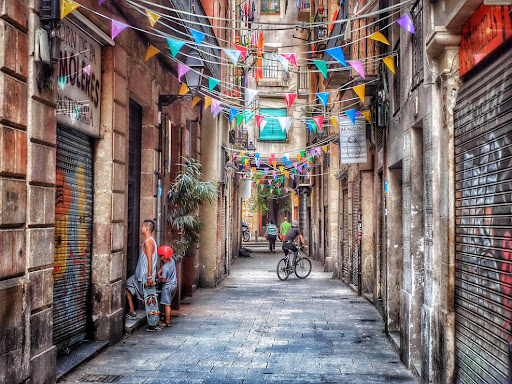
Medieval street in El Born neighborhood, Barcelona
Street in El Born, Barcelona; image from barcelonaconnect.com.

So, first, the neighborhood. El Born is one of the medieval neighborhoods of Barcelona, full of tiny, narrow streets that barely fit one car or aren’t wide enough for any cars at all! It is now a trendy, funky city neighborhood full of art galleries, restaurants, boutiques, museums, but also very family-friendly, containing residential apartments, food stores, pastry shops, schools, and parks. Its most famous structures are the Basilica of Santa Maria del Mar, which signals its proximity to Barcelona’s waterfront (the waterfront is now in Barceloneta, ten minutes away; the church used to be on the actual waterfront before Barcelona was expanded, and its parish consisted largely of fishermen, dockworkers, and their families); the Picasso Museum, housed in five combined medieval palaces or large townhouses (like the “hotels particuliers” of medieval Paris); the El Born Centre Cultural, a fascinating museum about the neighborhood’s history, in a restored covered market; and the Parc de la Ciutadella, a park built on the site of a demolished citadel fort that had been built in 1714 by King Philip V of Spain to control Barcelona after conquering it during the War of Spanish Succession. The fort was a hated tool and symbol of conquest and military occupation, and it was demolished in the mid-19th century during a rare period of Barcelonan independence.

“El Born” is traditionally understood to be the medieval district south of the street Carrer de la Princesa and east of the “Barri Gotic”, or Gothic Quarter, starting at the Via Laietana. However, nowadays many use the name to refer to the area that is technically a neighborhood called “La Ribera”, between Carrer de la Princesa and Barcelona’s legendary Palau de la Musica (“Palace of Music”), which includes more residential streets as well as the Mercat de Santa Caterina, a restored covered food market full of Catalan epicurean delights. Can you tell that I love Barcelona? I’ve been lucky enough to visit a few times, thanks to my husband’s work that used to take him there once or twice a year, pre-pandemic, and it is now one of my favorite cities. It is also home to some very happy perfume hunting-grounds, by the way, where I have delighted in serious “perfume tourism” in niche boutiques and perfumeries.

Carner Barcelona is a fragrance brand that was launched in 2010 by Sara Carner. It aims to capture the spirit of Barcelona and Catalonia in its fragrances: “We are captivated by Barcelona’s Mediterranean soul; its architecture, culture and the unique way in which history merges with the contemporary lifestyle and the vitality of its people.” El Born is part of its original collection and was launched in 2014. It is described as an “amber floral”, and that’s accurate — I would say it is mostly amber, slightly floral. The notes listed on the brand website are: Sicilian Lemon, Calabrian Bergamot, Angelica, Honey (top); Fig, Heliotrope, Benzoin from Laos, Egyptian Jasmine (middle); and Madagascan Vanilla Absolute, Peru Balsam, Australian Sandalwood, Musk (base).

Right away, when I spray El Born on my skin, I smell the honey and angelica top notes. They provide a soft, warm, but slightly herbal sweetness: a bit like caramel but not sugary, if that makes sense. It is more like clover honey, i.e. honey from bees that have feasted on clover nectar. There is a brief spark of citrus at the start, but it doesn’t linger. As the middle phase develops, the sweetness is carried by the fig and benzoin, with heliotrope contributing a subtle floral dimension. I don’t really pick up the jasmine at all, and I’m okay with that! The other accords are very soft, and the honey lingers among them. The vanilla accord joins in pretty early in this fragrance’s progression, and it’s just the kind of vanilla I like — more botanical than gourmand. Balsam, sandalwood, and musk notes in the base carry forward the soft warmth that characterizes all stages of El Born.

El Born, the fragrance, is just as ingratiating as El Born, the neighborhood. I should note, however, that the actual El Born neighborhood does NOT smell as wonderful as this fragrance! It has that damp, stony smell that many medieval neighborhoods have, sometimes with a soupçon of sewer due to ancient drains. Never mind! It’s a truly delightful place to visit, with wonderful food, restaurants that serve meals until very late in the night (late per this appreciative American tourist’s POV), interesting things to see around every corner (and there are LOTS of corners in El Born).

The photo below isn’t specific to El Born, but it demonstrates (again) the incredible sense of style and color that characterizes Barcelona, and it comes from the city’s annual competition to design holiday lights for some of the major city streets (one of which is Via Laietana, the western edge of El Born). This shows lights in the Diagonal neighborhood:

Christmas lights in Barcelona
Barcelona. Christmas lights, Diagonal.

Now really, if those lights don’t put you in a holiday frame of mind, as we enter the last week of Advent, what will? Have you visited Barcelona, or tried any of Carner Barcelona’s scents?
Scented Advent, December 16

Scented Advent, December 16

Today’s Advent SOTD is Dior’s Gris Dior, created by François Demachy and originally launched in 2013 as Gris Montaigne. It is a very beautiful, modern, rose chypre, with the classic bergamot opening, floral heart of rose and jasmine, and base notes that include oakmoss and patchouli. The latter are used with a light hand, though, and are joined in the base by cedar, amber, and sandalwood.

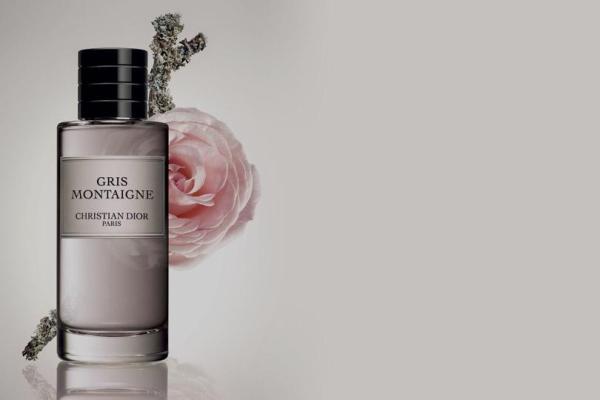
The name Gris Dior refers to Maison Dior’s signature shade of pearl grey, which is one of my favorite colors. It is so much more than a combination of white and black; it has a soupçon of lavender and even pink. It is one of the softest, most elegant colors I can imagine; and this fragrance evokes it to perfection. The photo below, borrowed from a favorite blog, Bois de Jasmin, is of the earlier version, Gris Montaigne, but it captures the idea of the colors so perfectly (as well as the pink rose and the grey oakmoss) I wanted to share it:

Bottle of Christian Dior fragrance Gris Montaigne with pink rose, grey background
Dior’s Gris Montaigne; image from boisdejasmin.com.

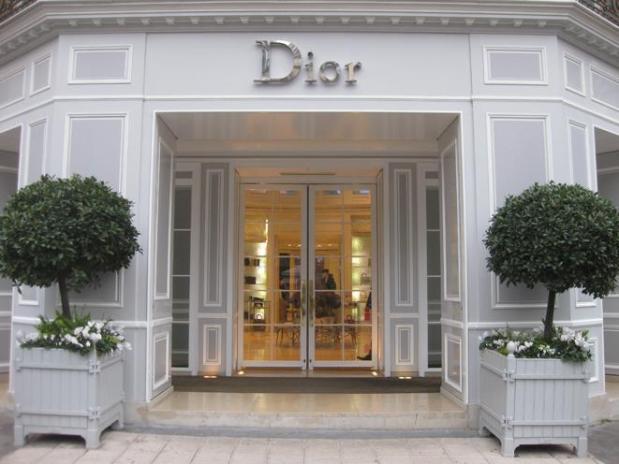
Interestingly, the paint manufacturer Benjamin Moore (whose colors are exceptional, imho) sells a paint color called “Dior Grey”, but it is darker than what I think of as Dior grey, although it does align more closely with the darker accent colors on Dior’s flagship store on the Avenue Montaigne:

Facade of Dior flagship store in Paris
Dior’s flagship store, Avenue Montaigne, Paris; image from kafkaesqueblog.com.

Another favorite blog, Kafkaesque, had this review of the original Gris Montaigne, with some charming reminiscences of the actual store, which is painted in the house’s signature pearl grey. (I had a more positive view of the fragrance than Kafkaesque did; she loved the opening stages but was disappointed in the drydown). In couture, the combination of that pearl grey and pale pink was a favorite of M. Dior, dating back apparently to his childhood home, a rose-colored villa set above grey rocks. I have that combination in a favorite set of scarf and matching gloves in soft pink and grey cashmere (not Dior!); it’s such a pretty, feminine color scheme, and I’m now reminded to pull those out now that the weather is cooler. I can spray them with Gris Dior!

My experience with Gris Dior has been very satisfactory so far; I’m enjoying the drydown, as it gets warmer and cozier after the bright bergamot opening and soft floral heart. The use of oakmoss here is very clever; it evokes one of the most legendary chypre fragrances of all time, the original Miss Dior, named for M. Dior’s sister Catherine, a heroine of the French Resistance. It also lends the grey tones to the pale pink of the rose and jasmine floral accords in Gris Dior, because it is so lightly blended in that one doesn’t get the full force of what many perceive as the dark, inky influence of oakmoss in fragrance. Nevertheless, it is definitely there. Kafkaesque was troubled by the purple patchouli she smelled as dominating the base, but my nose doesn’t really pick that up. The amber and sandalwood accords in the base, undergirded by cedar, add to its warmth and soften the oakmoss.

Really, Gris Dior is a disarming and elegant fragrance that I could see wearing more often. Perfect for wearing to an office, and also lovely for a quiet, candlelit dinner out with a loved one. It is part of Dior’s “Collection Privèe”, and priced accordingly. Have you tried it, or any others from that collection?

Scented Advent, December 15

Scented Advent, December 15

What a pleasure, to open today’s Advent calendar drawer and find a sample of Ormonde Jayne’s Ormonde Woman! I’ve tried it before, from a discovery set, and liked it very much, but I’ve bought other Ormonde Jayne scents in full bottles (my favorite being Ta’if), so hadn’t returned recently to this one. Launched in 2002, it was created, like all the Ormonde Jayne signature fragrances, by perfumer Geza Schoen, working with the brand’s founder Linda Pilkington. It is woody and aromatic; the brand’s own description is as follows:

Beginning and ending with the unique scent of Black Hemlock absolute – rarely used in such luscious quality and quantity – this utterly hypnotic, unconventional and mysterious woody essence is combined with jasmine and violet absolute to create a dusky, seductive perfume.

The notes listed on the brand’s website are: Cardamom, Coriander and Grass Oil (top); Black Hemlock, Violet and Jasmine Absolute (heart); and Vetiver, Cedar Wood, Amber and Sandalwood (base). This is a brilliantly structured and executed fragrance. The top notes are very clear and distinct, though well-blended; to my nose, the grass oil is dominant, but then the cardamom and coriander become more evident. As the heart phase emerges and the top notes step back, one can clearly smell both violet and jasmine absolute, with a greenish, woody, undercurrent that I assume is the black hemlock. This middle phase lasts a good while, at least an hour; to my nose, the most lasting middle note is the violet.

Luca Turin and Tania Sanchez awarded Ormonde Woman five stars in their book “Perfumes: The A-Z Guide”, and described it as a “forest chypre.” Comparing it to Chanel’s Bois des Iles, Ms. Sanchez noted that it has “all the sophistication … but none of the sleepy comfort.” Instead, she felt it evoked “the haunting, outdoors witchiness of tall pines leaning into the night.” I agree with the witchiness, but I hesitate to use the word “pines” in relation to Ormonde Woman, lest a reader think it smells like air freshener or floor cleaner! It certainly does not. It does smell evergreenish, to coin a word; but these are living evergreens, rising from a forest floor dotted with violets. It calls to mind a sight often seen on the highways and byways of the Southeast: pine woods in which yellow Carolina jessamine has run wild, so that its vining, yellow flowers fling themselves all over the dark green branches of the pine trees in early spring.

Yellow jessamine flowering vine on pine trees in Georgia
Carolina jessamine in pine trees; image from usinggeorgianativeplants.blogspot.com

Another vine that does this is the wisteria vine, which smells to me more like the violets featured in Ormonde Woman, though not in its native American form (varieties of Asian wisteria, which are fragrant, have escaped into the wild and have become invasive in hardwood forests).

As it dries down, Ormonde Woman becomes warmer and woodier. I can smell sandalwood and amber more than cedar and vetiver, and yet there is a dryness to the base that tells me they are present. This is a lovely, sophisticated but approachable fragrance, and I look forward to getting to know it better!

Scented Advent, December 14

Scented Advent, December 14

Another favorite independent perfumer showed up in my fragrance Advent calendar today: Jeffrey Dame, of Dame Perfumery! Jeffrey Dame has had a long career in the cosmetic and fragrance industry; Dame Perfumery, which he co-founded with his son and runs as a family business, launched its first fragrances in 2014. There are several lines within its brand; today’s scent is one of its “Soliflore” oils, Soliflore Orange Flower. The brand website calls the Soliflore line “photorealistic fragrances”, and that’s pretty accurate.

Orange flower blossoms on branch with orange fruit
Orange blossom and orange; image from petalrepublic.com

Soliflore Orange Flower is a light, pretty orange flower, with lemony highlights. I find it less indolic than jasmine or tuberose; the lemony aspect lightens and brightens it. Fragrance writer Ida Meister chose it as a favorite in a Fragrantica piece some years ago, on Dame Perfumery’s “Best In Show“:

Dame Perfumery Soliflore Orange Flower was a revelation to me from the first wearing. So very dense and fulsome, bursting initially with that juicy yet faintly mentholated undertone which renders it photorealistic. It recalls the manner in which tuberose and other white flowers often echo this particular aspect before waxing imminently floral and expansive.

After the juice, sweet, tangy [bergamot?], subterranean-ly medicinal – comes the indolent indolic: divine decay, sex and death. It is the swan song of orange blossoms: “The silver Swan, who, living, had no Note, when Death approached, unlocked her silent throat.”

Orlando Gibbons, 1611

One of the aspects I like very much about Dame Perfumery and its creations is how user-friendly and budget-friendly they are. Beyond the Soliflores, there is the DAME Artist Collection of perfumes; and also the JD Jeffrey Dame Post-Modern Perfume line. Among the Artist Collection, I really like Black Flower Mexican Vanilla; and in the JD line, I like JD Duality, and most of the others I’ve tried. All are priced very reasonably for their quality and concentration; and when one orders directly from the Dame Perfumery website, the order comes with extra goodies like samples, a discount code, postcards, etc.

Soliflore Orange Flower is of a piece with this approach: straightforward, user-friendly, reasonably priced. It’s not pretending to be anything but a straight-up orange flower fragrance. It would be fun to layer it with other Dame Perfumery creations, like the Eaux de Toilette line.

Do you like soliflore fragrances? Do you ever layer them with other scents?

Scented Advent, December 13

Scented Advent, December 13

Today’s Advent calendar post was slightly delayed because I had to have an early morning appointment with my dentist to investigate an ongoing toothache. Ugh, I hate dental work although I like my dentist very much. Anyway, the SOTD is Rosa Nigra, from the UNUM line of fragrances launched by a lifestyle and artistic brand called Filippo Sorcinelli. Rosa Nigra was released in 2015. The name means “black rose”, but not a single rose note is listed. Fragrantica lists these notes: Artemisia and Anise (top); Peach, Sandalwood and Freesia (heart); Musk, Cashmere Wood, Amber and Vanilla (base). The brand’s website calls this fragrance “an olfactory paraphrase of the Assumption” and says “The Virgin Mary who ascends to heaven ‘in body and soul’: all the materials that compose her call to mind a rose that in reality is not present.”

Purple prose aside, the few commenters on Fragrantica claim to smell the rose that isn’t there. Rosa Nigra also got a favorable review as a “created rose” fragrance on the blog Fragroom. I don’t smell any rose. I do smell the herbal opening notes, artemisia and anise, which I like; I also get the peach and sandalwood heart notes, but no freesia. The drydown smells to me like a kind of mash-up of the listed base notes. It’s quite pleasant, but not distinctive. I don’t get or expect much sillage, as Rosa Nigra comes in an extrait format.

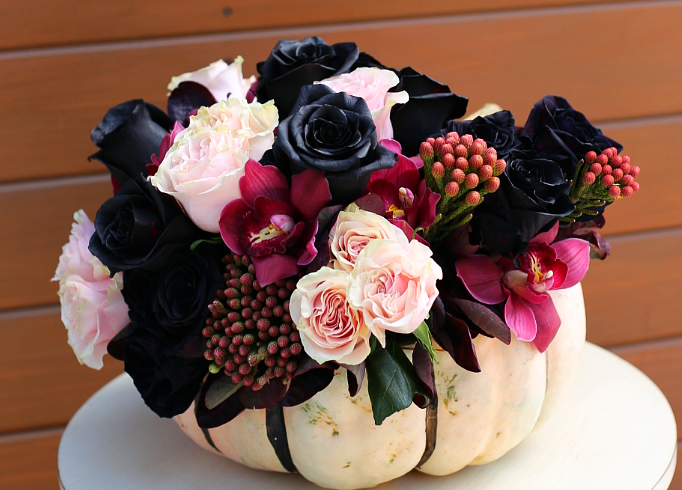
Of course, the name itself may be a giveaway of a fragrant sleight-of-hand, since there is no such thing as a black rose in nature. There are some very dark crimson or burgundy roses, that may even blacken somewhat as their blossoms age, but black roses are as fanciful as blue roses — figments of the imagination. Some florists may dye dark roses with black ink.

Artificially black roses in bouquet
“Black” roses in bouquet; image from orchidrepublic.com.

I like Rosa Nigra but there are so many other, actual rose scents, and other scents with better drydowns, so I won’t be seeking out a full bottle. Have you encountered any of the UNUM fragrances? And do you understand the brand’s prose??

Scented Advent, December 12

Scented Advent, December 12

My Advent calendar surprise today is a sample from a brand I’ve been wanting to try, Maison Trudon. That company has a long history as makers of fine candles, supplying Versailles and cathedrals with famously white, less smoky, beeswax candles, a business that continued through revolutions and restorations. In this century, the company has focused mostly on very high-end, perfumed candles; and in 2017, it began producing perfumes under the simple name “Trudon”, working with noted perfumers such as Lyn Harris, Antoine Lie, and Yann Vasnier.

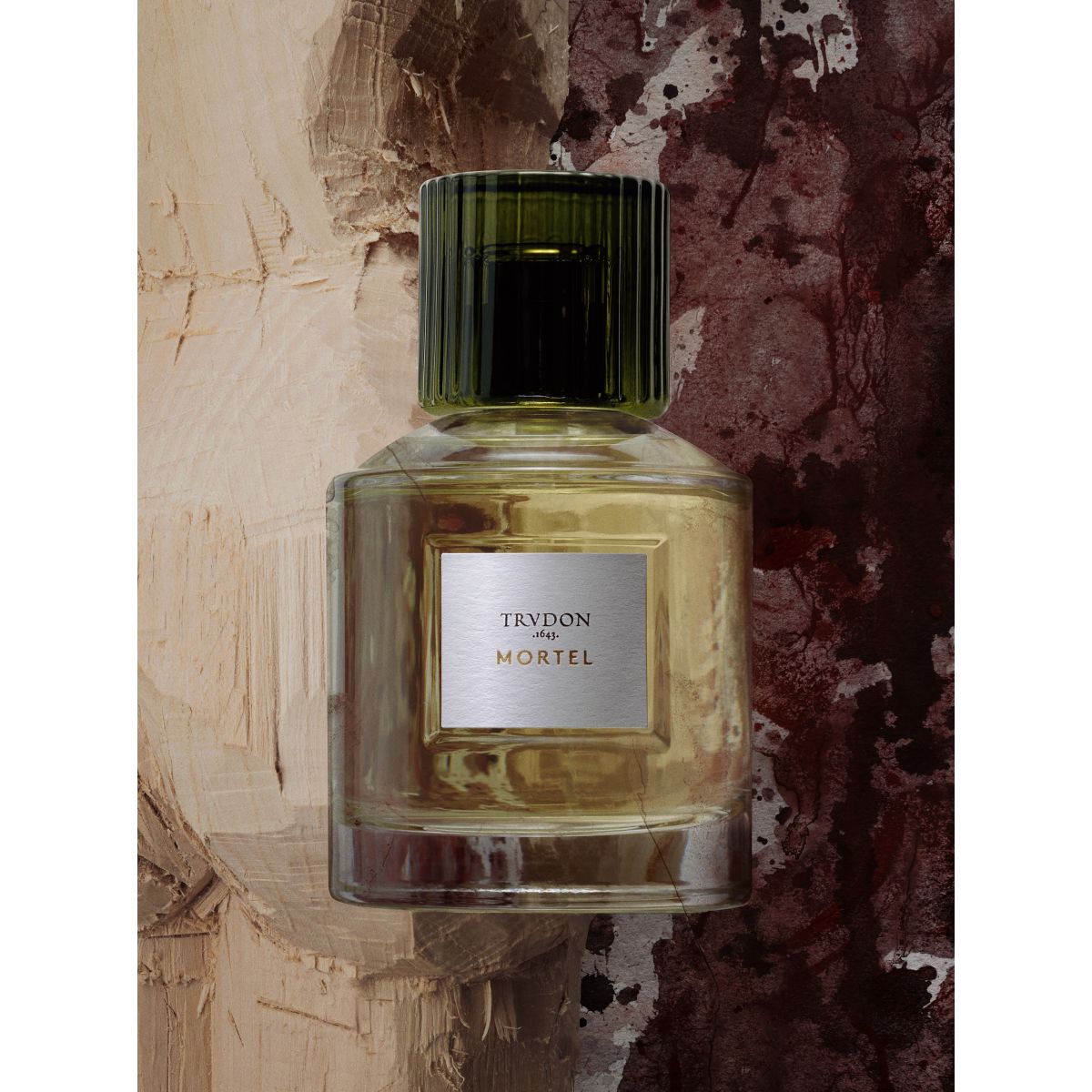
The latter was the creator of today’s scent, Mortel. M. Vasnier has a real gift for accords that involve spices and resins, which is on full display in Mortel. According to the brand’s website, it has notes of: Pimento, Black Pepper (top); Mystikal, Somalian Frankincense (heart); Benzoin Resin, Pure Cistus, and Myrrh (base). Fragrantica also lists nutmeg as a top note, and woody notes in the heart and base. Mystikal is a Givaudan captive molecule that specifically smells like burning incense. Wow, it really does! It doesn’t smell particularly smoky, which I appreciate.

Bottle of Mortel eau de parfum, from Cire Trudon
Mortel, by Cire Trudon; image from brand website.

I’ve written before about the use of incense in traditional Christian services, including the funeral mass for my late mother-in-law. As I wrote there, she absolutely loved Christmas, and I always think of her at this time of year, especially because she had made for us three beautiful pieces of cross-stitched embroidery with depictions of Father Christmas, which we bring out in December. She had just taken up the hobby of counted cross-stitch when I joined the family, and she became a very accomplished needlewoman; her later works had the tiniest stitches, on real linen fabric. I began doing it myself after she showed me how, although I haven’t cross-stitched anything in several years (three children and a full-time job outside the home ensure that there isn’t much time for embroidery). But as I contemplate my own retirement in the next few years, and as my youngest child is no longer even a teenager, I’ve started looking again at the patterns I’ve collected over the years, and organizing my materials, thinking that I’d like to take it up again.

Back to Mortel! The heart phase that really smells like incense and frankincense lasts a good long time. It’s not overpowering as a dabber from a sample vial; if I owned a spray bottle, I would proceed with caution! I cannot emphasize enough how much this stage smells exactly like the fragrant smoke that emanates from a thurible in church. Here’s what I think is very clever, aside from the obvious quality of the materials (which one would expect in a product from a company that has specialized for centuries in creating candles for cathedrals and palaces). The opening of black pepper and pimento is bright and a bit sharp — as if a match has been struck and is flaring up, to ignite a censer. The heart phase is all about incense and frankincense, as if one is smelling the actual incense while it burns in a church or other place of worship (the tradition of using incense in religious rites is observed in Judaism and other ancient religions).

Pope Francis, incense, Roman Catholic mass, statue of Mary and Christ Child.
Pope Francis uses incense to venerate a statue of Mary during Mass at the Verano cemetery in Rome (CNS photo/Paul Haring)

As that dries down, the woody notes emerge, and the impression is that of an old church, whose wooden pews and structures have been so imbued with incense over centuries that the scent still floats on the air when no incense is burning. I’ve smelled that so many times, in many visits to old churches and cathedrals in Europe. Note — Mortel doesn’t have any of the damp, musty smells that can also permeate ancient churches. (A favorite family memory recalls the time when we lived in Brussels, when my sisters and I were children; our parents took us to many historic sites on weekends, making the most of our sojourn in Europe. My little sister, who was about 5 or 6 at the time, as we entered yet another cathedral on one occasion, wailed “Oh, no, not another smelly old church!”). So, to my nose, Mortel traces the progression of incense being used in a church, from the time it is lit to the time when it lingers in the wood and air as a fragrant memory. M. Vasnier himself has described the setting as an artisan’s fiery forge, but there is no doubt that this son of Brittany would know the smell of an ancient church.

Mortel and its evocation of church are especially appropriate today, which is the third Sunday in Advent, also known as “Gaudete Sunday” in more traditional liturgies. Gaudete means “rejoice” in Latin; so this Sunday, sometimes also called “Rose Sunday” because the clergy can wear rose-colored vestments, is an occasion to focus on the most joyful aspects of Advent. It is sometimes symbolized on an Advent wreath by a pink candle.

Advent wreath with colored candles
Advent with candles, including Gaudete pink candle

Have you tried any Trudon fragrances? Any favorites?

Scented Advent, December 11

Scented Advent, December 11

I’m happy to report that today’s Advent calendar SOTD is a bargain beauty! It is Natori, from the brand Natori, in EDP format. Right away upon application, I smell aldehydes, plum, and a plummy rose. It’s interesting that this starts out with a very evident burst of aldehydes, because this fragrance was created in 2009 and I always think of aldehydes as a more vintage perfume note. I think the plum note, also very evident from the start, saves Natori from smelling old-fashioned, because it really doesn’t. The perfumer was Caroline Sabas, who works at Givaudan and has created some other interesting fragrances, such as ELdO’s You or Someone Like You. According to the brand:

A sparkling floral oriental, the NATORI fragrance opens with an effervescent bouquet of fresh rose petals enriched by deep, dark plum notes. The heart is an exotic and alluring hybrid of ylang ylang, purple peony and night blooming jasmine. Slipping languidly over pulse points, black patchouli, amber and a hint of satin musk complete this mysterious and tantalizing fragrance.

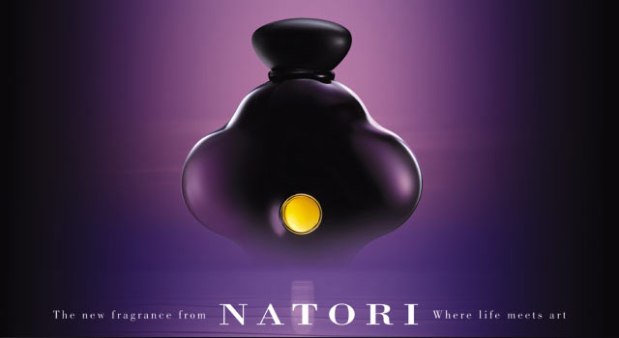
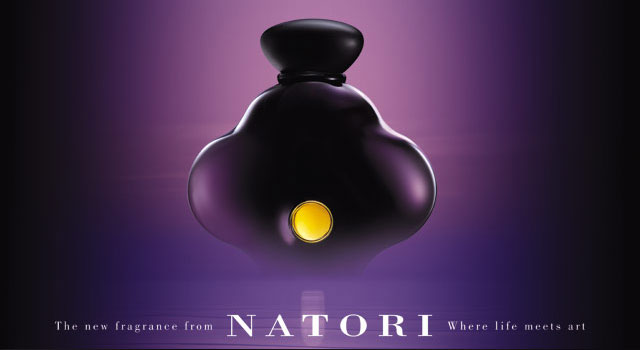
The dominant note in the middle phase is the ylang-ylang, combined with jasmine. Together with the rose and aldehydes, it makes Natori slightly reminiscent, though not a dupe, of Chanel No. 5 and Chanel No. 22. As it dries down, the scent warms on the skin, with amber most evident in the base notes, to my nose. If you like florals, this is a very charming one! The purple bottle, shaped like a lotus blossom, is also very pretty. It is available for quite low prices online, as low as $18 for 100 ml.

Purple bottle of Natori eau de parfum
Natori eau de parfum; image from brand Natori.

I don’t know why, but this fragrance smells to me like a nice, youngish mother, like some of my friends’ mothers when I was growing up, or my late aunt. They wore classic but pretty clothes, nothing too fancy unless they were going into “the City” (meaning New York) for an Occasion, or attending a suburban black-tie event, often at a country club; they wore floor-length tartan kilts for Christmas holiday at-home soirees. They volunteered for everything in our town; they hosted lovely, intimate dinner parties in pretty but unpretentious homes; they liked children and gave hugs. These were women who mostly married young in the 1950s and early 60s, often right after graduating from a “Seven Sisters” women’s college, and started families soon thereafter, so when I was in elementary school and middle school, few of them were even 40 yet; some had just entered their 40s. Some were also friends of my mother, though she was less cuddly and more aloof, certainly with children who weren’t her own. I have fond memories of these women, and Natori is bringing them back.

I’m enjoying Natori, and if you’re in search of a modern floriental, give it a try! I think it would suit women of all ages; it has enough fruitiness to please even an older teenager, unless she is firmly committed to gourmand scents, though it doesn’t quite cross the line into “fruity floral.” I can see this being very office-friendly; it’s not a “statement” fragrance, but it’s very well-made. The Scented Salamander blog had this review when it launched in 2009: “Natori by Josie Natori; Sensual Yet Pointing To No Visible Body Parts.” That reviewer noted a similarity not only to Chanel No. 5, but also to the late, great Joy by Jean Patou.

It’s always fun to find a new “bargain beauty”! Have you tried this one, or any others lately that are new to you?

Scented Advent, December 10

Scented Advent, December 10

Although it’s apparently a cult favorite, I hadn’t previously heard of today’s Advent calendar offering: Child. It was created by Susan Owens for her own use in 1988 and launched as a product available to others in 1990. Fragrantica lists its notes as: Lilac, Magnolia, Vanilla and Citruses (top); Jasmine, Tuberose and Violet (middle); Musk, Woodsy Notes, Mimosa and Rose (base). The Child Perfume website also lists orange flower, which is clearly present right from the start. The original formulation of Child was a roll-on perfume oil, but it is also available as an extrait de parfum. The sample in my Advent calendar is the oil, evident because of the sheen it leaves on my skin when I apply it.

To me, Child smells like a grown-up, more sophisticated Coppertone lotion. I believe Coppertone’s white flower notes are mostly described as orange flower; the fundamental “tropical flower” scent is present in both and may come from a substance like benzyl salicylate, an ingredient originally used in sunscreen because it both absorbs UV light and smells good.

Vintage ad for Coppertone lotion, with little girl and dog
Vintage Coppertone ad

I find Child to be more sophisticated because as it develops on my skin, the scent evolves away from the white floral, Coppertone accord and becomes more herbal, while new floral notes emerge. At the start, most of what I smell is orange blossom, jasmine, and tuberose standing in for “white flowers”, with a tinge of tangy citrus. As those fade, I smell something a bit more astringent, a bit less sweet, which could be a mimosa accord mingled with woody notes, but there’s also a slightly aromatic accord that isn’t accounted for in the notes list. The musky base also appears during the middle stage, and it lends a softness to the overall scent.

The combination of accords is very clever and appealing if you like beachy scents. For me, it evokes the late afternoon of a day spent at the beach, when one’s skin still smells of suntan lotion, the scent mingling with that of the sun-warmed vegetation nearby, while the temperature cools enough that one seeks a warm wrap of some kind to throw over one’s shoulders. Slanting sunlight begins to throw lengthening shadows, but no one wants to go home just yet.

Beach in late afternoon sun
Image by Robert Barnes for Getty Images

Scented Advent, December 9

Scented Advent, December 9

I’m happy to say that today’s little Advent surprise, from my fragrance Advent calendar, is delightful. It is Mendittorosa’s Omega, one of the original three scents that launched this independent niche brand in 2012; it was created by perfumer Amélie Bourgeois. The other two scents are Alfa and Id; the brand says that the three, called The Trilogy, can be worn together:

Alfa, Omega and Id. Because in opposites we find balance, three perfumes were created to complement each other and complete journeys. Alfa and Omega are two faces of the same coin. Id (from Iddu, a local dialect word) represents the pure eternal energy of Stromboli, the active volcano off the northern coast of Sicily and spiritual Mendittorosa home for Brand Owner Stefania Squeglia. The Trilogy compositions are can be worn solo, or layered to achieve a truly personal effect.

According to the website, Omega has notes of Egyptian cumin (top); jasmine, violet, iris, rosewood (heart); and a leather accord (made with resin and oud), incense, Virginia cedar, white musk, and vanilla (base). Two notes on this list gave me pause, the cumin and the oud; but I can report that neither is dominant or even obvious, to my nose. In fact, if you had asked me whether there was either cumin or oud in Omega, I would probably have said no before reading the notes list. What I smelled first was a soft combination of iris, vanilla, a hint of violet, and a bit of leather. Right away, I perceive that the iris ingredient is of a very high quality; it smells buttery, smooth, and rich, and I love it. After the first half-hour, the leather accord has faded into the background, but other reviews suggest it may come roaring back later in the scent’s development.

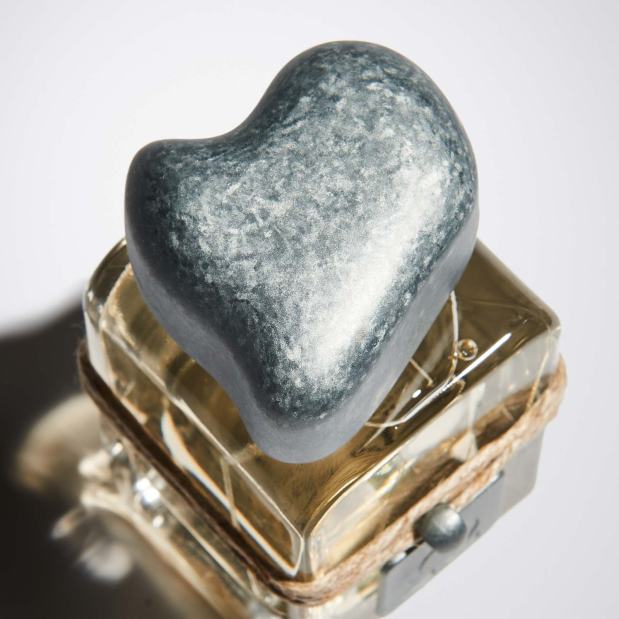
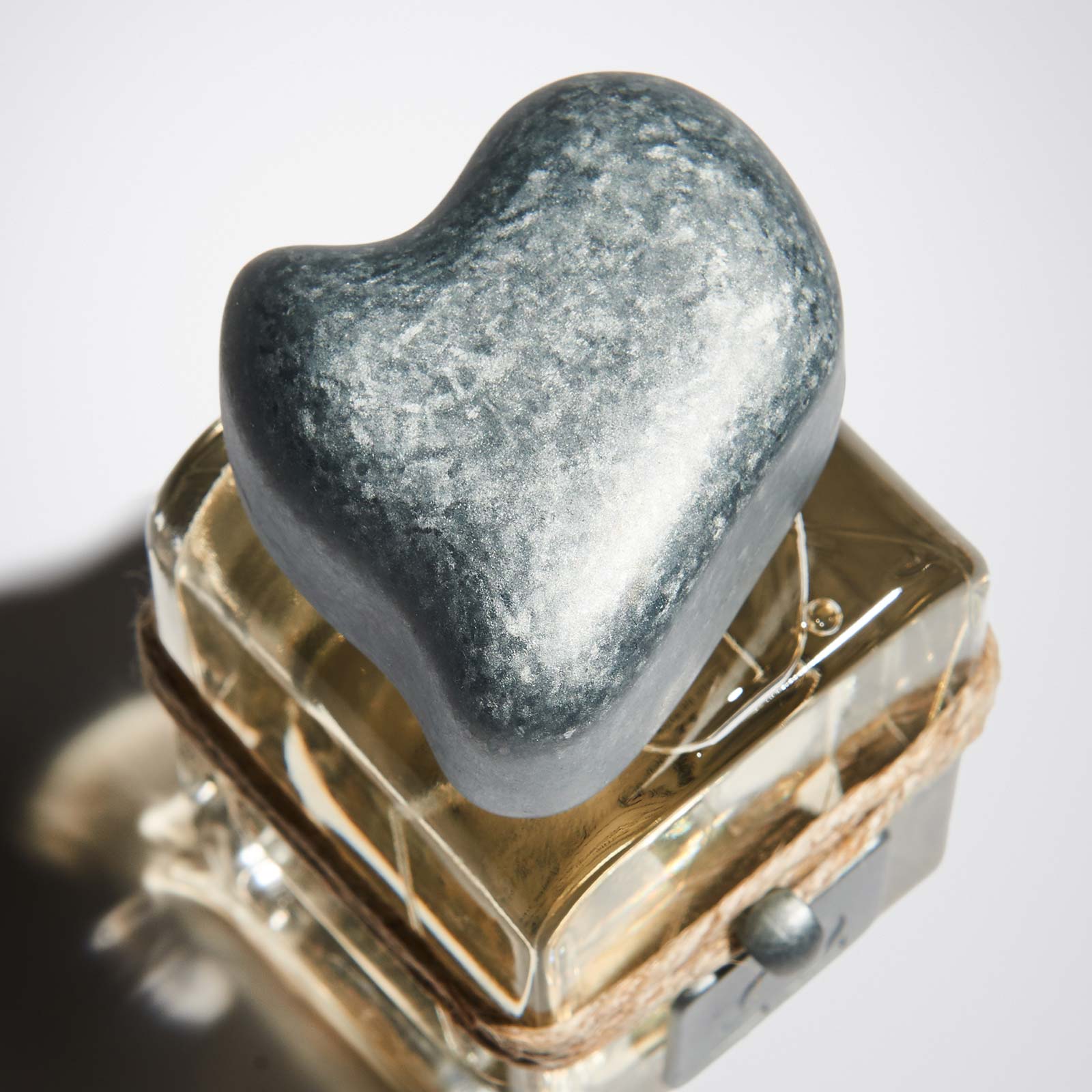
Interestingly, I wonder whether Omega has been altered from its original formula, just because my perception of it varies quite a bit from the reviews when it was launched. Those reviews mention more smokiness and more jasmine, and on my skin it’s all about iris and vanilla, with some musk. The bottle design also differs from the one shown in earlier reviews (I prefer the current one, with a cap that looks like a silvery pebble from the sea).

Mendittorosa is known for its artistic packaging; the bottles are little works of art, with distinctive sculpture-like bottles and caps. I find the Trilogy bottles very attractive, including Omega‘s:

Artistic bottle of Omega eau de parfum
Omega eau de parfum by Mendittorosa; image from mendittorosa.com.

I’m very glad to have the chance to try Omega as I don’t recall having previously tried Mendittorosa’s scents. If Omega is a reliable example of their quality, I’ll have to seek some out! Luca Turin and Tania Sanchez famously awarded the brand’s Le Mat five stars in their most recent book, “Perfumes: The Guide 2018.” Have you tried any? Do you have any favorites?

Scented Advent, December 8

Scented Advent, December 8

Today’s post about the SOTD from my Advent calendar will be brief, because it’s a scent I don’t like very much, and I don’t like to write a lot about scents I don’t like. It is Amber Aoud, from Roja Dove. First, I don’t much care for oud except in very small doses, and I’m tired of how omnipresent it seems to be, both as an ingredient and in the names of fragrances. Sadly, I suspect that the reason it is omnipresent and the reason I don’t like most of what I’ve encountered are the same: chemists have come up with some cheap synthetic molecules meant to imitate the real, expensive substance, which probably smells much better and more interesting.

Second, I react to Roja Dove’s fragrances much as I do to Tom Ford‘s: there are some very nice scents among them, but the hype and the prices are too much. I’ve enjoyed visiting a Roja Dove boutique in London, in the Burlington Arcade, and I’ve occasionally stopped by the counter in Neiman Marcus to test, but I’ve never been tempted to buy one of his fragrances. There are just so many other, equally (if not more) appealing, less expensive options.

But, to briefly address Amber Aoud, the first note that hits my nose is in fact “oud” that smells very chemical and synthetic to me. It smells smoky but not in a way that I enjoy; I’m sure that more sensitive noses would experience it as “burning.” It does turn into something sweeter and more pleasant, but for the life of me I can’t detect the rose it is supposed to contain as a major note, or any fig. It doesn’t smell particularly like “amber” either, or at least any of the accords I’ve learned to identify with “amber.” The full list of notes on Fragrantica is: Top notes of Bergamot, Lime and Lemon; middle notes of Rose, Fig, Ylang-Ylang and Jasmine; base notes of Agarwood (Oud), Ambergris, Saffron, Cinnamon, Birch, Civet, Orris Root, Musk, Oakmoss, Sandalwood and Patchouli. I don’t smell any of the citrus top notes at all (but this may be an older sample where they’ve evaporated). The sweetness I sense after the initial smoke may be coming from ylang-ylang, but it’s very hard to tell. As to the base notes, I smell “oud” and birch tar, and maybe a hint of the orris root.

So that’s me and Amber Aoud. Sorry to disappoint any fans — your mileage may vary! If you know and like this one, please share your thoughts in the comments. I’m looking forward to something different in tomorrow’s Advent calendar surprise! Which is one of the fun aspects of Advent calendars — a little surprise every day.

Refillable wooden Advent calendar
My fragrance Advent calendar