Another favorite independent perfumer showed up in my fragrance Advent calendar today: Jeffrey Dame, of Dame Perfumery! Jeffrey Dame has had a long career in the cosmetic and fragrance industry; Dame Perfumery, which he co-founded with his son and runs as a family business, launched its first fragrances in 2014. There are several lines within its brand; today’s scent is one of its “Soliflore” oils, Soliflore Orange Flower. The brand website calls the Soliflore line “photorealistic fragrances”, and that’s pretty accurate.
Orange blossom and orange; image from petalrepublic.com
Soliflore Orange Flower is a light, pretty orange flower, with lemony highlights. I find it less indolic than jasmine or tuberose; the lemony aspect lightens and brightens it. Fragrance writer Ida Meister chose it as a favorite in a Fragrantica piece some years ago, on Dame Perfumery’s “Best In Show“:
Dame Perfumery Soliflore Orange Flower was a revelation to me from the first wearing. So very dense and fulsome, bursting initially with that juicy yet faintly mentholated undertone which renders it photorealistic. It recalls the manner in which tuberose and other white flowers often echo this particular aspect before waxing imminently floral and expansive.
After the juice, sweet, tangy [bergamot?], subterranean-ly medicinal – comes the indolent indolic: divine decay, sex and death. It is the swan song of orange blossoms: “The silver Swan, who, living, had no Note, when Death approached, unlocked her silent throat.”
Orlando Gibbons, 1611
One of the aspects I like very much about Dame Perfumery and its creations is how user-friendly and budget-friendly they are. Beyond the Soliflores, there is the DAME Artist Collection of perfumes; and also the JD Jeffrey Dame Post-Modern Perfume line. Among the Artist Collection, I really like Black Flower Mexican Vanilla; and in the JD line, I like JD Duality, and most of the others I’ve tried. All are priced very reasonably for their quality and concentration; and when one orders directly from the Dame Perfumery website, the order comes with extra goodies like samples, a discount code, postcards, etc.
Soliflore Orange Flower is of a piece with this approach: straightforward, user-friendly, reasonably priced. It’s not pretending to be anything but a straight-up orange flower fragrance. It would be fun to layer it with other Dame Perfumery creations, like the Eaux de Toilette line.
Do you like soliflore fragrances? Do you ever layer them with other scents?
Today’s Advent calendar post was slightly delayed because I had to have an early morning appointment with my dentist to investigate an ongoing toothache. Ugh, I hate dental work although I like my dentist very much. Anyway, the SOTD is Rosa Nigra, from the UNUM line of fragrances launched by a lifestyle and artistic brand called Filippo Sorcinelli. Rosa Nigra was released in 2015. The name means “black rose”, but not a single rose note is listed. Fragrantica lists these notes: Artemisia and Anise (top); Peach, Sandalwood and Freesia (heart); Musk, Cashmere Wood, Amber and Vanilla (base). The brand’s website calls this fragrance “an olfactory paraphrase of the Assumption” and says “The Virgin Mary who ascends to heaven ‘in body and soul’: all the materials that compose her call to mind a rose that in reality is not present.”
Purple prose aside, the few commenters on Fragrantica claim to smell the rose that isn’t there. Rosa Nigra also got a favorable review as a “created rose” fragrance on the blog Fragroom. I don’t smell any rose. I do smell the herbal opening notes, artemisia and anise, which I like; I also get the peach and sandalwood heart notes, but no freesia. The drydown smells to me like a kind of mash-up of the listed base notes. It’s quite pleasant, but not distinctive. I don’t get or expect much sillage, as Rosa Nigra comes in an extrait format.
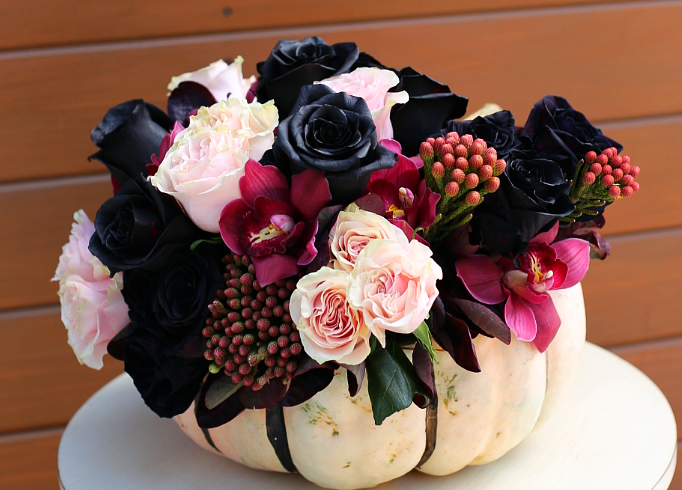
Of course, the name itself may be a giveaway of a fragrant sleight-of-hand, since there is no such thing as a black rose in nature. There are some very dark crimson or burgundy roses, that may even blacken somewhat as their blossoms age, but black roses are as fanciful as blue roses — figments of the imagination. Some florists may dye dark roses with black ink.
“Black” roses in bouquet; image from orchidrepublic.com.
I like Rosa Nigra but there are so many other, actual rose scents, and other scents with better drydowns, so I won’t be seeking out a full bottle. Have you encountered any of the UNUM fragrances? And do you understand the brand’s prose??
My Advent calendar surprise today is a sample from a brand I’ve been wanting to try, Maison Trudon. That company has a long history as makers of fine candles, supplying Versailles and cathedrals with famously white, less smoky, beeswax candles, a business that continued through revolutions and restorations. In this century, the company has focused mostly on very high-end, perfumed candles; and in 2017, it began producing perfumes under the simple name “Trudon”, working with noted perfumers such as Lyn Harris, Antoine Lie, and Yann Vasnier.
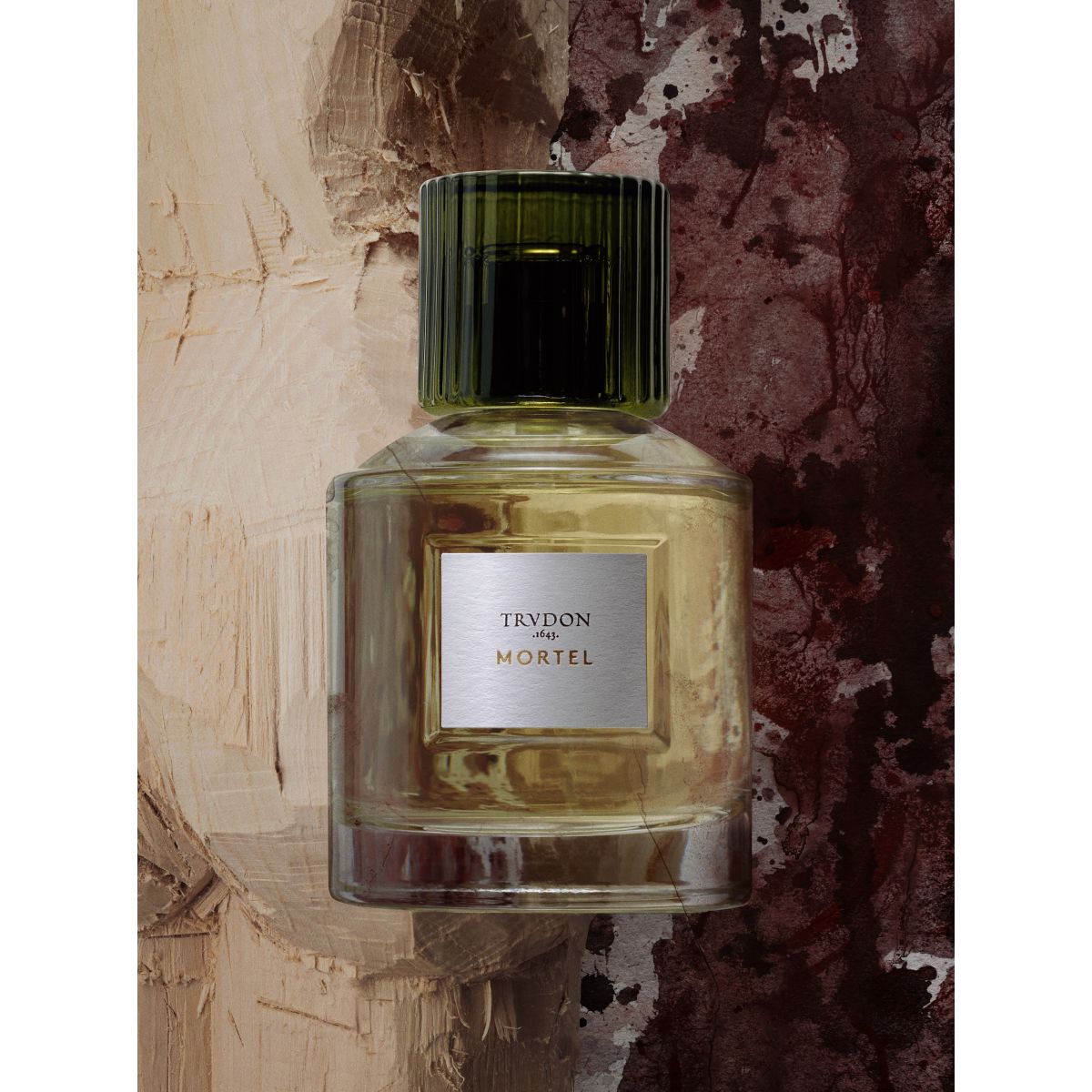
The latter was the creator of today’s scent, Mortel. M. Vasnier has a real gift for accords that involve spices and resins, which is on full display in Mortel. According to the brand’s website, it has notes of: Pimento, Black Pepper (top); Mystikal, Somalian Frankincense (heart); Benzoin Resin, Pure Cistus, and Myrrh (base). Fragrantica also lists nutmeg as a top note, and woody notes in the heart and base. Mystikal is a Givaudan captive molecule that specifically smells like burning incense. Wow, it really does! It doesn’t smell particularly smoky, which I appreciate.
Mortel, by Cire Trudon; image from brand website.
I’ve written before about the use of incense in traditional Christian services, including the funeral mass for my late mother-in-law. As I wrote there, she absolutely loved Christmas, and I always think of her at this time of year, especially because she had made for us three beautiful pieces of cross-stitched embroidery with depictions of Father Christmas, which we bring out in December. She had just taken up the hobby of counted cross-stitch when I joined the family, and she became a very accomplished needlewoman; her later works had the tiniest stitches, on real linen fabric. I began doing it myself after she showed me how, although I haven’t cross-stitched anything in several years (three children and a full-time job outside the home ensure that there isn’t much time for embroidery). But as I contemplate my own retirement in the next few years, and as my youngest child is no longer even a teenager, I’ve started looking again at the patterns I’ve collected over the years, and organizing my materials, thinking that I’d like to take it up again.
Back to Mortel! The heart phase that really smells like incense and frankincense lasts a good long time. It’s not overpowering as a dabber from a sample vial; if I owned a spray bottle, I would proceed with caution! I cannot emphasize enough how much this stage smells exactly like the fragrant smoke that emanates from a thurible in church. Here’s what I think is very clever, aside from the obvious quality of the materials (which one would expect in a product from a company that has specialized for centuries in creating candles for cathedrals and palaces). The opening of black pepper and pimento is bright and a bit sharp — as if a match has been struck and is flaring up, to ignite a censer. The heart phase is all about incense and frankincense, as if one is smelling the actual incense while it burns in a church or other place of worship (the tradition of using incense in religious rites is observed in Judaism and other ancient religions).
Pope Francis uses incense to venerate a statue of Mary during Mass at the Verano cemetery in Rome (CNS photo/Paul Haring)
As that dries down, the woody notes emerge, and the impression is that of an old church, whose wooden pews and structures have been so imbued with incense over centuries that the scent still floats on the air when no incense is burning. I’ve smelled that so many times, in many visits to old churches and cathedrals in Europe. Note — Mortel doesn’t have any of the damp, musty smells that can also permeate ancient churches. (A favorite family memory recalls the time when we lived in Brussels, when my sisters and I were children; our parents took us to many historic sites on weekends, making the most of our sojourn in Europe. My little sister, who was about 5 or 6 at the time, as we entered yet another cathedral on one occasion, wailed “Oh, no, not another smelly old church!”). So, to my nose, Mortel traces the progression of incense being used in a church, from the time it is lit to the time when it lingers in the wood and air as a fragrant memory. M. Vasnier himself has described the setting as an artisan’s fiery forge, but there is no doubt that this son of Brittany would know the smell of an ancient church.
Mortel and its evocation of church are especially appropriate today, which is the third Sunday in Advent, also known as “Gaudete Sunday” in more traditional liturgies. Gaudete means “rejoice” in Latin; so this Sunday, sometimes also called “Rose Sunday” because the clergy can wear rose-colored vestments, is an occasion to focus on the most joyful aspects of Advent. It is sometimes symbolized on an Advent wreath by a pink candle.
Advent with candles, including Gaudete pink candle
Have you tried any Trudon fragrances? Any favorites?
I’m happy to report that today’s Advent calendar SOTD is a bargain beauty! It is Natori, from the brand Natori, in EDP format. Right away upon application, I smell aldehydes, plum, and a plummy rose. It’s interesting that this starts out with a very evident burst of aldehydes, because this fragrance was created in 2009 and I always think of aldehydes as a more vintage perfume note. I think the plum note, also very evident from the start, saves Natori from smelling old-fashioned, because it really doesn’t. The perfumer was Caroline Sabas, who works at Givaudan and has created some other interesting fragrances, such as ELdO’s You or Someone Like You. According to the brand:
A sparkling floral oriental, the NATORI fragrance opens with an effervescent bouquet of fresh rose petals enriched by deep, dark plum notes. The heart is an exotic and alluring hybrid of ylang ylang, purple peony and night blooming jasmine. Slipping languidly over pulse points, black patchouli, amber and a hint of satin musk complete this mysterious and tantalizing fragrance.
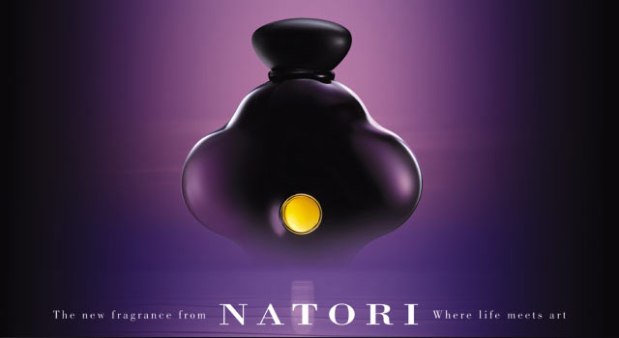
The dominant note in the middle phase is the ylang-ylang, combined with jasmine. Together with the rose and aldehydes, it makes Natori slightly reminiscent, though not a dupe, of Chanel No. 5 and Chanel No. 22. As it dries down, the scent warms on the skin, with amber most evident in the base notes, to my nose. If you like florals, this is a very charming one! The purple bottle, shaped like a lotus blossom, is also very pretty. It is available for quite low prices online, as low as $18 for 100 ml.
Natori eau de parfum; image from brand Natori.
I don’t know why, but this fragrance smells to me like a nice, youngish mother, like some of my friends’ mothers when I was growing up, or my late aunt. They wore classic but pretty clothes, nothing too fancy unless they were going into “the City” (meaning New York) for an Occasion, or attending a suburban black-tie event, often at a country club; they wore floor-length tartan kilts for Christmas holiday at-home soirees. They volunteered for everything in our town; they hosted lovely, intimate dinner parties in pretty but unpretentious homes; they liked children and gave hugs. These were women who mostly married young in the 1950s and early 60s, often right after graduating from a “Seven Sisters” women’s college, and started families soon thereafter, so when I was in elementary school and middle school, few of them were even 40 yet; some had just entered their 40s. Some were also friends of my mother, though she was less cuddly and more aloof, certainly with children who weren’t her own. I have fond memories of these women, and Natori is bringing them back.
I’m enjoying Natori, and if you’re in search of a modern floriental, give it a try! I think it would suit women of all ages; it has enough fruitiness to please even an older teenager, unless she is firmly committed to gourmand scents, though it doesn’t quite cross the line into “fruity floral.” I can see this being very office-friendly; it’s not a “statement” fragrance, but it’s very well-made. The Scented Salamander blog had this review when it launched in 2009: “Natori by Josie Natori; Sensual Yet Pointing To No Visible Body Parts.” That reviewer noted a similarity not only to Chanel No. 5, but also to the late, great Joy by Jean Patou.
It’s always fun to find a new “bargain beauty”! Have you tried this one, or any others lately that are new to you?
Although it’s apparently a cult favorite, I hadn’t previously heard of today’s Advent calendar offering: Child. It was created by Susan Owens for her own use in 1988 and launched as a product available to others in 1990. Fragrantica lists its notes as: Lilac, Magnolia, Vanilla and Citruses (top); Jasmine, Tuberose and Violet (middle); Musk, Woodsy Notes, Mimosa and Rose (base). The Child Perfume website also lists orange flower, which is clearly present right from the start. The original formulation of Child was a roll-on perfume oil, but it is also available as an extrait de parfum. The sample in my Advent calendar is the oil, evident because of the sheen it leaves on my skin when I apply it.
To me, Child smells like a grown-up, more sophisticated Coppertone lotion. I believe Coppertone’s white flower notes are mostly described as orange flower; the fundamental “tropical flower” scent is present in both and may come from a substance like benzyl salicylate, an ingredient originally used in sunscreen because it both absorbs UV light and smells good.
Vintage Coppertone ad
I find Child to be more sophisticated because as it develops on my skin, the scent evolves away from the white floral, Coppertone accord and becomes more herbal, while new floral notes emerge. At the start, most of what I smell is orange blossom, jasmine, and tuberose standing in for “white flowers”, with a tinge of tangy citrus. As those fade, I smell something a bit more astringent, a bit less sweet, which could be a mimosa accord mingled with woody notes, but there’s also a slightly aromatic accord that isn’t accounted for in the notes list. The musky base also appears during the middle stage, and it lends a softness to the overall scent.
The combination of accords is very clever and appealing if you like beachy scents. For me, it evokes the late afternoon of a day spent at the beach, when one’s skin still smells of suntan lotion, the scent mingling with that of the sun-warmed vegetation nearby, while the temperature cools enough that one seeks a warm wrap of some kind to throw over one’s shoulders. Slanting sunlight begins to throw lengthening shadows, but no one wants to go home just yet.
I’m happy to say that today’s little Advent surprise, from my fragrance Advent calendar, is delightful. It is Mendittorosa’s Omega, one of the original three scents that launched this independent niche brand in 2012; it was created by perfumer Amélie Bourgeois. The other two scents are Alfa and Id; the brand says that the three, called The Trilogy, can be worn together:
Alfa, Omega and Id. Because in opposites we find balance, three perfumes were created to complement each other and complete journeys. Alfa and Omega are two faces of the same coin. Id (from Iddu, a local dialect word) represents the pure eternal energy of Stromboli, the active volcano off the northern coast of Sicily and spiritual Mendittorosa home for Brand Owner Stefania Squeglia. The Trilogy compositions are can be worn solo, or layered to achieve a truly personal effect.
According to the website, Omega has notes of Egyptian cumin (top); jasmine, violet, iris, rosewood (heart); and a leather accord (made with resin and oud), incense, Virginia cedar, white musk, and vanilla (base). Two notes on this list gave me pause, the cumin and the oud; but I can report that neither is dominant or even obvious, to my nose. In fact, if you had asked me whether there was either cumin or oud in Omega, I would probably have said no before reading the notes list. What I smelled first was a soft combination of iris, vanilla, a hint of violet, and a bit of leather. Right away, I perceive that the iris ingredient is of a very high quality; it smells buttery, smooth, and rich, and I love it. After the first half-hour, the leather accord has faded into the background, but other reviews suggest it may come roaring back later in the scent’s development.
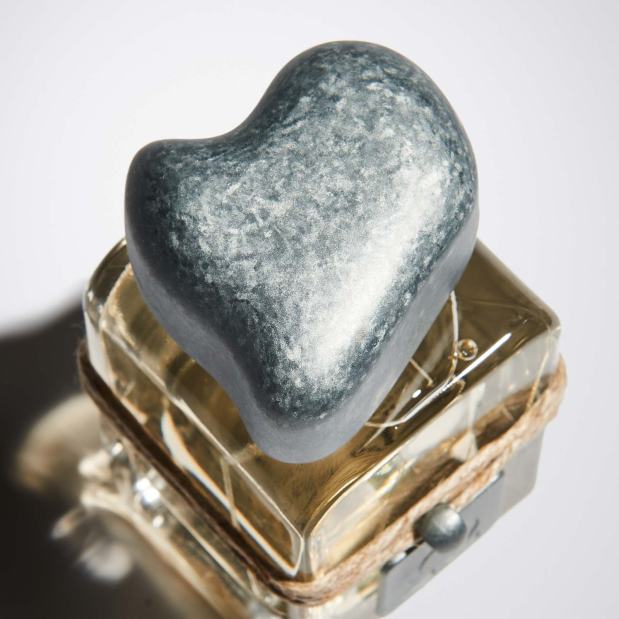
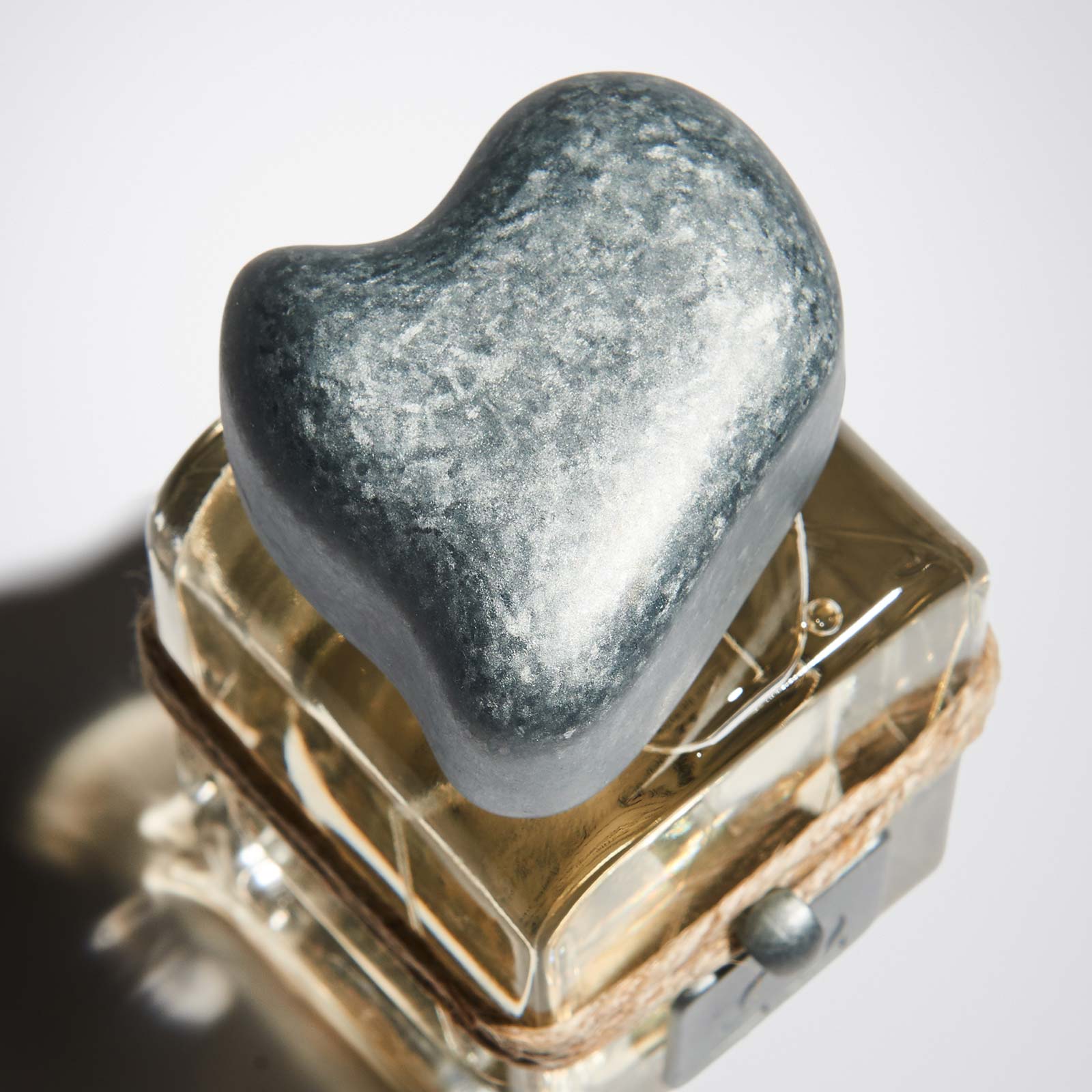
Interestingly, I wonder whether Omega has been altered from its original formula, just because my perception of it varies quite a bit from the reviews when it was launched. Those reviews mention more smokiness and more jasmine, and on my skin it’s all about iris and vanilla, with some musk. The bottle design also differs from the one shown in earlier reviews (I prefer the current one, with a cap that looks like a silvery pebble from the sea).
Mendittorosa is known for its artistic packaging; the bottles are little works of art, with distinctive sculpture-like bottles and caps. I find the Trilogy bottles very attractive, including Omega‘s:
Omega eau de parfum by Mendittorosa; image from mendittorosa.com.
I’m very glad to have the chance to try Omega as I don’t recall having previously tried Mendittorosa’s scents. If Omega is a reliable example of their quality, I’ll have to seek some out! Luca Turin and Tania Sanchez famously awarded the brand’s Le Mat five stars in their most recent book, “Perfumes: The Guide 2018.” Have you tried any? Do you have any favorites?
Today’s post about the SOTD from my Advent calendar will be brief, because it’s a scent I don’t like very much, and I don’t like to write a lot about scents I don’t like. It is Amber Aoud, from Roja Dove. First, I don’t much care for oud except in very small doses, and I’m tired of how omnipresent it seems to be, both as an ingredient and in the names of fragrances. Sadly, I suspect that the reason it is omnipresent and the reason I don’t like most of what I’ve encountered are the same: chemists have come up with some cheap synthetic molecules meant to imitate the real, expensive substance, which probably smells much better and more interesting.
Second, I react to Roja Dove’s fragrances much as I do to Tom Ford‘s: there are some very nice scents among them, but the hype and the prices are too much. I’ve enjoyed visiting a Roja Dove boutique in London, in the Burlington Arcade, and I’ve occasionally stopped by the counter in Neiman Marcus to test, but I’ve never been tempted to buy one of his fragrances. There are just so many other, equally (if not more) appealing, less expensive options.
But, to briefly address Amber Aoud, the first note that hits my nose is in fact “oud” that smells very chemical and synthetic to me. It smells smoky but not in a way that I enjoy; I’m sure that more sensitive noses would experience it as “burning.” It does turn into something sweeter and more pleasant, but for the life of me I can’t detect the rose it is supposed to contain as a major note, or any fig. It doesn’t smell particularly like “amber” either, or at least any of the accords I’ve learned to identify with “amber.” The full list of notes on Fragrantica is: Top notes of Bergamot, Lime and Lemon; middle notes of Rose, Fig, Ylang-Ylang and Jasmine; base notes of Agarwood (Oud), Ambergris, Saffron, Cinnamon, Birch, Civet, Orris Root, Musk, Oakmoss, Sandalwood and Patchouli. I don’t smell any of the citrus top notes at all (but this may be an older sample where they’ve evaporated). The sweetness I sense after the initial smoke may be coming from ylang-ylang, but it’s very hard to tell. As to the base notes, I smell “oud” and birch tar, and maybe a hint of the orris root.
So that’s me and Amber Aoud. Sorry to disappoint any fans — your mileage may vary! If you know and like this one, please share your thoughts in the comments. I’m looking forward to something different in tomorrow’s Advent calendar surprise! Which is one of the fun aspects of Advent calendars — a little surprise every day.
So after yesterday’s “angelic” scent, today we have Tom Ford’s F**king Fabulous as the daily sample from my Advent calendar. I must say, without the calendar and a sample that was a gift, I don’t think I would ever have tried it, because I dislike the name so much. I mean, who is the intended buyer — middle school boys, sniggering at dirty words? Please.
However — gonna go out on a limb here and say, I like it. Thankfully, it’s not a “love it, must have it” kind of like. I really do like some of Tom Ford’s fragrances, but I resist the whole fashion marketing schtick, the snob chic, and I think the prices are ridiculously high. There, I said it! I hope I haven’t given offense. Back to the SOTD, which I’ll refer to as Fabulous. It was released in 2017 and it was hyped to the max. Fragrantica characterizes it as a leather fragrance, but the leather isn’t a heavy one, to my nose. Notes listed on Fragrantica include: Top notes of Clary Sage and Lavender; middle notes of Bitter Almond, Leather, Vanilla and Orris; base notes of Leather, Tonka Bean, Cashmeran, White Woods and Amber. It’s an unusual and successful combination, especially that herbal opening with sage and lavender, which I enjoy very much. That leather note in the middle stage is, to my nose, more like suede; it’s very soft. It blends well with the vanilla and orris notes. I think the bitter almond accord is what some commenters have perceived as a smoky rubber scent. I don’t smell burning rubber, but I can sense how it might smell that way to someone else. If I had to sum up this fragrance in two words, they would be “lavender suede.”
Lavender suede
Others have commented that the leather smells powdery to them, and I get that too, probably from the orris, plus the soft, warm base notes; Fabulous is unexpectedly cozy and cuddly. Many commenters talked about a similarity to baby wipes, but I think that’s really because many traditional baby product scents include lavender and vanilla, both of which are in evidence in Fabulous.
That’s pretty much my experience with it! I enjoyed sampling it, but I won’t be seeking it out. Have you tried it? What did you think? And how do you react to some of the names of TF fragrances that appear chosen to titillate, if not offend?
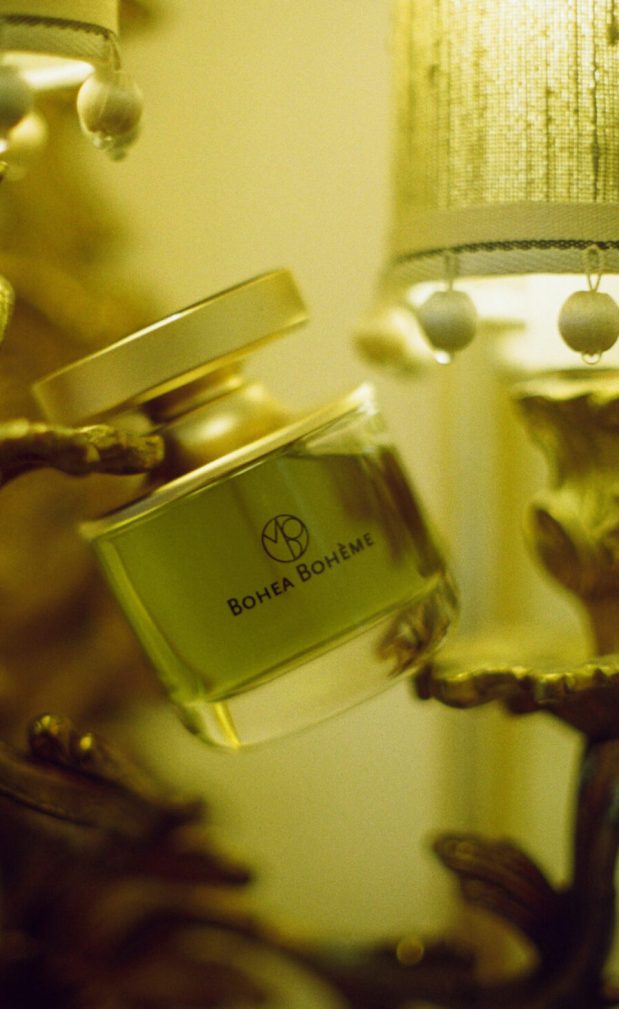
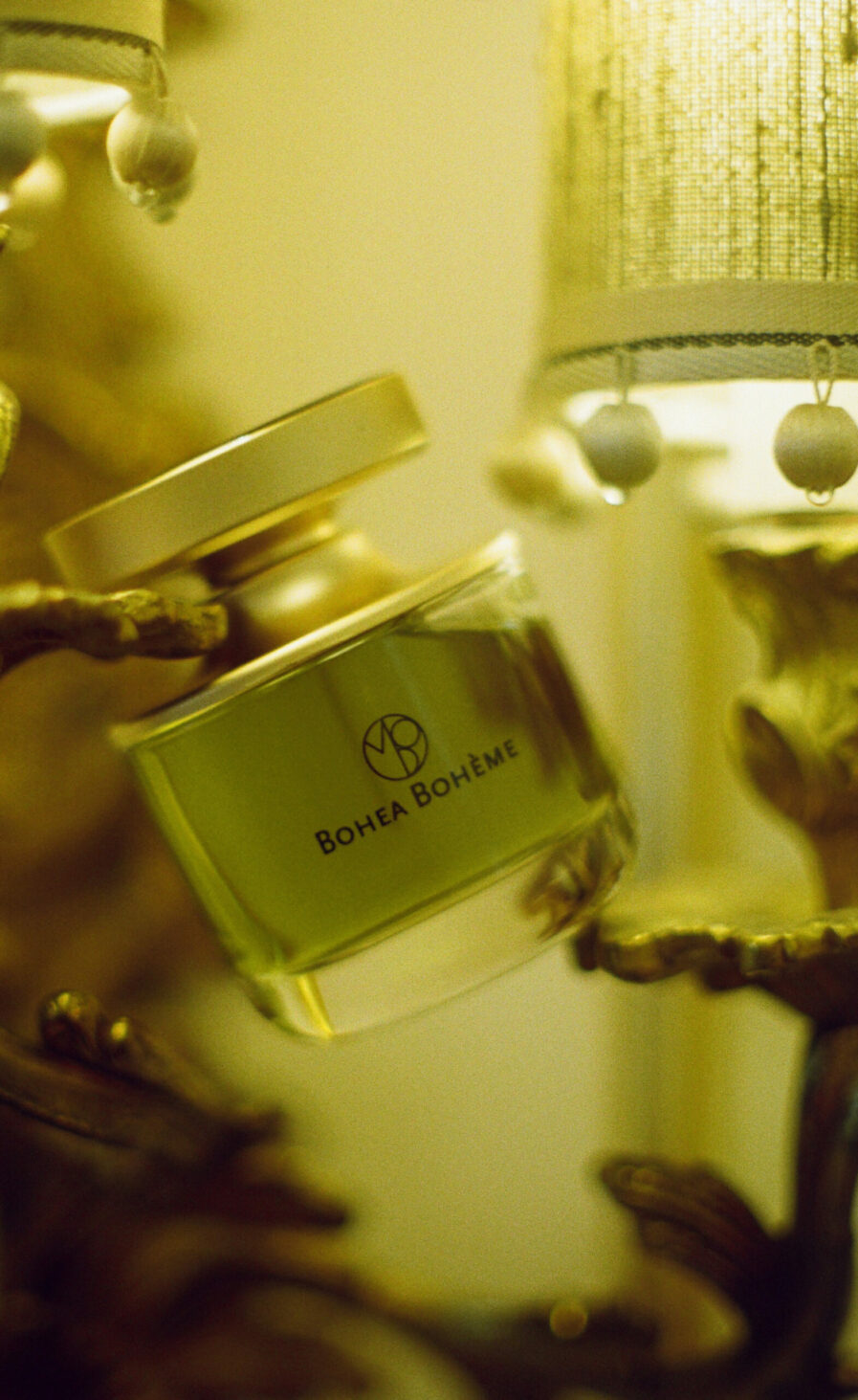
Mona di Orio’s Bohea Bohème is today’s Advent calendar scent. As soon as I dabbed it on my wrist, I thought, “Mmm, incense?”. It’s not really an incense scent, but it has many of the facets that make up a good incense, such as resins, fragrant woods, spices. It is built around a tea accord that evokes Bohea oolong tea from China, which is smoked with pinewood; a few floral notes are added (iris, osmanthus, geranium). The complete notes list on Fragrantica is: bergamot, cardamom, Florentine iris, chamomile, balsam fir, boxwood, geranium, black tea, juniper, smoke, oak, sandalwood, beeswax, bay leaf, benzoin, vanilla absolute, poplar buds.
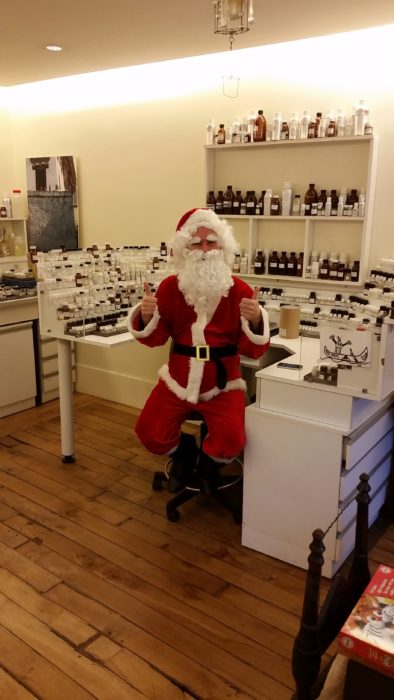
That last one is unfamiliar to me; it is said to bring “a peculiar balsamic green and bitter-sweet scent” to a fragrance. It turns out, though, that I’ve encountered it before, in Tom Ford’s Vert des Bois, which was one of his quartet of green fragrances launched in 2016. Bohea Bohème was also launched in 2016, but was created by a different perfumer, Fredrik Dalman, while the perfumer who created Vert des Bois is Olivier Gillotin. Cafleurebon’s interview with Fredrik, linked above, is well worth reading; he is Swedish, though traditionally trained in France, and he prizes the scent of cardamom, a common ingredient in spiced Swedish recipes (I myself make an excellent Glögg, a Swedish mulled wine, with cardamom, using a recipe that was handed down through the family of a Scandinavian friend). The interview also includes his hilarious story of dressing up as Santa for the flagship store of L’Artisan Parfumeur, the company where he was apprenticed to master perfumer Bertrand Duchaufour. He went back upstairs to the lab on his break to continue working on a formula before returning to Santa duties, and was found there by his startled mentor.
Fredrik Dalman as Santa; image from cafleurebon.com.
I am loving Bohea Bohème! It is masterfully blended, so that the floral notes emerge slowly as the spicier opening fades. The notes list on the brand website is shorter than the one on Fragrantica: Black tea oil, Florentine Iris, Blue Chamomile, Poplar Bud Absolute, Fir Balsam Fraction, Smoked Juniper, Oakwood absolute, Beeswax Absolute. I love spices in fragrance, but there are some I can only take in very limited quantities (cinnamon and cloves, I’m looking at you!). Bohea Bohème is perfectly spiced, and it feels to me like a perfect holiday fragrance, with its combination of cardamom, balsam, scented wood, and a smoke as gentle as candlelight. Truly, as the website says, it is a “luxurious woody fragrance with a balsamic vibrato, unconventional and seductive.”
Do you have any favorites from Mona di Orio? Also, don’t forget to join me and my collaborators tomorrow for “Scent Semantics“! We have a particularly nice holiday word and reflections for you.
Bohea Bohème, by Mona di Orio; image from monadiorio.com.
It’s the second day of Advent (and the second day of final exams at the university where I work — ugh). As regular readers here know, some of us were chatting back and forth about Advent calendars on our blogs, and lo! a plan was born. I have a refillable Advent calendar, and I have placed in it some of the surprise samples sent by a kind perfumista, only looking to make sure the samples will fit in the little drawers. So I don’t know what I’m going to get on any given day!
Today’s SOTD is Diptyque’s Eau Duelle, in the eau de toilette fomulation, created by Fabrice Pellegrin and launched in 2010. Wow, vanilla! I like this a lot, because it’s not a very sweet vanilla; it smells more botanical than gourmand. The website lists only vanilla, pink peppercorn, and cypriol as “raw materials”. Fragrantica lists its notes as: Bourbon vanilla, elemi resin, cardamom, juniper, pink pepper, olibanum, black tea, ambergris, bergamot, saffron, musk. The brand also describes it as “an ode to travel and vanilla. Along the spice route, the vanilla at the heart of Eau Duelle takes on new aromas: luminous, addictive accents of calamus and dark, smoky nuances of cypriol. Travelling through time and over borders, Bourbon vanilla from Madagascar reveals itself between darkness and light.”
Cypriol is a fascinating substance. It comes from the root of an ancient plant in the same family as papyrus. The Society of Scent describes its aroma as a combination of vetiver, patchouli, and cedar, with hints of pepper and bay leaf. That would explain the non-gourmand aspect of Eau Duelle; it really is more botanical — an herbal vanilla. When I first applied some to my wrist, most of what I smelled was a gust of vanilla, and that remains strong throughout. As it dries down, though, more and more of the herbal and woody facets of this fragrance emerge, in a pleasant, cozy way. One commenter has said that wearing Eau Duelle is like wrapping yourself in a cashmere blanket; I would add that you’re also drinking a cup of vanilla chai or other spiced tea while wrapped in said blanket.
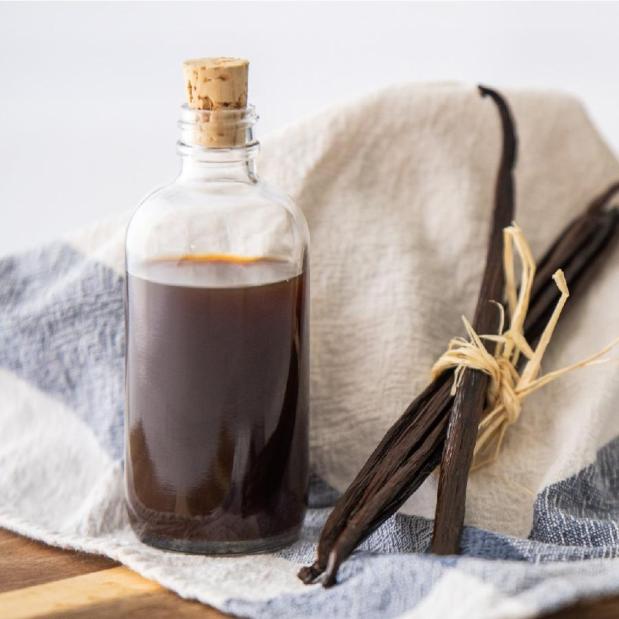
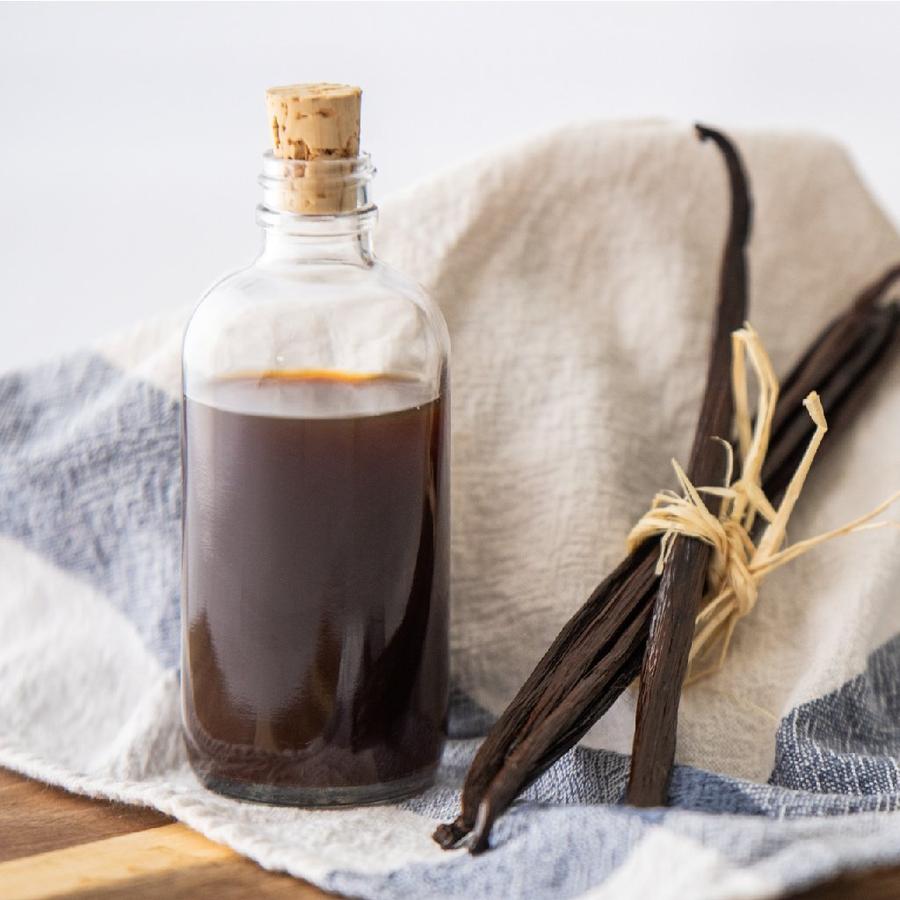
Bourbon vanilla beans and extract; image from nativevanilla.com
I can’t distinguish all the notes listed on Fragrantica, but I do pick up hints of cardamom and juniper. The website also mentions calamus, both in its description and as an “olfactory accident”, whatever that means. Calamus is another ancient plant; Egyptians wrote about it as early as 1300, when it may have been used in perfumes. In our own literary history, the poet Walt Whitman used it as a symbol of homosexual love between men, and his masterpiece “Leaves of Grass” includes a series of poems known as the “Calamus Poems” or “Calamus Sequence.” Its odor is said to be warm, spicy, woody, with green notes. It’s entirely possible that the many notes listed by Fragrantica are really different aspects of just two substances: cypriol and calamus.
I could definitely see myself getting a travel spray of Eau Duelle some day. I’ll be interested to see, once I’m out and about more, whether I get any comments on it; there’s something about vanilla notes that really attracts people. It reminds me of Le Couvent des Missions’ original Eau des Missions cologne, a cult favorite with many perfumistas. Interestingly, it came out just a year after Eau Duelle, in 2011. If you’re yearning for that long-discontinued scent, try Eau Duelle.










 Serenity Now Scents and Sensibilities