Fragrance Friday: Hair Spray

Fragrance Friday: Hair Spray

Or rather, hair MIST. This is a relatively new discovery for me, as I wrote about here: Fragrance Friday: Hair Spray/Colette. I may have to explore this world further, based on a recent experience in airport security. Yes, that’s right — airport security. As my family and I were returning from Ireland a few weeks ago, we were going through security in the Dublin airport. As I am wont to do, I had spent some time browsing among fragrances in the duty-free shop, where I had come across Diptyque’s new hair mist. Having enjoyed the Colette hair mist, I decided to try it. And, if the truth be told, I had already sprayed other scents on both wrists and inner elbows. Hair was the only real estate left.

Reader, I sprayed it. And generously, too. Shortly after, I grabbed my bags and went through the security screening line. As I passed through the scanner for people, and my bags passed through the scanner for luggage, I didn’t give it a thought — I knew where my liquids were, I knew everything in my bag was allowed, I took off my metal bracelet and put it in my handbag, etc. Suddenly — “Ma’am! Ma’am!”. A youngish female airport employee was approaching me with an urgent tone in her voice. “Yes?”, I asked, inwardly sighing that I must have messed up something with my luggage (side note: I have done that and was once busted by an airport bag-sniffing dog who found an apple I had forgotten was in my backpack).

Dublin airport security screening line and trays

Dublin Airport security screening

“Do I need to open my bag?”, I asked.

“No, ma’am, I just need to know what scent you’re wearing. You smell wonderful!”

Now that’s a first. I have occasionally been stopped by strangers asking about my fragrance, which is always flattering when they ask nicely and not in a creepy way. But I’ve never been stopped by airport security over my own fragrance, as opposed to the scent of an illicit piece of fruit. (By the way, the dogs don’t sit quietly when they find the fruit. They bark. Loudly. And put their paws on your bag). I assume it was the hair mist that attracted her attention, because I sprayed on more of it than anything else, and it really does carry. And of course I told her what I thought it was and pointed back vaguely toward the Diptyque counter, because when airport security asks you a question, YOU ANSWER.

Airport beagle sniffer dog with fruit

Airport beagle finding illicit fruit in luggage

All of this is a roundabout way of saying that if you haven’t tried fragranced hair mist yet, you might want to! And you might want to start with Diptyque, which now has two: Eau Rose and Eau des SensGiven that fragrance often lasts longer and has more sillage when sprayed on hair, this seems like an affordable way to wear Diptyque, and I hope they offer more of their scents in this formulation. Here’s the challenge: I don’t remember which one I sprayed on, and Eau Rose appears to be sold out online at Diptyque’s website.

Not to be dissuaded from my quest, I plan to make a visit soon to one of my local department stores that carries Diptyque and see if I can try them both. If I figure out which one made the screener swoon, I’ll update this post!

Featured image from http://www.britishbeautyblogger.com.

Some Final Bottles Available — Perfume in Progress

The last several months I have contacted many people who had written to me in Jan/Feb to request bottles. I’ve filled about as many of those requests as I can with what I had in stock (minus a few people that I couldn’t reach via email). I’m now listing the few remaining bottles here. These bottles have […]

via Some Final Bottles Available — Perfume in Progress

If you always wanted some fragrances from Sonoma Scent Studio, this is your last chance! Award-winning perfumer Laurie Erickson is retiring from the perfume business and may have a buyer for Sonoma Scent Studio. She has a small number of bottles of her fragrance creations still available for purchase. I’m sad to see such a gifted artisan perfumer leave the scene but I am confident Laurie will flourish in her next phase.

Fragrance Friday: Rose Royale

Fragrance Friday: Rose Royale

Just days ago, a book I have been eagerly awaiting (despite the controversy its authors love to stir) was finally published: “Perfumes: The Guide 2018”, by Luca Turin and Tania Sanchez. Of course, I’ve spent more time than I should browsing its characteristically snarky, idiosyncratic reviews — agreeing with some, disagreeing with others, but always informed and amused by their points of view. One thing I do like is that Turin and Sanchez are quite upfront about some of their individual tendencies and how those may affect their reviews. For instance, Turin doesn’t really like rose soliflores. And yet he gave four stars to Parfums Nicolai’s Rose Royale and listed it among the top ten florals of the last decade. Good enough for me, since I love rose soliflores and we’ve just finished June, the month of roses! Here is Parfums Nicolai‘s own description:

Real rose without any frills or fuss, fresh and vegetal thanks to its magnificent natural essences. With just a few strands of coriander as well as base notes of immortelle to give it punch without any distortion … simply the perfume of the rose at the end of its stem. A longing for nature becomes a scent of vegetation enhanced by blackcurrant and passion fruit, over an explosion of Turkish rose essence. Coriander and ambrette seeds enhance the fragrance. Bottom notes of guiac wood and immortelle strengthen the long lasting, lingering spell of Rose Royale.

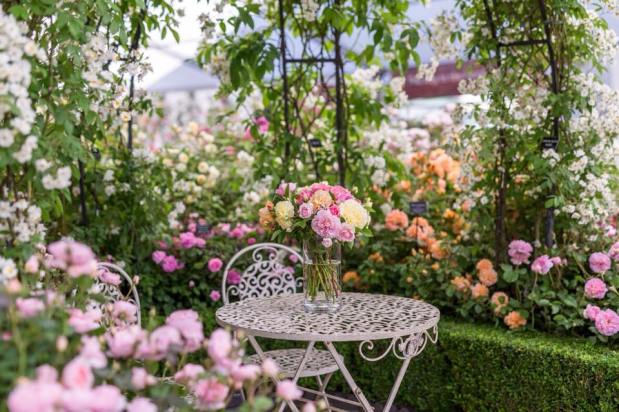
After having visited the RHS Chelsea Flower Show this spring, I renewed my obsession with David Austin’s English Roses, which added to its medals with another spectacular display of his stunning flowers. If you don’t know of them, they are the result of Mr. Austin’s lifetime of hybridizing roses to restore the fragrances and forms of the older French roses he loves, combining them with the vigor, disease resistance, color range, and repeat flowering of more modern roses. Each entry for a rose in his catalogue lovingly  describes not only the growth habit, color, form and size of its blossoms, but also each variety’s individual fragrance. One such entry reads:

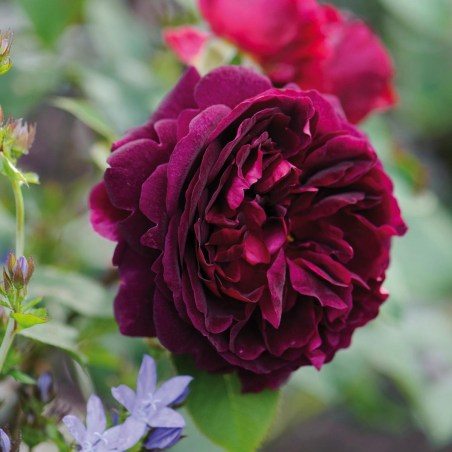
Munstead Wood: Light crimson buds gradually open to reveal very deep velvety crimson blooms, the outer petals remaining rather lighter in color. The flowers are large cups at first, becoming shallowly cupped with time. The growth is quite bushy, forming a broad shrub with good disease resistance. The leaves are mid-green, the younger leaves being red-bronze to form a nice contrast. There is a very strong Old Rose fragrance with a fruity note. Our fragrance expert, Robert Calkin, assesses this as “warm and fruity with blackberry, blueberry and damson.”

Munstead Wood was recommended to me by someone who used to work with David Austin, and so I am now growing it in a large pot on my front terrace, which faces south (much of my garden is shaded at least part of the day, which doesn’t suit roses). And Rose Royale smells a lot like it, with its top notes of blackcurrant buds, passion fruit, and bergamot moving quickly into the heart of rose, coriander, and ambrette seeds. I love it! Yes, Mr. Turin, I do love a good rose soliflore.

David Austin English Rose "Munstead Wood"

David Austin rose “Munstead Wood”; image from http://www.davidaustinroses.com

Rose Royale has a delectable opening, the blackcurrant buds dominating, followed by bergamot lending its green-citrus pop, with passion fruit hovering behind them and adding sweetness to the green. If I had to pick one genre of fragrances to love, it would have to include greenness (green florals, green aromatics, etc.), and Rose Royale fits the bill. After the lively opening, the rose takes center stage, but the fragrance never loses its “fresh and vegetal” character. Mr. Turin refers to it as a “soapy rose” but it doesn’t smell soapy to me, or at least no more so than a real rose often does. I suspect this is because rose notes have been so heavily used to scent soap that our Western noses merge the two. Be that as it may, here is his review of Rose Royale in “Perfumes: The Guide 2018” (Kindle Edition):

Tomes of perfumery prattle are churned out annually on the subject of the Her Royal Majesty the Rose, Queen of Flowers, and all associated romance and grandeur. Yet when you smell rose soliflores, they do tend to let you down: flat or thin, a whisper of phenylethyl alcohol or a mere goofy fruity fantasy. Patricia de Nicolaï’s take is a perfect soapy-aldehydic white-floral froth with facets of lemon and raspberry. If you are the sort of gold-rimmed-teacup gripping, pinky-finger sticker-outer who will insist against all advice upon a rose soliflore uninterfered with by complicating ideas, here is a beautifully silly one for you.

While I do own gold-rimmed teacups, I don’t stick out my pinky finger while drinking from them, and my hands are often too grubby from digging in my garden’s dirt to grip them very regularly.

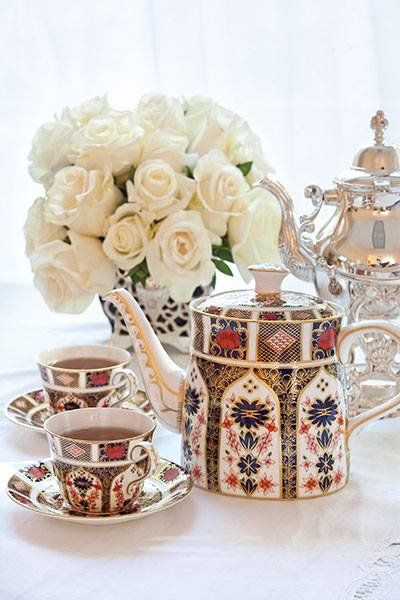
Royal Crown Derby Imari pattern tea set with white roses, from TeaTime Magazine

Royal Crown Derby Imari; image from http://www.teatimemagazine.com

Like the rose Munstead Wood, which has some of the sharper thorns I’ve encountered among roses I’ve grown, Rose Royale has a little more bite to it than is immediately apparent. As it dries down, there is enough light wood and spice to suggest that there is more to this rose than its soft petals. I would agree with Mr. Turin’s overall assessment, though, that Rose Royale evokes a certain elegance and delicacy one might associate with gold-rimmed teacups. Patricia de Nicolai clearly intended this, as her company’s website describes the fragrance as inspired and named for “a stroll in the calm of the Palais Royal, with a French garden framed by perfect classical architecture.” It has been far too many years since I myself visited Paris and strolled through the Palais Royal, but Rose Royale takes me there with one sniff.


Fragrance Friday and Saturday Snippet: Le Petit Prince

Fragrance Friday and Saturday Snippet: Le Petit Prince

I am reposting this from my other blog, “Old Herbaceous”, where I post about gardening and garden-related books. It seems appropriate for a “Fragrance Friday” because this rose, “Le Petit Prince”, has won awards for its fragrance and that is a major reason why I bought it for my garden. I am growing it in a large pot that can be moved around until I learn more about its habits and where it might grow best. It is, indeed, marvelously fragrant!

Old Herbaceous's avatarOld Herbaceous

This is a tardy Saturday Snippet, posted on a Sunday because I spent most of yesterday actually planting things in my garden! But I have the perfect reason to post this weekend, complete with literary tie-in: my new rosebush, Le Petit Prince.

Also known as La Rose du Petit Prince, this beautiful rose is named for the classic novella Le Petit Prince, by Antoine de Saint-Exupery, which features a Rose who is the Little Prince’s responsibility and love, in spite of her flaws.

Illustration from Le Petit Prince by Antoine de Saint-Exupery. Le Petit Prince and his Rose

But here’s some additional, wonderful information about the actual rose, from the blog www.thelittleprince.com:

“For over 50 years the Pépinières et Roseraies Georges Delbard nursery gardeners have been creating exceptional roses. Very possibly you have a Claude Monet or Comtesse de Ségur rose bush growing in your garden … It was back in 2008 that they first thought of…

View original post 640 more words

Fragrance Friday: Excellent Customer Service

Fragrance Friday: Excellent Customer Service

Facebook Fragrance Friends recently posted the question: where have members received excellent customer service when trying/buying fragrance? I thought that was a great question and it offers the opportunity to articulate the positive instead of dwelling on the negative. While I appreciate comments that warn about particularly bad experiences, I also value (maybe even more) fellow fragrance-lovers’ input on particularly good ones; and I also like to give a shout-out to the folks who extend themselves to make a customer’s experience as pleasant as possible. So here is my random list, in no particular order, and I apologize in advance if I’ve left anyone or any place out! I’ll do another post on customer service online, and outside the US.

In-person experiences in the US:

Neiman Marcus. It may be partly because I live in the South, though I’m not a native Southerner, and it really is true that Southerners seem to take a little more time and extend a little more warmth and courtesy with customers. Not all of them, and not all the time, but overall this is true to my experience, including at a large store like Neiman Marcus. I go to the one in my city occasionally; without exception, the sales associates in their large, top-of-the line fragrance department have been courteous, helpful, enthusiastic but never pushy about offering various fragrances to try even when I have said candidly that I was just browsing, or they didn’t have what I originally wanted. Several have been very knowledgeable, not just about a couple of the brands they carry, but about fragrance generally. All have been kind, and usually able and willing to offer small samples. If I were wholly devoted to a high-end house that is rarely available online, I would absolutely develop a relationship with one of its sales associates at NM.

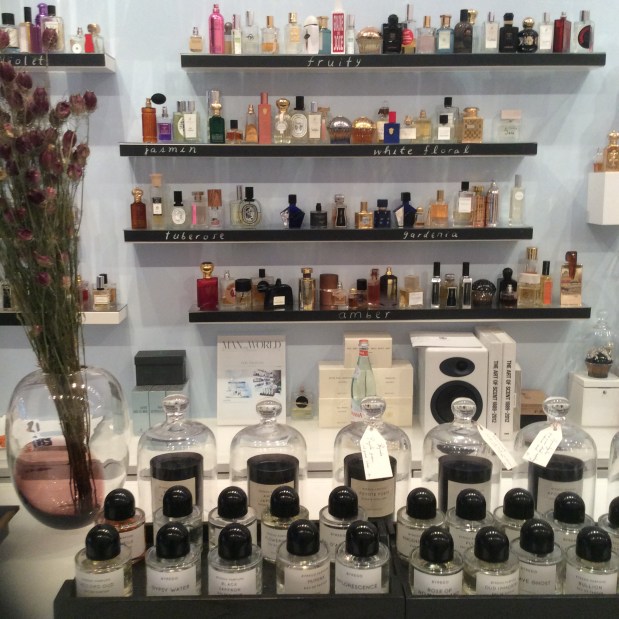
Scent Bar. Such a fun boutique to visit! On my one and only visit to LA, a few years ago, I sought it out with a friend, at their first location in Hollywood. I understand they now have two locations in addition to their website LuckyScent. The store has a delightful set-up, with fragrances displayed by categories on open shelves along all the walls (floral, green, spicy, etc.), fronted by a long bar-like counter. The sales associate responded knowledgeably to my interest in florals, especially lily of the valley, pulling out a wide range of fragrances for me to try, including some I had not heard of before. I ended up buying a terrific Byredo sampler and was also given several samples of the other suggestions she made. I love supporting an independent business like this, btw.

Nordstrom. This department store chain is famed for its customer service, and our local store fits the claim. It has open containers throughout the fragrance department with small, empty sample atomizers that one is invited/encouraged to fill oneself from the many testers on display. Now THAT is nice. Sales associates there have been less expert than those at NM or ScentBar, but still very helpful and courteous.

Sephora. Although service can be hit or miss, depending on the store you visit and who’s on duty that day, I have had several excellent experiences at Sephora, with enthusiastic young sales associates. What they might lack in detailed knowledge, they have compensated for by their willingness to suggest and offer samples of various fragrances, in sincere attempts to help. As a result, I’ve bought more at Sephora than I otherwise might have, because most of what’s in its stores just isn’t “me” — I don’t really experiment with make up, or use most of the products they carry.

What have others experienced that counts as excellent customer service? Praise and compliments only, please, we are dwelling on the positive in this post!

Fragrance Friday: Hair Spray/Colette

Fragrance Friday: Hair Spray/Colette

I’ve now tried something that has tempted me for a while: fragrance for one’s hair, which seems to be a lasting trend. It makes sense, because many people think that fragrance lasts longer on hair than on skin, hair won’t react to allergens as skin might, and most of us are used to scented shampoos. Hair fragrance is a logical next step, and probably more effective than shampoo that gets rinsed out.

When I found two of Tocca’s hair mist fragrances on sale locally, and they happened to be two of their scents that I have previously liked, Liliana and Colette, I pounced. The first one I’ve used is Colette, and I’m happy to say that it is delightful! Fragrantica describes the EDP as “the natural scent of a woman”, a “warm, spicy and sweet” fragrance, with  notes of “bergamot, mandarin, lemon, juniper berry, pink peppercorn, jasmine, violet, cyclamen, incense, sandalwood, musk, amber, vanilla and cedar.” The hair fragrance seems to have the same notes, but it is based on a light, sheer oil instead of alcohol. I don’t detect any oiliness on my hair after I spray it on.

The hair mist definitely opens with a nice light burst of citrus notes, then it quickly moves into a more floral middle stage. None of the flower notes are strong or overpowering, including the jasmine. The vanilla note emerges soon after that, and remains as the base note most evident to my nose, while the other warm base notes gently support and enhance it. It’s a little powdery, and very pretty. It is a peaceful kind of fragrance; it would work well for a quiet afternoon reading at home, or a walk in the park with a friend, or a cuddle session with someone you like — romantic partner or child. I have worn it to bed a couple of times, and it is a soft, serene scent to waft one to sleep. The bottle is really pretty too, heavy with an ornate top. This design may have been discontinued, however; I saw smaller, simpler bottles on the Tocca website, in other scents.

If you like soft, feminine scents and want to try something in your hair, I can recommend this one. Have you tried any other hair fragrances, from Tocca or other brands? Has anyone tried the Chanel No. 5 hair mist?

Bottles of Tocca hair fragrances

Hair fragrances from Tocca; photo from Fragrantica.


Fragrance Friday: Incense

Fragrance Friday: Incense

A little over a week ago, I had started writing a post about fragrance gifts, in particular how to give someone a fragrance when you’re not sure what that person might like, or whether the recipient might want to try something new. Then on Friday, December 15, we found out that my beloved mother-in-law had died early that morning. My post about holiday gifts suddenly seemed frivolous, and I didn’t have the heart to post anything that day or in the week since; we scrambled to get to her funeral, which was held in another state on Tuesday.

We have just returned home, and I’m trying to resume normal routines, as I know she would want us to do. So for this Fragrance Friday, I’ll write about the beautiful service that celebrated her life a few days ago. My mother-in-law was a devout Roman Catholic; church, faith, and family were central to her life. She and my father-in-law were married for 60 years. He knew exactly what she wanted for her memorial service: a mass, attended mostly by her large extended family and close friends. It was perfect. My mother-in-law loved Christmas and was one of those enthusiasts who decorated every surface with Christmas-themed items starting in mid-November. She often left them up until late January, which we loved, and she made us all many Christmas-themed items, like a handknit Christmas stocking for every grandchild, which are hanging right now from our mantel, and beautiful pieces of needlework like the birth samplers she also made for all her grandchildren. The church where her funeral service was held was filled with evergreens, including several simple trees, bare of all decoration except a few pine cones on their branches and bouquets of scented white flowers — lilies, roses, delphiniums — at their base. She would have loved that, as well as the snow that had fallen the day before, leaving a soft white blanket over the ground.

The priest led this traditional service very capably, including his use of a thurible to cense her casket. This is an ancient tradition in the Roman Catholic church; the fragrant smoke of the incense symbolizes the prayers of the faithful rising up to heaven, as in Psalm 141 (140), verse 2: “Let my prayer be directed as incense in thy sight: the lifting up of my hands, as evening sacrifice.”  It can also symbolize the soul rising to God. The priest swings the thurible, which is a type of censer used to contain burning incense, always in multiples of three times to stand for the Father, Son, and Holy Spirit. The incense is often made with frankincensebenzoinmyrrhstyraxcopal or other aromatics. These are associated in many cultures with sacrifices, gifts to divinities, and purification, leading to the tradition that the Magi who came to find the newborn Jesus brought him those as gifts, recognizing that he was divine and also that he came to sacrifice himself to save and purify us.

The sadness of the funeral service was gentled by the music and beautiful surroundings, by the loving family gathered to honor my husband’s mother, and by traditions like the use of incense. Its fragrant smoke lingered in the air, sweet and aromatic, as we bade her goodbye. It seems impossible to understand that we won’t see her again in this life; but we are glad she is released from illness and suffering, and we pray we will see her in the next.

Pope Francis, incense, Mary, and Christ Child

Pope Francis, incense, Mary, and Christ Child

Fragrance Friday: Cranberry Chutney

Fragrance Friday: Cranberry Chutney

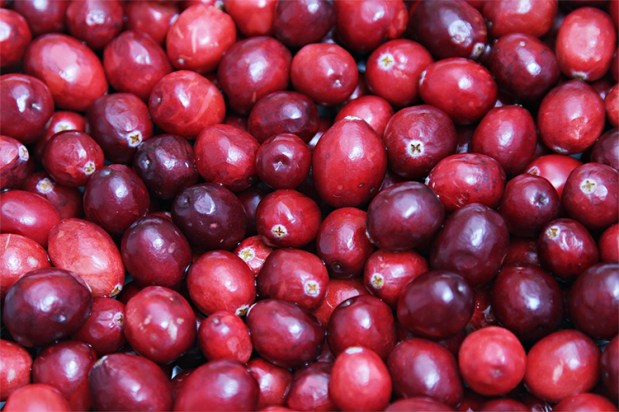
Like many of you, I’m sure, I spent most of yesterday (Thanksgiving) in the kitchen, happily cooking my way through a number of favorite recipes. One of them is a fragrant chutney I discovered a few years ago, made with cranberries and an excellent replacement for the ubiquitous cranberry sauce that lingers, uneaten, on too many Thanksgiving tables.

Cranberries are considered one of the quintessential Thanksgiving foods, probably because cranberries are native to North America and were known to have been eaten by the Native Americans, and by English settlers in North America as early as the first half of the seventeenth century, according to Martha Stewart. They are highly nutritious, a true superfood with a lot of nutrient bang for the caloric buck as they are low in sugar. However, traditional cranberry sauce recipes tend to add a lot of sugar to this otherwise healthy fruit. As a lover of Indian food, I was happy to find several different recipes for cranberry-based savory chutney; the version I make includes much less sugar, and one of my favorite spices/fragrances, cardamom.

Cranberry Chutney recipe (adapted from Food and Style):

Continue reading

Fragrance Friday: Les Saisons Automne

Fragrance Friday: Les Saisons Automne

Ah, fall. I love autumn. It kicks off with my birthday and showcases my favorite trees, the gorgeous Japanese maples in all their color and variety. I’ve always loved school, and fall is the season of new beginnings in school. The anticipation of a new school year, with new classmates and possibilities … Come to think of it, fall really is the season of anticipation for me. It leads us into Advent, another season I love, and the series of holidays I cherish in America: Halloween, Thanksgiving, Christmas, New Year’s. Anticipation also rises as I plant bulbs in the fall; they produce many of my favorite flowers, often fragrant, and each bulb is like a small gift wrapped in brown paper.

This fall, I am enjoying Van Cleef & Arpels’ Automne, from their series Les Saisons. The perfumer behind it is none other than Francis Kurkdjian, of MFK fame. According to Fragrantica:

Every perfume from the series is dedicated to a certain season of the year: the symbol of the series is a tree that changes, but stays the same. Automne is the scent of the fall; the scent of yellow leaves and moist branches; the scent of a golden autumn forest. Woody fragrance with mild spicy and floral notes warms you like a wool scarf. The composition opens with fresh notes of Italian lemon, black currant and red berries, developing into the heart of white sandalwood, lily and almond. The base is filled with heliotrope, cedar wood and musk.

One of the aspects I am enjoying most about Automne is that it differs from many “fall” fragrances in that it retains a predominantly floral aura while still offering the spicy and woody notes many of us want in an autumnal perfume. Other fragrances I enjoy in the fall are more boozy, more spicy, but I love this one because it reminds me that flowers are still blooming in autumn. My own garden still has a few late roses; my azaleas are throwing off some unseasonal blooms; the sasanqua camellias are blossoming in shades of pink and white. The lily notes in Automne remind me of the fragrance I anticipate from the bulbs I plant in this season, while the delicate warmth and wood notes evoke both the Japanese maples I love and the papery covering of spring bulbs.

The classic Easter lily, lilium longiflorum, is also native to Japan, as is Lilium auratum, the legendary “golden-rayed lily”.

Lilium auratum, or golden-rayed lily of Japan

Lilium auratum; image from http://www.gardenia.net.

I do not grow the golden-rayed lily, but I have a number of Easter lilies in my garden, usually planted out after I have bought them in bud for Easter adornment.

White trumpet Easter lily, or lilium longiflorum.

Lilium longiflorum; image from http://www.southeasternflora.com

Automne opens with a refreshing citrus accord, dominated by Italian lemon but including also black currant and red berries. It feels fresh and lively, not sweet. The scent quickly moves into a combination of floral and woody notes, specifically lily and sandalwood. The creamy almond note is present but it seems to function mostly as a way to soften the edges of the sandalwood and bridge that woody note to the softer floral note of the lily.  This stage lasts a while, though nothing about this scent lasts very long.

As it dries down, Automne gently fades into softer and softer floral notes (heliotrope) underlaid by cedar and some mild spices. In fact, the spice note smells like allspice to me: gentle but very much present. I don’t really notice the musk base note, which is fine. After about an hour, Automne is really a skin scent with little sillage, but I enjoy that. It is an excellent fragrance to wear to office, church, library, etc., as it won’t affront anyone’s nose and stays close to its wearer. I also like it because you can’t really overspray it. Its longevity improves if applied over moisturized skin; I’m looking forward to trying it over a light body oil, for example, SheaMoisture’s baby oil that contains traces of frankincense and myrrh. That seems like a very nice way to anticipate the arrival of Advent in this autumnal season of anticipation.

What do you like or dislike about this season? What are some favorite fall fragrances?

Fragrance Friday: Un Jardin Apres La Mousson

Fragrance Friday: Un Jardin Apres La Mousson

Given the hurricanes we have recently endured here in my part of the world, and in honor of my dear friend who evacuated from Florida a week ago and is able, happily, to return to her intact home tomorrow, it’s time for me to comment on a favorite fragrance: Un Jardin Apres La Mousson, translated as “a garden after the monsoon.” Very apropos, especially considering that my friend is a landscape architect and designer of lovely gardens!

Un Jardin Apres La Mousson is, of course, one of the “Jardin” series of fragrances created for Hermes by Jean-Claude Ellena while he was their in-house perfumer. I love all five of them, but this one is high on my list. Hermes’ website describes it as a unisex fragrance meant to evoke the calm of a wet garden in India after the rain“A serene expression of nature’s rebirth after the monsoon rains.” Jean-Claude Ellena

Un Jardin après la Mousson explores unexpected aspects of India, when the monsoon gives back what the sun has taken from the earth, and drives away the scorching breath of drought. In this novella, ginger, cardamom, coriander, pepper and vetiver tell the story of nature’s rebirth, captured in Kerala in a world overflowing with water.

Mousson’s specific fragrance notes include: cardamom, coriander, pepper, ginger, ginger flower, vetiver, and unspecified citrus, floral and water notes (it seems that the citruses are lime and bergamot). The spices are not hot or warm or traditionally “spicy.” They present themselves as “cool” spices, after a refreshing initial gust of citrus on first application. Omitted from the official list of notes is melon, which clings to the whole composition; some wearers experience that note as more like cucumber. Its presence is confirmed by a later analysis revealing that the aromachemical Melonal is a key ingredient.

Both melons and cucumbers are members of the plant family Cucurbitaceae, the flowering gourds. Both are indigenous to India and have been cultivated there for thousands of years, possibly as long ago as 3000 years. Many varieties of each are cultivated in Kerala and are widely used in Indian cuisine, with cucumbers especially often combined with the spices listed as notes for Mousson. The cucurbits grown in Kerala are “rain-fed crops”, benefiting from the region’s monsoon rains.

Cultivation of gourds and melons hanging from vines in India

Melons and gourds cultivated in India; photo from asianetindia.com

I have never been to India, but I have read that Kerala is one of its most beautiful regions, with tropical beaches and islands, breathtaking waterfalls, tea and cardamom plantations in the hills, rivers, lakes and houseboats. Some travel writers say that monsoon season is an idyllic time there, as the rains are not incessant deluges as in other regions, but daily downpours that last a few hours and disperse every day, allowing sunshine to reveal a remarkably verdant, rain-washed landscape. The rains replenish the famous waterfalls, lakes and rivers and cool the air. Monsoon season is also the time for the harvest festival of Onam; and it is reputed to be the best time for the ayurvedic treatments for which the region is famous.

Kerala, India, waterfall and green mountains during monsoon rainy season.

Kerala waterfall in monsoon season; photo from iryas/wikipedia.

Jean-Claude Ellena visited Kerala more than once during his work on Mousson. One of his trips is described by Phoebe Eaton in Liquid Assets:

In coastal Kerala, spices have been trafficked since the Romans rode in on the winds of the monsoons seeking cardamom and pepper: black gold. Women wear their saris differently here than they do up north, draping them like togas. And when the first monsoon blows in from the Arabian Sea — and it always seems to arrive during the first week of June, extinguishing the scorching rays of the summer sun and ushering in a joyful verdant renewal — the modest women of Kerala rush out into the rain, and the saris cling close to the body.

Chant Wagner wrote a lovingly detailed review of Mousson when it was released in 2008, at www.mimifroufrou.com. She’s a fan, as is Luca Turin; Chandler Burr was not. The latter’s review is puzzling; he spends more than a few sentences on his hypothesis that Ellena’s new creation would present a new experience of the aromachemical Calone, then he expresses outrage that it turns out not to be among the ingredients and calls Mousson a failure. Turin, on the other hand, praises the “core accord” as a “combination of melon, capsicum, and peppercorns” with an “incongruously fruity” effect. His review also notes the watery effects which Chant Wagner describes so well:

From the vantage point of the watery motif, it offers a notable variation on it by introducing a lactic, milky sensation that makes the perfume feel both aqueous, transparent and cloud-like. The fruit that is showcased here – a green cantaloupe going at times in the direction of a buttery watermelon – is [as] fluidly delineated as an impressionistic fruit can be.

Aqueous, transparent and cloud-like. Those words perfectly describe some of the lovely photographs I’ve seen of Kerala during monsoon season:

Clouds over mountains in Kerala, India, during monsoon season.

Kerala in monsoon season; photo sreetours.com

Mousson’s bottle is also lovely; it matches all the bottles of the other Jardin fragrances and, like them, is tinted with ombre shades of green, blue, or both (here, green is combined with blue). The bottle has a pleasing weight in the hand. The outer box is printed with a charming Hermes print of fanciful elephants, monkeys and parrots, cavorting amid flowers with tiny parasols in their grasp.

Print for outer box of Hermes' eau de toilette Un Jardin Apres La Mousson

Un Jardin Apres La Mousson print; hermes.com

I find Un Jardin Apres La Mousson intriguing, delightful, and different. I especially enjoy it during the summers here, which are hot and humid. As an admitted fan of all the Jardin fragrances, and a gardener myself, I may be biased! Have you tried this, or any of the others, and what did you think?

un-jardin-apres-la-mousson-boat

Un Jardin Apres La Mousson; image from Hermes, perfumista.vn