As regulars here know, in addition to being somewhat obsessed with fragrance, I’m also a gardener. I would say, perhaps, a longtime or experienced gardener, except that one is brought up short by Thomas Jefferson, who wrote to a friend: “Tho’ an old man, I am but a young gardener.” So true! One is always learning in a garden, always making new discoveries.
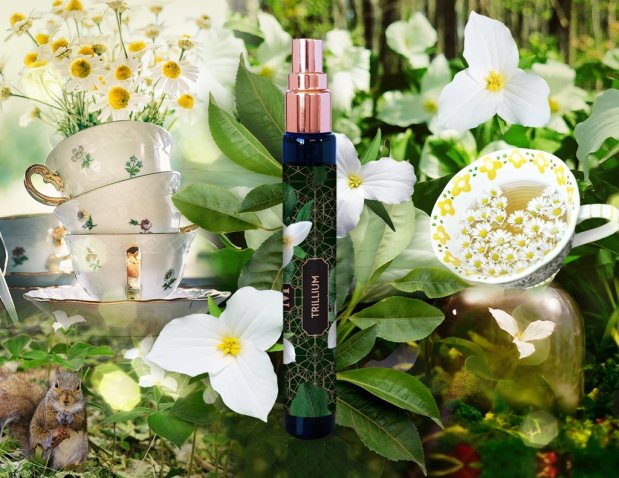
However, the house we bought so many years ago (our first and only) came with an old garden that had been lovingly cultivated over decades by a couple who raised their own family here. They were master gardeners, and a former neighbor who knew them told me that she thought the husband had actually been a landscape architect. For years after we first moved in, every season brought new discoveries of their plantings and how cleverly they had designed and planted our garden. One such discovery was a planting of the American native wildflower, the trillium. I call it a discovery because trilliums famously appear suddenly in the early spring, then go dormant and disappear completely until the next year. I was so surprised when I came across a large clump in the wooded, back part of our garden that had seemingly come out of nowhere, and then equally surprised when I went back several weeks later and it was completely gone, like magic.
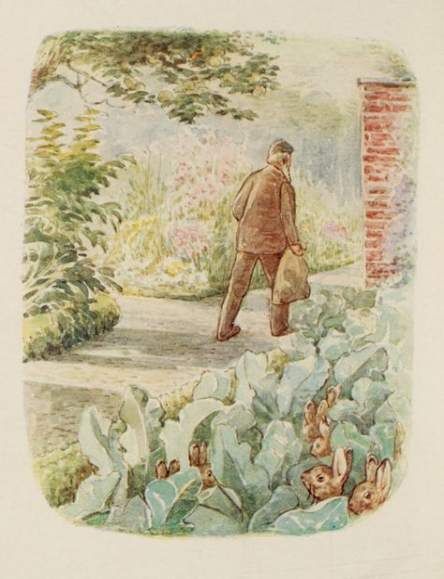
Given how much gardening is on my mind (and under my fingernails) these days, it seems fitting to write about one of 4160 Tuesday’s quirkier scents, Le Jardin de Monsieur McGregor. Yes, it is named for the antagonist gardener in the Peter Rabbit stories, and also in homage to Jean-Claude Ellena’s Jardin series of scents for Hermes (all of which I own and enjoy). Perfumer Sarah McCartney writes that it was created during one of her perfume-making workshops, with a focus on the aroma molecule Hedione, which creates an impression of freshness and floralcy, with notes of jasmine and greenness. The goal was for the class to create the scent of a cottage garden in the Lake District.
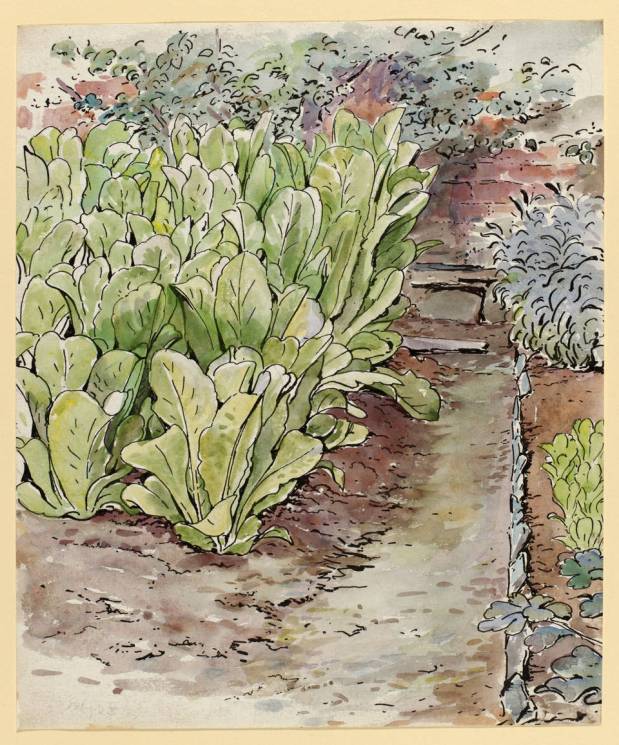
For those who may not know, the famous author and illustrator of the Peter Rabbit books and many others, Beatrix Potter, played a key role in preserving thousands of acres in the Lake District, including leaving 4000 acres of countryside and 14 farms she owned to the National Trust. She was, of course, a marvelous illustrator, but she was also a gifted botanist, naturalist, gardener, and farmer, and the plants in her illustrations for her children’s books are botanically accurate down to the last details. They include many of the plants mentioned in the notes and materials list for Le Jardin de Monsieur McGregor.
Welcome to the weekly Perfume Chat Room, perfumistas! I envision this chat room as a weekly drop-in spot online, where readers may ask questions, suggest fragrances, tell others their SOTD, comment on new releases or old favorites, and respond to each other. The perennial theme is fragrance, but we can interpret that broadly. This is meant to be a kind space, so please try not to give or take offense, and let’s all agree to disagree when opinions differ. In fragrance as in life, your mileage may vary! YMMV.
Today is Friday, April 9, and I’ve had a lovely week, starting with Easter. I took this week off from work, to rest up before the final push toward the end of the semester and final exams (I work all summer, too, but it’s less hectic once the students have left). Usually I would have had a week off for a university spring break in March, but that was canceled this year, in an attempt to reduce travel back and forth from the campus and thus spreading infection.
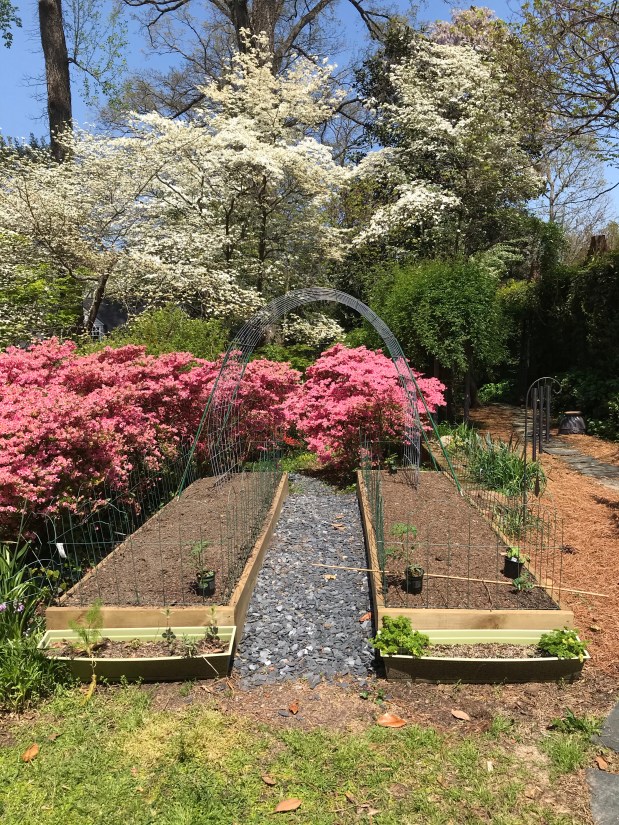
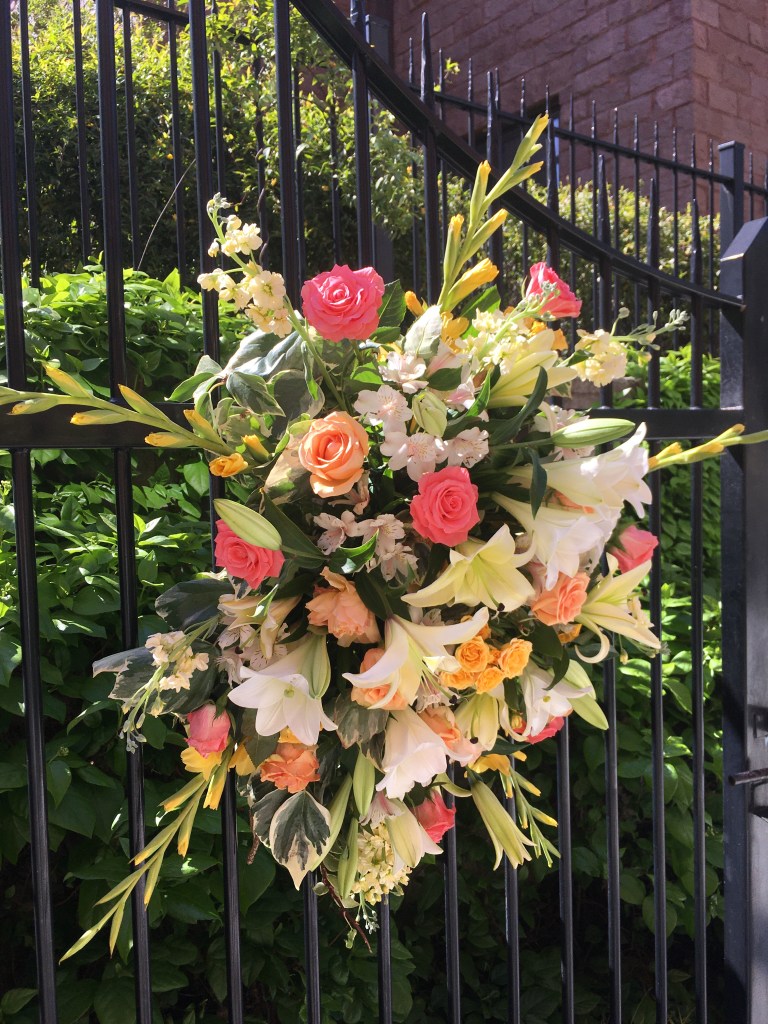
The weather has been beautiful, including Easter Sunday, and we were able to attend church in person, outside in the courtyard. The volunteers who handle everything from set-up to flowers outdid themselves, and everything was just beautiful. I’ve spent most of this week gardening, including in my new raised-bed vegetable garden, so things look tidier than usual!
Easter flowers
We’re also making real progress on putting our house back together — the two semi-demolished bathrooms now have floors and tiles again, and most of the plumbing fixtures are back in place. The shower in one bathroom is mostly rebuilt. Electrical work has been done to replace lighting in that bathroom too, though the fixtures have to wait until all the plaster and paint have been redone. The living room and dining room still look like scenes of demolition, with great gaping holes in the ceilings and one wall, but those will be handled as part of one massive re-plastering. I can’t wait to have my house back, after all these months!
Meanwhile, the fragrant flowers blooming in my garden include: the first roses; Korean lilacs; late daffodils; violets; lilies of the valley. The large pots of herbs I planted last year are sending up new growth, including the pretty silver-leaved lavenders. Since I’m at home all day to take proper care of them, I’ve started quite a few seeds, and I’m excited to see how they do. I also have pots of forced hyacinths and Easter lilies in the house, which I’ll plant out when they start to fade.
How was your week? What’s in bloom near you? Do you have any favorite fragrances with notes from the flowers in my garden, or yours?
I recently obtained a mini of vintage Dioressence eau de toilette, in a blue-marbled box with a small, squarish splash bottle that resembles the vintage houndstooth bottles of other Dior fragrances from the 1980s. It is so well-suited to the current fickle weather we’re having in mid-February! I love all my spring floral fragrances but I don’t yet feel ready to pull them out again, other than an occasional spritz of Ostara to remind me that the daffodils are on their way. We’ve had weeks of cold and rain, though I’m thankful to have missed the deep freeze and unexpected snowstorms that hit other parts of the country this month. But Dioressence feels right today, as the sun shines brightly over a still-chilly landscape and my garden, where I have new raised beds that are full of soil but not yet planted.
The version I have dates from the 1980s, and it is a 1979 rework of the original, done by Max Gavarry, who worked with Guy Robert to create the original in the 1960s. I love the story of its origins, as told by Luca Turin to Chandler Burr and described in Burr’s book “The Emperor of Scent.” Apparently Guy Robert had been tasked with creating a new scent for Christian Dior that would launch with a new collection of Christian Dior ready-to-wear furs, and the brief was to create something very animalic but related to earlier Dior fragrances like Miss Dior while also contrasting with them. He was wrestling with this problem when he went to a broker’s office in London to assess some real ambergris for potential purchase. Turin’s recounting, via Burr:
The New Yorker magazine, renowned home of literary legends, has published a piece called “How To Make Sense of Scents”, by staff writer Rachel Syme. She reads Fragrantica! Like many fragheads, she traces her interest in perfume back to childhood and her mother’s favorite scents, which included Anais Anais and Poison. She became a hoarder of perfume samples from Surrender to Chance and The Perfumed Court, like many of us.
Ms. Syme’s piece discusses the way that most of us lack the vocabulary to describe scents accurately and consistently. She also highlights a recently published book (October 2020), Harold McGee’s “Nose Dive: A Field Guide to the World’s Smells” (Penguin Press). McGee is actually a food scientist, so his observations range from the molecular to deviled eggs, with many stops between.
Where McGee seeks a common vocabulary for exploring the osmocosm, Muchembled reminds us that the variables of time and place may defy a truly shared language. What we smell depends on what’s in vogue and what’s valued—on what cultural forces happen to be swirling in the air.
She ties Muchembled’s discussion of the impact of plague epidemics of the Middle Ages on the populaces’ relationship to the sense of smell, to the current pandemic in which we face a deadly virus that spreads largely through aerosolized forms and can also deprive sufferers of their sense of smell, temporarily or permanently.
I will have to seek out more of Ms. Syme’s writing! I’ve already bought the Kindle version of McGee’s book and will likely do the same with Muchembled’s tome (as an incorrigible book hoarder, I try to buy most books in digital form these days). After all, who doesn’t love a writer who voices these scentiments:
I also have a new appreciation for the elusive quest to track down smells: while there is an undeniable appeal to pursuing a “proper language” for discussing the osmocosm, there is also something to be gained by accepting that much of the pleasure of nasal perception is untranslatable. When we are at last able to swoon together again, unmasked and unmoored, over lilacs or hot brioche, what we will really be sharing is secret reverie.
Featured image: Photograph by Delaney Allen for The New Yorker.
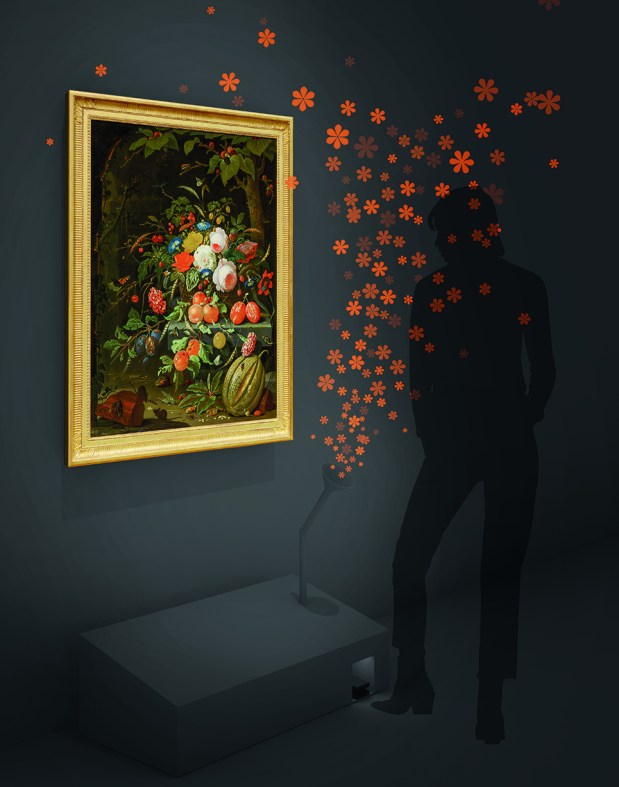
One of my favorite fragrance blogs, Now Smell This, posted a brief mention of an upcoming art exhibit at the Mauritshuis museum in Holland. It is called “Fleeting — Scents in Colour”, and it will pair artworks with the imagined scents of what is portrayed. Apparently, some of those scents will be pleasant, and others — not so much. But what a great idea!
I think fragrance is under-utilized as a partner to other arts, but I understand why — it is hard to use in live performance spaces, for example, unless one decided to have one dominant smell, because how do you clear one out of the air to make room for another? And some people could be allergic, even if it just makes them sneeze. Pairing more static artworks like paintings with fragrance one can smell in limited space seems more feasible, though I wonder how this will work in the ongoing pandemic of airborne COVID-19.
Kudos to the Mauritshuis for even trying! Here is their description:
Fleeting – Scents in Colour
11 February 2021 – 6 June 2021 – Scented flowers and perfumes, foul-smelling canals and unpleasant body odours, smell and well-being, new aromas from far-away lands (spices, tobacco, coffee and tea), the disappearing smells of the bleaching fields, old crafts and more. Can life in the seventeenth century be captured in smell? How are smell (and scent) portrayed? What significance did people attach to smell? And what aromatic connotations do artworks have? In this exhibition, the Mauritshuis will undertake smell-historical research. In the vicinity of the art, various historic scents will be prepared to bring the paintings in the exhibition to life.
This effort reminds me of my 2019 trip to Venice (sigh — no travel for me in 2020), specifically my visit to that city’s Palazzo Mocenigo, which houses a perfume museum. I miss traveling, and I miss my “perfume tourism”, but I was so lucky to have been able to take more than one lovely trip with my husband in 2019. While 2020 was a lost year for travel, other than one much-needed week at a beach to which we could drive, my fingers are crossed for at least the second half of 2021. And since he won’t be traveling for work much this year, and who knows what international restrictions will be in place, we’ll probably get more creative in our travels and explore more of our own large and beautiful country.
Do you engage in “perfume tourism”, by which I mean seeking out perfume-related sites and stores in places you visit, and maybe bringing back perfume souvenirs?
Welcome to the weekly Perfume Chat Room, perfumistas! I envision this chat room as a weekly drop-in spot online, where readers may ask questions, suggest fragrances, tell others their SOTD, comment on new releases or old favorites, and respond to each other. The perennial theme is fragrance, but we can interpret that broadly. This is meant to be a kind space, so please try not to give or take offense, and let’s all agree to disagree when opinions differ. In fragrance as in life, your mileage may vary! YMMV.
Today is Friday, January 22, and I am late! I apologize — our spring semester began this week and I taught a new course for two hours this morning, so I was a bit distracted. I really do need to set up these posts in advance for automated posting, but I like adding in stuff about what actually happened this week.
A LOT happened in the US this week; we have a new President and VP, and we had inauguration events that started on Tuesday and continued much of the week. My son went back to his college dorm this week; we will miss him so much! We got spoiled, having him home for the last two months. I don’t know what our dog Lucy will do, although she still has four humans here to spoil her. She has a particular soft spot for the youngest, though.
One of the Christmas gifts we sent off with him was a restock bottle of Davidoff’s Cool Water, his fragrance of choice for the last few years. I chose it for him at his request for recommendations, because it is a quality scent but very affordable when he has to buy it himself. Created by Pierre Bourdon, it was launched in 1988 and is widely thought to be the progenitor of many (if not most) “aquatic” scents. Top notes are listed as Sea water, Lavender, Mint, Green Notes, Rosemary, Calone and Coriander; middle notes are Sandalwood, Neroli, Geranium and Jasmine; base notes are Musk, Tobacco, Oakmoss, Cedar and Amber. However, it has been reformulated over the years, so I’m not vouching for that note list! It’s enough to say that it smells fresh, clean, and summery, with a youthful vibe but not so much that only the young can wear it.
What has your week been like, in fragrance or just regular living? Are you sticking to any New Year’s resolutions? We are doing a Sober January in this house — so far, so good!
From the Perfume Professor! I haven’t done one of these Zoom sniffalongs yet, but I’m very intrigued. Maybe over the upcoming winter break … Have you tried one?
Since we truly enter the holiday season this week, with Thanksgiving to be followed swiftly by Advent, Hanukkah, Christmas, New Year’s, today seems like as good a time as any to comment on Clinique’s Wrappings, which for many years was available only during the winter holidays at certain high-end stores. Nowadays you can buy it directly from the Clinique website (maybe they hide it after January?), although the copy describes it as “our once-a-year fragrance, here just for the holidays.” Regardless, Wrappings seems to have developed something of a cult status, although it is very reasonably priced, $47.00 for the gift set of a parfum spray and body lotion, and often marked down after Christmas (so don’t pay inflated prices on eBay).
Launched in 1990, Wrappings fits in well with a house whose most famous fragrance for many years was Aromatics Elixir. It is a gentler sibling, described on Fragrantica as a “floral aldehydic” fragrance. (I disagree with that characterization). Top notes are Green Notes, Aldehydes, Artemisia, Nutmeg Flower and Lavender; middle notes are Hyacinth, Orris Root, Cyclamen, Carnation, Rose and Jasmine; base notes are Oakmoss, Cedar, Sea Notes, Patchouli, Musk and Leather. Wrappings has a clean vibe to it that is well-suited to the decade of the 1990s, which embraced clean and aquatic fragrances. It is sold in parfum format, in a 25 ml bottle, often in a gift set with body lotion.
When I first spray it on my wrists, I smell a note that isn’t on the list above, something citrusy. It might be bergamot, because it isn’t sweet or fruity, and it blends in well with the green and herbal notes that also open this fragrance. I was relieved to read earlier reviews by Persolaise and MimiFrouFrou/The Scented Salamander, in which both commented on the citrusy note, confirming what my own nose was telling me! The reason I don’t agree with Fragrantica’s category is that when I read “floral aldehydic”, I think of scents like White Linen, or Chanel No. 22. And Wrappings is nothing like those. I can sense the aldehydes boosting the opening, giving it lift and sparkle, and a certain brisk chill, but they’re not as dominant as they are in, say, No. 22. The herbal notes are what linger throughout the opening stage, to my nose, especially the artemisia and lavender. Another commenter has called Wrappings a “feminine fougere”, and that sounds exactly right to me.
I barely smell any of the listed floral notes. If the flowers are there, they are not greenhouse-grown, luxuriously tended until they are gathered into bouquets for indoors. No, these are flowers of the Mediterranean growing wild in their natural habitats, wafting over grasses and herbs. And given how faint they are, and how well Wrappings suits late autumn, I would say that they are the last, brave blooms that show up sporadically throughout a sunny fall season, thriving in those cool nights and warm days until the first frost stops them in their tracks and sends them into dormancy.
Many commenters smell pine in Wrappings, but I don’t. I do smell a green woodiness in the middle stage; I don’t think it is the cedar, listed as a base note, it is probably the oakmoss, which continues through the drydown stage. There is an alluring mineral note in the drydown that I think comes from the “sea notes”. The musk that lingers longest at the end, with a hint of the oakmoss, is quite soft, and I don’t smell any patchouli or leather.
Wrappings lasts several hours on my skin, but it is quite faint after 7 hours or so. This seems to be a parfum concentration, per the label on the bottom of the bottle, so I don’t think it carries very far. The Scented Salamander’s review mentions that early advertising for Wrappings compared it to a chemise, slipped on over clean, bare skin, and I think that’s right. The current website says it “hugs skin in layers of warmth and brightness.”
Although I think “feminine fougere” is apt, this could certainly be worn by men. Have you tried Wrappings?
Easy spring outfit. Sarah Butler of @sarahchristine wearing Paige Sela Silk Slip Dress in Dream Blue in Seattle, Washington.






 Serenity Now Scents and Sensibilities