Notes on Notes: Oud

Notes on Notes: Oud

November’s “Notes on Notes” is about oud, or agarwood. I don’t think I can provide a better or clearer explanation than this, from Sarah McCartney in her book “The Perfume Companion: The Definitive Guide to Choosing Your Next Scent”:

Oud is Arabic for wood, and you’ll also see it spelled oudh, aoud, and aoudh. An oudh is also a musical instrument which looks a lot like a lute. In perfumery, though, it’s a specific kind of wood from the agarwood tree, also called aloewood. Even more specifically, this tree must be infected by a species of mould, Phialophora parasitica, which makes it strongly whiffy.

Montage of the development of agarwood and oud essence from aqualiaria trees
Agarwood and its products; image from Researchgate.net.

Perfumer Geza Schoen offered this explanation to Allure magazine in its excellent article:

Natural oud, the scent (the essential oil) arises when a particular fungus places itself on an Aquilaria tree. A reaction creates a resin that slowly embeds into the wood creating agarwood, known as oud, which is then soaked, and using a distillation and evaporation method is developed into an oil.

That is how perfumers in the Middle East, India, and the Far East have traditionally made a essential oil that can be very costly. As many perfume-lovers know, oud has been a trend in Western perfumery for several years (6  Western commercial fragrances based on oud were launched in 2007, over 200 by 2019), but what we mostly encounter is a synthetic re-creation of that oil, which puts oud-based fragrances within reach of many more fragrance lovers. The qualities of oud that don’t attract me are when it is used heavily to evoke smoke or leather. A great reference for some fragrance-lovers, but not really me. However, I’ve read that there are many different facets to oud,  in nature depending on the specific variety of Aquilaria tree and the environment where it was grown, so I’m sure the synthetic creations also vary widely.

I’ll be honest – I can’t think of many oud-focused fragrances that I like a LOT, though I don’t object to it as a supporting player. It may be that my nose is acting sensitive toward a synthetic, but that’s not usually an issue for me. And I’ve gotten weary of every other new fragrance seeming to have “oud” in its name! There is one oud-centric fragrance that I really do enjoy a lot, and it grows on me every time I wear it: David Yurman Limited Edition. It is a classic combination of rose with oud, and both are used with a deft touch. The bottle, by the way, is gorgeous, a heavy, faceted, dark red crystal flacon.
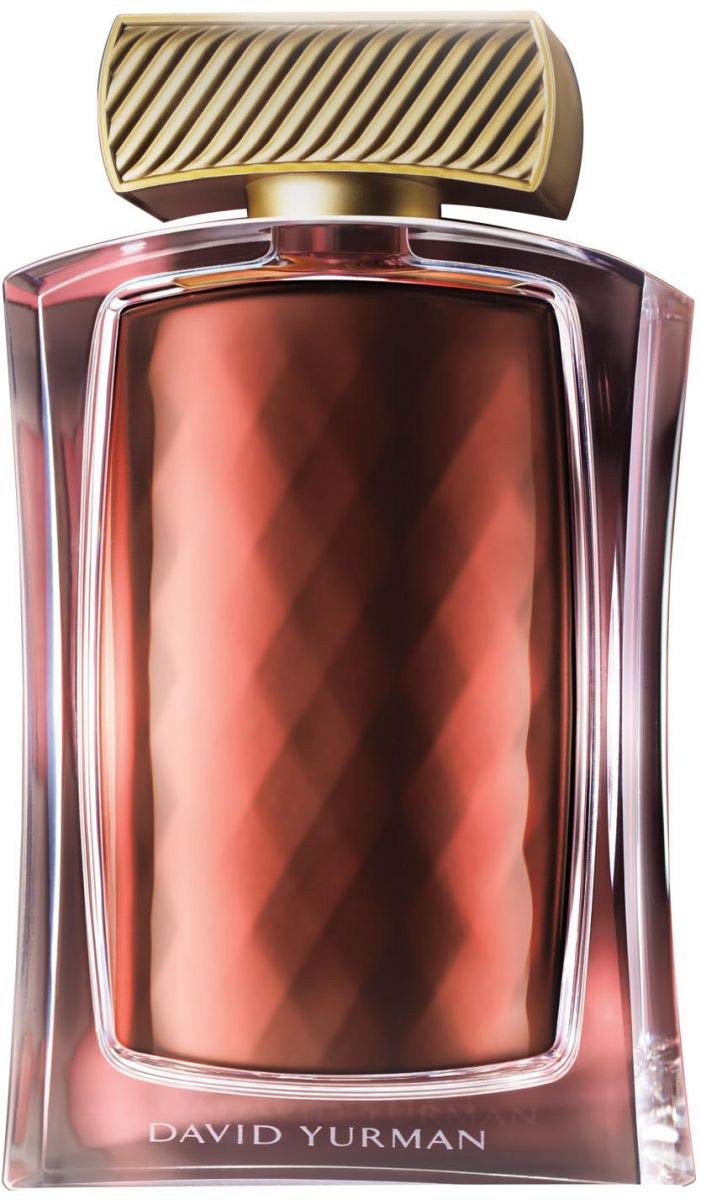
Red bottle of David Yurman Limited Edition fragrance
David Yurman Limited Edition extrait de parfum; image from Amazon.com

Launched in 2011, it is an extrait de parfum with central notes of oud and Taif rose. Top notes also include coriander, geranium, saffron, and raspberry, but the rose and oud notes appear immediately and carry through the parfum’s development, so the typical pyramid structre may not accurately describe it. Heart notes include violet and jasmine, though at this stage my nose is so distracted by the Taif rose and oud that I hardly detect them. Base notes add suede, musk, vanilla, and sandalwood. Interestingly, the notes list makes a point of saying “natural agarwood”, though that is no guarantee that the ingredient used isn’t synthetic.

I think this is a very skillful fragrance. The rose and oud could have been overwhelming, and they’re not, at least not with a controlled application, lol. This fragrance is all about gentle, rosy warmth with a bit of spice. The notes are well-blended, with saffron and fruity raspberry peeking through. The rose fades away sooner than the oud but it still hums softly in the background. DY Limited Edition reminds me a bit of Aramis’ Calligraphy Rose, and I wonder how it would compare to Calligraphy Saffron, which I haven’t tried. It’s not clear who was the perfumer behind DY Limited Edition, but I think it has to have been Harry Frémont of Firmenich, who created all the other David Yurman fragrances (the link will take you to a long interview of him by Richard Goller of the Fragroom blog).. He certainly knows his way around a rose, too, as a creator of Estée Lauder’s marvelous Knowing, as well as dozens of other scents.

Have you tried DY Limited Edition? Or can you suggest other oud fragrances that would appeal to a floral lover like me? Drop by Australian Perfume Junkies to see what Portia has to say about oud!


Notes on Notes: Vetiver

Notes on Notes: Vetiver

Welcome to this month’s installment of “Notes on Notes”, a monthly collaboration between this blog and Australian Perfume Junkies! Every month, we pick one fragrance note and write about it, posting on the first Monday of the month — fragrances we like that feature it, what we like or don’t like about it, anything else we know about it, whatever takes our fancy. For February, the note is vetiver.

Notes on Notes logo
Notes on Notes; image by Portia Turbo.
Continue reading
Scented Advent, December 15

Scented Advent, December 15

What a pleasure, to open today’s Advent calendar drawer and find a sample of Ormonde Jayne’s Ormonde Woman! I’ve tried it before, from a discovery set, and liked it very much, but I’ve bought other Ormonde Jayne scents in full bottles (my favorite being Ta’if), so hadn’t returned recently to this one. Launched in 2002, it was created, like all the Ormonde Jayne signature fragrances, by perfumer Geza Schoen, working with the brand’s founder Linda Pilkington. It is woody and aromatic; the brand’s own description is as follows:

Beginning and ending with the unique scent of Black Hemlock absolute – rarely used in such luscious quality and quantity – this utterly hypnotic, unconventional and mysterious woody essence is combined with jasmine and violet absolute to create a dusky, seductive perfume.

The notes listed on the brand’s website are: Cardamom, Coriander and Grass Oil (top); Black Hemlock, Violet and Jasmine Absolute (heart); and Vetiver, Cedar Wood, Amber and Sandalwood (base). This is a brilliantly structured and executed fragrance. The top notes are very clear and distinct, though well-blended; to my nose, the grass oil is dominant, but then the cardamom and coriander become more evident. As the heart phase emerges and the top notes step back, one can clearly smell both violet and jasmine absolute, with a greenish, woody, undercurrent that I assume is the black hemlock. This middle phase lasts a good while, at least an hour; to my nose, the most lasting middle note is the violet.

Luca Turin and Tania Sanchez awarded Ormonde Woman five stars in their book “Perfumes: The A-Z Guide”, and described it as a “forest chypre.” Comparing it to Chanel’s Bois des Iles, Ms. Sanchez noted that it has “all the sophistication … but none of the sleepy comfort.” Instead, she felt it evoked “the haunting, outdoors witchiness of tall pines leaning into the night.” I agree with the witchiness, but I hesitate to use the word “pines” in relation to Ormonde Woman, lest a reader think it smells like air freshener or floor cleaner! It certainly does not. It does smell evergreenish, to coin a word; but these are living evergreens, rising from a forest floor dotted with violets. It calls to mind a sight often seen on the highways and byways of the Southeast: pine woods in which yellow Carolina jessamine has run wild, so that its vining, yellow flowers fling themselves all over the dark green branches of the pine trees in early spring.

Yellow jessamine flowering vine on pine trees in Georgia
Carolina jessamine in pine trees; image from usinggeorgianativeplants.blogspot.com

Another vine that does this is the wisteria vine, which smells to me more like the violets featured in Ormonde Woman, though not in its native American form (varieties of Asian wisteria, which are fragrant, have escaped into the wild and have become invasive in hardwood forests).

As it dries down, Ormonde Woman becomes warmer and woodier. I can smell sandalwood and amber more than cedar and vetiver, and yet there is a dryness to the base that tells me they are present. This is a lovely, sophisticated but approachable fragrance, and I look forward to getting to know it better!

Roses de Mai Marathon: Ta’if

Aaah. That’s what my nose felt like when I spritzed on some of Ormonde Jayne’s Ta’if this morning. It’s just that beautiful. The fragrance is, of course, named for the famous Taif rose of the Middle East.  Continue reading

Scent Sample Sunday: A Pop-Up, Anat Fritz Tzor’a, and Berdoues’ Trefle & Vetiver

Scent Sample Sunday: A Pop-Up, Anat Fritz Tzor’a, and Berdoues’ Trefle & Vetiver

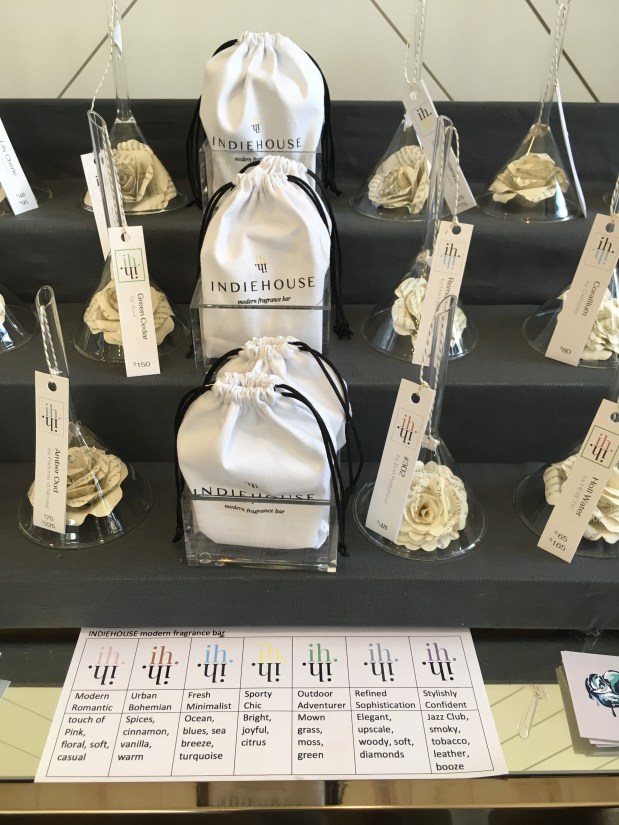
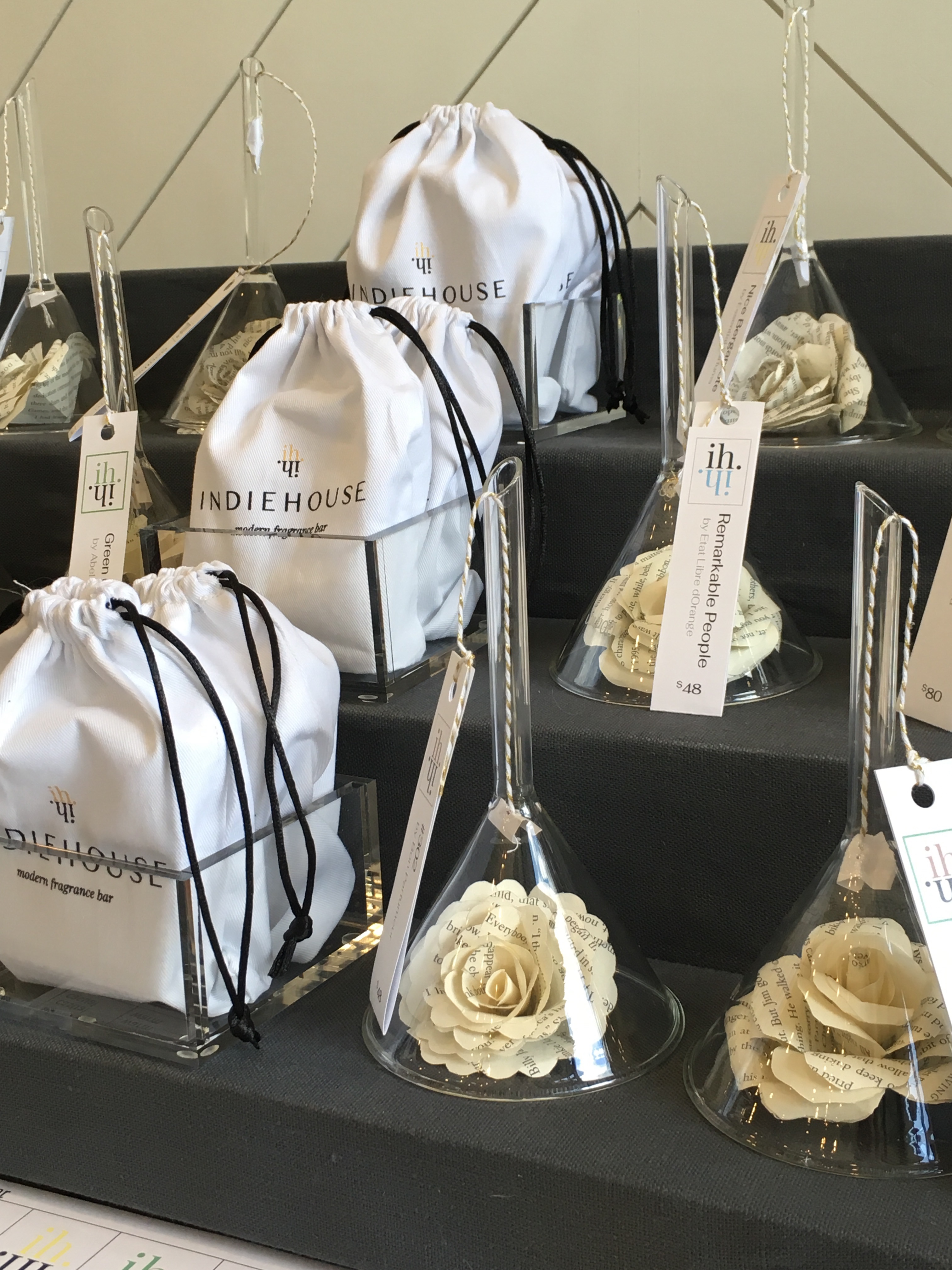
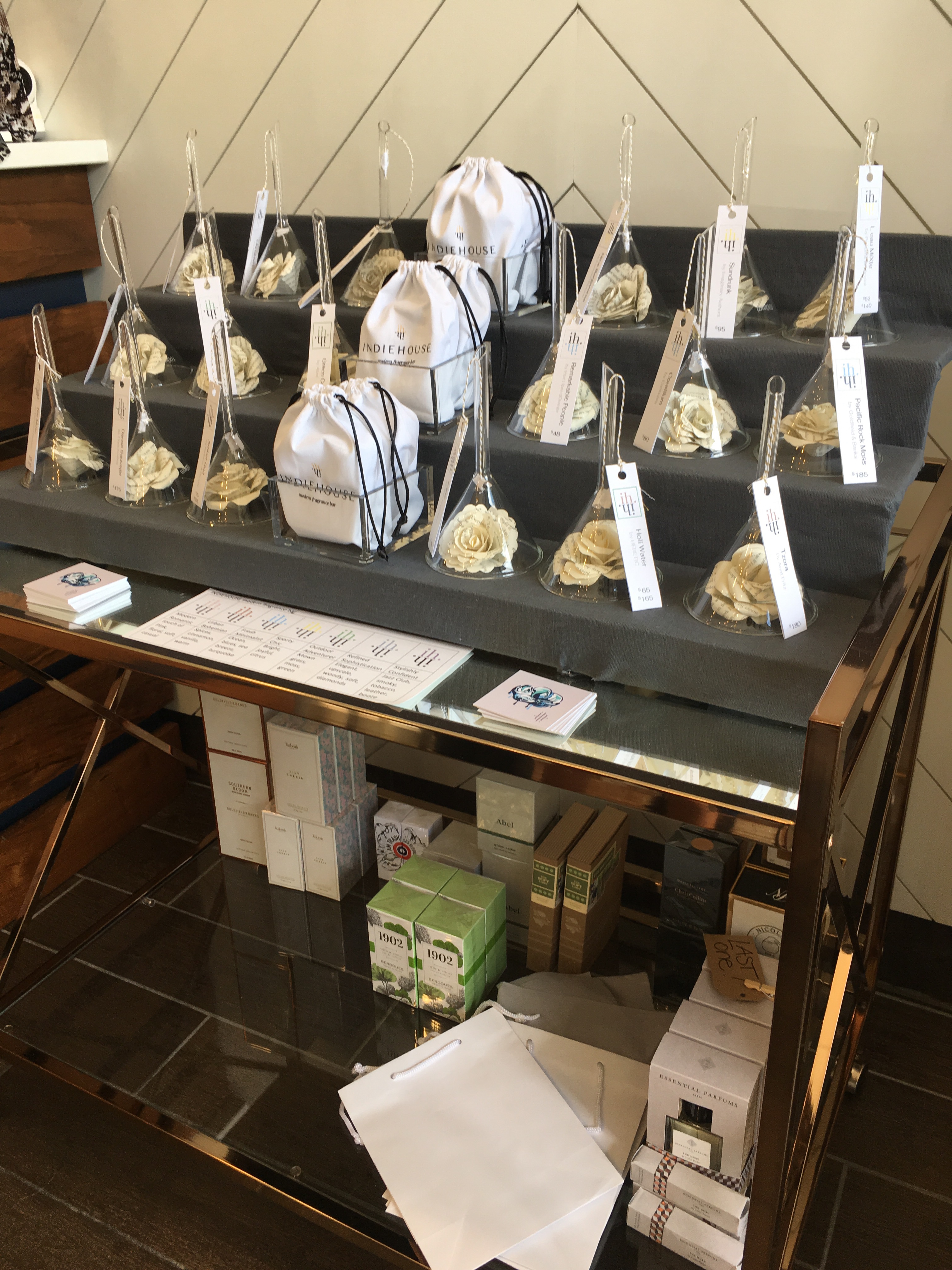
Last weekend, I visited a pop-up store presented by a new niche perfume retailer in my area: IndieHouse. I met its owner, Carrie Hadley, sniffed her small but thoughtfully chosen selection of fragrances for this event, and ended up buying an eau de toilette, Berdoues’ Trefle & Vetiver, from their 1902 line. With my purchase, I received a sample of Anat Fritz’ Tzor’a, another green scent, in eau de parfum.

Anat Fritz is a clothing and accessories designer who started in Berlin and is now based in New York. She has two fragrances, the second of which, Tzor’a, was created by perfumer Geza Schoen, who may be best known for his creations for Escentric Molecules and Ormonde Jayne. The website describes Tzor’a as “a bright, peppery unisex fragrance, featuring a zingy mix of warm citrus, pepper, earth, moss, and woods.” The composition is a pyramid structure: top notes of black currant, clary sage, bergamot, pepper; heart notes of magnolia, osmanthus, jasmine; base notes of cedarwood, vetiver, patchouli, musk, moss. If you are thinking this all sounds quite green, you are right! I love green fragrances, which is what attracted me to Tzor’a after sniffing the clever samples of fragrances that Carrie had created out of paper flowers sprayed with each fragrance and placed under glass funnels.

img_0027


The opening of Tzor’a is the “zingy” part. It is in fact very bright and peppery, thanks to the black current, sage, bergamot, and pepper. Users beware: a little of Tzor’a goes a long way! One spritz on the inside of my elbow lasted for hours and had great sillage — not so strong that it would repel anyone, but definitely radiating for a few feet. As it dries down, I must say that I don’t smell any of the flowers listed as heart notes; on my skin, Tzor’a goes straight into the woody base notes after the bright opening. The Non-Blonde blog’s review made a similar comment about the floral notes. Most prominent is the cedarwood, followed by vetiver. Some Fragrantica commenters have compared it to Terre d’Hermes.  Although it is unisex, it probably inclines more toward the masculine than the traditionally feminine. It is a very dry scent, which makes sense based on the brand’s description of what inspired it:

An ancient piece of land near Jerusalem, where the biblical story of Samson and Delilah begins. On a hill – with a breathtaking view over the whole landscape – lies Kibbutz TZOR Á between pomegranate, olive- and citrus trees. Luscious fruit trees wherever you look. A paradise place.

My imaginary home. The place I refer to when asked for the most beautiful place in the world. TZOR Á is an ode to this piece of nature, which emanates freedom, authenticity and self-confidence. Fresh and clear.

The place Tzor’a is home to a noted winery and series of vineyards in the Judean Hills. Interesting historical note: excavations near this kibbutz in 2011 uncovered a Jewish ritual bath structure dating back to the “Second Temple Period” (first century BC through first century CE). It was the first archaeological site to confirm that the area had Jewish inhabitants as long as 2000 years ago, likely until about the year 70 CE, when the Temple  (and most of ancient Jerusalem) was destroyed by the Romans to put down a rebellion, in one of the more brutal episodes of the Roman Empire.

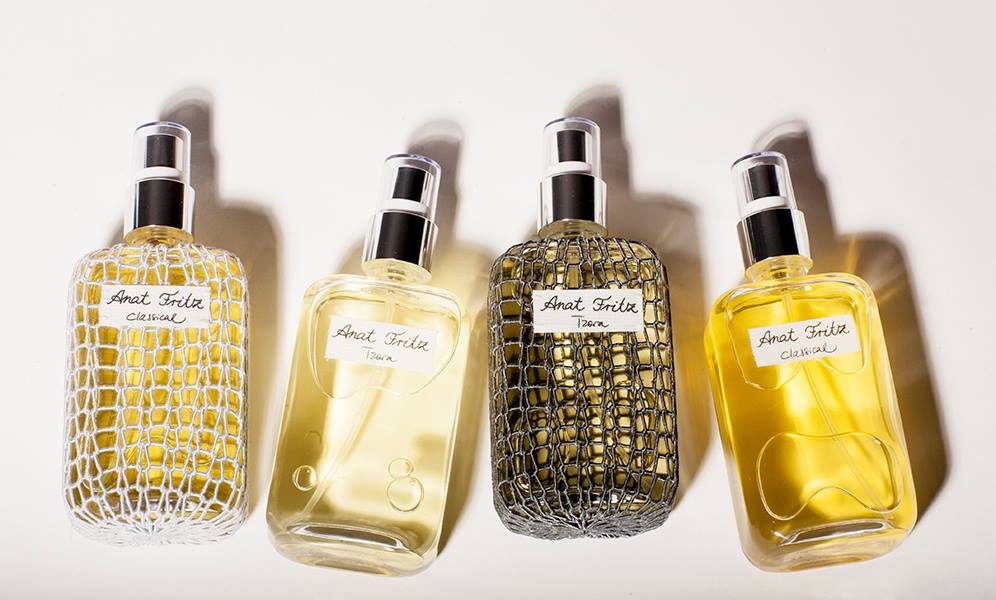
Tzor’a comes in a unique bottle: the bottle itself is a simple shape, a rounded rectangle of glass, but it is encased in a handknit net of sage green yarn, invoking Anat Fritz’ interest in textiles and knits. It is a very appealing presentation.

Anat Fritz perfumes

Anat Fritz fragrances; Tzor’a and Classical; image from http://www.anatfritz.com

All in all, I like Tzor’a a lot, but I think I would prefer it on my husband to wearing it myself. Given how much I love floral notes as well as green notes, and since I don’t seem to be able to smell the few floral notes in this composition, I think it will suit me better on him! It is an expensive fragrance, but the quality and strength are so high, it may be more affordable than it seems from the retail price ($180 for 80 ml), since it lasts so long with 1-2 sprays. Cafleurebon editor Gail Gross is a fan; her review is here.

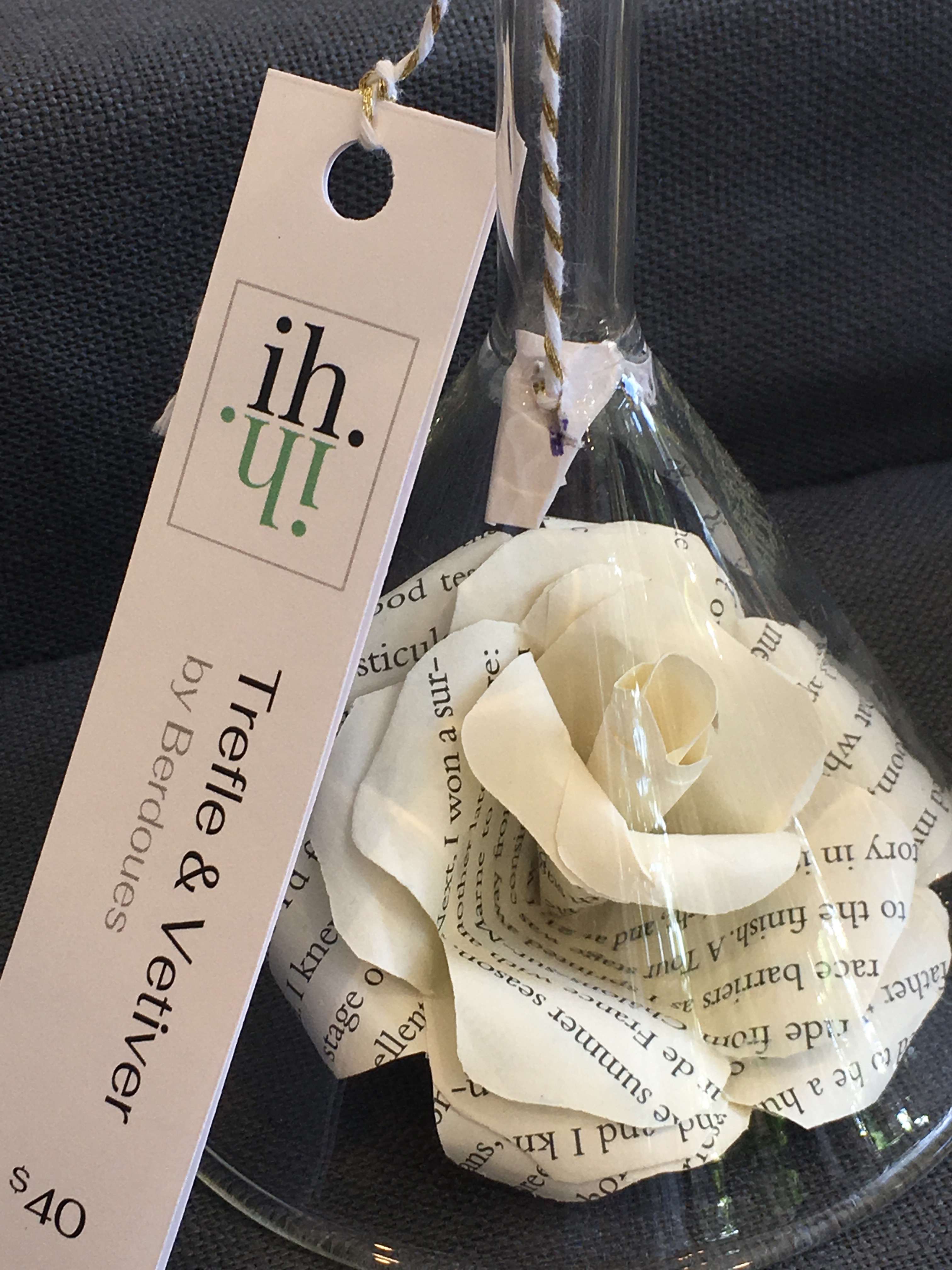
The other green fragrance I tried (and bought) was Berdoues’ Trefle & Vetiver.

img_0033

“Trefle” is French for clover, and the scent does indeed smell like summery clover blossoms. The top notes are apple and jasmine, the heart is clover, and the base note is vetiver. I find this to be more unisex than Tzor’a, because the fruity and floral notes are more apparent to me. It doesn’t last nearly as long as Tzor’a, not surprising since it is an eau de toilette, not eau de parfum. It is also more affordable, coming in at $40 for 100 ml. I was impressed by the wide range of prices that Indiehouse displayed, from the affordable to the luxe. Such a great way to introduce more people to niche fragrances! I look forward to writing more about Indiehouse when the brick-and-mortar store opens this fall.

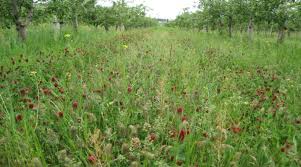
Trefle & Vetiver feels right for the weather and time of year in my part of the US. It is almost October and the days are getting noticeably shorter, yet the weather is still very hot and dry. The combination of bright apple with summery jasmine, tempered by clover and grounded by vetiver, suits that. It still feels like summer around here, but it’s time to harvest apples! Various clovers appear in apple orchards as non-invasive cover crops that help fix nitrogen in the soil, don’t compete with the trees for water, and attract the honey bees and other pollinators that are essential to fruit production. My own garden is too small and shaded to envision growing fruit trees for fruit, but I love the image of apple orchards underplanted with blossoming clover!

Blossoming red clover underplanting apple trees

Red clover in apple orchard; image from http://www.nrcs.usda.gov.

Although Trefle & Vetiver doesn’t radiate as strongly or as long as Tzor’a, it continues to make itself known as a pleasant skin scent for several hours after application. This would be a very nice scent to wear to work; it is subtle and soft as it dries down, but it is a pleasant reminder of the great outdoors when one has to be inside.

Have you visited any pop-up stores lately? Tried either of Anat Fritz’ fragrances? Have any other suggestions for fragrances during a hot, dry fall?