Welcome to the weekly Perfume Chat Room, perfumistas! I envision this chat room as a weekly drop-in spot online, where readers may ask questions, suggest fragrances, tell others their SOTD, comment on new releases or old favorites, and respond to each other. The perennial theme is fragrance, but we can interpret that broadly. This is meant to be a kind space, so please try not to give or take offense, and let’s all agree to disagree when opinions differ. In fragrance as in life, your mileage may vary! YMMV.
Today is Friday, September 19, and boy, has it been a week here in the USA. All the chaos and unprecedented actions are affecting my ability to focus, but I’m trying to keep making time and mental space for things I love. AND we’re going to see the Downton Abbey movie this weekend with longtime, beloved friends, so I’ll enjoy a bit of escapism while I plan the letters I will write, the protests I will attend, the modest donations I will make (on top of the modest ones I already make). It really does feel as if we live in a looking-glass era, where bad people are lionized and actual heroes are ignored.
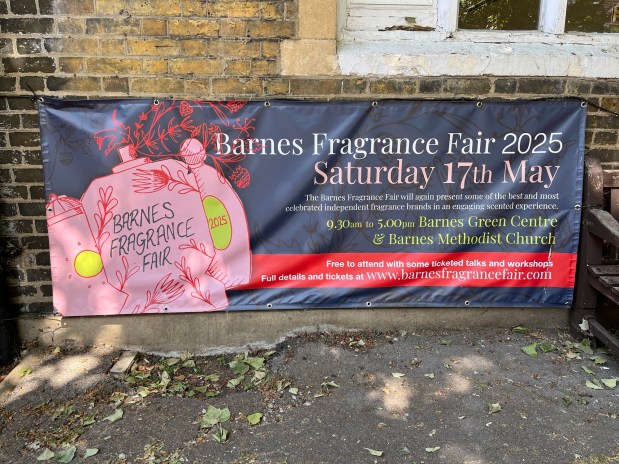
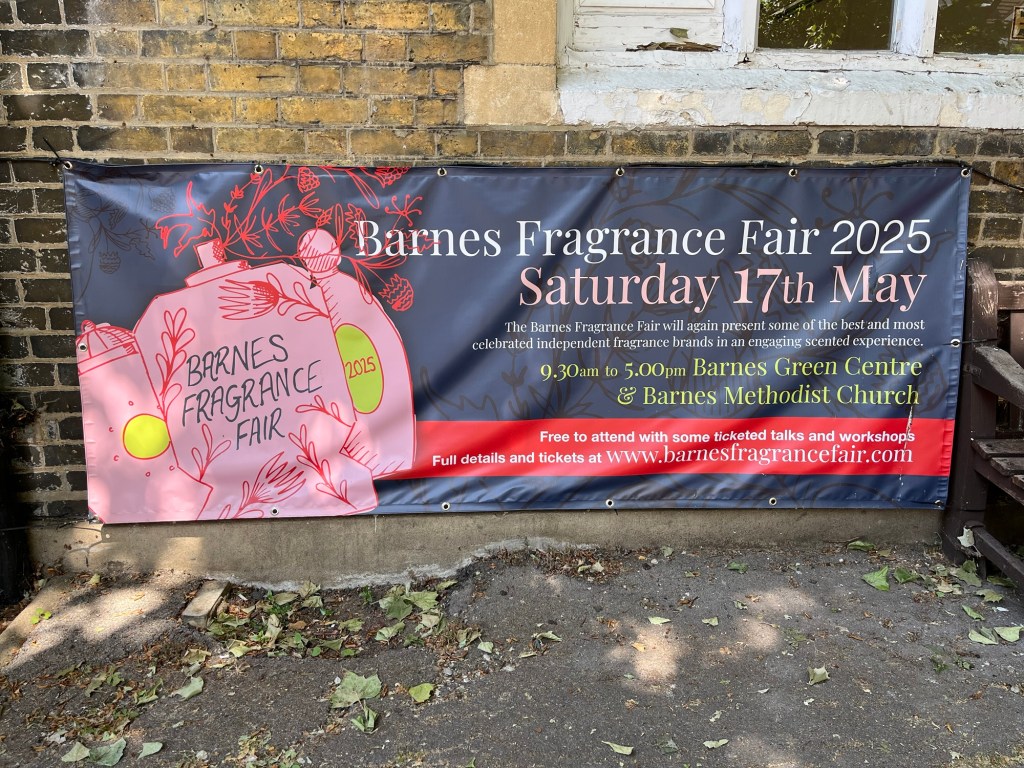
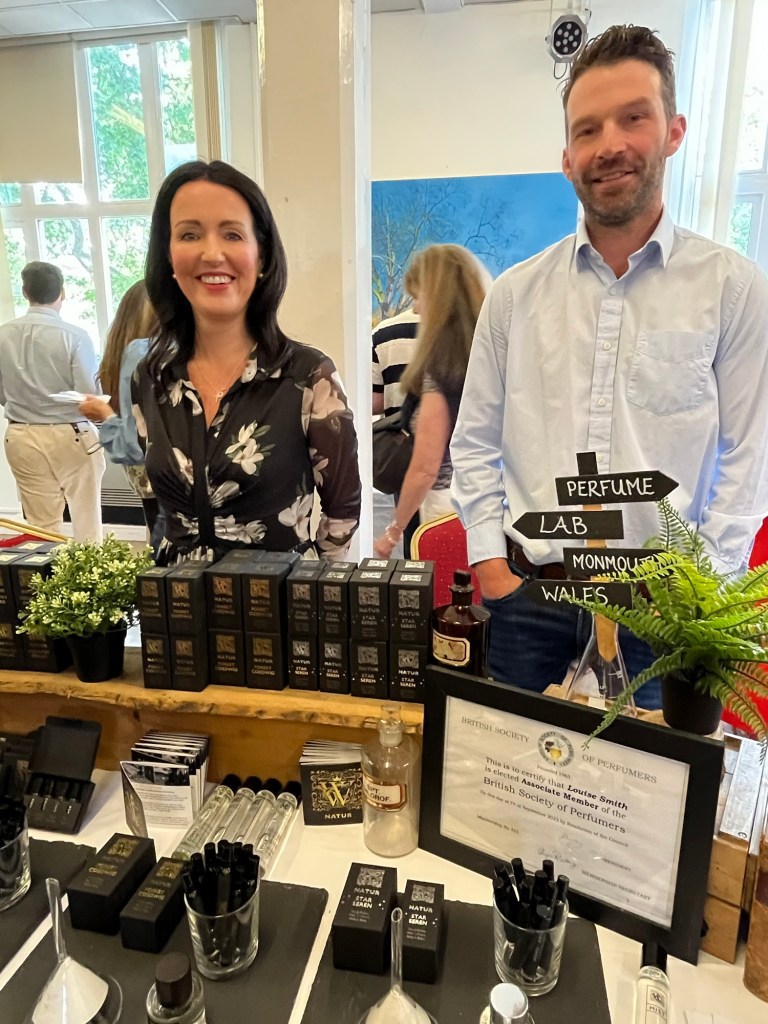
Today I’m wearing a fragrance I got in a grab bag at The Barnes Fragrance Fair outside London this spring. It is a relatively young event; it started after COVID lockdowns, I believe.
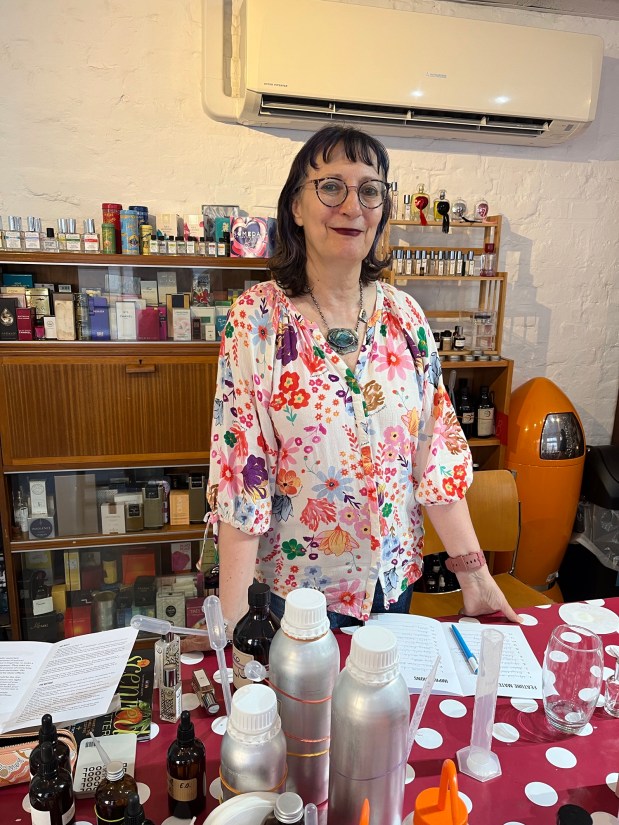
It is a showcase for British independent perfumers, like Sarah McCartney of 4160 Tuesdays. She had a display there and she taught perfume-making workshops like the one I did at her studio the week before.
4160 Tuesdays display
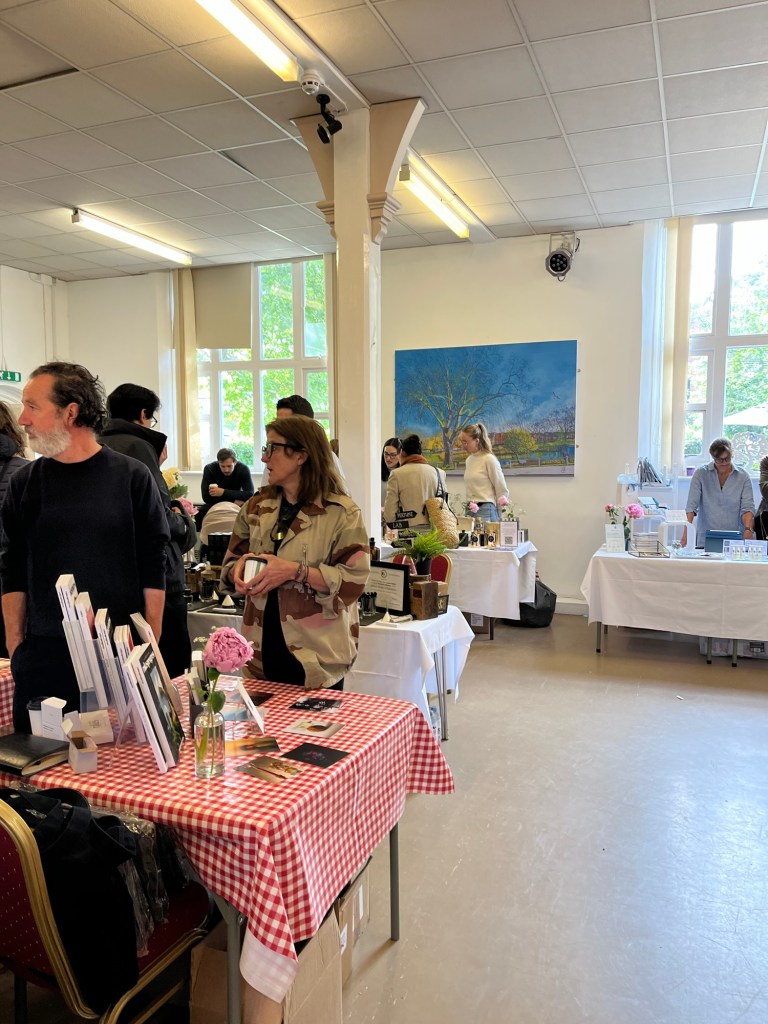
Just going through some of the photos I took does cheer me up, because it reminds me that there are so many creative, kind, interesting people all around the world. If you get a chance to go to the Barnes Fragrance Fair, do it! So much fun!
Back ro my scent of the day: Sunset Riot Intense. As the name suggests, it is a 2024 flanker to the original Sunset Riot, launched by AllSaints in 2018. It is a unisex amber, spicy floral with a strong undertone of cedar.
I suspect this comes from a use of ambroxan, a synthetic molecule that is commonly used to create a dry, amber, musky scent. Some perfumksts really hate it and can’t to.erate it in fragrances, but I don’t have such a strong reaction to it. It’s just not really my thing. As regular readers here know, I’m much more drawn to floral and green fragrances, even chypres.
According to Fragrantica, these are the notes of Sunset Riot Intense: “Top notes are Pink Pepper, Mandarin Leaf and Freesia; middle notes are Moss, Orange Blossom and Jasmine; base notes are Leather, Amber, Musk, Cetalox and Cedar.”
Honestly, I didn’t smell those top notes at all. Of the middle notes, I smell some light orange blossom and jasmine, but not much of either. They do lighten up the listed base notes, though, which don’t smell nearly as heavy as they sound. I don’t really smell leather, unless it’s a suggestion of suede (and I like suede!). I do get the amber, musk, and cedar. So basically, I think I’m smelling a light jasmine-inflected ambroxan. Pleasant enough, but not my thing and not something I’d shell out a lot of money ones to buy. I might feel differently if I were more drawn to masculine scents, though, and I can see many men really enjoying this, and their partners enjoying it on them.
Welcome to the weekly Perfume Chat Room, perfumistas! I envision this chat room as a weekly drop-in spot online, where readers may ask questions, suggest fragrances, tell others their SOTD, comment on new releases or old favorites, and respond to each other. The perennial theme is fragrance, but we can interpret that broadly. This is meant to be a kind space, so please try not to give or take offense, and let’s all agree to disagree when opinions differ. In fragrance as in life, your mileage may vary! YMMV.
Today is Friday, May 30, and I’m back from London! I had such a wonderful time, while my lovely husband worked (which is why we were there). One of my many adventures was the Barnes Fragrance Fair, which I found out about from Sarah McCartney of  4160 Tuesdays.
Sarah McCartney, 4160 Tuesdays
The Barnes Fragrance Fair is a relatively young event; it started after COVID lockdowns, I believe. It is a showcase for British independent perfumers, like Sarah. She had a display there and she taught perfume-making workshops like the one I did at her studio the week before.
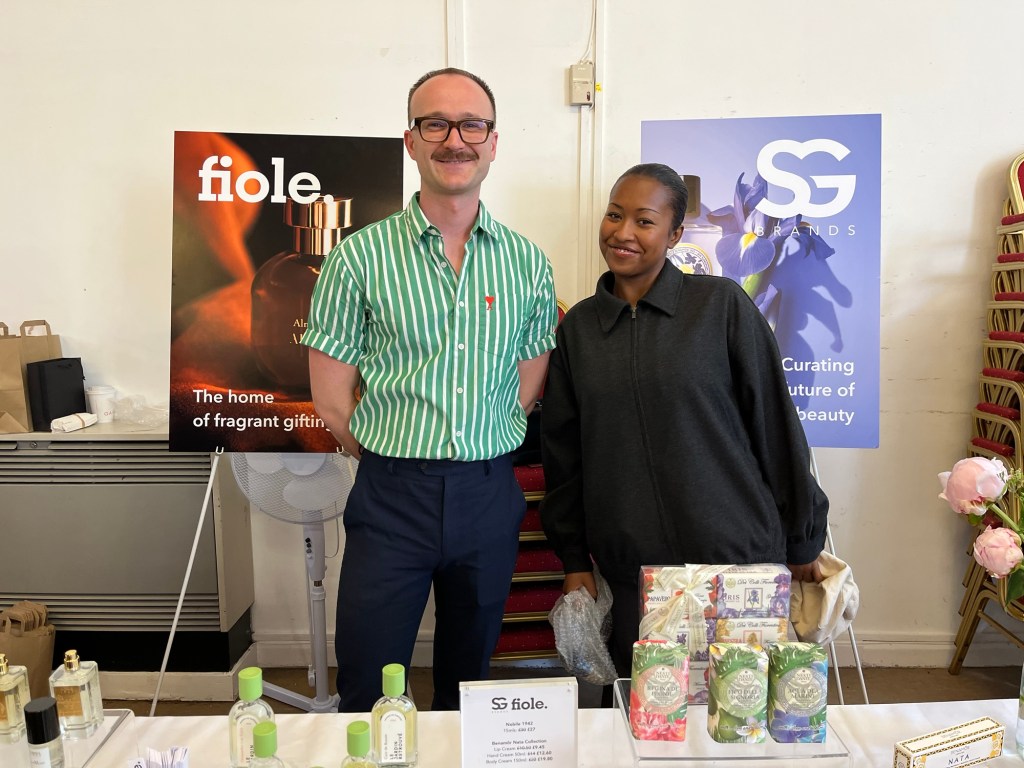
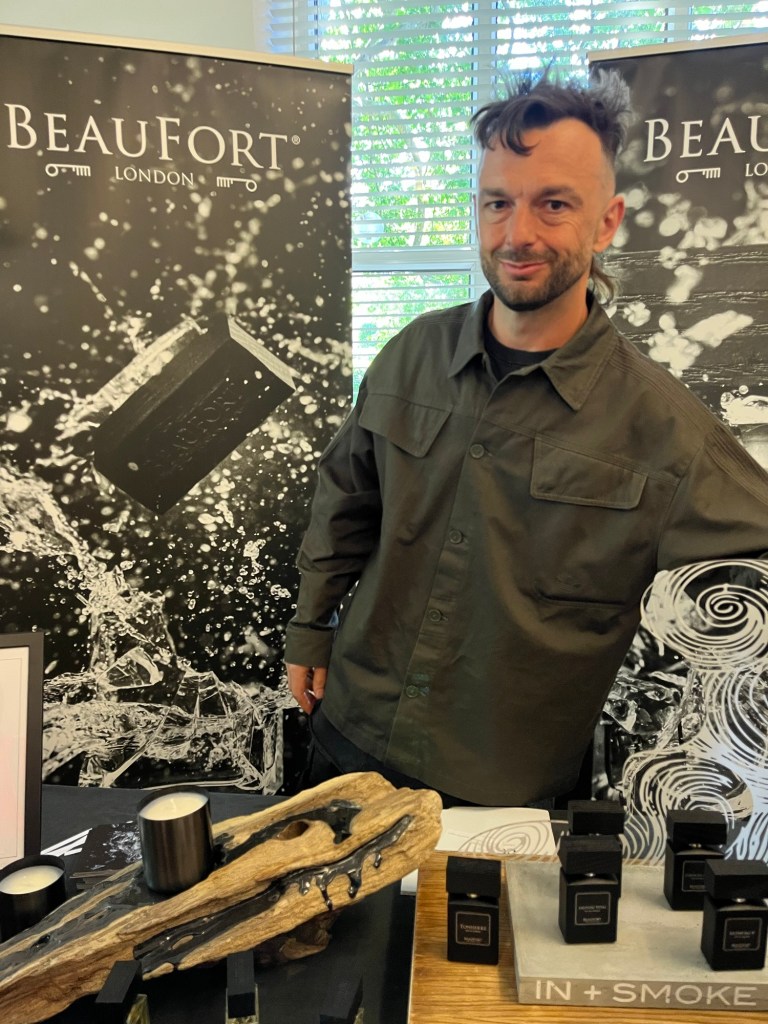
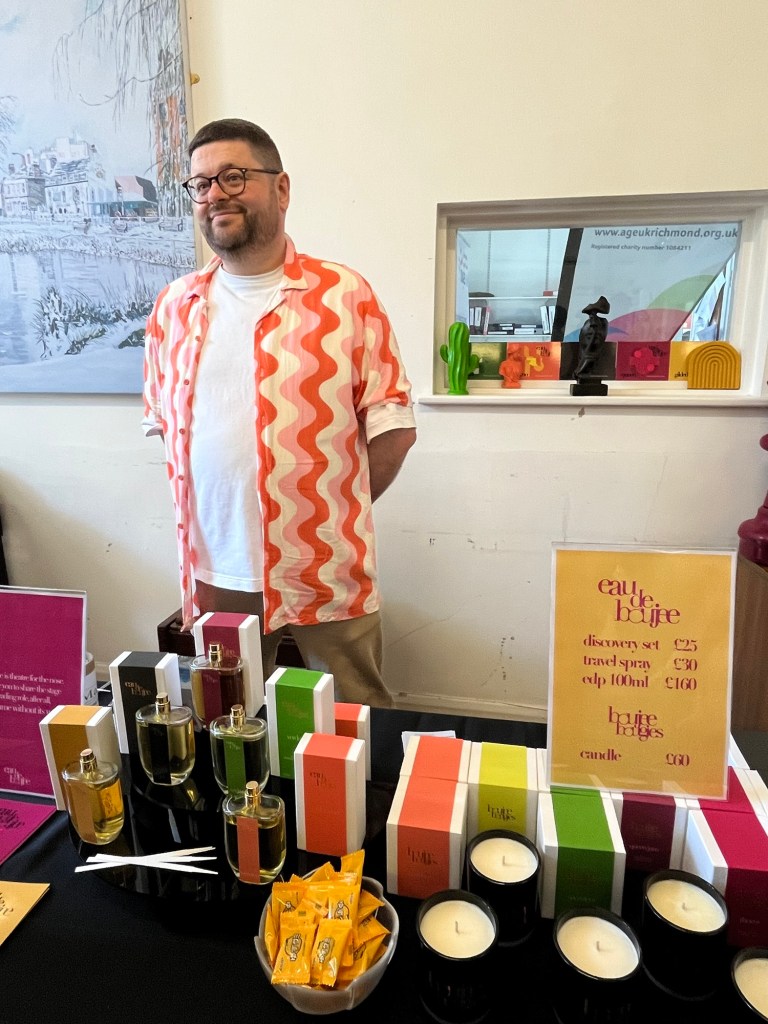
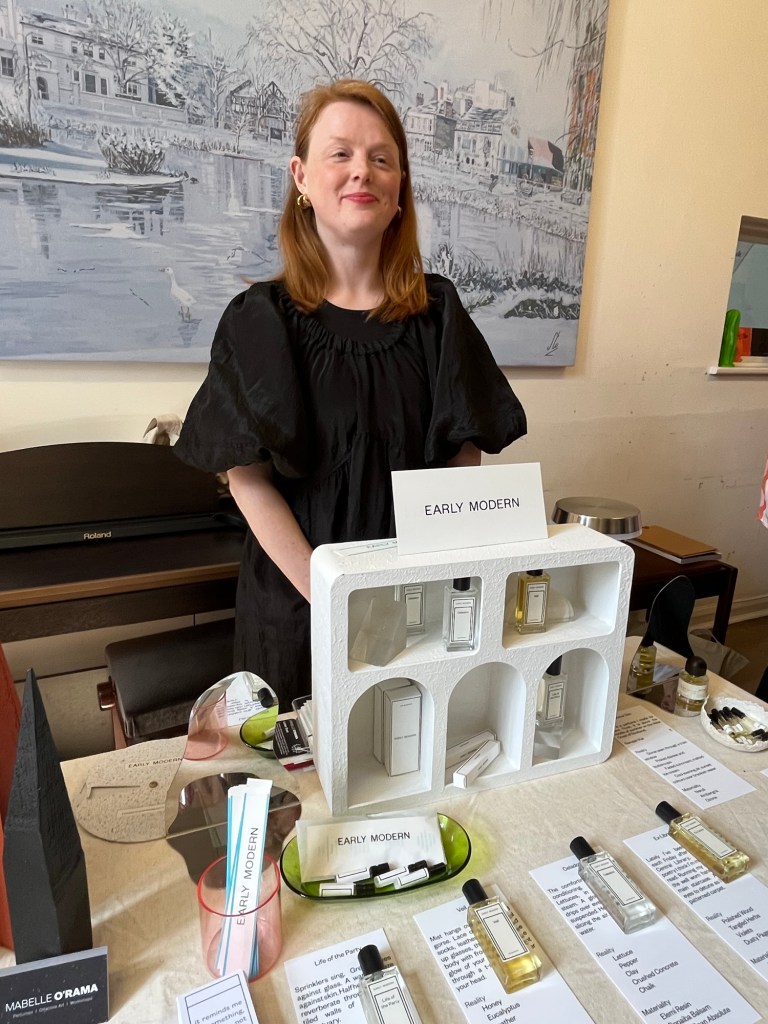
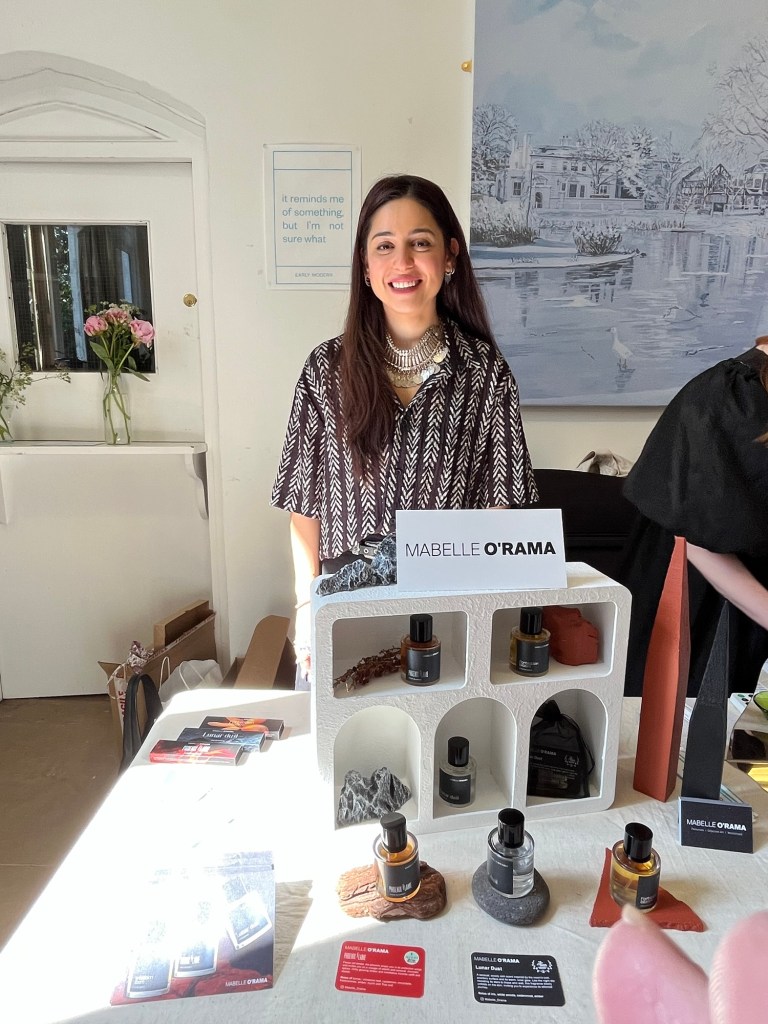
There were so many interesting perfumers there, from some that are well-known among fragrance fans, like Beaufort London, 4160 Tuesdays, Jorum Studio, Kingdom Scotland, Maya Njie, Gallivant, Angela Flanders, Nancy Meilland, and more. There were also brands that were new to me, which was fun. All the perfumers were very friendly and interesting, and I came home with a few discovery sets as well as three new 4160 Tuesdays fragrances. I got there right after it opened, so it wasn’t too crowded, but by lunchtime, it was packed.
I have more photos to share but I’m having technical issues right now! Do you know any of these brands?
Welcome to the weekly Perfume Chat Room, perfumistas! I envision this chat room as a weekly drop-in spot online, where readers may ask questions, suggest fragrances, tell others their SOTD, comment on new releases or old favorites, and respond to each other. The perennial theme is fragrance, but we can interpret that broadly. This is meant to be a kind space, so please try not to give or take offense, and let’s all agree to disagree when opinions differ. In fragrance as in life, your mileage may vary! YMMV.
Today is Friday, May 16, and I did a perfume-making workshop in London this week with Sarah McCartney of 4160 Tuesdays! It was held in her studio in Hammersmith, in a very appealing neighborhood.
Sarah McCartney, 4160 Tuesdays
It was so much fun. Sarah focused the workshop on sustainability in perfumery and did an excellent job explaining to the group how each ingredient she had chosen for the workshop relates to that theme. As a lover of rose scents, my favorite was the rose absolute derived from upcycled rose petals. As a gardener, my favorite was the vetiver, which was harvested via a different method that leaves half the plant and, importantly, its whole root system to prevent erosion.
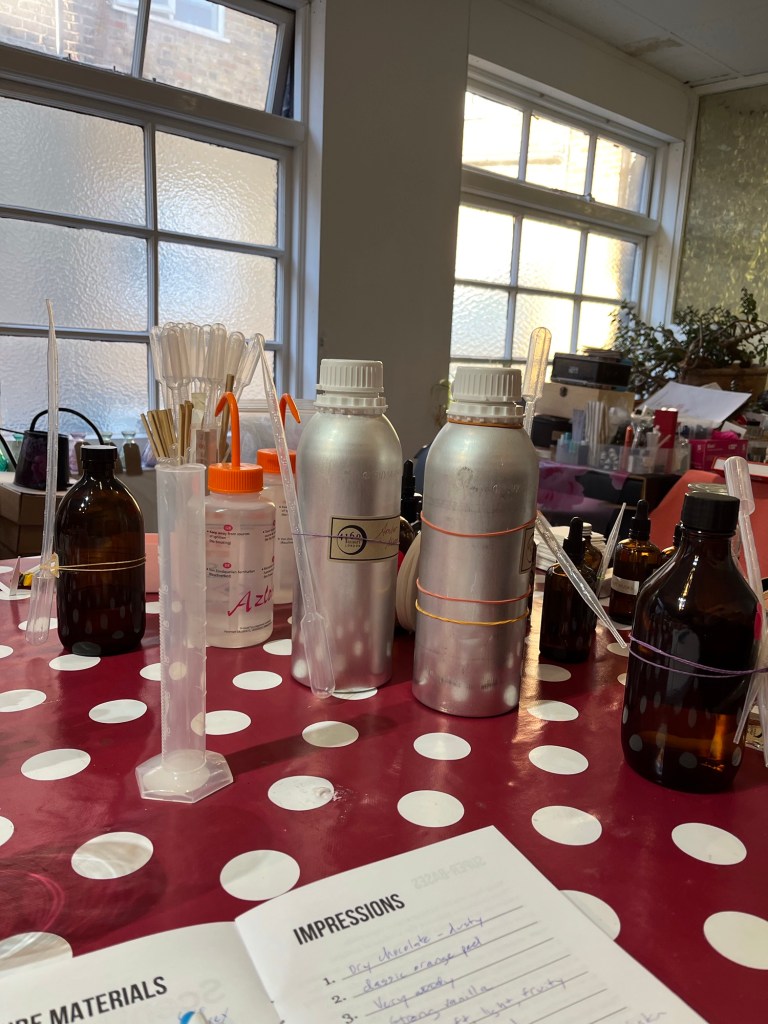
Tester strips for the substances we used
Sarah also did an outstanding job explaining how perfumery is a mix of math and chemistry, as she taught us to combine different substances in different ratios on filter paper, which we would then try to translate into the proportions we would use in our final creations.
The book you see on the left is the full weeklong program for London Craft Week, which has been this week. Sarah’s workshop was part of that.
Some of our workshop materials
I used Sarah’s base of “Soft Musks” for my own creation. I can’t describe it any better than she can, so here’s the info.
Made from readily biodegradable materials. These molecules enhance the aromas of natural materials, and extend a fragrance’s longevity, to make a more wearable longer lasting fragrance. They take the place of components lost during the process of extracting natural materials. Historically animal materials, like musk, ambergris and civet, were used for these effects.
To that base, I added compounds based on rose, lily, orange, raspberry.
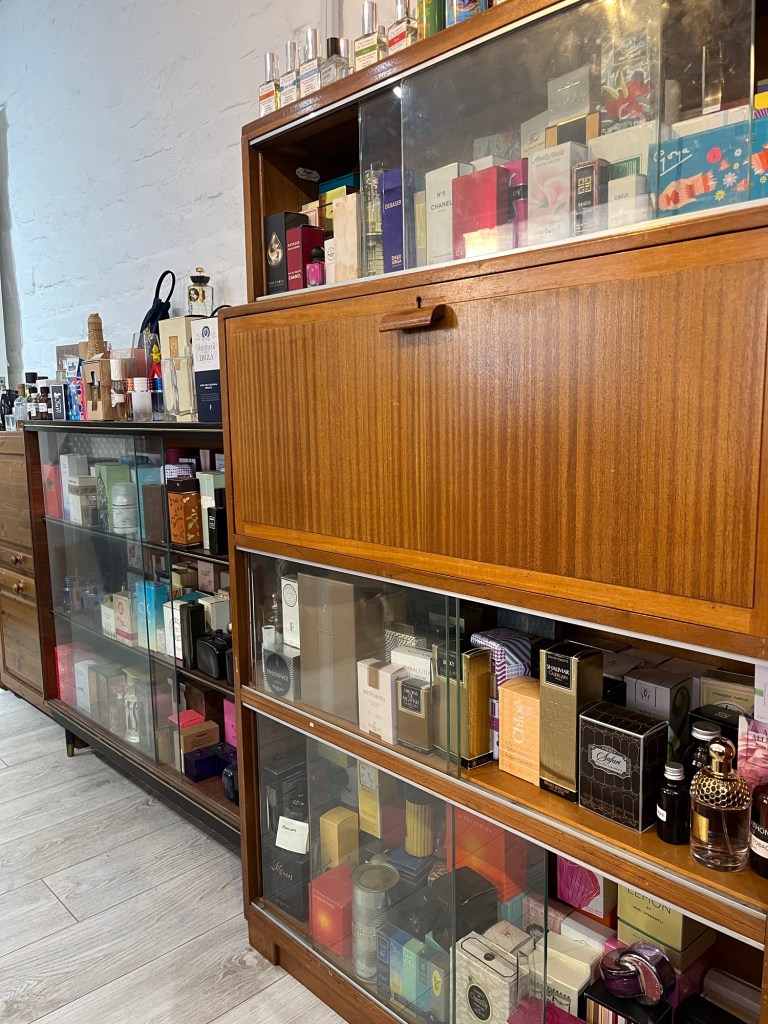
My own perfume!Part of Sarah’s collection of perfumes
Sarah also has an important collection of perfumes, many of which she used in writing her book with Samantha Scriven, “The Perfume Companion”, which I highly recommend if you can get a copy (I think it’s still available on Kindle if you can’t find a hard copy).
Sarah McCartney
I had a fabulous time and I learned so much! Sustainability is important, and it’s wonderful to know of the progress in this area.
Do you have any thoughts or insights about sustainability in perfumery?
Welcome to the weekly Perfume Chat Room, perfumistas! I envision this chat room as a weekly drop-in spot online, where readers may ask questions, suggest fragrances, tell others their SOTD, comment on new releases or old favorites, and respond to each other. The perennial theme is fragrance, but we can interpret that broadly. This is meant to be a kind space, so please try not to give or take offense, and let’s all agree to disagree when opinions differ. In fragrance as in life, your mileage may vary! YMMV.
Today is Friday, August 30, and I’m looking forward to an upcoming trip to London. As usual, I’m tagging along on one of my husband’s work trips, which I’m always happy to do! I haven’t made up my mind yet about all the things I want to do, but one option is Portobello Road’s markets, which I’ve never visited and have always found intriguing. If you have suggestions, please share! I do have a friend who has lived in London for many years; maybe I’ll see if she’s interested in going with me.
Also on my list is Fortnum & Mason, which I’ve never visited, and maybe a return visit to Jovoy Paris. And of course, if I’m at Jovoy, why wouldn’t I stop by my favorite store in London, Liberty? I’m hoping to see some theater and art exhibits too, but I’m not buying any tickets in advance after last September’s cancellation (which I don’t regret doing at all, given our son’s situation, but we weren’t able to use some tickets I had bought. Luckily, my nice friend could!). If the weather is nice, I’m always up for a visit to a garden. Maybe Syon Park this time?
I might see if I can stop by the new digs of 4160 Tuesdays, a favorite brand of mine. I was able to visit their former location and meet Sarah McCartney, who is just as fun, nice, and creative as one might hope from sniffing her fragrances and reading her website. Speaking of Sarah, she was just featured in a great article in The Financial Times, by Hannah Nepilova, which is well worth reading. It’s about her work scenting performance arts, such as a new opera that will open next month.
Is there a possibility that, between all the visual and musical stimuli, such subtleties of aroma might go unnoticed? McCartney believes that “even when we don’t positively register it, smell contributes to the atmosphere of a room.” Besides, “smell activates a part of the brain that wouldn’t otherwise be used . . . I’m not hoping to add something extra to the opera, but rather to fill in the missing part that everybody has forgotten about.”
Do you have any suggestions for my London trip, fragrance-related or otherwise?
November’s “Notes on Notes” is about oud, or agarwood. I don’t think I can provide a better or clearer explanation than this, from Sarah McCartney in her book “The Perfume Companion: The Definitive Guide to Choosing Your Next Scent”:
Oud is Arabic for wood, and you’ll also see it spelled oudh, aoud, and aoudh. An oudh is also a musical instrument which looks a lot like a lute. In perfumery, though, it’s a specific kind of wood from the agarwood tree, also called aloewood. Even more specifically, this tree must be infected by a species of mould, Phialophora parasitica, which makes it strongly whiffy.
Agarwood and its products; image from Researchgate.net.
Perfumer Geza Schoen offered this explanation to Allure magazine in its excellent article:
Natural oud, the scent (the essential oil) arises when a particular fungus places itself on an Aquilaria tree. A reaction creates a resin that slowly embeds into the wood creating agarwood, known as oud, which is then soaked, and using a distillation and evaporation method is developed into an oil.
That is how perfumers in the Middle East, India, and the Far East have traditionally made a essential oil that can be very costly. As many perfume-lovers know, oud has been a trend in Western perfumery for several years (6 Western commercial fragrances based on oud were launched in 2007, over 200 by 2019), but what we mostly encounter is a synthetic re-creation of that oil, which puts oud-based fragrances within reach of many more fragrance lovers. The qualities of oud that don’t attract me are when it is used heavily to evoke smoke or leather. A great reference for some fragrance-lovers, but not really me. However, I’ve read that there are many different facets to oud, in nature depending on the specific variety of Aquilaria tree and the environment where it was grown, so I’m sure the synthetic creations also vary widely.
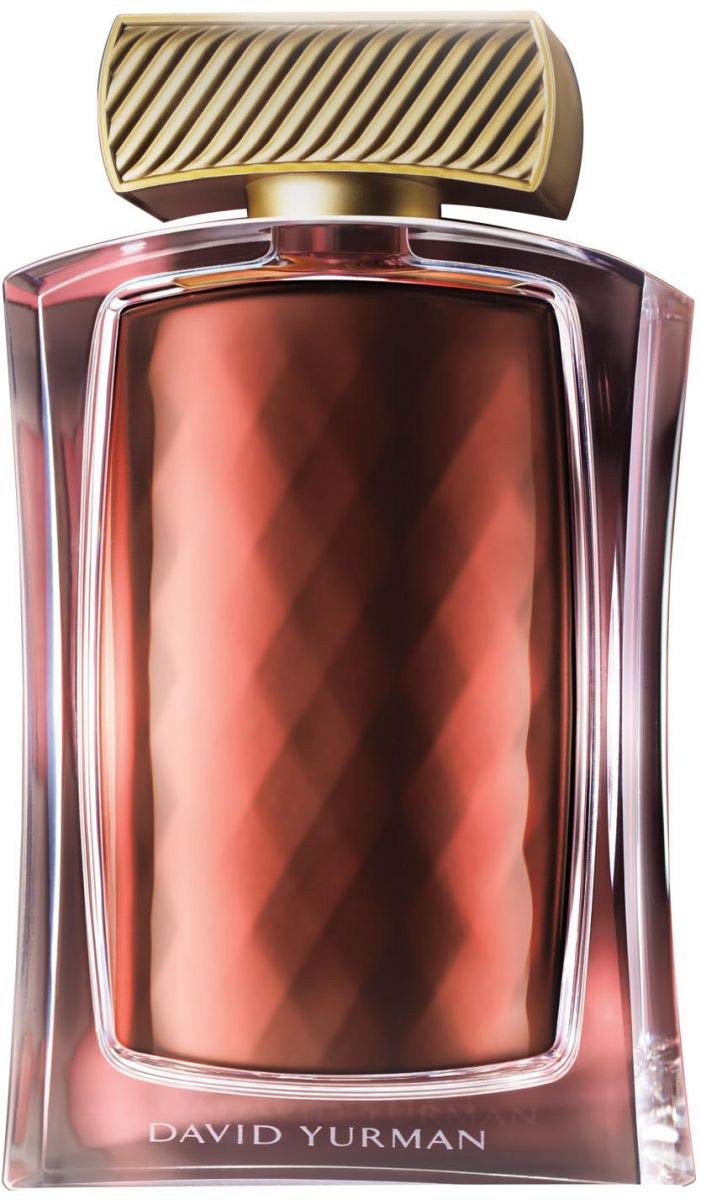
I’ll be honest – I can’t think of many oud-focused fragrances that I like a LOT, though I don’t object to it as a supporting player. It may be that my nose is acting sensitive toward a synthetic, but that’s not usually an issue for me. And I’ve gotten weary of every other new fragrance seeming to have “oud” in its name! There is one oud-centric fragrance that I really do enjoy a lot, and it grows on me every time I wear it: David Yurman Limited Edition. It is a classic combination of rose with oud, and both are used with a deft touch. The bottle, by the way, is gorgeous, a heavy, faceted, dark red crystal flacon.
David Yurman Limited Edition extrait de parfum; image from Amazon.com
Launched in 2011, it is an extrait de parfum with central notes of oud and Taif rose. Top notes also include coriander, geranium, saffron, and raspberry, but the rose and oud notes appear immediately and carry through the parfum’s development, so the typical pyramid structre may not accurately describe it. Heart notes include violet and jasmine, though at this stage my nose is so distracted by the Taif rose and oud that I hardly detect them. Base notes add suede, musk, vanilla, and sandalwood. Interestingly, the notes list makes a point of saying “natural agarwood”, though that is no guarantee that the ingredient used isn’t synthetic.
I think this is a very skillful fragrance. The rose and oud could have been overwhelming, and they’re not, at least not with a controlled application, lol. This fragrance is all about gentle, rosy warmth with a bit of spice. The notes are well-blended, with saffron and fruity raspberry peeking through. The rose fades away sooner than the oud but it still hums softly in the background. DY Limited Edition reminds me a bit of Aramis’ Calligraphy Rose, and I wonder how it would compare to Calligraphy Saffron, which I haven’t tried. It’s not clear who was the perfumer behind DY Limited Edition, but I think it has to have been Harry Frémont of Firmenich, who created all the other David Yurman fragrances (the link will take you to a long interview of him by Richard Goller of the Fragroom blog).. He certainly knows his way around a rose, too, as a creator of Estée Lauder’s marvelous Knowing, as well as dozens of other scents.
Have you tried DY Limited Edition? Or can you suggest other oud fragrances that would appeal to a floral lover like me? Drop by Australian Perfume Junkies to see what Portia has to say about oud!
Welcome to the (late!) October installment of “CounterPoint”! I was thrown off by how early the first Monday of the month was, and various other distractions, but here we are, to discuss Christian Dior’s Diorella. Thank you, Portia, for being so patient!
Launched in 1972, Diorella is a “lemon chypre”, a narrow and specialized category of fragrance, given that chypres generally are a specific category. Perfumer Edmond Roudnitska created Diorella in 1972 at the peak of his powers, having already created for Dior the legendary fragrances Diorama, Diorissimo, and Eau Sauvage.
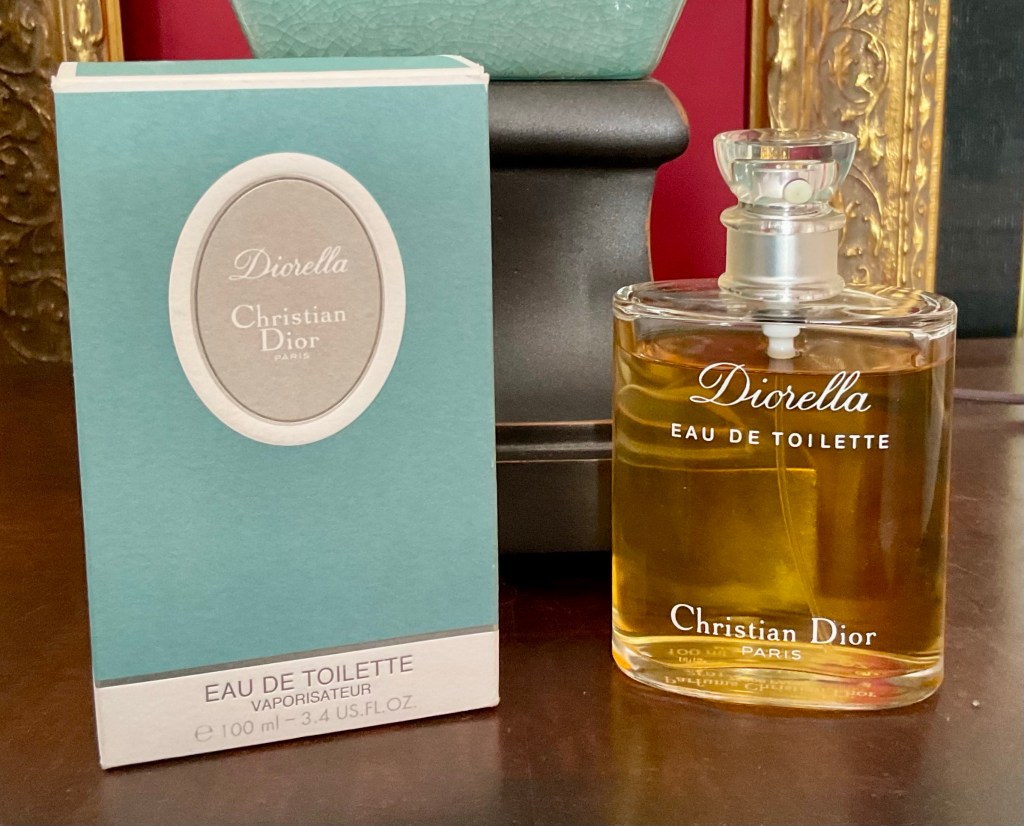
Diorella; image by Christian Dior.
Interestingly, Diorella was the inspiration for Meet Me On The Corner, a crowd-funded fragrance by Sarah McCartney of 4160 Tuesdays that she created to capture the vibe of 1970s chypres and named after a 1972 pop song.
Tye-dye girls, Doreen Spooner/Getty Images
How did you first encounter Diorella and what was your first impression?
Portia: When Old Herbaceous asked if we could do Diorella my first internal response was “Diorella? Sure I’ve heard of it but have no memory of ever seeing it or smelling it.” Dutifully I went to the DIOR box and rummaged around just to be sure. Lo and behold, there is a 100ml, extremely vintage looking beat up houndstooth box of Diorella EdT. There’s clearly been some leakage, the sprayer and surrounds have residue and some eating away of the silver. The moment I touched the very bleached out label it just fell off. This bottle is O L D. Even on spritzing I have no memory of smelling this beauty. So while I may have smelled Diorella in the past I’m coming at it as a newbie. First impression is that I’m really surprised that the top seems to be intact.
Old Herbaceous: My perfumista journey began when I read “The Perfect Scent” by Chandler Burr, then moved on to “Perfumes: The A-Z Guide” by Luca Turin and Tania Sanchez. I was fascinated by their witty insights and their rating system of stars, so I started to seek out the fragrances they had awarded five stars, their top rating. One of those was Diorella, in its pre-2009 formulation. As I learned more about fragrances, I started to figure out how to find vintage fragrances (sadly, without access to the amazing Japanese flea markets that Neil Chapman describes in his blog The Black Narcissus!). I found an intact bottle of Diorella eau de toilette that dates from 2002, as best I can tell, based on its box, bottle, and batch number. It was a reasonable price, so I snapped it up.
My Diorella
My first impression was “Yes, this is a true chypre!” I happen to love most chypres (I can’t think of one I have disliked yet), with their classic structure of citrus top notes, floral heart notes, and base notes that include oakmoss. Per Fragrantica, the structure of the original Diorella is: top notes of green notes, Sicilian lemon, bergamot, melon, and basil; middle notes of honeysuckle, Moroccan jasmine, peach, carnation, cyclamen, and rose; and base notes of oakmoss, vetiver, patchouli, and musk. While the top notes of my bottle have faded somewhat with age, the combination of citrus and green notes is still evident and lively.
2. How would you describe the development of Diorella?
Old Herbaceous: The top notes aren’t as vivid in my bottle as I’m sure they were when it was new, but they are vivid enough to indicate the lemony/green opening accord intended by M. Roudnitska. The melon and green notes have taken precedence in my bottle, including a lovely basil accord. I think the basil is what may have prompted Turin and Sanchez to declare that if Guerlain’s fragrances are desserts, Diorella is a Vietnamese beef salad. Fear not! It smells nothing like rare meat. I think I can smell a couple of the base notes right from the start, specifically the vetiver and oakmoss, humming in the background.
In the heart phase, I smell honeysuckle and jasmine. The jasmine isn’t heavy or narcotic, it stays light. The hum of vetiver and oakmoss becomes more noticeable, and soon they take over from the floral notes entirely. In the drydown and base stage, Diorella moves from fresh toward warm without becoming spicy, supported by patchouli and musk. It also lasts a good long time, surprising in a fragrance that also smells very fresh.
Portia: Fizzy opening with bright green citruses and aldehydes, leaning slightly waxy like putting your fingernail into the peel and getting that luscious burst of fresh and sunshiny goodness. The greenery is both camellia leafy and tulip stemmy, crushed to let their greenness explode.
As the initial heady notes calm, I have a very modern masculine waft of cucumber/melon intertwined with the bouquet. It’s a surprise to have something so stuck in my mind as a 1980/90s gym men’s changeroom smell be lurking so significantly in this epitome of female beauty. It does not detract from the femininity at all and makes me think of how many of the men would also swoon for Diorella.
I will say that Diorella is very cologne-ish. This is not a complaint, merely an observation. For some reason I was expecting a very fruity/mossy chypre in the style of Mitsouko. This is as far from that as you can imagine while still bearing many of the same notes.
The heart and base take a long time merging and there’s plenty of crossover during this time, plus the citruses are subtly tenacious.
The crisp, green, oily grassiness of vetiver is tempered by the earthy patchouli and moss but there is much more going on here. I’m getting wafts of quite astringent eucalyptus, the fresh green of shady creeks as you trudge through the greenery. There’s a cooling, slightly salted seaside breeze hiding below.
The last gasps are a very vegetal musk and sweet greenery.
Diorella is so tapestried and I think it will take a dozen more wears to even get a hold of what’s happening here.
3. Do you or will you wear Diorella regularly? For what occasions or seasons?
Portia: Honestly, now that I’ve found this gorgeous unicorn it might be too special to wear willy nilly. Though it feels like an excellent sunny day spritz and could give me blue sky reminiscences in winter, I think just holding the bottle and sniffing the cap will be all I’m capable of doing.
Old Herbaceous: I haven’t been wearing Diorella regularly, but it has been such a good fit for the beautiful October weather we’re having that I plan to keep it out and within reach for at least a while (keeping it in its box, of course, to protect it from light!). It partners beautifully with these crisp, sunny, dry autumn days, although I often think of it more as an early summer scent. Diorella works well for a whole range of occasions, from casual to elegant, from daytime to evening. It’s like a Diane von Furstenburg wrap dress, the kind that were so fashionable in the 1970s (my mother wore them) and that you could dress up or dress down, endlessly versatile but with a distinct, chic personality.
4. Who should/could wear Diorella?
Old Herbaceous: Well, here’s what Luca Turin wrote on that topic: “Diorella was intended as a feminine and was the very essence of Bohemian chic, with an odd, overripe melon effect that still feels both elegant and decadent. The modern version, no doubt fully compliant with all relevant health-and-safety edicts since the fall of the Roman Empire, is drier and more masculine than of old, no bad thing since I have always seen it as a perfected Eau Sauvage and one of the best masculines money can buy.”
So there you have it! Diorella will work well for many perfume-lovers and can be spritzed for just about any occasion.
Portia: A truly unisex beauty that is cologne related but so much more. I need to go sniff a modern bottle to see if it still smells as good. Then if it does I might buy a bottle and wear it regularly through the warmer months. I’ll be most interested to read OH’s description of how it has survived.
Old Herbaceous: Borrowing again from Luca Turin with regard to the 2009 reformulation: “Great perfumery accords share with holograms the strange property of being damage resistant; the picture remains legible even though noise increases and fine detail is swept away. Diorella is one of those accords, and while the latest version is less caressingly decadent and lush than of old, it still conveys much of what made the original great.” Note that his comment is about the 2009 version; I think this is still the current edition, as I haven’t been able to find anything about a later formulation despite new IFRA restrictions on oakmoss. I wonder whether the oakmoss was already greatly reduced in 2009, with vetiver taking a more prominent role in the base, so more changes weren’t necessary.
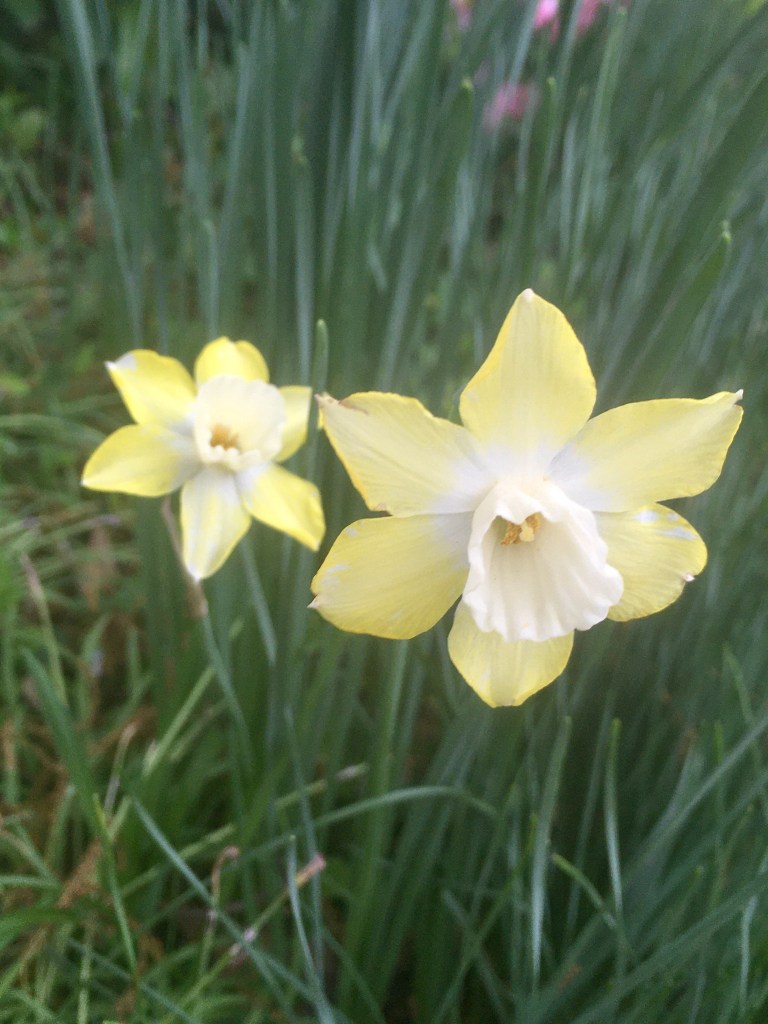
As many of you know, I am not only a perfumista but an avid gardener. And of the many flowers I love, a favorite genus is Narcissus. Some of the common names for members of this family are daffodils, jonquils, narcissi, paperwhites, etc. Most have a fragrance that I find very alluring; and I love the succession of spring blossoms they provide over a long season.
The flower is often said to have been named after a Greek myth recounted by the Latin poet Ovid, in his “Metamorphoses.” The story tells of a remarkably beautiful youth, Narcissus, who scorns the love of the many people who become infatuated with him, including the nymph Echo. The gods decide to punish him by decreeing that he would never know love, but any love he felt for another would be unrequited and unattainable. One day, while he was out hunting, he went to a spring to drink water and saw his own reflection. He fell instantly in love, but of course he could not embrace or converse with his watery double. Consumed by this unrequited love, he stayed by the pool, gazing only at himself, until he wasted away and died. When the nymphs came to bury his body, in its place they found only a beautiful flower – the narcissus.
However, there is another origin story for the narcissus, told by Homer in a hymn to Demeter, which says that the flower was created to lure Persephone away from her friends and her mother Demeter, so that Hades, god of the underworld, could abduct her: “a marvelous, radiant flower. It was a thing of awe whether for deathless gods or mortal men to see: from its root grew a hundred blooms and it smelled most sweetly, so that all wide heaven above and the whole earth and the sea’s salt swell laughed for joy. And the girl was amazed and reached out with both hands to take the lovely toy.” (translated from the Greek by Hugh G. Evelyn-White, Loeb Classical Library).
Narcissus absolute is extracted from real narcissus flowers, usually Narcissus poeticus, but sometimes Narcissus jonquilla or Narcissus tazetta, through a solvent method. It takes huge amounts of flowers to create a single kilogram of absolute, so it is an expensive ingredient. It is also very complex, with hints of its close cousins the lilies, but also echoes of jasmine, green notes, a touch of hay or tobacco, and even some animalic notes. Some people detect notes of leather in narcissus absolute. It is also possible to extract narcissus oil by using the traditional method of enfleurage.
Luckily, because natural narcissus absolute, concrete, and oil are all very expensive, there are excellent synthetic alternatives. Perfumer Sarah McCartney has a series of related fragrances in which she experimented with varying amounts of naturals and synthetics, the “Clouds” series, named after Joni Mitchell’s song “Both Sides Now.” The first two fragrances, Clouds and Clouds’ Illusion, were the same scent, crowd-funded by the Eau My Soul Facebook group, but Clouds used the more expensive naturals and Clouds’ Illusion used more synthetic versions of the same substances (with some of the less expensive naturals). Both Sides of Clouds is a remix, using both naturals and synthetics. I have and love all three, plus a later and darker sibling, Complicated Shadows.
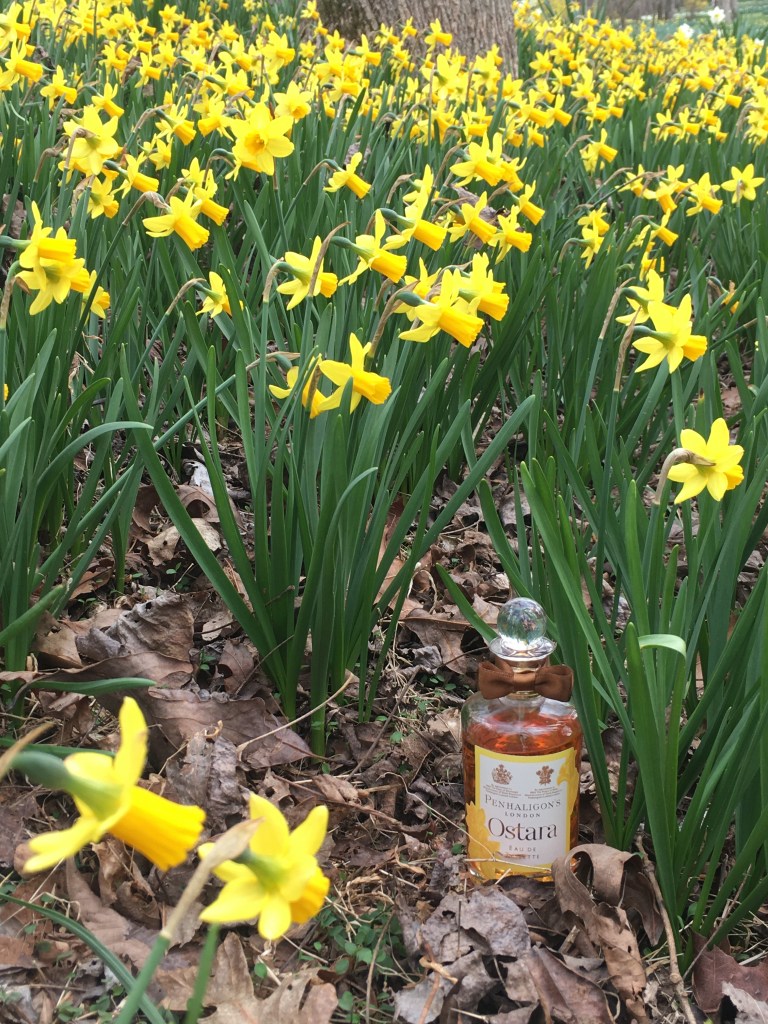
The narcissus-based fragrances I like best are those that really evoke the flowers themselves, so I gravitate to the ones that combine green notes with the narcotic aspect of the blossoms that rely on indoles (like jasmine). Clouds’ Illusion fulfills that wish, and so does one of my all-time favorites, Penhaligon’s Ostara.
Penhaligon’s Ostara eau de parfum among daffodils
But I’ve written about both of them before, so today I’ll focus on Tom Ford’s Jonquille de Nuit. Launched in 2012, it was part of a group that included Ombre de Hyacinthe, Café Rose, and Lys Fumé. It was reissued in 2019 as part of Tom Ford’s “Private Blend Reserve Collection”. Jonquille de Nuit is a beautiful floral. The name deceives, however – it is not dark or sultry, as one might assume from “nuit” (night). TBH, it smells to me more like mimosa than jonquil, but it’s very pretty and sunny.
The opening notes are mimosa, violet leaf, angelica, cyclamen, bitter orange blossom; heart note is narcissus; and the base notes are orris and amber. The mimosa accord especially gives the impression of yellow pollen, somewhat like Ostara, which does not have mimosa listed as a note. Right from the start, Jonquille smells soapy, in a nice way, without smelling like aldehydes (I like aldehydes, but I don’t smell them here). The soapiness may be coming from the angelica accord. There is a pleasant, understated greenness to the opening also, doubtless from the violet leaf accord. Overall, Jonquille smells quite synthetic, though not unpleasantly so.
To my nose, Jonquille de Nuit is a fragrance that evokes jonquils rather than representing them. Ostara, on the other hand, smells like an actual bouquet of daffodils. A favorite blogger and author, Neil Chapman of The Black Narcissus, calls it “frighteningly hyper-realistic” in his book “Perfume: In Search of Your Signature Scent.” (I can’t write a post about narcissus without mentioning his eponymous blog which I highly recommend). I like Jonquille de Nuit and I’m glad I have a couple of decants from a scent subscription, but I wouldn’t pay the exorbitant prices I see for it. Personally, for that amount of money, I would go buy another back-up bottle of Ostara! Or another bottle of the parfum version of Both Sides of Clouds, which I’ve been enjoying this spring and which I believe contains real narcissus absolute.
Speaking of insane prices, one of the fragrances I considered for this post was Narcisse, by Chloe, as I have a 30 ml bottle. It still has its price tag from a brick and mortar discount store: $14.99. Discontinued, it now lists online for three figures! While I like Narcisse, and it captures the narcotic, indolic aura of the flowers, it rests pretty far down my list of fragrances, so I’m glad I snagged my one small bottle when I did. I don’t feel the need for another.
Do you have any favorite fragrances named for, or containing, narcissus? Also, happy May Day – I won’t be doing a May Marathon on the blog this year as I’ll be traveling again this month, but do enjoy my “May Muguet Marathon” and “Roses de Mai Marathon” from prior years! Check out what Portia has to say about narcissus; and look for our next collaborative post, “Counterpoint“, where we choose a fragrance and each of us answers the same list of questions about it.
Welcome back to the weekly Perfume Chat Room, perfumistas! I envision this chat room as a weekly drop-in spot online, where readers may ask questions, suggest fragrances, tell others their SOTD, comment on new releases or old favorites, and respond to each other. The perennial theme is fragrance, but we can interpret that broadly. This is meant to be a kind space, so please try not to give or take offense, and let’s all agree to disagree when opinions differ. In fragrance as in life, your mileage may vary! YMMV.
Today is Friday, January 7, and it is 2022! Earlier this week, my fellow bloggers and I posted our monthly “Scent Semantics” post for January, riffing off the word “luscious.” Check out the posts on six different fragrance blogs!
2022 in fireworks; image from parade.com
Like many other Americans, my work week began again post-holidays, but we’re back to remote work because of the massive surge in omicron variant COVID cases. I feel much less anxious about it this time.
Instead of “dry January”, I’m going to make a conscious effort to minimize fragrance purchases this month, since I took full advantage of many sales and discounts before, during, and after Christmas! Most of those were from small or independent perfumers or perfumeries, so I don’t feel bad about supporting them. This month, I’m enjoying the “January Joy Box” from 4160 Tuesdays, which is a box of 15 fragrances, most of them limited editions or not yet in the main 4160 Tuesdays line, to be opened one at a time, every other day, in numbered order. Sarah McCartney started this annual tradition a few years ago, and it is great fun! It’s like a January Advent calendar. Lots of chatter about each fragrance on 4160 Tuesdays’ Facebook pages!
So far, I’ve opened 1) Spellbinder; 2) Cherry Who?; and 3) Dawn to Dusk. Of those, so far my favorite is Spellbinder, which Sarah actually created for an independent US business called Haunted Saginaw (the fragrances are labeled “13th Floor Fragrance Co.”). Here’s the published description:
Rich and luxurious tonka beans infused with superior Madagascar vanilla, bursting with a citrus & slightly earthy opening (Bergamot, Mandarin, Tart Cranberry & ripened Rhubarb) intertwined with a dark forest of woods (Cedar, Sandalwood, Cashmere) into a slightly smokey veil ( Sweet Tobacco, Incense & Leather) sensually merging into a dark floral heart ( Jasmine, Violet, and exotic Ylang Ylang) surrounded by an array of arromatic spices ( Cardamom, Nutmeg & more).
If this sounds like something you must have, it can still be purchased at the Haunted Saginaw website. By the way, Sarah and fragrance blogger Sam Scriven from “I Scent You A Day” published their book this fall, “The Perfume Companion“, and it is great fun. I love that two bloggers I follow, Sam and Neil Chapman of “The Black Narcissus” have both published books in recent years. I love reading their insights, and both books are great for browsing.
On the topic of books, one of my Christmas gifts this year, which I’ve just started reading, is the book “The Scent of Empires: Chanel No.5 and Red Moscow“, by Karl Schlogel. Already it promises to be fascinating to this history nerd!
Have you started off your New Year in any new fragrances, or with any new books? Do tell!
I’ve been wanting a bottle of Penhaligon’s fragrance Juniper Sling for a long time, since I got a tiny mini bottle of it in a Penhaligon’s gift coffret and sampled it in place of 4160 Tuesdays’ Scenthusiasm, which hadn’t been available to me in 2018 when I read a review of it on the blog “I Scent You A Day.” Happily, since 2018, I’ve been able to snag a full bottle of Scenthusiasm and, now, one of Juniper Sling, in Penhaligons’s summer sale. So I’m fully stocked with gin-inspired fragrances, thank you, to go with a gin cocktail (click the link for a recipe for one made with Fentiman’s Rose Lemonade).
Revisiting my former thoughts on Juniper Sling, I still find that the juniper berries dominate the opening, and that note persists for a while. It lends the fragrance an aromatic aura and adds to the sense that this scent is truly unisex. It’s also an ideal scent for hot, humid, summer weather — herbal and cool. Created by Olivier Cresp, its notes are listed as follows: Top notes are angelica, cinnamon, orange brandy, and juniper berries; middle notes are cardamom, orris root, leather and pepper; base notes are vetiver, cherry, sugar and amber. I like that I can clearly smell the cardamom, and now that I have a full bottle and can really spritz, I can also smell the angelica. Not much cinnamon, thank goodness — I can only take cinnamon in very small quantities in fragrance, much as I like to cook with it. Orris root softens the edges of the herbs and spices. Vetiver is detectable in the base, but I can’t say that I smell cherry or sugar. An amber accord may be there, and there is definitely something warm that balances the vetiver. Juniper Sling is a transparent sort of fragrance, like a limpid pool on a hot summer day — clear and sparkling. It doesn’t last more than a few hours on my skin, but I’ll be more than happy to reapply as needed.
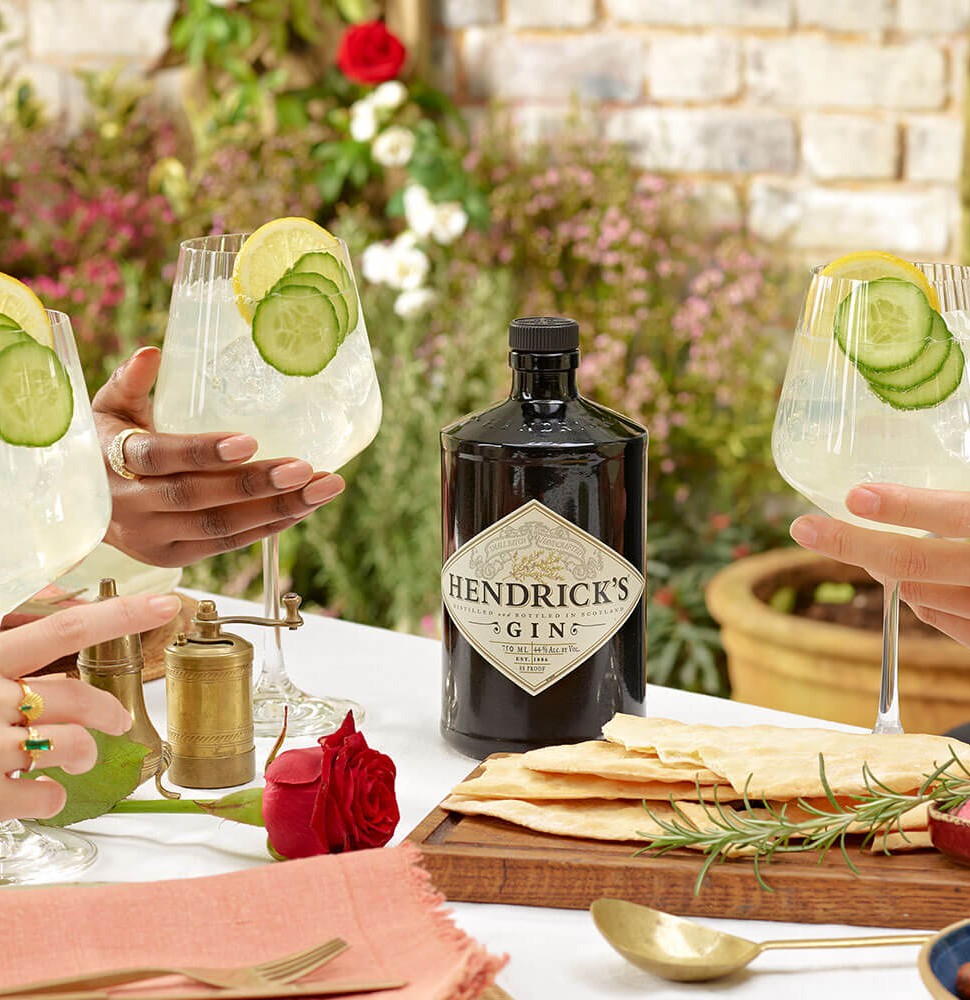
Scenthusiasm, on the other hand, is more floral, though it is also very summery, cool, aromatic, and refreshing. It was created for a Hendrick’s Gin event — not to smell like the gin itself, but to complement the floral and herbal notes in Hendrick’s.
Hendrick’s Gin Cucumber Lemonade
If you like the sound of Gin Cucumber Lemonade, try the recipe and let us know how it is in the comments (or try my recipe linked above, or try both)!
In Sarah McCartney’s own words:
Scenthusiasm is made with natural orris (iris) butter, rose absolute, lemon and orange essential oils, cucumber extract, juniper absolute (of course) and coriander essential oil. To make it last, boost the scents of the naturals and too smooth them out, we blended it with our favourite simple musk, fresh air and white wood note synthetics. It’s inspired by gin, and has gin notes but mostly it’s a floral at heart: rose and iris, with the herbs dancing around it.
I think Scenthusiasm is also quite unisex, though it may lean a bit more traditionally feminine. Sam at “I Scent You A Day” wrote that the orange and lemon notes risk making it go “a bit Pimms”, but I’m not qualified to judge that! My lack of familiarity with Pimms several years ago resulted in my allowing two of my three children (all under the age of 12, as I recall) choose it as a canned drink to go with their lunches at Kew Gardens, on a day-trip from London. As all the food and drinks were together, I’m sure the checkout cashier thought I was planning to drink the lot myself!
Luckily the older of the two would-be Pimms drinkers took one sip, realized it was alcoholic, and alerted me before her (much younger) brother drank any. Not that it would have killed either of them, of course, but one doesn’t like to render a five year-old tipsy. So having sensibly got for myself a simple lemonade, I switched with the children and drank one of the Pimms, pouring out the other surreptitiously on the ground as both had been opened. It was fine as a summer drink, but on a later trip to London I was introduced to Aperol spritzes, and that is now a favorite (nor does it raise embarrassing memories).
I really love Scenthusiasm. One might say, I am scenthusiastic about it, lol. It’s a delightful summer floral with the unexpected references to gin botanicals, more aromatic than sweet. Definitely not fruity, nor green. The cucumber note is noticeable, and it’s an unusual note to find in perfume. One of the few I’ve been able to find with a prominent cucumber note is a 2020 launch from By Kilian, called Roses On Ice. Lo and behold, it is supposed to smell like Hendrick’s Gin, the original inspiration for Scenthusiasm. I may have to try it some day, but for now, I’m very happy with my purchase from a favorite independent small perfumer.
Sarah McCartney of 4160 Tuesdays
I could see a couple wearing Juniper Sling and Scenthusiasm to complement each other’s fragrance. But which would each one choose? Which would you choose? Or would you, like me, say “Both, please!”?
I’m not much for cocktails. My tipple is usually a glass of wine; two years ago, I was introduced to the Aperol Spritz, and that’s my “fancy summer drink”, though I also like sangria (basically wine with fruit). However, on a couple of trips to Northern Ireland and Ireland in recent years, my husband and I were introduced to small-batch artisan gin. We had previously enjoyed Hendrick’s Gin and I even made up a cocktail that combined it with Fentiman’s Rose Lemonade (here’s the recipe), because my husband does like a good gin-and-tonic in the summer, and I wanted some variety.
Imagine my delight, then, when I found out that 4160 Tuesdays had created a fragrance called Scenthusiasm, based on the botanicals found in Hendrick’s Gin, for a special event by that brand! I didn’t really expect to get my hands on a bottle, but the opportunity arose after I wrote that post in 2018, and I seized it. After all, my little mini of Penhaligon’s Juniper Sling wasn’t going to last forever!
I also have a purse spray of Commodity’s Gin, and I’ve been wanting to compare the two. So today, I sprayed Gin on one hand, and Scenthusiasm on the other. They actually go quite well together as adjacent scents (not layered one on the other). Of the two, no surprise, I prefer Scenthusiasm. It doesn’t smell like gin; it smells like the floral and herbal notes in Hendrick’s, with natural orris (iris) butter, rose absolute, lemon and orange essential oils, cucumber extract, juniper absolute (of course) and coriander essential oil with musk, fresh air and white wood note synthetics. As perfumer Sarah McCartney says: “It’s inspired by gin, and has gin notes but mostly it’s a floral at heart: rose and iris, with the herbs dancing around it.” Just my cup of tea, to mix my metaphors! To my nose, the dominant floral note is the orris root; here, the rose is uncharacteristically cast as a supporting performer. The cucumber and juniper berries led the middle phase an astringent greenness, while the orris root carries through from start to finish.
Commodity’s Gin, on the other hand smells more masculine, aromatic, and woody to me. Commodity has closed down, but its fragrances are still to be found online and sometimes at discounters like T.J. Maxx and Marshall’s. Gin‘s top notes are Juniper Berries, Grapefruit and Lime; middle notes are Ginger Leaf, Labdanum and Freesia; base notes are Oak, Musk, Smoke and Patchouli, according to Fragrantica. As soon as I spray it, there’s a strong pop of lime and juniper, both aromatic scents I quite like. They do smell like a traditional, aromatic men’s cologne to my nose, an association I can’t shake even though Gin is truly unisex. The opening is really intriguing, with its burst of lime and juniper, together with the citrus essential oils. The heart phase smells mostly gingery to me, with an early entrance from both oak and smoke., followed pretty soon by patchouli. I don’t smell freesia at all. Both the opening and heart stages dry down pretty quickly, leaving a combination of oak, musk, smoke and patchouli that smells like the wood-paneled interior of an old-fashioned room like a library or study, where gin cocktails might be served before dinner and where family members and guests might be allowed to smoke occasionally.
How do you feel about gin? Boozy scents? Aromatic florals?
P.S. 4160 Tuesdays is having a “Tidying Up Sale” to make room, and Scenthusiasm is marked down in its smaller sizes (50 ml and below), by 50%! If I didn’t already own a lot of it, I’d be jumping on that.























 Serenity Now Scents and Sensibilities