Scented Advent, December 18

Scented Advent, December 18

Today’s Advent scent is Incense Flash, from Andy Tauer’s “Tauerville” line. The “Flash” series were meant to be less expensive than his main line of fragrances, but no less interesting (Rose Flash is a favorite of mine). Incense Flash has an abbreviated notes list: incense, woody notes, leather, musk. That’s a little deceiving, because incense itself can contain different notes, and who knows how many notes are included under the single term “woody notes”? Anyway, incense is what I smell, right away. It is smoky but not harsh.

Incense sticks, one burning
Incense sticks; image from Epicurious.com

I used to associate incense with a sort of hippie mentality, but I find it so interesting in perfume. It seems to have gone more mainstream in recent years, with people buying sticks to burn at home. And of course, Advent is a great time to be wearing an incense-based scent, given various church traditions. I find myself really enjoying Incense Flash. I don’t really smell leather, but I think the musk accord is softening the whole impression.

I would say that the development of Incense Flash is somewhat linear. The lead actor is the incense, and everything else revolves around that, coming and going. I like it, as a straightforward incense fragrance.

Do you use incense in your home? Do you have any favorite Tauerville scents?

Scented Advent, December 17

Scented Advent, December 17

The Guerlain Advent sample today is Rose Barbare, created by Francis Kurkdjian and launched in 2005. I think it was one of three original fragrances in the “L’Art et la Matière” collection. It is a gorgeous rose, if you don’t mind aldehydes in the opening. I get along well with aldehydes, one of my favorite fragrances is Chanel No. 22, which is loaded with them, so that’s not an issue for me. Aldehydes seem to be the main focus of any critical comments on Fragrantica. The full list of notes, according to Fragrantica, is: top notes of rose and aldehydes; middle notes of rose and fenugreek; base notes of honey, patchouli, and woody notes.

At the start, I could have sworn I smelled something lemony, but it came and went so quickly, I couldn’t tell. The rose leaps forward, lifted airborne by aldehydes. These aren’t your mother’s aldehydes, to my nose they smell fresher and more vibrant than more old-fashioned aldehydic fragrances. And the rose is specifically said to be “Ottoman rose”, which I assume is at least one actual ingredient. That may have inspired the name that means “barbaric rose”, but that seems rude given the sophistication of the Ottoman Empire.

Sultan with a rose; image from Daily Sabah

The fenugreek in the middle stage lends a certain dustiness to the rose, which is still going strong. I find this an appealing combination, as the rose still smells great and dominates. It is hard to say when the base notes emerge, because they do so very subtly with sweetness from a honey accord, earthiness from patchouli, and woody notes. I don’t know why this fragrance is described as a chypre floral, without the classic chypre structure and accords. Nevertheless, Rose Barbare smells wonderful. It is by no means a soliflore, but the rose clearly takes center stage.

If you’ve tried or owned Rose Barbare, please jump in via the comments!

Scented Advent, December 16

Scented Advent, December 16

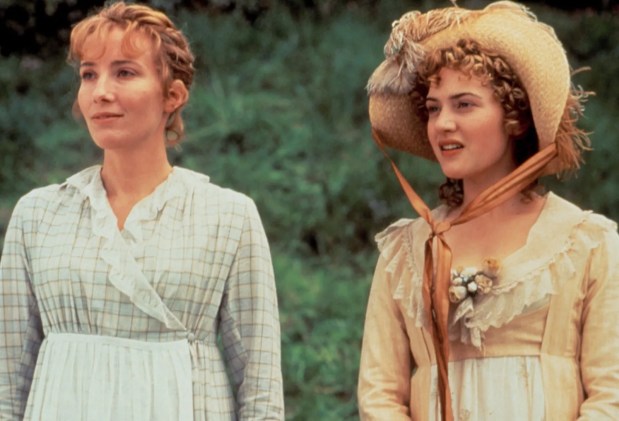
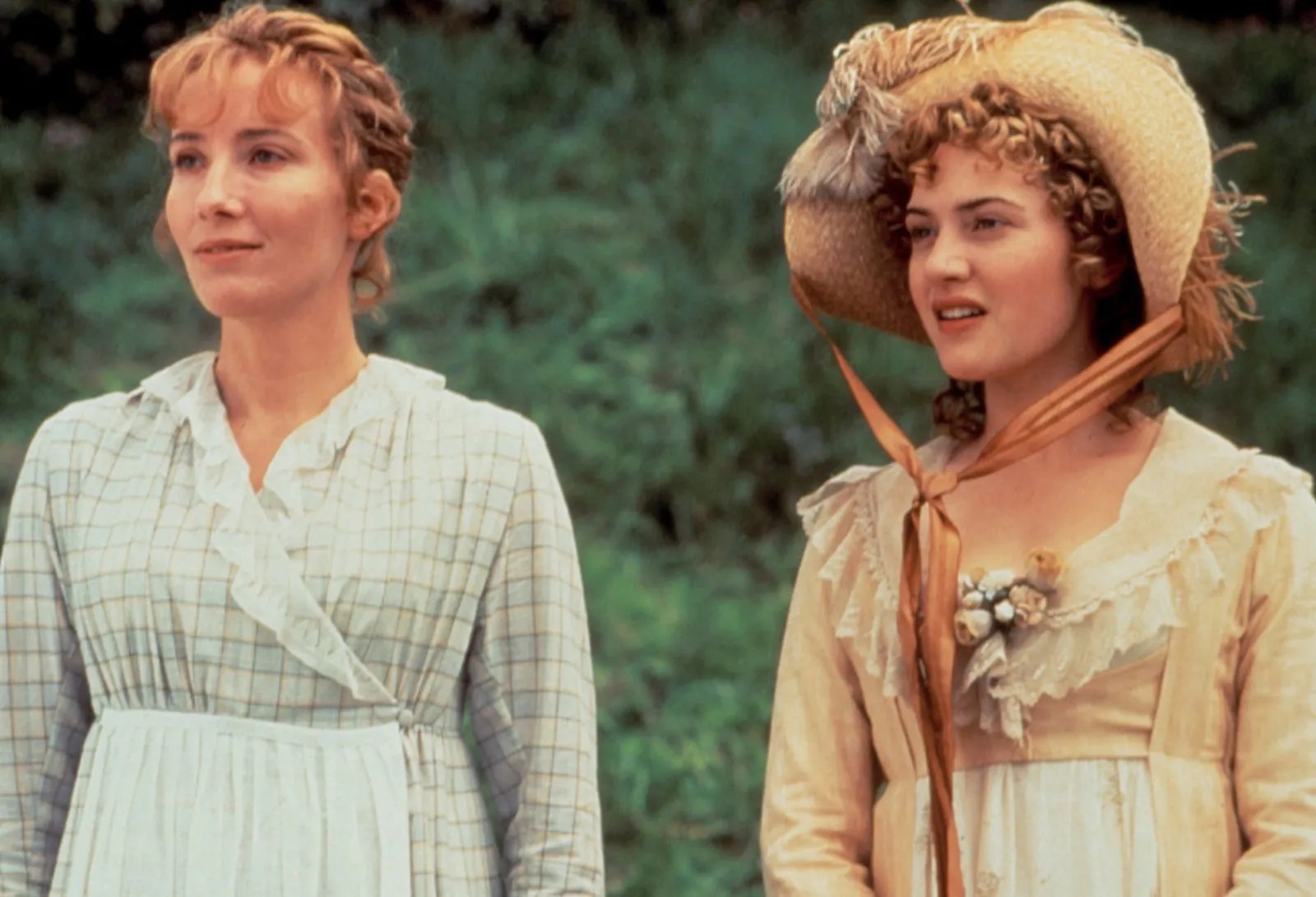
Today I cheated on the Advent calendar process. I needed a sample from an independent perfumer, to alternate with my Guerlain samples, but I also wanted to take part in Now Smell This’ Friday community project, which was to name your favorite work by, or inspired by, Jane Austen. So I grabbed the discovery set of Francesca Bianchi fragrances, which I hadn’t yet opened, and chose one that I thought might do. My favorite Jane Austen-inspired work is the movie “Sense and Sensibility”, which is why my blog is named, in part, Scents and Sensibilities (full name is Serenity Now: Scents and Sensibilities).

Emma Thompson and Kate Winslet in "Sense and Sensibility"
The heroines of “Sense and Sensibility”; image from Encyclopedia Brittanica.

The sample I chose was one I’ve never tried, called The Lover’s Tale. After all, Jane Austen’s books are all tales about lovers. But when I read more about it on Fragrantica — bingo! Here’s what Francesca Bianchi said about it herself:

This is a story of by-gone times about a secret encounter of lovers. It represents the contradictions between sense and sensibility, pruderie and passion. The lovers are full of desire but their education holds them back.

Francesca Bianchi

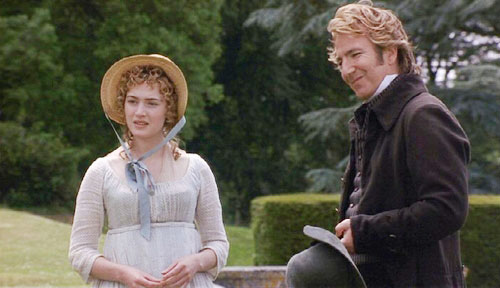
Launched in 2018, The Lover’s Tale has top notes of Honey, Mimosa, Aldehydes and Bergamot; middle notes of Orris, Peach, Heliotrope, Egyptian Jasmine and Bulgarian Rose; and base notes of Leather, Castoreum, Musk, Labdanum, Oakmoss, Vetiver and Sandalwood. It is considered a leather fragrance, as that note is a main player. Given its partnering with castoreum, musk, oakmoss, and vetiver, I venture to say that this is a more stereotypically masculine leather. However, the earlier notes are all very stereotypically feminine, with their profusion of florals. In a way, The Lover’s Tale is a combination of two characters from “Sense and Sensibility”: Colonel Brandon and Marianne Dashwood, who fall in love after various trials and tribulations.

I read somewhere that while it is understood that the title “Sense and Sensibility” refers to the two sisters, Elinor Dashwood who has common sense and intelligence, and the younger Marianne, who has a Romantic sensibility and passion, it can also be read as referring to Brandon and Marianne. He is the older, experienced man who commits himself to solving problems and addressing crises, including Marianne’s. He is practical — but he also has a wide streak of Romanticism himself, with his love of music and his infatuation with the emotional, musical Marianne.

Colonel Brandon and Marianne Dashwood, from "Sense and Sensibility"
Colonel Brandon and Marianne Dashwood; image from Columbia Pictures.

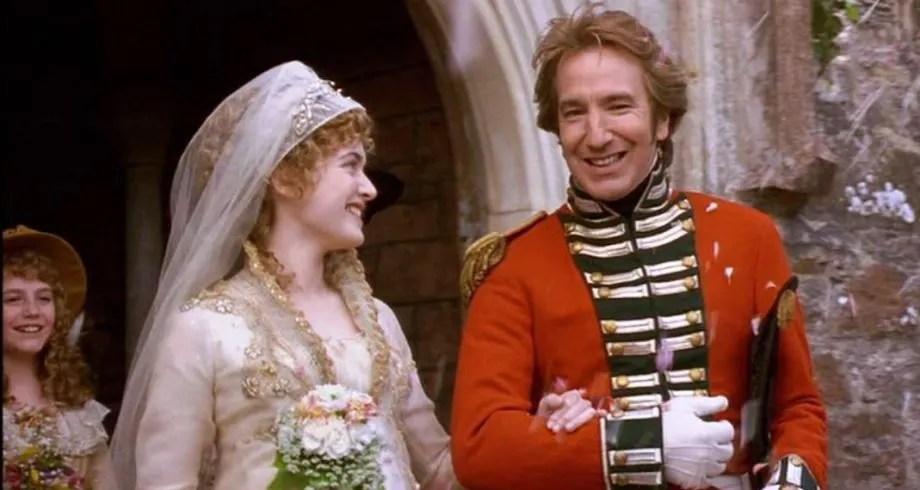
Colonel Brandon also spends much of the movie throwing himself into the saddle and riding off to save the day, so a leather fragrance is well suited to him. The honey in the opening notes can be a nice reference to what Emma Thompson, who wrote and starred in the movie, called the “extraordinary sweetness [of Brandon’s] nature.” The aldehydes and floral notes evoke Marianne’s love of beauty that can sometimes be a bit flighty; by the time The Lover’s Tale is in the final stage of drydown, the floral notes, the leather, and the warm animalic notes of the base have reconciled, and combine with labdanum and sandalwood in a beautiful marriage of scent.

Colonel Brandon and Marianne's wedding, "Sense and Sensibility"
Wedding of Colonel Brandon and Marianne Dashwood; image from Columbia Pictures

Do you have a favorite work by, or inspired by, Jane Austen? Any fragrance you might associate with it?

Scented Advent, December 15

Scented Advent, December 15

The Guerlain sample I pulled today was one that I tried and liked in the Las Vegas boutique, Frenchy Lavande. This version was launched under that name in 2021, but it is basically the same as Le Frenchy, which was launched in 2017. Like a few others, it was renamed and moved into the collection “L’Art et la Matière”. It is called an “aromatic fougère”, so classified largely because of the central role that lavender plays, but others have called it a citrusy aromatic. Fragrantica lists its notes as: Top notes, Lemon Verbena, Lemon and Bergamot; middle notes, Petitgrain, Lavender, Citron, Sage and Neroli; base notes, Ambergris, Vetiver and Tonka Bean. Eddie Bulliqi reviewed it and Herbes Troublantes recently for Fragrantica: “Herbs for Winter; Guerlain’s Frenchy Lavande and Herbes Troublantes.”

The opening is lovely, and even my nearby husband looked up and commented, “That’s really nice, what is it?”. While the opening notes are in fact very citrusy, I also smell lavender right away. The lemon and lemon verbena are more prominent than the bergamot, and the lemon verbena adds a distinctly herbal tint to the lemon and lavender. I can’t pinpoint the moment when lemon gives way to citron, but I can say that the partnership of citrus and lavender continues in the middle phase. I only get glimmers of sage, and the neroli is a latecomer to this stage, at least to my nose. It gradually replaces the lavender, as the fragrance moves toward its base notes. Vetiver continues the aromatic, herbal aspect of Frenchy Lavande. I can’t really distinguish the ambergris and tonka bean accords, just that the base slowly becomes warmer and less herbal.

Believe it or not, there is actually a blog called “The Traveling Frenchy” by a young woman named Alex, and in it she has posted a guide to visiting the lavender fields in Provence. I highly recommend it if you are thinking of seeking out French lavender fields; she gives very specific information on the locales she prefers, and even lists particular villages and roads.

French girl in field of French lavender in Provence
The Traveling Frenchy blog’s Ultimate Guide to the Lavender Fields in Provence

Ultimately, though I like Frenchy Lavande very much, it is a bit like Herbes Troublantes in reminding one of a cologne, although it is in a eau de parfum format. I wouldn’t say that it is much nicer than my Jicky eau de toilette or even that it lasts longer; and it certainly costs a lot more. Bottom line: if you want a Guerlain lavender, I recommend Jicky. In fact, that may be my next Guerlain purchase, from its reissue of several Guerlain classics in the collection “Les Legendaires”.

Do you have a favorite lavender-centric fragrance?

Scented Advent, December 14

Scented Advent, December 14

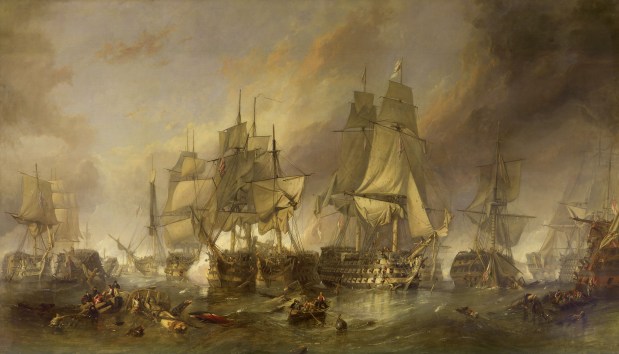
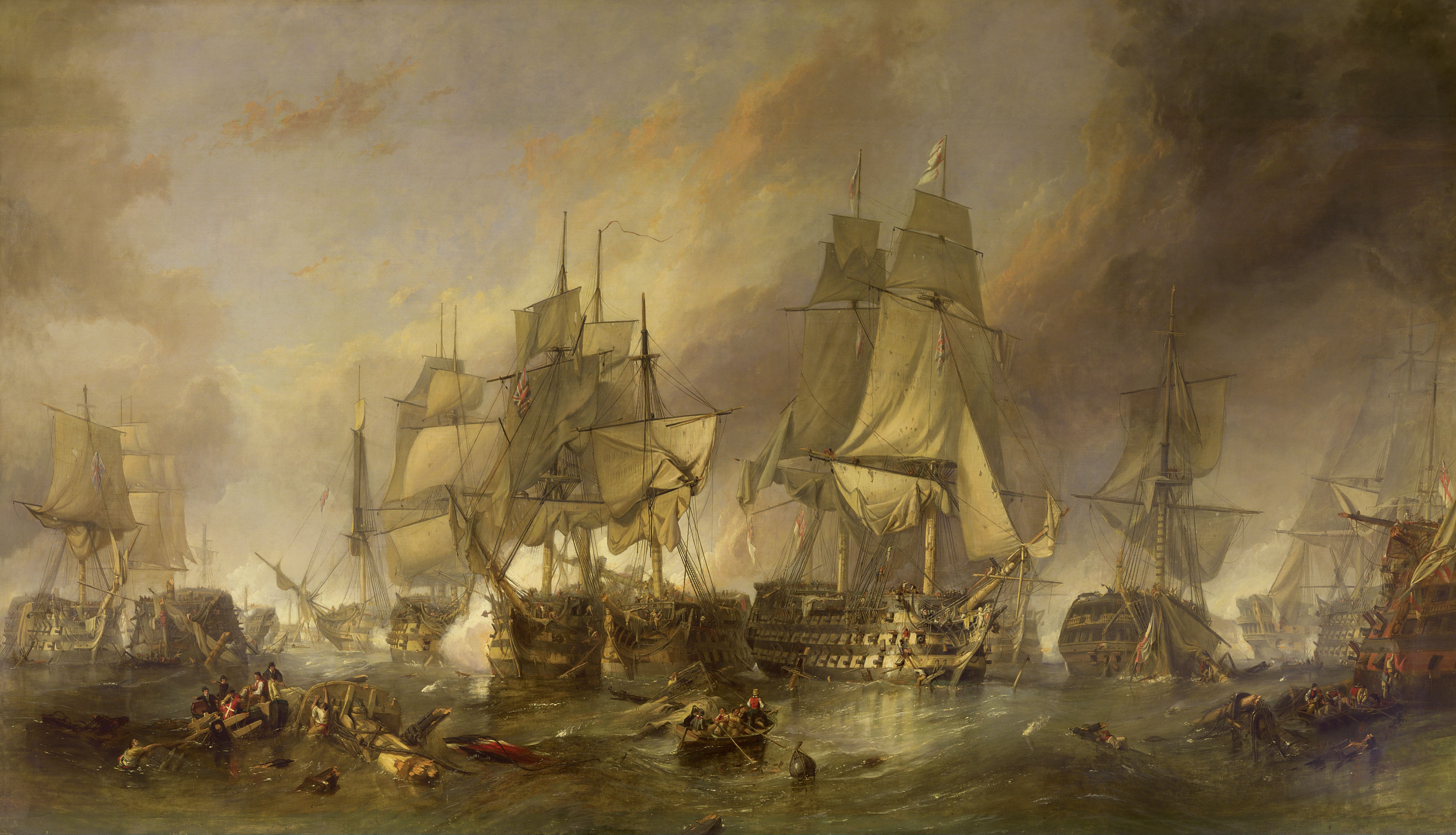
The independent perfumer’s sample for today’s Advent scent is 1805, later renamed as 1805 Tonnerre, by Beaufort London. It is one of the first three fragrances released by this niche house upon its debut in 2015, as part of the “Come Hell Or High Water” collection. Fragrantica explains:

This collection brings together elements of Britain’s history, both imagined and real, to create collages of scent embodying themes of warfare, trade and exploration.

Crabtree’s lifelong love of fragrance and a preoccupation with the darker elements of British history served as the collection’s impetus. 

Fragrantica

The brand’s packaging mentions the significance of the year 1805: the same year when Admiral Nelson won the Battle of Trafalgar but lost his life; and the year when the “wind force scale” was invented by Sir Francis Beaufort. The scent’s composition is described as follows:

The scent imagines moments within the battle itself. Powerful accords of smoke, gunpowder, blood and brandy combine with sea spray and a penetrating citrus note.

Beaufort London

More prosaically, Fragrantica lists its notes as: Top notes are lime, smoke and gunpowder; middle notes are blood, brandy and sea water; base notes are amber, balsam fir and cedar.

This is definitely a unique scent but it’s not unpleasant. Much more masculine than unisex to my nose, but is that mostly because we have learned to associate non-floral odors with men more than women? Be that as it may, I smell the top notes of smoke and gunpowder, and there is a sharp note right at the beginning that may be the “lime”. The sample I have is the actual 2015 launch 1805, not the renamed, later version, and I think that citrus top note may have gone off a bit. Blood? Brandy? There is a metallic tang in the middle phase that I think is meant to represent “blood”, but mostly what I smell is the continuing smoke, now merging with sea water. I don’t smell anything I could identify as brandy.

The opening and middle stages are challenging, but the final stage is calmer and warmer, perhaps in the way there is calm after a great naval battle or storm. The base notes are very woody; accords of fir and cedar dominate over amber. Unfortunately, this is also the stage where 1805 smells more generic, like a woody aftershave. Again, not unpleasant, but now not as interesting. Whenever the gunpowder accord wafts through, though, as it regularly does, it rekindles my nose’s interest.

Painting of the naval battle of Trafalgar
The Battle of Trafalgar, by William Clarkson Stanfield

I was introduced to Beaufort London at Bloom perfumery in London, several years ago, at which time they had released a couple more fragrances to join the original three. One of those, Fathom V, is actually a fragrance I like a lot, on its own merits. If you like smoky scents that are different, you may like 1805 and its other siblings, but this is definitely a fragrance where one must proceed with caution.

What scents do you find very intriguing and artistic, but you might not choose to wear them yourself or at least to wear them less often?

Scented Advent, December 13

Scented Advent, December 13

In a total change of direction, today’s Guerlain sample is a 2021 addition to “L’Art et la Matière”, Herbes Troublantes, by Thierry Wasser. Apparently, it used to be a cologne called Un Dimanche À La Campagne. This new version, an eau de parfum, is categorized as a “citrus aromatic”, and is it ever! The first word that came to my mind when I dabbed it on my wrists was “zingy”. It has a very fresh, green, bergamot-dominant opening. Luckily, I quite like bergamot; in fact, I like it a lot.

Once the bergamot fades into the background, a neroli accord appears, with unspecified “green notes.” Like bergamot, it is fresh, green, slightly bitter, aromatic, and very much a citrus note, but it also has the floral aspect of orange blossom. At this stage, Herbes Troublantes becomes softer, though it is still very aromatic in a green citrus kind of way; and if pressed to name the green herbs, I would choose lemongrass or lemon basil. The only base note identified for it is white musk, which to my nose means that it just gets softer and more reminiscent of clean linen. The overall impression I get from Herbes Troublantes is that of a citrusy herb, perhaps like lemongrass or even citronella (the plant, not the oil). It’s very pleasant and I think I would like it on my husband.

Clumps of green lemongrass
Clumps of lemongrass; image from Rural Sprout.

The name of this fragrance is intriguing: it means “disturbing grasses (or herbs)”. Really, there’s nothing disturbing at all about Herbes Troublantes. It succeeds in its goal of capturing the spirit of a cologne, in eau de parfum concentration. It lasts longer than a cologne, of course, but I don’t think it lasts as long as other scents in the collection.

What do you think of the idea of evoking a cologne in an eau de parfum? Wasn’t that the whole concept behind Atelier Cologne? now sadly no longer distributed in North America although one can still find it to buy online.

Scented Advent, December 12

The independent perfumer Advent sample of the day is Hiram Green’s Arcadia. Wowza! It is classified as an “aromatic fougère”, and it has a great opening, top-heavy with lavender and bergamot. As they settle down, the bergamot recedes but the lavender stays strong, joined and made more floral by the arrival of jasmine and rose accords. The notes list from the brand’s website is: Bergamot, lavender, jasmine, rose, spices, resins, tonka bean, aged patchouli, New Caledonian sandalwood. Hiram Green, who is a natural perfumer, also lists the actual ingredients, which include evernia prunastri extract, which is oakmoss. Be still, my heart! I love oakmoss in fragrances. Mr. Green says this about the fragrance, which he launched this year (2022):

For this perfume I was inspired by the natural splendour of Arcadia. In this idyllic, unspoiled wilderness babbling brooks meander through mountains covered in dense forests and the air is filled with the sound of humming insects and twittering birds.

Imagine the lush undergrowth that covers the forest floor. In areas where the sun manages to break through the canopy, fragrant flowers bask in the sunlight and their sweet scent intertwines with the fresh green smell of the foliage.

The base notes blend beautifully together. The spices are pretty subtle — definitely noticeable, but they don’t hit you over the head (or nose). Resins, tonka bean, and sandalwood provide warmth, and patchouli and oakmoss hum underneath. The drydown stage is where I think Arcadia smells most like a traditionally masculine fragrance, with the lavender still evident over those warm base notes. There’s a light dustiness to this stage, possibly from the oakmoss, that makes me think of motes of sunlight floating through the sunbeams that shine through Mr. Green’s Arcadian forest.

In fact, the whole fragrance makes me think of a particular forest: Ashdown Forest in England, famous not only for its woodland beauty but also as the landscape of Christopher Robin’s childhood idyll, the Hundred Acre Wood he shared with Winnie-the-Pooh and friends. Arcadia, indeed!

Sunlit woodland path in Ashdown Forest
Sunlight in Ashdown Forest, England; image from ashdownforest.com.

I’ve never been there, but I loved A.A. Milne’s books as a child; in fact, “Winnie-the-Pooh” was the first book I read by myself, shocking my parents at the age of four when I pointed to it and said, “I can wead that book.” And so I could, having taught myself to read, although I couldn’t pronounce Rs very well. One of my late mother’s cousins actually illustrated Christopher Milne’s memoir “The Path Through the Trees”.

I’m delighted with Mr. Green’s version of Arcadia and will put it on my “possible full bottle some day” list. Have you tried any of Hiram Green’s fragrances? Any favorites?

Scented Advent, December 11

Scented Advent, December 11

Today’s Advent Guerlain sample is Angélique Noire, which seems to have developed something like a cult following since it was launched in 2005. And I can see (or smell) why! It’s an unusual, distinctive fragrance, totally unisex to my nose. Fragrantica lists it as an “amber floral”, with top notes of Angelica, Pear and Pink Pepper; middle notes of Jasmine and Caraway; and base notes of Vanilla, Angelica and Cedar. Right away, upon spraying, I smell the angelica. It is green, herbal, aromatic but lightly so. It is made slightly but noticeably fruity by the pear accord, which is a very appealing combination. Some reviews mention bergamot, but I don’t really smell that. However, since bergamot is, to my nose, a slightly bitter, green citrus scent, a combination of green angelica and juicy pear may emulate it.

While jasmine and caraway join in for the middle phase, the angelica never goes away, and it persists through the entire drydown. That’s saying something, because I could still smell Angélique Noire on my wrist, albeit faintly, ten hours after applying it this morning. The caraway carries forward the initial herbal greenness of the angelica, while the jasmine brings a bit of floral sweetness. To my nose, the notes in this fragrance are really well blended, they just segue from one to the next, often overlapping. The perfumer is Daniela Roche Andrier, creator of one of my top fragrances, Tiffany & Co..

As the floral notes fade, the vanilla emerges and the angelica becomes dominant again as part of the base. At this stage, it reminds me of Vanira Moorea, the citrusy vanilla from Berdoues whose greenness comes from a petitgrain accord. Angélique Noire is a darker green, but still fresh. The base shows off more of its aromatic nature, which a cedar accord enhances.

I was interested to try Angélique Noire partly because Guerlain sales assistants seem quite enthusiastic about it. I first encountered it several years ago, when there was still a Guerlain counter at our local Neiman Marcus or Saks (can’t remember which!). I had asked the SA to recommend some vanilla scents and she immediately wanted me to try Angélique Noire. I remember liking it then, but my senses were overcome by Spiritueuse Double Vanille, so I don’t think Angélique Noire made much of an impression. Then, this past September, when I made my first visit to a standalone Guerlain boutique, the lovely SA literally pressed a sample of it into my hands, and sent me another one with the order I had placed. I had told her I like green scents, and I think that is the aspect of Angélique Noire she wanted to bring to my attention.

I really like Angélique Noire! I don’t find anything particularly “noir” about it, either. Angelica is an unusual note on which to center a fragrance; do you know of or recommend any others?

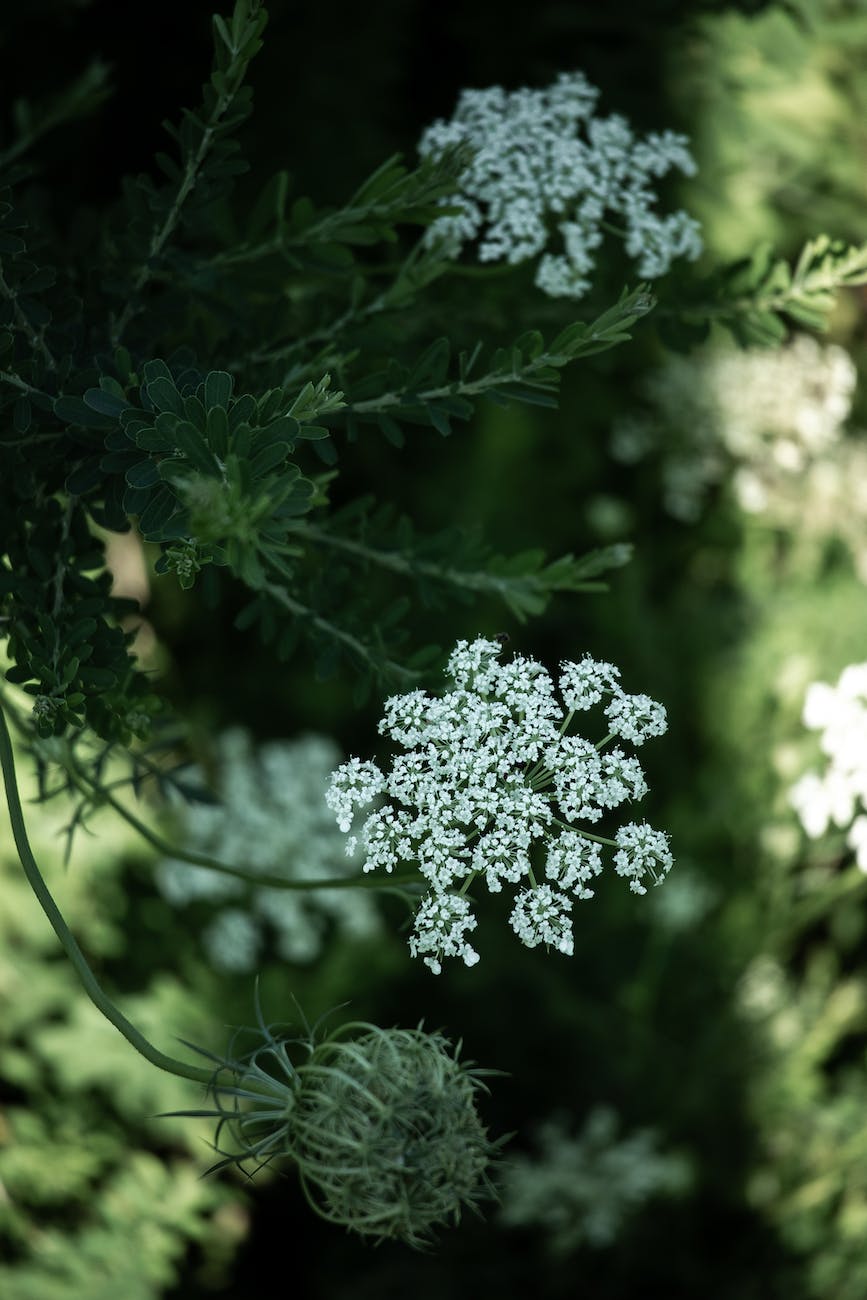
Angelica plant in bloom
Photo by PrathSnap on Pexels.com
Scented Advent, December 10

Scented Advent, December 10

Today’s independent perfumer sample is Splendiris, by Parfums Dusita. What an intriguing scent! There was something in the opening that I didn’t like, though I did like the overall effect. I truly can’t figure out what it was that annoyed me — perhaps the carrot seeds listed as a note, as it was an almost woody note that bothered me. Luckily, the combination of violet and orris appears quite soon, and it’s a beautiful friendship. At this heart stage, those two accords dominate, but gently, like a cool breeze wafting over a flower bed.

The notes are listed by Fragrantica as follows: Top notes are Violet Leaves, Carrot Seeds, Fig Leaf, Green Mandarin, Italian Orange and Calabrian bergamot; middle notes are Violet, Orris, Grasse Rose and Jasmine Sambac; base notes are Vanilla, Ambergris, Haitian Vetiver and Cedar. The overall impression I get from Splendiris is “cool”, but it is the cool of a bright spring day, lightly warmed by sunshine. There is just enough rose and jasmine in this phase to make it more multi-layered and textured, especially the jasmine, but I don’t think anyone smelling it for the first time would think of it, even at this stage, as a rose or jasmine fragrance.

I’ve been trying more Dusita fragrances lately; I’ve been intrigued by the brand since it has a contest to name what became Splendiris.

Artwork for Parfum Dusita's naming competition
Naming competition, Parfums Dusita

To my nose, Splendiris smells like the artwork above: shades of transparent purple and blue, illuminated by touches of gold, yellow and brown. The yellow, gold, and brown tints come from the base notes, such as vanilla, vetiver, and ambergris. There are some people who smell almost everything “in color”, in the phenomenon called synesthesia. I am not one of them, but Splendiris does lend painterly effects to the overall impressions, more than I usually perceive.

Have you had any experiences with synesthesia, or do you strongly associate any fragrances with a particular color?

Bottle of Parfums Dusita's Splendiris eau de parfum with blue flowers
Splendiris eau de parfum; image from Parfums Dusita
Scented Advent, December 9

Scented Advent, December 9

The Guerlain sample of the day is Iris Torréfié, which was created by Delphine Jelk and launched in 2020. I had to look up the word “torréfié”, as it was unfamiliar; it means roasted, often in reference to coffee beans. Sure enough, among the notes listed for the fragrance is coffee. The full notes list on Fragrantica is: Top notes, Cardamom, Coffee and Bergamot; middle notes, iris and Ambrette (Musk Mallow); base notes, Leather, Tea, Vanilla and Amber. I’ve never associated iris with coffee — or roasting, for that matter — but I do like the opening of Iris Torréfié very much.

Iris Espresso coffee beans

The very first thing I smell upon spraying my wrists is the iris, and it’s a beauty. Rich, a bit fruity, a bit carroty — it’s a gorgeous iris. And who knew? There is an actual iris called “Coffee Trader”. So maybe they are meant to be together after all!

Tall bearded iris "Coffee Trader"
Iris “Coffee Trader”; image from garden.org

I don’t smell cardamom at all in the opening, and I’m a little disappointed by that because I love the smell of cardamom. I do smell the bergamot; it makes a quick appearance to brighten the opening and then steps back. If I hadn’t been told there was a coffee note in Iris Torréfié, I would not have known. To my nose, the opening is all about iris with a light touch of bergamot.

In the middle phase, the iris is still dominant, still gorgeous. There is an underlying muskiness that emerges, which must be attributable to the ambrette. As Iris Torréfié dries down, the base reveals itself to be a warm combination of leather, vanilla, and amber; I don’t smell the listed note of tea. The iris continues to reign, warm but not “roasted.” All of these accords play very nicely with each other, while keeping the iris the star of the show. The leather is very subtle and segues smoothly from the ambrette.

Iris Torréfié is a lovely fragrance, and the first among my Guerlain samples that could tempt me to a full bottle, even though I have several iris-forward fragrance. It has just the right balance of floralcy and vaguely spicy, soft leather. Have you tried it? What did you think?