Fragrance Friday: Un Jardin Apres La Mousson

Fragrance Friday: Un Jardin Apres La Mousson

Given the hurricanes we have recently endured here in my part of the world, and in honor of my dear friend who evacuated from Florida a week ago and is able, happily, to return to her intact home tomorrow, it’s time for me to comment on a favorite fragrance: Un Jardin Apres La Mousson, translated as “a garden after the monsoon.” Very apropos, especially considering that my friend is a landscape architect and designer of lovely gardens!

Un Jardin Apres La Mousson is, of course, one of the “Jardin” series of fragrances created for Hermes by Jean-Claude Ellena while he was their in-house perfumer. I love all five of them, but this one is high on my list. Hermes’ website describes it as a unisex fragrance meant to evoke the calm of a wet garden in India after the rain“A serene expression of nature’s rebirth after the monsoon rains.” Jean-Claude Ellena

Un Jardin après la Mousson explores unexpected aspects of India, when the monsoon gives back what the sun has taken from the earth, and drives away the scorching breath of drought. In this novella, ginger, cardamom, coriander, pepper and vetiver tell the story of nature’s rebirth, captured in Kerala in a world overflowing with water.

Mousson’s specific fragrance notes include: cardamom, coriander, pepper, ginger, ginger flower, vetiver, and unspecified citrus, floral and water notes (it seems that the citruses are lime and bergamot). The spices are not hot or warm or traditionally “spicy.” They present themselves as “cool” spices, after a refreshing initial gust of citrus on first application. Omitted from the official list of notes is melon, which clings to the whole composition; some wearers experience that note as more like cucumber. Its presence is confirmed by a later analysis revealing that the aromachemical Melonal is a key ingredient.

Both melons and cucumbers are members of the plant family Cucurbitaceae, the flowering gourds. Both are indigenous to India and have been cultivated there for thousands of years, possibly as long ago as 3000 years. Many varieties of each are cultivated in Kerala and are widely used in Indian cuisine, with cucumbers especially often combined with the spices listed as notes for Mousson. The cucurbits grown in Kerala are “rain-fed crops”, benefiting from the region’s monsoon rains.

Cultivation of gourds and melons hanging from vines in India

Melons and gourds cultivated in India; photo from asianetindia.com

I have never been to India, but I have read that Kerala is one of its most beautiful regions, with tropical beaches and islands, breathtaking waterfalls, tea and cardamom plantations in the hills, rivers, lakes and houseboats. Some travel writers say that monsoon season is an idyllic time there, as the rains are not incessant deluges as in other regions, but daily downpours that last a few hours and disperse every day, allowing sunshine to reveal a remarkably verdant, rain-washed landscape. The rains replenish the famous waterfalls, lakes and rivers and cool the air. Monsoon season is also the time for the harvest festival of Onam; and it is reputed to be the best time for the ayurvedic treatments for which the region is famous.

Kerala, India, waterfall and green mountains during monsoon rainy season.

Kerala waterfall in monsoon season; photo from iryas/wikipedia.

Jean-Claude Ellena visited Kerala more than once during his work on Mousson. One of his trips is described by Phoebe Eaton in Liquid Assets:

In coastal Kerala, spices have been trafficked since the Romans rode in on the winds of the monsoons seeking cardamom and pepper: black gold. Women wear their saris differently here than they do up north, draping them like togas. And when the first monsoon blows in from the Arabian Sea — and it always seems to arrive during the first week of June, extinguishing the scorching rays of the summer sun and ushering in a joyful verdant renewal — the modest women of Kerala rush out into the rain, and the saris cling close to the body.

Chant Wagner wrote a lovingly detailed review of Mousson when it was released in 2008, at www.mimifroufrou.com. She’s a fan, as is Luca Turin; Chandler Burr was not. The latter’s review is puzzling; he spends more than a few sentences on his hypothesis that Ellena’s new creation would present a new experience of the aromachemical Calone, then he expresses outrage that it turns out not to be among the ingredients and calls Mousson a failure. Turin, on the other hand, praises the “core accord” as a “combination of melon, capsicum, and peppercorns” with an “incongruously fruity” effect. His review also notes the watery effects which Chant Wagner describes so well:

From the vantage point of the watery motif, it offers a notable variation on it by introducing a lactic, milky sensation that makes the perfume feel both aqueous, transparent and cloud-like. The fruit that is showcased here – a green cantaloupe going at times in the direction of a buttery watermelon – is [as] fluidly delineated as an impressionistic fruit can be.

Aqueous, transparent and cloud-like. Those words perfectly describe some of the lovely photographs I’ve seen of Kerala during monsoon season:

Clouds over mountains in Kerala, India, during monsoon season.

Kerala in monsoon season; photo sreetours.com

Mousson’s bottle is also lovely; it matches all the bottles of the other Jardin fragrances and, like them, is tinted with ombre shades of green, blue, or both (here, green is combined with blue). The bottle has a pleasing weight in the hand. The outer box is printed with a charming Hermes print of fanciful elephants, monkeys and parrots, cavorting amid flowers with tiny parasols in their grasp.

Print for outer box of Hermes' eau de toilette Un Jardin Apres La Mousson

Un Jardin Apres La Mousson print; hermes.com

I find Un Jardin Apres La Mousson intriguing, delightful, and different. I especially enjoy it during the summers here, which are hot and humid. As an admitted fan of all the Jardin fragrances, and a gardener myself, I may be biased! Have you tried this, or any of the others, and what did you think?
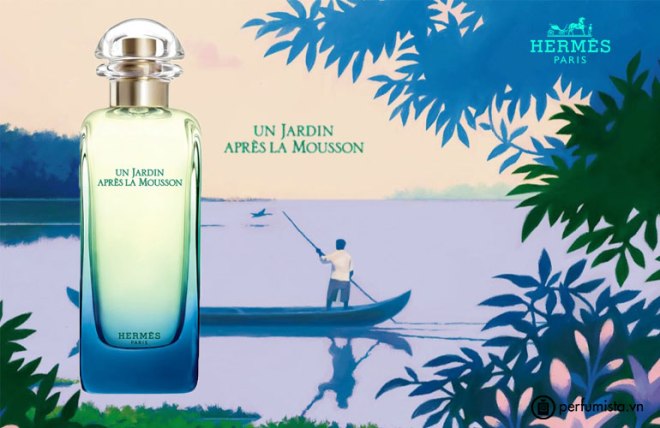
un-jardin-apres-la-mousson-boat

Un Jardin Apres La Mousson; image from Hermes, perfumista.vn

Fragrance Friday: Total Eclipse of the Sun

Fragrance Friday: Total Eclipse of the Sun

I live in a part of the US that was near, but not in, the zone of “totality” for this week’s total solar eclipse. Nevertheless, the moon’s coverage of the sun peaked here at about 98%, which was dramatic. Lots of excitement about it in my city; libraries, museums and schools handed out free “eclipse glasses” so people could look at it safely (btw: yes, you can go blind from looking directly at a solar eclipse, or at least do serious damage to your eyes).

One blog I follow had the wonderful idea of asking perfumistas what special scent they would wear for the occasion. Many responses were that the commenter would wear either a really special occasion perfume, or something that referred to the sun or moon. My choice? L’Heure Attendue, by Jean Patou. I mean, how could I not choose that? This week’s eclipse was the DEFINITION of the “awaited hour”; some estimates claim that American employers lost several hundred million dollars of productivity due to their workplaces coming to a halt during the eclipse. (Not shedding tears for them. This major astronomical event doesn’t happen every day).

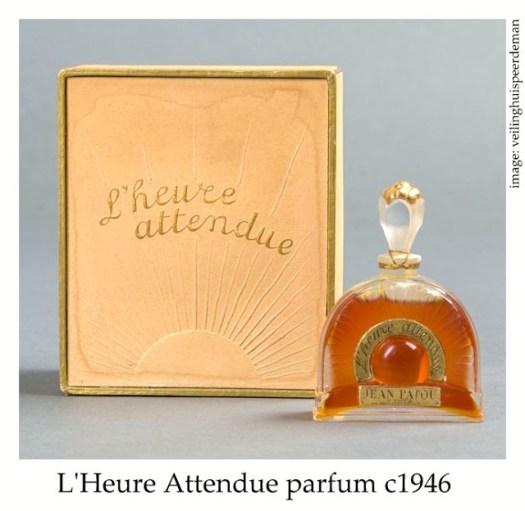
So, L’Heure Attendue. It was launched in 1946, the reference being to the long-awaited liberation of Paris and the end of World War II. The perfumer was Henri Almeras, working for the couture house of Jean Patou, who created most of Patou’s legendary fragrances including Joy. The vintage advertising showed the perfume as a rising sun and the beautiful bottle shared that optimistic image of dawn:

Vintage bottle and package of L'Heure Attendue perfume by Jean Patou

L’Heure Attendue vintage; photo from jeanpatouperfumes.blogspot.com

Australian Perfume Junkies has some lovely photos of a vintage bottle found in an antiques market, with commentary. According to some commentators, the house of Patou registered the name as early as 1940, after the Nazi invasion of France and occupation of Paris, already hoping for the end of the war. The original ad copy says: “Created in a mood of hope, to capture your dreams, your desires, to bring them nearer to realization …”

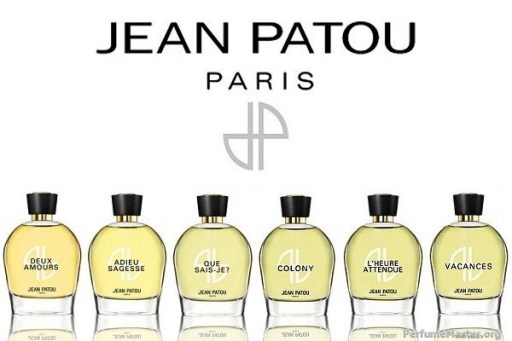
It has been reformulated at least twice: once in 1984, when some of Patou’s classic perfumes were reissued, and again in 2014, as part of Patou’s “Collection Heritage.”

Six bottles of reformulated classic Jean Patou perfumes: Duex Amours, Adieu Sagesse, Que Sais-Je?, Colony, L'Heure Attendue, Vacances

Jean Patou Collection Heritage 2014; photo from perfumemaster.org

That is the version I have, and it is lovely. The reformulation was done by Thomas Fontaine. I would be remiss if I didn’t comment on the bottle. It is heavy, high-quality glass, clear enough to be mistaken for crystal; the weight and the rounded shape of the bottle feel elegant in the hand. It is a pleasure to hold. The notes are listed on Fragrantica as: top notes: tangerine, aldehydes and neroli; middle notes are rose, jasmine, ylang-ylang and peach; base notes are opoponax, patchouli, sandalwood and amber.

These notes are quite different from those listed for the 1946 original: top: lily of the valley, geranium, lilac; heart: ylang-ylang, jasmine, rose, opopanax; base: mysore sandalwood, vanilla, patchouli. The opening must be very different from the original, but it is delightfully sunny: a light hand with the aldehydes but enough to give it a classic nuance, combined with the light floral of neroli and freshened by the citrusy tangerine (a fragrance note I appreciate more and more — not too sour, not too sweet).

The middle notes of rose, jasmine, ylang-ylang and peach are almost the same as the original except for the addition of peach and the placement of the opoponax; my nose isn’t sophisticated enough to distinguish whether the latter is appearing among the heart notes or, as listed for the original, in the base notes. Opoponax is also known as “sweet myrrh” and is used to impart sweet, honeyed balsamic notes. In the 2014 L’Heure Attendue, it lends a lightly Oriental nuance to the floral notes that deepens as the fragrances dries down. Overall, though, I don’t think I would place it in the category of spicy Oriental, as I don’t pick up on any spices here, just warmth. Maybe it’s a “floriental.”

The base notes in the 2014 formulation differ from those listed for the original: they are opoponax, sandalwood, patchouli and amber. The original lists opoponax as a middle note, with sandalwood, patchouli and vanilla in the base. The only real difference is the substitution of amber for vanilla. I think Mr. Fontaine may have carried forward the sweetness of the peach in his reformulation to combine with the amber in the base and create an impression of vanilla-like warmth.

I do find this L’Heure Attendue to be a warm scent, unlike at least one other reviewer‘s reaction to the vintage original EDT. She found the lilac note of the original to be melancholy; it is not present in the new version, nor are the geranium and lily of the valley notes from 1946. PerfumeMaster sums up the new one nicely: “The fog in the atmosphere has dissolved, night is no more and the sun has risen gloriously once again.” That’s also a pretty good description of the recent eclipse! It was truly amazing to watch the black circle of the moon slowly creep across the face of the mid-afternoon sun blazing in the sky. As I was not in the path of eclipse “totality”, daylight did not disappear, but the light dimmed noticeably and the temperature cooled ever so slightly when the moon’s coverage of the sun was at its peak. The leaves of the trees acted as pinhole cameras, with the light of the eclipse shining through tiny gaps between them and casting thousands of crescent-shaped shadows on the ground. The moon continued its progress and full daylight was eventually restored.

As L’Heure Attendue slowly fades on my skin hours later, it leaves a lingering, sweet warmth. It is elegant and ladylike, but not chilly. It almost feels like a softer, gentler Chanel No. 5, probably because of the similar floral heart notes, the aldehydes in the top notes, and sandalwood and patchouli among the base notes. They have other notes in common — notably, Chanel No. 5 EDP (created in 1986 by Jacques Polge) has a peach top note, which the original L’Heure Attendue did not have but the new one includes as a heart note. I’m glad to recognize the similarities, as the original Chanel No. 5 eau de toilette and parfum were my mother’s scents and I don’t want to wear that particular Chanel, but I’m enjoying this “kissing cousin” very much. I especially like the contrast between the sunny opening, the progression through rosiness, and the slow, warm drydown. Like the dawn of a new day … the awaited hour.

Photo of sun at dawn behind clouds, over sea.

Dawn through clouds; photo from pexels.com

Did you choose a special scent to wear during this eclipse, or have you done that for any other natural event, like a solstice?

Fragrance Friday: Fragrance Fantasy

Fragrance Friday: Fragrance Fantasy

For something completely unique, however, there’s Penhaligon’s Bespoke by Alberto Morillas, spearheaded by the man behind some of the world’s most recognisable scents including Calvin Klein’s CK One, Tommy Hilfiger’s Tommy and Marc Jacobs’s Daisy. Comprising eight months of trial-and-error testing and costing from £35,000, it’s a process that requires both a significant monetary and…

Oh, how I long to be able to do this, given how often I have gravitated to Penhaligon’s fragrances! Alas, it will remain nothing more than a lovely fantasy. What choices would you make, if you pursued the less expensive option of having specific bases and notes combined for you, as described in the article? I am consoling myself with a few photos from my visit to the Penhaligon’s boutique in the Burlington Arcade last fall, and a few spritzes of my beloved Blasted Bloom.

via A significant monetary and personal commitment — Now Smell This

Fragrance Friday: IKEA?

Fragrance Friday: IKEA?

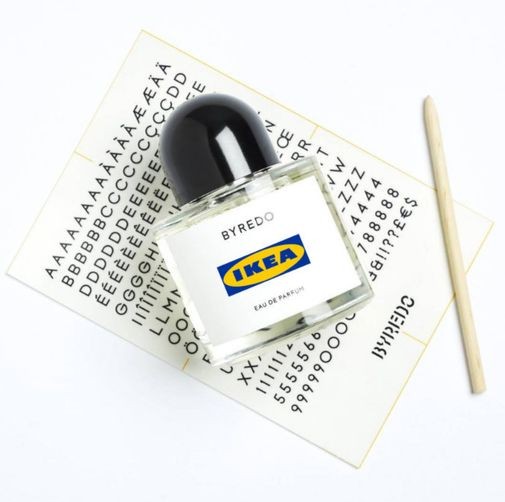
Swedish retail and home furnishings phenomenon IKEA has announced that it will develop its own fragrance, with Swedish perfume-maker Byredo. ?? I’m intrigued, because I love both Byredo and IKEA, but I wouldn’t necessarily think of them together!

And although IKEA has said it won’t evoke Swedish meatballs, THAT is the smell I associate with IKEA, aside from the woody smell of the warehouse-like section where you get your own stuff off the shelves. Could that be it? Wood and dust? Plus cinnamon rolls? But IKEA made its name creating well-designed, quality, affordable home products, so I am genuinely interested to see what they do with a luxury product like Byredo fragrance.

What are your favorite fragrance partnerships, or most unusual fragrance concepts?

Fragrance Friday: Flor y Canto and Scentbird

Fragrance Friday: Flor y Canto and Scentbird

In a feeble attempt to control my fragrance hobby, I signed up for the Scentbird subscription service, which sends subscribers a sprayer with about .27 oz. of a fragrance you select from among their offerings. You can pre-select several months’ worth at a time, and the monthly charge is $14.95. My first delivery arrived yesterday. It is Arquiste’s Flor y Canto, a fragrance that sounded as if I would like it very much, but which is VERY expensive, so a size less than a full bottle is warranted.

Reader, I loved it. Fragrantica lists its notes as: Mexican Tuberose, Magnolia, Frangipani and Marigold; Arquiste lists the notes with plumeria instead of frangipani; they are the same flower, often used in leis. Created by perfumer Rodrigo Flores-Roux, Flor y Canto made its debut in 2012; its name means “flower and song”. It opens with a lemony greenness that I associate with magnolia. I seem to smell that more than I smell tuberose, but there is definitely a creamy white flower lurking behind the magnolia. The Arquiste website says:

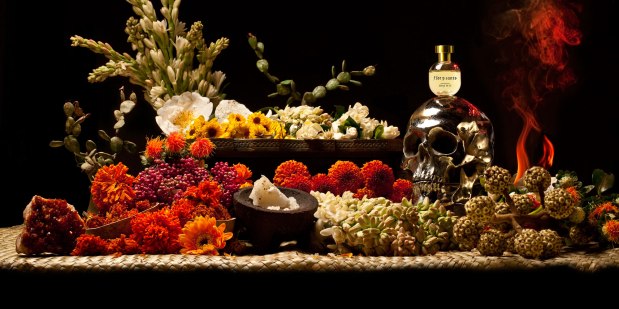
On the most fragrant festival in the Aztec calendar, the rhythm of drums palpitates as a wealth of flowers is offered on temple altars. Billowing clouds of Copal act as a backdrop to the intoxicating breath of Tuberose, Magnolia, Plumeria and the intensely yellow aroma of the sacred Marigold, Cempoalxochitl.

The Mexican marigold is also locally called the Flower of the Dead, because it is traditionally used to decorate altars in Oaxaca, Mexico on the Day of the Dead (or “Dia de los Muertos”) in early November, and also used in the past to form garlands for the worship of Aztec gods. Flor y Canto, however, is meant to evoke a summer festival in the ancient Aztec city of Tenochtitlanthe religious and political capital of the Aztec civilization. It was destroyed eventually by the Spanish conquistadors in the 16th century, according to the Ancient History Encyclopedia, but apparently it was so remarkable and beautiful, with its towers, canals, and floating gardens, that the Spanish chroniclers left very detailed descriptions of the city. There is even a surviving Nahuatl poem about it:

The city is spread out in circles of jade,
radiating flashes of light like quetzal plumes,
Besides it the lords are borne in boats:
over them extends flowery mist.

Mexican quetzal bird in flight

Quetzal bird in flight; photo from Mexico News Daily

“Flowery mist” is an apt description of Flor y Canto. It is purely floral with a slightly green, fresh note like fragrant leaves or the marigold flowers. This is a creative and effective use of marigold; its astringency cuts the sweetness of the white flowers and enhances them. It is much lighter and greener than the image at the top of this post, from the Arquiste website, suggests.

Tenochtitlan and its sacred precinct were also the site of human sacrifices to the Aztec deities; one is thankful that Arquiste chose NOT to evoke those in the fragrance itself in spite of the reference to death and altars in their illustration. Flor y Canto is an elegant, soft, summery floral. It wafts gently from one’s wrists without overwhelming. Bravo, Arquiste and M. Flores-Roux!

Featured image from http://www.arquiste.com

Fragrance Friday: Lilybelle

Fragrance Friday: Lilybelle

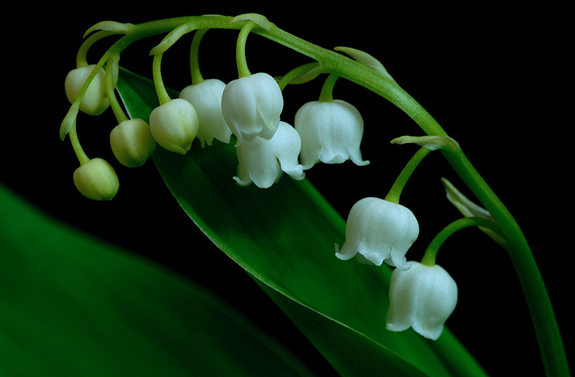
As you know if you read any of my posts during last year’s May Muguet Marathon, I love lily of the valley and all things muguet. I wore Diorissimo for a decade and have been happily exploring other LOTV fragrances — but something was missing. And, yes, something really WAS missing, due to IFRA restrictions and reformulations. One of those things was the former level of hydroxycitronnelal (“a lily of the valley aroma-chemical and the main constituent of Diorissimo’s muguet bouquet”, according to the blog Perfume Shrine). Several of the aromachemicals formerly used to create a LOTV scent, such as Lyral and Lillial, are now restricted, I have read.

Enter Lilybelle! “According to David Apel, Senior Perfumer at Symrise, ‘Lilybelle is a molecule with an extremely fresh, green and wet smell. A touch of aldehydes raises its luxuriant floral touch, thus capturing the sparkling freshness of spring.’

From Premium Beauty News: Symrise innovates with a lily of the valley note from sustainable sources:

After six years of development, the Symrise research team has designed Lilybelle, a new molecule with fresh and transparent notes that are very close to the scents of lily of the valley. This (…)

Source: Perfumes: Symrise innovates with a lily of the valley note from sustainable sources

Notably, Lilybelle is an aromachemical made with “green chemistry” practices and principles, from renewable resources, and it is biodegradable. Take that, IFRA!

I think this is a wonderful development and I share the hope expressed by Mr. Apel that perfumers will use this new aromachemical in creative, innovative ways, including its use in unisex and masculine fragrances. I already enjoy Laboratorio Olfattivo’s Decou-Vert, which is supposed to be unisex. However, I also hope that a talented perfumer who, like me, loves muguet, will create a lovely, feminine LOTV which, unlike Guerlain Muguet 2016, I can afford.

Confederate Jasmine

Confederate Jasmine

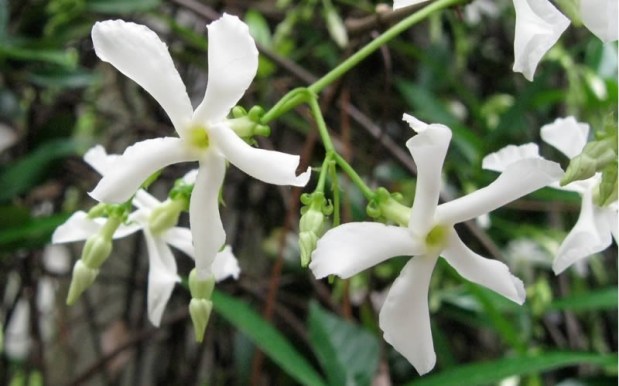
Although last year I wrote a series called May Muguet Marathon, in truth the lilies of the valley bloomed here in late March/early April. What blooms here in May is Confederate jasmine and in my garden, lots of it. I have a brick wall and more than one fence that are completely covered in it. It is an evergreen vine with medium-sized, glossy, dark green leaves that make a perfect cover for such structures. Its major advantage over other such plants is its flower. Every spring, the vines are covered in hundreds of delicate, small white flowers with a starry appearance and powerful fragrance.

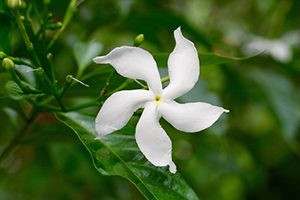
Close up of white Confederate jasmine flower

Confederate jasmine; trachelospermum jasminoides

I was prompted to write here about it because another member of a Facebook fragrance group posted a photo of a plant he had seen and asked what it was, as it smells so heavenly. It really does. A single plant can scent an entire garden; dozens of plants, as I have in my garden, may be scenting the whole block!

When I plant in my already over-crowded garden, I try to use plants that serve multiple purposes, and Confederate jasmine is a prime example. As I love fragrant plants, fragrance is high on my list of the qualities I seek. As my property is less than one acre, plants like vines that will grow vertically and not take up much precious ground space are desirable. It is shaded by a high canopy of tall oak trees, so I seek out plants that tolerate partial shade and shade. I also have a brick wall all along one side of our lot and chain link fence around the rest (erected by a previous owner and now, thankfully, mostly unseen due to the same owner’s clever screen plantings).

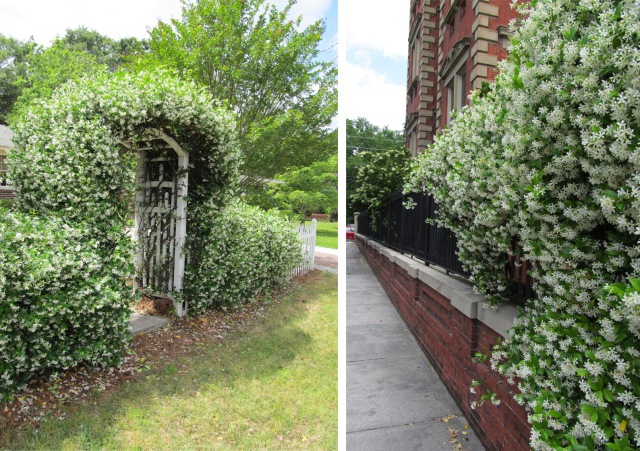
The brick wall was built several years ago by a neighbor and required something to cover its then-naked surface, which extended the whole length of our garden. Enter Confederate jasmine! We installed vertical iron trellises on the brick pillars that rose about every ten feet along the wall, planted the jasmine, and within a few years, the whole wall was almost completely covered with pretty evergreen leaves, as the vines fling themselves with abandon into the space between the trellises. The bonus, of course, is that at this time of year, the fragrance is remarkable and the wall is covered with white flowers, as in these images from the blog Old City South.

Confederate jasmine vines on wall and arbor, from Old City South blog

Confederate jasmine; photos from Old City South blog

What does it smell like? It is sweet, with a hint of lemon. It attracts and nourishes bees, another excellent quality given severe declines in North American bee populations. It is intense and it wafts for long distances, but I have never found it overpowering or unpleasant. It is similar to the scent of true jasmine but has less of a “hot-house” aura. Hard to describe precisely, but lovely.

The Gift of Muguet

Happy May Day! Last year I did a blogging “May Muguet Marathon“; not sure I’ll be able to do as many posts this year. But to get you started off on the right foot, here is The Candy Perfume Boy’s take on two wonderful muguet fragrances, both of which I love and about which I wrote last year: May Muguet Marathon: Muguet Porcelaine and May Muguet Marathon: Diorissimo. Enjoy your favorite muguet and your day!

Fragrance Friday: What to Wear?

Fragrance Friday: What to Wear?

This weekend I will be attending a major gala event, a centennial gathering that will include a former President, Senators, and a range of attendees from middle-aged millionaires to current students. I’ve narrowed down the outfit to two options: a navy lace top over a floor-length navy, bias-cut, skirt covered with tiny navy sequins, or a floor-length sapphire blue gown with a “portrait” off-the-shoulder neckline. I’ve figured out that I should do my hair in a simple up-do. But which of my many fragrances should I wear from my collection???

This is an opportunity to wear something much more formal than I usually do. I have the Modern set of Amouage Miniatures for Women:

Set of six miniature Amouage fragrances for women

Amouage Modern Miniatures for Women

It includes: Lyric, Epic, Honour, Memoir, Interlude and Fate. I also have Amouage Gold for Women. I’m leaning toward an Amouage fragrance as they tend toward the formal and last so long. Also, if I use one of the miniatures, I can take it along with me in my evening purse.

On the other hand, I have dozens of lovely samples, any one of which would be enough to last me for one evening, including some Chanels and Guerlains. I have a few sprays left of vintage Chanel No. 22 eau de toilette, from my “salad days.” And I live close enough to a Neiman Marcus that I could, in fact, walk in and drench myself from a Roja Dove tester or one of their many other fragrance delights (I love NM and their nice fragrance sales associates. If I ever bring myself to buy the Guerlain Muguet 2016 in the silver-encased bottle, it will be there).

img_3912

Roja Dove

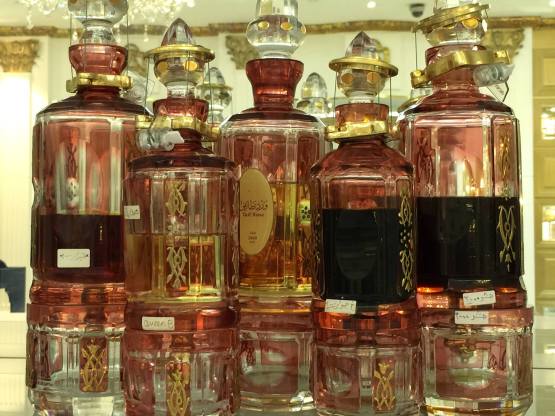
Maybe tonight is an opportunity to wear the gorgeous Taif Rose attar my husband brought me from Dubai! I could even layer it with one of the others …

Taif Rose

I also have a new, unopened bottle of Orquidea Negra from The Perfumery Barcelona, which we visited in January. If you ever get a chance to go, do! The owner is delightful and spent quite some time chatting with us and showing us different fragrances. Orquidea Negra is a creation of perfumer Daniel Josier, but the boutique carries other niche brands too; most are unusual and hard to find.

Dear Reader: What would you advise? Scent me, please!

Fragrance Friday: David Austin Roses

I am predictably obsessed with a few things (fragrance being the newest obsession). One of those is gardens. Another is roses. Put together fragrance, and roses, and gardens, and I am in heaven. It should come as no surprise, then, that I adore David Austin’s English Roses. He has been carefully breeding them for decades and I am able to grow a few in my garden with its limited sunny spots, including two that are mentioned in the article: Lady of Shalott and The Generous Gardener. One of the key attributes for which David Austin selects seedlings for his breeding program is fragrance.

In The Romantic Quest of David Austin RosesVictoria magazine shares some of the roses’ secrets with some lovely photographs. Michael Marriott, the “senior rosarian” at David Austin Roses, explained that “a rose’s fragrance may be the result of a mixture of up to three hundred various oils, but that two or three of these combine to create the dominant scent… ‘In David Austin’s English Roses,’ he explains, ‘the mix will include, variously, Old Rose, Tea, Musk, Myrrh or Fruit. Other oils add important subtle nuances that give different roses distinctive, evocative notes of cucumber, lemon, blackberry, honey, cedar wood, and more.’”

Three hundred different oils that go into creating a real rose’s natural fragrance! I swoon at the thought. No wonder my many rose-based fragrances all smell different. Mr. Marriott found it hard to pick a favorite among the real roses: “’A fresh memory of scent and off I’ll go in another direction.’ For fragrance, though, he favors the classic Old Rose scent of Gertrude Jekyll, and the Buttercup, he says, “for its elusive, truly delicious and rather exotic perfume.’”

Right now I am enjoying my sample spray of Jo Loves White Rose and Lemon Leaves, and it may be the finalist for the gift certificate I received at Christmas. It lasts longer than many other fragrances by Jo Malone (the company AND the perfumer) and it really does evoke a white rose as opposed to a red one (I also have Jo Malone Red Roses).

Which white rose? David Austin has a new one: Desdemona. If I could find another suitable spot in my small garden, I’d find one for her. As it is, I will have to make do with a much smaller bottle of perfume!

White English rose by David Austin, Desdemona

David Austin Rose Desdemona; photo http://www.davidaustinroses.com