May Melange Marathon: Tobacco Rose

May Melange Marathon: Tobacco Rose

When I first began to engage in “perfume tourism”, in 2015, I was lucky enough to be able to tag along with my husband on one of his business trips to London. I spent every day roaming London, visiting gardens and discovering perfumeries. One of them was Les Senteurs, a deservedly legendary perfume boutique that sells many niche fragrances. (If you ever get the chance to visit their store on Elizabeth Street, I highly recommend that you do! The staff are really nice, friendly, and knowledgeable, and the neighborhood is beautiful — plus, Jo Loves is right up the block!).

On that first visit, I told the helpful sales associate that I was interested in smelling some rose fragrances, as I had spent so much time in rose gardens that week. He showed me several and kindly offered samples, too. One in particular that he recommended was Tobacco Rose, launched just the year before, from Papillon Perfumery. He knew quite a bit about its founder, Liz Moores, whom he had met, and told me what a nice person she was! I follow Liz on Instagram — what an interesting person she is, and I love her photos of her pet owl, Ghost.

I own full bottles of a couple of her fragrances, Dryad and Bengale Rouge, but not Tobacco Rose. Sadly, as I exited Les Senteurs’ shop in their other location (now closed) that day, I took a terrible fall and broke my shoulder. True story. I had planned to live with the sample for a day and night, and return the next day to buy a full bottle if I loved it. The best-laid plans of perfumistas … Instead of buying perfume, I found myself in a NHS emergency room being x-rayed, after having taken a double-decker bus across London to get to my husband’s office. Yes, I was probably in shock.

That summer, the summer of 2015, was when I learned how to use WordPress and launched my blogs, as I was stranded at home all summer. I guess I was an early adopter of working remotely, lol! But back to Tobacco Rose. I enjoyed my sample, and later bought a sample set of several Papillon fragrances. My favorite so far is Dryad, and I love Bengale Rouge, but I’m always tempted by Angelique. I do enjoy Tobacco Rose. The website says:

A sensual blend of Bulgarian rose, geranium and Rose de Mai form an opulent backdrop of velvety rose notes set against a luxuriously rich and smoky base of French hay and earthy oakmoss. Soft animalic touches of ambergris and beeswax have been suspended in a sumptuous blend of musks, creating an enigmatic, alluring and unmistakable perfum.

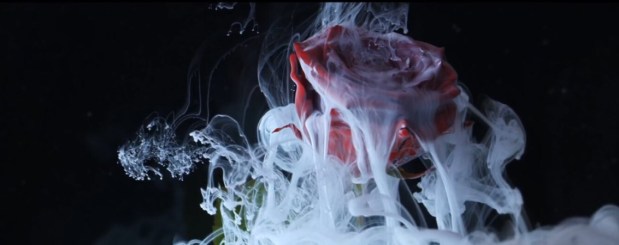
That pretty much says it all. Tobacco Rose starts out right away with a smokiness that continues through its entire development. It is not heavy or overwhelming, it is more like tendrils of smoke that entwine a lush red rose. I don’t believe there is actual tobacco in the fragrance, I think the gentle smokiness comes from the hay, oakmoss and ambergris. Liz Moores has written that she wanted to avoid creating a “sweet, old-fashioned, pretty” rose, she wanted to create a scent that felt “as though one were breathing in not only the fading petals but the rich earth from which a rose grows.” She included mineral notes to achieve that effect, and they are discernible, although not listed elsewhere, especially during the drydown. They lend a dryness to Tobacco Rose that really appeals to me.

The oakmoss is also discernible but it is included with a light touch. It blends beautifully with the rose, ambergris, and musks. Tobacco Rose really is one of the best rose fragrances available; it was a finalist for the Fragrance Foundation Awards in the category of Best New Independent Fragrance.

Have you tried any Papillon perfumes?
May Melange Marathon: Eve

May Melange Marathon: Eve

One of the joys of this fragrance hobby is discovering independent perfumers and their work. One of my favorites is Diane St. Clair, of St. Clair Scents. I’ve loved her earliest creations, like Gardener’s Glove and First Cut. My SOTD is Eve, one of the “Audacious Innocence” collection, which was a finalist for the 2020 Art & Olfaction Awards in the artisan/independent category.

The other fragrance in the collection, Pandora, is a “sister” to Eve. According to the brand’s website, they share most of the same notes, but Pandora shows a darker side, with added base notes of labdanum and opoponax. Eve‘s notes, without those added base notes, are: Top notes of Lemon, Tomato Leaf, Apple, Bergamot and Mandarin Orange; middle notes of Orris, Lilac, Bulgarian Rose, Turkish Rose, Ylang-Ylang, Carrot Seeds and Jasmine Sambac; base notes of Oakmoss, Tonka Bean, Woods, Vetiver, Musk. Both scents come in a parfum extrait concentration of 35%.

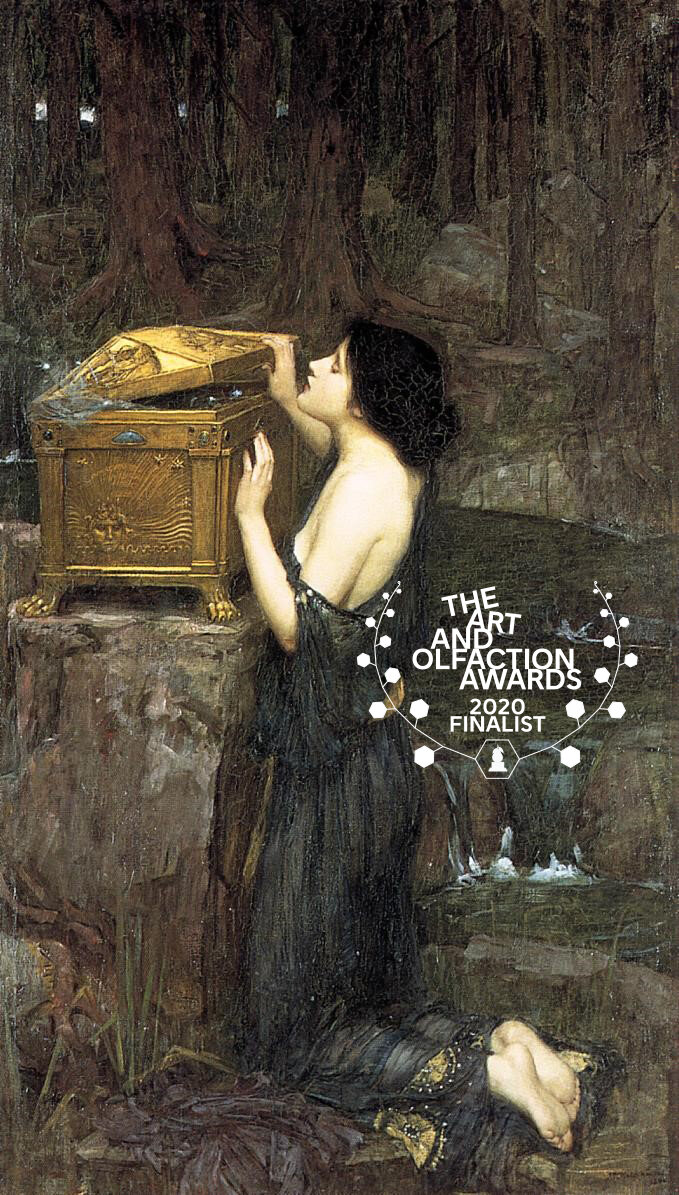
Pre-Raphaelite painting of Pandora opening the box
Pandora, by John William Waterhouse

Diane St. Clair sees Eve and Pandora as similar:

The stories of Pandora and Eve, who reached for the forbidden apple, have much in common. Both came to symbolize women who were punished for disobeying orders and acting on their impulses towards curiosity. We believe that women who challenge the rules and follow their curiosity are striving towards creativity, innovation and independence.

The opening of Eve is as lush as the painting that inspired it, above. It smells of all the fruits listed as top notes, bound together by the astringent greenness of tomato leaf and bergamot. This seems so appropriate, since the Garden of Eden, where Eve was tempted to eat the apple, was more of an orchard than a garden. (In fact, I’ve learned that the word “paradise”, often used to refer to the Garden of Eden, comes from an ancient Persian word that means a walled orchard garden). I love green scents, so the tomato leaf especially appeals to me. A good thing, since it is quite strong! As the top notes retreat, the scent becomes more and more floral, with orris taking the lead, though ylang-ylang and roses are right behind it. This stage is rich and lush — almost creamy, but not gourmand at all.

I smell the oakmoss almost from the start, and certainly in the “heart” phase. This is some serious oakmoss, friends. It evokes the shadowy, green darkness under the dense branches of trees. That impression only grows stronger as the floral notes fade away and the other base notes anchor the whole scent to the earth, with their woods, musk, vetiver. I can’t say that I smell tonka much at all. Eve lasts a long time on my skin, several hours.

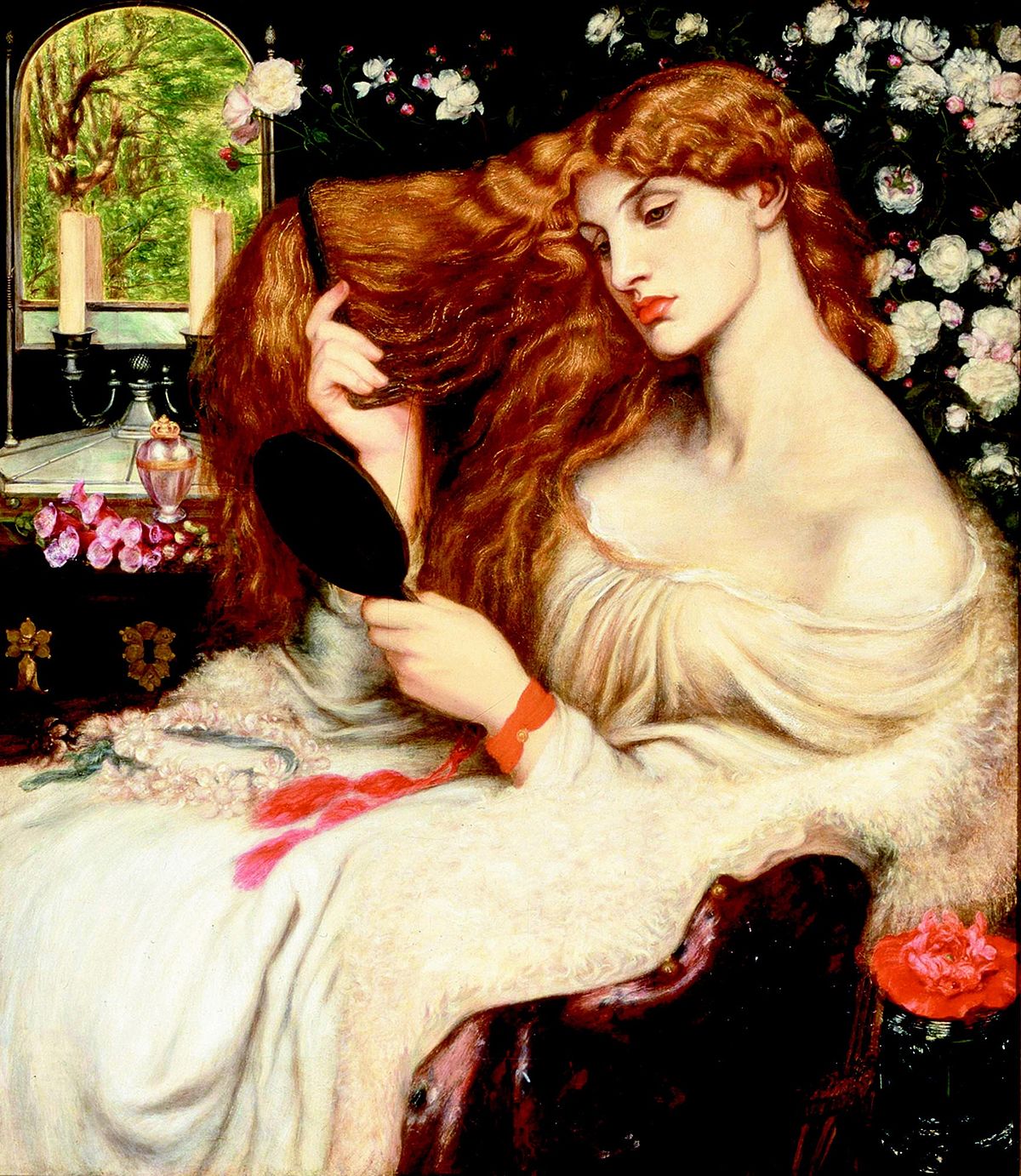
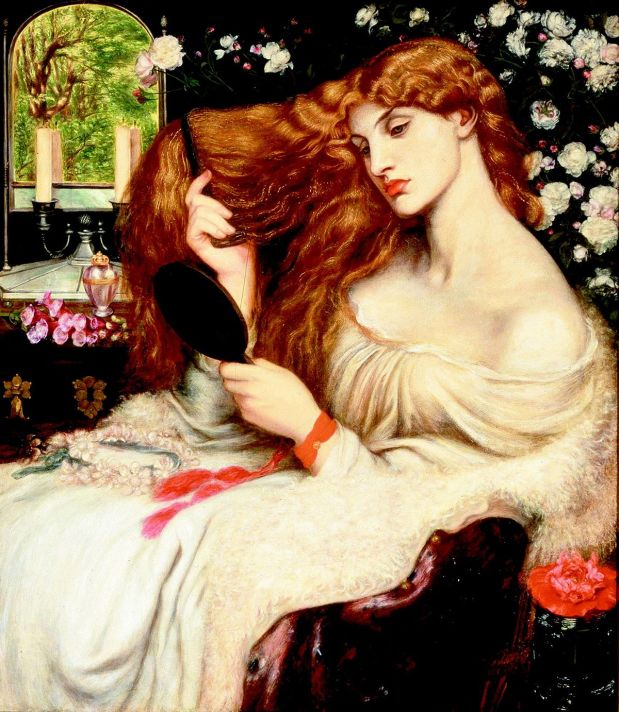
Sillage is moderate, as one would expect from an extrait, but I would say that a little goes a long way! I dabbed tiny spots of Eve on my wrists, and their scent carries easily and clearly up to my nose. Longevity is excellent. Eve just feels like a high-quality perfume all around; one senses the quality of the ingredients right from the start. Even though it is supposed to be the “yin” scent to Pandora‘s darker “yang”, this is not a light or frivolous fragrance. It is not to be trifled with! Which is why I used the gorgeous Pre-Raphaelite painting as this post’s featured image; it shows Lilith, said in Jewish folklore to have been the first wife of Adam (yes, that Adam), who was replaced by Eve because she was too rebellious. The painting beautifully captures a lush, flowering garden, and I think that’s a perfume bottle by the mirror!

Pre-Raphaelite painting of Lilith, first wife of Adam
Lady Lilith, by Dante Gabriel Rossetti

Have you had the chance to try any of St. Clair Scents’ fragrances? Do you have any favorite artisan or independent perfumers?

May Melange Marathon: Jeunesse Il Giorno e La Notte

May Melange Marathon: Jeunesse Il Giorno e La Notte

One of my greatest pleasures is to travel with my husband, and until 2020, his work required him to travel a LOT. I couldn’t go on most trips during the academic year, due to my own job, but I was able to go with him usually at least once a year. 2019 was a banner year for such trips — I was able to go with him on business trips to Nice, then London, then Tuscany. The Tuscany trip happened in the summer, so we extended it for a real vacation and spent several days in Florence and Venice, which we had never seen before.

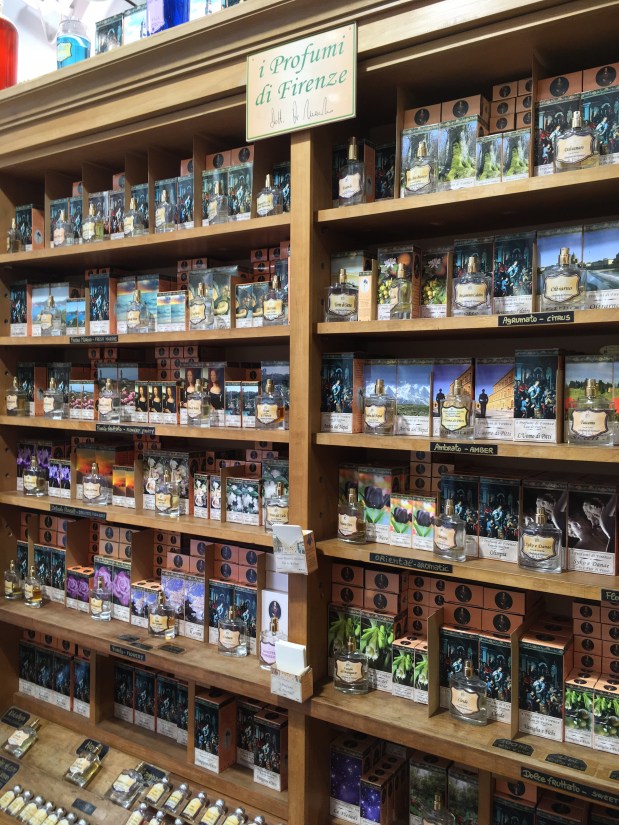
Florence, as it turns out, has a long tradition, centuries old, of perfumery, and is the perfect city to indulge in “perfume tourism.” We visited Santa Maria Novella, Farmacia SS Annunziata dal 1561, and the boutique of I Profumi di Firenze, Spezierie Palazzo Vecchio, among others. I acquired perfume souvenirs at each of them.

Profumo di Pioggia, winner of award from I Profumi di Boboli
I Profumi di Firenze perfume souvenirs

One of the bottles from the latter that came home with me was Jeunesse Il Giorno e La Notte, which is formulated as an eau de parfum. The notes list from the brand’s website includes Citrus, Italian Bergamot, Lily Of The Valley, Lavender, Floral Notes. Fragrantica adds that the base notes are white musk, and musk.

I should start this mini-review by noting that my 19 year-old son, who is usually pretty oblivious to his mom’s fragrance habits and applications, walked over to me today around noon to ask about yardwork, and immediately said, “You smell so nice!”. Music to a mother’s ears.

Continue reading
May Melange Marathon: Cristalle

May Melange Marathon: Cristalle

Chanel’s Cristalle came to me later in life; my earliest Chanel “love” (for myself) was No.22, which I still love and wear, then No.19, also still a strong love and in regular rotation on my skin. I’m not sure why it took me so long to discover Cristalle; I probably thought my need for a green Chanel was fully met by No.19. Regardless, I first tried Cristalle a few years ago, and yes, it’s love. I wear Cristalle on days when I need a good snap of green but No. 19 feels like overkill. Both were created by perfumer Henri Robert: No. 19 in 1970, and Cristalle in 1974. (I refer to the eau de toilette; Jacques Polge created an eau de parfum version for Chanel twenty years later).

The two share some notes. Cristalle‘s notes are: Top notes — Sicilian Lemon and Bergamot; middle notes — Hyacinth, Brazilian Rosewood, Honeysuckle and Jasmine; base notes — Oakmoss and Vetiver. No.19‘s notes are: Top notes of Galbanum, Hyacinth, Bergamot and Neroli; middle notes of iris, Orris Root, Rose, Lily-of-the-Valley, Narcissus, Jasmine and Ylang-Ylang; base notes of Oakmoss, Vetiver, Leather, Cedar, Musk and Sandalwood. No.19 was launched the year before Coco Chanel died; it seems to be the last fragrance that she personally approved.

Continue reading
May Melange Marathon: Fragrances That Changed the Field

May Melange Marathon: Fragrances That Changed the Field

We interrupt our regularly scheduled programming, because the following New York Times Style Magazine article popped up in my news feed, and I got totally distracted by it! It is called The Fragrances That Changed the Field, by Aatish Taseer. It starts with a childhood memory, from India, of a first encounter with oudh, and travels a winding path from there through the “Orientalism” of fragrances in the 1970s, to the power statement fragrances of the 1980s, circling back to previous centuries and the use of florals and musks in fragrances. It includes insight from several modern perfumers.

I highly recommend this article! You’ll want to set aside a good block of time to read it. The opening paragraph:

I REMEMBER AS IF it were yesterday that distant afternoon on which I first smelled oudh. I was in my grandmother’s house in Delhi. I was 13, maybe 14. We had a family perfumer, or attarwallah, a man of some refinement, who came to us from Lucknow — a city that is a metonym for high Indo-Islamic culture. We didn’t know the attarwallah’s name, or how he knew to follow us from address to change of address. But he came without fail two or three times a year. A slim, gliding figure, with a mouth reddened from paan, or betel leaf and areca nut, the attarwallah produced his wares from carved bottles of colored glass that he carried in a black leather doctor’s bag. He showed us scents according to which season we were in. So in winter, musk and patchouli; in summer, white-flowered varieties of jasmine — of which there are some 40 odd in India — as well as rose and vetiver. In the monsoon, he brought us mitti attar, which imitates the smell of parched earth exhaling after the first rain (“mitti” means “mud” in Hindi). The perfumes came from the medieval Indian town of Kannauj, which is a 75-mile drive west of Lucknow and which, like its French counterpart, Grasse, has a tradition of perfume manufacturing several centuries old. Once he had drawn his perfume out on white cotton buds at the tips of long, thin sticks, the attarwallah lingered over his customers, telling stories of the various scents and reciting the odd romantic couplet of Urdu poetry.

If that doesn’t intrigue you, as a person interested in fragrance, I don’t know what will! Enjoy. BTW, my scent of the day today was Cristalle, and I’ll write about it tomorrow instead.

Featured image from baystreetex.com.

May Melange Marathon: Bohemian Bluebells

May Melange Marathon: Bohemian Bluebells

I promise I won’t spend the whole month of May dissecting Zara Emotions fragrances, but here’s another one: Bohemian Bluebells. I like it very much and it’s certainly affordable! Also truly unisex, I think it would smell wonderful on a man as well as a woman. Its listed notes are lavender, sandalwood, and musk (nothing to do with bluebells). If you can imagine a warm lavender, that’s what it smells like to me. I do tend to associate lavender with bedtime, given its soothing properties, but I don’t usually associate it with warmth in spite of its cultivation in hot, sunny climates like Provence (there are also famous lavender fields in England and other parts of the UK). Sometimes I crave Jicky eau de toilette at bedtime, if I’m going to sit up and read for a while, but Jicky feels cool to me somehow, like the clean sheets that have been newly put on a bed, with their crisp, unwrinkled surfaces.

Continue reading
May Melange Marathon: Beyond Paradise

May Melange Marathon: Beyond Paradise

“Melange” is an apt word to use for Estee Lauder’s Beyond Paradise, as it is truly a melange of different florals. In their book “Perfumes: The Guide A-Z”, Luca Turin and Tania Sanchez not only gave it five stars, but also close to three full pages of discussion (most perfumes got a paragraph). He calls it a “symphonic floral.” Calice Becker was the perfumer who created it; Beyond Paradise was launched in 2003. The bottle I have is the teardrop-shaped, rainbow-tinted original. The batch number on the bottom suggests it dates to 2013. Fragrantica lists that version’s notes as: Top notes of Hyacinth, Orange Blossom, Grapefruit, Bergamot and Lemon; middle notes of Jasmine, Gardenia, Honeysuckle and Orchid; base notes of Hibiscus, Plum Wood, Ambrette (Musk Mallow) and Amber. The 2015 version in the rectangular bottle is described as having top notes of Blue Hyacinth, Orange Blossom and Jabuticaba; middle notes of Honeysuckle, Jasmine, Orchid and Mahonia; and base notes of Ambrette (Musk Mallow), Plum Blossom, Paperbark, and Woody Notes.

Both versions of Beyond Paradise are meant to be “fantasy florals” with a tropical theme; part of the length of Turin’s review is a long digression into the nature of abstract floral fragrances and how challenging they are to create, with a tip of the hat to perfumer Calice Becker, an acknowledged master of the art. According to contemporaneous press and PR coverage when it was launched, it included “proprietary notes” gleaned from a collaboration with The Eden Project, a fascinating conservation site in Cornwall, which involves massive biospheres located in and above an abandoned quarry and which I’ve had the privilege to visit. It does in fact house many rare and tropical plants, so it must be a great resource for unusual smells.

Continue reading
May Melange Marathon: Layering Zara Emotions

May Melange Marathon: Layering Zara Emotions

Today’s fragrance is a true “melange”, from the Zara Emotions line, a series of fragrances created by the perfumer Jo Malone for Zara, the clothing retailer that is known for its inexpensive yet effective fragrances. In interviews, Ms. Malone has said that the line uses raw ingredients similar to the ones she uses in her own (much more expensive) line, Jo Loves, taking advantage of Zara’s enormous global buying power; there are just fewer separate ingredients in each Zara Emotions fragrance. The Zara Emotions fragrances are pretty simple but several are very appealing, and they are designed to be easy to layer with each other. So today, I am wearing one of the brand’s recommended combinations, Waterlily Tea Dress and Amalfi Sunray.

Continue reading
May Melange Marathon: Chamade

May Melange Marathon: Chamade

Not quite as legendary as some other Guerlains, Chamade nonetheless has its passionate devotees. Luca Turin gave it five stars in the original “Perfumes: The A-Z Guide”, though it’s not clear whether he was reviewing parfum or eau de toilette. The most recent version I have is the eau de toilette in the “bee bottle”; it has recently been reissued by Guerlain as part of its 2021 “Patrimoine Collection”, for which six of its most famous fragrances have been bottled in the design of the original Mitsouko bottle with its hollowed heart stopper. (The list of notes for the reissued Chamade, by the way, is much shorter than that for the original, and puts some of them in a different order).

Originally created by Jean-Paul Guerlain in 1969, Chamade seems to have been an attempt to bridge earlier generations of Guerlain fragrances to a new generation of fragrance that would appeal to the ascendant youth culture, catering to the Baby Boomers who entered their 20s during the 1960s. Chamade is by no means an avant-garde or hippie scent, though. It reminds me of the most senior girls at the Belgian convent school I attended for a couple of years as a young child — young ladies from good families, many of them minor aristocrats, who were picked up after school on Fridays by dashing, slightly older boyfriends driving small sports cars. The senior girls were also allowed to change out of their school uniforms on Friday afternoons, and I have a dim memory of admiring their bright A-line dresses: ladylike, expensive, but youthful. That is how Chamade strikes me: like the kind of fragrance a chic European mother or grandmother would have given then to an 18 year-old as her “first Guerlain.”

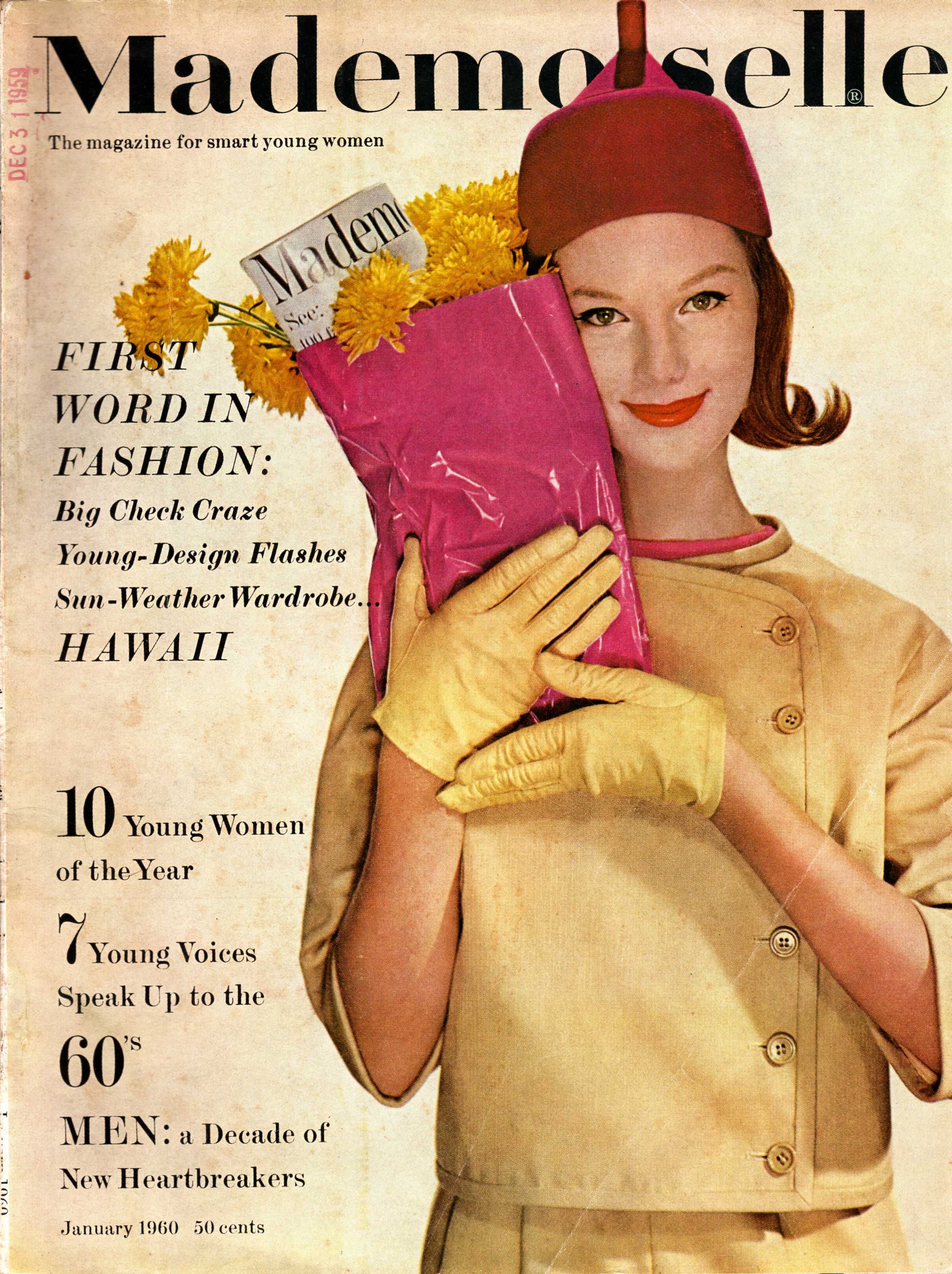
Cover of Mademoiselle magazine, girl in yellow dress with gloves and hat
Mademoiselle magazine cover, 1960.
Continue reading
May Melange Marathon: White Peacock Lily

May Melange Marathon: White Peacock Lily

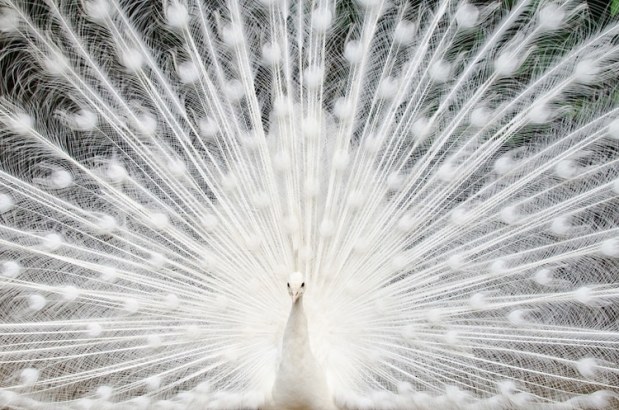
D.S. & Durga is a niche brand I haven’t experienced very much, partly because of their price point (high, even for samples). But when I had an opportunity to buy a reasonably priced decant of White Peacock Lily, I jumped at it, because it sounded so intriguing when it was launched in 2016. It is indeed a very lovely lily-focused fragrance. Its notes include: Top notes of Oleander, Cabreuva Rouge, and Grapefruit Pith; middle notes of White Lily, Egyptian Jasmine, Cream and “Alabaster Violet” (which I assume means white violet); base notes of Ambrette (Musk Mallow), Vanilla, and Fog. The perfumer, D.S. of D.S. & Durga, also mentions on the website that it has notes of bergamot, melon, and rose Otto.

One thing I like about the brand’s website is that each fragrance comes with detailed “liner notes”, describing the inspiration for it, with references to literature, music, etc. The liner notes for White Peacock Lily state:

The piece that inspired this perfume is called “The White Peacock” by Fiona Macleod — a Scottish woman famous throughout the highlands for her dreamy works—and set to music by Griffes. It is one of the few tone poems based on an actual poem. The music, scored for a small orchestra, takes direction from the words. Mercurial/magic harps, winding strings, quirky brass horns, and the comical buzz of clarinets describe the beautifully soft language: “cliffs of basalt, fronds of cactus, where the bulbul singeth, cream-white poppies.” In Griffes music, the listener can hear the cream white poppies, the sweeping seas of flowers, and most important the silent noble glide of the grand bird that floats above the fields of flowers.

The composer mentioned is unfamiliar to me: Charles Tomlinson Griffes. Sadly, he died of pneumonia at the age of 35, at the outset of a very promising career, in 1920 at the height of the last century’s global pandemic, influenza. Apparently one of a few of his works that are still performed is “The White Peacock”, inspiration for today’s “May Melange Marathon” fragrance.

Continue reading