Scent Sample Sunday: Vol de Nuit

Scent Sample Sunday: Vol de Nuit

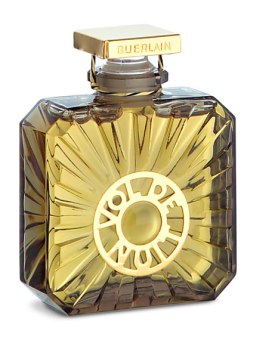
Within the last few months, I scored a purse spray of vintage Vol de Nuit extrait de parfum, a Guerlain masterpiece. I had previously been able to buy what I think is actually the most beautiful Vol de Nuit bottle, which doesn’t contain liquid at all — it is the limited edition shimmer powder’s blue-green flacon, the twin of the famous propeller bottle of the original parfum.

Blue green atomizer bottle of Guerlain's Vol de Nuit shimmer powder

Vol de Nuit shimmer powder; image http://www.guerlain.com

Propeller bottle of Guerlain's Vol de Nuit parfum

Vol de Nuit parfum; www.guerlain.com

But honestly, when would one have the opportunity to wear them? What occasion? What ensemble to wear with them?

Last night was the night.

My husband and I went to a benefit auction last night, and after much pondering, I decided that a simple cocktail dress in black velvet with tiny black sequins and short sleeves would be my outfit, combined with a necklace of white baroque pearls that was given to me by one of my dearest friends. I couldn’t decide what fragrance to wear, though. Amouage Gold EDP was a leading contender, as I’ve worn it before to dressy events and I always enjoy it. Then I thought of the Alaia extrait de parfum I bought last year, which is also beautiful. And it hit me — I could finally use the shimmer powder! And now I had the parfum to go with it! So Vol de Nuit it was.

Victoria at Bois de Jasmin reviewed the shimmer powder when it came out in 2011:

The powder itself is tinted a silvery shade closer to mother of pearl than polished metal. It is a complex color, with peach and blue creating an ethereal effect. Although Guerlain suggests using the powder for both face and body, I find that it is too cool for my warm complexion. However, it looks beautiful sprayed lightly on the shoulders and chest. The sparkling particles are quite fine, so the impression is opalescent and soft, rather than disco ball glitzy.

I took her advice and sprayed it on my neck and chest, plus a bit on my arms. It is possible to apply it very lightly, for just a hint of glimmer. I think it’s important to have well-moisturized skin before using it, but the moisturizer should be unscented. as the powder itself is scented, albeit lightly. The baroque pearls looked beautiful against the slight shimmer on my neck.

The parfum went on the pulse points behind my ears and inside my elbows. I often apply on my inner elbows instead of my wrists when wearing short sleeves. It’s easier to control the spray, and I can diffuse it on my skin just by bending the crook of my elbow instead of rubbing wrists together (which some perfumistas discourage).

My theater artist daughter did my makeup for me; I don’t usually wear much makeup, so I’m not the best judge of what will work. I may never look so chic again!

How was the fragrance? It was celestial. Neil at The Black Narcissus has described Vol de Nuit better than almost anyone: “Journey Into Light: Vol de Nuit by Guerlain (1933).”

And yes, this is how I felt, although any resemblance is strictly fanciful and internal:

Ad for Guerlain's Vol de Nuit shimmer powder

Vol de Nuit limited edition shimmer powder from Guerlain.

What fragrance makes you feel most glamorous? When do you wear it?

Fragrance Friday: Parfum et Vous

Last week, I was able to visit Nice, France, thanks to my husband’s work. He had to go for a business trip, I was able to take a few days off from my own job and tag along! During the day, he had meetings and I explored.

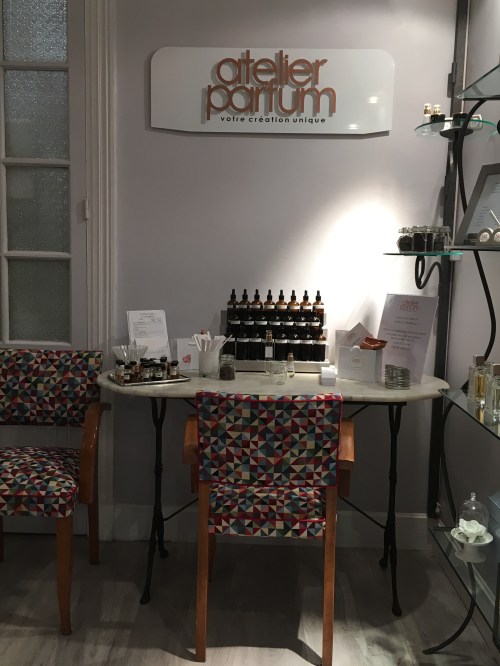
I have been to Nice before: once on our honeymoon, and again a few years ago when we took a family trip to the Cote d’Azur. But those trips were both before my perfumania, so I planned much of my week around fragrance. One thing I knew I’d like to try was a perfume-making workshop for beginners. Nice offers options; two different ones with an established perfume house, Molinard, and one with an independent perfumery, Parfum et Vous. I was leaning toward the latter, so when I contacted Megan in Sainte-Maxime to see if we might be able to meet (more about that in another post — such fun!), I asked her thoughts.  She enthusiastically recommended that choice, and she knows the owner, so I signed up. The price included a two-hour workshop to learn about perfume and then make our own scents, using pre-made accords, and one bottle of our own creation. The workshop would take place in a pretty old building in the heart of Nice, a short walk from the famous “Promenade des Anglais”, in the retail showroom of Parfum et Vous.
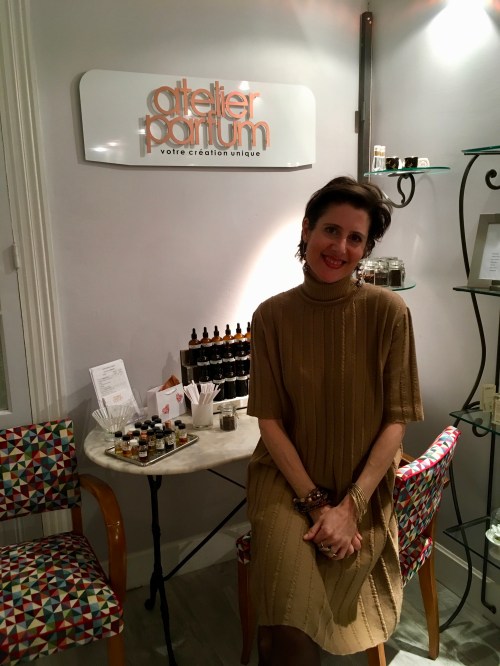
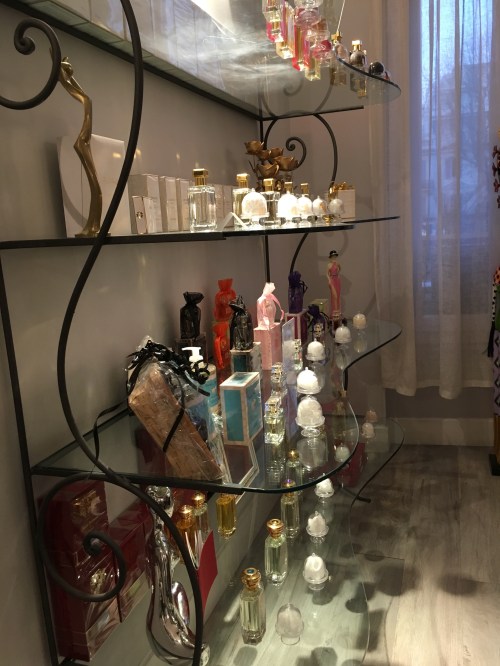
There were four of us taking the workshop, plus the lovely and vivacious Sasha, owner of Parfum et Vous, and her assistant. Sasha gave a brief introduction and overview about perfume, then had us walk around her small showroom filled with niche perfumes, smelling them and thinking about what genres and notes we might like to try in our own concoctions. Sasha’s wares are true artisan perfumes from niche houses, like Beaufort London, Nishane, NabuccoBarutiPaul Emilien and many others, so there was a wide range of fragrances to smell.
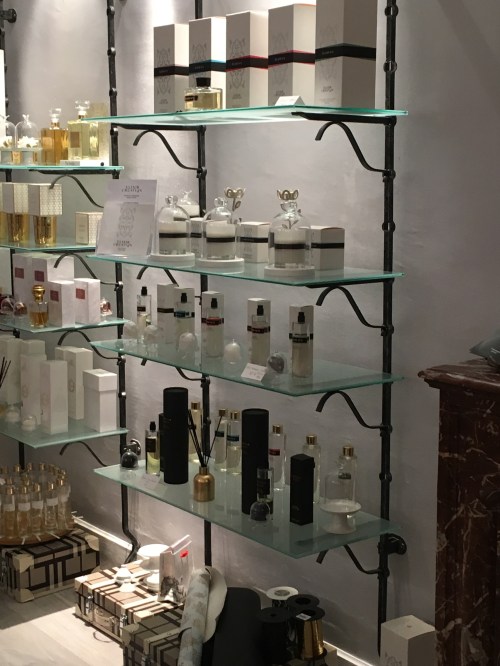
Then we went to a table where there were pre-mixed scents in eau de parfum strength representing categories of fragrance foundations, like “woody marine.” We talked about what we would try to create for our own eau de parfum, and sniffed all of the foundations. I wanted to create a unisex fragrance that would remind my husband and me of our trips to the South Carolina Lowcountry, the marshy coastland that borders the Atlantic Ocean in that state.

Next, we moved to a table that had 22 different accords in large bottles with droppers, divided among top notes, heart notes and base notes, and labeled with identifiers like “iris”, ‘chypre”, “citrus, “spice.” Each one also listed individual notes, e.g. “spice” included cinnamon, clove, and pepper. Sasha started each of us off with a formula to create a foundation for the category we had chosen, specifying how many mls of each accord we should add to our individual 30 ml bottles. I was starting with “woody marine”, so my beginning foundation included marine, citrus, green tea, “oriental woody”, and woody accords. Others wanted to create a gourmand, or a floral oriental, and there were foundations for those and other options.

Then the real fun began! Throughout the process, Sasha had us smell each stage as we added more accords in small amounts, tweaking our fragrances in the directions we wanted. I added notes of jasmine, cyclamen, wild rose, vetiver, and oak moss. As the other students and I added accords, Sasha would have us spray a bit on our skin and she would smell our progress and make suggestions. I got to a point where I wanted to add more heart notes. I was satisfied with the top notes, which by now included a citrus accord of mandarin, orange, and tangerine, the marine accord, and a tiny amount of a fruit accord (grapefruit and apple).

The heart note accords available were: neroli, spices, white flowers, rose, powdery (rice notes and white musk), iris, green tea, and cassis. We thought about adding neroli, but ruled that out. I asked about the powdery accord, and Sasha recommended against it, given the other accords I already had. We settled on slowly adding small amounts of the white flowers accord, which was a combination of jasmine and cyclamen. Then I thought about iris. Sasha was a little doubtful, but when I explained that I wanted that earthier, rooty aspect, she concurred but urged a light hand. In went .5 ml of the iris accord. Sniff, sniff. Wait. Another .5 ml. Sniff. Perfect!

Time to tweak the base notes. I already had accords that included notes of patchouli, vanilla, vetiver, tonka, cedar, and sandalwood. I wanted to add more of the “chypre” accord, with notes of vetiver and oak moss, and Sasha agreed but advised going slowly and adding 1 ml at a time, checking each time to see what I thought. Because of the nature of base notes, which emerge more slowly than the top and heart notes, one relies more on the formulas for base notes; even in a leisurely, unhurried workshop like this, there’s not time to wait for the full progression. Because I love chypre, I ended up adding more of that and no more of the other available base note accords, and I’m very happy with the outcome.

Once we were satisfied with our creations, Sasha had us name and label them. Parfum et Vous keeps a record of our names, and the formula for the specific blend we had created, so one can reorder if one wants. I named mine “Lowcountry Spring”, and I find it charming!

As you can tell, I enjoyed this workshop thoroughly and heartily recommend it. Because of the pre-formulated foundations and accords, plus expert guidance from Sasha, one really can’t go too far astray. It would take deliberate effort to create something that wasn’t pleasing. The atmosphere was fun and informative. I enjoyed meeting my three fellow students; we all helped each other, sniffing each other’s formulas along the way (yes, there were little canisters of coffee beans to help reset our noses, although I find it sometimes works best, when I’m trying many scents, to reset by just putting my nose to my own shoulder). I also really enjoyed seeing and smelling the many interesting niche perfumes Sasha sells in her showroom, some of which I hadn’t encountered before, and others which I had read about but never had the chance to try. If you get a chance to visit Nice, go see Parfum et Vous! Whether or not you have the time or inclination to spend an afternoon in the workshop, it is well worth a visit for the showroom alone, and to meet Sasha.

Have you ever tried making your own fragrances? How did it go?
 

Scent Sample Sunday: Hoarding?

Uh oh. The New York Times is onto us! This is why I need “Thunking Thursday.” Do you feel that your collection of samples is starting to look like hoarding? What (if anything) do you plan to do about those samples?

Scent Sample Sunday: What to Try, What to Buy?

Scent Sample Sunday: What to Try, What to Buy?

Hello friends — this week, I am seeking your advice! I will be in the South of France, and I’d love to know your thoughts on any particular fragrances that are easier or less expensive to get in France than in the US, or any special fragrance “explorations” I should pursue. I am already signed up for a perfume workshop at Parfum et Vous, and I can’t wait! I’ve been to Grasse before and have done one of the factory tours at Molinard (great fun and very instructive). Our group will be visiting Saint-Paul de Vence and Nice. I’ve visited Nice before and plan to wander in the markets there; I’ll probably bring home some of those lovely soaps. Any other suggestions? P.S. We will have one transfer in Charles de Gaulle airport, coming and going, but I don’t know how much time we’ll have there.

white square ceramic ornament

Photo by Pixabay on Pexels.com

Scent Sample Sunday: Florist’s Fridge

Scent Sample Sunday: Florist’s Fridge

I have been curious for a while about the company Smell Bent, and its proclaimed mission to “delight your nose and your funny bone.”  One of their lines is called “Frankensmellies“, because they have been assembled from accords that their creator just thought would work well together as a “sketch.” When they had a sale this fall, I ordered a Frankensmellie that had been on my radar: Florist’s Fridge.

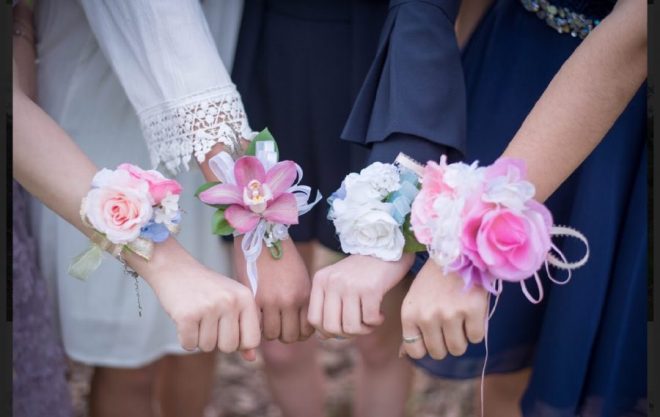
Florist’s Fridge appeals to me on a few levels. One, I love florists’ shops and their smell! Two, it smells strongly green, which I love. Three, it really does smell like that blast of mixed scents when one visits a florist and they open the fridge to show you or take out flowers that are chilling in buckets. Four, that evokes happy memories for me of going to the florist with my teenaged son to buy corsages for his dates (yes, that still happens on formal occasions, and those still happen for teenagers in the American South).

Wrist corsages at high school formal prom dance

Wrist corsages for high school formal dance

The listed accords are orchid, hyacinth, and chilled flora. Other commenters on Fragrantica have noted the strong impression of green stems and leaves, and I agree. Actually, to me the floral notes smell more like carnation than hyacinth, but luckily I enjoy both. Florist’s Fridge doesn’t last very long on my skin, but it really is fun, and you can get it for such a good price that you may not care very much about its longevity.  I haven’t come across anything else that smells quite like it, and it has that almost addictive quality of making me want to spritz and smell my wrists over and over. Like a corsage.

Remember to thunk something this week and tell us all about it on “Thunking Thursday“!

Scent Sample Sunday: Thunking

Scent Sample Sunday: Thunking

This is my first “Scent Sample Sunday” post of the New Year, and I have thunking on my mind, thanks to a running conversation on the blog Australian Perfume Junkies (a very welcoming online community, btw, which I highly recommend). I think it was APJ reader Brigitte who coined the phrase, referring to the satisfying “thunk” sound made by an empty vial or bottle of fragrance when it hits the bottom of a wastebasket, having been happily emptied and enjoyed by its owner. Thunk!

The running conversation has been about the readers’ commitments to finishing the fragrances they already have before rushing to buy more. A related commitment is to “shopping in your own closet”, i.e. to rediscover what one already has in one’s fragrance cabinet or other storage, enjoy and appreciate it, and reduce impulse buying.

Count me in! So I’m going to start a new series of blog posts here, called “Thunking Thursday”, and I invite you to join me! I’ll write briefly about something I’ve thunked that week, and I hope you’ll comment on whatever you have thunked, whether that week or earlier. Or even what you plan to thunk in coming weeks! Maybe we can reinforce each other’s New Year’s resolutions — or at least vicariously enjoy each other’s “thunks.” I might award a prize to the reader who describes the most completed thunks here this month if I get a large number, so boast away! Please include a brief description of the fragrance and your experience with it, including whether you think you’ll seek it out again.

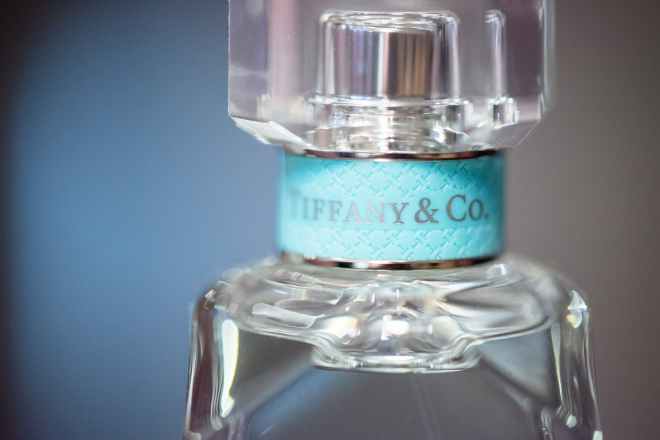
I’ll start today, claiming one “thunk point” for my sample of Tiffany & Co. Intense EDP.  I loved everything about it: the strong iris note, the packaging, the ad campaign. Maybe I should have to deduct points from myself, though, since I got a full bottle of it for Christmas based on my love of the store sample! Oh well. We all know what paves the road to … you know the rest.

How many thunk points have you accumulated so far in 2019? If you need a few days to think and thunk, come back on Thunking Thursday and comment there! Happy New Year!

Bottle of Tiffany & Co. perfume Tiffany blue

Photo by Bryan Schneider on Pexels.com

Fragrance Friday: La Belle et L’Ocelot

Fragrance Friday: La Belle et L’Ocelot

In the growing world of niche and “exclusive” perfumes, there are not many bargains. Prices seem to go up and up, into the realm of the ridiculous. And, may I say, some of the most expensive bottles of fragrance are also — if not hideous, tacky. House of Sillage, I’m looking at you, and Clive Christian, you’re not far behind (apologies to any readers who love those bottles, this is imho only!). The House of Sillage bottles look to me like demented cupcakes. I’m sorry, they do.

By contrast, some of my favorite bottles contain inexpensive but enjoyable fragrances. For instance, one of the first fragrances I blind-bought when I went down the perfume rabbit-hole was Vicky Tiel’s Sirene. Its frosted glass bottle, with a bas-relief of caryatids, is just gorgeous; and I like the scent itself very much. It is a rosy floral with a sharp opening and  soft drydown. At about $20 for 100 ml, why not take a chance on it? The bottle alone makes it worth the price.

At Christmas, my kids now ask me what fragrance I’d like them to get me that’s within their price range. I try to keep that under $25, and luckily there are some bargain fragrances out there to be had for that price. This year, my two daughters gave me Salvador Dali’s La Belle et l’Ocelot, in both the eau de toilette and eau de parfum formats. Friends, these are two of the prettiest bottles I own!


Bottle and box of Salvador Dali's La Belle et l'Ocelot eau de parfum.

La Belle et l’Ocelot eau de parfum; http://www.parfums-salvadordali.com

Bottle and box of Salvador Dali's La Belle et l'Ocelot eau de toilette

La Belle et l’Ocelot eau de toilette; http://www.parfums-salvadordali.com

And the fragrances themselves aren’t bad either — not strong loves for me, but definitely likeable and wearable. The EDP (2014) is a warm, balsamic, slightly spicy scent, with top notes of Sicilian bitter orange, davana (artemisia), and elemi (a resin), heart notes of osmanthus, rose, night-blooming jasmine, and tonka, and base notes of patchouli, benzoin, and incense. It reminds me a bit of a lighter, less complex Opium or Obsession. Believe it or not, many of its notes are the same as those of Chanel’s Coromandel, which was launched two years later, in 2016. It’s very appealing in this season’s colder weather, and it is light enough that I think it will still appeal even in the summer, especially on warm, balmy evenings.

The EDT is a completely different fragrance from the EDP — not, as the website says, a softer version of it. The EDT’s top notes are apple blossom, nashi pear and grapefruit; heart notes are iris, Turkish rose and Egyptian jasmine, base notes are cedar and musk. Really, the only thing these two have in common is the beautiful design of their bottles. One intriguing fact is that both fragrances are meant to evoke an olfactory recreation of Beauty and the Beast, according to the website, but one can also perceive the EDP as more animalic (“beastly”) and the EDT as more floral (“beauty”). The EDT is a light, soft floral, with some fruitiness but not so much as to make it overly sweet. I think it would wear best in late spring and throughout the summer. I tend to prefer sharper, greener florals generally but especially in the spring, so this would be more of a summer scent for me.

Salvador Dali was well-known for his eccentricities, in his life as well as his art, one of which was that he kept a pet ocelot (which is a kind of tiny leopard) named Babou. He took Babou to many places and was often photographed with the animal:

Artist Salvador Dali with pet ocelot Babou

Dali with Babou

Another fun fact is that the popular culture we most associate now with “Beauty and the Beast” is the Disney Company’s animated film — but in real life, Walt Disney and Salvador Dali not only knew each other, but collaborated briefly on a short film called “Destino.” It was shelved during WWII, and revived in the 21st century by Walt Disney’s nephew, Roy Disney.

I got interested in Dali fragrances first by reading Luca Turin’s review of the original Dali, created in 1983 by Alberto Morillas, which he gave four stars. I have a mini of the parfum, and it is beautiful as a fragrance; its bottle is also lovely, as are all the Dali perfume bottles that are based on the sculptured lips and nose of Dali’s Aphrodite in his work Apparition of the Face of Aphrodite of Knidos. (I must say, though, I think the bottles for La Belle et l’Ocelot are even more lovely). Some well-know perfumers in addition to M. Morillas have created Dali fragrances: Mark Buxton created Laguna (also awarded four stars by M. Turin) early in his career, in 1991, and Francis Kurkdjian created Purplelight in 2007. Have you tried any of the Salvador Dali fragrances? Do you think any are “discount diamonds”?

Featured image: model Donyale Luna with Dali’s pet ocelot Babou.

Merry Christmas!

Merry Christmas!

To all who celebrate Christmas — a very merry one to you! Thank you for reading my random thoughts this year! May your scents be many and your troubles few. Merry Christmas!

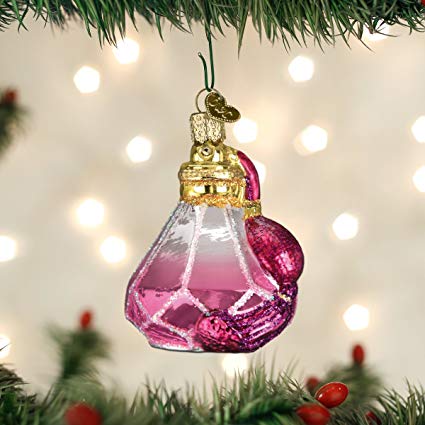
perfume bottle ornament on Christmas tree

Fragrance Friday: RIP, David Austin

Fragrance Friday: RIP, David Austin

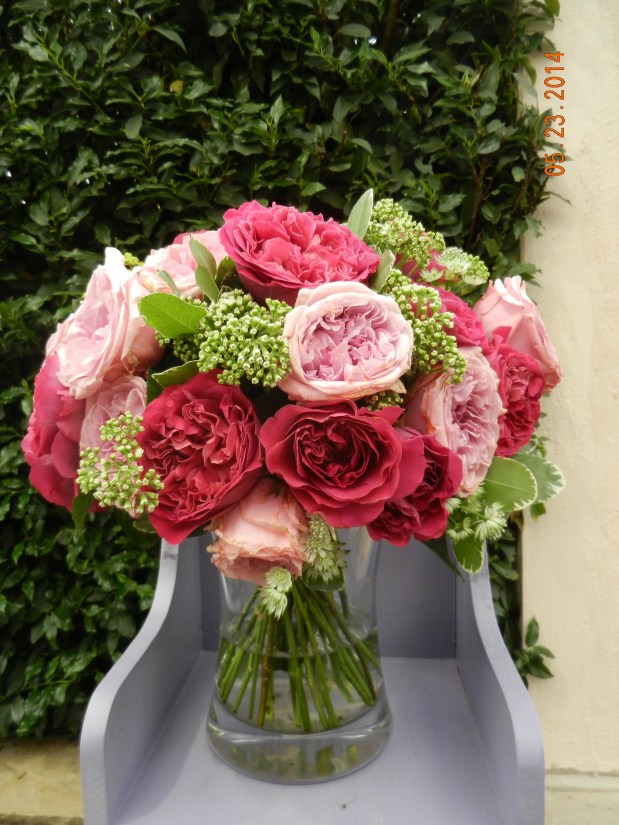
One of the giants of horticulture died this week: David Austin, OBE, creator of the “English Roses.” What does this have to do with fragrance, you ask? One of Mr. Austin’s major goals in hybridizing roses was to reinstate the powerful fragrances of “old roses” into modern roses with some of the best traits of newer rose hybrids: disease resistance, repeat bloom, a wider range of colors. And he succeeded, probably even beyond his own dreams, in creating “the perfect garden worthy rose that combines beauty, fragrance, repeat-flowering ability and good disease resistance with great charm – the quality his English Roses are most renowned for.” As he wrote in his book The English Roses, he had one preeminent objective, “… that we should strive to develop the rose’s beauty in flower, growth and leaf.” Of fragrance: “[It] may be said to be the other half of the beauty of a rose”.

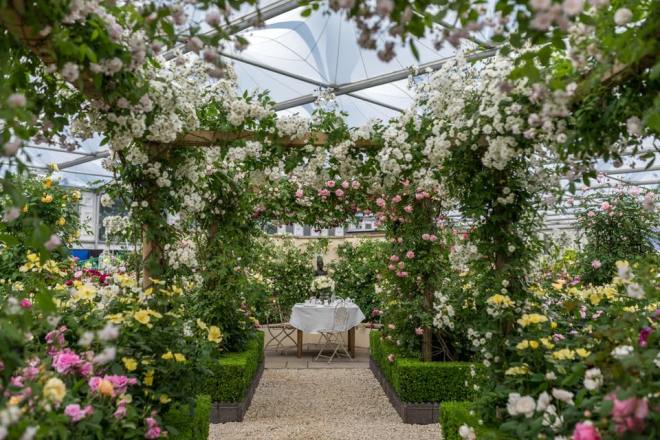
Mr. Austin’s English Roses won 24 gold medals at the RHS Chelsea Flower Show, the greatest flower show on earth. I’ve been privileged to visit that show twice, and the David Austin Roses display was always glorious!

David Austin Roses display at RHS Chelsea Flower Show, 2018

David Austin Roses display at RHS Chelsea Flower Show, 2018

When he was awarded the Order of the British Empire (OBE) in 2007 for his services to horticulture, he said “Every day, I marvel at my good fortune to have been able to make a life out of breeding roses. My greatest satisfaction is to see the pleasure my roses give to gardeners and rose lovers around the world”. What a legacy to leave! Legions of lovers of the English Roses included H.M. Queen Elizabeth II, who visited his displays at Chelsea:

David Austin and Queen Elizabeth II, display of English Roses at the RHS Chelsea Flower Show

David Austin showing Queen Elizabeth his English Roses at Chelsea; image http://www.davidaustinroses.com.

I grow some of his roses, although I have to choose carefully which ones, as my gardening climate is more hot and humid than they prefer. But I have had some gorgeous blossoms from them, and whenever I cut a few and bring them indoors, they scent an entire room with true, beautiful rose fragrance. The company’s website says:

The English Roses are famous for the diversity and strength of their fragrances, with many varieties having won awards, both nationally and internationally, for their delicious fragrances which can be Old Rose, Tea, fruity, myrrh, musky or almost any mixture of these elements.

The website and catalog describe each rose’s fragrance in specific detail: one has a scent that is a mix of “tea, myrrh, and fruit”; another has a “strong, delicious Old Rose fragrance, often with overtones of strawberry.” There is an entire chapter in his book devoted to fragrance.

Nearly all the basic scents of the rose are to be found somewhere among English Roses and, as a rose of one scent is hybridised with a rose of another, new scent combinations become evident. So it is that we find one scent merging into another, as we move through the varieties of English Roses. I regard this as one of the greatest pleasures they have to offer us. One problem arising out of this great diversity of fragrances is the difficulty in describing them. It is rather like writing about wines; in fact, taste is, as we all know, very close to the sense of smell. We can but do our best, by means of classification and reference to other scents that most of us know. As with wines, there is the danger of sounding pretentious.

Wonderful! Mr. Austin also wrote with gratitude of benefiting from the expertise of Robert Calkin as a fragrance consultant. Mr. Calkin is the author of a classic text on perfumery, Perfumery: Practice and Principles, and apparently “a great lover of roses.” With his guidance, the English Roses are loosely grouped into these categories of fragrance: Old Rose, Tea Rose, Myrrh, Musk, Fruit, and “Myriad.” The latter prompted the following description:

Sometimes it seems as though the fragrance of all the flowers are to be found somewhere in English Roses. The scent of lilac is found in ‘Heather Austin’ and ‘Barbara Austin’; that of lily of the valley in ‘Miss Alice.’ The scent of peach blossom is found in a number of roses. Sometimes, as we cast hither and thither for a name for our fragrances, we refer to them in terms of the bouquet of wine or the fragrance of honey. Clove scent occurs in certain varieties, as, for example, in ‘Heritage’. Seldom are these comparisons exact. Not always can any two people agree on the right term, but this only adds to the many charms of English Roses.

Mr. Austin was clearly a gifted writer, and some of the tributes to him have noted his deep love of books. I’ve always been charmed by the names of the English Roses, so many drawn from English literature (“William Shakespeare”), places (“Winchester Cathedral”), history (“Fighting Temeraire”), and even horticulture (“Gertrude Jekyll”).

Online tributes are flooding in; this obituary aptly describes his contributions. I will just say that although I never had the pleasure of meeting him or being in communication with him, Mr. David Austin brought much joy to me through the beauty AND fragrance of his lovely roses. I hope that heaven had bouquets of them awaiting his arrival. May “flights of angels sing thee to thy rest,” Mr. Austin.

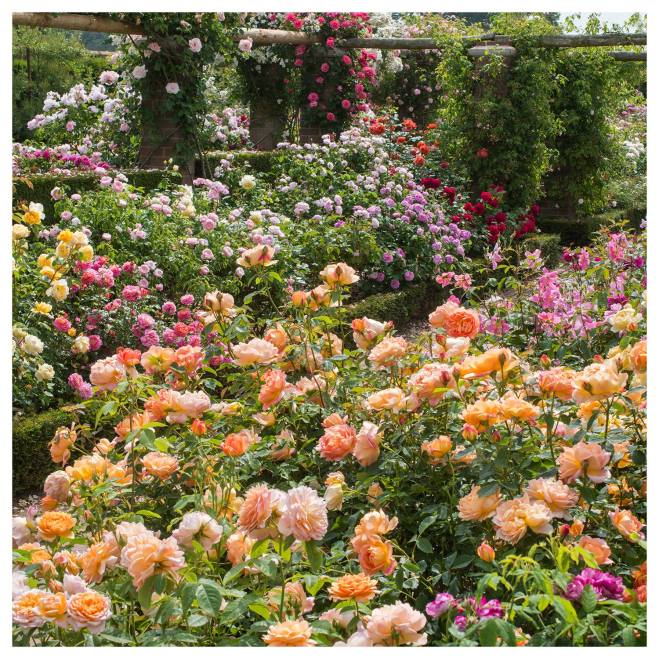
Beds of English Roses at David Austin Roses display, RHS Chelsea Flower Show 2018.

David Austin English Roses at Chelsea, 2018.


Scent Sample Sunday: Iris Rebelle

Scent Sample Sunday: Iris Rebelle

Iris Rebelle is a 2018 launch from Atelier Cologne, which I’ve just tried as part of their Advent Calendar for this year. Fragrantica lists the following notes: top notes — calabrian bergamot, orange blossom and black pepper; middle notes — iris, lavender and may rose; base notes — guaiac wood, patchouli and white musk. And sure enough, as soon as I applied some on my wrist from the mini-dabber that comes in the calendar, my first reaction (without having yet read the notes list) was “bright iris.” I like it very much, but if you don’t enjoy carroty iris notes, this is not for you. Iris Rebelle is worth your attention if you like iris notes in fragrance. It will not last for hours on end, but it will last long enough for you to experience the progression of its notes.

The opening combines a bright, strong citrus note from the bergamot with a lightly earthy iris, right from the start. I don’t really smell any pepper that I can pick out separately, but a light spiciness underlies the citrus and iris. The middle phase is mostly about the iris, fittingly. It is an earthy iris, but it also has a transparency that seems to be typical of Atelier CologneIris Rebelle is also part of the line’s “Chic Absolu” collection, which is described on the website as “clean, transparent, and elegant.” The bright citrus opening is also one of their signatures, as the line was founded to feature the kind of citrus notes found in colognes, combining them with a wide range of other notes:

Inspired by the legendary Eau de Cologne, the Cologne Absolue is a new olfactive family created in 2009 by Sylvie Ganter and Christophe Cervasel, Atelier Cologne Creators and Founders. Genuine pure perfume exalting the magical freshness and elegance of citruses with exceptional lasting power thanks to very high concentrations of essential oils.

I haven’t tried many of Atelier Cologne’s scents, so the Advent calendar was a nice opportunity to do so. They also sell a discovery set online, which comes with a voucher to apply its purchase price to a future order of a bottle. I like this company’s considerate treatment of its customers, from the discovery set voucher to the small sizes they make available (down to 10 ml). Sometimes you just want to play with a fragrance, not commit to 100 ml at great expense! Atelier Cologne is also very conscientious with the ingredients they use, which do not include any paraben, paraffinum liquidum, GMO, animal-derived ingredients, colorants, or sulfates.

Each Atelier fragrance comes with a little slice of backstory, which seems to be de rigueur for modern niche fragrances. The moments assigned to Iris Rebelle are:

He was drawing obsessively, invading her space as if he were alone. But when she changed her seat he could not stop staring at her… Days later backstage, she was nervously breathing as the crowd was waiting for the ballet to start. At that moment, she unexpectedly saw him in the front row. All at once, she felt strong and calm, as if they were alone.

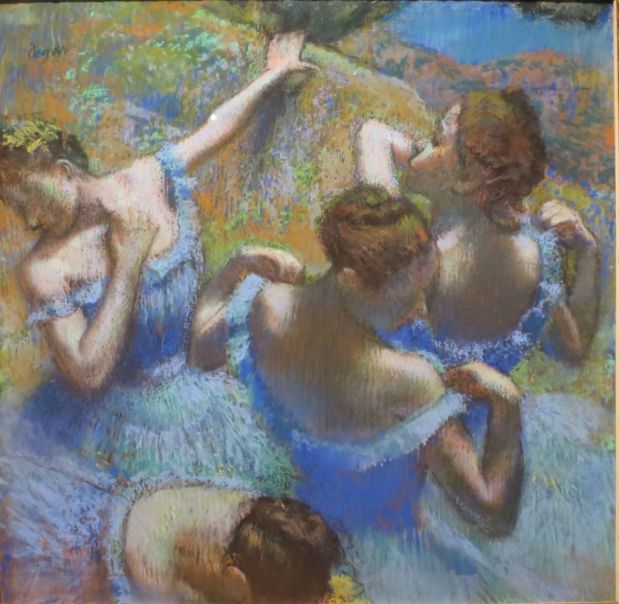
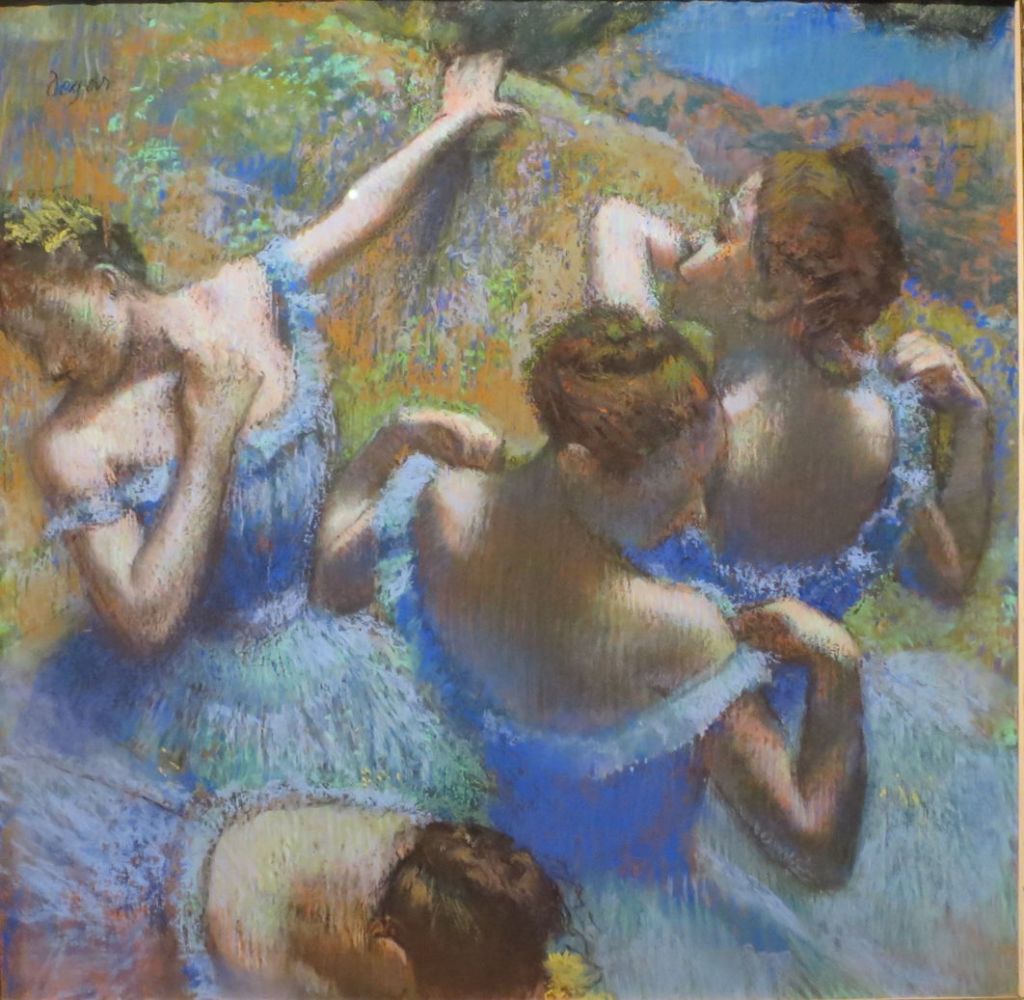
Who is the artist? Who is the dancer? I think this is a romanticized reference to the artist Edgar Degas and one of his many models among the ballet corps of the Paris Opera, whom he did draw “obsessively.” And indeed, Iris Rebelle does evoke some of that world, from the cologne of the “abonnes”, the male patrons of the ballet, to the wood of the stage flooring, surrounding the flowers that may represent Degas’ “danseuses“, to the transparency it displays, not unlike Degas’ works in pastel. Degas was himself a rebel artistically, one of the Impressionists who overturned the received notions of art, drawing, and painting, in 19th century France. The backstory for this fragrance is highly idealized, however, as the ballet world Degas portrayed was much harsher than his pastels suggested; and it seems that Degas himself was something of a misogynist even for that time.

Painting and pastel by Edgar Degas of Paris Opera ballet dancers rehearsing.

Edgar Degas, The Rehearsal of the Ballet Onstage, http://www.metmuseum.org

One aspect of Iris Rebelle that I like is the persistence of the citrus note, especially since it comes from bergamot, a green and astringent citrus note that I love. I have never eaten an actual bergamot fruit, but the scent is very familiar to me from the famous Earl Grey tea, which is flavored with the bergamot that lends its distinctive fragrance to the tea. Usually citrus notes in perfume fade away very quickly, but this bergamot lasts a while longer, and weaves together with the lavender note to evoke a hint of a gentleman’s cologne insinuating itself into the floralcy of the heart notes. Even the earthiness of the iris may refer to the lower origins of most of the dancers, while the orange blossom and rose notes evoke the pastel fantasy world they worked so hard to embody onstage.

Pastel of ballerina tilting onstage, by Edgar Degas

Ballerina, by Edgar Degas

Have you tried Iris Rebelle? What other Atelier Colognes do you recommend?

Pastel of ballet dancers in blue, by Edgar Degas
Dancers in Blue, by Edgar Degas