www.nytimes.com/2021/05/11/t-magazine/beauty-shops-fragrance-skincare.html
This article is making me yearn to start traveling again!
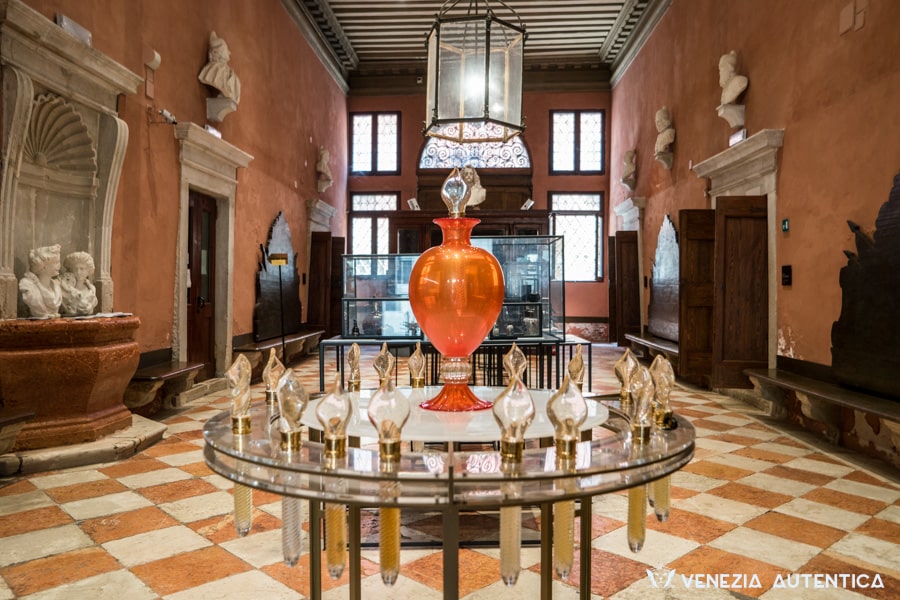


www.nytimes.com/2021/05/11/t-magazine/beauty-shops-fragrance-skincare.html
This article is making me yearn to start traveling again!
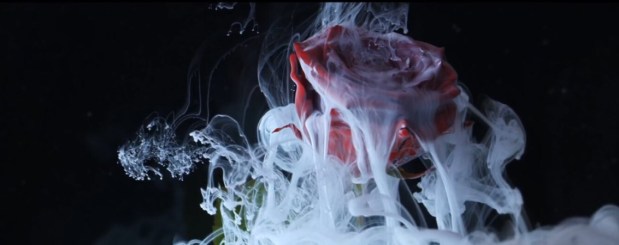
When I first began to engage in “perfume tourism”, in 2015, I was lucky enough to be able to tag along with my husband on one of his business trips to London. I spent every day roaming London, visiting gardens and discovering perfumeries. One of them was Les Senteurs, a deservedly legendary perfume boutique that sells many niche fragrances. (If you ever get the chance to visit their store on Elizabeth Street, I highly recommend that you do! The staff are really nice, friendly, and knowledgeable, and the neighborhood is beautiful — plus, Jo Loves is right up the block!).
On that first visit, I told the helpful sales associate that I was interested in smelling some rose fragrances, as I had spent so much time in rose gardens that week. He showed me several and kindly offered samples, too. One in particular that he recommended was Tobacco Rose, launched just the year before, from Papillon Perfumery. He knew quite a bit about its founder, Liz Moores, whom he had met, and told me what a nice person she was! I follow Liz on Instagram — what an interesting person she is, and I love her photos of her pet owl, Ghost.
I own full bottles of a couple of her fragrances, Dryad and Bengale Rouge, but not Tobacco Rose. Sadly, as I exited Les Senteurs’ shop in their other location (now closed) that day, I took a terrible fall and broke my shoulder. True story. I had planned to live with the sample for a day and night, and return the next day to buy a full bottle if I loved it. The best-laid plans of perfumistas … Instead of buying perfume, I found myself in a NHS emergency room being x-rayed, after having taken a double-decker bus across London to get to my husband’s office. Yes, I was probably in shock.
That summer, the summer of 2015, was when I learned how to use WordPress and launched my blogs, as I was stranded at home all summer. I guess I was an early adopter of working remotely, lol! But back to Tobacco Rose. I enjoyed my sample, and later bought a sample set of several Papillon fragrances. My favorite so far is Dryad, and I love Bengale Rouge, but I’m always tempted by Angelique. I do enjoy Tobacco Rose. The website says:
A sensual blend of Bulgarian rose, geranium and Rose de Mai form an opulent backdrop of velvety rose notes set against a luxuriously rich and smoky base of French hay and earthy oakmoss. Soft animalic touches of ambergris and beeswax have been suspended in a sumptuous blend of musks, creating an enigmatic, alluring and unmistakable perfum.
That pretty much says it all. Tobacco Rose starts out right away with a smokiness that continues through its entire development. It is not heavy or overwhelming, it is more like tendrils of smoke that entwine a lush red rose. I don’t believe there is actual tobacco in the fragrance, I think the gentle smokiness comes from the hay, oakmoss and ambergris. Liz Moores has written that she wanted to avoid creating a “sweet, old-fashioned, pretty” rose, she wanted to create a scent that felt “as though one were breathing in not only the fading petals but the rich earth from which a rose grows.” She included mineral notes to achieve that effect, and they are discernible, although not listed elsewhere, especially during the drydown. They lend a dryness to Tobacco Rose that really appeals to me.
The oakmoss is also discernible but it is included with a light touch. It blends beautifully with the rose, ambergris, and musks. Tobacco Rose really is one of the best rose fragrances available; it was a finalist for the Fragrance Foundation Awards in the category of Best New Independent Fragrance.
Have you tried any Papillon perfumes?

Welcome to the weekly Perfume Chat Room, perfumistas! I envision this chat room as a weekly drop-in spot online, where readers may ask questions, suggest fragrances, tell others their SOTD, comment on new releases or old favorites, and respond to each other. The perennial theme is fragrance, but we can interpret that broadly. This is meant to be a kind space, so please try not to give or take offense, and let’s all agree to disagree when opinions differ. In fragrance as in life, your mileage may vary! YMMV.
Today is Friday, May 21, and I’ve just picked the first ripe tomato in my garden! If you’re thinking, that’s very early, you are right — it’s a variety called “Early Girl”, and I also bought a mostly grown plant, as opposed to the usual seedlings, just to get a headstart on the tomato season. There is just nothing like a fresh, homegrown tomato, which is why I persevere in spite of marauding birds and chipmunks. Have you ever heard of a book called “The $64 Tomato”? That’s me.
You may wonder why I’m carrying on about tomatoes here — yesterday’s May Melange Marathon scent was Eve, by St. Clair Scents, and it has a prominent note of tomato leaf. Perfumer Diane St. Clair also used tomato leaf to great effect in one of her first scents, Gardener’s Glove. No surprise — I’m a fan.
What scents are you wearing these days, as we transition from spring to summer?
Featured image by Susan Mulvihill, http://www.spokesman.com. My tomato fantasy, not my reality!
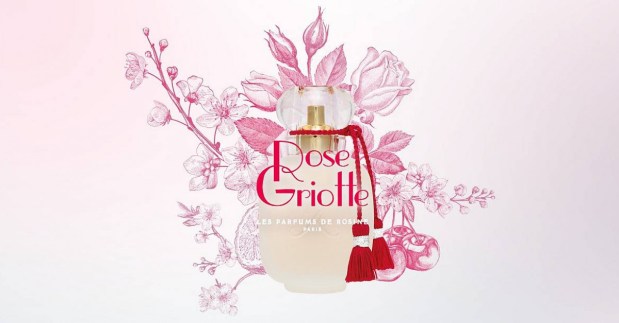
Thanks to a kind reader, I have a generous sample of Les Parfums de Rosine‘s latest fragrance, Rose Griotte. It is lovely! Launched in February of this year (2021), it was created by perfumer Nicholas Bonneville with Marie-Helene Rogeon. Interestingly, it is really a cherry blossom fragrance, but it has been anchored by a rose accord, as Mark Behnke explains on his blog, Colognoisseur:
The keynote floral is cherry blossom. There is little chance any rose essential oil wouldn’t trample the delicacy of that. So they make the clever choice to use a rose accord of three fresh florals as its balancing partner. It begins with a juice dripping, fruity top accord around pear. There is a bit of citrus and baie rose to provide some rounding effect, but the earliest moments are a ripe pear. Then the heart finds the beautiful powdery fragility of the cherry blossom matched with an expansive rose accord of peony, jasmine, and heliotrope. The last also has a bit of cherry in its scent profile which allows it to act as complement.
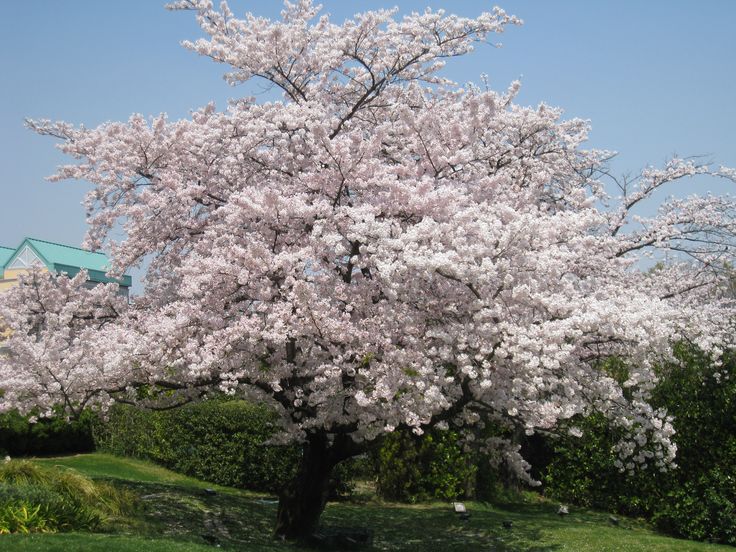
“Griotte” is apparently a wild cherry, sometimes called a Morello cherry, whose fruit is more sour than the cherries we commonly buy at the market. Like tart apples, the sour cherries make for very flavorful pies, clafoutis, and preserves. It has blossoms that are just as beautiful as the famous cherry blossoms in Washington, D.C. Most of those thousands of trees are Yoshino Cherry. Other species include Kwanzan Cherry, Akebono Cherry, Takesimensis Cherry, Usuzumi Cherry, Weeping Japanese Cherry, Sargent Cherry, Autumn Flowering Cherry, Fugenzo Cherry, Afterglow Cherry, Shirofugen Cherry, and Okame Cherry.
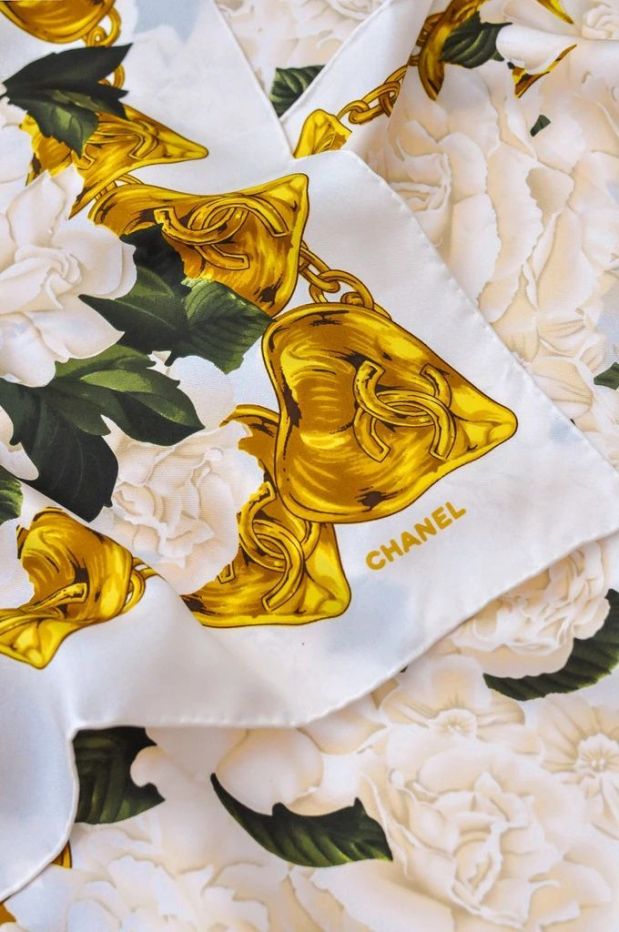
Today was crazy busy, so I won’t have much to say right now, except that my second daughter got her long-delayed college graduation ceremony (she graduated in May 2020), and we were so happy for her! I wore my longtime favorite, the first Chanel I ever bought for myself, No. 22 in the eau de toilette formulation. I have worn it off and on, to greater or lesser degrees, since my own 20s. It is like a familiar scarf at this point — but an elegant silk one with Parisian flair.
No. 22 is a sumptuous Chanel floral with plenty of aldehydes, white flowers, and iris. Top notes are Aldehydes, Neroli, Lily, Tuberose, Lily-of-the-Valley and Orange Blossom; middle notes are Ylang-Ylang, Jasmine, White Rose and Nutmeg; base notes are iris, Vanilla and Vetiver.
I’ll say more about it tomorrow!
Continuation: One of the things that puzzles me about No.22 is how often other commenters talk about an incense note. I don’t smell any incense at all! And I remember when I bought it, the sales associate told me it was based on white roses. I was thankful to see white roses listed among its notes! I don’t, however, think the white roses are dominant, certainly not the way they are in Jo Loves’ White Rose & Lemon Leaves. Nor is incense listed among its notes.
I do smell something sort of woody, sort of spicy, and I think it’s the nutmeg listed as part of the heart phase of No.22. It’s an unusual note to combine with all the white flowers in No.22. Aldehydes dominate the opening notes, an overdose for which No. 22. is famous. It was created by Ernest Beaux at the same time as the legendary No.5, and was one of the finalists presented to Coco Chanel for her house’s first fragrance. She chose No.5 instead, which launched in 1921; No.22 launched the next year (1922). The aldehydes and iris have led my daughter to declare that it smells like baby powder. Sure, honey, the world’s most elegant and expensive baby powder!
I know some of the regulars here share my love for No.22, such as Kathleen and Portia. Anyone else? Care to share your thoughts and experiences in the comments?
One of my greatest pleasures is to travel with my husband, and until 2020, his work required him to travel a LOT. I couldn’t go on most trips during the academic year, due to my own job, but I was able to go with him usually at least once a year. 2019 was a banner year for such trips — I was able to go with him on business trips to Nice, then London, then Tuscany. The Tuscany trip happened in the summer, so we extended it for a real vacation and spent several days in Florence and Venice, which we had never seen before.
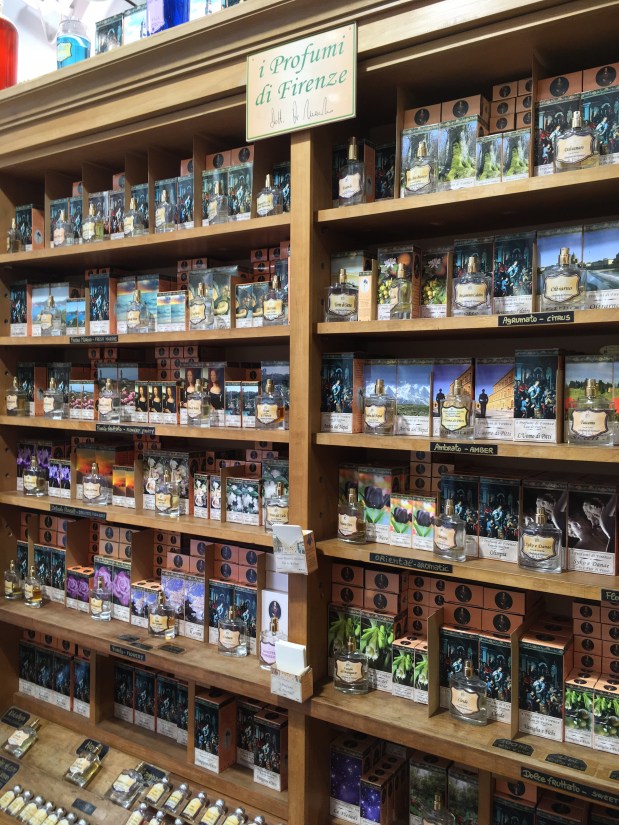
Florence, as it turns out, has a long tradition, centuries old, of perfumery, and is the perfect city to indulge in “perfume tourism.” We visited Santa Maria Novella, Farmacia SS Annunziata dal 1561, and the boutique of I Profumi di Firenze, Spezierie Palazzo Vecchio, among others. I acquired perfume souvenirs at each of them.

One of the bottles from the latter that came home with me was Jeunesse Il Giorno e La Notte, which is formulated as an eau de parfum. The notes list from the brand’s website includes Citrus, Italian Bergamot, Lily Of The Valley, Lavender, Floral Notes. Fragrantica adds that the base notes are white musk, and musk.
I should start this mini-review by noting that my 19 year-old son, who is usually pretty oblivious to his mom’s fragrance habits and applications, walked over to me today around noon to ask about yardwork, and immediately said, “You smell so nice!”. Music to a mother’s ears.
Continue reading
Welcome to the weekly Perfume Chat Room, perfumistas! I envision this chat room as a weekly drop-in spot online, where readers may ask questions, suggest fragrances, tell others their SOTD, comment on new releases or old favorites, and respond to each other. The perennial theme is fragrance, but we can interpret that broadly. This is meant to be a kind space, so please try not to give or take offense, and let’s all agree to disagree when opinions differ. In fragrance as in life, your mileage may vary! YMMV.
Today is Friday, May 14, and my “May Melange Marathon” continues! I’m very excited to have received this week several samples from two kind readers (thank you!) and will write about a couple of the scents this month. This weekend is a big occasion for my family — one of my daughters “graduated” from college in May 2020, meaning she got her degree but there was no ceremony, and the only festivities were what we could do for her at home with just her parents and siblings. Luckily, her university is holding a special graduation tomorrow for the May 2020 graduates, so she’ll get to walk with quite a few of her friends, and we’ll be able to celebrate her properly. I’m so happy — she worked really hard all four years of college and graduated summa cum laude, but she missed out on all the pomp and circumstance to go with that. She was a really good sport about it, but it was yet another sadness in a sad year. So this weekend will be a special “What Went Well” weekend, for which I’m very grateful.
So that’s most of what I’ll be doing this weekend! You?

We interrupt our regularly scheduled programming, because the following New York Times Style Magazine article popped up in my news feed, and I got totally distracted by it! It is called The Fragrances That Changed the Field, by Aatish Taseer. It starts with a childhood memory, from India, of a first encounter with oudh, and travels a winding path from there through the “Orientalism” of fragrances in the 1970s, to the power statement fragrances of the 1980s, circling back to previous centuries and the use of florals and musks in fragrances. It includes insight from several modern perfumers.
I highly recommend this article! You’ll want to set aside a good block of time to read it. The opening paragraph:
I REMEMBER AS IF it were yesterday that distant afternoon on which I first smelled oudh. I was in my grandmother’s house in Delhi. I was 13, maybe 14. We had a family perfumer, or attarwallah, a man of some refinement, who came to us from Lucknow — a city that is a metonym for high Indo-Islamic culture. We didn’t know the attarwallah’s name, or how he knew to follow us from address to change of address. But he came without fail two or three times a year. A slim, gliding figure, with a mouth reddened from paan, or betel leaf and areca nut, the attarwallah produced his wares from carved bottles of colored glass that he carried in a black leather doctor’s bag. He showed us scents according to which season we were in. So in winter, musk and patchouli; in summer, white-flowered varieties of jasmine — of which there are some 40 odd in India — as well as rose and vetiver. In the monsoon, he brought us mitti attar, which imitates the smell of parched earth exhaling after the first rain (“mitti” means “mud” in Hindi). The perfumes came from the medieval Indian town of Kannauj, which is a 75-mile drive west of Lucknow and which, like its French counterpart, Grasse, has a tradition of perfume manufacturing several centuries old. Once he had drawn his perfume out on white cotton buds at the tips of long, thin sticks, the attarwallah lingered over his customers, telling stories of the various scents and reciting the odd romantic couplet of Urdu poetry.
If that doesn’t intrigue you, as a person interested in fragrance, I don’t know what will! Enjoy. BTW, my scent of the day today was Cristalle, and I’ll write about it tomorrow instead.
Featured image from baystreetex.com.
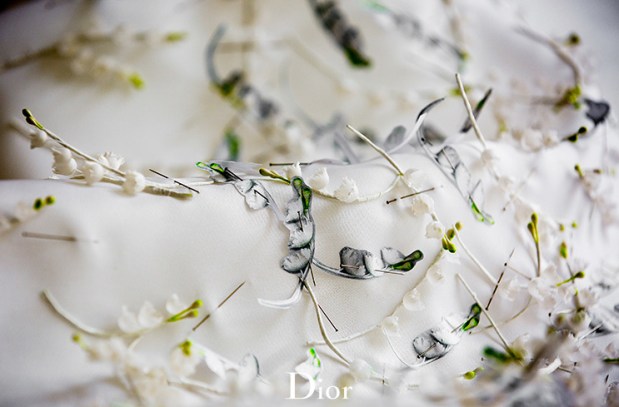
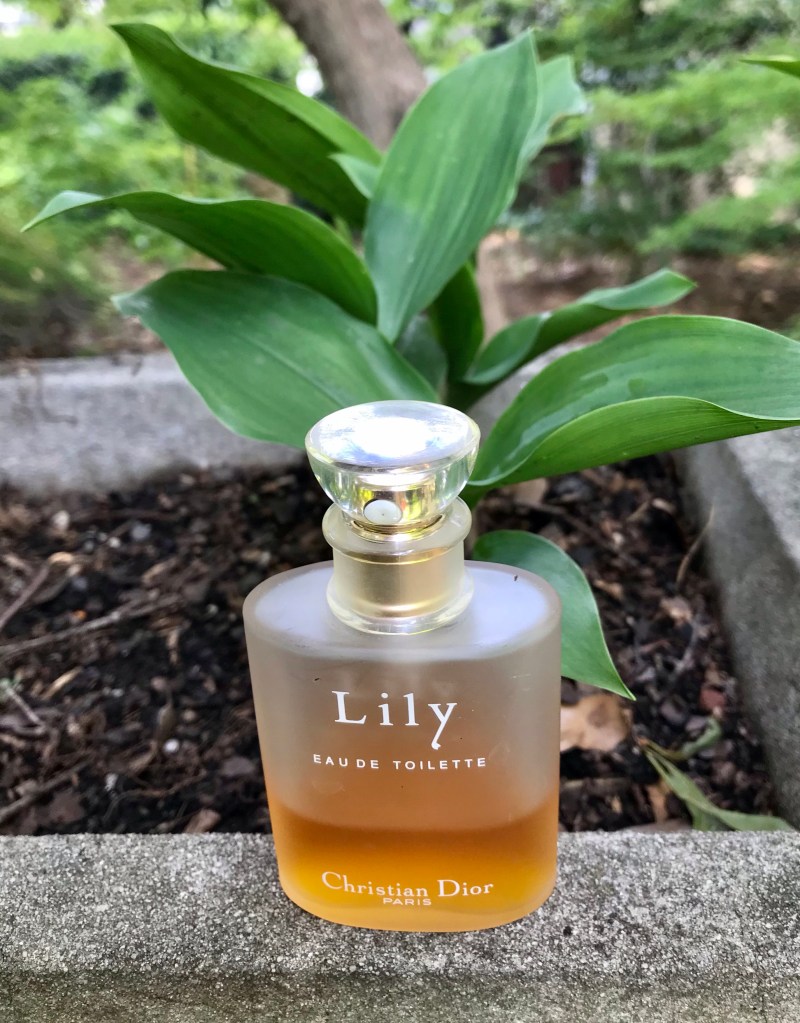
Parfums Christian Dior is responsible for possibly the most famous muguet fragrance of all time, Diorissimo. A less-known, discontinued muguet fragrance by Dior is the lovely Lily, launched in 1999. The perfumer behind it is Florence Idier, who also created Comme des Garcons’ Series 1 Leaves: Lily, another lily-of-the-valley fragrance. There is another fragrance called Lily Dior, but the one I have is just called Lily; it is an eau de toilette.
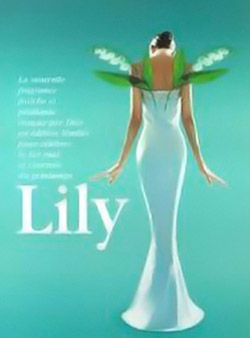
Fragrantica (which has a photo of the wrong bottle on this fragrance’s page, btw; it shows 2004’s Lily Dior) lists its notes as: Top notes are Green Notes, Fruity Notes, Bergamot and Brazilian Rosewood; middle notes are Lily-of-the-Valley, Lilac, Lily, Jasmine and Rose; base notes are Musk and Sandalwood.
I acquired my bottle of Lily within the past year, so it has never featured in my frequent “May Muguet Marathon.” It wouldn’t be May for me without some reviews of muguet fragrances! I like Lily very much, and if I didn’t already have several true-love muguet fragrances, it would be among my top dozen. Even as a vintage eau de toilette, its top notes are clear and strong, with a noticeable fruit note at the start that reminds me of a green pear. The only listed top note that I don’t really smell is the rosewood; the opening is very fresh and green.
The lily-of-the valley note steps forward quickly and it is very natural-smelling (although LOTV notes famously rely on clever combinations of other substances, as the flowers’ natural essence cannot be extracted). The companion notes of lilac and jasmine are evident, with the lilac slightly more obvious than the jasmine. At this stage, Lily reminds me a lot of the 1998 version of Guerlain’s Muguet, which was created by Jean-Paul Guerlain and launched the year before Lily.
Hmmm. The list of notes for each fragrance is almost identical, according to Fragrantica. The clear presence of both lilac and jasmine in the middle stage, as part of the evocation of lily-of-the-valley, is very similar in each fragrance. Lily‘s opening is distinctive, though, with that green pear note that gives it some zing together with the bergamot. I’m going to give Parfums Dior the benefit of the doubt here, though: Christian Dior’s association with the muguet, his favorite flower, goes back decades and prompted the creation of Diorissimo; the flower appeared regularly in Dior fashions: dresses, scarves, hats, jewelry, and apparently he had a tradition of giving sprigs of lilies-of-the-valley to employees every May Day, which the fashion house continues to this day. Don’t you just love this hat?
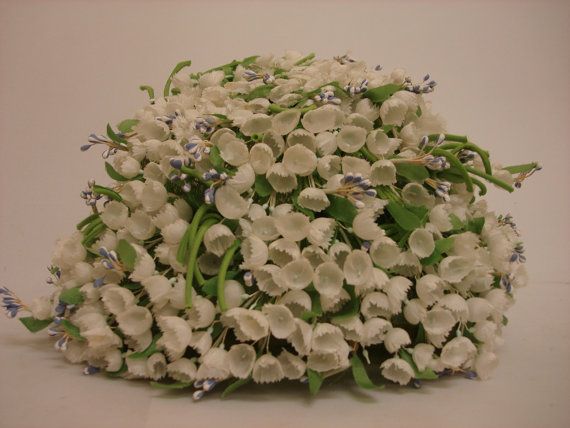
The Christian Dior name is also attached to a wide variety of household goods featuring lilies of the valley as his signature flower, everything from sheets to fine porcelain. A new collection of muguet-themed housewares was launched by Dior last year, and they are quite beautiful.
As my regular readers know, I truly love muguet fragrances. I struggle to grow them here in the South, as it really is too hot and humid here for them, but I have a few plants I have nursed along in dedicated planters on the shady edge of our front terrace, where I can keep them well-watered and mulched with the rich humus compost they love. Lily is very true to the natural scent of lilies-of-the-valley and it doesn’t smell soapy at all to my nose, unlike some LOTV fragrances. It doesn’t last more than a few hours, which is the norm for most muguet fragrances, especially in eau de toilette concentrations. While it lasts, though, it is very pretty. However, most of the prices you will see online for Lily are too high, considering that one can easily find lovely, newer, muguet fragrances that are more affordable, or at least fresh (see my “May Muguet Marathon” posts for some suggestions!).
For a lovely post on lily-of-the-valley scents, check out one of my favorite blogs, Bois de Jasmin. Its author, Victoria, mentions Dior’s Lily briefly in the comment section. She writes about muguet fragrances pretty regularly, as it is a favorite scent of hers. I know lily-of-the-valley scents can be polarizing; people tend to like them very much, as I do, or not at all. How do you feel about them?
I like to seek out fragrance “bargain beauties”, for my own sake and for the sake of readers who may not be able to afford (or want to pay) the often eye-watering prices of niche fragrances. While there is much to recommend the practice of buying only a few, albeit expensive, high-quality fragrances, it is fun to educate one’s nose by trying many different fragrances, especially at the outset of this hobby, and that is how I acquired a number of ‘bargain beauty” fragrances. Luckily, I also have two young adult daughters, currently living at home during the pandemic, and they’re happy to share them! Of course, none would be bargains if they weren’t pleasing at some level, and likely to be used and enjoyed.
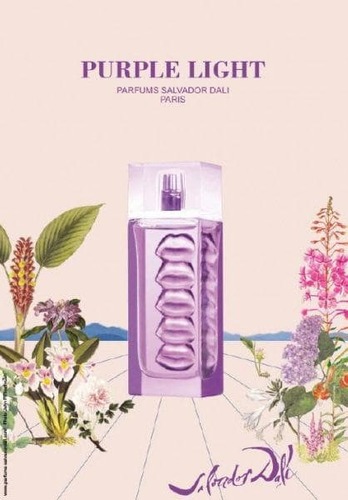
One such bargain beauty is Parfums Salvador Dali’s Purplelight. Launched in 2007, the nose behind it is Francis Kurkdjian, usually associated with much more expensive fragrances, including those from his own brand Maison Francis Kurkdjian. While Purplelight is in no way comparable to those fragrances, it is a very pleasant, soft, lilac-centered eau de toilette that works well. Its primary notes are bamboo, lilac, and musk, with companion notes of cherry blossom, jasmine, tiare flower, almond tree, and vetiver, according to Fragrantica. Purplelight followed the house’s 2006 launch of Purplelips, another lilac-forward fragrance, created by perfumers Antoine Lie and Guillaume Flavigny. I really enjoy finding pleasant bargain fragrances that have been created by well-known perfumers; as some of you know, one of my favorite bargain beauties is Adam Levine for Women, created by Yann Vasnier, who has also created fragrances for much more expensive brands like Arquiste, Frassai, Tom Ford, Comme des Garcons, Jo Malone, and others. My most recent bargain beauty fragrance line, which I wrote about earlier this week, is the Zara Emotions line created by perfumer Jo Malone (the person, not the brand). Parfums Salvador Dali has several bargain beauties, well worth exploring.
At first spray of Purplelight, what I smell most is a light green bamboo with watery undertones. As that dies down, I smell more and more of a soft lilac. This is very light also; I like the fact that to my nose, it doesn’t smell soapy, as some lilac scents do. Over a short period of time, a soft, gentle musk appears. Projection and sillage are minimal, but I can clearly smell Purplelight on my hand and wrist for a few hours. It is still possible to find gift sets of the eau de toilette that come with body lotion, and it seems likely that the two used together would increase the scent’s longevity. I enjoy Purplelight as an easy floral for warm weather or bedtime, when one doesn’t necessarily want a powerhouse or anything very challenging.
I can’t fail to mention the charming bottle for Purplelight, which matches that of its sister fragrance Purplelips. It is a rectangular column into which is set a row of concave lips. The juice inside is a light purple, which tints the bottle. The artist Salvador Dali incorporated lips into many of his artworks, and the theme has been carried into many of the bottles of Parfums Salvador Dali.
Have you tried any of the other Salvador Dali fragrances, either the bargain-priced ones or the more expensive “haute” line?
 Serenity Now Scents and Sensibilities